
After you aerate your lawn, those tiny holes in the soil are a golden opportunity to feed the roots directly. But pick the wrong fertilizer, and you could waste the aeration, get patchy growth, or even burn the new grass you are trying to grow. The right fertilizer after aeration is one packed with phosphorus — that is the nutrient (the middle number in the NPK ratio) that drives root development and helps new grass plants anchor in.
I’m Rikta — the co-founder and writer behind Lawn Gear Lab. This guide is built by comparing the manufacturers’ published specifications and the patterns across verified customer reviews, so you get each pick’s real strengths and trade-offs instead of marketing spin.
The five fertilizers below were chosen because they are proven starter formulas that deliver the high phosphorus levels new seedlings crave after aeration. This guide to the best lawn fertilizer after aeration breaks down what each product actually does, who it is best for, and what real buyers discovered.
How To Choose The Best Lawn Fertilizer After Aeration
After aeration, your lawn’s roots have direct access to the soil. The fertilizer you put down at this moment needs to do two jobs: feed the existing grass and give new seedlings (if you overseeded) a strong start. Here is what to look for.
Phosphorus — the root-builder
Look at the middle number in the N-P-K ratio on the bag. Phosphorus is the key ingredient for root formation. A ratio like 15-20-10 has a phosphorus (20) that is higher than nitrogen (15), which tells you this formula is built for root establishment, not just leaf growth. After aeration, that is exactly what you need.
Coverage area vs. bag weight
Manufacturers list how many square feet a bag covers. A 15 lb bag covering 5,000 sq. ft. is a different density than an 18 lb bag covering 4,500 sq. ft. or a 50 lb bag covering 12,500 sq. ft. Match the coverage to your lawn size so you do not run short — or over-apply and risk burning.
Nitrogen type — quick versus slow
Some fertilizers use quick-release nitrogen for an instant green-up, while others include a slow-release form (like XCU or sulfur-coated urea) that feeds the grass steadily over several weeks. For after aeration, a blend of both is ideal: you get visible color fast, plus sustained feeding while the roots dig in.
Quick Comparison
On smaller screens, swipe sideways to see the full table.
| Model | Category | Best For | Key Spec | Amazon |
|---|---|---|---|---|
| Jonathan Green Veri-Green | Mid-Range | Balanced root + leaf growth | 12:18:8 ratio | 15 lb bag | Amazon |
| Lawn Synergy 15-20-10 | Mid-Range | Fast root establishment | 15:20:10 ratio | 4,500 sq. ft. | Amazon |
| The Andersons 20-27-5 | Premium | Maximum phosphorus for seedlings | 20:27:5 ratio | 1% iron | Amazon |
| Yard Mastery 12-12-12 | Premium | Balanced feeding with iron boost | 12:12:12 ratio | 3% iron | Amazon |
| The Andersons 18-24-12 | Premium | Large lawns & heavy feeding | 18:24:12 ratio | 50 lb bag | Amazon |
In‑Depth Reviews
1. Jonathan Green (16007) Veri-Green Starter Fertilizer for Seeding & Sodding – 12-18-8
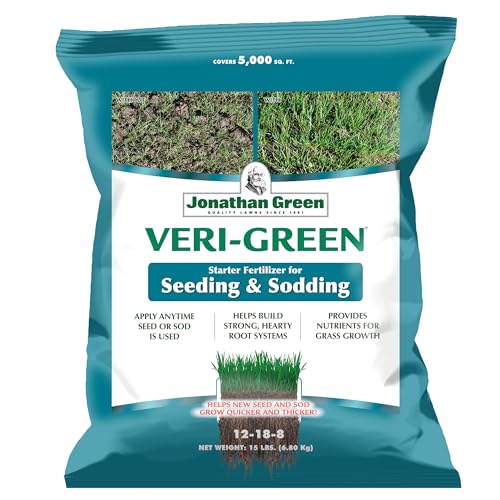
Its 12-18-8 ratio (phosphorus at 18) makes this the pick for the most common job — aerating and overseeding in the same day. Buyers report it “produced green grass with no burning or brown spots after four mows”, so it is gentle on new seedlings while still turning the lawn green. A single 15 lb bag covers 5,000 sq. ft., a practical size for a typical suburban lot.
This fertilizer includes humates (organic compounds that help soil hold nutrients longer), so the grass keeps feeding for up to 2 months after you apply it. That matters after aeration because the holes close up over time, and you want the roots to keep drawing from the soil even after the surface has sealed.
For most lawns after aeration, this strikes the right balance of performance, safety, and coverage. If your soil test shows a serious phosphorus shortage, the higher-ratio options below may suit you better.
Why it’s great
- Proven safe for new seedlings, no burn reported
- Feeds for up to 2 months with humates
- Easy-to-find brand with reliable quality
Good to know
- Mid-range phosphorus compared to top-tier starters
- Bag covers 5,000 sq. ft., so larger lawns need multiple bags
2. Lawn Synergy 15-20-10 Starter Fertilizer (18 lbs.)
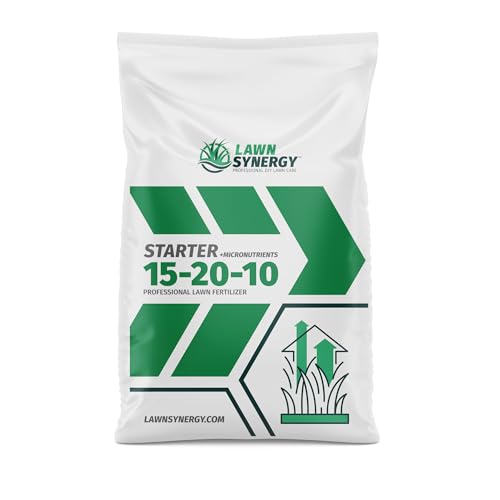
This formula delivers more phosphorus (20) than the top pick’s (18), so it gives a bigger push to young roots after aeration. It also uses slow-release XCU nitrogen (a coated urea that breaks down gradually), so the grass gets steady feeding for weeks rather than a single burst. An 18 lb bag covers 4,500 sq. ft., which is a denser application that puts more nutrients per square foot right into the aerated holes.
Owners mention it works fast: one reviewer noted the “grass is coming in good” after the first use. The 15-20-10 ratio pushes root growth while the ammonium sulfate and iron (both included) drive early green color. That matters if you aerated late in the season and want quick establishment before cold weather arrives.
Choose this over the top pick if your priority is fast root growth and you are willing to accept less coverage per bag. The denser application means you cannot stretch it as far, but the roots get more of what they need — exactly the point of feeding after aeration.
Where it shines
- Higher phosphorus (20) than the top pick for stronger roots
- Slow-release XCU nitrogen feeds steadily for weeks
- Professional-grade quality not sold in big-box stores
Worth noting
- Covers only 4,500 sq. ft., less area per bag than the Jonathan Green
- Premium-tier pricing, though well-supported by results
3. The Andersons Premium New Lawn Starter 20-27-5 Fertilizer (18 lb)
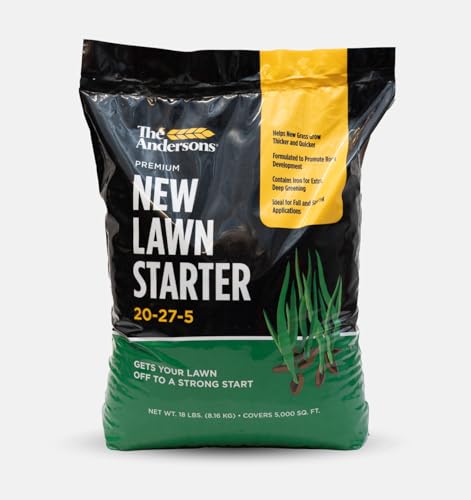
Imagine you aerated a bare-soil area and overseeded it with fresh grass seed — you need a fertilizer that focuses on root growth above all else. The Andersons delivers with a 20:27:5 ratio, where phosphorus sits at 27 — the highest middle number in this lineup. That is 67% more phosphorus than the 12:18:8 in the Jonathan Green, making it a specialist for extreme root establishment.
Customers note being “able to get grass in just over a week”, which matches the quick-release nitrogen component blended with a slower-release form for sustained feeding. The 1% iron in the formula adds a dark green tone that typically appears within days, so you see results fast while the roots are building underground. An 18 lb bag covers up to 5,000 sq. ft. — the same coverage as the top pick but with a much heavier phosphorus punch.
The standout spec here is the 20:27-5 ratio itself — if your soil test shows low phosphorus or you are establishing a lawn from scratch after aeration, this is the most targeted tool for the job.
What stands out
- Highest phosphorus (27) of the group — 67% more than the top pick
- 1% iron for rapid deep greening
- Quick + slow nitrogen blend for instant and sustained feeding
The trade-offs
- Lower potassium (5) means less help for winter hardiness
- Best matched with a soil test confirming phosphorus need
4. Yard Mastery Lawn Fertilizer 18 lbs – 12-12-12 Starter Fertilizer
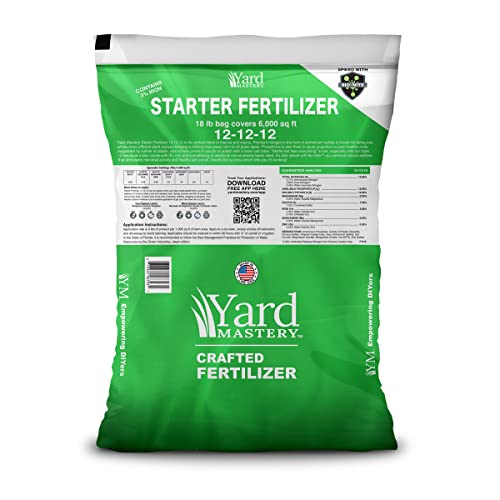
The single number that matters most in this category is coverage, and at 6,000 sq. ft. per 18 lb bag, the Yard Mastery covers 20% more ground than both the Jonathan Green and The Andersons 20-27-5. The 12-12-12 ratio is balanced — not the highest phosphorus, but it gives you even nutrition across all three nutrients, which works well if your soil does not have a specific deficiency.
The catch you accept is a lower phosphorus number (12) compared to the other starters here. For a lawn that was aerated as a routine maintenance step (not for bare-soil seeding), this balanced feed keeps the existing grass happy while supporting modest root development. The 3% iron is the highest iron content in this lineup, and reviewers point out it delivers “rich dark green” color — one buyer mentioned germination in just one week with 3-4 inch tall grass in 15 days.
This is a price-to-value play: you get more square footage per dollar than any other product here, plus a slow-release formulation that cuts down on how often you need to reapply. If your goal after aeration is a general lawn boost rather than aggressive root push, this is the smart money pick.
The upsides
- Covers 6,000 sq. ft. — 20% more than most competitors
- 3% iron for the fastest, darkest green-up
- Slow-release formula reduces application frequency
Keep in mind
- Lower phosphorus (12) than dedicated starter fertilizers
- Not ideal for establishing new lawns from scratch
5. The Andersons 18-24-12 Starter Turf Fertilizer, 50lb Bag
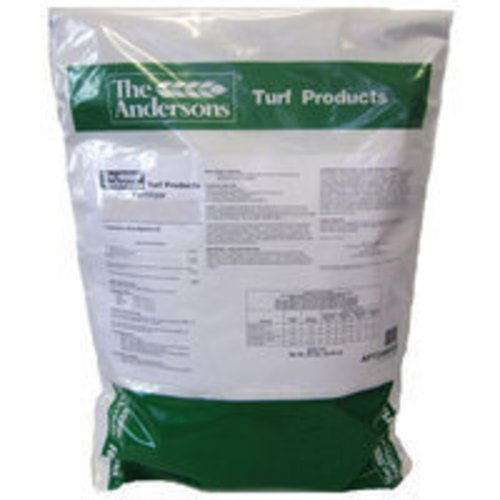
What you actually get at this lower price is a 50 lb bag of 18-24-12 starter fertilizer that covers up to 12,500 sq. ft. at a medium rate — more than double any other product in this guide.
That money buys serious volume for a large lawn or a property with multiple turf zones. One buyer called it “like Wow! Incredible results!!!!!”, and another noted it “made my grass liven up quick” when applied with a broadcast spreader and watered well. The 50 lb weight is physically heavy to carry, but you buy one bag and you are done for the entire season’s aeration plus seeding.
The one reason to choose this over the field is if you have over 10,000 sq. ft. of lawn — the smaller bags would force you to buy three or four of them, making the per-project cost climb fast. The Andersons 50 lb bag is the big-lawn specialist that makes the whole job simpler, and it is perfect for the budget buyer who wants to cover a large area with a single purchase and avoid buying multiple smaller bags.
Why we’d pick it
- Covers up to 12,500 sq. ft. — more than double the competition
- Strong 18-24-12 ratio for serious root development
- Best cost per square foot for large properties
A few caveats
- 50 lb bag is physically heavy to carry and store
- Overkill for a small or medium-sized lawn
Understanding the Specs
N-P-K Ratio
The three numbers on a fertilizer bag stand for Nitrogen (N), Phosphorus (P), and Potassium (K). For aeration, phosphorus is your priority because it builds the root system. A starter fertilizer for after aeration should have the middle number (P) at least as high as the first number (N) — something like 12-18-8 or 15-20-10. The higher the middle number, the more root push you get.
Slow-Release vs. Quick-Release Nitrogen
Nitrogen can come in two forms. Quick-release gives fast greening but can burn grass if overapplied. Slow-release (like XCU, sulfur-coated urea, or polymer-coated prills) feeds steadily over weeks, which is ideal after aeration because the roots keep getting food as they grow down. Many premium starters combine both for immediate color and long-term feeding.
Coverage Area
Measured in square feet, this tells you how much lawn a single bag treats at the recommended rate. A 5,000 sq. ft. bag works for a typical quarter-acre lot, while a 12,500 sq. ft. bag handles a full acre. If you apply too heavy, you risk burning; too light, and the aeration benefit is wasted. Always match the coverage to your lawn’s measured size.
Iron Content
Iron is a micronutrient that drives chlorophyll production — the compound that makes grass green. A fertilizer with 1% to 3% iron will darken your lawn within days, even if the nitrogen is still working slowly. This is a cosmetic perk more than a structural one, but after aeration you want visible results fast, and iron delivers that.
FAQ
Should I fertilize right after aeration or wait a few days?
Can I use a regular lawn fertilizer instead of a starter fertilizer after aeration?
How much fertilizer should I apply after aeration?
Final Thoughts: The Verdict
For the majority of shoppers, the best lawn fertilizer after aeration winner is the Jonathan Green Veri-Green Starter Fertilizer because it combines a proven 12-18-8 ratio, humates for extended feeding, and a safe track record with new seedlings — all in a practical 5,000 sq. ft. coverage bag. If you want fast, intense root growth from a higher phosphorus formula, grab the Lawn Synergy 15-20-10. And for large properties needing maximum coverage per bag, the standout is the The Andersons 18-24-12 50 lb bag.