
Specs are compiled from manufacturer listings and verified buyer reviews and can change over time — please confirm the key details on the product page before buying.
Every footstep, every rainstorm, every season packs your soil tighter. The result is a lawn that looks tired, drinks water that runs right off, and grows roots that can’t breathe. A good aerator fixes that — but only if the plugs come out clean and the tool doesn’t fight you. The right tool pulls deep, uniform cores that let air and water reach the root zone.
I’m Rikta — the founder and writer behind Lawn Gear Lab. This guide is built by comparing the manufacturers’ published specifications and the patterns across verified customer reviews, so you get each pick’s real strengths and trade-offs instead of marketing spin.
Whether your yard is a postage-stamp patch or a full acre that needs serious attention, these are the lawn aerator plugs that actual owners swear by — the tools that pull real cores without the headache.
Our Picks at a Glance

How To Choose The Best Lawn Aerator Plugs
A manual aerator with hollow tines is the most common way to pull plugs on a small to medium lawn. The key decision depends on three things: tine type, cores per plunge, and whether you collect plugs or leave them on the lawn. Here is what to look for.
Hollow Tines vs. Solid Spikes
Only hollow tines actually remove a plug of soil from the ground. Solid spikes just poke a hole and push soil sideways, which can add to compaction around the hole. For real aeration that relieves soil density, hollow tines are the way to go. The best designs have a beveled or tapered opening that helps the tine slice in and then eject the core cleanly.
Number of Tines and Spacing
Most manual core aerators have between two and four hollow tines. A three-tine tool like the Landzie gives you a good balance of coverage per step and physical effort. A four-tine tool like the Dolibest pulls more plugs per plunge, which can speed up the job, but it requires more downward force. If you have heavy clay soil, the extra force of a four-tine tool can become tiring quickly.
Soil Core Storage
A few aerators come with a tray that catches the soil plugs as they eject from the top of the tines. This means you do not have to rake plugs off the lawn afterward — a real time-saver if you plan to overseed or want a clean look immediately. The trade-off is that the tray adds weight and can clog if the soil is wet.
Quick Comparison
| Model | Best For | Tine Type | Number of Tines | Weight | Amazon |
|---|---|---|---|---|---|
| Manual Core Aerator (LawnVigor)★ Best Overall | Best Overall | Hollow | 3 | 3.52 lb | Amazon |
| Colwelt Spike AeratorCompact Pick | Budget Spike | Solid Spike | 4 | 4.31 lb | Amazon |
| Bluesea 16-SpikeSelf-Cleaning | Self-Cleaning | Solid Spike | 16 | 6.24 lb | Amazon |
| MEIIOFS Core Aerator | With Tray | Hollow | 3 | 6.4 lb | Amazon |
| Dolibest 4-Corer | Four Tines | Hollow | 4 | 5.54 lb | Amazon |
| Dolibest with Tray | Premium Manual | Hollow | 4 | 6.19 lb | Amazon |
| Agri-Fab SmartLink | Tow-Behind | Hollow | 24 | 29 lb | Amazon |
| Landzie Original | Zero Assembly | Hollow | 3 | 5.6 lb | Amazon |
| Brinly PA-403BH | Heavy Acreage | Hollow | 24 | 63.9 lb | Amazon |
In‑Depth Reviews
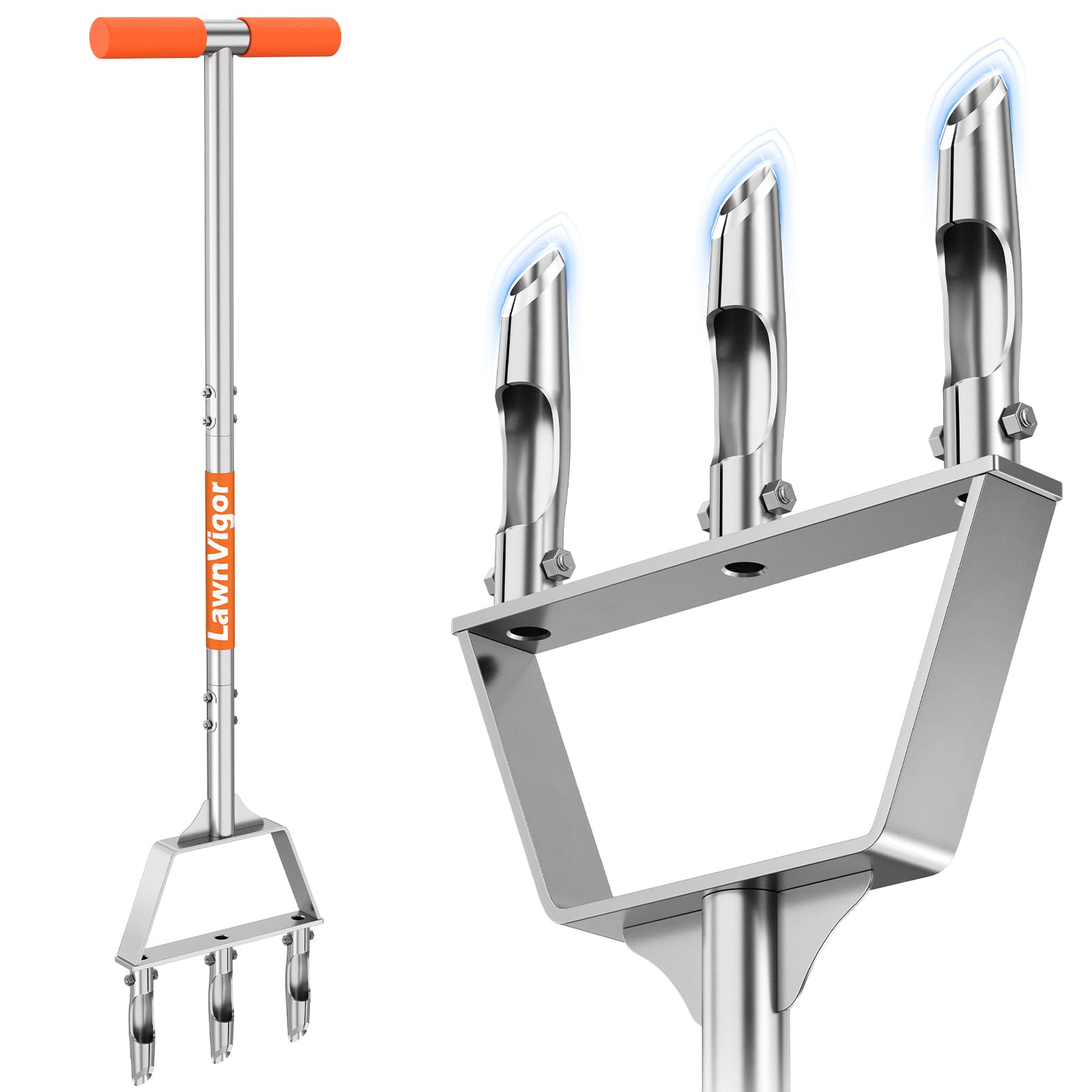
1. Manual Core Aerator Lawn Tool (LawnVigor)
Our pick — 4.5★ from 200+ verified ratings; the strongest balance of quality and price.
Pulls deep, uniform 3-inch plugs without clogging — the gold standard for manual aeration.
This is the manual core aerator that owners say works 10x better than the first one they tried. The three heat-treated hollow tines slice into compacted soil and eject 3-inch cores cleanly, which owners confirm: “Pulls deep, uniform 3-inch plugs reliably without clogging.” The foot bar gives good leverage so you can put your weight into it, and the large dirt-release holes speed up the job because you are not shaking soil out of the tines after every step.
The crowd favorite here — 4.5 stars across a broad base of owners — consistently lands on the same words: sturdy, easy assembly, and effective. The thing everyone raves about is the functionality: it removes soil plugs, not just displaces dirt. At 3.52 pounds it is lighter than the Colwelt spike tool by nearly a full pound, which matters when you are covering a 1,000-square-foot lawn. The trade-off is the same one every manual tool carries — a large area will test your patience. As the reviews put it: “I would not want to do a massive area with this, but a small area or small yard — it’s perfect.”
Why Owners Love It
- Heat-treated hollow tines pull real 3-inch plugs without clogging
- Easy assembly with all hardware included — set up in minutes
- Sturdy powder-coated steel frame with a non-slip ergonomic handle
- Large dirt-release holes keep the tines from packing up
The Real Limit
- Manual effort means it’s best for small to medium lawns — not for acre-size jobs
- Some owners note the handle covers can spin; a dab of adhesive helps
Your go-to if: You have a small to medium yard with compacted soil and want a tool that pulls real cores on the first try, backed by hundreds of owners who say the same thing.
Think twice if: Your lawn is over half an acre — you will save your back by renting a machine or buying a tow-behind unit.
2. Colwelt Lawn Aerator Tool 38inch
A spike aerator with 3.5-inch spikes that punches holes without pulling cores.
This is a different approach from the core aerators above. The Colwelt uses four solid steel spikes — each 3.5 inches long and 2/5 of an inch in diameter — to push holes into the soil. It does not remove a plug, so it won’t relieve compaction the way a hollow-tine tool does. What it will do is create channels for water and air to reach the roots, and it does that with less effort than a core tool because you are not pulling a plug out of the ground.
The big advantage here is the 38-inch height and the wide foot plate, which measures 6 inches across. You do not have to bend much, and the foot plate is large enough for any boot or shoe. Owners say it is easy to use and works well for a small area, and one person reported finishing a 1,000-square-foot lawn in about 90 minutes. At 4.31 pounds it is a bit heavier than the LawnVigor core tool, but the weight is in the steel construction, which owners call very sturdy. The trade-off is that solid spikes can increase compaction around the hole in heavy clay — so this is a tool for light maintenance, not for rehabbing hard-packed soil.
A solid maintenance tool: Quick to use on small lawns, with long spikes and a tall handle that saves your back. Not a true core aerator for serious soil compaction.
Reach for this if: Your soil is reasonably loose and you want a quick, no-fuss way to punch aeration holes across a small yard.
Look elsewhere if: You have dense clay or heavy compaction — you need hollow tines that pull plugs, not spikes that push soil.
3. Bluesea Lawn Aerator Tool – 16 Iron Spikes
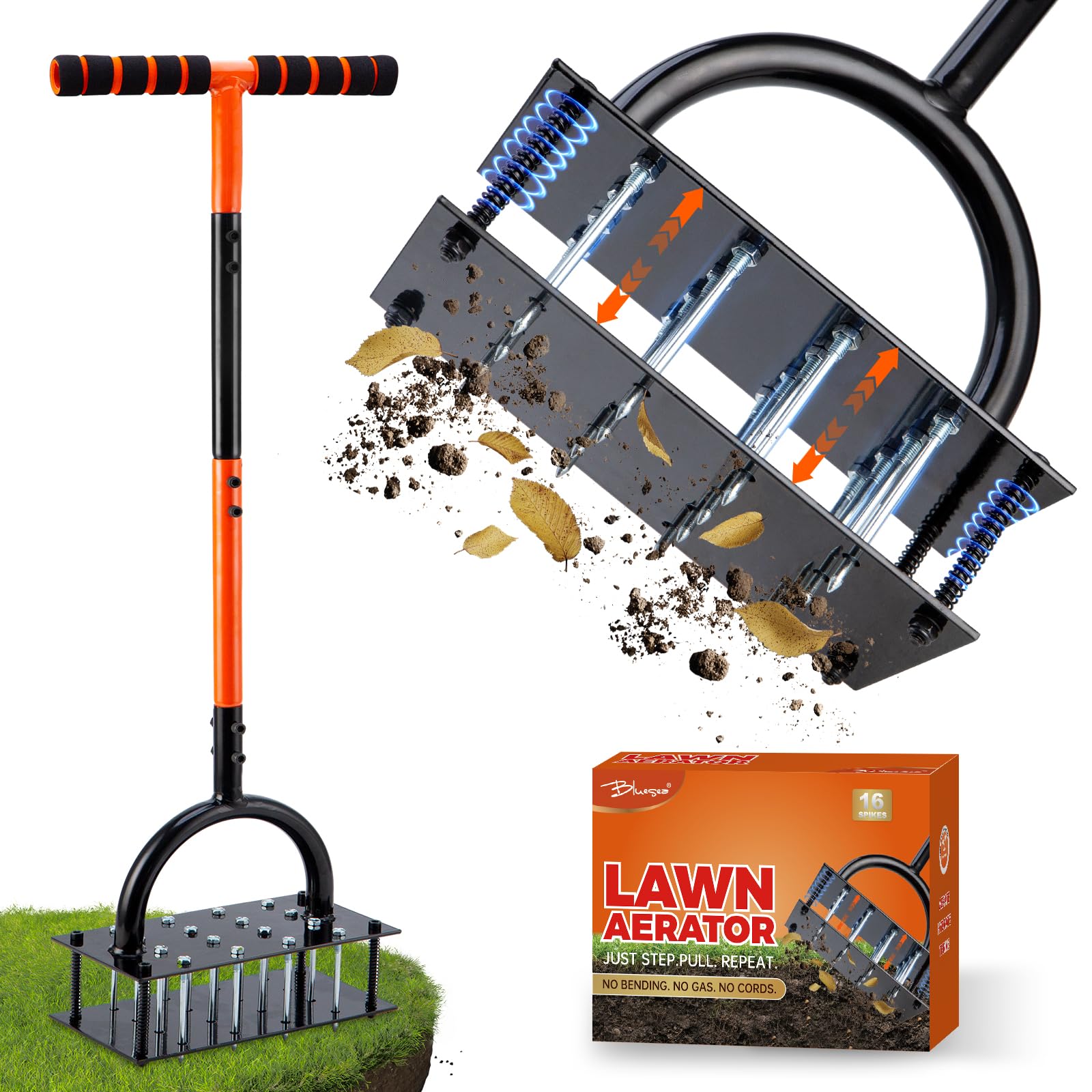
A 16-spike aerator with a double-layer spring that shakes dirt off the tines.
The Bluesea takes a unique approach with a built-in double-layer spring mechanism. After each step, the spring pushes the spikes back up and shakes off loose soil automatically, so the tines stay clean for the next plunge. Owners appreciate this feature, calling it a big help for keeping the tool working smoothly. The 16 spikes are arranged in a 4×4 grid, each 3.5 inches long, and the company says the argon arc welding creates bonds that are 40% stronger than conventional methods.
That said, this is a spike aerator, not a core aerator. It pokes holes but does not remove plugs. A few buyers report that the metal handle broke after about a month of regular use, which suggests the long-term durability is not where it needs to be for heavy or frequent jobs. The self-cleaning spring is a real convenience, but the solid-spike design limits its effectiveness on truly compacted soil.
Best for light, routine aeration: The spring-cleaning feature is handy, but the solid spikes and some durability questions mean this is not the tool for hard soil or frequent use.
Ideal for: Quick seasonal aeration on loose or moderately compacted soil where you want minimal cleanup.
skip it if: You need to pull real cores or plan to use it regularly on tough clay.
4. MEIIOFS Lawn Aerator with Soil Core Storage Tray

A hollow-tine aerator with a built-in tray that catches every soil plug.
Here is a clever idea: let the aerator collect the soil cores so you do not have to walk behind it with a rake. The MEIIOFS uses three hollow tines to pull plugs, and those plugs eject into a storage tray mounted on the frame. That means no soil cores sitting on your lawn to break apart or get tracked into the house. The tool is made from high-density alloy that owners describe as solid and rust-proof, and the T-handle with cushioning keeps the work comfortable.
The catch is size. Multiple owners say the tool is smaller than the photos suggest, and that makes it slower to cover ground. The dimensions are 16 x 11 x 4.9 inches, which is compact. It works well for hitting dead spots and small patches, but covering a full lawn will take more steps than a larger tool. At 6.4 pounds it is the heaviest of the manual core aerators here, which is partly the weight of the storage tray. An included cleaning tool helps you clear the tine holes if they clog.
What Works
- Storage tray catches soil plugs — no raking or cleanup after aeration
- High-density alloy construction feels solid and resists rust
- Comes with a cleaning tool for unclogging tines
The Trade-Offs
- Smaller than expected; covering a large yard takes many passes
- Tray adds weight and occasional clogging issues with wet soil
Best for: Spot-aerating trouble areas without leaving plugs on the lawn — especially useful if you plan to overseed right after.
Not for: Whole-lawn aeration on anything larger than a small yard; the compact size makes it slow going.
5. Dolibest Lawn Coring Aerator – 4 Stainless Steel Corers
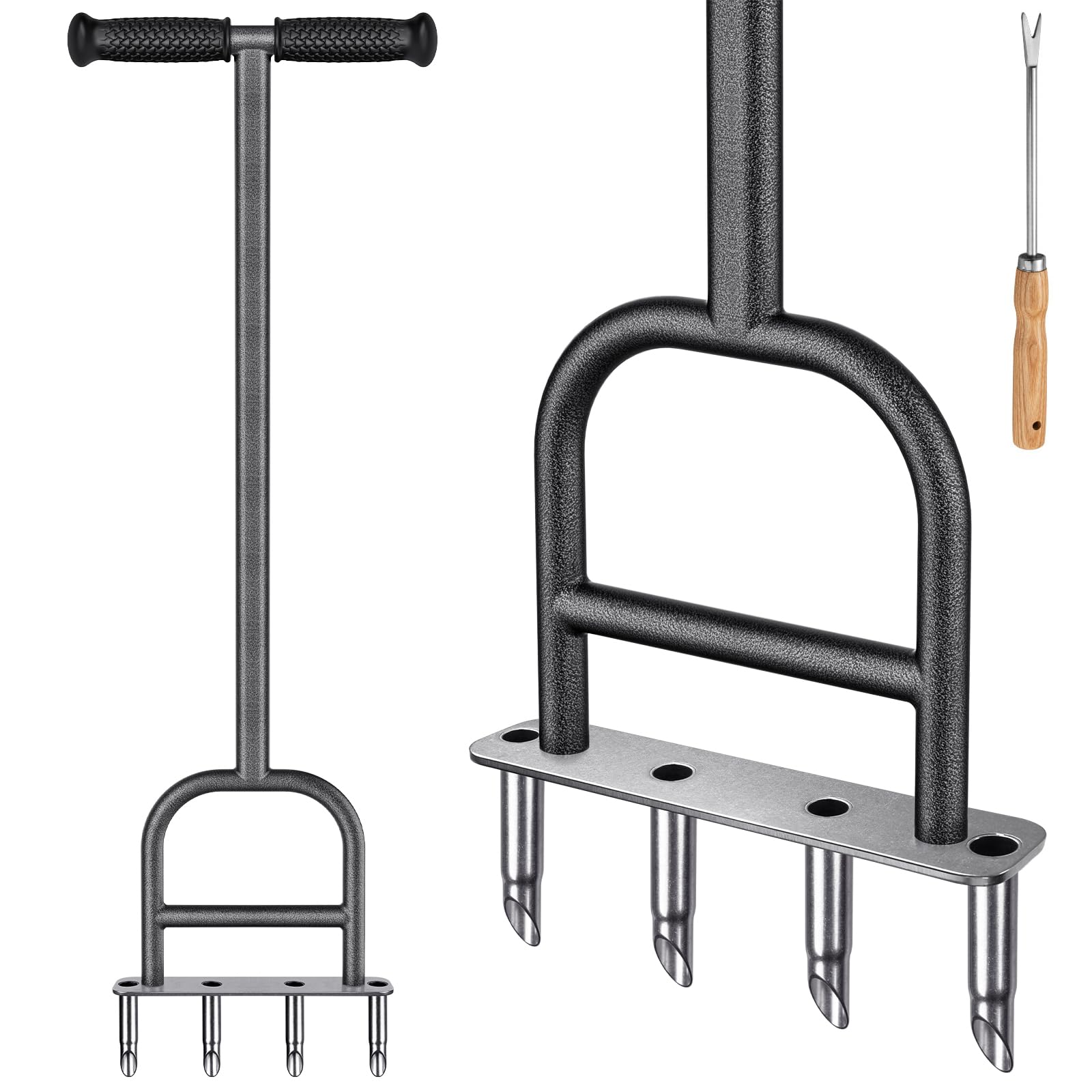
Four stainless steel corers that each pull a 3.5-inch plug in one step.
The Dolibest steps up the pace with four hollow tines instead of the usual three. Each corer is 3.5 inches long and half an inch in diameter, so you get four deep, narrow plugs per plunge. The tines are made from stainless steel with a black powder-coated finish on the frame, so rust is not a concern. Owners say it works fantastic for small to medium projects and that the plugs feed out the top of the tubes cleanly.
The trade-off is that four tines require more downward force than three. Some owners note that the rounded foot step does not give as much leverage as a flat step, and they resort to rocking the tool side to side to get full depth. Clogging is also a recurring theme, especially in dry clay soil, so moist soil is essential. On the plus side, it comes with a 12-inch weeder tool for cleaning the tines and for other garden tasks. At 5.54 pounds it is manageable, but the extra tine means more effort per step.
Why It Shines
- Four hollow tines pull more plugs per step for faster coverage
- Stainless steel corers resist rust and stay sharp
- Soft rubber grip prevents hand fatigue and blisters
- Includes a 12-inch hand tool for cleaning and weeding
What to Watch
- Rounded foot step makes it harder to reach full depth without rocking
- Clogging is common in dry or heavy clay soil — moist soil is a must
Reach for it when: You want the speed of four tines on a medium lawn and are willing to work moist soil to avoid clogs.
pass on it if: Your soil is consistently dry and hard — you will spend more time clearing clogs than aerating.
6. Dolibest Lawn Coring Aerator with Soil Core Storage Tray
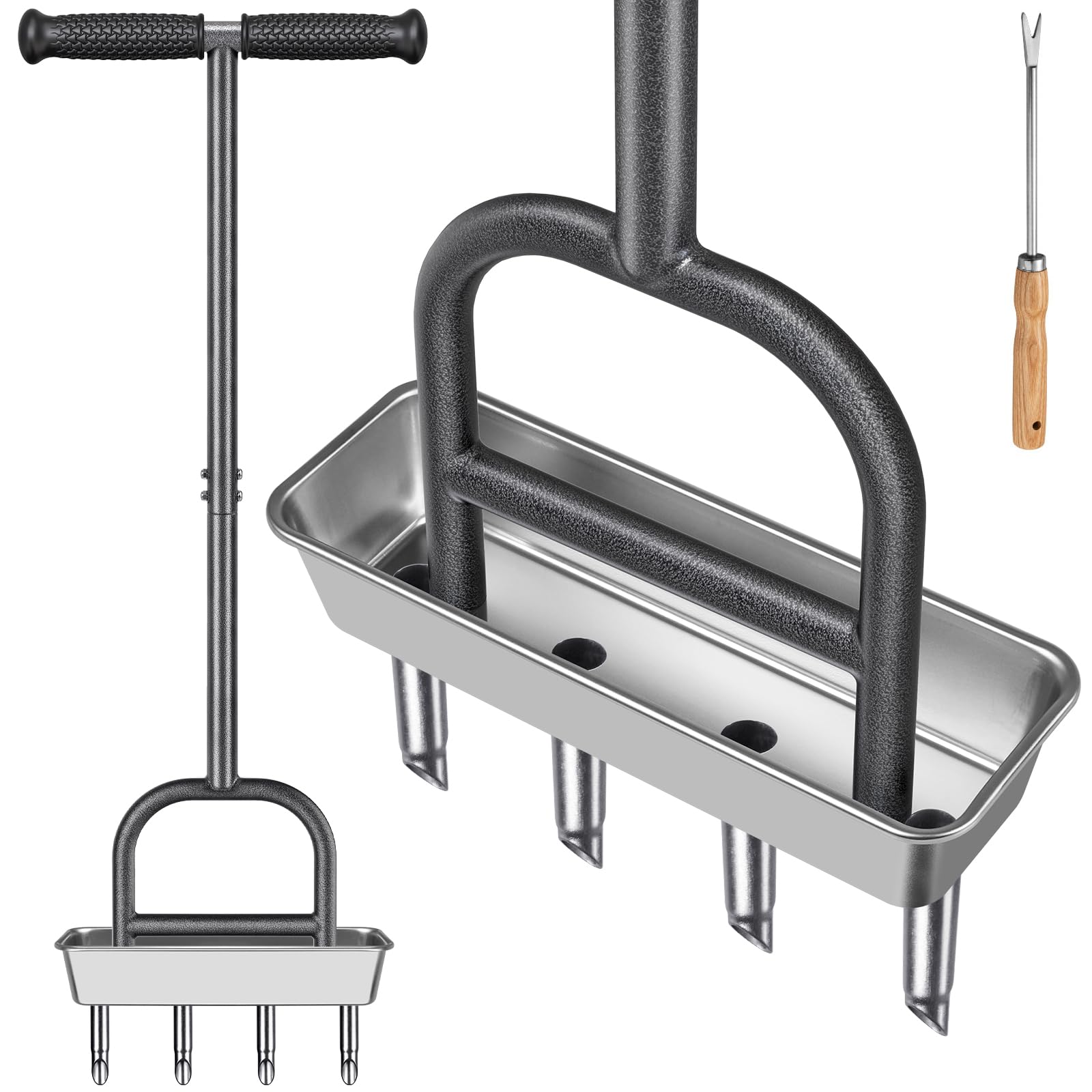
A four-tine core aerator with a stainless steel tray that catches every plug.
This is the upgraded version of the Dolibest above, adding a SUS 304 stainless steel storage tray to the four-tine design. The tray mounts right below the tine openings, so as each core pushes through the hollow tube it drops into the tray instead of falling on the lawn. Owners appreciate the convenience, and one noted it was about half the price of a similar tool at a big-box store. The rubber grip on the handle and the improve crossbar keep the experience comfortable.
The core collection feature gets mixed feedback, though. Some owners mention that dirt occasionally gets clogged in the tines and the tray, requiring the included 12-inch tool to clear it out. The unit is pre-assembled in three parts that lock together with screws in about two minutes, which is notably faster than most competitors. At 2.81 kilograms it is a touch heavier than the tray-less version, but the convenience of not raking plugs might be worth the extra weight for many owners.
A well-built, time-saving design: The stainless tray keeps your lawn clean after aeration, and the four tines speed up the work. Clogging is an occasional hassle, but moist soil largely solves it.
Best for: Owners who want the speed of four tines plus the cleanup convenience of a storage tray — ideal for small to medium lawns.
Consider the simpler version if: You do not mind raking plugs and prefer a lighter tool without the tray.
7. Agri-Fab 45-0474 SmartLink Plug Aerator

A tow-behind unit with 24 rustproof knives that aerate an acre in under an hour.
When your lawn gets big enough that a manual tool feels like a workout, the Agri-Fab SmartLink is the answer. It hitches to any lawn tractor or ZTR using the SmartLink system — a universal platform that also accepts spike aerator and dethatcher attachments. The 24 rustproof aerator knives plunge into the soil and pull 3-inch plugs, allowing air, water, and nutrients to reach the roots across a full acre without breaking a sweat.
Owners say assembly takes about 30 minutes and the tool is sturdy and stable. Some report that adding weight — like three cinder blocks on the platform — helps the knives penetrate deeper in dry or heavy soil. The major complaint is packaging: boxes often arrive damaged, and some buyers find missing hardware that requires a trip to a local store. The 3-year limited warranty from the manufacturer provides some confidence. At 29 pounds, it is a serious piece of equipment that will last many years with proper care.
The Big Wins
- 24 knives pull plugs across a 40-inch swath — covers an acre quickly
- SmartLink system works with other attachments (spike aerator, dethatcher)
- Sturdy metal construction with rustproof knives
- 3-year limited warranty
The Recurring Gripes
- Packaging is poor — boxes arrive damaged and hardware can be missing
- Welds on some units have broken; treat it with care
- Customers note Mixed durability feedback over extended use
Your pick if: You have a large lawn (half an acre or more) and already own a riding mower or garden tractor.
Not for: Small yards or owners without a towing vehicle — a manual tool will be more practical.
8. Landzie – The Original Hollow Tine Lawn Aerator Tool
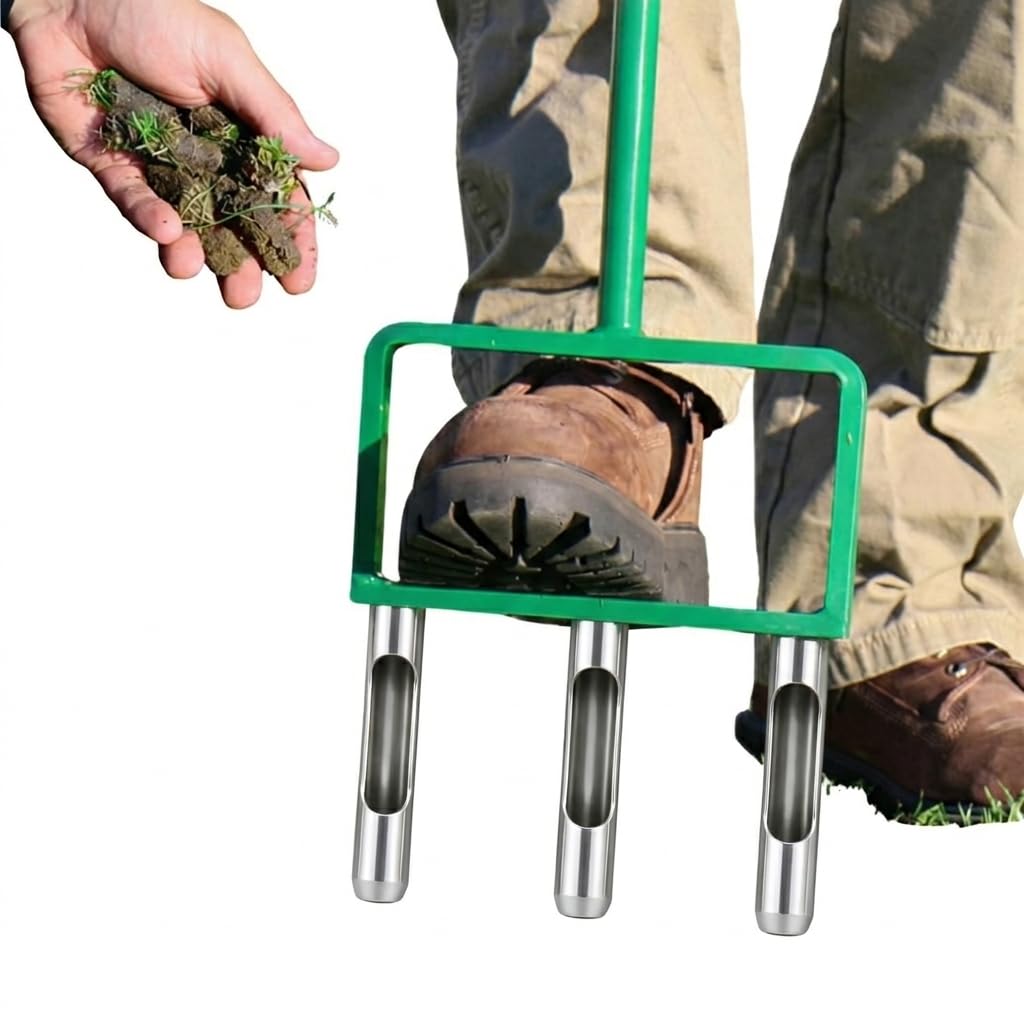
Ready to use from the start with beveled stainless steel tines that resist clogging.
The Landzie skips the assembly step entirely. It arrives with the three hollow tines already fitted to the frame, so you can start aerating the minute the box opens. The tines are made from stainless steel and have a beveled design that the company says is revolutionary for clog-free operation. Owners confirm that the tool works well on moist soil and produces consistent 4-inch plugs. The tines are also replaceable, which extends the tool’s lifespan.
The physical effort is the main story here. Multiple owners say the Landzie is very sturdy and well-built, but that aerating a 1,200 to 2,200 square foot lawn is brutally hard work. One owner described a 2,200-square-foot lawn taking 4 hours. The tool is best on damp soil after rain — dry soil is nearly impossible to penetrate. The foot bar can be slippery when wet, and the price is higher than similar manual aerators. That said, the build quality is exceptional, and owners call it a buy-once, cry-once investment.
Uncompromising build, uncompromising effort: The Landzie is beautifully made and ready to go immediately, but it demands damp soil and serious stamina to cover anything beyond a small lawn.
Choose this if: You want zero setup time and a tool that will outlast you, and your lawn is small enough to manage with manual effort.
it’s not for you if: You need to cover more than 2,000 square feet or your soil stays dry — your back will thank you for a tow-behind or rental machine.
9. Brinly Tow Behind Plug Aerator PA-403BH

A 24-spoon plug aerator with a weight tray that holds up to 150 pounds for deep penetration.
The Brinly is the heavy hitter of this list. It uses 24 heat-treated, 16-gauge steel plugging spoons that penetrate compacted soil and remove up to 3-inch plugs. The spoons have a narrower profile with sharpened ends, which the company says allows easier penetration with less weight. An all-steel design with a fully enclosed weight tray that can hold up to 150 pounds of extra ballast means you can dial in the depth for your specific soil conditions.
Reviewers point out that assembly takes about an hour to two and a half hours, depending on experience, and that the instructions can be confusing because they cover two different sizes. The universal hitch attaches easily to any lawn tractor or ZTR, and the three independently rotating tine sections minimize turf damage when turning. The 10-inch semi-pneumatic tires make transport across driveways and walks smooth. The main drawback is the weight — 63.9 pounds — and the assembly time, but the build quality and made-in-USA construction earn consistent praise. Owners say it creates 2.5 to 3-inch plugs and works well when the ground is moist.
What You Get
- 24 heat-treated steel spoons pull up to 3-inch plugs across a 40-inch swath
- Weight tray holds up to 150 pounds for maximum penetration
- Three independently rotating tine sections protect turf on turns
- Universal hitch fits most lawn tractors, ZTRs, and ATVs
The Realities
- Assembly takes 1-2.5 hours and instructions cover multiple models
- Heavy at 63.9 pounds — requires storage space and some muscle to move
- Best results require moist soil and added weight for hard ground
Built for: Large lawns and acreage where a manual tool would take all day — the weight tray and 24 spoons get the job done fast.
look elsewhere if: You have a small yard or no riding mower; this is a serious investment in both money and storage space.
Understanding the Specs
Hollow Tines vs. Solid Spikes
The single most important distinction in any lawn aerator is whether it uses hollow tines or solid spikes. Hollow tines cut a core of soil and pull it out of the ground, leaving a clean hole that relieves compaction and gives roots room to spread. Solid spikes simply push the soil aside, which can actually increase compaction around the edge of the hole over time. If your goal is true aeration, hollow tines are the right choice.
Plug Depth and Diameter
Look at the length and diameter of the tines or spoons. Most manual aerators pull plugs that are 3 to 4 inches long, which is enough depth to break through the compacted layer where grass roots live. The diameter of the plug — usually between half an inch and five-eighths of an inch — determines how much soil is removed per hole. Deeper and wider plugs mean better aeration, but they also require more force to extract.
Number of Tines and Footprint
A two-tine tool gives you the least coverage per step but the least effort. A three-tine tool is the most common balance, and a four-tine tool gives you the fastest coverage per step but demands more downward force. For tow-behind units, the number of spoons or knives (often 24) and the width of the unit (typically 40 to 48 inches) determine how quickly you can cover a large area. More tines mean more plugs per pass, but also more drag.
Weight and Added Ballast
Weight is critical for both manual and tow-behind aerators. A heavier tool sinks into the soil more easily and pulls deeper plugs without you having to jump on it. Some tow-behind units include a weight tray that can hold cinder blocks or sandbags to increase penetration. For manual tools, a heavier frame usually means better durability, but it also means more to lift and carry between steps.
FAQ
What is the difference between a spike aerator and a plug aerator?
How long does it take to aerate a lawn with a manual aerator?
Should I water my lawn before aerating?
How often should I aerate my lawn?
Can I use a solid spike aerator on heavy clay soil?
Do I need to pick up the soil plugs after aerating?
Can a tow-behind aerator work with any lawn tractor?
What does a weight tray do on a tow-behind aerator?
How do I clean and maintain a core aerator?
What is the best time of year to aerate my lawn?
Final Thoughts: The Verdict
If you want one dependable pick, the lawn aerator plugs winner is the Manual Core Aerator Lawn Tool from LawnVigor because it pulls clean 3-inch plugs without clogging and has a sturdy build that owners consistently praise across hundreds of reviews. If you want the speed of four tines plus a storage tray to skip raking, grab the Dolibest with Soil Core Storage Tray. And for large acreage where manual work is out of the question, the Brinly Tow Behind Plug Aerator is the one to reach for — it covers ground fast and the weight tray lets you dial in the penetration for your specific soil.
How We Picked
We do not accept paid placement. Every pick is matched to a real buyer and a real use-case; we do not hands-on test units.
Sources & Methodology
Specifications: manufacturer listings and product documentation. Review insights: verified customer reviews, as of July 2026. Pricing: not shown on this page (it changes often); check the current price via the retailer link.
As an Amazon Associate, Lawn Gear Lab earns from qualifying purchases. This does not affect which products we feature.