
Specs are compiled from manufacturer listings and verified buyer reviews and can change over time — please confirm the key details on the product page before buying.
If your lawn feels more like a parking lot than a soft green carpet, the problem is usually hiding beneath the surface. Compacted soil blocks air, water, and nutrients from reaching the roots, leaving you with patchy grass and puddles after a rain. The right lawn aeration tools break through that crust without needing a gas-powered machine or a landscaper.
I’m Rikta — the founder and writer behind Lawn Gear Lab. This guide is built by comparing the manufacturers’ published specifications and the patterns across verified customer reviews, so you get each pick’s real strengths and trade-offs instead of marketing spin.
You need to match your lawn aeration tools to your yard size and soil hardness. Spike aerators push holes into the ground, which works for mild compaction, while core (plug) aerators pull out a small cylinder of soil, creating channels that stay open longer. The wrong choice means you either waste energy or do not fix the problem.
Our Picks at a Glance
How To Choose The Best Lawn Aeration Tools
Your choice depends on your yard size, soil hardness, and how much physical work you want. A spike aerator pushes holes into the ground, which is great for mild compaction, while a core (plug) aerator pulls out a small cylinder of soil, creating channels that stay open longer. The wrong choice means you either waste energy or do not fix the problem.
Spike vs. Core Aerators
A spike aerator is a simpler tool — you step on a foot plate, and metal spikes push into the ground. This works fine for lightly compacted soil or regular maintenance. But spikes can actually compress the soil around each hole, which worsens compaction over time. A core aerator uses hollow tines to extract a plug of soil, leaving a clean hole that allows air and water to reach roots. If your soil is truly hard-packed or your grass has bare patches, a core aerator is the more effective choice.
Spike Length and Thickness
The length of the spikes or tines determines how deep you can aerate. A spike that is 2.75 inches long is decent for shallow aeration, but a tine that reaches 3.5 inches gives you access to deeper root zones. Thicker spikes, around 2/5 inch in diameter, create bigger holes that allow more water and air to pass through, which is especially helpful in clay-heavy soil.
Handle Height and Ergonomics
A handle that reaches between 36 and 42 inches lets you stand upright while using the tool, which reduces strain on your lower back. Look for a handle with a rubberized or foam grip if you plan to aerate for more than 15 minutes at a time. A wide foot plate (around 6 inches wide) gives you a stable surface to push down on with your full body weight, making it easier to penetrate hard ground without the tool tipping over.
Quick Comparison
| Model | Best For | Spike/Tine Depth | Number of Tines | Weight | Amazon |
|---|---|---|---|---|---|
| Jardineer Spike Aerator★ Best Overall | Affordable spike aeration | 2.75 inches | 12 steel spikes | 5.02 lbs | Amazon |
| Xuperace Core AeratorAlso Great | Clog-free side-core ejection | — | 3 hollow tines | 5.69 lbs | Amazon |
| Landzie Hollow Tine Aerator | No-assembly, heavy-duty use | — | 3 hollow tines | 5.6 lbs | Amazon |
| Dolibest 4-Plug (w/ Tray) | Core collection with storage tray | 3.5 inches | 4 corer plugs | 2.81 kg | Amazon |
| Dolibest 4-Plug (No Tray) | Four-hole plug aeration | 3.5 inches | 4 corer plugs | 5.54 lbs | Amazon |
| LawnVigor Core Aerator | Non-clogging core removal | — | 3 hollow tines | 3.52 lbs | Amazon |
| Colwelt Spike Aerator | Long, thick spikes for deep holes | 3.5 inches | 4 spikes | 4.31 lbs | Amazon |
In‑Depth Reviews
1. Jardineer Lawn Aerator Tool (36-inch)
Our pick — over 4★ from 500+ verified ratings; the strongest balance of quality and price.
The no-frills spike aerator that handles small yards while staying affordable.
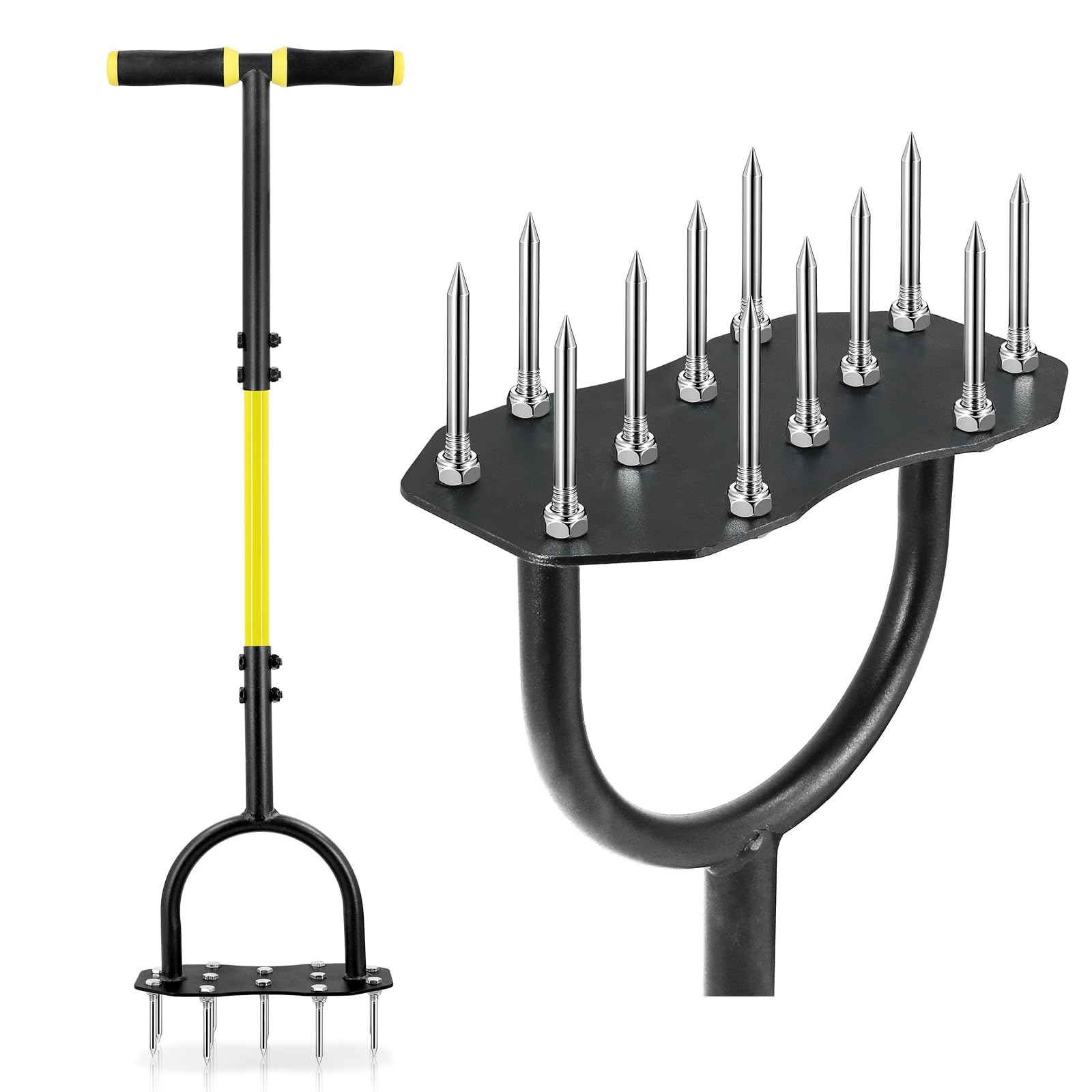
The Jardineer Lawn Aerator Tool uses 12 heat-treated steel spikes that are 2.75 inches long. For a budget spike aerator, that is a decent depth — enough to poke holes in clay, sand, and loam for light aeration. The 36-inch handle is designed to save your back, and the rubber grip helps reduce hand fatigue during repeated plunges. At 5.02 pounds, it is heavier than the Colwelt (4.31 lbs), which gives it more heft to push into the ground, but that also means more weight to lift and move between holes. The thick steel foot plate is solid and can handle your full body weight without bending, which is a common weak point on cheap spike aerators.
Customers note this tool works great for compacted clay soil, but they also note a real limitation: “During the first use, two of the spikes bent but they were easy to replace and were included with the item.” Replacement spikes come in the box, which is thoughtful, but bending during first use is a sign that the steel, while decent, has limits. The spikes hold up well against soil but can bend if they hit rocks or underground plumbing. The simple latch mechanism is more secure than twist-on attachments, and the tool can be disassembled for easy storage. Some reviewers found that the tool is a workout for larger areas and recommended giving the handle a twist after each plunge for better penetration.
Compared to the Colwelt, the Jardineer has 12 smaller spikes versus 4 large ones, so you cover more ground with each step but create shallower holes (2.75 inches vs. 3.5 inches). For very small yards or spot-treating compacted patches, the Jardineer is a perfectly functional entry-level tool. Just keep an extra set of spikes handy if you have rocky soil.
Pros
- 12 spikes per step cover more ground area quickly.
- Includes replacement spikes in case of bending on rocks.
- Solid foot plate and secure latch mechanism feel well-made for the price.
Cons
- Spikes can bend on underground rocks or hard debris.
- Shorter 2.75-inch spikes are less effective on heavily compacted soil.
Good for: Small lawns or garden beds where you need a simple, affordable spike aerator for routine maintenance.
Pass on it if: Your soil is full of rocks or you need deep core aeration to fix serious compaction.
2. Xuperace Core Aerator
The clever side-ejection design that banishes clogging for good.
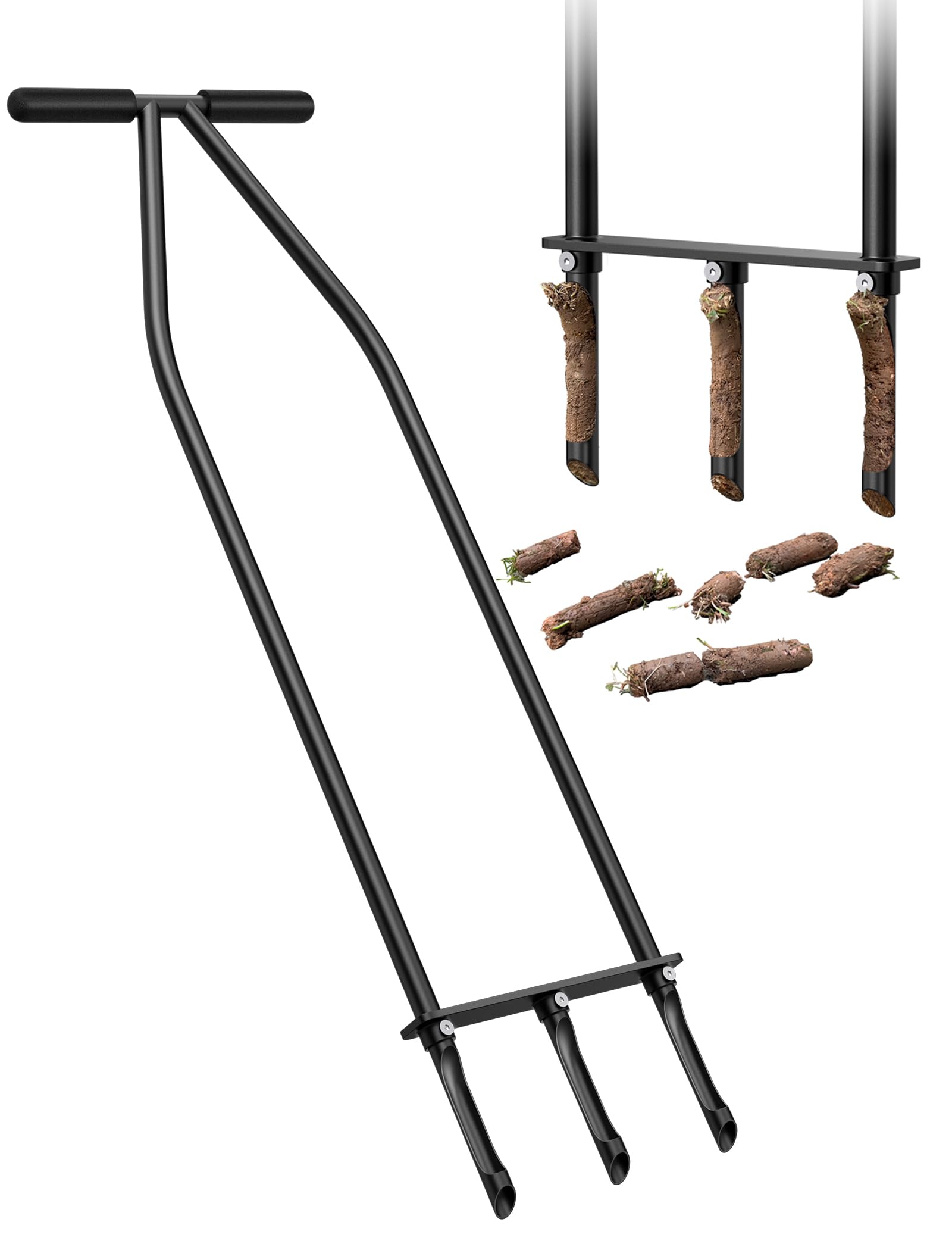
The Xuperace Core Aerator solves the single biggest frustration with manual core aerators: clogged tines. Instead of soil getting stuck inside the hollow tubes (as it does on many competitors), the patented design shoots the plugs out the side via a ramp. Buyers report that “dirt pops out with the next dig,” which saves you from stopping every few minutes to poke out a stuck core. At 5.69 pounds, it is slightly heavier than the LawnVigor model (3.52 lbs), but the extra heft comes from high-strength alloy steel that feels solid underfoot.
The knee-friendly design is a standout here — the footplate has an opening in the middle, so your leg can move freely without banging against a crossbar. The 3 hollow tines are replaceable and connected with screws, and if the ground is too hard, you can remove the middle tine to reduce the force needed. This makes it a flexible choice for both medium and stubbornly compacted soil. Unlike the Jardineer spike aerator that simply pushes holes, this tool pulls actual plugs, which is more effective for heavy compaction.
Buyers mention that the assembly screws can loosen after the first use, but the included Allen wrench makes retightening a quick fix. The tool weighs 5.69 lbs, which is noticeably heavier than the 3.52-lb LawnVigor core aerator, giving it more stability when you step down. One 72-year-old reviewer noted she could use it for about an hour at a time on moist soil, which speaks to the ergonomic advantage of the open footplate design.
What works
- Side-ejection ramp prevents clogging better than competing models.
- Knee-friendly open footplate reduces joint strain.
- Replaceable tines and high-strength alloy frame offer long-term durability.
Keep in mind
- Screws can loosen during first use; need occasional tightening.
- Works best on moist grass; dry soil requires significant force.
Perfect for: Anyone with medium to large yards who wants a durable core aerator that doesn’t stop to unclog every few holes.
One real limitation: The higher price tag compared to spike aerators, and you must water the lawn first for the tines to penetrate fully.
3. Landzie Hollow Tine Aerator
The premium no-assembly coring tool built for professional-grade durability.
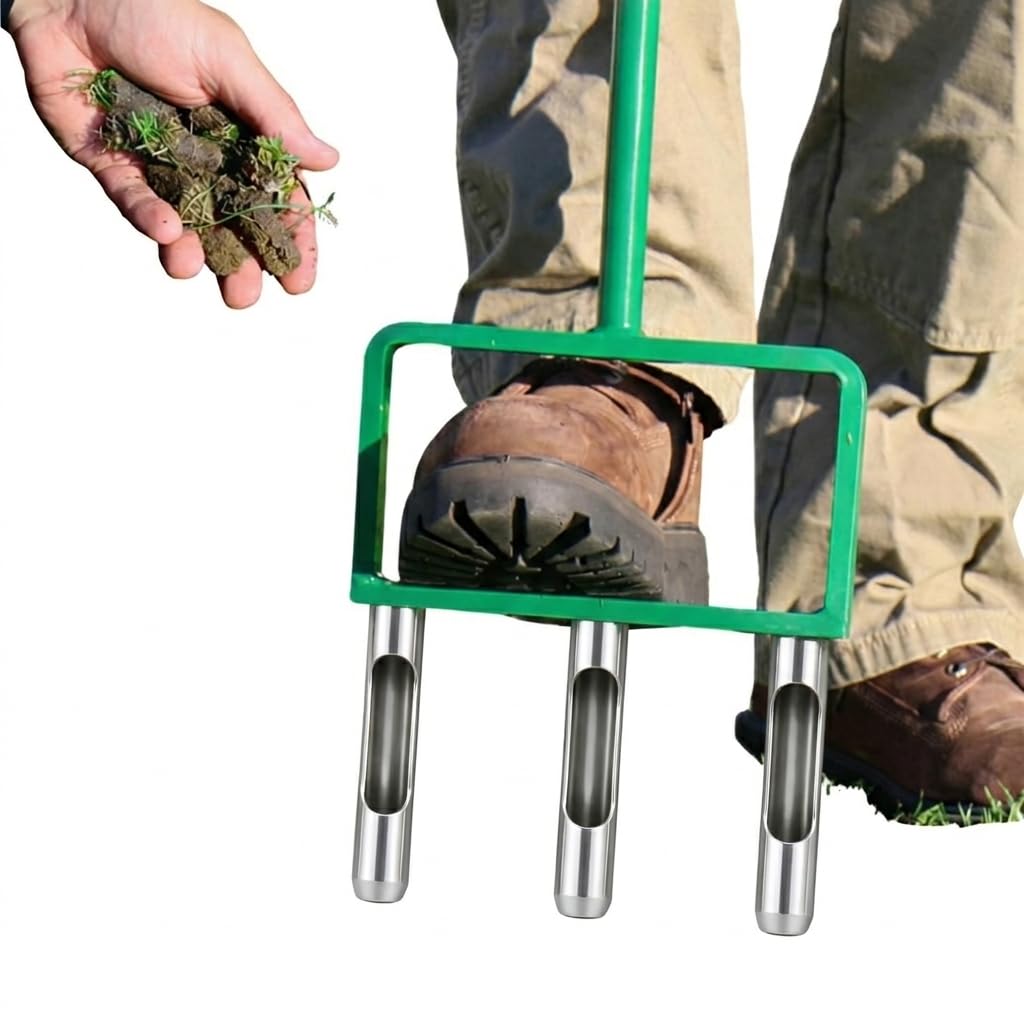
The Landzie Hollow Tine Aerator arrives with the tines already fitted to the frame, so you can start working straight from the start. It uses three solid stainless steel tines that are designed to push old material up and out each time you press them into the ground, which the brand calls a “clog-free beveled” design. At 5.6 pounds, it is nearly identical in weight to the Xuperace aerator (5.69 lbs), but it feels heavier because of the dense powder-coated steel frame. This tool is meant for heavy-duty work — one buyer with dense compacted clay soil reported using it for a 2200-square-foot lawn, which took about four hours of steady effort.
The most honest feedback from buyers is that this is physically demanding work. One 6-foot, 225-pound reviewer said it was exhausting for a 1000-square-foot area, and recommended using a “pogo-stick” technique — jumping on the footplate with your full weight — to get the tines deep into dry soil. Unlike the spike aerators on this list, which simply push holes, the Landzie removes a core of soil, making it better for serious compaction. The tines are replaceable and stay sharp, and owners mention they self-clean during use, so you rarely need to poke out a stuck plug.
The foot bar could use more grip to prevent slipping, which is a minor complaint given the premium price point. Still, multiple customers note they expect this tool to last a lifetime, and the fact that replacement tines are available separately adds long-term value. If your lawn is extremely hard or you have more than 3000 square feet, you might be better off renting a gas-powered machine — one buyer admitted they would have done that for their first aeration.
Why it stands out
- Ready to use with zero assembly required.
- Solid stainless steel tines self-clean and stay sharp through many uses.
- Extremely sturdy build that holds up to dense clay soil.
The downside
- Very physically demanding on large areas; prepare for a workout.
- Foot bar can feel slippery; consider wearing boots with good grip.
Ideal for: Lawn enthusiasts who want a professional-grade core aerator and don’t mind a strong workout for small to medium lawns.
skip it if: You have a very large yard or severely compacted soil where a gas-powered machine would save hours of effort.
4. Dolibest Lawn Coring Aerator (with Storage Tray)
Four corers and a built-in tray that collects soil plugs so you do not rake twice.
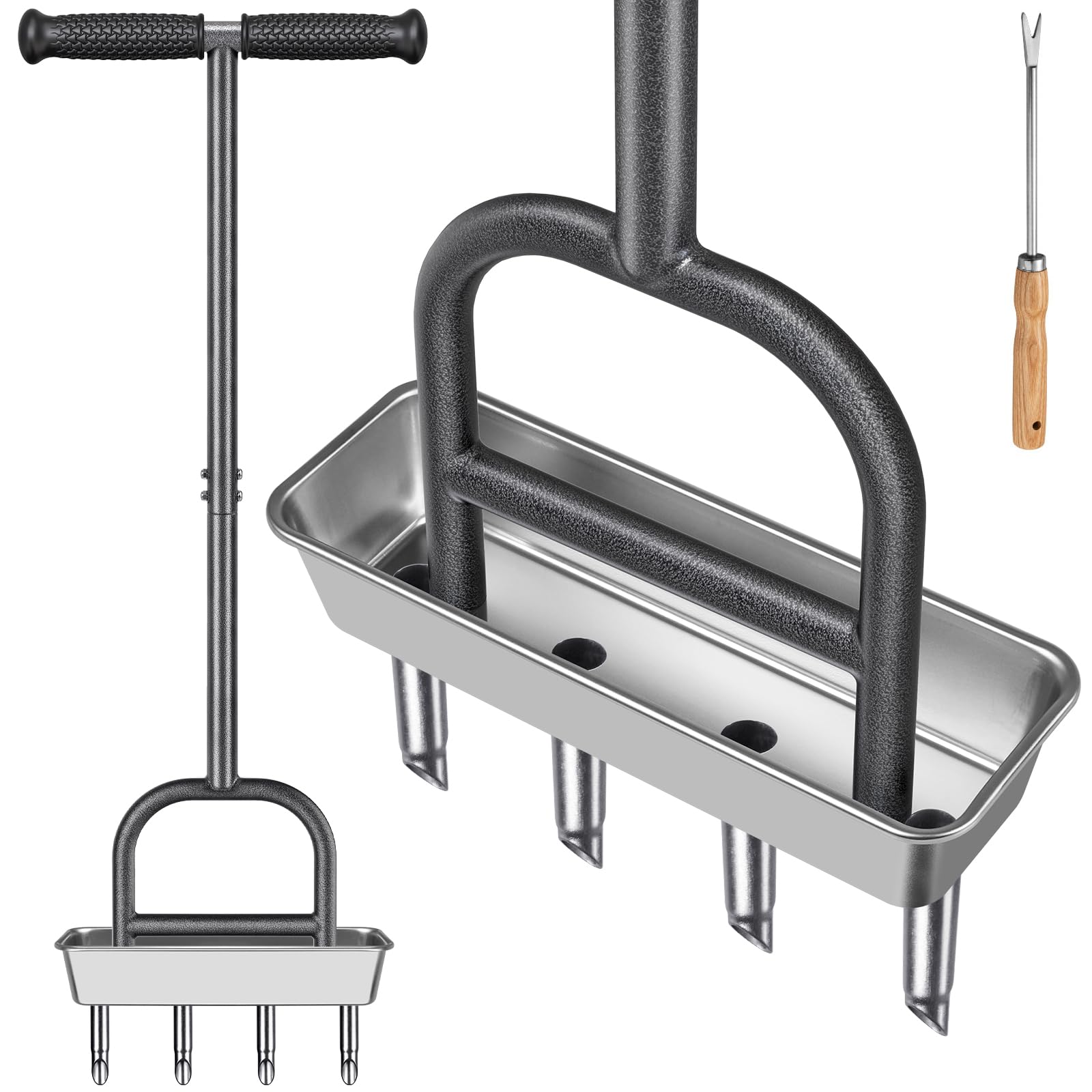
Most core aerators spit the soil plugs right onto your lawn, creating a mess you have to clean up later. The Dolibest Lawn Coring Aerator solves that with a stainless steel tray that automatically collects the ejected plugs as you work. Each of the four corer plugs is 3.5 inches long and 0.5 inches in diameter, creating deep, narrow holes that allow water and nutrients to reach the root zone. The tool is made with SUS 304 stainless steel at the bottom and a black powder-coated finish on the rod, so rust should not be a concern. At 2.81 kilograms (about 6.2 pounds), it is heavier than the LawnVigor core aerator (3.52 lbs), but the weight helps it penetrate harder ground more easily.
Reviewers point out the build quality is excellent and that the tool works beautifully for pulling plugs. One reviewer noted that this is “literally the exact same product” sold at a big-box store for twice the price, so the value here is strong. The soft rubber grip on the handle prevents blisters, and the improve crossbar keeps your shoes from interfering with the tray. The included 12-inch weeding tool doubles as a cleaning tool for the corers, which is handy when wet soil clogs the tubes — though some buyers did report occasional clogging that required the tool to clear.
The assembly takes only a few minutes, which is less work than the LawnVigor model that arrives semi-assembled. One catch: the tray works well with moist soil, but if the ground is too wet, the cores can get sticky and clog the corers. Plan to use it after a light watering or after rain, not during a downpour.
Highlights
- Built-in tray collects soil plugs, saving cleanup time.
- Four stainless steel corers at 3.5 inches deep create effective aeration holes.
- Priced well below comparable models from big-box stores.
Potential issues
- Soil can still clog the corers in very wet conditions.
- Heavier weight means more effort to lift and reposition between holes.
Reach for this if: You want a four-tine core aerator that makes cleanup easier and don’t mind a bit of extra weight for the convenience.
Look elsewhere if: Your lawn is always wet or you want the lightest tool possible for a small patch of grass.
5. Dolibest Lawn Coring Aerator (No Tray)
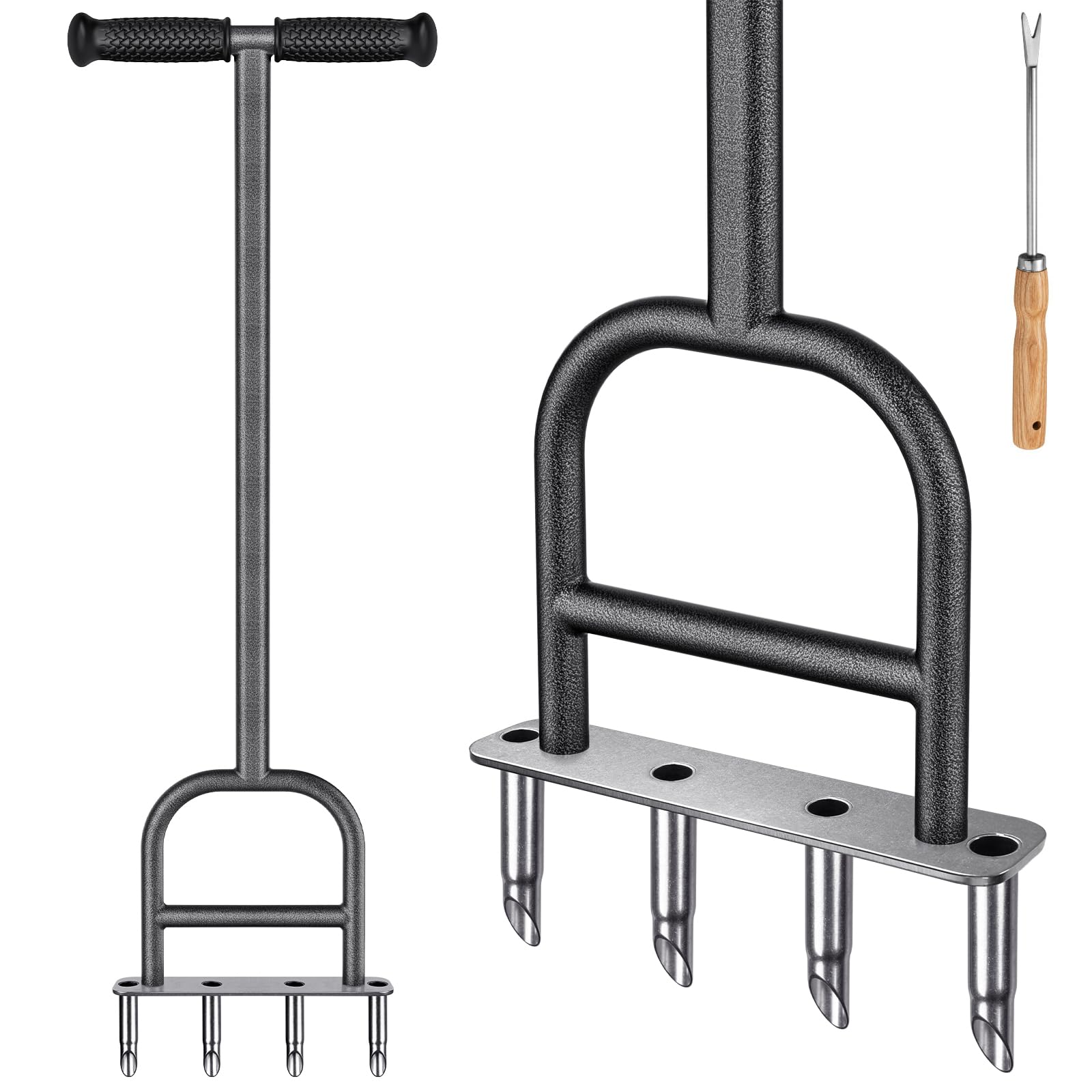
A four-plug corer that skips the tray for a lower price and a lighter feel.
The Dolibest Lawn Coring Aerator (without the storage tray) gives you the same four stainless steel corers as the version above but at a lower cost and a slightly different user experience. Each corer plug is 3.5 inches long and 0.5 inches in diameter, which creates the same deep, narrow holes for air and water penetration. This version weighs 5.54 pounds, which is lighter than the tray-equipped model and feels more nimble when you are moving between holes. The soft rubber grip on the handle helps prevent blisters, and the foot bar is designed to keep your shoes from interfering with the ejection of the soil plugs.
Shoppers say that this tool works well for small to medium projects and that the plugs feed out of the top of the tubes cleanly. However, one buyer mentioned that the rounded footstep reduces leverage, requiring you to rock the tool side-to-side instead of pushing straight down. In contrast, the Xuperace core aerator’s side-ejection design is reported to work more reliably without clogging. Some buyers found that wet soil caused clogs about eight times in two hours, which is more frequent than clogging on the LawnVigor or Xuperace models.
The included 12-inch weeding tool is useful for clearing the corers and for transplanting seedlings. Assembly is straightforward, and the tool is one solid welded piece, so there are no screws to loosen over time — a clear advantage over the Xuperace model’s bolted design. Use sturdy boots when stepping on the foot plate, and water the lawn before use to get the best results.
What we like
- Welded single-piece construction means no loose screws to worry about.
- Four 3.5-inch corers punch deep holes for effective aeration.
- Rubber grip and low weight make it easy to handle for extended use.
Watch out for
- Rounded footstep can limit penetration depth on hard soil.
- More frequent clogging in wet soil compared to side-ejection models.
A solid pick for: Small lawns with moderately compacted soil where you want a four-tine corer without a bulky tray.
Not the best for: Hard, dry clay where maximum depth is essential; consider a spike aerator or a more powerful core model in that case.
6. LawnVigor Core Aerator
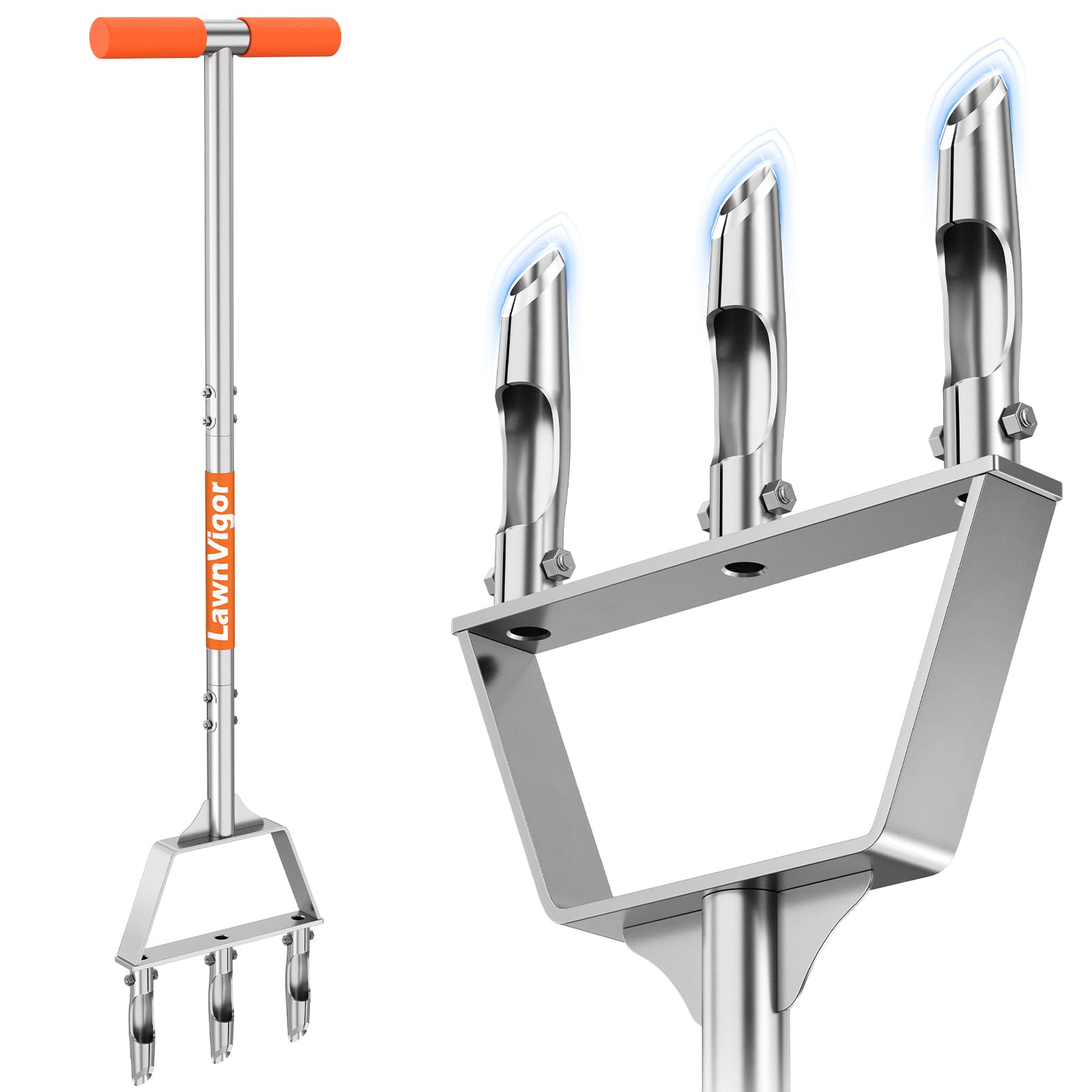
The lightest core aerator on the list that actually pulls plugs without clogging.
At just 3.52 pounds, the LawnVigor Core Aerator is significantly lighter than the Dolibest models (5.54 lbs) and the Xuperace aerator (5.69 lbs), which makes a real difference when you are lifting and plunging across a yard. It uses 3 hollow tines that are heat-treated to stay sharp, and the design pushes soil plugs upward through the tines. Buyers report it “worked 10x better than the first manual core aerator I purchased a few years ago,” which highlights the improvement over cheaper big-box store versions. The semi-assembled design means you only need to attach the handle pieces and secure them to the tine housing, a process that takes under five minutes.
The non-slip ergonomic handle and the height of the tool are designed to minimize back strain, which is a common complaint with shorter tools. The white plastic inserts inside the tines should be kept in place — they help release the soil plugs cleanly so you are not shaking dirt out manually. Owners mention that the tines consistently push plugs of grass and dirt out without clogging, though small roots can get stuck in the gaps of each tine during cleanup. The handle covers can spin during use, so some reviewers recommend applying a small amount of adhesive to hold them in place. The tool is best for small yards under 3000 square feet; for larger areas, the physical effort becomes significant.
Compared to the Jardineer spike aerator, which pushes holes with 12 spikes, the LawnVigor pulls actual plugs of soil, which is more effective for compacted soil. The 3.52-pound weight makes it easier to carry and maneuver than the heavier Xuperace and Dolibest models. Just remember to water dry soil before use and avoid rocking the tool side-to-side when it is in the ground.
Pros
- Lightweight at 3.52 lbs reduces fatigue during extended use.
- Hollow tines pull real soil plugs for effective aeration.
- Quick assembly and non-clogging design work right from the start.
Cons
- Handle covers can spin; may need adhesive to stay fixed.
- Not ideal for large lawns due to the effort required per plunge.
Who it is for: Anyone with a small yard who wants a lightweight, effective core aerator at a reasonable price.
One drawback to know: The spinning handle covers and the effort required for large areas mean this is a tool for focused maintenance, not full-yard transformations.
7. Colwelt Lawn Aerator Tool (38-inch)

Longer, thicker spikes than any other manual aerator at this price point.
The Colwelt Lawn Aerator Tool stands out because of its 3.5-inch spikes that are 2/5 inch in diameter — that is a full inch longer and noticeably thicker than the Jardineer spikes (2.75 inches). This means each plunge creates bigger holes, which is more effective for heavily compacted soil. The 38-inch total height lets you stand upright while working, which reduces back strain compared to shorter tools. At 4.31 pounds, it is lighter than the Jardineer model (5.02 lbs), making it easier to lift and move between spots. The steel construction feels heavy-duty, and the anti-slip foot plate is 6 inches wide and 5.5 inches tall, which accommodates larger boots comfortably.
Buyers emphasize one key tip: “Make sure to water your lawn for 15min before using the aerator.” Dry soil is nearly impossible to penetrate with this spike aerator — moist ground is essential. The cushioned T-handle provides a comfortable grip, and the tool is easy to store in a garage or shed because of its detachable handle. Some reviewers noted that the handle can feel a bit thin, but the overall build quality is solid for the price. Unlike the Landzie or Xuperace core aerators, this is a spike tool, so it does not remove soil plugs; it creates holes by pushing soil aside, which is better for mild compaction.
If your lawn is small and you are dealing with light to moderate compaction, the Colwelt gives you the longest spikes on this list at a very accessible price. It is a step up from basic spike aerators that have shorter, thinner spikes, and the 38-inch height is a genuine comfort advantage over the 36-inch Jardineer.
What makes it special
- 3.5-inch spikes are longer and thicker than any other budget spike aerator.
- 38-inch handle keeps you standing upright, reducing back strain.
- Wide, anti-slip foot plate works well with large boots.
Things to note
- Moist soil is essential; dry ground makes spikes nearly unusable.
- Spike aeration is less effective than core aeration for heavily compacted clay.
Ideal for: Small lawns with moderate compaction where you want the deepest spike penetration for the lowest cost.
Not the tool for: Extremely hard, dry soil or large yards where core aeration would be more effective.
Understanding the Specs
Spike Depth vs. Core Depth
Spike depth tells you how deep a solid metal rod pushes into the ground. A 2.75-inch spike is shallow and best for light maintenance. Core depth, measured by the hollow tine, typically reaches 3.5 inches or more, pulling out a plug of soil. Deeper is better for breaking up hardpan (a dense, impermeable layer of soil) and encouraging root growth.
Number of Tines and Coverage
A tool with 12 spikes covers more ground with each step than a 4-spike design, but each hole is smaller. A 4-spike aerator with thick tines (2/5 inch in diameter) creates bigger holes but requires more force per plunge. For small lawns, 3 or 4 tines are enough. For larger areas, more tines can speed up the job, but the extra resistance may tire you out faster.
FAQ
Is a spike aerator or a core aerator better for my lawn?
How often should I aerate my lawn?
Will a manual aerator work on dry soil?
How do I know if my soil is too compacted for a spike aerator?
Can I use a core aerator on a sloped lawn?
What size lawn is too large for a manual aerator?
Do I need to rake up the soil plugs after core aeration?
Are replacement tines available for most manual aerators?
Final Thoughts: The Verdict
For most people, the lawn aeration tools winner is the Xuperace Core Aerator because its side-ejection design solves clogging better than any other manual corer, and the knee-friendly footplate makes the work less punishing. If you want a premium no-assembly tool that feels built to last a decade, grab the Landzie Hollow Tine Aerator. And for small yards on a budget, the Colwelt Spike Aerator gives you the longest spikes in its price range for deep holes while staying affordable.
How We Picked
We do not accept paid placement. Every pick is matched to a real buyer and a real use-case; we do not hands-on test units.
Sources & Methodology
Specifications: manufacturer listings and product documentation. Review insights: verified customer reviews, as of July 2026. Pricing: not shown on this page (it changes often); check the current price via the retailer link.
As an Amazon Associate, Lawn Gear Lab earns from qualifying purchases. This does not affect which products we feature.