
Specs are compiled from manufacturer listings and verified buyer reviews and can change over time — please confirm the key details on the product page before buying.
Your lawn feels like a concrete slab underfoot. Water pools on the surface, and that stubborn patch of brown just will not green up. The fix is aeration — punching holes so air, water, and food can actually reach the roots. The question is which tool does the job without breaking your back, your budget, or itself on the first stomp. This guide cuts through the noise to find the lawn aeration tool that matches your yard size, your soil, and your idea of a good Saturday morning.
I’m Rikta — the founder and writer behind Lawn Gear Lab. This guide is built by comparing the manufacturers’ published specifications and the patterns across verified customer reviews, so you get each pick’s real strengths and trade-offs instead of marketing spin.
You will find everything from a cheap spike roller to a premium, no-assembly-needed core puller. We focus on how deep the tines go, how often they clog, and how much sweat equity each tool demands — the only honest measure of a manual aerator.
Our Picks at a Glance

How To Choose The Best Lawn Aeration Tool
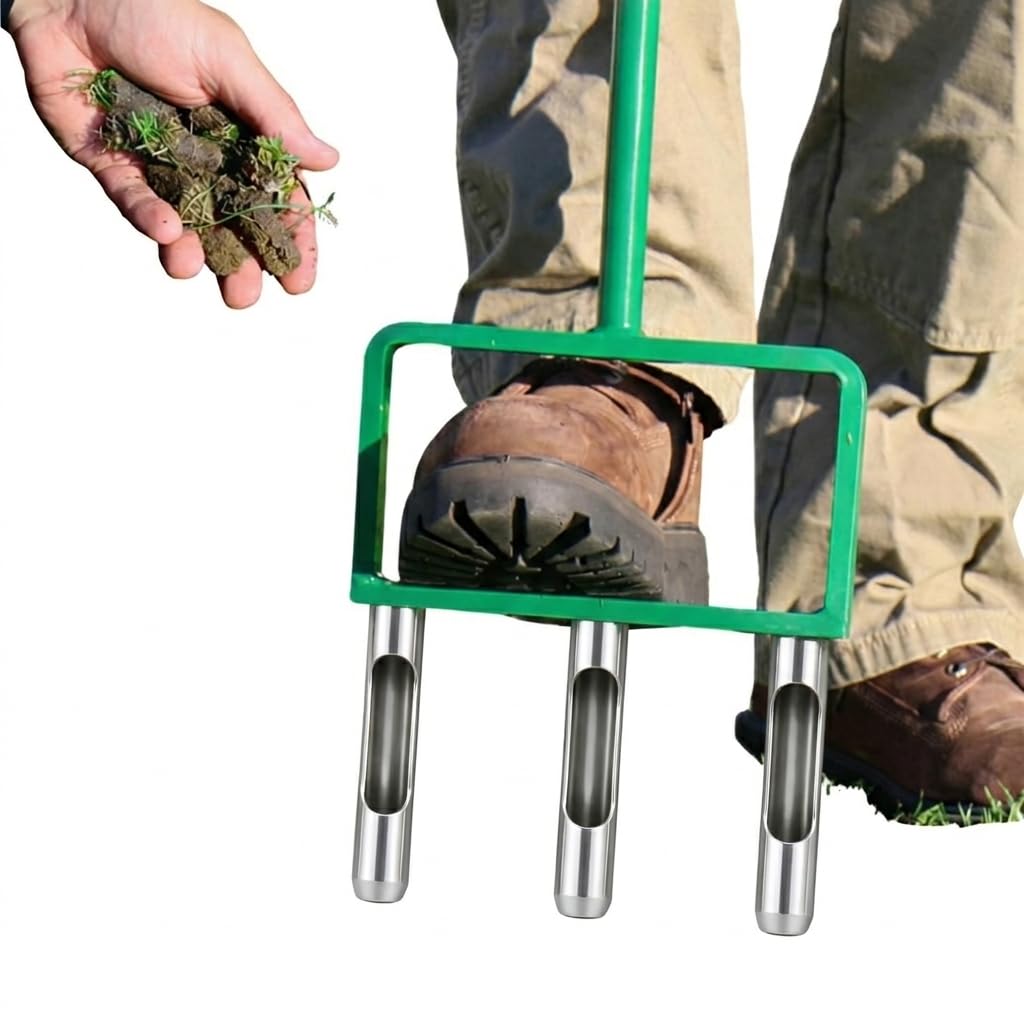
You have two main choices: a spike aerator that pushes solid metal rods into the ground, or a core (plug) aerator with hollow tines that pull out a small cylinder of soil. Spikers are simpler and cheaper, but they can actually compact the soil around the hole. Core aerators do the real work — they remove thatch and give roots room to spread — but they often cost more and need more effort to push.
Spike Length and Thickness
A spike that is too short just skims the surface. You want at least 2.75 inches of working length to reach the root zone. Thicker spikes — around two-fifths of an inch in diameter — create bigger channels for water and air to travel through, which matters most in heavily compacted clay or loam.
Foot Plate and Handle Design
A wide, high foot plate lets you put your full weight behind each plunge without your shoe hitting the ground first, which limits depth. Look for a plate that is at least five inches tall. The handle height matters too — a 36-inch or taller shaft saves your lower back from hunching. Rubber grips reduce blisters when you are out there for an hour.
Quick Comparison
| Model | Best For | Type | Spike/Tine Depth | Weight | Amazon |
|---|---|---|---|---|---|
| Colwelt 38″ Spike Aerator★ Best Overall | Small yards, easy penetration | Spike | 3.5 inches | 4.31 lbs | Amazon |
| Landzie 42″ Core AeratorTop Performer | Serious DIY, no assembly | Core | 4 inches | 5.6 lbs | Amazon |
| LawnVigor Core AeratorSmart Design | Compact soil, core removal | Core | 3 inches (approx) | 3.52 lbs | Amazon |
| Jardineer 36″ Spike Aerator | Small yards, basic aeration | Spike | 2.75 inches | 5.02 lbs | Amazon |
| Bluesea 16-Spike Aerator | Budget-friendly with self-cleaning | Spike | 3.5 inches | 6.2 lbs | Amazon |
| Dolibest 4-Corer Aerator | Small-medium projects, no rust | Core | 3.5 inches | 5.54 lbs | Amazon |
| EEIEER 3-Tine Aerator | Small lawns, tidy operation | Core | ~2.6 inches (installed) | — | Amazon |
| Dolibest 4-Corer w/ Tray | Core aeration with easy cleanup | Core | 3.5 inches (approx) | 6.2 lbs | Amazon |
| Walensee Rolling Aerator | Medium lawns, less bending | Spike (Rolling) | 2 inches | 11.97 lbs | Amazon |
In‑Depth Reviews
1. Colwelt 38″ Heavy Duty Spike Aerator
Our pick — 4.5★ from 200+ verified ratings; the strongest balance of quality and price.
The spike aerator that actually sinks into hard soil on the first stomp.
The thing owners praise most is how well it works — functionality gets the highest mention count by a solid margin. That makes sense when you look at the spikes: each one is 3.5 inches long and two-fifths of an inch in diameter. That is 27% longer and twice as thick as the 2.75-inch spikes on the Jardineer below, so you create bigger channels for air and water. It is also 16% lighter than that Jardineer model, at 4.31 pounds, which makes hauling it around a small yard less of a chore.
Buyers report finishing a 1,000-square-foot lawn in about 90 minutes, and the feedback consistently calls it easy to use and very sturdy. The wide foot plate — 6 inches wide, 5.5 inches tall — gives you room for any boot and lets you lean your full weight in. A few owners mention that watering the lawn beforehand for about 15 minutes is key, especially if the soil is hard clay. The cushioned T-handle helps with comfort, but the real win here is that a tool this affordable delivers real depth without bending.
Real-world reach: The 3.5-inch spikes bite deeper than most competitors in this price tier, turning a tedious chore into a quick lap around the yard.
Grab it if: You have a small to medium lawn with compacted soil and want the best bang for your buck — this is the tool that does the job without hassle.
Think twice if: You need to pull actual soil cores; this is a spike aerator, so it punches holes but does not remove plugs.
2. Landzie 42″ Original Hollow Tine Core Aerator
The no-assembly core puller that pros and DIYers both swear by.
This is a core aerator — meaning it pulls three actual plugs of soil out of the ground instead of just poking holes — and it comes ready to use straight from the start. The hollow stainless steel tines are beveled to reduce clogging, and the crowd favorite feature is effectiveness, which tops the aspect list by a wide margin: owners consistently say it transforms compacted lawns. The 42-inch height saves your back, and the sturdy build, at 5.6 pounds, feels like a tool that will last many seasons.
The catch here is effort. This thing demands physical work. Owners mention that on a damp lawn — key phrase, damp — it drives in and pulls 4-inch plugs cleanly. On dry, hard soil, it is a fight. One owner described covering 2,200 square feet over four hours and feeling utterly exhausted, though he also noted it never clogged. That is the trade-off: you get real core aeration that actually relieves compaction and helps grass roots spread, but you earn every square foot. The foot bar can feel slippery when wet, so good footwear matters.
Owner-verified: The no-clog claim holds up across the vast majority of reviews — the hollow tine design really does push the plug out without jamming.
Reach for this if: You want genuine core aeration for a small to medium lawn and value build quality over speed — this tool will last for years and do the job right.
Look elsewhere if: Your yard is larger than a quarter acre or your soil is bone-dry clay; you will want a gas-powered machine for that kind of work.
3. LawnVigor Manual Core Aerator
The core aerator that out-thinks clogging with simple, smart holes.
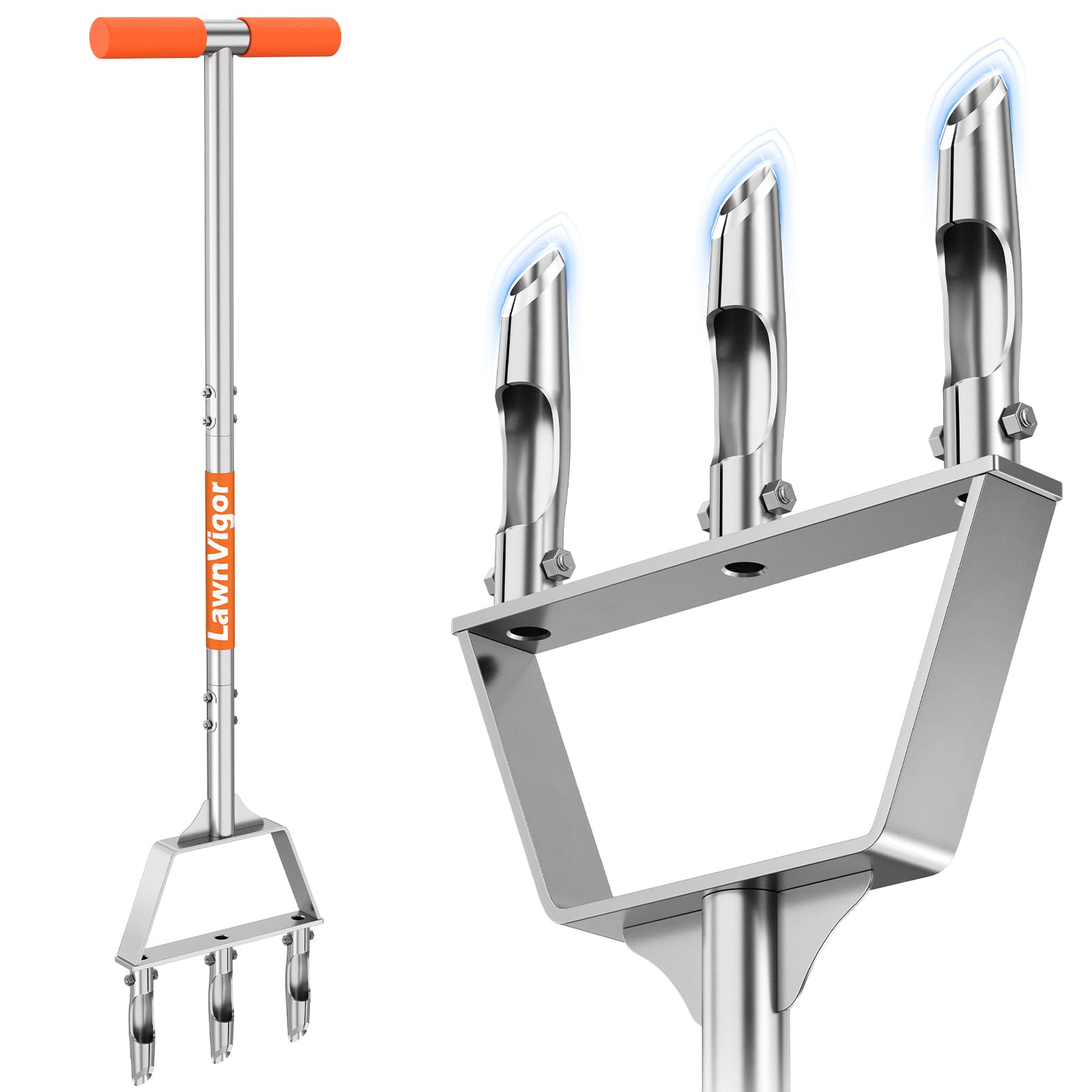
Functionality and assembly are the two most-praised aspects here — owners love that it works on compacted Bermuda grass and that it comes semi-assembled, so setup takes minutes. The big difference from the spike tools above is that these hollow tines pull out a plug of soil, ideally removing thatch and giving roots room to breathe. The design includes large dirt-release holes in the tines, which customers note saves the constant shaking-out that other core aerators require.
It is lighter than the Landzie at 3.52 pounds, and the foot bar gives good leverage. A few owners note that the handle covers can spin during use, which caused blisters even with gloves on — a minor annoyance but worth knowing if you plan to aerate a large area. The general consensus is that for small yards or compacted patches, this tool outperforms cheaper spike versions by a wide margin. Just do not rock or twist it side-to-side when it is in the ground; the maker warns against that.
Honest read: The non-clogging design is a genuine time-saver, but the loose handle covers mean you might want work gloves with good grip.
A great fit for: Homeowners with small to medium lawns who want real core aeration without the frustration of constant tine-clogging.
skip it if: You have a very large yard — at 3 tines per stomp, you will be out there for hours.
4. Jardineer 36″ Updated Spike Aerator
A reliable, well-reviewed spike tool for basic lawn aeration on a budget.
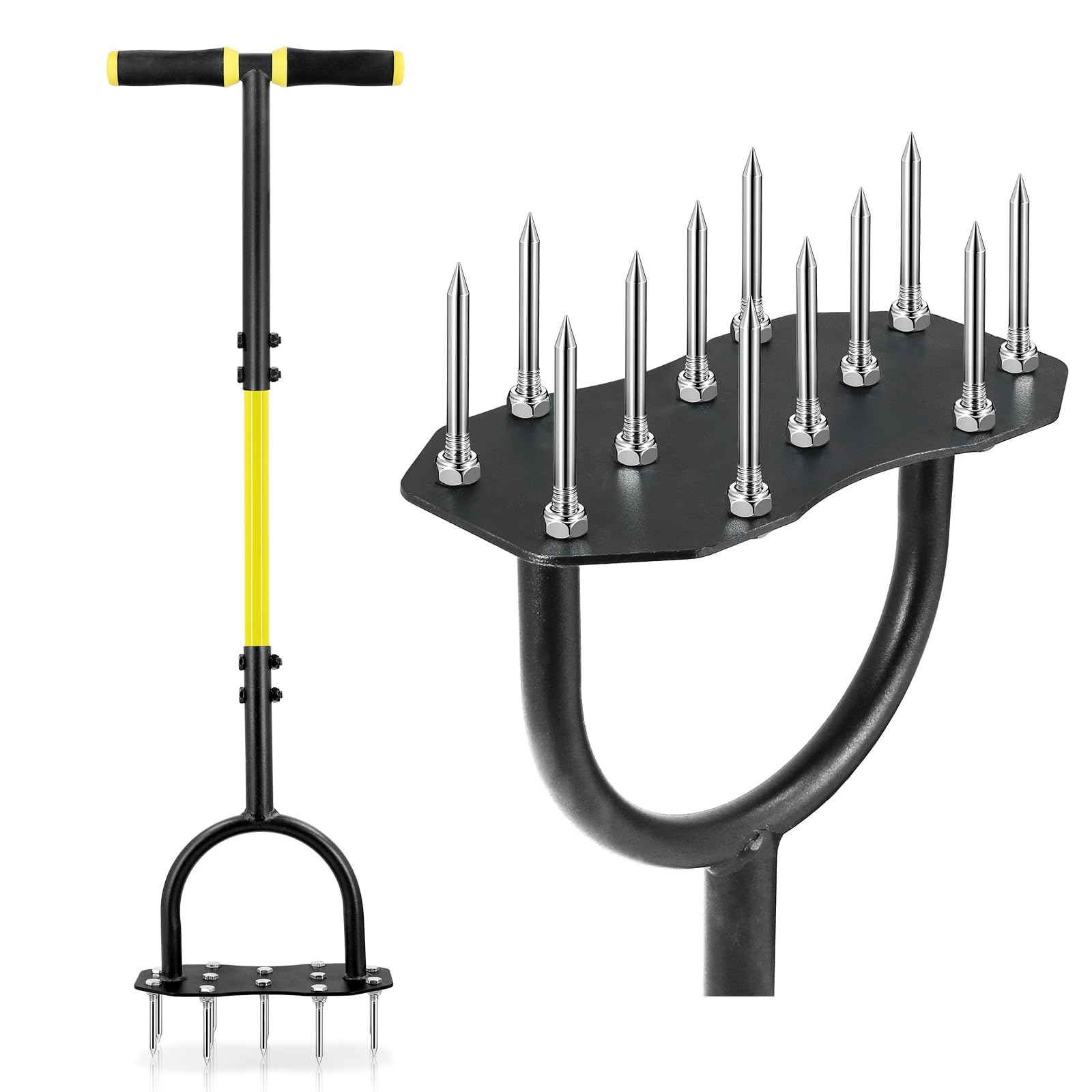
This is the everyman aerator — over half a thousand owners, a solid 4.3-star average, and functionality and ease of use are the top two aspect mentions by a lot. The 12 heat-treated steel spikes are 2.75 inches long, which is shorter than the Colwelt above but still enough to reach the root zone in most lawns. It comes pre-assembled with a wrench and manual, so you can start aerating literally minutes after opening the box.
The word on the street is mixed on durability: some owners have used it many times with no issues, while others report spikes bending on first use if they hit a rock or plumbing. The tool does come with a couple of replacement spikes, which is a nice safety net. At 5.02 pounds, it is heavier than the Colwelt, and the 36-inch height is fine for most people. The real limit is that this is strictly for small areas — buyers caution against trying to cover a big field with it.
Trade-off you should know: The spikes do bend if you hit something hard; the included replacements cover the first mistake, but not a rocky yard.
Best for: Occasional aeration on a small, rock-free lawn where you want a simple tool that ships nearly ready to use.
Not ideal for: Heavy clay or soil with hidden rocks and roots — you risk bending spikes on the first pass.
5. Dolibest 4-Corer Plug Aerator (Stainless Steel)
A stainless-steel 4-corer that resists rust and pulls plugs you can see.
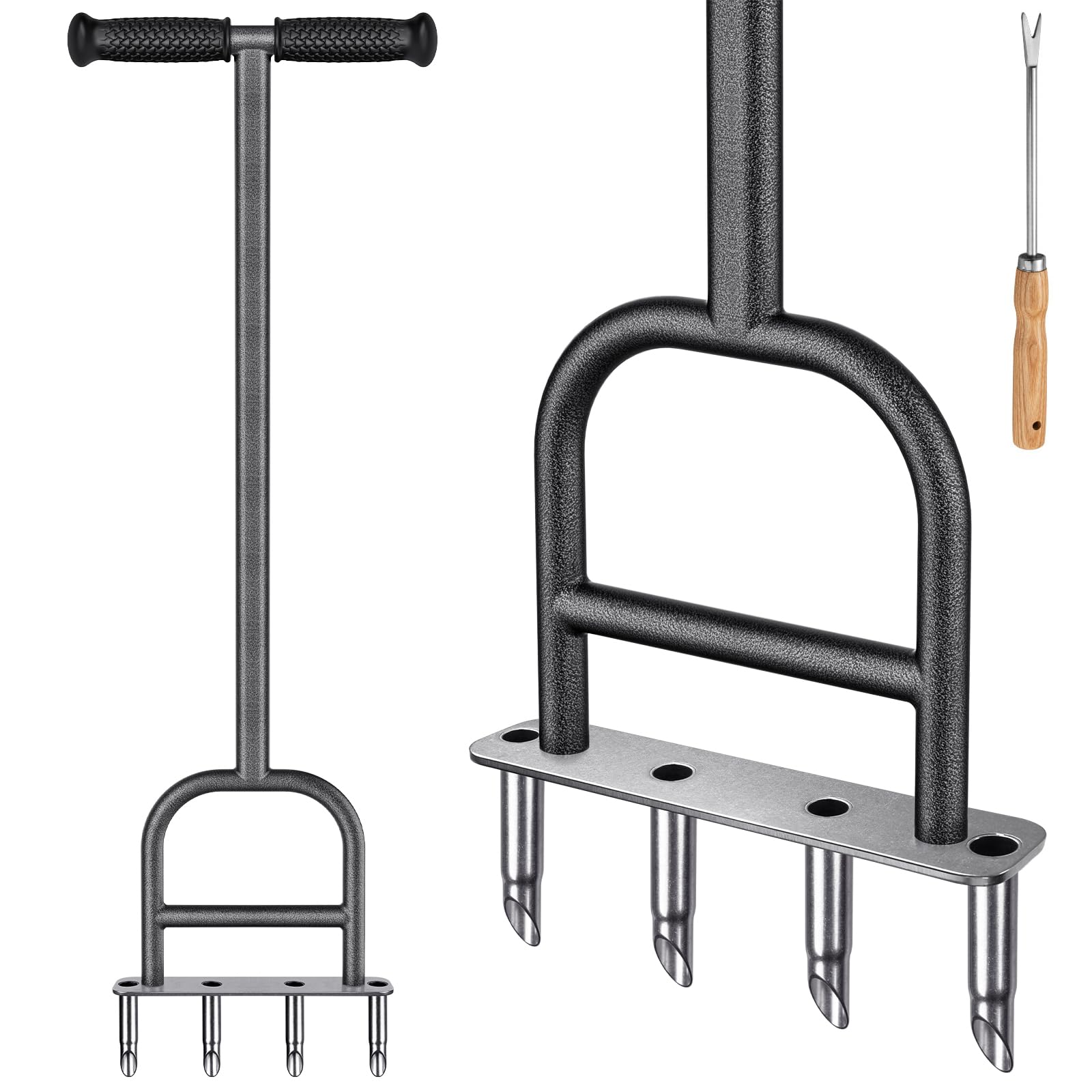
Where the LawnVigor and Landzie use three tines, this Dolibest has four stainless steel corers, each 3.5 inches long and half an inch in diameter — so you pull four plugs per stomp and cover ground 33% faster. The stainless steel bottom and corer plugs are the standout feature: they will not rust or bend, even in damp soil. The single welded construction feels very solid, and the soft rubber grip prevents blistered hands during longer sessions.
Functionality and construction are the two top aspect mentions, and owners say it works well even in heavy clay. But the most-discussed negative is clogging — 17 owners mention it. In dry clay soil the tines can get packed with dirt, which slows you down. The trick, reviewers point out, is to use the tool when the soil is sufficiently dry, not wet. A 12-inch weeder tool is included to clear the corers, and the foot bar is designed to keep your shoes from interfering with plug ejection. It is a solid, well-built tool, just one that demands the right soil moisture.
The real catch: Clogging is the trade-off for four tines — dry soil is your friend here, and the included cleaning tool is essential.
Go for it if: You want a rust-proof, four-plug core aerator for a small to medium yard and are willing to work with soil timing.
Pass if: Your soil is heavy clay that stays wet — you will spend more time unclogging than aerating.
6. EEIEER 3-Tine Aerator with Soil Storage Basket

The core aerator that catches the mess so you do not have to rake afterward.
This one solves a specific annoyance: the soil plugs that core aerators leave scattered across your lawn. The EEIEER has a storage basket that catches the ejected cores, so your yard stays tidy and you skip the cleanup step. The 2025 upgraded model uses a one-piece bottom structure — unique, according to the maker — instead of welded joints, which they say is more durable. The inner wall of the tines is thickened from 1.2mm to 2mm to reduce the chance of breakage.
Buyers highlight functionality and ease of use as the two top aspects, but the picture is more mixed on clogging and soil ejection — those two categories have nearly as many mentions as the positive ones. The tool works best on soft, moist soil; on hard ground, the tines clog and the cleaning stick becomes your best friend. The 38-inch handle and 4.3-inch heightened pedal make it comfortable for most users, though at 5’5″ one owner found the handle a bit too short, causing lower back discomfort. It handles up to 3,000 square feet per the reviews, but that assumes good soil conditions.
Smart addition: The soil storage basket genuinely saves a raking step, but the tines clog in dry or sandy soil, so pre-watering is non-negotiable.
Best for: Homeowners who want core aeration without the post-job cleanup — the basket is a real time-saver on a tidy lawn.
Consider carefully if: Your soil is hard, sandy, or dry — you will battle clogs and the cleaning stick will get heavy use.
7. Dolibest 4-Corer Aerator with Storage Tray
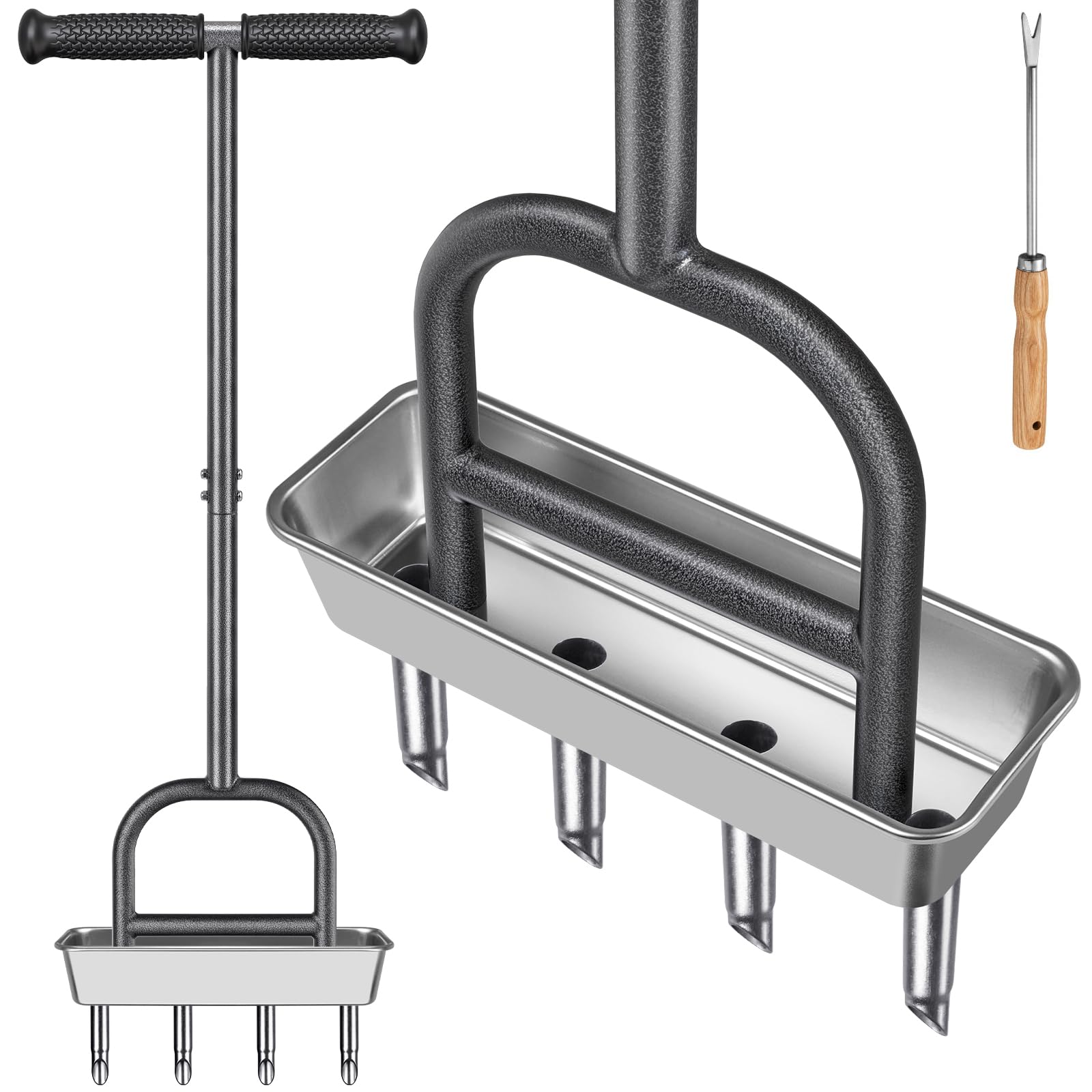
The stainless steel core aerator that collects plugs automatically.
This is the sibling to the earlier Dolibest 4-corer, but with an added SUS 304 stainless steel storage tray that catches the plugs as they eject. The tray prevents the mess of soil cores scattered on the lawn, just like the EEIEER, but here both the tray and the corer plugs are stainless steel — meaning nothing rusts or warps over time. The rod is high-quality solid steel with a black powder coating. Assembly takes about two minutes and involves only three parts.
Functionality scores highest among aspect mentions, and owners say it works well for touching up smaller areas. The core collection feature gets mixed reactions, though — about as many owners flag the storage tray as a pro as find it flawed. The main complaint is that dirt gets clogged in the spikes, requiring the included screwdriver-style tool to clear. It works beautifully on wet soil for pulling plugs, but if the ground is too dry, the tines jam. For the price point, shoppers say it is essentially the same tool as a big-box store version at half the cost.
Value note: Owners consistently say this is identical to a store-brand tool selling for double the price — the real savings is in the materials and tray, not the design.
Pick this if: You want rust-proof stainless construction plus plug collection for a small lawn, and you do not mind occasional clearing with the included tool.
pass on it if: You need to cover a large area fast — four plugs per stomp is still slow going for a big yard.
8. Walensee Rolling Lawn Aerator
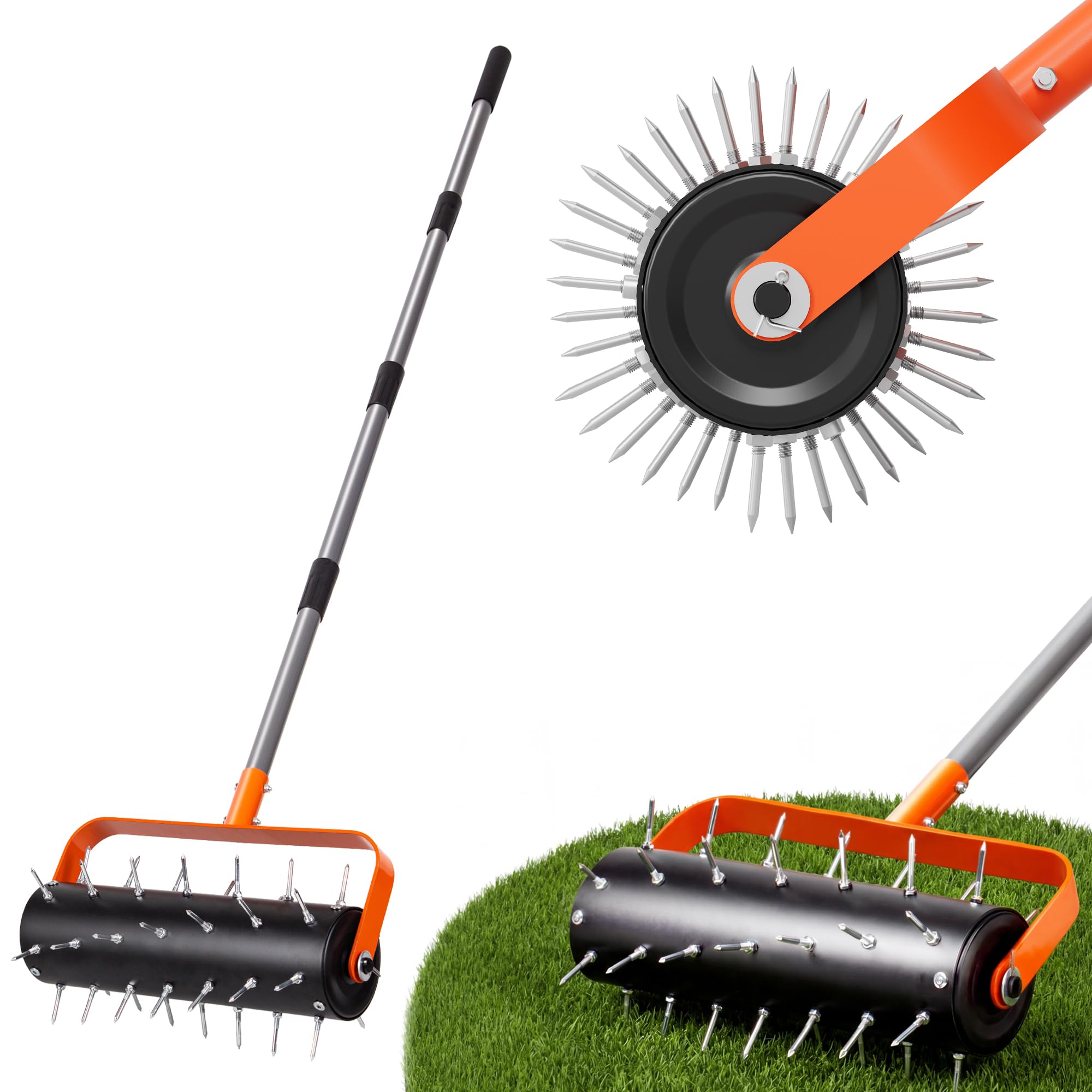
The rolling beast that lets you stand upright while aerating your whole lawn.
Unlike every other tool here that you stomp into the ground, this one is a drum on wheels. You fill the roller with stones (the maker explicitly says no sand), push it across your lawn, and 42 heat-treated, 2-inch steel spikes punch holes as it rolls. The spiral arrangement of the spikes keeps the drum stable and prevents vertical jumping. The handle is adjustable in height, so you are not bent over, and the ergonomic rubber grip is comfortable for longer sessions.
Functionality and ease of use lead the aspect mentions, but durability and weight are mixed — some owners find it too light to penetrate hard soil without extra weight. The drum weighs 11.97 pounds empty, and most buyers report adding river rocks or concrete-filled jars to get proper depth. The 2-inch spike length is shorter than the standing spike tools (the Colwelt and Bluesea have 3.5-inch spikes, for comparison), so it works best on lawns that are already reasonably soft. A soaking rain beforehand is the universal advice from owners, and even then, heavily compacted areas may need a second pass or a manual spike tool.
Owner tip: Fill the drum with river rocks, not sand — sand spills out the end caps, but rocks stay put and add the weight you need for good penetration.
Ideal for: Large small-to-medium lawns (about 1/3 acre) where you want to avoid bending and stomping — push rolling is much easier on the back.
Not for: Hard, compacted clay or root-heavy ground — the 2-inch spikes need soft, moist soil to penetrate.
9. Bluesea 16-Spike Aerator with Self-Cleaning Spring
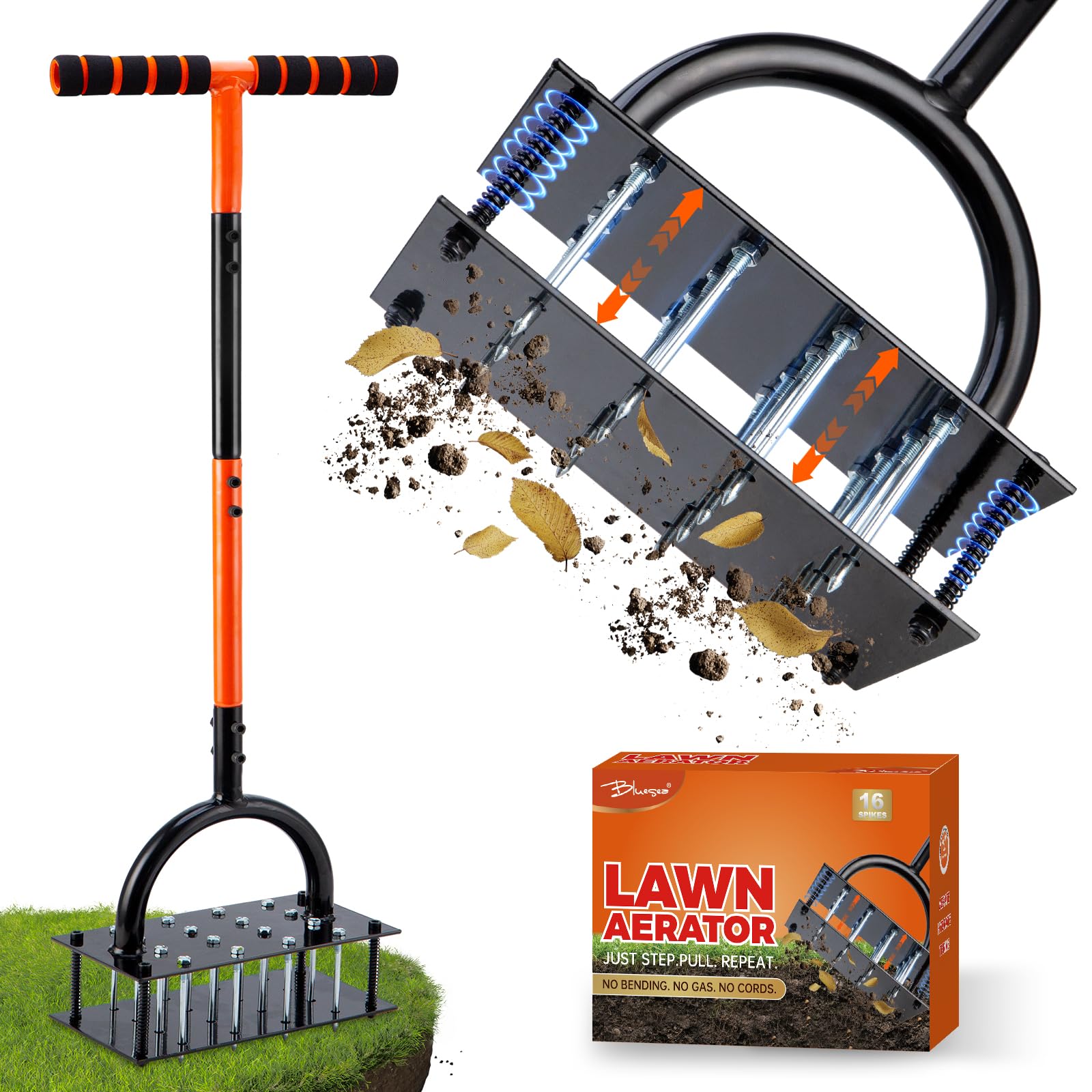
The budget spike tool with a spring-loaded trick that flings dirt off automatically.
At the entry-level price point, this aerator packs 16 iron spikes, each 3.5 inches long, arranged in a 4×4 grid. That is four times as many spikes as the Colwelt tool, which means more holes per stomp and faster coverage on a small lawn. The double-layer spring mechanism is the defining feature here — after each stamp, the springs push the spikes back up and shake off soil and debris automatically, so the spikes stay clean for the next plunge. The maker says the precision argon arc welding creates bonds 40% stronger than conventional methods.
The broader picture from owners is more mixed than the spec sheet suggests. Functionality is praised, and owners mention it penetrates well on moist soil. However, durability is a real question: several customers note the handle breaking after about a month of regular use, and the TPE (thermoplastic elastomer) handle material may not hold up to heavy seasonal work. A few buyers also note that spikes can loosen and fall out if you do not check the screws before each use. The self-cleaning spring is a clever idea, but the build quality at this price point means it is best suited for light, occasional work on a very small lawn.
Honest limit: The 16-spike grid is great for coverage, but the long-term durability is not there for frequent use — consider this a season or two tool.
Best for: Budget-conscious buyers with a tiny patch of lawn who want quick, light aeration and like the idea of self-cleaning spikes.
Look elsewhere if: You plan to aerate vigorously for multiple seasons or have hard, compacted soil that demands real force — the handle may not survive.
Understanding the Specs
Spike vs. Core Aerator
A spike aerator pushes solid metal rods into the ground, creating narrow channels for water and air. A core aerator uses hollow tubes to pull out a cylinder of soil — called a plug or core — which actually removes thatch and reduces compaction. If all you want is better water absorption, a spike tool will do. If you are fighting thick thatch or heavy foot traffic, you need a core aerator.
Spike Length and Diameter
Every spike or tine on the list has a stated length and thickness. A 3.5-inch spike goes deeper than a 2.75-inch one, reaching the root zone where the grass actually lives. The diameter matters for the hole size: a two-fifths of an inch spike creates a wider channel than a one-fifth inch spike, allowing more water and nutrients to flow through. Bigger holes are especially useful in clay soil that drains slowly.
Weight and Foot Plate
Manual aerators rely on your body weight to drive the tines into the ground. A heavier tool itself requires less of your own force, but a wide, high foot plate lets you transfer that force more efficiently. A plate that is 6 inches wide and 5.5 inches tall, for instance, accommodates larger boots and keeps your shoe from hitting the ground before the spikes reach full depth.
Rolling Aerators vs. Step Aerators
A step aerator is a frame with tines that you stomp into the ground. It gives you total control over depth and placement but requires repeated bending and stepping. A rolling aerator is a drum you push across the lawn. It is easier on the back and faster, but the spike depth is fixed — usually around 2 inches — and it struggles on hard soil unless you add significant weight to the drum.
FAQ
Should I use a spike aerator or a core aerator on my lawn?
How deep should the spikes or tines be for effective aeration?
Will a manual lawn aerator work in hard clay soil?
How long does it take to aerate a lawn with a manual tool?
Are rolling lawn aerators better than step aerators?
Can I aerate my lawn when the soil is dry?
How often should I aerate my lawn with a manual tool?
What is the difference between a spike and a hollow tine on a core aerator?
Will a manual aerator damage my irrigation system or underground cables?
Why do some core aerators clog while others do not?
Final Thoughts: The Verdict
For most people, the lawn aeration tool winner is the Colwelt 38″ Spike Aerator because it balances deep 3.5-inch spikes, a solid build, and a crowd-pleasing 4.5-star average from over 200 owners at a very friendly price point. If you want genuine core aeration with no assembly, grab the Landzie 42″ Hollow Tine Aerator. And for a back-friendly roll across a medium lawn, the Walensee Rolling Lawn Aerator is the one to reach for.
How We Picked
We do not accept paid placement. Every pick is matched to a real buyer and a real use-case; we do not hands-on test units.
Sources & Methodology
Specifications: manufacturer listings and product documentation. Review insights: verified customer reviews, as of July 2026. Pricing: not shown on this page (it changes often); check the current price via the retailer link.
As an Amazon Associate, Lawn Gear Lab earns from qualifying purchases. This does not affect which products we feature.