
Specs are compiled from manufacturer listings and verified buyer reviews and can change over time — please confirm the key details on the product page before buying.
Lavender is notoriously picky about its soil. Get the mix wrong — too dense, too acidic, too moisture-retentive — and you end up with yellow leaves, stunted growth, or the dreaded root rot that kills a plant within weeks. The fix is a blend that drains sharply, leans alkaline, and breathes around the roots, and the four mixes here are built specifically for that job.
I’m Rikta — the founder and writer behind Lawn Gear Lab. This guide is built by comparing the manufacturers’ published specifications and the patterns across verified customer reviews, so you get each pick’s real strengths and trade-offs instead of marketing spin.
Whether you are growing on a sunny windowsill or filling a patio container, these four options represent the most reliable lavender soil mixes available right now, each chosen for its drainage, ingredient quality, and real-world track record with this finicky Mediterranean herb.
Our Picks at a Glance
How To Choose The Best Lavender Soil
Lavender originates from the rocky, sun-baked hills of the Mediterranean. It evolved to thrive in lean, alkaline soil that dries out quickly between rains. That means the dirt you use for tomatoes or ferns will almost certainly kill it. Here are the three non-negotiable qualities to look for.
Drainage Is Everything
Lavender roots cannot sit in wet soil. They rot fast. A good lavender mix includes coarse materials like perlite, pumice, sand, or horticultural charcoal that create air pockets and let water flow through instead of pooling. If the bag feels heavy and dense, it is wrong for lavender.
pH: Think Alkaline
Lavender wants a pH between 6.4 and 8.5 — slightly alkaline to neutral. Most general-purpose potting soils lean acidic (around 5.5 to 6.5) because they are designed for acid-loving plants. A lavender-specific blend usually adds lime to push the pH up into the range where lavender can actually absorb the nutrients it needs.
Lean Is Better Than Rich
Lavender does not crave heavy feeding. Too much nitrogen or rich compost produces floppy, leafy growth with few flowers and a weaker scent. The best mixes use modest organic inputs like worm castings and biochar rather than heavy synthetic fertilizers, giving the plant steady, mild nutrition without overwhelming it.
Quick Comparison
| Model | Best For | Volume | Key Drainage Additives | pH Range | Amazon |
|---|---|---|---|---|---|
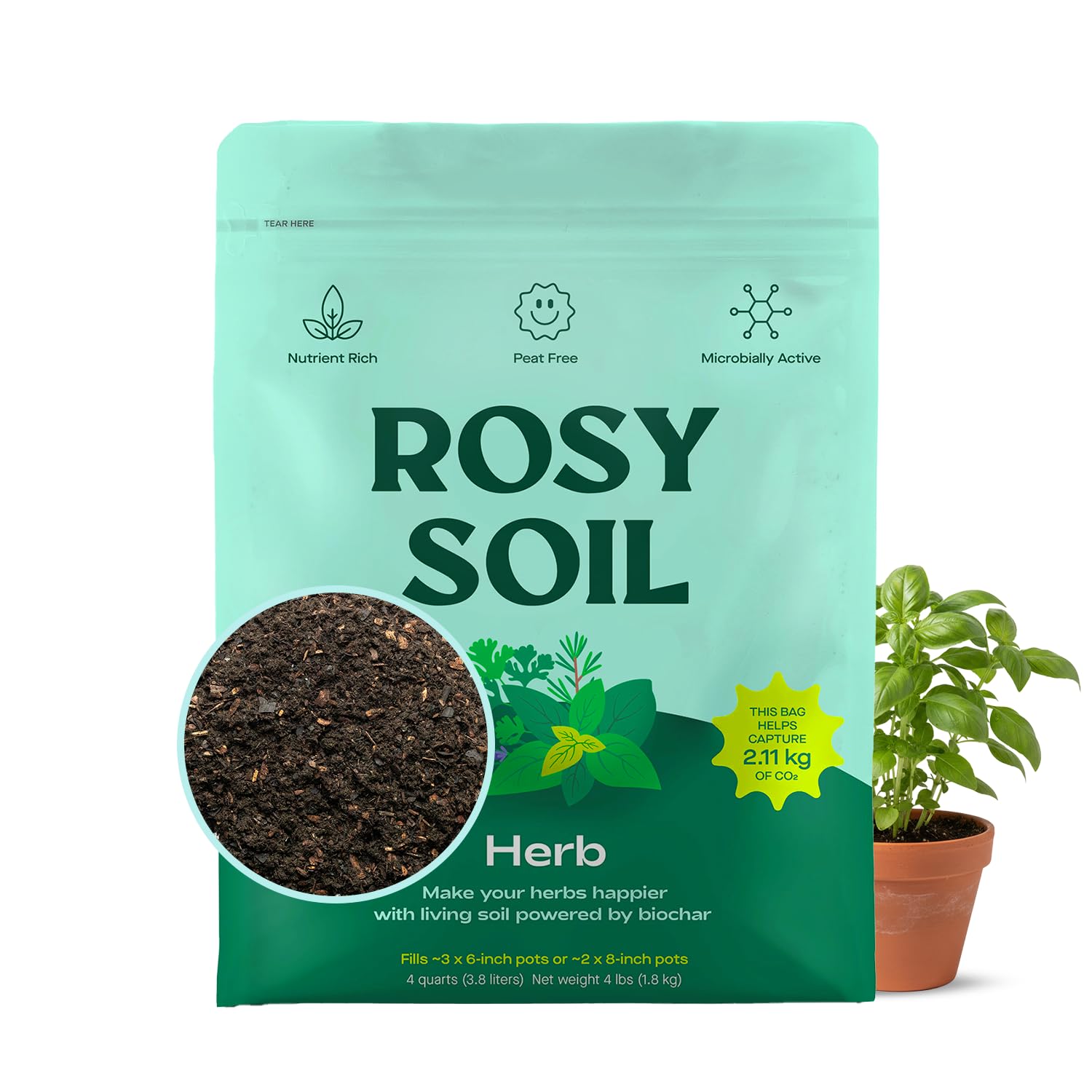
| Rosy Soil Herb Mix★ Best Overall | Organic & Herbs | 4 Quarts | Biochar, Bark Fines | Neutral (peat-free) | Amazon |
| Soil Sunrise Lavender Potting Mix | Best Overall | 8 Quarts | Perlite, Pumice, Sand, Charcoal | Alkaline (lime added) | Amazon |
| Doter Premium Lavender Potting Mix | Seed Starting | 4 Quarts | Perlite, Coir | 6.4 – 8.5 | Amazon |
| Gardenera Lavender Potting Soil | Premium Ingredients | 5 Quarts | Perlite, Sand, Pumice, Charcoal | Balanced (lime added) | Amazon |
In‑Depth Reviews
1. Rosy Soil Herb Mix, Organic Indoor and Outdoor Herb Potting Soil (4 Quarts)
Our pick — over 4.5★ from 70+ verified ratings; the strongest balance of quality and price.
A peat-free, living-soil approach that herbs love — with one important caveat for lavender.
Rosy Soil skips peat moss entirely and builds its mix from biochar, worm castings, compost, bark fines, and beneficial mycorrhizae fungi. The texture is described as “airy” and “fluffy,” and the biochar acts like a sponge that holds onto nutrients and water while hosting the microbes that help roots access what they need. That living-soil philosophy earns genuine enthusiasm from owners — they describe the soil as “beautiful and clean” and report that their Winter Savory and basil are thriving in it.
However, there is a crucial detail for lavender growers specifically. As buyers report, “For Mediterranean herbs (rosemary, oregano, sage), add sand/perlite as it retains water.” This mix is wonderful for thirstier herbs like basil and parsley right out of the bag, but its water retention is higher than lavender ideally wants. The fix is simple — mix in some extra perlite or coarse sand — but you need to know to do it. If you plan to use it for a mixed container of basil and lavender, the basil will be happy and the lavender will need the amendment.
At 4 quarts, this bag fills 2 to 3 medium 6-inch pots, and it comes in a resealable bag that keeps the unused portion fresh. For the gardener who wants an organic, peat-free foundation and is comfortable tweaking the mix to suit lavender, this is a high-quality starting point that supports, as the brand puts it, “fuller, more flavorful harvests.”
What Stands Out
- Completely peat-free and built from upcycled, carbon-negative ingredients
- Biochar and mycorrhizae create a living soil ecosystem that supports strong root development
- Resealable bag is practical for storing unused soil without mess
One Thing to Know
- Retains more moisture than lavender prefers; you will need to add sand or perlite for Mediterranean herbs
Grab it for: the eco-conscious grower who wants a peat-free, organic base and is willing to add drainage amendments specifically for lavender.
skip it if: you want a ready-to-use lavender soil that needs zero tweaking straight from the bag.
2. Soil Sunrise Lavender Potting Soil Mix (8 Quarts)

The crowd-favorite mix that turns struggling lavender into a bushel of flowers.
This is the largest bag in the lineup at a generous 8 quarts — enough to fill a big 12-inch pot without needing a second bag. The ingredient list reads like a checklist for lavender success: peat moss for moisture-holding, perlite and pumice for sharp drainage, sand for heft and porosity, horticultural charcoal to sweeten the root zone, worm castings for gentle feeding, and lime to push the pH alkaline. The result is a soil that feels “very satisfying” when you pour it, as owners describe it, and that a struggling grocery-store lavender responded to in two days by blooming.
What really sets this mix apart is the real-world proof in the reviews. One longtime lavender grower who had killed plants in both containers and in-ground says this mix finally produced “big, bushy lavender with abundant flowers” even going into the dormant season. That is the exact outcome anyone buying lavender soil is after. The 8-quart volume gives it a major practical edge — at 8 quarts versus the 4-quart size of most competitors, you are not running out partway through a project, and the price per quart works out significantly lower.
The only honest trade-off here is that this mix contains peat moss, which some gardeners prefer to avoid for environmental reasons. If sustainability is your top priority, the peat-free Rosy Soil below is a better philosophical fit, but the Soil Sunrise is the most proven, most generous, and most likely to keep your lavender alive and flowering.
Why Owners Love It
- 8 quarts is double the volume of most competitors — fills a whole 12-inch pot
- Seven-ingredient blend hits every lavender requirement: drainage, aeration, alkalinity, and gentle nutrition
- Real owner evidence of reviving and blooming stressed plants within days
One Consideration
- Contains peat moss, which is not a renewable resource; eco-conscious buyers may prefer a peat-free option
Reach for this if: you want the most bag for your money and a formula that has repeatedly proven it can turn around struggling lavender plants.
Look elsewhere if: avoiding peat moss in your garden is a hard rule for you.
3. Doter Premium Lavender Potting Mix (4 Quarts)

The mix that got lavender seeds to sprout in under a month — normally a multi-month wait.
Doter’s formulation is the only one in this lineup that explicitly states its pH target on the bag: 6.4 to 8.5, which perfectly matches lavender’s preference for slightly alkaline to neutral conditions. The mix uses perlite and coir to strike a balance between drainage and moisture retention — coir holds water like a gentle reservoir while perlite creates escape routes for excess.
That germination speed is a big deal for anyone who has tried and failed to start lavender from seed. Lavender seeds are notoriously slow and finicky, and the right soil mix is often the missing variable. One owner was so successful that they are now “nurturing ~20 seedlings” and also got chamomile to sprout in the same mix. For container growers, the soil also worked well when used as a bulk ingredient in a homemade seed-starting blend, mixed with worm castings for added nutrition.
The honest caveat here is that a small number of owners had plants die within a week, and while some of those cases may involve pot type and watering habits — one owner noted “waterlogging despite extra holes” in the pot — the risk is real enough to mention. Lavender is never a guarantee, even with the right soil. But for the specific goal of getting lavender seeds to germinate reliably, the Doter mix has the strongest anecdotal track record in the group.
Why It Impresses
- Explicit pH range of 6.4-8.5 matches exactly what lavender needs
- Multiple owners mention lavender seeds sprouting in under one month
- Perlite and coir strike a useful drainage-moisture balance for containers
The Risk
- A few owners experienced plant death; pot drainage and watering precision seem critical with this mix
Best for: seed starters who have struggled with lavender germination times and want a pH-targeted mix to tip the odds.
Think twice if: you tend to water on a schedule rather than checking soil moisture, as this mix needs careful water management in certain pots.
4. Gardenera Lavender Potting Soil (5 Quarts)

A carefully sourced premium blend that turned around a buyer’s annual lavender failures in one season.
Gardenera goes all-in on ingredient sourcing, describing its Canadian Peat Moss, Charcoal, Worm Castings, Perlite, Sand, Pumice, and Lime as “handpicked” and “carefully sourced.” It is the same structural philosophy as the Soil Sunrise mix — lime for alkalinity, perlite and pumice and sand for drainage, charcoal for root-zone health, worm castings for mild feeding — but in a 5-quart bag at a premium price point. The texture is designed for “improved air circulation” around the roots, which is exactly what lavender roots crave.
The owner stories here are compelling. One buyer in southern Michigan — a region where lavender struggles in heavy clay soil and humid summers — reports planting lavender seeds in a pot on the patio and watching them sprout, calling the mix “effective for growing lavender.” Another buyer who had watched lavender die “every year” finally switched to this soil in a new container mixed with organic topsoil and says “my plants look great and are growing fast.” That kind of testimonial, from a repeat failure turned into success, is worth paying attention to.
The catch is the price. At 5 quarts, this is the most expensive option per quart in the lineup, and some customers note the cost directly — one calls it “good stuff but the price was high.” There is also a small number of reports where plants still died, which may point to this mix needing the right pot and watering discipline, just like any lavender soil. But for someone who has tried cheaper bags and lost plants repeatedly, the Gardenera mix represents a quality-focused reset that a number of frustrated lavender growers credit with finally working.
The Verdict, Plainly: If you have killed lavender in cheap soil before and want a premium, ingredient-conscious mix that multiple former failures credit with success, this is your bag. If you are budget-conscious, the Soil Sunrise gives you more soil for less money with a nearly identical ingredient philosophy.
Reach for this if: you want maximum ingredient transparency and are willing to pay for “handpicked” quality after previous lavender failures.
Consider the alternative if: soil cost per quart matters to you, because the Soil Sunrise delivers a very similar blend at a lower effective price.
Understanding the Specs
Drainage Additives
Perlite, pumice, sand, and horticultural charcoal are the workhorses of a good lavender mix. They create physical gaps in the soil so water flows through instead of pooling around the roots. Without them, even perfect watering habits can lead to root rot because the soil compacts and traps moisture. When you see perlite (those little white rocks) and sand on the ingredient list, that is a sign the mix was built for drainage.
pH and Lime
Lavender wants a pH between 6.4 and 8.5. Most bagged potting soils lean acidic because they are formulated for ferns and tropical plants. A lavender-specific mix nearly always includes lime (ground limestone) to raise the pH. If the bag does not mention lime or a pH range in the description, it may still work, but the odds drop because the chemistry is not tune for lavender’s nutrient uptake.
FAQ
Can I use regular potting soil for lavender?
Does lavender need sand mixed into the soil?
How much lavender soil do I need for one pot?
Is peat moss good or bad for lavender?
How often should I water lavender in a pot?
Can I start lavender seeds directly in lavender potting mix?
What is the difference between organic and non-organic lavender soil?
Will lavender soil work for other plants too?
Why did my lavender die even with special soil?
How long does an opened bag of lavender soil stay fresh?
Final Thoughts: The Verdict
For the majority of shoppers, the lavender soil winner is the Soil Sunrise Lavender Potting Mix because it delivers double the volume of the competition, a complete seven-ingredient formula that hits every key requirement, and a proven track record of reviving struggling plants and producing abundant blooms. If you want a peat-free, organic foundation that supports a living soil ecosystem, grab the Rosy Soil Herb Mix. And for seed starters who have struggled with long lavender germination times, the Doter Premium Lavender Potting Mix is the one to reach for.
How We Picked
We do not accept paid placement. Every pick is matched to a real buyer and a real use-case; we do not hands-on test units.
Sources & Methodology
Specifications: manufacturer listings and product documentation. Review insights: verified customer reviews, as of July 2026. Pricing: not shown on this page (it changes often); check the current price via the retailer link.
As an Amazon Associate, Lawn Gear Lab earns from qualifying purchases. This does not affect which products we feature.