
Specs are compiled from manufacturer listings and verified buyer reviews and can change over time — please confirm the key details on the product page before buying.
When a clematis or rose shoots up faster than expected, you need a trellis that holds it immediately. A proper lattice fence replaces flimsy bamboo teepees, rusty wire grids, and bare dirt with a sturdy, lasting support. It provides climbing plants a permanent framework to reach sunlight, transforms bare walls into living tapestries, and completes the garden’s look.
I’m Rikta — the founder and writer behind Lawn Gear Lab. This guide is built by comparing the manufacturers’ published specifications and the patterns across verified customer reviews, so you get each pick’s real strengths and trade-offs instead of marketing spin.
Below, you find eight of the best options — from budget-friendly willow rolls to premium expandable wood panels. This guide helps you choose the right lattice for training a single vine or screening an entire fence line, matching your space, plants, and assembly patience.
Our Picks at a Glance
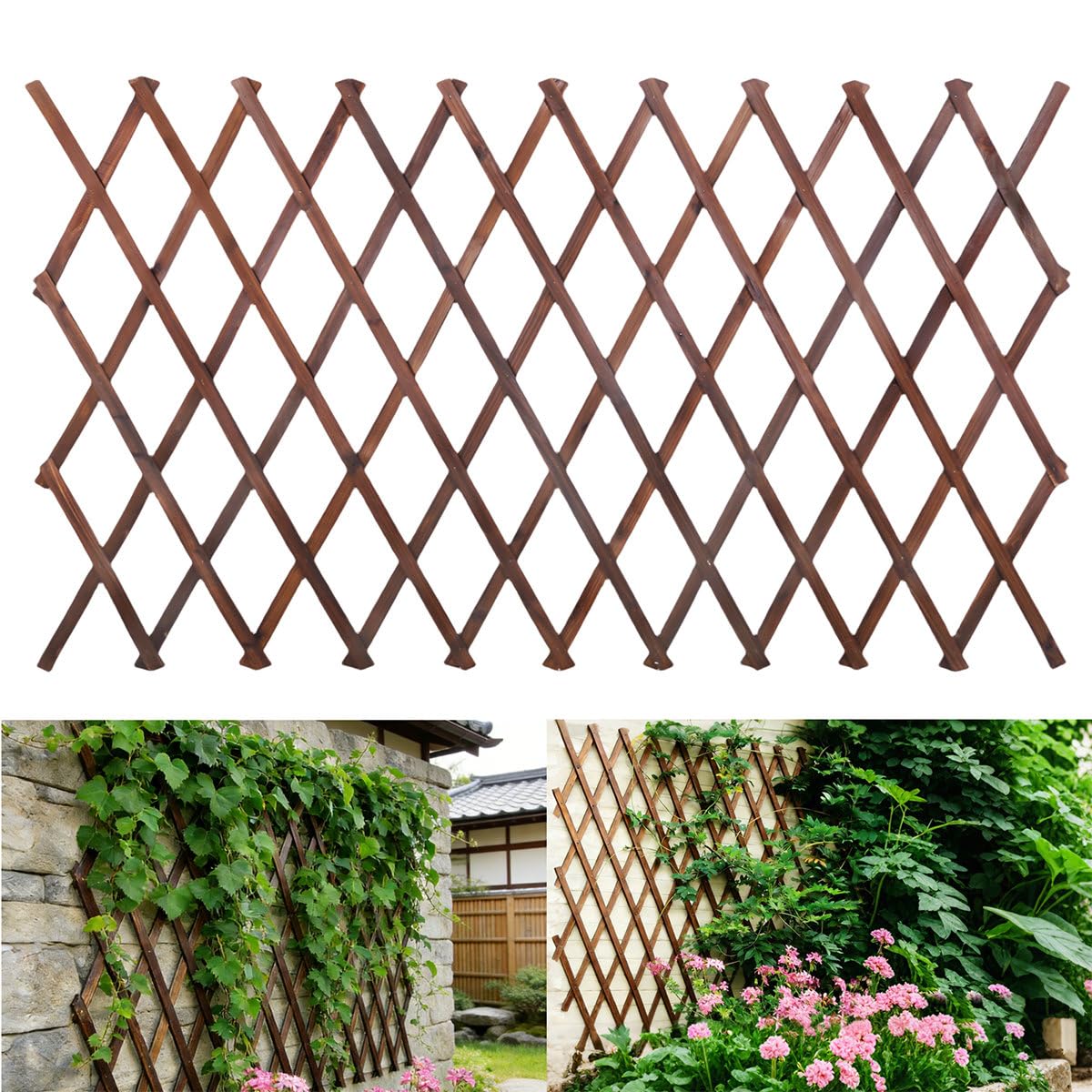


How To Choose The Best Lattice Fence For Garden
A lattice fence must do two things: stay upright under mature foliage, and let vines weave through it. Here is what separates a trellis that becomes an eyesore from one that disappears under blooms for years.
Material and Weather Resistance
Natural willow is the most common budget option, and it looks beautiful against greenery. Willow is biodegradable, so it breaks down outdoors. Most buyers report a willow trellis lasts one to two seasons before getting brittle, especially in direct rain and sun. Carbonized pine is wood heat-treated to resist moisture and pests. It costs more upfront but often lasts two to three times longer without sagging or cracking. For trellises facing afternoon sun or heavy spring rain, carbonized pine is the safer choice.
Expanded Dimensions and Fit
Every expandable lattice has a closed size and a fully-opened size. The expanded width tells you how much fence line or wall you can cover. Most panels in this category range from roughly 78 to 92 inches at full stretch. A taller panel (around 90 inches) works well for large vines like climbing roses or grapevines that need vertical reach. A shorter panel (around 13 inches high) is better for raised beds or balcony railings where you just need low support. Before you buy, measure the exact span you want to fill. A panel that is too short leaves your vine flopping over the top; one that is too wide bunches up at the ends.
Stick Thickness and Connection Strength
The individual sticks that make up the lattice range from thin willow rods (about a quarter-inch thick) to thicker wooden slats (about a third of an inch). Thicker sticks resist warping and hold heavier vines without bowing outward. Equally important is how the sticks are joined. Rivets are standard; the best lattices use “high quality rivets” that let the panel expand smoothly and stay locked in place. Flimsy connections cause the lattice to sag in the middle or shed sticks at the edges over time. If you support a heavy vine like wisteria or mature honeysuckle, prioritize thicker wood and riveted joints over thin, stapled connections.
Ease of Installation
Most expandable lattices install with zip ties, hooks, or small screws — no power tools required. The trick is whether the panel holds its shape during installation. Some lattices are so lightweight that they droop until you anchor them; others are sturdy enough to stand semi-supported while you work. If you install alone, a lattice that stays rigid in your hands makes the job much quicker. If you cover a large area, a multi-pack (like a 4-pack) saves you from buying and matching separate pieces later.
Quick Comparison
| Model | Best For | Material | Expanded Size | Stick Thickness | Amazon |
|---|---|---|---|---|---|
| Bounmer 38″x89″★ Best Overall | Overall Value & Durability | Cedar Wood | 38″x89″ | 0.35″ | Price |
| Sumery Willow 36×92″Natural Look | Natural Aesthetic, 2-Pack | Willow Wood | 120″x22″ | ~1/4″-3/8″ | Price |
| Helprise 36X92″Budget Champion | Rustic Look, Vegetable Vines | Willow Wood | 120″x22″ | ~1/4″-3/8″ | Price |
| BYBAG Natural Willow | DIY Gate or Privacy Screen | Willow Wood | 120″x22″ | ~1/4″-3/8″ | Price |
| ANPHSIN 13×78″ (2-Pack) | Tall, Narrow Spaces & Orchids | Anti-Corrosion Wood | 78″x13″ | Standard | Price |
| Miuwauer 13.4″x78.8″ (4-Pack) | Covering Large Areas on a Budget | Natural Wood | 78.8″x13.4″ | Standard | Price |
| Avalution 75″x11.8″ (4-Pack) | Versatile Privacy & Decor | Carbonized Wood | 75″x11.8″ | Carbonized | Price |
In‑Depth Reviews
1. Bounmer 38″x89″ Expandable Garden Trellis
Our pick — 4.5★ from 400+ verified ratings; the strongest balance of quality and price.
Thicker wood that holds a full-grown clematis without bowing — unlike thinner willow panels.
You want a lattice that does not flex and crack by the second season. The Bounmer uses cedar slats that measure a full 0.35 inches thick, a 30% increase over standard panels. You feel the difference as soon as you unbox it: the lattice holds its shape as you expand it, and it does not sag in the middle when you attach it to a fence or wall. The carbonized finish (a heat treatment without chemicals) gives it a rich, dark brown color that resists warping through summer heat and spring rain. It expands to 89 inches wide and 38 inches high, so it covers most standard garden spans in one go.
One buyer described it as “solid and beautiful,” fastening it at a 45-degree angle on both sides of a fence to create a V-shaped support for clematis. Owners mention it held perfectly. The 89-inch width and 38-inch height give tall vines room to climb. The trade-off: cedar is heavier than willow, so you need to anchor it to a solid fence post or wall rather than a flimsy stake. A few customers note the lattice breaking at the cross joins within the first week if handled roughly — treat the joins gently during installation.
What Wins Owners Over
- Versatility is the biggest talking point — buyers use it for fence-top extensions, indoor wall decor, and more
- The color and appearance draw consistent praise; it looks like a premium addition at a mid-range price
The Honest Caveat
- While most find it well-made, a small number report the lattice breaking within the first week, usually where the slats cross — treat the joins gently during installation
Best for: Gardeners who want one trellis that handles multiple seasons of heavy vines without warping — the 0.35-inch cedar thickness is the real advantage here.
Think twice if: You need a trellis that folds down to a tiny package for off-season storage — the thicker wood makes it less compact when collapsed than a willow panel.
2. Sumery Nature Willow Trellis (2-Pack)
A two-pack of natural willow that blends into the garden like it grew there — ideal for rustic cottage looks.
If your garden leans rustic or cottage-style, this lattice looks right from day one. The willow wicker is 100% natural with no chemical treatment, so the pale wood tone blends with emerging green growth. It expands to 120 inches wide by 22 inches tall, more than enough to run along a fence line or wrap around a deck corner. Owners use it for climbing roses over a weathered fence or as a quick divider between vegetable beds. The 2-pack means you cover 240 inches total.
The catch is durability. One owner sums it up: “Purchased in May 2023, and as of July 2024, it is falling apart and brittle.” Natural willow is biodegradable, so it degrades in direct rain and sun. Most owners get one to two seasons before sticks start snapping. Buyers who bring it indoors or under cover during winter report it lasting much longer — one owner is on their second year and calls it “perfectly storable for off season.” The riveted connections are strong for natural wood, but the material itself has a limited lifespan outdoors. The Bounmer trellis above is far more weather-resistant than this willow option.
Material trade-off: The rustic look is the whole point here, and owners consistently praise the quality and appearance. But expect to replace it every couple of years if it stays outside — that is the nature of untreated willow, not a defect.
Who it fits: Gardeners who prioritize natural aesthetics and seasonal storage over permanent installation — or anyone who wants a quick, attractive support for an annual vine like morning glories that they can compost at the end of the season.
3. Helprise Expandable Willow Lattice 36X92″
Thicker willow rods than the cheapest options — about 1/4 to 3/8 of an inch — for medium-weight vines at a low price.
You want a budget lattice that does not feel like kindling. Helprise uses willow rods that are roughly 1/4 to 3/8 of an inch thick, giving the panel more body than ultra-cheap alternatives. Owners routinely use it for tall vegetable vines like grapes and cucumbers, and the natural wood finish looks attractive against a dark fence or green hedge. The lattice expands to 120 inches wide by 22 inches tall, so it can cover a long stretch in one continuous piece.
The sturdiness is the most-discussed point, and the consensus is mixed. The lattice holds shape once anchored, but the willow sticks are still natural wood and will eventually degrade outdoors. Buyers who take it down and store it over winter report a much longer life. As one satisfied owner puts it: “Works great, collapsible, can be hung horizontal also. I’m using it for the second summer. They’ve worked great for my purpose.” The panel comes with a few long zip ties, but owners note that installing it solo is tricky; it takes two people to anchor it to an existing fence without sagging. For a more durable option that needs less babysitting, the Bounmer trellis with its 0.35-inch cedar slats is a better long-term investment.
Why People Like It
- Versatility is the top praise — it works as a fence topper, a climbing frame, or even a horizontal divider
- The appearance gets strong marks; the natural willow is visually unobtrusive and looks like it belongs in a garden
The One Headache
- Sturdiness is a mixed bag — secure it well with extra supports for heavy vines, especially in windy spots
Who it suits: Budget-conscious gardeners with medium-weight vines like grapes or jasmine who can store the panel over winter — at this price, the value is tough to top.
skip it if: You need a permanent outdoor installation that stays in rain and snow year-round — natural willow simply is not built for that.
4. BYBAG Natural Willow Lattice Trellis
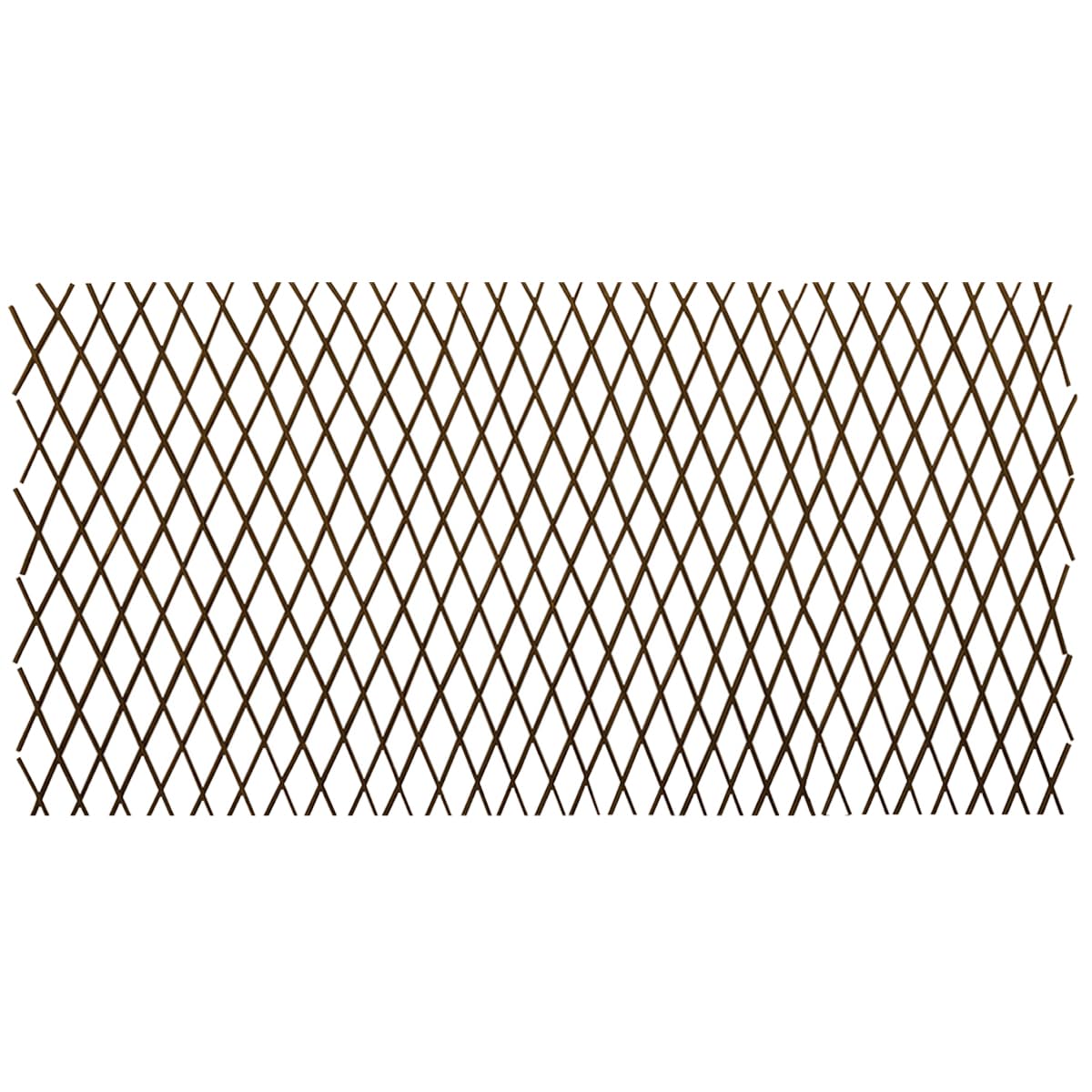
A zigzag willow panel that doubles as a garden gate or privacy screen — not just a trellis.
This trellis has a zigzag construction that gives it more visual texture than a flat lattice. Owners have found clever uses beyond standard vine support. One bought it specifically as a patio gate to keep a small dog contained, calling it “perfect for our 60 inch wide steps” and praising how easy it is to put up and take down. Others use it with fake vines on a back patio to screen off an untidy neighbor’s yard. It expands to 120 inches wide by 22 inches tall, and the zigzag design means it stands out more than the flat Helprise or Sumery panels when used as a visual barrier.
The recurring note across reviews is that the trellis is beautiful for its purpose but fragile by nature. It lasts about three years depending on exposure to the elements, and it needs stable objects to attach to; it will not stand up on its own. The packaging includes zip ties for quick mounting, but if you use it in a windy area, you need to anchor it more thoroughly. The handmade willow construction means each panel has slight variations, which adds rustic charm but also means inspecting it for loose sticks on arrival is a good idea. If you want a permanent privacy screen that lasts longer, the Bounmer trellis’s thicker cedar slats are a sturdier choice.
Best use case: A temporary or semi-permanent screen that you can take down in winter — the zip-tie mounting makes it truly tool-free, and the natural look improves rather than detracts from a flower garden.
Reality check: This is organic material, not a permanent structure. Expect some sticks to loosen over time, and plan to replace it every few years if it stays outdoors.
5. ANPHSIN 13×78″ Wood Trellis (2-Pack)

Tall, slender panels — 78 inches high by 13 inches wide — that squeeze into tight spots where wide lattices do not fit.
Not every space needs an 8-foot-wide lattice. This ANPHSIN set gives you two panels that are 78 inches tall but only 13 inches wide, ideal for covering square porch posts, filling a gap between fence slats, or creating a wall-mounted trellis on a narrow balcony. The anti-corrosion wood treatment is a step above raw willow; reviewers point out it holding up well against Florida humidity and daily rain exposure, especially when mounted under a roof overhang. The diamond pattern gives it a classic lattice look that suits cottage gardens and modern decks alike.
The best review comes from an orchid enthusiast who used these panels with hemp wire on brick porch posts. They report the trellis holds up well despite getting wet daily from orchid spraying. For standard garden use, the narrow width means you may need multiple panels to cover a large area, but the 2-pack gives you two right from the start. Durability is the most common mixed note — the wood is lightweight, and owners find it splits a little if you screw directly into it. Pre-drilling holes or using zip ties avoids that issue. Unlike the Sumery or Helprise willow lattices, this panel’s treated wood is more suited to damp conditions.
What Stands Out
- Quality is the top praise — the anti-corrosion wood actually lasts longer than willow in damp conditions
- Appearance earns solid marks; the dark wood blends well with greenery and matches stained deck finishes
The Limitation
- Durability divides opinion — some find it sturdy for the weight, others note it feels flimsy for heavy vines; support it with an existing structure
Ideal for: Narrow spaces, porch posts, or anyone who needs a tall trellis that does not stick out sideways — the 13-inch width fits where most lattices are too wide.
Not for: Covering a long fence line in one piece — you will need several panels and the narrow strips do not connect smoothly.
6. Miuwauer 13.4″x78.8″ (4-Pack)

Four panels give you over 26 feet of total trellis coverage — perfect for a long fence line on a budget.
You are staring at a 20-foot fence line and want uniform trellis across the whole thing. This 4-pack saves you the headache of matching separate orders. Each panel expands from 11.4 x 17.3 inches up to 13.4 x 78.8 inches, giving you over 26 feet of total coverage when all four are stretched end to end. The natural wood retains its original color and grain, so it looks consistent across every panel. Owners use them propped behind pepper plants, zip-tied to bird feeder poles for morning glories, and as decorative backdrops in rock gardens.
The sturdiness is the main sticking point. While the lattice works well for light and medium vines, the individual panels lack rigidity on their own. Shoppers say needing metal poles or a sturdy existing fence to keep them from sagging. The top panel in a vertical stack can droop without additional support. On the positive side, owners consistently call it “beautiful” and “practical” for the price, and the quick installation means you can have all four up in under an hour. The mixed feedback on adjustability comes from owners who expected a more rigid structure for heavier plants. Compared to the ANPHSIN narrow panels, this Miuwauer set is better for wide horizontal runs but weaker in vertical rigidity.
Best for: Vegetable gardens, bird-feeder backdrops, or any area where you need a lot of low-cost coverage quickly — the 4-pack is genuinely convenient.
Biggest drawback: It needs structural support from an existing fence or posts to stay upright; it is not a freestanding solution for heavy vines.
7. Avalution 75″x11.8″ Carbonized Wood (4-Pack)

Carbonized wood in a 4-pack gives you nearly 25 feet of trellis — the most coverage per dollar for weather-resistant panels.
You want a lot of carbonized-wood coverage without buying multiple sets. This Avalution 4-pack delivers 75×11.8-inch panels, totaling nearly 25 feet of trellis. The carbonized construction uses high-temperature treatment to improve strength and resist cracking, and the reinforced rivet connections hold the lattice together through expansion and contraction. Owners use these panels for everything from indoor vining plants to full garden privacy screens. One buyer was delighted to use the lattice as a decorative Christmas tree replacement, calling it “very cool, versatile and great price.”
The single most important note from the reviews is about the finish. One owner reported that their clematis “partially died after 2 days” of being attached to the lattice, attributing the damage to a strong stain odor. They recommended letting the panels bake in the sun before installing them near sensitive plants. Aside from that, quality is the top positive aspect — buyers consistently find the carbonized wood well-built and attractive. The sturdiness sees mixed feedback, with some calling it “nice and sturdy” and others noting it is “not the strongest” but adequate for a dog gate or lightweight privacy screen. Unlike the Miuwauer 4-pack’s natural wood, this Avalution set’s carbonized treatment offers better weather resistance but requires that air-out period.
The edge: Four panels for this price gives you the most coverage per dollar in the carbonized-wood category, and the versatility (privacy screen, trellis, decor) makes it a flexible buy.
One real caution: Let the panels air out for a day or two before putting plants on them — the carbonized finish can off-gas a strong odor that may affect sensitive vines.
Understanding the Specs
Carbonized vs. Natural Wood
Carbonized wood is heat-treated at high temperatures to remove moisture and natural resins. This makes it more resistant to rot, warping, and insects without any chemical preservatives. Natural willow is untreated, so it degrades faster in direct rain and sun. If you want a lattice that stays outdoors year-round for several years, carbonized wood is the better investment. If you prefer a temporary or seasonal look that is 100% biodegradable, natural willow is fine.
Expanded Size and Aspect Ratio
Lattice panels are listed by their fully-expanded dimensions. A wider panel (80-120 inches) covers more fence line in one piece, while a taller panel (30-40 inches) gives climbing vines more vertical room. The trade-off: a wider, shorter panel is easier to install solo. A taller, narrower panel needs more anchoring but fits tight spaces. Measure the exact area you want to cover before buying — a panel that is too short leaves your vine sprawling sideways, and one that is too wide will bunch up at the ends.
Stick Thickness and Rivet Strength
The individual wood sticks that form the lattice range from roughly 1/4 inch thick (thin willow) to 0.35 inches thick (carbonized pine). Thicker sticks resist warping and hold heavier vines like wisteria or grapes. The rivets that connect the crossing points are what let the lattice expand smoothly. Cheap lattices use staples or flimsy wire rivets that pop out after a few adjustments. High-quality rivets (the data should call them “high quality rivets” or “reinforced”) hold the lattice tight and keep it from sagging in the middle.
Installation and Anchoring
Almost every expandable lattice fence uses zip ties, hooks, or small screws for mounting — no power tools required. The key difference is whether the panel holds its rigid shape during installation. Light willow panels droop until anchored, which makes solo installation frustrating. Heavier carbonized panels stay semi-rigid and are easier to position. If you are working alone, look for a panel that is stiff enough to hold its expanded shape while you reach for a zip tie. Every panel needs an existing structure (fence, wall, posts) — none are freestanding on their own.
FAQ
How long does a willow lattice fence last outdoors?
Can I use a lattice fence as a privacy screen?
Do I need to treat or paint my lattice fence?
How do I install an expandable lattice fence?
Will a lattice fence support heavy vines like wisteria or grapes?
What is the difference between a trellis and a lattice fence?
Can I cut an expandable lattice to fit a smaller space?
How do I store a lattice fence between seasons?
Is a lattice fence safe for edible plants like cucumbers or beans?
Will a lattice fence rot if it touches the ground?
Final Thoughts: The Verdict
For most buyers, the lattice fence for garden winner is the Bounmer 38″x89″ because the thicker cedar construction gives you the best balance of durability, appearance, and ease of