
Specs are compiled from manufacturer listings and verified buyer reviews and can change over time — please confirm the key details on the product page before buying.
Pouring concrete planters at home sounds easy until a thin plastic mold buckles, leaks cement slurry across your workbench, or gives you a lopsided pot you would not put in the garage. The difference between a satisfying DIY project and a frustrating mess depends on the mold itself: how thick the plastic is, how its locking system works, and what size the final pot actually is. This guide gives you four durable, properly large molds that make planters you will be happy to put on a porch or patio.
I’m Rikta — the writer behind Lawn Gear Lab. This guide is built by comparing the published specs from each brand and the patterns in verified customer reviews. You get each pick’s real strengths and trade-offs, not marketing spin.
You might be shaping a romantic heart planter for the garden, a roomy round vessel for a small tree, or a sleek geometric urn for succulents. These four workhorses all deliver the scale and repeatability you need from the best large planter molds for concrete.
Our Picks at a Glance
How To Choose The Best Large Planter Molds For Concrete
A good concrete mold is an investment in repeatability: you want it to survive more than one pouring weekend. Three factors separate a mold that gives you twenty planters from one that cracks on the second use.
Focus on the Finished Size, Not the Mold Size
The mold you buy might say “large” on the label, but the finished piece can be much smaller due to the thickness of the concrete walls. Always look for the dimensions of the completed planter in the product description, not just the outer footprint of the plastic shell. For example, a mold with an outer dimension of roughly 13 by 12 inches might make a pot only 10 inches wide inside.
Locking Mechanism & Seal Quality
A flimsy latch or a mold made in several loose pieces invites leaks. Concrete slurry (the wet mix) is heavy — around 140 pounds per cubic foot — and it will force its way through any gap. Molds with built-in buckles or metal-reinforced tabs hold up better under that pressure. If the design relies only on plastic nubs that snap into grooves, you will probably need external clamps (which are not always included) to keep the seal tight.
Plastic Thickness & Reusability
The single biggest predictor of a mold’s life is how thick its plastic is. Very thin walls flex and crack under the weight of a full pour. Premium ABS plastic (a tough engineering plastic widely used for molding), around 2 to 3 millimeters thick, handles multiple demoldings without developing hairline fractures. Owners who get ten or more pours from one mold almost always credit a thick, rigid plastic shell over a flexible one.
Quick Comparison
| Model | Best For | Finished Size | Pieces | Weight (lbs) | Amazon |
|---|---|---|---|---|---|
| AUTUMN Heart Mold★ Best Overall | Romantic garden accents | 17 x 16 x 2 in | 1 | Not listed | Amazon |
| SEWACC Urn Mold | Decorative urns & succulents | 11.4 x 11.4 x 10.6 in | 1 | 3.1 | Amazon |
| EAIVENY 13.78″ Round Mold | Heavy daily production | 13.78 x 12.2 x 12 in | 3 | 2.0 | Amazon |
| AUTUMN 16″ Orb Mold | Massive statement spheres | 16 in diameter | 1 | Not listed | Amazon |
In‑Depth Reviews
1. AUTUMN Large Concrete Heart Mold
Our pick — over 4.5★ from 100+ verified ratings; the strongest balance of quality and price.
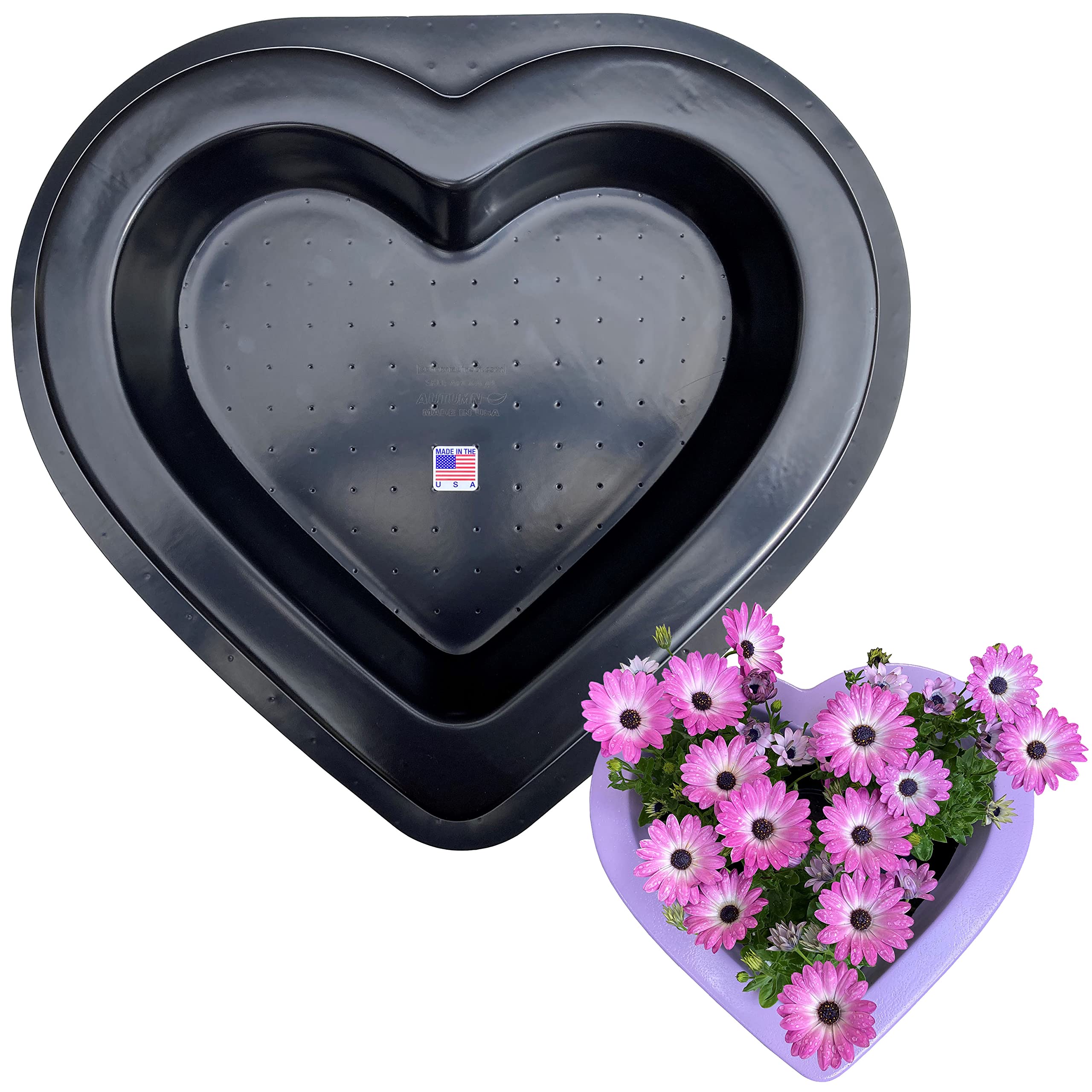
The heart mold that gives you real scale: a finished piece measuring 17 inches across and 16 inches tall.
This is the mold to pick when you want a centerpiece garden ornament that actually reads as “large.” The finished piece measures a full 17 inches across and 16 inches tall, with a 2-inch thickness that gives the final planter real weight and presence. It is a single-piece mold, which means no seams to wrestle with and no leak paths between parts. Owners describe the plastic as “reasonably quality” and say the mold stays well balanced when you flip it upside-down with wet concrete inside.
What wins people over is how forgiving this mold is for beginners. The shape has no tight undercuts (indentations that would trap the concrete), so a light coating of vegetable oil (which owners confirm works perfectly) releases the finished heart with little drama. A few pours produce small air bubbles on the surface, but that is a mixing technique issue, not a mold flaw — tapping (gently striking) the mold after filling settles most of them. The mold is made by an American manufacturing company, which appeals to buyers who want domestically produced tools.
The crowd-sourced rating of 4.6 stars across over 100 owners is a clear signal that this mold delivers consistent results pour after pour. That rating and owner satisfaction put it ahead of the other picks on this list, including the popular EAIVENY for round planters.
What Owners Praise
- Massive finished heart at 17 by 16 inches stands out in any garden.
- Single-piece plastic shell means no assembly or leaking seams.
- Low learning curve — oil and pour works for first-timers.
The Honest Trade-Off
- The 2-inch wall thickness limits the planter cavity: better for shallow succulents than deep-rooted shrubs.
Grab this if: you want the most reliable, beginner-friendly large mold on the market and a heart shape that makes a statement.
Think twice if: you need a deep soil pocket for tall plants — the finished piece is shallow at just 2 inches thick.
2. AUTUMN Concrete Cement Orb Mold (16-Inch)

A 16-inch sphere that takes a full 90-pound bag of concrete mix to fill completely.
If sheer scale is your top priority, this orb mold produces the biggest finished piece in the lineup: a 16-inch diameter sphere that commands attention in your yard. The bigger the diameter, the more concrete it needs — one experienced owner confirmed that a single 90-pound bag of concrete fills the form. You clamp it tight, pour it full, tap the sides to settle the mix, top it off, and let it cure. The result is a heavy, polished garden orb that looks like a professional landscape addition.
Owners consistently praise the finished look. They describe polishing and painting their spheres, then placing them in the front yard where they draw compliments. The mold is made in the USA by the same AUTUMN brand behind the heart mold, so the plastic quality is similar. The clear downside, mentioned by multiple owners, is the locking mechanism. The plastic nubs that seat into grooves can give way under the weight of wet concrete. The manufacturer recommends using external clamps (not included) for a tight seal, and experienced buyers report this is essential.
Scale trade-off: The orb’s visual impact is class-leading compared to the AUTUMN heart mold, but you must budget for separate clamps to stop the mold halves from separating during the pour.
Choose this for: making oversize statement spheres that anchor a garden design — nothing else here produces this much mass.
skip it if: you want a planter cavity. This is a solid sphere mold (it creates a solid concrete ball), not a hollow planter.
3. SEWACC Planter Mold Pot Plastic Mold (Large Urn)
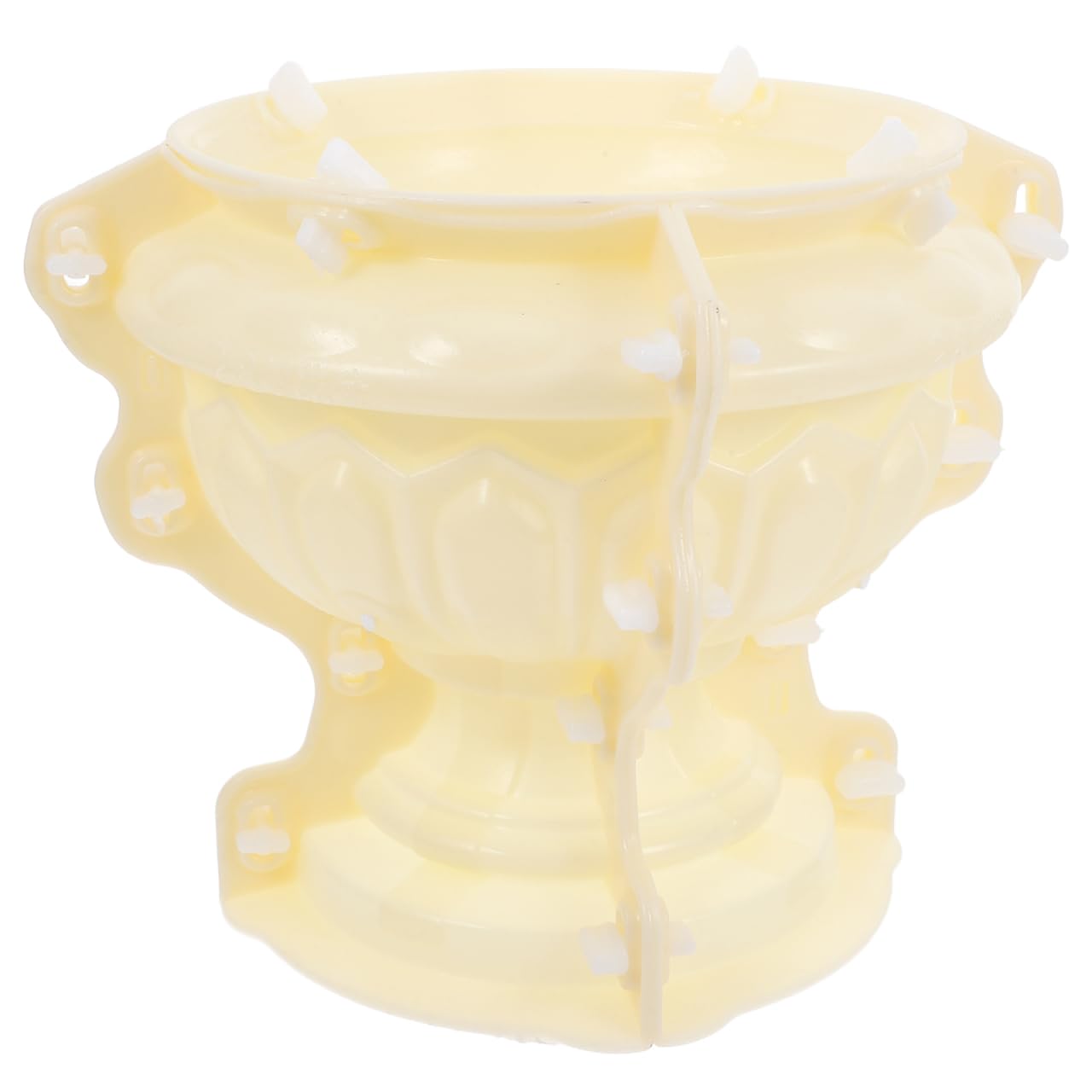
A sturdy urn mold at 3.1 pounds that owners call a “good buy for the money” — and weighing 3.1 pounds compared to the EAIVENY round mold’s 2 pounds.
This is the mold for the dipper who wants a classic urn shape without spending premium money. The finished dimensions are 11.4 by 11.4 by 10.6 inches, making it the most compact pick on this list. That size works beautifully for a cluster of succulents or a single statement houseplant. The plastic is thick and rigid. The mold weighs 3.1 pounds — significantly more than the EAIVENY round mold, which weighs just 2 pounds. That extra heft means better durability; owners describe the mold as sturdy and crisp in its detail.
A 17-year concrete professional who owns the mold left detailed advice: use a form release oil (WD-40 works fine), clean the mold well between pours by soaking it in vinegar if needed, and vibrate the concrete after pouring to eliminate air pockets. He confirmed the mold does not stick or tear when you demold (remove the concrete from the mold). The honest note, echoed by several owners, is that the finished planter is not quite as large as the outer dimensions suggest. One buyer put it plainly: “Not as large as advertised but good mold.” Still, most find the size adequate for decorative use, not for large shrubs.
Why Owners Like It
- Thick, sturdy plastic at 3.1 pounds resists flexing under wet concrete.
- Easy assembly with built-in tabs, and owners mention clean releases with spray release agent.
- The urn shape produces boutique-quality results with a little practice.
The Catch
- The inner cavity is smaller than the 11.4-inch outer spec — check the finished size before you buy.
Reach for this when: you want a budget-friendly, durable urn mold that rewards careful technique with pro-level results.
Walk away if: you need a planter bigger than 10 inches across — this mold produces a more compact vessel.
4. EAIVENY Large Concrete Planter Mold (13.78-Inch Round)
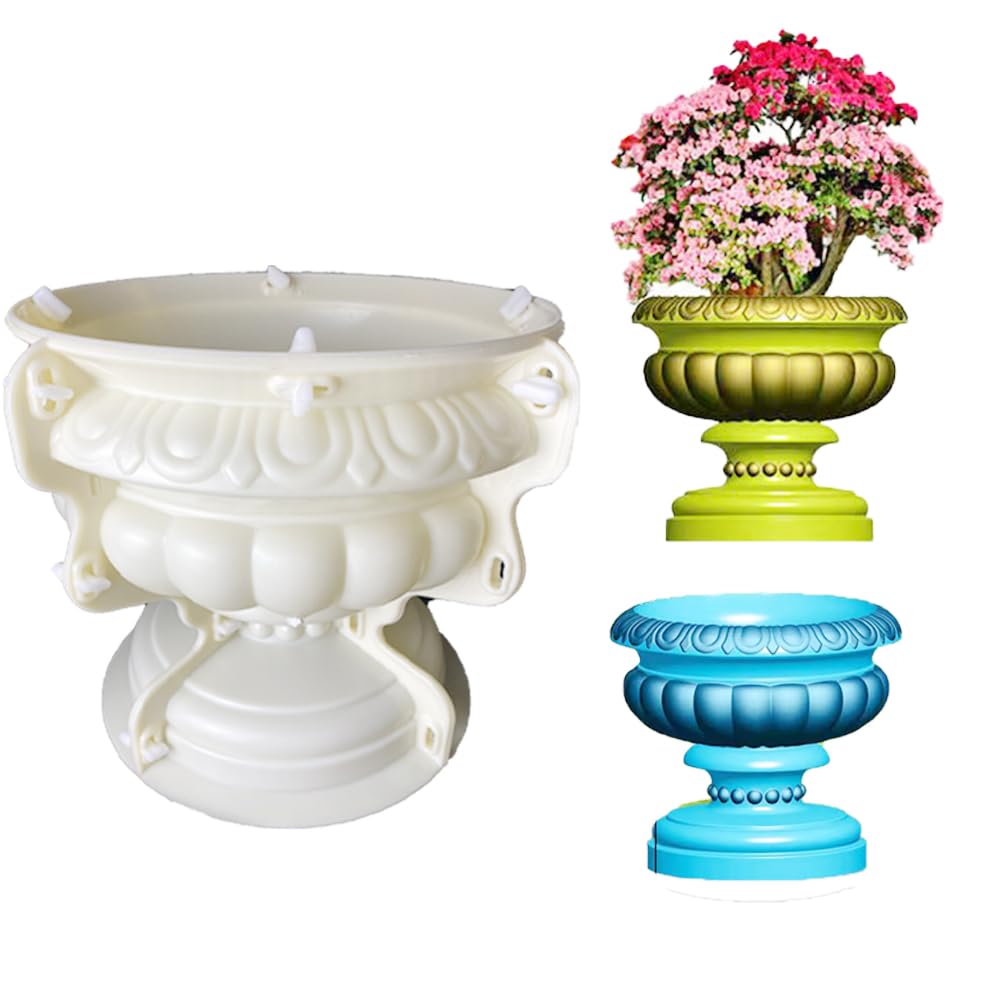
The three-piece round mold that survives heavy daily use — one reviewer noted over 10 pours and it was still going strong.
This is the mold for the production-minded DIYer who wants to churn out multiple round planters per week. The finished dimensions are 13.78 by 12.2 by 12 inches, giving it the largest round planter cavity on this list by volume. It comes as a three-piece set (an outer mold plus an inner core), which adds setup steps but also lets you create a hollow planter with a real soil cavity — something the solid-sphere mold cannot do. The plastic is ABS (acrylonitrile butadiene styrene, a tough impact-resistant plastic), and at 2 pounds it is noticeably lighter than the 3.1-pound SEWACC urn mold, though still stiff enough for repeated use.
The standout owner report comes from a buyer who used it twice a day and confirmed “no signs of defects or breaks on the mold so far.” Another long-term review sums it up: “This has held up well after approx 10 molds.” The downsides, mentioned across multiple reviews, are real. The plastic is thin in spots, and the mold can leak at the seams if you do not reinforce the joints. Several owners had to add extra hardware or tape to get a good seal. A recurring note is the lack of a drainage hole — you need a long masonry bit (a drill bit for concrete) to drill one yourself.
Production champ: This mold wins on sheer output volume per session (larger than the SEWACC urn mold), but you trade some setup fiddling for that productivity. Budget for seal reinforcement and a drill bit.
Pick this if: you are making planters in batches and need a hollow round form with real soil volume — it is the only pick here designed for that.
Pass on it if: you want a pour-and-forget experience. This mold demands attention to seals and drainage prep.
Understanding the Specs
Number of Pieces
A one-piece mold is the simplest to use: you fill it, let it cure, and flex it off the concrete. A three-piece mold (outer shell, inner core, and sometimes a base) creates a hollow planter with a soil cavity, which is essential for real plants, but adds assembly steps and more seams that can leak if not sealed properly. For your first mold, a one-piece design is the most forgiving.
Material and Weight
Plastic thickness is rarely listed directly, but the mold’s total weight is a useful clue. A mold that weighs over 3 pounds (like the SEWACC urn) typically uses thicker walls and will survive more pours than a 2-pound mold (like the EAIVENY round). ABS plastic (a tough, impact-resistant plastic) is preferred over generic polyethylene (a softer, more flexible plastic) because it resists cracking under repeated flexing during demolding.
FAQ
Can I use a large planter mold for concrete with regular Quikrete from the hardware store?
How do I keep the concrete from sticking to the mold?
Will one 60-pound bag of concrete fill a 16-inch sphere mold?
How long should I wait before demolding the concrete?
Can I make a planter with a drainage hole using these molds?
Are these molds reusable, or do they break after one use?
Why does my concrete planter have air bubbles on the surface?
What is the difference between a one-piece mold and a three-piece mold?
Final Thoughts: The Verdict
For most buyers, the large planter molds for concrete winner is the AUTUMN Large Concrete Heart Mold because it combines the largest finished piece on the list (17 by 16 inches) with a forgiving, single-piece design that beginners and pros alike trust. If you want a true hollow planter with a soil cavity, grab the EAIVENY 13.78-Inch Round Mold — it is the only pick here built to hold plants, not just concrete. And for a massive solid garden sphere that fills a 90-pound bag of concrete, the AUTUMN 16-Inch Orb Mold is the one to reach for.
How We Picked
We do not accept paid placement. Every pick is matched to a real buyer and a real use-case; we do not hands-on test units.
Sources & Methodology
Specifications: manufacturer listings and product documentation. Review insights: verified customer reviews, as of July 2026. Pricing: not shown on this page (it changes often); check the current price via the retailer link.
As an Amazon Associate, Lawn Gear Lab earns from qualifying purchases. This does not affect which products we feature.