
Specs are compiled from manufacturer listings and verified buyer reviews and can change over time — please confirm the key details on the product page before buying.
Leaf blowers come in two basic flavors: gasoline beasts that move anything in their path, and battery-powered models that ditch the fuel and pull-cord hassle for everyday yard cleanup. But here’s where it gets tricky: a blower’s specs (CFM, MPH, engine size or battery voltage) don’t tell the full story of how it handles your actual property. Wet oak leaves matted against a curb demand something very different from a quick sweep of a concrete patio.
I’m Rikta — the founder and writer behind Lawn Gear Lab. This guide is built by comparing the manufacturers’ published specifications and the patterns across verified customer reviews, so you get each pick’s real strengths and trade-offs instead of marketing spin.
You need a leaf blower that clears a big yard fast without leaving piles behind. The best large leaf blower for you depends on your property size and how many leaves you deal with — pick the wrong one and you waste money on power you never use or end up with a tool that bogs down in wet oak leaves.
Our Picks at a Glance

How To Choose The Best Large Leaf Blower
The biggest mistake buyers make is looking at MPH (miles per hour — how fast the air exits the nozzle) and ignoring CFM (cubic feet per minute — the total volume of air moving). For large properties with heavy, wet leaves, CFM is the number that actually clears the pile. A high CFM figure means the blower pushes more air overall, which is what you need to move a wall of wet maple leaves. MPH matters more for dislodging debris from cracks or tight spaces.
Power Source: Gas vs. Battery
Gas blowers deliver the highest CFM and run as long as you have fuel, making them the default for acreage with deep leaf loads. The trade-offs are noise (gas blowers are loud enough to require hearing protection in many areas), emissions, pull-cord starting, and ongoing fuel and oil costs. Battery blowers have closed the gap significantly, especially 56V and 80V models that reach 600-880 CFM. You trade infinite runtime for instant start, less noise, zero maintenance, and the convenience of grabbing the tool without mixing gas. Your decision hinges on property size: for 1+ acres of heavy trees, gas can still be faster; for typical suburban lots, a modern top-tier battery blower is often the better daily experience.
Battery Capacity and Runtime
Battery capacity is measured in Ah (amp-hours) at a given voltage. Manufacturer runtime claims (like “up to 90 minutes”) always assume the lowest speed setting. If you plan to use Turbo mode for heavy wet leaves, expect runtime to drop by half or more. The practical solution for large yards is having two batteries so one charges while you drain the other, or stepping up to a higher-capacity battery like a 5.0Ah or 7.5Ah unit.
Ergonomics and Weight Distribution
Handheld blowers concentrate all the weight in one arm, which leads to fatigue faster than a backpack design that distributes the load across your shoulders. A 10-pound handheld blower feels significantly heavier after twenty minutes than a 25-pound backpack blower. Look for features like an adjustable shoulder strap, a cruise control trigger lock, and a well-balanced grip. If you have a large yard with more than thirty minutes of blowing per session, a backpack blower or a lightweight handheld with a premium strap and harness system will save your arm.
Quick Comparison
| Model | Best For | Airflow (CFM) | Max Speed (MPH) | Weight / Form | Amazon |
|---|---|---|---|---|---|
| Echo PB-9010T★ Best Overall | Heavy wet leaves, acreage | 1110 CFM | 220 MPH | Backpack, 79.9cc gas | Amazon |
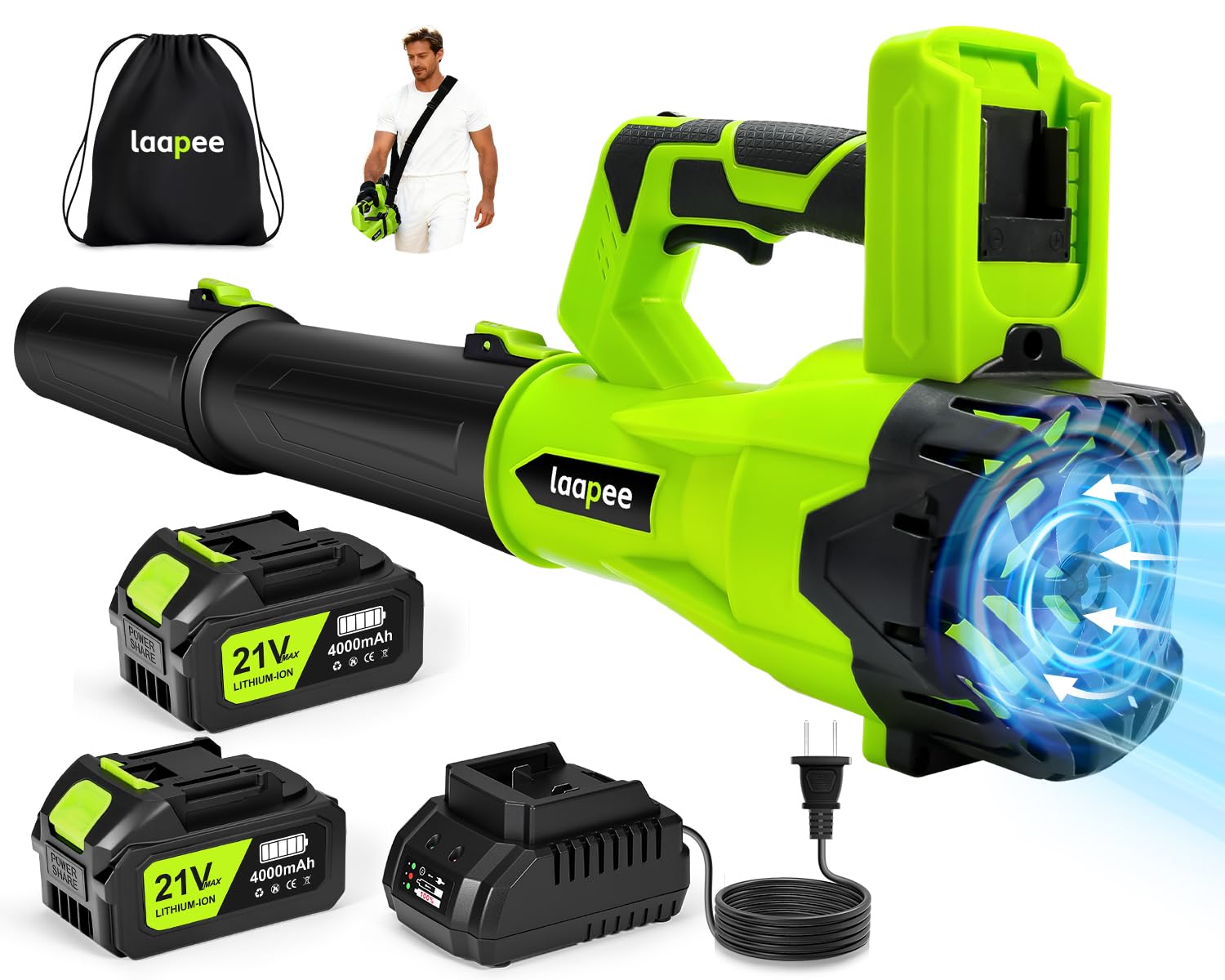
| Laapee BF868Best Value | Budget-friendly daily cleanup | 650 CFM | 180 MPH | 4.4 lbs handheld | Amazon |
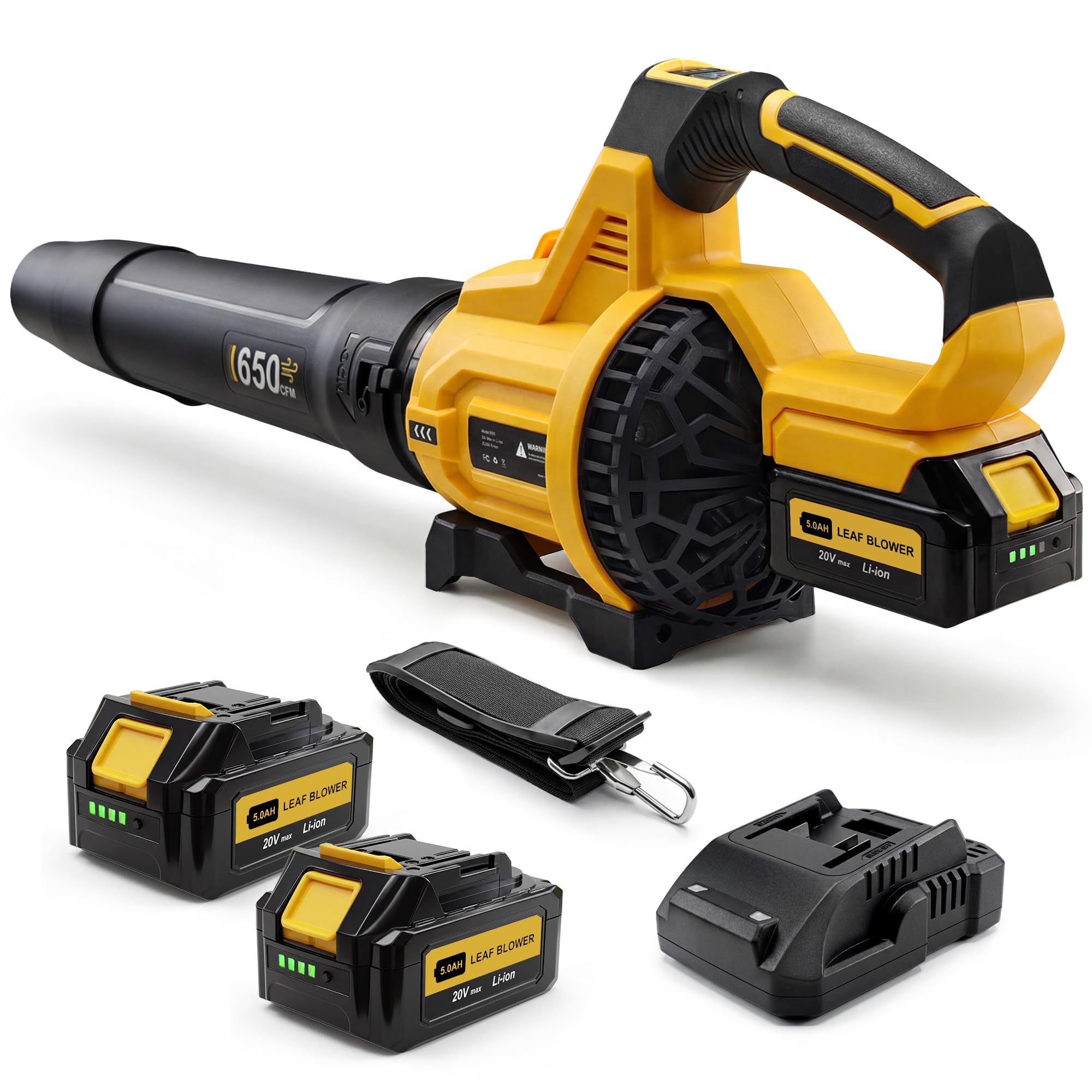
| LOSART CYJBattery Life King | Long runtime, medium yards | 650 CFM | — | 4.4 lbs handheld | Amazon |
| SEESII 8194 | Turbo boost, versatile use | 650 CFM | 160 MPH | 4.6 lbs handheld | Amazon |
| Greenworks BL80L2515 | 80V power, noise-sensitive areas | 700 CFM | 170 MPH | 5.8 lbs handheld | Amazon |
| EGO LB6703 | 56V balance, mid-yard work | 670 CFM | 180 MPH | 11.7 lbs handheld | Amazon |
| Echo PB-2620 | Gas handheld, professional tasks | 456 CFM | 172 MPH | Handheld, 25.4cc gas | Amazon |
| Husqvarna 350iB | Highest battery power, large yards | 800 CFM | 200 MPH | 10 lbs handheld | Amazon |
| EGO LB8803-2 | Maximum battery CFM, acreage | 880 CFM | 200 MPH | Handheld w/strap | Amazon |
In‑Depth Reviews
1. Echo PB-9010T Gas Backpack Blower
Our pick — over 4.5★ from 900+ verified ratings; the strongest balance of quality and price.
The gas backpack powerhouse that clears 14 oak trees in a couple of hours.
This machine moves an enormous 1110 CFM at a top speed of 220 MPH, and it shows in the real world. The verdict from owners is consistent: it is a “beastly” upgrade from smaller blowers like the Echo PB580/755ST, and it handles wet leaves, sticks, and matted debris without hesitation. The backpack straps spread the weight across your shoulders, making the 28″ x 20″ x 24″ frame feel manageable even during long sessions. Buyers report that the tube-mounted throttle puts control right under your thumb.
The trade-offs are the ones you expect from a pro-tier gas unit: it is loud, it is heavy enough that the blower “pushes back when walking,” and you need to plan for fuel and oil. But the consensus is that it outperforms the top models from Husqvarna, Stihl, and Redmax while costing less than those competitors. The power is so strong that one owner advises keeping the nozzle away from windows and vehicles because it can fling small rocks.
The crowd favorite among 900+ buyers, this unit earns a 4.7-star rating and dominates the discussion on performance and power — the two most-praised aspects. The “Powerful, clears 14 large oak trees’ leaves in ~2 hours” line from an owner sums up why this belongs at the top of the list for anyone with a serious leaf load.
The Air-Moving Authority
- 1110 CFM airflow — the highest in this lineup, capable of handling wet leaves and heavy debris.
- Owners say it starts easily and runs smoothly even after years of use.
- Comfortable harness system makes hours of work manageable despite its size.
The Realities of Gas
- Very loud operation — hearing protection is essential in most neighborhoods.
- No battery convenience; requires fuel mixing and routine maintenance.
- Some owners find the on/off switch location awkward compared to older Echo models.
The Heavy-Lift Winner: Reach for this if you have more than an acre of heavy leaf cover or wet debris that a battery blower cannot budge.
skip it if: You need a lightweight tool for quick daily cleanups, or you want to avoid the noise and maintenance of a gas engine.
2. Laapee BF868 Cordless Blower
A battery blower that punches well above its weight class for daily yard maintenance.
This handheld unit delivers 650 CFM at up to 180 MPH, which is impressive for a battery tool at this level. You get six speed settings (80 to 180 MPH) so you can dial down for dust and grass or crank it up for leaves and light snow. The package includes two 20V 4.0Ah batteries and a fast charger, giving you up to 30 minutes of runtime on low speed while the other battery charges.
The real story is how often owners mention its battery life — 180 owners single it out, making it the most-discussed feature by far. The included shoulder strap and two extension nozzles reduce arm fatigue during longer jobs. The “batteries don’t last very long” note from one owner is fair: hard use on high speed will drain a battery quickly, but the second battery keeps you moving.
At a 4.5-star average across hundreds of ratings, this is the crowd-pleasing option for anyone who wants cordless convenience without spending premium money. It clears leaves, grass clippings, dust, and even a couple of inches of dry snow.
The Everyday Workhorse
- Six speed settings let you match power exactly to the task.
- Two included batteries double your work time with zero waiting.
- Light enough to carry one-handed for quick sweeps.
The Battery Caveat
- Runtime on high speed is short — about 30 minutes on low, less on turbo.
- Plastic body can feel less durable than higher-priced metal-housing blowers.
The Smart Starter: Grab this if you want a capable cordless blower for a medium-sized yard without overspending.
Step Up If: You face heavy wet leaves or more than an hour of continuous blowing — consider a larger battery or gas backpack.
3. LOSART CYJ Cordless Blower
Runs up to 150 minutes on low — the battery endurance leader in this roundup.
The LOSART blower also hits 650 CFM, but it accomplishes that with a 1200W brushless motor and two 5.0Ah batteries — larger capacity packs than most competitors offer at this tier. The three speed settings give you enough control to handle everything from dust to wet leaves, and the tapered nozzle concentrates the airflow for more striking force.
What owners praise most — power, with 28 mentions — backs up the spec sheet. The unit weighs just 4.4 pounds with the ergonomic handle and shoulder strap, so it is genuinely comfortable for extended use. The “two batteries provide plenty of runtime” comment matches what we see in the data: you can blow for over two hours on low if you keep swapping packs.
This unit scores a 4.7-star average across nearly 160 ratings, making it one of the highest-scored battery blowers in the lineup. It is a strong middle choice between the budget-tier Laapee and the premium EGO units.
The Runtime Champion: Two 5.0Ah batteries give you the longest uninterrupted run time of any battery blower here. The trade-off is the 31.1-inch length — it is a longer tool, so it takes a little more room in storage.
Reach for This If: You have a medium yard and hate swapping batteries mid-job — the dual 5.0Ah packs keep you going.
Look Elsewhere If: You need the absolute highest CFM for wet leaves; this is 650 CFM, not the 800-880 CFM range of premium models.
4. SEESII 8194 40V Cordless Blower
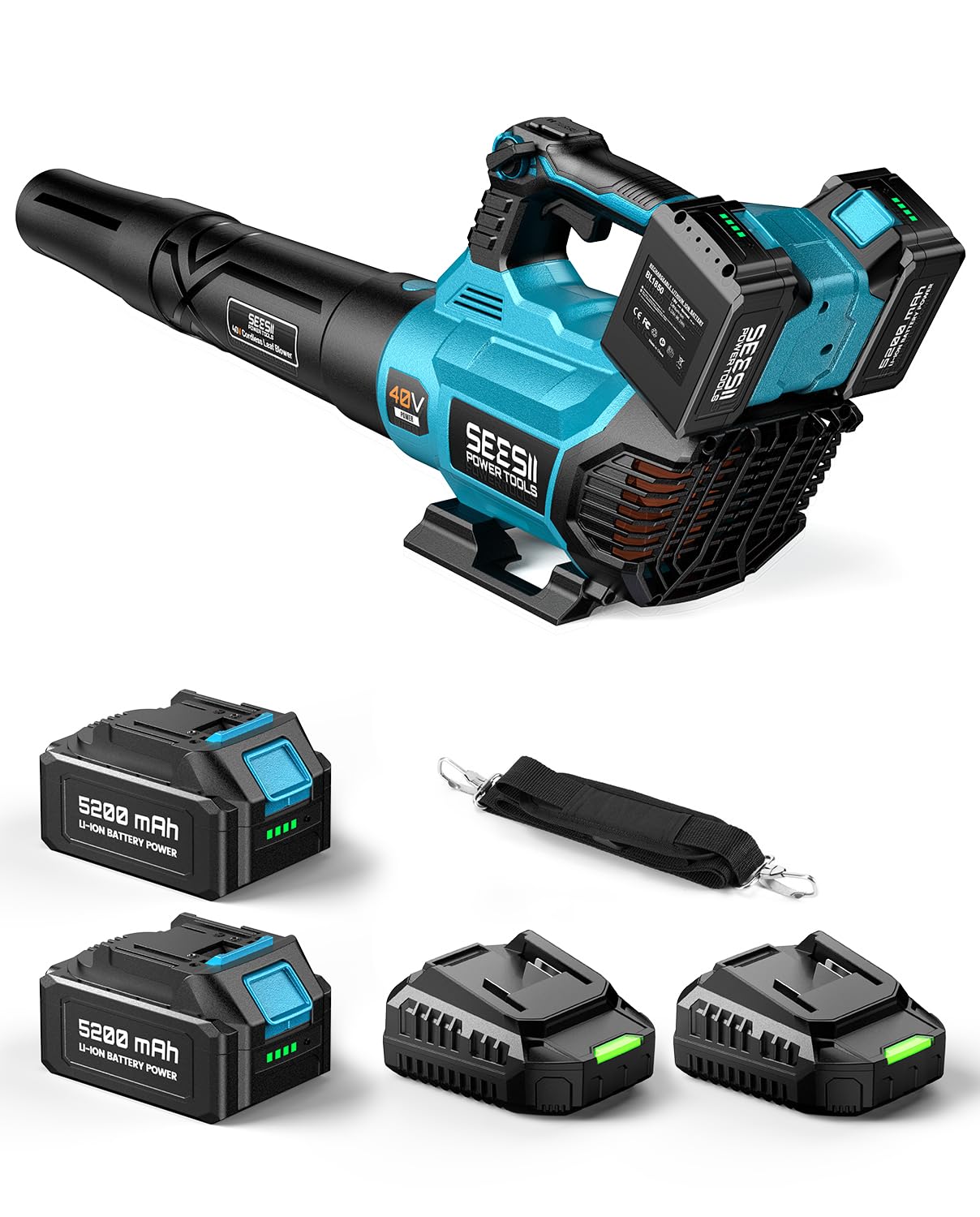
A one-touch turbo button unleashes 650 CFM and 160 MPH instantly.
The SEESII follows the same 650 CFM formula as the previous two picks, but it adds a dedicated turbo mode that the manufacturer says boosts cleaning efficiency by 30% compared to standard operation. That extra burst is engineered to dislodge rain-soaked leaves and small stones that normal speed cannot move. The 40V system runs on two 20V batteries connected in series, and you get two 5.2Ah batteries with two chargers.
Owner feedback highlights power (38 mentions — the top aspect) and effectiveness (30 mentions). The unit weighs 4.6 pounds, has an adjustable shoulder strap, and runs at variable speed plus the turbo button. The “good CFM, light weight for easy use” feedback from one owner reflects the general satisfaction. The mixed battery life reviews (31 mentions) are honest: at turbo speeds, battery drains fast, but the dual-pack system helps.
With 4.5 stars across nearly 300 ratings, the SEESII hits the mid-range balance — it costs more than the cheapest models, but you get a turbo boost (a button that temporarily maxes out airspeed for stubborn wet leaves) that budget blowers lack.
The Instant Boost: When you hit the turbo button, you get a surge that outperforms the standard 650 CFM blowers. The catch is battery life — the “beast mode” drains packs faster than normal operation, so plan for shorter bursts at full power.
Best For: Owners who want one tool for dust, grass, and occasional heavy wet leaves — the turbo covers all those scenarios.
Think Twice If: You need to blow for 45 minutes straight at full speed; the twin batteries run out faster than the LOSART’s dual 5.0Ah packs.
5. Greenworks BL80L2515 80V Blower
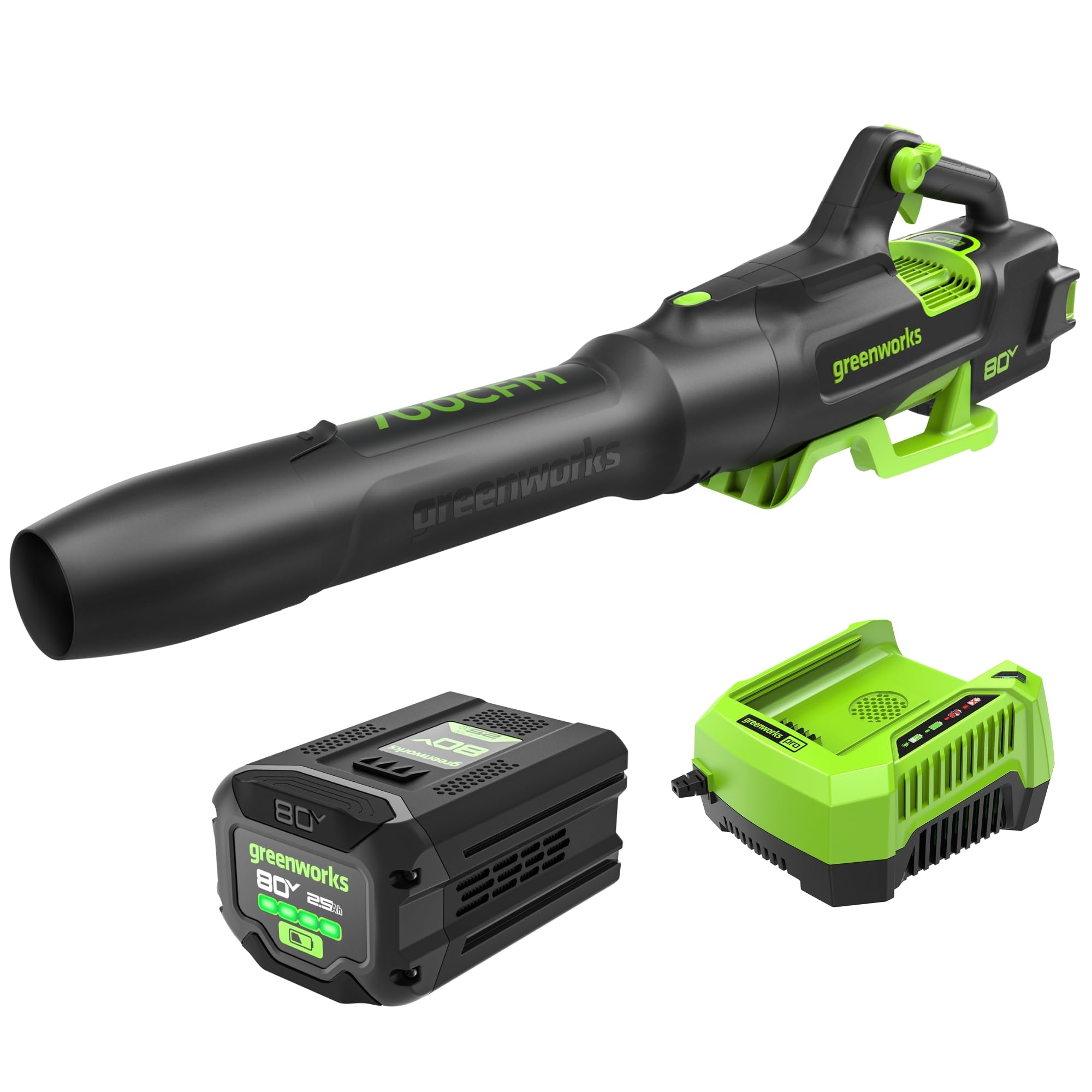
An 80V system that matches gas blowers on power without the fumes.
At 700 CFM and 170 MPH with a turbo boost, the Greenworks 80V steps into the range that used to belong only to gas handhelds. The manufacturer claims it outperforms 27cc gas blowers while running at 74 dB — significantly quieter than any gas equivalent. The brushless motor is rated for 30% longer lifespan and 40% quieter operation compared to gas models, and the cruise control trigger lock helps save 20% battery life during long jobs.
Owners mention that it powers through light snow on cars and sidewalks with ease, and that it is “more powerful than the 60V” version. Power and quality are the most-praised aspects, with 59 and 44 mentions respectively. The downsides are consistent with a high-voltage battery blower: it is a little on the heavy side at 5.8 pounds, battery life (51 mentions, rated mixed) depends heavily on using the variable speed and cruise control wisely.
This unit holds a 4.5-star average across 350+ ratings, and it is a natural pick for homeowners already invested in Greenworks’ 80V ecosystem for their trimmer or chainsaw.
The Gas Alternative
- 700 CFM turbo boost moves wet leaves as fast as many gas handhelds.
- 74 dB noise level is quieter than any comparable gas blower.
- Cruise control trigger lock reduces hand fatigue during extended use.
The Battery Reality
- Heavier than the 4.4-pound battery blowers; some owners find it fatiguing after 30 minutes.
- Battery life on full turbo is short — plan your work around the included 2.5Ah pack.
Choose This For: The highest voltage in the battery handheld class, giving you gas-like performance without the pull cord or fumes.
Consider Something Else If: You prefer a lighter tool — at 5.8 pounds this is not the most comfortable for one-handed operation over an hour.
6. EGO LB6703 Cordless Blower

EGO’s 56V platform delivers up to 80 minutes of runtime with reliable power.
The LB6703 offers 670 CFM and 180 MPH from its turbine fan design, which EGO says is inspired by aeronautics technology. The variable speed dial lets you lock in any speed from 250 to 530 CFM, and the included 4.0Ah battery can run for up to 80 minutes on a charge. The battery and charger combo is a key part of the value: the included CH3200 charger refills the 4.0Ah pack in about 55 minutes.
Owners praise the power (82 mentions) and quality (73 mentions) most often. Many describe it as a lighter, quieter, and easier-to-handle alternative to their previous gas backpack blower. The weight — 11.7 pounds with the battery — is the most common criticism, with 59 mentions of weight as a negative factor. That is heavier than many handhelds, but the tool is well-balanced, and some customers note a comfortable experience with the strap.
The LB6703 holds a 4.4-star average across nearly 700 ratings and works with all EGO 56V ARC Lithium tools and batteries. It is a solid mid-range entry that benefits from the brand’s extensive platform.
The Balanced Handheld: EGO’s 56V system sits between the 40V budget blowers and the 80V high-voltage models. It gives you enough power for a one-acre yard with decent battery runtime, and the platform compatibility means you can share batteries with other EGO tools.
Best For: Homeowners who already own EGO tools or want the flexibility to expand into the EGO 56V ecosystem in the future.
Watch Out For: The weight — at nearly 12 pounds, this is a heavy handheld that may fatigue a smaller-framed user on long jobs.
7. Echo PB-2620 Gas Handheld Blower
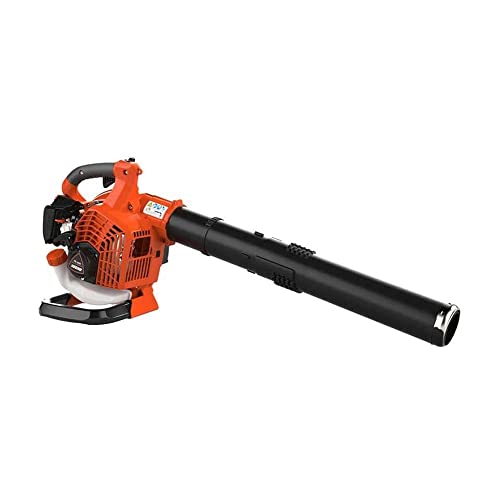
Echo’s handheld gas blower starts easily and delivers professional-grade wind force.
At 456 CFM and 172 MPH from a 25.4cc 2-stroke engine, the PB-2620 sits below the backpack Echo in raw horsepower but still punches into the gas-powered territory that most battery blowers cannot match on sustained power. The noise level is measured at 69 dB — quieter than many gas blowers, though still loud enough to need ear protection for extended use. It comes with both the round and flared nozzles tucked into the package, which reviewers found a pleasant surprise because the flared nozzle is not obvious in the listing.
The “starts on the third pull, idles smooth” feedback from owners is the kind of reliability that Echo’s pro-series reputation is built on. Performance (51 mentions) and blowing power (35 mentions) are the top aspects. The trade-off is weight and noise: it is a gas handheld, so there is engine vibration and the general heft of the engine block. The weight is noted as mixed by 13 owners.
With a 4.5-star average across 300+ ratings, this is a committed professional’s choice — someone who wants gas power in a handheld format and is willing to accept the noise and pull-start routine.
Professional-Grade Gas Power
- Starts reliably on the first few pulls and runs smoothly after break-in.
- Comes with both tapered and flared nozzles for different debris scenarios.
- Runs as long as you have fuel — no battery runtime anxiety.
Gas Realities
- Heavier than most battery handhelds; some owners find it tiring during long sessions.
- Requires fuel mixing and regular maintenance for the 2-stroke engine.
- At 69 dB, it is quieter than many gas blowers but still louder than any battery option.
Ideal For: Commercial or heavy residential use where you need reliable gas power in a smaller, more maneuverable format than a backpack blower.
Not For: Occasional users — the battery-powered blowers in this guide start instantly and need no gas or oil changes, so they suit lighter, less frequent jobs better.
8. Husqvarna 350iB Cordless Blower

The 800 CFM battery blower that one owner says “outperforms my gas blower.”
The Husqvarna 350iB produces 800 CFM at 200 MPH, which is the highest airflow in the battery handheld category in this lineup. The 40V system with the included 7.5Ah battery means you get a power boost mode that the brand says delivers 20 percent more power on demand. The intuitive keypad and cruise control make operation straightforward, and the built-in debris scraper helps loosen wet, sticky leaves.
The feedback from owners is emphatic about the power: “this thing really blows some air” and “comparable to a backpack blower” are typical comments. The unit is long — 41 inches including the nozzle — and at 10 pounds it is heavy enough that some owners experience arm fatigue after about an hour. There is no included shoulder strap. Battery life is the most mixed aspect, with some owners reporting over 30 minutes of runtime on normal speed and others finding it drains quickly under power boost.
With a 4.4-star average across nearly 700 ratings, this is the highest-CFM battery blower from a major outdoor power brand. The price point makes it a premium choice that competes directly with mid-range gas backpack blowers.
Battery Performance Leader
- 800 CFM at 200 MPH is as close to gas backpack power as a handheld battery blower gets.
- Power boost mode delivers 20 percent more power for tough, wet debris.
- One battery fits all Husqvarna 40V handheld tools, expanding your cordless yard system.
The Compromises
- Heavy for a handheld — no included shoulder strap, and arm fatigue sets in after 30-60 minutes.
- Expensive spare batteries make it tough to extend runtime affordably.
Go For This If: You want the absolute most powerful battery handheld on the market and do not mind the higher price and weight.
Choose The Echo Backpack Instead If: You have more than an acre and need sustained blowing power without worrying about battery drain.
9. EGO LB8803-2 Cordless Blower

880 CFM and a digital display — the most powerful EGO handheld you can buy.
The LB8803-2 is a statement piece from EGO: 880 CFM at 200 MPH, powered by two 4.0Ah batteries that give you up to 90 minutes of runtime. The digital display shows real-time blower performance, battery charge status, and the cruise control lock setting. The variable speed dial lets you set airflow from 270 to 700 CFM before engaging turbo mode for the full 880 CFM burst.
Owner feedback is dominated by performance (110 mentions) and power (87 mentions) — both solidly positive. “The most powerful blower in a residential cordless” and “outperforms gas blowers” captures the general sentiment. The unit includes a shoulder strap, which is a blessing given that it is still a handheld with the battery weight concentrated in your arm. The only notable downside is the noise — at full power, it is loud enough to need hearing protection.
At 4.6 stars across nearly 500 ratings, this is the battery champion of the lineup. The included twin batteries mean you can run one while the other charges, removing the big complaint about EGO’s single-battery models. If battery power is your priority and you have the budget, this is the one to beat.
The Cordless King
- 880 CFM is the highest airflow in any residential battery blower — matches many gas backpacks.
- Digital display gives you real-time info on battery and performance.
- Twin 4.0Ah batteries and fast charger mean nearly continuous operation.
The Premium Catch
- The included 4.0Ah batteries are limited at full power; owners recommend stepping up to 5.0Ah for longer runs.
- Very loud at full turbo — hearing protection is necessary.
Pick This One If: You want the absolute top-tier battery blower and are willing to pay for it. It is ideal for large suburban lots with heavy leaf cover.
Consider The Echo Backpack If: You have more than two acres of dense trees and need the endurance of a gas tank rather than battery swaps.
Understanding the Specs
CFM vs MPH
CFM (cubic feet per minute) measures the total volume of air the blower moves — this is the spec that pushes a heavy pile of wet leaves. MPH (miles per hour) is the air speed at the nozzle tip, which helps dislodge debris stuck in cracks, rocks, or grass. For large property work with heavy debris, prioritize CFM. For detail work around patios, driveways, and flower beds, MPH matters more. A good large leaf blower will have a CFM figure in the 650-1110 range and a MPH figure in the 160-220 range.
Brushless Motor
A brushless motor (an electric motor that uses an electronic controller instead of physical carbon brushes to spin) creates less friction and heat than a traditional brushed motor. That means you get more runtime per battery charge, less noise, and fewer repairs over the years. Every top-tier battery blower in this guide uses a brushless motor — look for it if you want a tool that lasts multiple seasons without wearing out.
FAQ
How many CFM do I need for wet leaves?
Is a gas or battery leaf blower better for a large yard?
Why is a backpack blower better than a handheld for large properties?
Does higher voltage mean more power in a battery blower?
How long does a battery leaf blower last on a single charge?
Can I use a leaf blower for snow removal?
Is a gas blower louder than a battery blower?
What is the difference between a two-stroke and four-stroke gas engine in a leaf blower?
Can I share batteries between different brands of leaf blowers?
What does the turbo button do on a leaf blower?
Final Thoughts: The Verdict
For most buyers, the best large leaf blower is the Echo PB-9010T because it delivers overwhelming 1110 CFM power in a comfortable backpack format that clears a heavy leaf load faster than anything else at its price. If you want the strongest battery-powered experience, grab the EGO LB8803-2 with two batteries for nearly non-stop work. And for a simple, effective daily tool, the LOSART CYJ offers the best balance of runtime and cost with its dual 5.0Ah batteries.
How We Picked
We do not accept paid placement. Every pick is matched to a real buyer and a real use-case; we do not hands-on test units.
Sources & Methodology
Specifications: manufacturer listings and product documentation. Review insights: verified customer reviews, as of July 2026. Pricing: not shown on this page (it changes often); check the current price via the retailer link.
As an Amazon Associate, Lawn Gear Lab earns from qualifying purchases. This does not affect which products we feature.