
Specs are compiled from manufacturer listings and verified buyer reviews and can change over time — please confirm the key details on the product page before buying.
A big outdoor planter needs to do two things that feel like opposites: hold a serious amount of wet soil without feeling like a boulder you have to haul around, and survive a full season of baking sun, freezing nights, and pounding rain without looking faded or chipped after a few months. The real trick is finding the balance between a pot that feels solid under a large shrub yet stays light enough to move when you redecorate the patio. The three picks here all clear the 16-inch-or-larger bar, but each one approaches that trade-off differently — a heavy-duty cube built like a piece of furniture, a versatile four-pack that keeps the cost per pot impressively low for the size, and a tall tapered pair that tricks the eye into thinking it is real stone.
I’m Rikta — the founder and writer behind Lawn Gear Lab. This guide is built by comparing the manufacturers’ published specifications and the patterns across verified customer reviews, so you get each pick’s real strengths and trade-offs instead of marketing spin.
Below, you will find the honest breakdown of every listed dimension, gallon capacity, and material claim, so there are zero surprises after checkout when you are looking for the best large flower pots outdoor option for your porch or garden.
Our Picks at a Glance
How To Choose The Best Large Flower Pots Outdoor
Buying a big outdoor pot using the wrong yardstick — picking by looks alone before you check capacity, weight, and the kind of plastic it is molded from — is the fastest way to end up with a cracked pot after the first hard freeze or a container that is too shallow for a shrub’s root ball. Three criteria matter most for this category.
Capacity and Real Root Room
A pot’s “height” measurement is not the same as its usable volume, because tapered sides slash capacity fast. A 26-inch-tall planter that tapers sharply at the base might hold less actual soil than a shorter, wider box of the same height. For big outdoor plants like hydrangeas, boxwoods, or small trees, you want at least 7 gallons of soil volume to give roots room to spread without circling and choking themselves.
Material: Resin vs. Polypropylene
Resin and polypropylene plastic both handle weather well, but they differ under weight. High-grade polypropylene is dense and rubbery — it flexes slightly before it breaks, making it excellent for windy spots where a stiff pot might crack. Resin, by contrast, is molded with stone-like texture and feels rigid and premium to the touch, but it is still lightweight (around 10 pounds for a tall planter). Both must be UV-stable; without that, any plastic pot turns chalky and brittle after one summer of full sun.
Drainage and Winter Survival
Water pooled at the bottom of a pot is a death sentence for roots in any season, and it is catastrophic in winter — frozen water expands and can split plastic or resin walls from the inside out. Good drainage means pre-drilled holes at the lowest point, not a vague “drillable” dimple you have to cut yourself. Saucers help keep decks clean, but for winter, you should either bring the pot under cover or tilt it so water runs out freely.
Quick Comparison
| Model | Best For | Capacity | Height | Weight | Amazon |
|---|---|---|---|---|---|
| Veradek Block Series Cube★ Best Overall | Heavy-duty cube for large shrubs | 35.84 liters | 18 inches | 14 Pounds | Amazon |
| Keter Stone Tapered Pair | Tall stone-look for entryways | 12.2 gallons | 26.38 inches | 9.9 Pounds | Amazon |
| Svxtoby 4-Pack | Budget multi-pack for patios | 7 gallons | 11.4 inches | 6.9 lb (approx) | Amazon |
In‑Depth Reviews
1. Veradek Block Series Cube Plastic Planter
Our pick — over 4.5★ from 650+ verified ratings; the strongest balance of quality and price.
The heavyweight cube that shrugs off wind and weather without cracking.
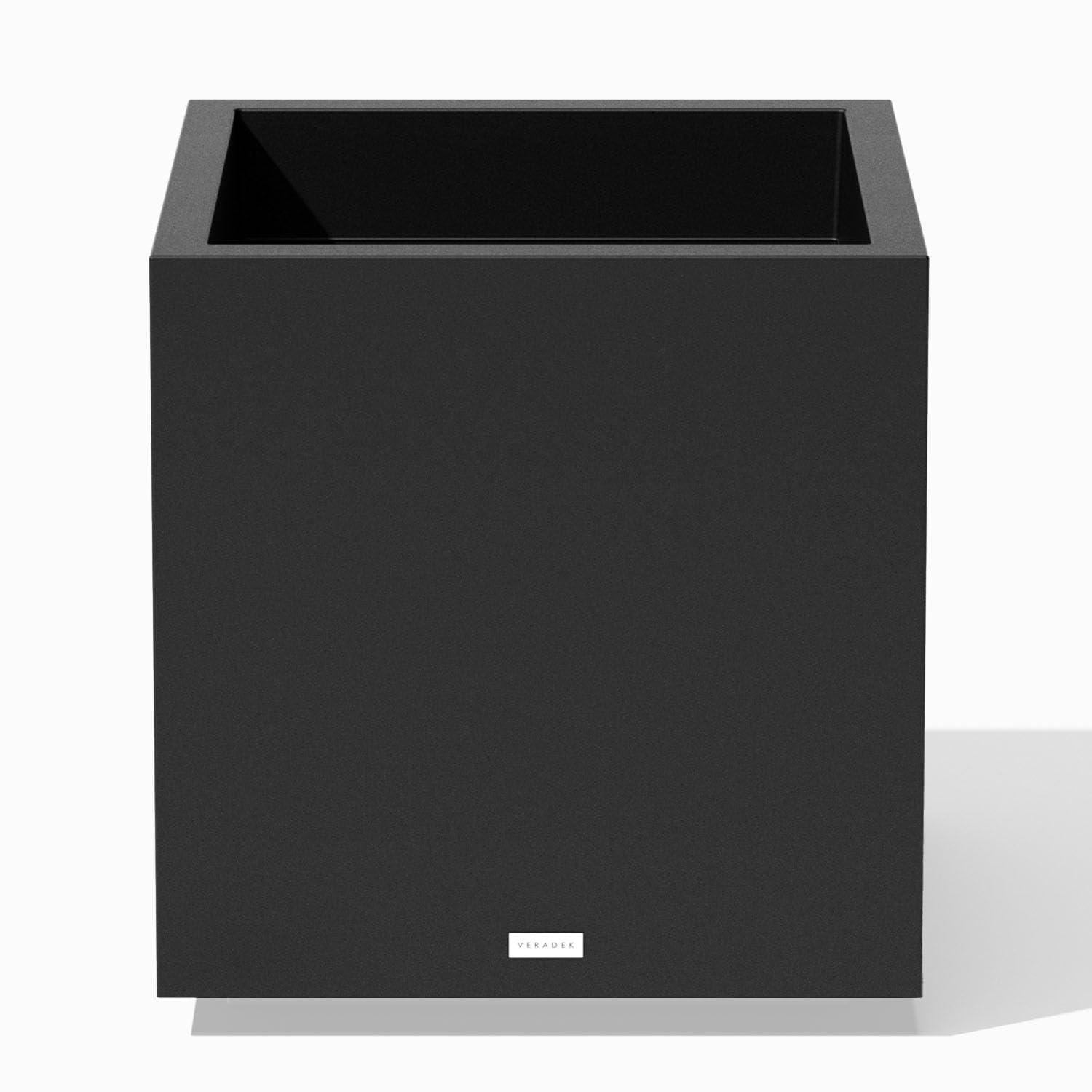
This is the one you choose when a pot needs to feel like furniture rather than a flimsy plastic tub after a season of abuse. At 14 pounds, it is the heaviest of the three picks here, which makes it the most stable in high-wind spots — you will not come outside to find a Russian sage lying on its side. The material is high-grade polypropylene (a dense, rubbery plastic that resists UV fading), so it absorbs bumps and freeze-thaw cycles better than brittle resin. Buyers report that it “withstands sun/rain” and praise the “lightweight, great drainage, built-in root protection.” Appearance is the most-praised aspect here, with well over a hundred owners calling it a beautiful addition to patios — and it is designed and manufactured in Canada, which adds a layer of quality assurance that many mass-market pots lack.
The pre-drilled drainage holes include plugs, so you can water without worrying about overwatering, though a handful of owners note the internal drainage system gets mixed feedback because the design is not a standard open bottom. The trade-off is real: some wish for more conventional drainage points. Still, the consensus is clear: buyers who paid the higher price feel they got what they paid for, calling it “sturdy and well made” and worth the money for a pot that improve the look of an entire entryway.
The recurring gripe here is the price — it is the most expensive single pot when compared per unit — and an occasional note about size being larger than expected. That is hardly a flaw for a category where “too large” is usually the goal, but measure your space before ordering. The insulation in the walls helps moderate soil temperature, and the stand-up-to-wind reputation means you can plant tall specimens without staking the pot itself. If you want one pot that does everything and will still look sharp three years from now, this is the pick.
Box-Store Toughness
- Heaviest build (14 pounds) stops tipping in strong wind
- High-grade polypropylene resists cracking in freeze-thaw cycles
- Pre-drilled holes with plugs let you control drainage
Trade-Offs to Know
- Drainage design gets mixed feedback — some want more conventional floor holes
- Higher per-pot cost than multi-pack options
Reach for this if: you want a single, sturdy, long-lasting planter that looks modern on a patio or front porch and can stand up to windy weather without budging.
Look elsewhere if: you need multiple pots for the lowest possible price, or if a conventional open-bottom drainage design is non-negotiable for you.
2. Keter Stone Tapered Planter Set of 2
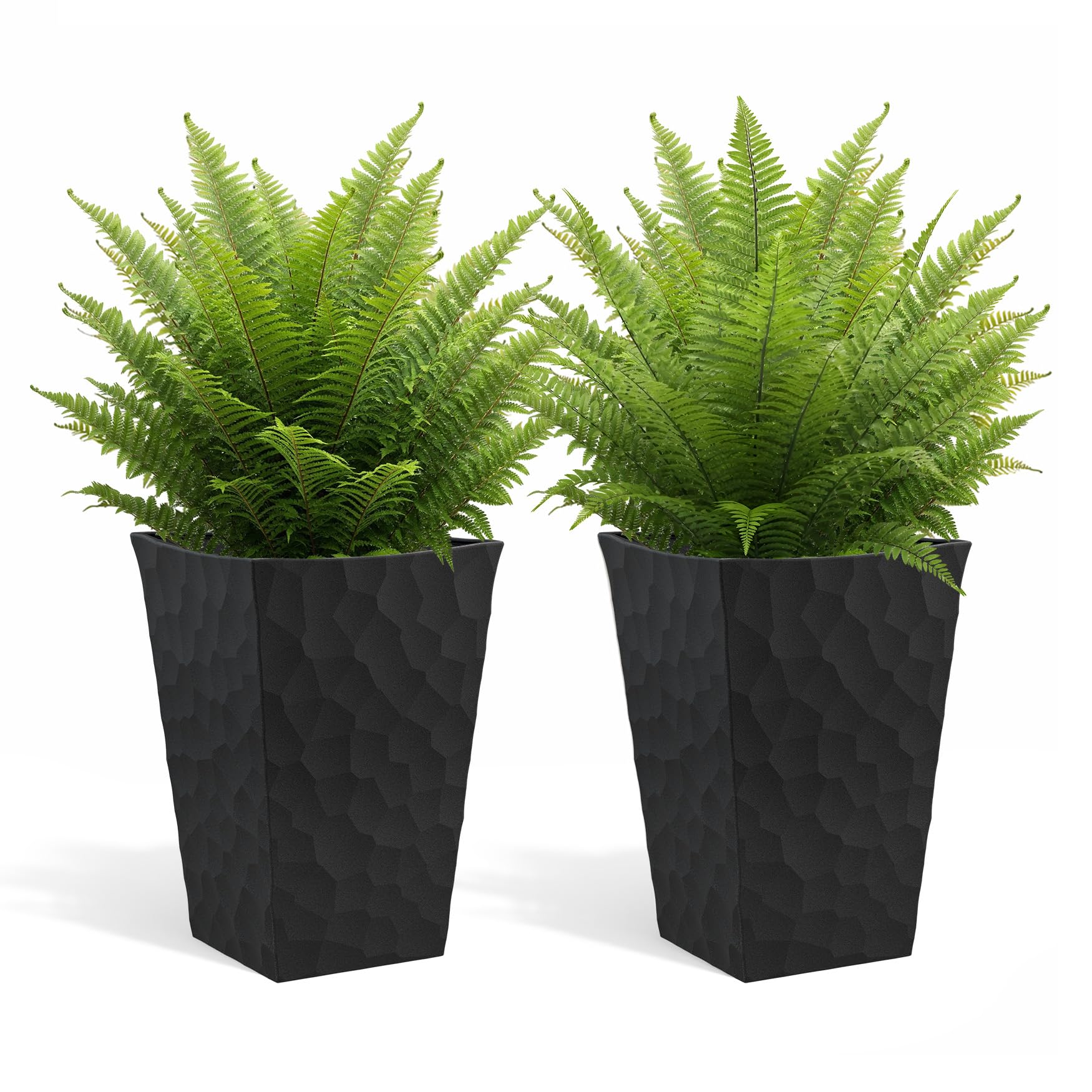
Tall, stone-textured resin that looks expensive without weighing like concrete.
This set of two planters leads with sheer presence. Each one reaches 26.38 inches tall — a head-turning height that makes it ideal for flanking a front door or anchoring the corners of a patio. The sculpted resin finish has a brushed stone look that owners consistently say “looks very expensive,” with appearance and quality as the top two most-praised aspects (combined, nearly a hundred buyers mention them). Despite the height, each pot weighs only 9.9 pounds, while the Veradek cube weighs 14 pounds, meaning you can move these around easily without sacrificing the visual heft of real stone. Owners mention they “stand up to heavy winds” with a bit of added weight in the bottom, and the flippable shape gives you two different display options.
The capacity here is the standout: 12.2 gallons per pot, versus the 7-gallon pots in the four-pack below. That is enough to support a small tree or a dense fern arrangement; one owner notes theirs holds a 50-inch fern with room to grow. The drainage design requires a small note: the holes are drillable dimples rather than pre-drilled openings, so you will need a drill to create them yourself. This gives you control over placement and size, but it is an extra step that some owners wish was already done. One experienced buyer filled the bottom with cinder blocks for ballast, which is smart preparation for a tall pot in an exposed spot.
The honest limitation is that the resin, while beautiful, is plastic — so it does not have the same freeze-thaw rigidity as the polypropylene cube. In extreme northern winters, leaving wet soil in an undrained pot risks cracking. The weight is also a double-edged sword: at under 10 pounds, a tall planter with a top-heavy shrub can tip in a gust unless you add stones or bricks to the base. That is standard practice for any tall lightweight pot, but worth factoring in before you plant. For a front porch statement that arrives fully assembled and needs zero construction, this pair is the most affordable way to get that premium look.
Tall, Light, Convincing: The stone-textured resin fools the eye into seeing something much heavier and more expensive than the 9.9-pound reality.
One Prep Step: Drillable drainage means you control the hole pattern, but you will need a drill and a few minutes before the first planting.
Choose these if: you want tall, elegant planters that look like carved stone for a front porch or entry flank, and you do not mind drilling your own drainage.
Skip them if: you want pre-drilled holes right from the start, or if your garden is in a famously breezy spot and you prefer a heavier built-in anchor.
3. Svxtoby 16 Inch Plant Pots Set of 4
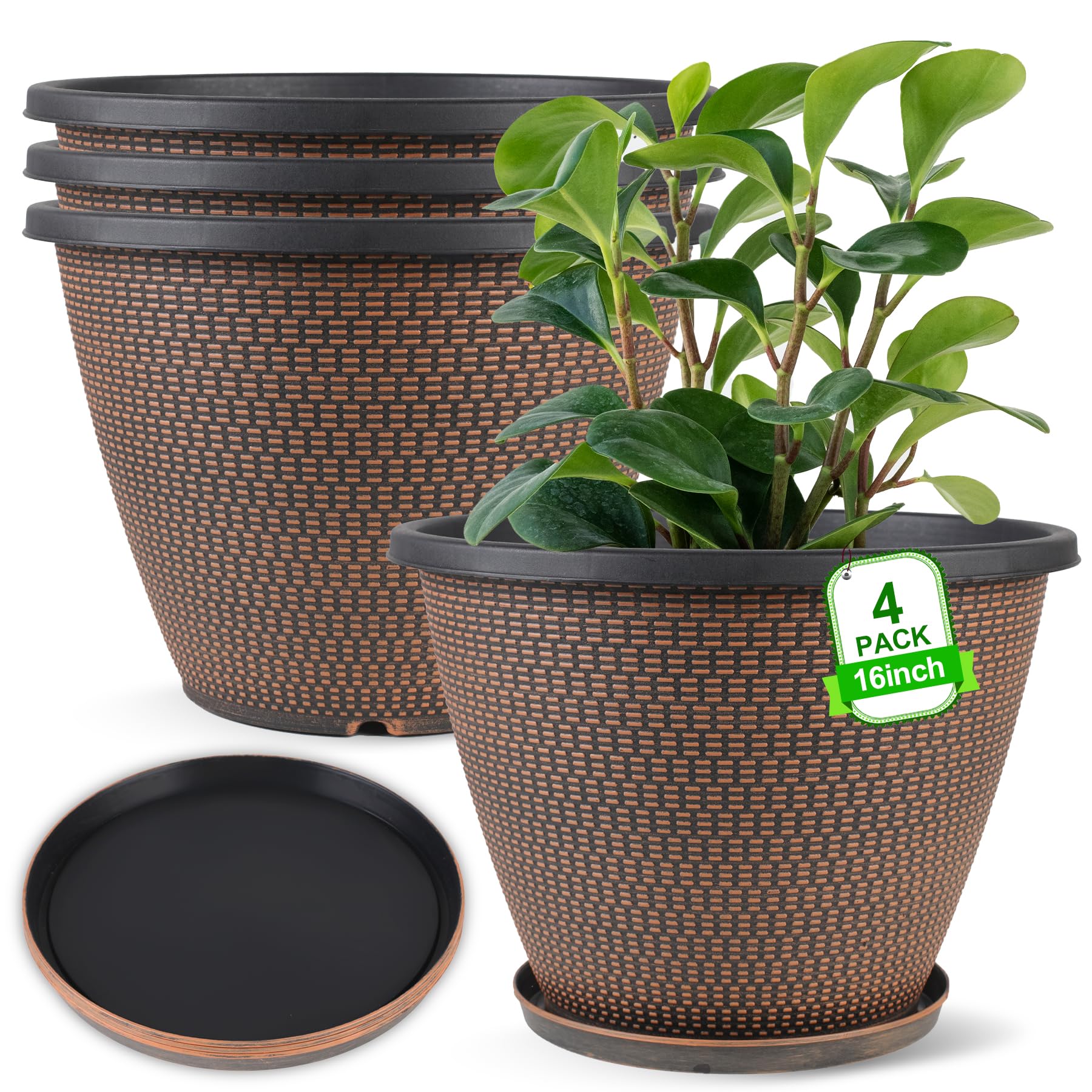
A four-pack of decent-sized pots that keeps the cost-per-planter impressively low.
Each pot holds 7 gallons of soil, which is enough for small shrubs, large perennials, or a cluster of annuals, and the included saucer means you can water on a deck or balcony without staining the surface. The plastic is lightweight (each pot is around 2.6 pounds) and weather-resistant, built to survive “intense sun and harsh winter temperatures” without fading, cracking, or peeling, according to the listing. The design uses a woven-texture pattern on a painted black copper finish, and customers note the appearance is the single most-praised feature here — they “look like real pottery” at a glance, which is impressive for a multi-pack in this price range.
The honest limit is the capacity: at 7 gallons, these are notably smaller than the Keter’s 12.2 gallons — a gap of 74% less soil volume — so they are a solid choice for medium-sized plants but will not accommodate a full-grown shrub or small tree the way heavier-duty options do. The saucers are shallow, which means overwatering quickly leads to runoff on the saucer rim rather than deep containment; buyers recommend keeping a light hand with the watering can. The height is 11.4 inches, which is short enough to place on a rail or a low shelf without overwhelming the space. For staging starter plants, herbs, succulents, or houseplants that you intend to move around, the lightweight build is a real convenience: you can shuffle pots around the patio without a hand truck.
The durability question for long-term outdoor exposure remains open — one cautious owner says “I hope they hold up,” and there is not enough review data to give a definitive verdict after multiple freeze-thaw cycles. For the price, they function as attractive houseplant pots that can live outside during the growing season, and the included drainage holes and trays are a welcome convenience that the Keter set does not offer from the start. If you need several matching pots for a uniform look across a patio or balcony on a tight budget, this set delivers strong bang for the buck.
Budget Champion: Four 7-gallon pots plus saucers make this the most economical way to get a matching set of large outdoor planters.
Know the Fit: Shorter than the other picks at 11.4 inches — best for medium plants, not tall privacy shrubs.
Perfect for: gardeners on a budget who need multiple pots for a deck or balcony and want decent drainage with included saucers.
Not ideal if: you need tall planters for visual height or want a pot sturdy enough for a small tree or a top-heavy shrub that needs root ball room beyond 7 gallons.
Understanding the Specs
Capacity in Gallons vs. Liters
This is the real measure of root room, not the pot’s height. A tall, narrow pot can hold less soil than a shorter, square one of the same height. For a large outdoor flower pot, 7 gallons is the minimum for a medium shrub, while 12 gallons or more clears space for a small tree or a dense fern arrangement. 35.84 liters equals roughly 9.5 gallons, so keep an eye on the actual number rather than the “18-inch” label.
Material: Resin vs. Polypropylene Plastic
Resin is a hard, rigid plastic that can be textured to look like stone or wood — it is light and weather-resistant, but it can crack if frozen water expands inside an undrained pot. Polypropylene plastic is denser and more flexible; it stands up to bumps and freeze-thaw cycles better but lacks the premium textured look. Both need UV stabilizers to avoid becoming brittle after months of direct sunlight. For heavy wind areas, a heavier polypropylene pot (like the 14-pound Veradek) is more stable than a lighter resin pot of the same size.
Drainage Holes: Pre-Drilled vs. Drillable
A pre-drilled hole means water exits immediately — the pot is ready to plant from the start. A “drillable” design uses a thin plastic dimple you must cut or drill yourself. That gives you control over the size and location of the hole, but it is an extra step you need to know about before pouring in soil. For winter use, any drainage is better than none: frozen water expands and can crack plastic or resin walls.
Item Weight and Wind Stability
A tall, lightweight pot acts like a sail in a strong gust. A 10-pound pot that is 26 inches tall needs ballast (stones, bricks, or wet soil) to stay upright with a top-heavy plant. Heavier pots — 14 pounds or more — are inherently more stable, but harder to move around the yard. Check your local wind exposure before choosing between a lightweight resin pair and a heavier polypropylene cube.
FAQ
Will a 7-gallon pot be big enough for a hydrangea shrub?
Can I leave a resin planter outside during freezing winter weather?
How much does a 16-inch pot actually weigh when filled with wet soil?
What is the difference between UV-resistant plastic and regular plastic for outdoor pots?
Do I need a saucer under an outdoor planter, or does the ground catch the water?
Is it better to get a set of four smaller pots or two larger ones?
How do I prevent a tall planter from tipping over in wind?
Can I repurpose indoor plastic pots for outdoor use?
Final Thoughts: The Verdict
For most buyers, the best large flower pots outdoor winner is the Veradek Block Series Cube because it combines the heaviest build (14 pounds) with a polypropylene material that handles wind and freeze-thaw cycles better than resin, and its pre-drilled drainage with plugs gives you immediate control over water flow. If you want the tallest, most elegant statement planters that look like real stone without the weight, grab the Keter Stone Tapered Set of 2 — the 26-inch height and 12.2-gallon capacity beat every other pick for root room and visual presence. And for a budget-friendly way to fill a patio with matching pots, the Svxtoby 4-Pack delivers four 7-gallon planters with saucers at a per-pot cost that leaves room in your budget for the actual plants.
How We Picked
We do not accept paid placement. Every pick is matched to a real buyer and a real use-case; we do not hands-on test units.
Sources & Methodology
Specifications: manufacturer listings and product documentation. Review insights: verified customer reviews, as of July 2026. Pricing: not shown on this page (it changes often); check the current price via the retailer link.
As an Amazon Associate, Lawn Gear Lab earns from qualifying purchases. This does not affect which products we feature.