
The frustration is universal: you lay down a weed barrier, spread fresh mulch, and within weeks stubborn shoots are pushing through. More often than not, the culprit isn’t the weeds — it’s a fabric that can’t breathe. Landscaping fabric separates functional gardens from perpetual maintenance traps, and choosing wrong means tearing everything up and starting over.
I’m Rikta — the co-founder and writer behind Lawn Gear Lab. I’ve sifted through hundreds of hours of owner reports and specification sheets to isolate the metrics that separate long-term solutions from seasonal failures.
Whether you are taming a flower bed, building a rock garden, or laying down a pathway base, finding the right best landscaping fabric depends on understanding weave type, weight density, UV stabilization, and water permeability—not just the highest rating on the package.
How To Choose The Best Landscaping Fabric
A successful weed barrier isn’t about blocking everything—it’s about strategic obstruction. Buyers often confuse “heavy duty” with “completely impermeable,” which suffocates soil organisms and creates runoff issues. Here’s what actually matters.
Woven vs. Non-Woven: The Fundamental Split
Woven fabrics are made from polypropylene tapes crisscrossed into a grid. They excel in high-traffic areas like walkways and under gravel because their tensile strength resists tearing and puncture. Non-woven fabrics are needle-punched fibers that resemble felt. They offer superior water flow and filtration, making them the top pick for flower beds, French drains, and areas where root aeration is critical. The wrong choice here is the most common single mistake.
Weight (Ounces per Square Yard) and Durability
Fabric weight directly correlates with longevity. A 3oz fabric is standard for annual flower beds and light mulched areas but can degrade faster under direct sunlight. A 5oz fabric handles heavy rocks, foot traffic, and multi-year projects without tearing. For commercial-grade applications or areas with aggressive perennial weeds, 8oz non-woven geotextile provides the maximum barrier. Verify the oz per square yard rating—not just the roll size.
Water Permeability and UV Stabilization
A barrier that traps water creates anaerobic soil conditions and promotes mold. Look for fabric explicitly rated for high permeability, measured in gallons per minute per square foot. UV stabilization is non-negotiable for exposed fabric. Without it, 6 months of sun turns a woven sheet into brittle plastic shards. The best manufacturers add carbon black or other stabilizers to guarantee multi-year outdoor performance.
Quick Comparison
On smaller screens, swipe sideways to see the full table.
| Model | Category | Best For | Key Spec | Amazon |
|---|---|---|---|---|
| VIVOSUN Premium 3x50ft 5oz | Woven/Non-Woven Hybrid | Flower beds & raised vegetable gardens | 5 oz dual-layer design | Amazon |
| Dewitt 12YR3100 3x100ft | Non-woven | Long-term mulch beds & pathways | 12-year UV guarantee | Amazon |
| GreatBuddy 4x200ft 3.2oz | Woven PP | Large area ground cover | 200 ft roll length | Amazon |
| VEVOR Geotextile 4x100ft 8oz | Non-woven | French drains & erosion control | 350 N tensile strength | Amazon |
| Winisok 4x200ft 3.2oz | Woven | Garden beds with mulch | Value-priced 200 ft roll | Amazon |
| TUFFIOM 3x300ft 3.7oz | Woven PP | Under artificial grass & driveways | 300 ft coverage area | Amazon |
| Sunocity 4x300ft 3oz | Woven | Budget large-scale projects | 90 landscape staples included | Amazon |
In‑Depth Reviews
1. VIVOSUN Premium Weed Barrier Landscape Fabric Heavy Duty, 3ft x 50ft 5oz
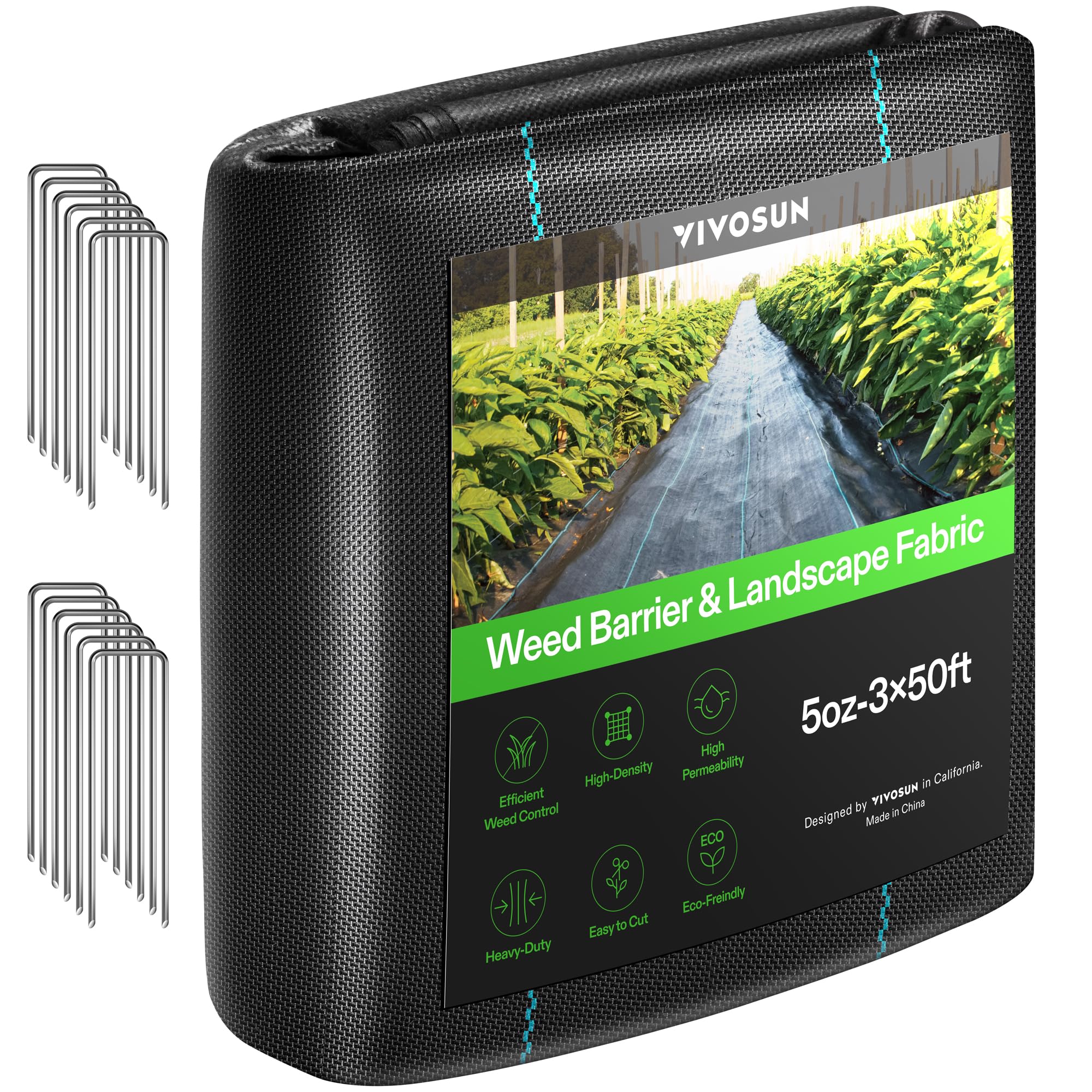
The VIVOSUN 5oz fabric stands out for its innovative dual-layer construction that bonds a woven layer with a non-woven fiber mat. This hybrid approach delivers the tear resistance of woven material while maintaining water permeability that is reported to be six times higher than standard woven ground covers. The needle-punching process creates molecular channels that actively draw water downward rather than letting it pool on the surface.
Homeowners consistently praise its performance in raised vegetable beds and flower gardens, noting that it holds up to daily foot traffic without shifting or tearing. The 3-foot by 50-foot size is practical for medium-scale projects, and the green line guides printed every foot simplify plant alignment. Owners do mention significant fraying at cut edges, which requires careful trimming and possibly sealing along cuts to prevent unraveling.
The included 12 landscape staples add convenience, though heavier-duty pins are advisable for loose or sandy soil. The fabric’s backside has a fuzzy texture that grips the ground effectively, reducing the need for excessive pinning. For a gardener seeking a single-roll upgrade that balances water flow and weed suppression, this is the strongest contender in its class.
What works
- Dual-layer design offers excellent water permeability and root aeration
- Thick 5oz material withstands foot traffic in garden beds
- Green alignment guides make plant spacing precise and easy
What doesn’t
- Cut edges fray and unravel more than some non-woven alternatives
- Included staples are light-duty; larger staples recommended for windy areas
2. Dewitt 3-Foot by 100-Foot Non Woven 12-Year Landscape Fabric 12YR3100

The Dewitt 12YR3100 commands attention with its industry-leading 12-year UV warranty, a rare guarantee among landscaping fabrics. This non-woven design uses hydrophilic treatment to actively improve water and nutrient flow rather than merely permitting it. The felt-like texture minimizes light penetration while allowing air to circulate, creating conditions that suppress weed germination without suffocating soil microbiology.
Real-world reports confirm that this fabric remains intact after three years in demanding environments, including Florida swamp conditions and beneath pea gravel in fire pit areas. The material resists unraveling when cut, a significant advantage over woven options, and its thickness handles heavy rock coverage without puncturing. Owners note that the 3-foot width is ideal for standard planting beds, and the lack of a plastic texture gives it a natural feel under mulch.
The main trade-off is cost per linear foot, which runs higher than basic woven fabrics. Some users find the material less rigid, making solo installation on windy days challenging. However, for anyone prioritizing longevity and preventing fabric replacement cycles, the upfront investment returns years of low-maintenance performance. It is also environmentally safer than chemical-heavy alternatives.
What works
- 12-year UV guarantee provides rare long-term protection against sun damage
- Hydrophilic non-woven design promotes superior water and air flow
- Cut edges resist fraying and unraveling
What doesn’t
- Higher per-foot cost compared to standard woven options
- Less rigid structure can be tricky to handle in windy conditions
3. GreatBuddy 4FT × 200FT Weed Barrier Landscape Fabric Heavy Duty, 3.2oz
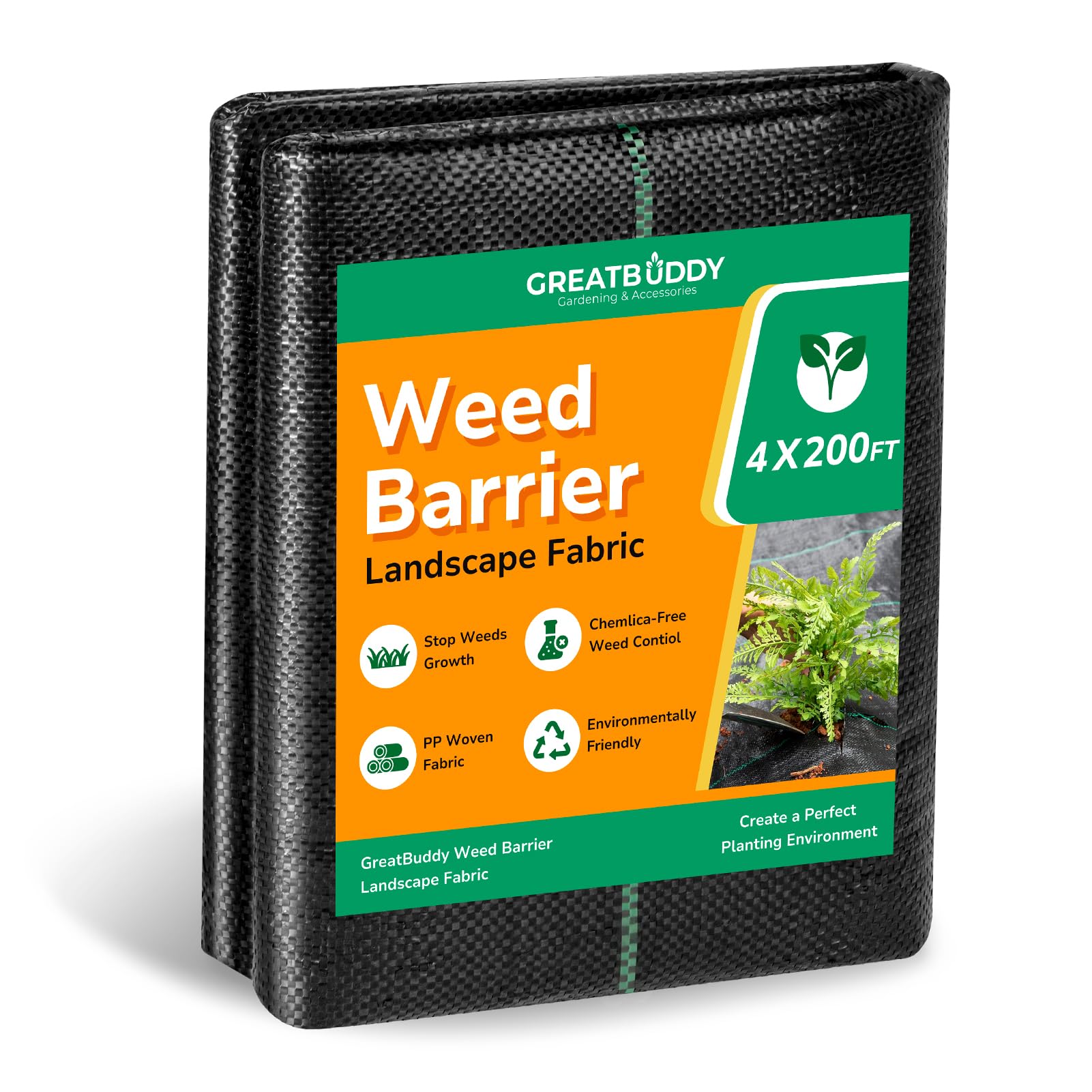
The GreatBuddy 3.2oz woven fabric targets large-scale coverage without stepping into premium pricing territory. Its 4-foot width and 200-foot length reduce seams and overlap, which is the primary failure point for weed breakthrough. The heavy-duty polypropylene construction resists corrosion and holds up against seasonal freeze-thaw cycles without becoming brittle.
User experiences highlight its effectiveness in suppressing weeds across large vegetable plots and under pathway gravel. The surface green lines aid straight cutting, and the fabric remains dimensionally stable after installation when properly staked. Several gardeners note that it outperforms big-box store brands like Vigoro, especially regarding tear resistance during installation. The material does shred slightly when cut with a utility knife, so clean cuts require a sharp blade and steady pressure.
At 3.2oz, this is not the thickest fabric available, and some aggressive perennial grasses may eventually push through without a heavy mulch layer on top. The roll weight approaches 16 pounds, making it cumbersome for a single person to maneuver. For medium to large projects where budget per square foot matters more than maximum thickness, this is a sensible choice.
What works
- 4-foot width reduces seams and simplifies coverage of large areas
- Resists tearing and corrosion better than basic store-brand fabrics
- Green cutting guides on the surface aid precision trimming
What doesn’t
- 3.2oz weight may allow aggressive perennial weeds to push through without heavy mulch
- Heavy 16-pound roll is awkward to handle alone
4. VEVOR Geotextile Landscape, 4ft x 100ft 8 oz Non-Woven

The VEVOR 8oz non-woven geotextile operates in a different class from standard weed barriers. With a 350 N tensile strength and 440 N load capacity, it functions as engineering-grade separation fabric for drainage systems, French drains, and erosion control. The needle-punched construction creates a dense mat that filters fine soil particles while allowing water to pass freely, preventing silt from clogging gravel layers.
Owners report excellent results in high-stakes applications like drainage ditches, retaining wall backfill, and under heavy stone pathways. The fabric’s thickness provides a cushioning layer that protects pond liners and prevents sharp rocks from migrating into soft soil. Reviews emphasize that it feels substantially different from the thin woven plastic found in most retail stores—more like industrial carpet padding than a mesh.
The main considerations are its bulk and cost. The 22-pound roll requires two people for comfortable handling, and its price per square foot is higher than lighter alternatives. Additionally, non-woven geotextile is not ideal for mulched flower beds where aesthetics matter, as it can look bulky near the surface. For drainage infrastructure projects, this is the strongest performer on the list.
What works
- 8oz thickness and 350 N tensile strength handle heavy loads and puncture risks
- Needle-punched non-woven design provides excellent soil filtration
- Outperforms standard woven fabrics in French drain and erosion control applications
What doesn’t
- 22-pound roll is heavy and requires two people for installation
- Bulkier appearance makes it less suitable for visible mulched garden beds
5. Winisok 4FT x 200FT Weed Barrier Landscape Fabric, 3.2oz
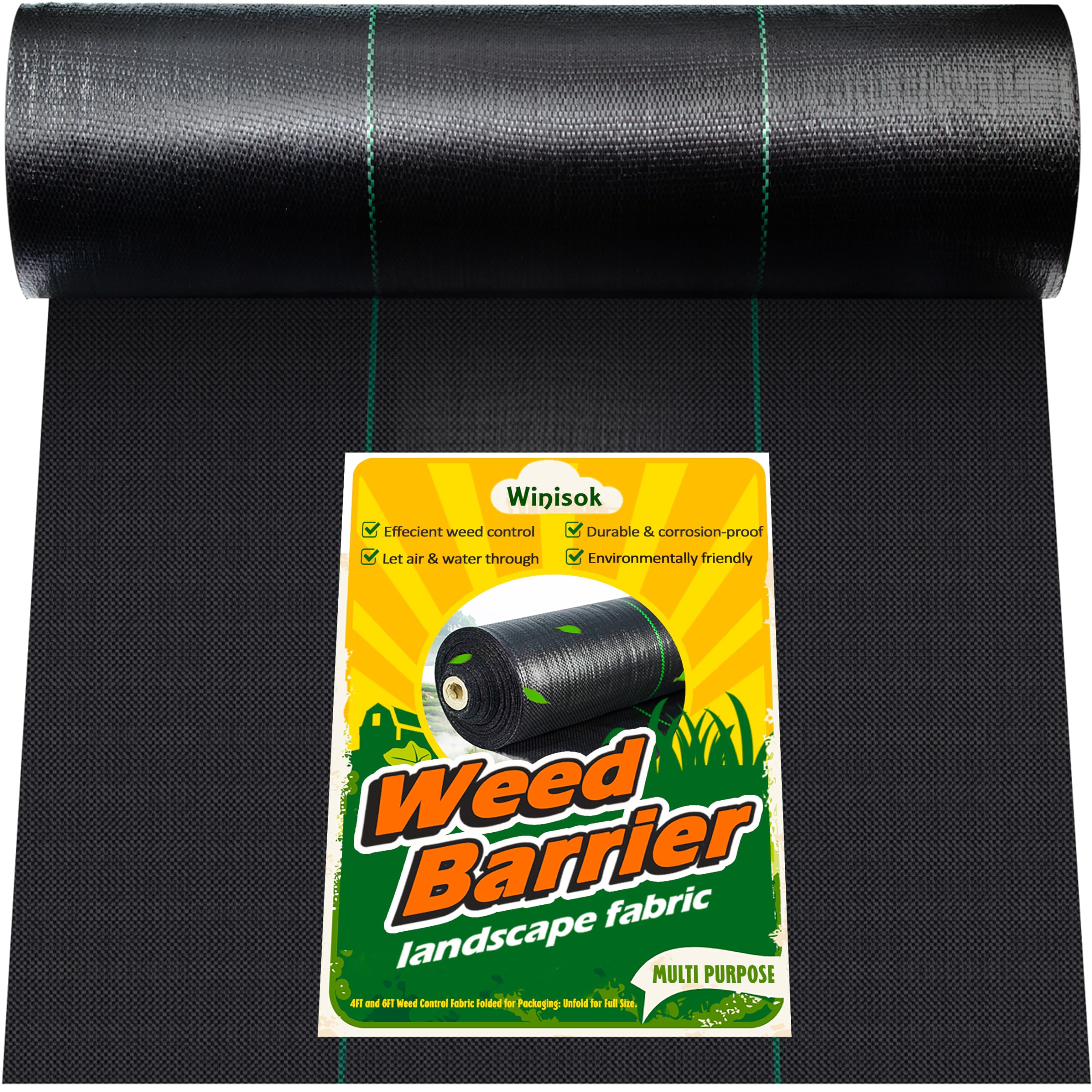
The Winisok 3.2oz woven fabric targets the value-conscious gardener who needs reliable weed suppression without paying for extra thickness they may not require. The 4-foot by 200-foot format delivers extensive coverage with fewer rolls, and the green stripe pattern helps with planting alignment and straight trimming. Its heavy-duty polypropylene build resists typical wear from mulch and light foot traffic.
Feedback from users who deployed it under rock gardens and around apple trees has been positive, with many reporting no weed breakthrough after several months. The fabric’s permeability allows irrigation water to reach roots, though a few users noted that heavy clay soils may experience slower drainage initially. The material cuts easily with sharp scissors, though tearing along cut lines is possible if pulled taut during installation.
Several buyers specifically mention that the delivered price undercuts local home improvement stores’ options for comparable roll dimensions. The trade-off is that this fabric is not designed for high-traffic commercial use or areas with sharp stone aggregates. For standard landscaping and gardening with a generous mulch cap, it offers a compelling cost-to-coverage ratio.
What works
- Excellent coverage per roll at a favorable cost-per-square-foot
- Green stripes assist with straight cutting and plant spacing
- Allows adequate water and air penetration for typical garden beds
What doesn’t
- 3.2oz weight may tear if pulled aggressively over sharp rocks
- Cut edges can fray or tear if not handled carefully
6. TUFFIOM 3 x 300 FT Weed Barrier Garden Landscape Fabric, 3.7oz

The TUFFIOM 3.7oz woven fabric offers one of the longest single-roll solutions on the market at 300 feet, making it ideal for sprawling projects like artificial grass underlayment, vegetable patches, and long driveway borders. The slightly higher weight per square yard compared to standard 3oz rolls gives it an edge in tear resistance without crossing into heavy-duty thickness that can impede drainage.
Field reports from users in harsh Gulf Coast climates confirm that the UV-stabilized polypropylene holds up under intense sun with no fading or degradation after months of exposure. The fabric’s weave effectively blocks sunlight while allowing water to drain through, preventing puddling. Several reviewers note that roots can occasionally take hold on top of the fabric if debris accumulates, so routine surface maintenance is still necessary.
The main challenge is that the fabric can shift if not staked aggressively with heavy-duty landscape pins, especially in sandy or loose soil. The 3-foot width is narrower than the 4-foot alternatives, meaning more seams for very wide areas. For those covering exceptionally long runs of ground, however, the continuous 300-foot roll minimizes joints and potential failure points.
What works
- 300-foot single roll reduces the number of seams needed for large projects
- 3.7oz weight provides better tear resistance than standard 3oz options
- UV-stabilized material withstands prolonged sun exposure without degrading
What doesn’t
- 3-foot width requires more seams for wide areas compared to 4-foot rolls
- Needs heavy-duty staples to prevent shifting in loose soil conditions
7. Sunocity 4ft x 300ft Durable Weed Barrier Fabric, 3oz
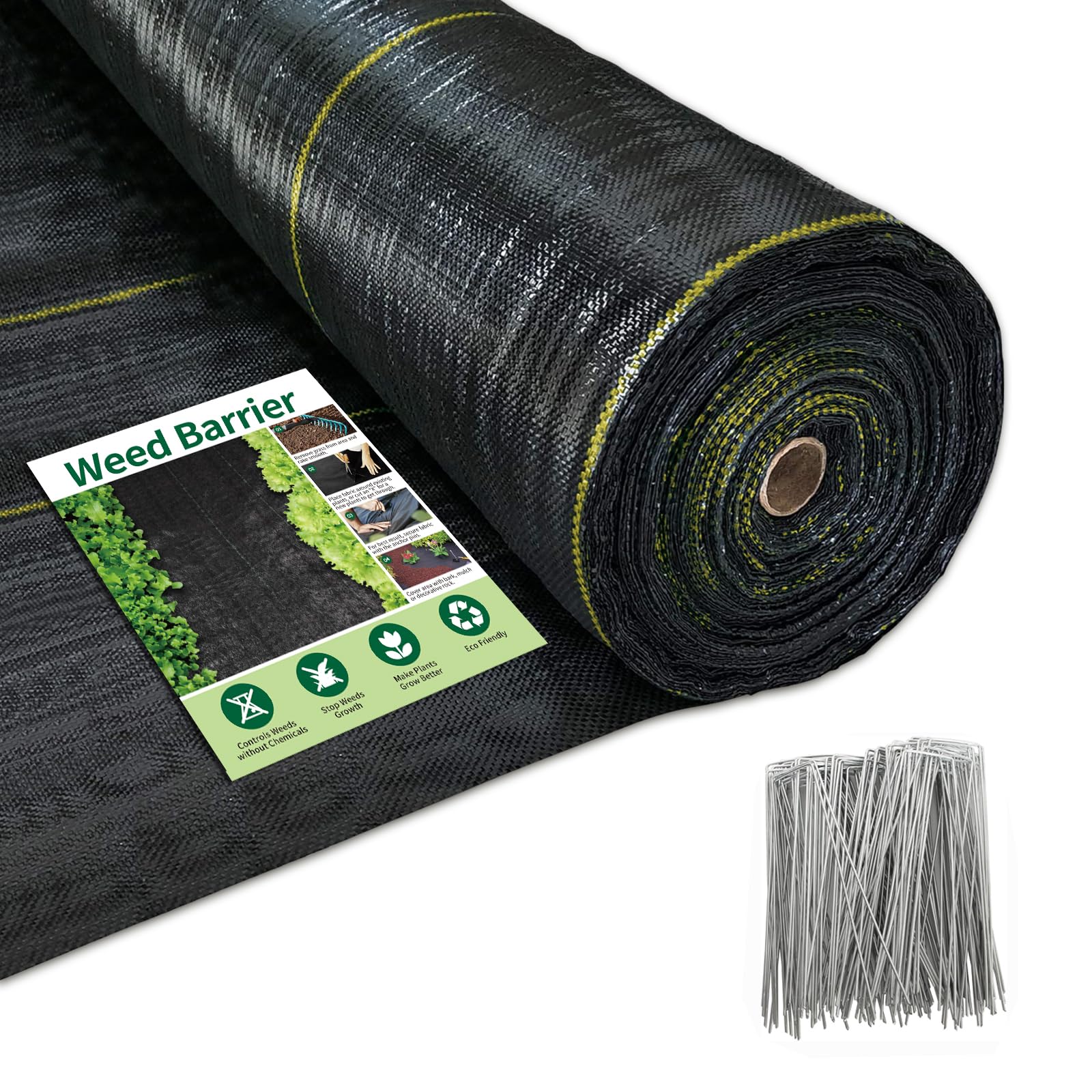
The Sunocity 3oz woven barrier is positioned as an entry-level option for covering large ground areas quickly without a major financial commitment. The 4-foot by 300-foot roll is the most generous surface coverage on this list, and the inclusion of 90 landscape staples removes an immediate accessory purchase. Its polypropylene construction is UV-stabilized for basic weather resistance.
Customer reactions to this fabric are mixed, which is notable for a product at this price tier. Some users report satisfactory weed suppression and easy installation in garden beds, while others describe tearing easily during handling and a noticeable chemical smell upon unrolling. The water permeability has been questioned by multiple users who observed pooling during heavy rain, suggesting the 3oz density may not be as breathable as thicker alternatives.
The 3oz weight is the lightest in this comparison, making it suitable for temporary setups or areas with very light weed pressure. Aggressive perennial weeds like Bermuda grass and bindweed may penetrate this fabric within a single season. For budget-constrained projects where replacement every year or two is acceptable, this roll delivers unmatched coverage per dollar spent.
What works
- Extensive 300-foot length covers large areas with fewer rolls needed
- 90 included staples save an accessory purchase for basic installation
- Lowest entry point for covering a substantial ground surface
What doesn’t
- 3oz thinness tears easily during installation and under heavy use
- Questionable water permeability may cause runoff and soil erosion
- Aggressive weeds may push through within one season
Hardware & Specs Guide
Fabric Weight (oz/yd²)
The weight directly determines puncture resistance and longevity. A 3oz fabric suits light mulched beds with minimal traffic. The 5oz to 8oz range is appropriate for rock gardens, heavy foot traffic, and areas with aggressive weed species. The VEVOR 8oz non-woven fabric is engineered for structural separation tasks where tensile strength and filtration are the primary requirements rather than simple weed suppression.
Weave Type vs. Project Type
Woven fabrics (GreatBuddy, Winisok, TUFFIOM, Sunocity) are optimal for high-durability surfaces like pathways, under gravel, and beneath artificial turf. Non-woven fabrics (Dewitt, VEVOR) excel in drainage applications and beds requiring maximum water and air exchange. The VIVOSUN hybrid is a rare exception, combining a woven base layer with a non-woven fiber mat to achieve a balance of strength and permeability.
FAQ
Should I use woven or non-woven landscaping fabric for a flower bed?
How long does landscaping fabric typically last before needing replacement?
Do I need to remove existing weeds before laying down landscaping fabric?
Final Thoughts: The Verdict
For most gardeners, the best landscaping fabric winner is the VIVOSUN Premium 5oz Dual-Layer because its hybrid construction delivers outstanding water permeability and tear resistance for flower beds, raised gardens, and mulched pathways without forcing you to choose between drainage and durability. If you prioritize longevity and need a fabric that will operate for over a decade under heavy conditions, grab the Dewitt 12-Year Non-Woven. And for drainage infrastructure projects like French drains and retaining walls where load capacity and filtration are the priorities, nothing beats the VEVOR 8oz Geotextile.