
Specs are compiled from manufacturer listings and verified buyer reviews and can change over time — please confirm the key details on the product page before buying.
You want a spray-on barrier that stops Japanese beetles without harming your apples, but most kaolin clay products are labeled for skincare, not orchards. Every pick here mixes easily into a spray, sticks to leaves through rain, and is made for fruit trees — not your bathroom counter.
I’m Rikta — the founder and writer behind Lawn Gear Lab. This guide is built by comparing the manufacturers’ published specifications and the patterns across verified customer reviews, so you get each pick’s real strengths and trade-offs instead of marketing spin.
You will find options from a compact bag for a small backyard to a professional-sized supply for serious growers. All answer the same question: which kaolin clay for fruit trees actually keeps insects off and your harvest healthy.
Our Picks at a Glance
How To Choose The Best Kaolin Clay For Fruit Trees
Not every white powder labeled “kaolin clay” is meant for the orchard — most are milled for face masks and bath bombs, which means they can be too fine or too clumpy for a sprayer. The right pick mixes into a consistent slurry, coats leaves without clogging your nozzle, and sticks after rain.
Particle Size and Mixability
The clay should blend into water with minimal effort and stay suspended long enough for you to spray an even coat. Clumpy clay leads to a patchy film that pests can slip through, while an ultra-fine powder may clog your sprayer. A product that mentions “silky texture” or “smooth slurry” signals easy mixing.
Purity and Additives
Your trees absorb whatever you spray, so choose 100% natural kaolin with no fragrances, chemicals, or preservatives. Some cosmetic-grade clays include moisturizers or scents that can harm leaf surfaces or attract unwanted bugs. A label that says “100% pure and natural” with a short ingredient list is the safest bet.
Bag Size vs. Your Orchard
A two-pound bag is great for a single dwarf apple tree or a small berry patch, but if you are treating several mature trees weekly through the season, you will quickly burn through it. A 10- or 25-pound bag will last the full six- to eight-week spray schedule without forcing you to reorder mid-season. Measure your tree count against the bag weight before you buy.
Quick Comparison
| Model | Best For | Weight | Mixability | Primary Use | Amazon |
|---|---|---|---|---|---|
| Bare Essentials Living 2 lb★ Best Overall | Small orchards & beginners | 2 lb | Excellent — no clogs | Gardening & pest control | Amazon |
| Relaxcation Bulk 10 lb | Mid-sized backyard trees | 10 lb | Silky & fine | Garden spray & face mask | Amazon |
| Edgar Minerals 5 lb | Specific pest targeting | 5 lb | Smooth thixotropic slurry | Fruit tree spray | Amazon |
| Surround WP 25 lb | Large acreage & organic farms | 25 lb | Easy to mix | Professional insecticide & sunblock | Amazon |
In‑Depth Reviews
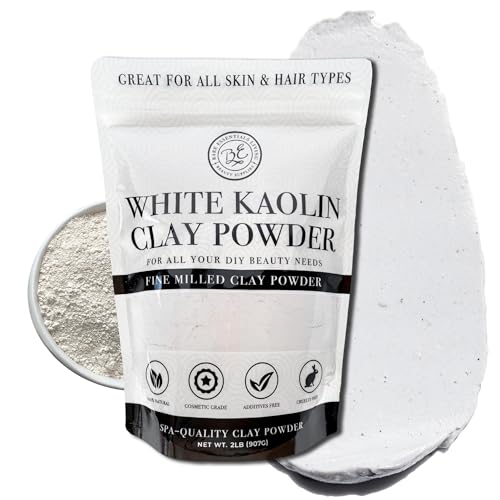
1. Bare Essentials Living White Kaolin Clay (2 lb)
Our pick — over 4.5★ from 1,500+ verified ratings; the strongest balance of quality and price.
The little bag that convinced the crowd — 2 pounds of pure Kaolin that stays sprayable.
This is the pick that growers keep coming back to because it solves the single most annoying problem with kaolin clay: a clogged sprayer. The 100% natural white kaolin is cosmetic-grade in purity but horticultural in performance, mixing smoothly without clumps so you spend your time spraying rather than unclogging a nozzle.
At 2 pounds, this bag will not cover a whole orchard for a season. But for a handful of dwarf trees, a berry patch, or a first-time user who does not want to gamble on a huge bag, it is a low-risk trial size. Reviewers praise its quality and effectiveness, and the price is low enough that you are not out much if you switch to a larger bag later.
Sprayer-friendly: This powder mixes with water and stays mixed, so you do not fight clogs mid-job — buyers confirm it “hasn’t clogged my sprayer at all” even across a full acre.
Go-to for small spaces: Best if you have a few trees or a vegetable garden and want a reliable, no-hassle clay that works from the first spray.
Watch the size: 2 pounds goes quickly with weekly reapplications; you will need to reorder if you are protecting more than two or three mature trees.
2. Relaxcation Bulk Kaolin White Clay Powder (10 lb)
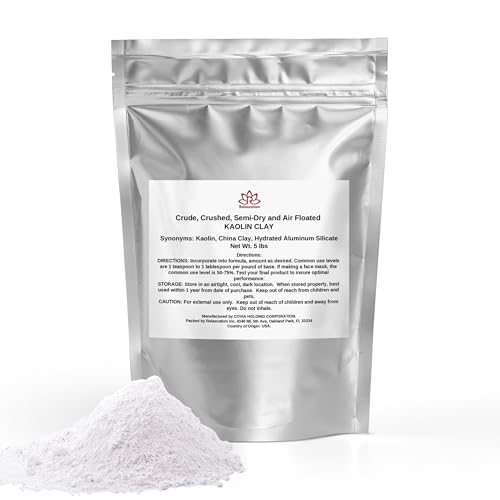
10 pounds versus 2 pounds — a 10 lb sack that keeps you spraying all season.
This Relaxcation bulk bag solves the 2-pound starter’s main limitation: it gives you 10 pounds of 100% natural white kaolin — 10 pounds compared to 2 pounds — so you cover more trees and more reapplications without reordering mid-season. Gardeners who use it note that “Kaolin clay has been used for gardens for 2000 years” — mixing it with water and coating leaves deters and confuses bugs effectively.
The powder is described as fine and silky, which helps it mix easily into a sprayable consistency. The realistic catch is the packaging: the clay comes in a loose bag, and some owners wished for a thicker zip-lock closure to make scooping and storage less awkward. Transfer it to a sealable container when it arrives, and you are set for a full season of mid-sized backyard trees.
The big advantage
- 10 pounds means fewer reorders — enough for several mature trees across a full 6-8 week spray schedule.
- Fine, silky texture mixes into water without stubborn clumps forming at the bottom of the tank.
The honest packaging note
- Arrives in a loose bag that is not resealable; plan to store it in a bucket or a thick zip-lock.
Buy it for season-long coverage: Ideal for the grower who has a half-dozen trees and hates placing repeat orders.
Prep for storage: Have a container ready when it arrives — the bag is functional but not convenient for daily scooping.
3. Edgar Minerals Kaolin Clay Powder (5 lb)

The middle-weight that fruit tree users trust for apples, peaches, and pears.
Edgar Minerals arrives with a clear orchard pedigree. The description lays out the exact spray schedule: start at first petal fall and reapply weekly for six to eight weeks. Owners put it to work “on apple, peach, pear trees for Japanese beetles,” mixing a quarter-pound per gallon and applying three sequential coats after petal fall to build a solid barrier. It does not kill insects — it repels them by forming a confusing film on the leaf surface.
This clay produces a smooth, thixotropic slurry (meaning it turns gel-like when still and flows freely when shaken or sprayed), which translates to minimal drip from leaves after you spray. The bag is labeled for pottery and DIY projects as well, but the verified use-case for fruit trees is strong. At 5 pounds, it lands between the small 2-pound bag and the 10-pound bulk options, making it a the just-right size for someone who has a few trees but does not want a huge sack sitting around.
Pest-specific protection: Japanese beetles are the primary target here — buyers confirm that three sequential applications build an effective barrier without harming beneficial insects.
Reach for this if: You have apple, peach, or pear trees and want a time-tested formula with clear reapplication guidance built into the product info.
Not ideal if: You need a single solution for sunburn and heat stress protection — this product is more focused on pest deterrence than UV reflection.
4. Surround WP Kaolin Clay Insecticide (25 lb)
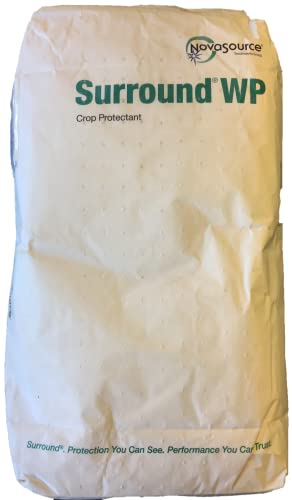
The serious grower’s standard — OMRI certified and Proven to cut sunburn damage in half.
Surround WP is not a side project from a skincare company; it is a dedicated crop protectant formulated for orchards and market gardens. It is OMRI certified for organic use, and The manufacturer claims it reduces sunburn damage by up to 50% and suppresses aphids, beetles, thrips, and moths. Owners confirm it works wonders against Japanese beetles and plum curculio, and that the white coating reflects UV rays to reduce heat stress on tomato and cucumber plants.
The bag is a full 25 pounds, so if you are protecting a large home orchard or a small commercial operation, this is the only bag you will need for the entire season. The active ingredient is kaolin clay — nothing else — and it mixes at roughly 1 cup per gallon. Some wish for a 10-pound option to reduce the upfront cost, but that smaller bag does not exist in this brand. For serious organic production, this is the product that the reviews unanimously point to.
What makes it the professional pick
- Reduces sunburn damage by up to 50% per manufacturer data, doubling as a pest barrier and UV shield.
- OMRI certified for organic use, so you can use it on certified organic crops without losing your certification.
The honest size trade-off
- 25 pounds is a lot of clay for a small backyard — you will have a big bag to store, and the upfront cost is significant.
- A few owners mention they wish for a 10-pound bag, as not everyone needs a 25-pound supply for a handful of trees.
Best for serious growers: If you have a large orchard, sell your fruit, or farm organically, this single bag covers the full season with proven pest and sun protection.
skip it if: You have one or two trees — the bag will outlast your season by several years, and a smaller option is a better fit for your scale.
Understanding the Specs
Particle Fineness & Mixability
The clay should feel silky between your fingers, not gritty. A fine powder dissolves into water more evenly, creating a slurry that stays suspended long enough for you to spray a consistent coat. Clumpy or coarse clay leads to uneven coverage, which leaves gaps in the protective film that insects can walk right through.
Application Timing & Reapplication
Kaolin clay washes off with heavy rain, so the standard advice is to start spraying at first petal fall and reapply weekly for six to eight weeks, or after any major rain event. The goal is a thin white film across the leaves and fruit — not a caked-on layer. A good product will remind you of this schedule in its description, which is a sign it was made with orchard use in mind.
FAQ
Will kaolin clay harm bees or beneficial insects?
Can I use cosmetic-grade kaolin clay on fruit trees?
How do I mix kaolin clay for spraying?
Does kaolin clay wash off in the rain?
Will the white residue affect the taste of my fruit?
How many trees does a 2-pound bag cover?
Is Surround WP worth the higher price compared to bulk clay?
Can I mix kaolin clay with other sprays or pesticides?
Final Thoughts: The Verdict
For most people, the kaolin clay for fruit trees winner is the Bare Essentials Living 2 lb because it balances a clog-free mixability, a crowd-tested reputation, and a size that is approachable for beginners and small-space growers. If you want a season-long supply without reordering mid-summer, grab the Relaxcation Bulk 10 lb. And for large acreage or organic certification, the Surround WP 25 lb is the one to reach for.
How We Picked
We do not accept paid placement. Every pick is matched to a real buyer and a real use-case; we do not hands-on test units.
Sources & Methodology
Specifications: manufacturer listings and product documentation. Review insights: verified customer reviews, as of July 2026. Pricing: not shown on this page (it changes often); check the current price via the retailer link.
As an Amazon Associate, Lawn Gear Lab earns from qualifying purchases. This does not affect which products we feature.