
Specs are compiled from manufacturer listings and verified buyer reviews and can change over time — please confirm the key details on the product page before buying.
A clean snip keeps plants healthy; a ragged tear invites disease. Japanese pruning scissors are famous for that razor-sharp cut — the kind that seals fast and keeps your garden thriving. But with so many options claiming “Japanese steel,” it is easy to pick a pair that dulls in a season or pinches your palm after ten minutes.
This guide is built from manufacturers’ published specs and patterns across verified customer reviews, so you get each pick’s real strengths and trade-offs instead of marketing spin.
The crowd favorite here holds an impressive 4.8 stars across hundreds of owners, but the best choice for your hand and your garden depends on exactly what you are cutting and how often. This guide to the best japanese pruning scissors breaks down the steel, the grip, and the cutting width that matter most so you can buy with confidence.
Our Picks at a Glance


How To Choose The Best Japanese Pruning Scissors
The phrase “Japanese pruning scissors” covers a wide range — from lightweight twig trimmers to heavy-duty bypass pruners that handle branches up to an inch thick. To narrow the field, focus on three things: the type of steel, the blade style, and how the handle fits your hand.
Blade Steel: SK5, Yasugi, or Carbon
SK5 steel is a high-carbon alloy that holds a razor edge and sharpens well, but it rusts if left wet. Yasugi steel is a premium specialty steel made only in Japan; it stays sharp longer and resists wear but costs more. Basic carbon steel is affordable and takes a fine edge, though it demands diligent drying and oiling to avoid corrosion.
Bypass vs. Straight Blades
A bypass blade — where two curved blades slide past each other — makes a clean, scissor-like cut that heals quickly. This is the standard for live wood and green stems. Straight or bevel blades crush the stem and are better for dead wood. For a healthy garden, bypass is the safer choice.
Cutting Width and Hand Feel
Check the cutting width in millimeters. A 15 mm capacity handles roses and thin branches; a 20 mm cut suits thicker shrub wood. On the handle side, look for non-slip vinyl or rubber coatings — they reduce fatigue during long trimming sessions and help if your hands tire easily.
Quick Comparison
| Model | Best For | Blade Steel | Cutting Width | Weight | Amazon |
|---|---|---|---|---|---|
| TONMA JP★ Best Overall | All-around precision | Japanese SK5 Steel | 1 inch | 244 g | Amazon |
| Kimura ProErgonomic Pick | Arthritis-friendly ergonomics | Japanese SK5 Steel | 15 mm | — | Amazon |
| SabotenFlorist Favorite | Sappy plants & florists | Carbon Steel | 20 mm | 0.24 kg | Amazon |
| Okatsune No.207 | Bonsai & detail work | Carbon Steel | 45 mm | 120 g | Amazon |
| SUIZAN | Compact all-day use | Japanese Steel | 15 mm | 210 g | Amazon |
| Wazakura Yasugi | Bonsai masters | Yasugi Steel | — | 148 g | Amazon |
| Kimura Samurai | Heavy branches | Yasugi Steel | 20 mm | 230 g | Amazon |
| YAMASAN Suiryu | Traditional craftsmanship | Blue Steel | — | 200 g | Amazon |
| KAKURI | Heirloom build plus sheath | Japanese Carbon Steel | — | 7.7 oz | Amazon |
In‑Depth Reviews
1. TONMA Pruning Shears
Our pick — over 4.5★ from 450+ verified ratings; the strongest balance of quality and price.
The near-perfect score that earns the top spot.
Your hand slips into the ergonomic handle and the first thing you notice is how balanced the 244-gram body feels. The blade — Japanese SK5 steel hardened to 59 HRC (Rockwell Hardness, a measure of how hard the steel is) — takes branches up to a full inch thick with a clean, bypass cut that does not crush the stem. That 59 HRC means the edge stays sharp through a whole season of pruning, though it is harder to touch up at home than softer steel.
Owners consistently call the cut “easy.” The smooth one-handed safety lock clicks into place without wobbling, and the bead-blasted aluminum handle with clear vinyl coating gives a secure grip even when your hands are damp. The honest trade-off is that SK5 steel is not stainless — it demands a wipe-down after use or you risk rust spots. A few buyers also note that the anvil side (the flat plate the blade hits) is a little thin at 5/16 inch, which can pinch bark on the largest hardwood branches.
Sharp Where It Counts
- Inch-thick cutting capacity handles most garden tasks in one tool
- Comfortable, ambidextrous grip that suits small and large hands alike
- Lifetime backup included with purchase — rare at this level
The Honest Caveats
- Carbon steel needs drying and oiling; skip that and it will rust
- Anvil side could be thicker for very large hardwood cuts
Grab these if: you want one pair that handles everything from rose stems to inch-thick branches and you do not mind a quick post-use wipe.
Think twice if: you prefer stainless steel for zero maintenance or you mainly cut thick, dry hardwood all day.
2. Kimura 8″ Pro Pruning Scissors
The pair that goes easy on stiff, aching hands.
If your hands cramp after a few minutes of trimming, this is the one to reach for. The aluminum handles are wrapped in non-slip vinyl and the whole tool is engineered for people with arthritis or carpal tunnel issues. The SK5 steel blade — forged in Japan and heat-treated to 59 HRC — cuts with minimal squeeze force, and a PTFE coating (the same non-stick material used in cookware) stops sticky sap from gumming up the action mid-session.
Sharpness and quality are the two most-discussed points by a wide margin, with owners consistently saying the blades stay sharp far longer than typical garden-center pruners. A buyer who works in a vegetable garden summed it up: “The pruning shears are exactly as advertised. Sharp, lightweight, easy to handle with nonslip handles.” The 15 mm cutting width is on the modest side — ideal for roses, herbs, and thin branches — but if you regularly tackle wood thicker than that, the 20 mm Saboten below may suit you better.
The spring mechanism is smooth and reliable on repeat cuts, and the lock strap requires just a light thumb push. A few owners mention they wish the cutting capacity were a little larger for thicker shrubbery, but for everyday deadheading and shaping, this pair punches above its weight. Weaving in the Saboten’s wider cut: the Saboten (Product 3) offers a 20 mm capacity for thicker branches if you need more reach than the Kimura’s 15 mm gives you.
Best for tender hands: the vinyl coating and lightweight build make this the most fatigue-friendly pick in the lineup, and the PTFE coating keeps the blades gliding through sappy stems.
The size note: at a 15 mm cut, it is perfect for flowers and thin branches but not for big woody limbs.
3. Saboten Japanese Pruning Shears
A florist’s tool that laughs at sticky pine sap.
The Saboten stands apart because of its fluorine coating — a non-stick layer that makes resin and plant gunk slide right off instead of building up on the blade. If you prune fruit trees, pines, or any sappy plant, this feature alone saves you ten clean-up minutes every session. The 20 mm cutting width (20 mm versus the Kimura Pro’s 15 mm) means it swallows thicker branches without complaint, yet the 7.9-inch body stays nimble enough for bonsai and rose deadheading.
Quality and cutting performance are the top two reasons owners love this tool. A florist who uses these daily wrote simply “I am a florist, and I love them!!!!!” and several buyers with arthritic hands report the non-slip rubber grip reduces wrist fatigue noticeably. The one-handed safety lock is secure and easy to flick open. On the flip side, the carbon steel blade needs the same care as other high-carbon tools — wipe it dry or it will spot with rust. The rubber and plastic handle construction feels less premium than all-metal options, though it does shave weight.
Perfect for sticky jobs: if you work with sappy wood or need a wide 20 mm cut in a compact frame, this is your tool.
skip it if: you prefer the cold heft of all-metal construction or you want stainless steel for zero rust worry.
4. Okatsune Professional Snips No.207
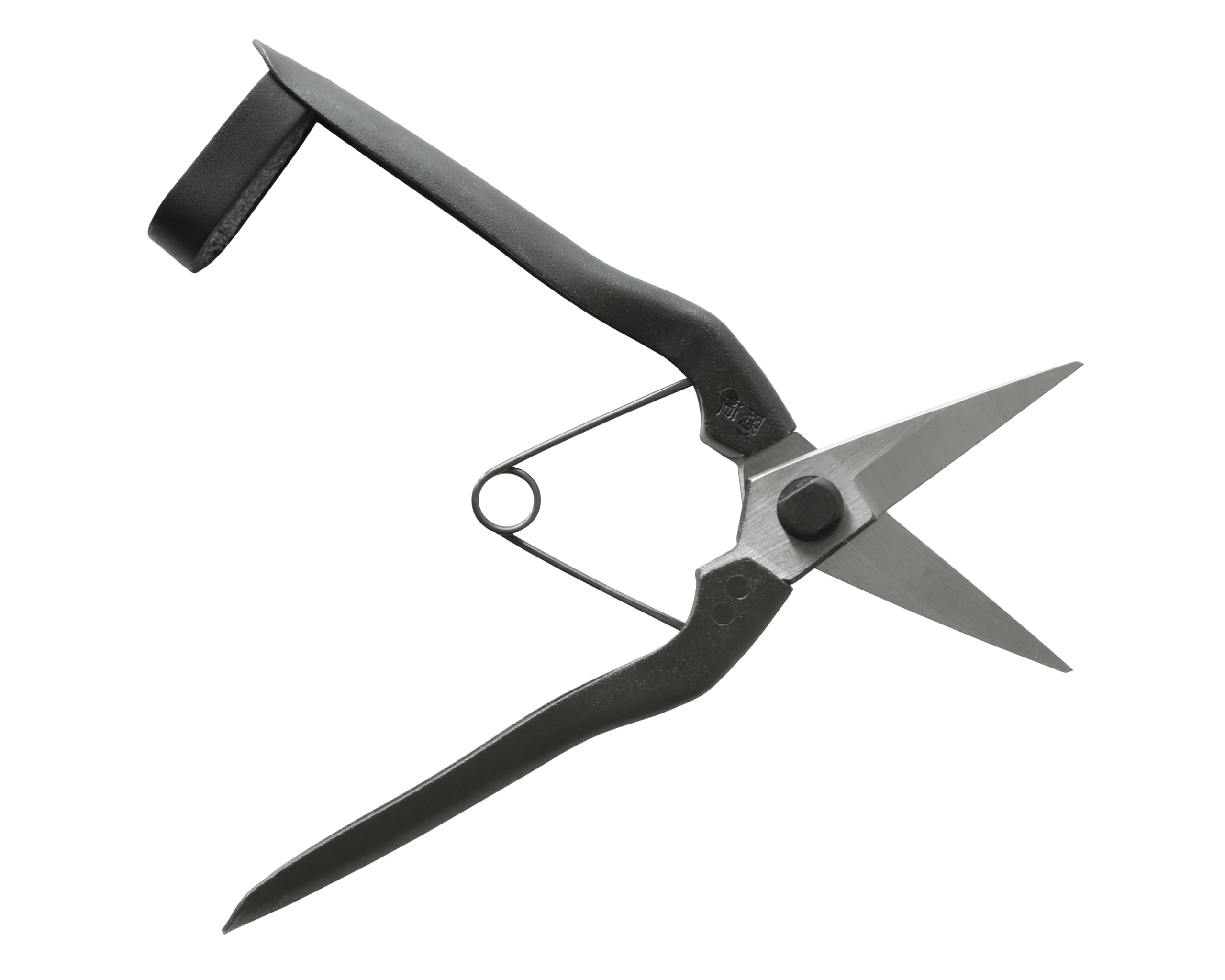
The featherweight that dances around bonsai branches.
At just 120 grams, the Okatsune No.207 disappears in your hand. The long 45 mm blade and narrow 7.5-inch profile give you the reach to snip deep into a bonsai canopy without disturbing neighboring foliage. This is a tool designed for detail work — think bud trimming, thin-root cutting, and precision harvesting where a bulkier pruner would get in the way. Compared to the TONMA’s 1-inch capacity, the Okatsune is all about finesse, not force.
Owners praise the quality and sharpness in equal measure. One long-time bonsai enthusiast called them “Perfect for detail / bonsai work! Very sharp… clean cuts each time!” and noted they replaced an older pair that finally wore out. The carbon steel holds an edge well with daily floral design use. But the Okatsune has some real quirks: the leather locking strap can tear, the metal handles are slick when wet, and a few buyers report the blades chipped after limited use on rose stems — suggesting the steel is tuned for sharpness, not impact. This set is best kept for soft wood and green stems.
Ideal for fine work: the light weight and long blade make this class-leading for bonsai, herbs, and floral arranging.
The catch: the slick handle and delicate edge mean it is not a heavy-duty branch cutter; stick to stems and shoots.
5. SUIZAN Bypass Pruning Shears

Made in a 250-year-old blade town, priced for everyone.
SUIZAN’s shears come from a region in Japan known for 250 years of blade-making history. At 210 grams and 8 inches long, they are light enough for all-day use but feel substantial in the hand. The bypass blade is serrated and cuts up to 15 mm, and the rubberized PVC handles give a secure grip even when your palms are sweaty from a long pruning session.
The most common praise from owners centers on the quality and the sharpness from the start. One professional-grade user noted the “heavy gauge steel spring” and “super sharp blade” as standout features, while another with small hands said the grip makes bush pruning easy. The mixed feedback falls on durability — some owners mention the blades corroding if left damp, which is typical for high-carbon steel but worth flagging. For the price, however, the SUIZAN offers a genuine Japanese-forged blade that competes with tools costing much more. If the serrated edge is a concern for sharpening, the TONMA’s straight SK5 blade is easier to maintain at home.
Best for budget-minded gardeners: you get authentic Japanese craftsmanship and a comfortable grip without spending a premium.
Just know: the serrated edge is harder to sharpen at home, and the steel needs careful drying to prevent rust.
6. Wazakura Yasugi Steel Twig Scissors

Samurai-era steel forged into modern bonsai scissors.
The Wazakura uses Yasugi Specialty Steel — a unique alloy made only in Japan that was traditionally used for samurai swords. Impurities like phosphorus and sulfur are removed during forging, resulting in a blade that is extra strong, wear-resistant, and holds its edge through season after season of bonsai work. At 148 grams and 8.27 inches long, these twig-style scissors have a slim profile that slips easily between tight branches without damaging the tree. They are a significant step up in steel quality from the Okatsune’s basic carbon steel.
Owners describe them as “elegantly formed” and “a pleasure to use.” The all-steel construction gives a confidence-inspiring weight, and the blades come pre-oiled from the factory. Bonsai masters recommend this style of scissor because you do not need much force to prune. The honest downside: Yasugi steel rusts easily if you do not keep a light coat of oil on it, and a few owners note that the pivot has a little play, which can make tip cutting less precise on very soft materials.
Perfect for serious bonsai: the Yasugi steel and narrow profile make this a professional-grade choice for delicate trimming.
Maintenance required: expect to oil after every use and store dry, or the steel will discolor.
7. Kimura Samurai Series Pruning Shears

The toughest blade in the lineup: 61 HRC Yasugi steel.
Kimura’s Samurai Series bumps the hardness up to 61 HRC — two points harder than the TONMA or the standard Kimura Pro — and uses the same Yasugi steel that the Wazakura does. That extra hardness translates to exceptional edge retention: you will sharpen these far less often. The 20 mm cutting width matches the Saboten, so it handles thick branches without straining, and the non-slip vinyl coating on the aluminum handles keeps control firm.
The tool feels heavier than the standard Kimura at 230 grams, which some owners appreciate as a sign of durability. One owner who used it to cut dead lilac branches said “heavy, cuts dead lilac branches easily” and praised the real steel construction. The reviews highlight quality and sharpness as the strongest points. A few customers note these are pricier than some alternatives, but the consensus is that the Yasugi steel and lifetime warranty justify the step up. The main hitch: these are not stainless, so clean and oil after every use.
Built for heavy work: the 61 HRC Yasugi blade and 20 mm capacity make this the best choice for thick, woody branches.
Not for lightweight tasks: the extra heft and price are overkill if you only trim flowers and thin stems.
8. YAMASAN KYOTO UJI Suiryu Bonsai Scissors

Hand-forged by a third-generation blacksmith in Sanjo.
These scissors are the closest thing to a bespoke tool on this list. They are made by Shiro Tsurumaki, a third-generation blacksmith from the famous Sanjo region in Niigata, Japan. The blade uses blue steel — a premium material normally reserved for high-end knives — which resists wear remarkably well. The 7.87-inch length and large curved handle rings make them easy to grip for long periods without your hand cramping.
Owners praise the build quality and sharpness. “Sharp and precise!” wrote one buyer, while another notes the tool produces “enough power to cut thicker branches.” The gold-plated joint is made of stainless steel, so the pivot resists rust and stays aligned. The honest trade-off is that these are large — the 3.94-inch-wide handle span makes them less suited for tight, intricate work inside dense bonsai foliage compared to the slimmer Wazakura. They excel at general garden pruning and root cutting where you need leverage.
A gift for the craft lover: if the story behind the tool matters as much as the cut, the hand-forged blue steel and artisan heritage make this special.
Size matters: the large handle loops are comfortable but can feel bulky for fine detail work or small hands.
9. KAKURI Japanese Pruning Shears

The last pruning shears you may ever need to buy.
KAKURI’s offering is the most expensive in this lineup, but it justifies the price with hand-forged Japanese carbon steel, a natural leather sheath, and wooden handles that feel warm and solid in the hand. The bypass blade is 2.3 inches long and cuts through stems up to 14.25 mm with the kind of precision that makes you want to find more things to prune. The shears weigh 7.7 ounces without the sheath, which is noticeable but not fatiguing.
Quality is the top-cited strength, and the cutting performance is close behind. One owner said “they are sharp and feel great in your hand” after pruning multiple hedges, while another noted the blade “cuts 14.25mm stems easily, comparable to electric shears.” The full-steel construction means no comfort grips, but owners who wear gloves find it comfortable enough. The main recurring complaint is rust — the high-carbon steel darkens and spots quickly if you do not oil it after use. One buyer summed it up: “Make sure to wipe them off after use, they rust fairly quickly as expected but sharp and great!”
An heirloom investment: the hand-forged blade and leather sheath make this a gift-worthy tool that will last decades with care.
pass on it if: you are not willing to oil and dry after every session — the rust issue is real with this steel grade.
Understanding the Specs
Hardness (HRC)
Rockwell Hardness (HRC) measures how hard the steel is. A higher number — like 59 or 61 HRC — means the blade stays sharp longer but is more brittle and harder to sharpen at home. Lower numbers (50-55) are easier to touch up but dull faster. For most gardeners, 58-60 HRC is the balance: great edge retention with reasonable sharpenability.
Bypass vs. Anvil vs. Straight Blade
A bypass blade slices two curved edges past each other — like scissors — making a clean cut that heals fast on live plants. An anvil blade crushes the stem against a flat plate, which is fine for dead wood but can damage live tissue. Straight (bevel) blades, common on bonsai snips, cut in a single plane and are best for thin, soft stems. For general garden pruning, bypass is the healthiest choice for your plants.
Cutting Width (mm)
This number tells you the maximum branch diameter the shears can handle. A 15 mm cut covers roses, herbs, and thin branches. A 20 mm cut handles thicker shrub wood. Some heavy-duty models go wider. Matching the cutting width to your garden’s thickest growth prevents you from forcing the blade and damaging the edge.
Fluorine and PTFE Coatings
Both are non-stick coatings that stop sap, resin, and plant debris from building up on the blade. Fluorine and PTFE (the same material used in non-stick pans) keep the cutting action smooth through sticky pine, fruit trees, and other sappy plants. They also make cleanup faster — a quick wipe and the gunk slides off.
FAQ
How do I keep Japanese pruning scissors from rusting?
What is the difference between SK5 steel and Yasugi steel?
Can I use Japanese pruning scissors on thick branches?
Are Japanese pruning scissors good for arthritis?
What does bypass blade mean?
How long do Japanese pruning scissors last?
Can I sharpen my Japanese pruning scissors at home?
What is a twig-style bonsai scissor used for?
Is made in Japan always better than Chinese or generic pruners?
What does HRC mean on a pruning scissor blade?
Final Thoughts: The Verdict
If you want one dependable pick, the pick that does everything right is the TONMA Pruning Shears — it combines a genuine Japanese SK5 blade, a 1-inch cutting capacity, and a comfortable ambidextrous grip at a price that undercuts many competitors. If your hands ache after trimming sessions, the Kimura Pro with its non-slip vinyl coating and lightweight build is the better fit. For florists and anyone who battles sticky pine sap, the Saboten with its fluorine-coated blade is the smart buy. And if you want an heirloom-quality tool you can pass down, the KAKURI with its hand-forged steel and leather sheath is the one to reach for.
How We Picked
We do not accept paid placement. Every pick is matched to a real buyer and a real use-case; we do not hands-on test units.
Sources & Methodology
Specifications: manufacturer listings and product documentation. Review insights: verified customer reviews, as of July 2026. Pricing: not shown on this page (it changes often); check the current price via the retailer link.
As an Amazon Associate, Lawn Gear Lab earns from qualifying purchases. This does not affect which products we feature.