
Specs are compiled from manufacturer listings and verified buyer reviews and can change over time — please confirm the key details on the product page before buying.
Your Japanese maple’s elegant branching structure is easy to damage — one wrong cut with a dull or bulky tool can crush a stem, leaving a wound that never heals and invites disease. The right pruner makes the difference between a clean snip and a ragged tear. You need blades narrow enough to slip between delicate twigs and sharp enough to sever cleanly without pinching the bark.
I’m Rikta — the founder and writer behind Lawn Gear Lab. This guide is built by comparing the manufacturers’ published specifications and the patterns across verified customer reviews, so you get each pick’s real strengths and trade-offs instead of marketing spin.
A quality pruner should feel like an extension of your hand. This guide helps you find the best japanese maple pruning tools for your tree size, grip comfort, and budget, from lightweight daily snips to heavy-duty heirloom-grade shears.
Our Picks at a Glance


How To Choose The Best Japanese Maple Pruning Tools
Japanese maples bruise easily. A tool that crushes the stem instead of shearing it off cleanly leaves a ragged wound that invites disease. Three things determine whether a pruner protects your tree or damages it.
Blade Style: Bypass vs. Anvil
You want a cut that heals fast, so you need a bypass blade (one that slides past a fixed jaw like scissors, slicing the stem cleanly). An anvil blade crushes the stem against a flat surface — faster but harsher, and that crushing damages live bark. For Japanese maples, bypass pruners are the only safe choice. The data consistently shows that bypass models like the ARS HP-SE45 and the Kimura Samurai shears leave the smoothest cuts.
Cutting Width & Reach
Maple branches range from pencil-thin twigs to thumb-thick leaders. The cutting width (the thickest branch the tool can handle) tells you if you need a needle-nose pruner for tight spots or a heavier bypass shear for the main scaffold branches. A 1.81-inch cutting width like the ARS handles daily cleanup, while a 1-inch-capacity tool like the TONMA TP-1 tackles thicker wood.
Handle Comfort & Hand Fatigue
Pruning a mature Japanese maple can take an hour of repeated squeezing. Buyers with arthritis or smaller hands consistently praise ergonomic vinyl-coated handles and lightweight builds. Tools around 4 to 5 ounces cause less fatigue than a heavier 8-ounce shear. The Saboten and Kimura pruners earn strong marks here for their non-slip rubber grips.
Quick Comparison
| Model | Best For | Blade Type | Cutting Width | Weight | Amazon |
|---|---|---|---|---|---|
| ARS Needle Nose Pruner HP-SE45★ Best Overall | Deadheading & tight spots | Bypass | 1.81 in | 0.09 kg | Amazon |
| VOUIU 8″ Concave CutterBest Value | Bonsai & branch removal | Anvil | 8.27 in | 230 g | Amazon |
| Kimura 8″ Pro Pruning ScissorsPrecision Pick | All-day precision trimming | Straight | 15 mm | — | Amazon |
| Saboten Japanese Pruning Shears | Arthritic-friendly gardening | Bypass | 20 mm | 0.24 kg | Amazon |
| Okatsune Professional Snips No.207 | Bonsai detail work | Bypass | 45 mm | 120 g | Amazon |
| TONMA TP-1 Pruning Shears | Heavy-duty maple branches | Bypass | 1 in | 244 g | Amazon |
| TONMA Ashinaga Bonsai Scissors | Rust-proof & low maintenance | Straight | — | 6.8 oz | Amazon |
| Wazakura Yasugi Steel Twig Scissors | Twig & bud trimming | Straight | — | 5.22 oz | Amazon |
| Kimura 8″ Samurai Pruning Shears | Traditional craftsmanship | Bypass | 20 mm | 230 g | Amazon |
In‑Depth Reviews
1. ARS Needle Nose Pruner HP-SE45, Orange
Our pick — over 4.5★ from 500+ verified ratings; the strongest balance of quality and price.
The featherweight that reaches deep into the canopy without crushing a single bud.
The ARS HP-SE45 makes a specific promise that matters more than any other for Japanese maples: a 1.81-inch cutting width paired with a needle-thin nose that slips between tight branch forks. That narrow stainless steel blade glides into spots where bulkier pruners would scrape bark off neighboring twigs. The bypass action shears the stem cleanly — no crushing, no ragged tearing.
At just 0.09 kg the tool is so light you forget it is in your hand after the first few minutes of deadheading. Buyers report that the “light and sturdy” build and the comfortable ergonomic grip reduce wrist strain significantly, with several noting it saves them from hand pain during long pruning sessions. The locking mechanism secures the blades safely for storage.
Precision needle nose
- Narrow needle nose — reaches tight spots where maple branches fork
- Stays sharp for a long time with very little pressure needed to cut
- Extremely lightweight at 0.09 kg, easy on arthritic hands
Heavy on hands
- Not built for high-volume cutting of thick branches — keep it for precision deadheading
- Plastic handles feel less premium than full-metal builds
Reach for precision: you need a precise, daily pruner for deadheading spent flowers and snipping thin stems in tight spaces.
Look elsewhere for comfort: you regularly cut branches thicker than a pencil — step up to the TONMA TP-1 for more leverage.
2. VOUIU 8inch Concave Cutter Bonsai tools
A budget-friendly bonsai cutter that buyers love for the sheer sharpness and solid feel.
The VOUIU concave cutter is built specifically for removing bonsai fork branches — the kind of structural pruning where you want a slight hollow left behind so the bark heals flush. The 8.27-inch cutting width is massive compared to the 1.81-inch ARS, which means it takes bigger bites out of thicker material. The anvil blade crushes down onto a flat surface rather than bypassing, so it is best for branches you are removing entirely — not for delicate shaping cuts near the trunk.
The thing everyone raves about is the cutting performance and sharpness right from the start. Buyers describe them as “very sharp” and “well made and sturdy,” with one noting they “make easy work out of clipping.” The tool arrives well-packaged with a storage bag. A few buyers find the handle length a little long, but the edge-offset design gives good leverage for the price.
Concave clean cuts
- Extremely sharp stainless steel anvil blade handles thick branches
- Comes with a storage bag and protective packaging
- Good leverage for larger hands despite the moderate price
Limited to small branches
- Anvil design crushes stem fibers — not ideal for live-branch shaping on maples
- Long-term durability is unproven since most buyers haven’t used it extensively
Best for bonsai: removing thicker, dead, or unwanted branches from bonsai projects at a low cost.
Skip if large pruning: you need a clean bypass cut on a live Japanese maple branch — the crushing action risks bark damage.
3. Kimura® 8″ Pro Pruning Scissors, Premium Japanese SK5 Hi-Carbon Steel
The razor-sharp SK5 steel that turns every snip into a glide — even on stiff hands.
The Kimura Pro pruning scissors land as a precision specialist with a 15-millimeter cutting width that is narrower than the Saboten (20 mm) and better suited for delicate work on twiggy maples. The Japanese Hi-Carbon SK5 steel blades are heat-treated to 59 HRC (Rockwell C scale — a hardness rating; 59 means the blade holds its edge for a very long time but needs some care when sharpening). The PTFE coating (a non-stick layer) on the blades reduces sap buildup — a real bonus when you are cutting through sticky new growth.
What stands out here is the ergonomic design. The aluminum handles are coated in non-slip vinyl, and buyers repeatedly mention that the scissors are “easy on stiff hands” and “perfect for people suffering from arthritis or carpal tunnel.” The locking strap open up with a light push. As one owner put it, “The pruning shears are exactly as advertised.”
Japanese SK5 steel: The PTFE-coated SK5 steel glides through stems without sap sticking to the blade, making it a low-friction tool for long pruning days.
Reach for sharpness: you want a lightweight, ergonomic shear that stays sharp for seasons and works for both delicate stems and light branches.
Look elsewhere for comfort: you need a heavy-duty branch breaker — the 15 mm cut capacity is for pencil-thin material only.
4. Saboten Japanese Pruning Shears 7.9″ – Professional Bypass Garden Clippers

A 7.9-inch bypass shear that feels like it was made for smaller hands and sap-heavy cuts.
The Saboten shears deliver the widest cutting capacity among the mid-range pick — 20 millimeters — while keeping a compact 7.9-inch body that gives you fine control around delicate maple branches. The high-quality carbon steel blade is treated with a sap-resistant fluorine coating (a layer that stops sticky resin from gumming the blade), so sticky resin from pine or fruit trees slides off instead of gumming up the action. Buyers confirm the blades stay sharp for a long time, with one calling them “extremely sharp” and noting they cut live and dead wood with very little effort.
The real standout here is the comfort. The lightweight body with a non-slip rubber grip reduces hand and wrist fatigue. Several buyers with arthritis specifically praise how easy it is to hold and squeeze. The one-handed safety lock opens cleanly and stays secure in your pocket. The Saboten is the only tool in this group that a florist reviewed with genuine enthusiasm: “I am a florist, and I love them!!!!!”
Professional bypass design: The fluorine coating keeps the blade clean through sappy jobs that would glue up a standard steel blade in minutes.
Best for daily use: gardeners with small or arthritic hands who need a sap-resistant bypass shear for precise cuts on branches up to 20 mm thick.
Skip if loose hinges: you prefer stainless steel over carbon — carbon requires drying after every use to prevent rust.
5. Okatsune Professional Snips, No.207 (Standard Version)
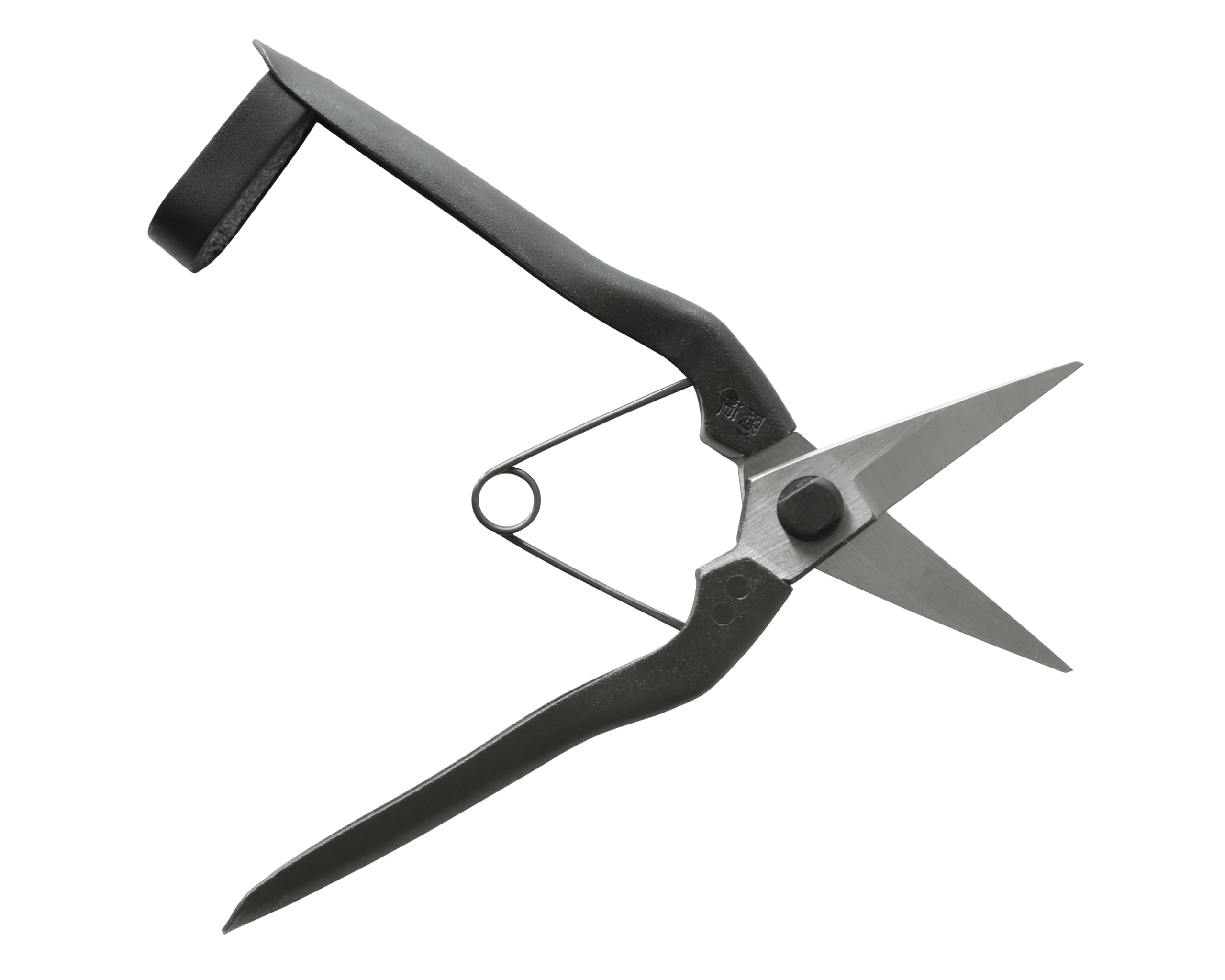
The 4-ounce snipper that bonsai masters reach for when precision matters more than power.
At 120 grams and only 7.5 inches long, the Okatsune No.207 is built for one thing: detail work. The 1.8-inch blade is purpose-designed for pruning pines and performing the kind of tight, clean cuts that Japanese maples demand. The blades are forged from carbon steel and stay sharp through months of daily floral and bonsai use. Buyers describe them as “perfect for detail / bonsai work” and report that they produce clean cuts every time.
There is a divide on durability here. While many owners praise the quality and sharpness, a few report that the blade chipped after a handful of cuts on hard rose stems. The leather strap locking mechanism also draws criticism for tearing over time. These are not heavy-duty loppers — they are precision snips for twigs, buds, and soft green growth, and they excel exactly there. As one buyer summed it up: “Not perfect, but of great quality.”
Trusted Japanese snips
- Lightweight at 4 oz (120 g) — easy on hands and joints during long sessions
- Precision blade ideal for bonsai, deadheading, and thin branches
- High-quality carbon steel stays sharp for months with regular use
Small hand fit
- Blade durability is mixed — some owners mention chipping on hard wood
- Leather strap lock can tear over time; handle design feels slick to some
Reach for reliability: you are a bonsai enthusiast who needs a precise, lightweight snipper for delicate twig and bud work.
Look elsewhere for large hands: you plan to cut through dry or dead hardwood regularly — the blades may chip.
6. TONMA 8″ Pruning Shears, Made in Japan, TP-1

The 1-inch cutting capacity in a bypass design — a rare combination for maple main branches.
The TONMA TP-1 is the only tool in this lineup with a full 1-inch cutting width in a bypass configuration, meaning it can cleanly shear off branches as thick as your thumb without crushing the stem. The SK5 steel is heat-treated to 59 HRC — a hardness that buyers describe as “unheard of for hand tools” — and the edge stays sharp for a remarkably long time. The bead-blasted aluminum handles are covered in a full clear vinyl coating that provides a secure grip.
Buyers are near-unanimous about the quality. They call it “the best pruners I’ve ever used” and “worth every penny.” The one-handed lock mechanism is smooth and stays tight. The only downside: SK5 steel is not stainless, so it requires rust prevention — a quick wipe and oil after each session keeps it pristine. The opposing steel could be thicker to prevent bark crush on very large hardwood, but for Japanese maple branches it delivers perfect, clean cuts.
Made in Japan quality: A 1-inch bypass cutting capacity at this weight (244 g) is rare — most 1-inch cutters are bulky loppers.
Best for durability: serious pruners who need to remove thumb-thick maple branches cleanly without moving to a two-handed lopper.
Skip if repairability needed: you want a no-maintenance tool — carbon steel needs oiling to prevent rust in humid climates.
7. TONMA Ashinaga Bonsai Scissors [Made in Japan] 8 inch Solid Stainless Steel
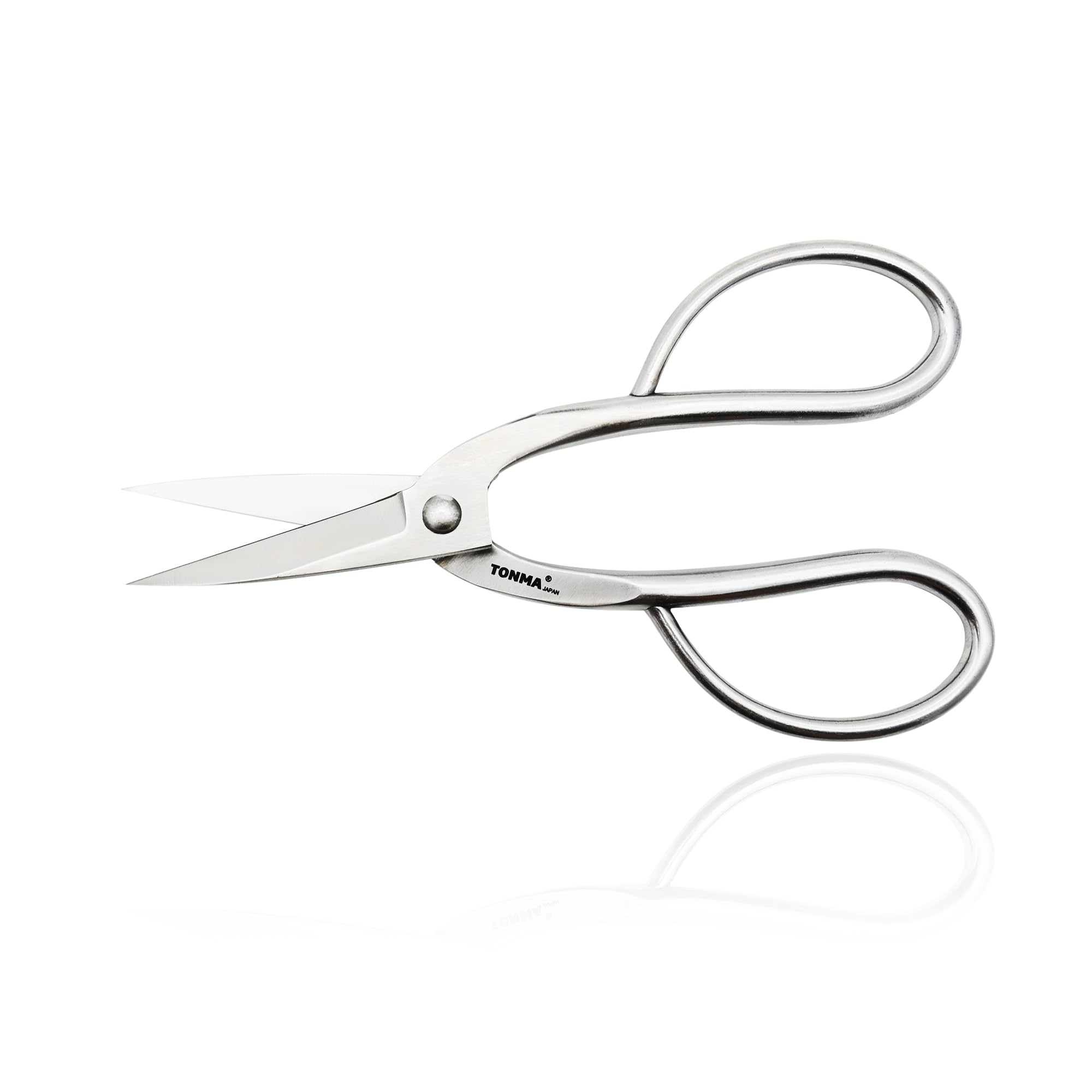
All-solid stainless steel from AUS-8 — the no-rust answer for gardeners who hate maintenance.
The TONMA Ashinaga is built from a single piece of Japanese AUS-8 stainless steel, including the handles, which makes it virtually rust-proof compared to any carbon-steel tool in this list. The blades are 4.5 mm thick with a hardness of HRC 59±1, and the 2.36-inch blade length gives you more reach than the Okatsune snips. Buyers describe it as “very sharp” and “comfortable to hold,” and they appreciate that the stainless construction requires much less maintenance than carbon steel.
It weighs 6.8 ounces, which is noticeably heavier than the 4-ounce Okatsune but still feels balanced in the hand due to the all-steel ergonomic handle design. The primary use-case is bonsai trimming and general gardening — not heavy branch removal. A few owners praise it for orchid work as well. The lifetime warranty backs the build quality.
Long reach Ashinaga: Solid AUS-8 stainless steel throughout — no coating, no plating, no rust worries after a wet pruning session.
Reach for depth: you want a low-maintenance stainless steel shear that stays sharp and never rusts, perfect for humid climates.
Look elsewhere for width: you need a bypass blade — these are straight scissors, not a bypass pruner, so they crush rather than shear thicker stems.
8. Wazakura Yasugi Steel Twig Bonsai Scissors Made in Japan 8.25 inches

Hand-forged Yasugi steel from third-generation artisans in Sanjo, Japan — the heirloom choice.
The Wazakura twig scissors are made from YCS3 Alloy Tool Steel (Yasugi Specialty Steel), a unique Japanese steel produced by Proterial Ltd. in the Shimane prefecture. The steel is forged by third-generation artisans in Sanjo, Niigata, a city known since the 17th century for its metalwork. The 8.27-inch body with a 2.05-inch blade is designed for trimming thin branches, twigs, and buds where you need to reach deep into a canopy without damaging the surrounding growth.
Buyers consistently praise the quality and sharpness, calling them “sleek, well made tools” and “a pleasure to use.” The slim design makes it easy to reach between branches, and the weight feels balanced in the hand. However, a few owners note some play in the pivot joint that makes tip cutting slightly difficult, and the rust resistance is mixed — these are high-carbon steel and require oiling. The blades arrive pre-oiled, but you must maintain that habit.
Yasugi steel hardness
- Hand-forged Yasugi specialty steel — extra strong and wear-resistant
- Slim, long handle reaches deep between maple branches without scraping bark
- Lightweight at 5.22 oz, easy to use for extended sessions
Rusts without care
- Rust resistance is mixed — high-carbon steel requires regular oiling after use
- Some pivot play reported, which can affect precision on very small tips
Best for tough twigs: bonsai purists who want a traditional hand-forged Japanese tool from a historical metalworking region.
Skip if low maintenance: you prefer stainless steel for low maintenance — the Yasugi steel needs careful drying and oiling.
9. Kimura® 8″ Samurai Garden Pruning Shears, [Made in Japan], Heavy Duty Premium Japanese Yasugi Steel Blades

Yasugi steel at 61 HRC — harder than any other shear here and reminiscent of samurai-era blades.
The Kimura Samurai Series shears are forged in Sakai, Japan, using Yasugi Steel heat-treated to 61 HRC, which is two points harder than the TONMA TP-1 and Kimura Pro at 59 HRC. In practical terms, this means the blade keeps its razor edge through heavy use for a very long time. The bypass design is ideal for Japanese maples — it shears the stem cleanly rather than crushing it. The aluminum handles are coated in non-slip vinyl, and the tool weighs 230 grams.
Buyers describe the shears as “heavy duty, sharp and should last a long time.” One owner replaced cheap ratcheting pruners with these and noted the “real steel blade, sharpenable, adjustable nut/bolt, steel spring” — all signs of a tool designed to be maintained and repaired rather than tossed. The recurring note is that these are heavy shears and require cleaning and oiling after each use. A few buyers argue they resemble the Okatsune design at a similar price, but the 61 HRC Yasugi steel is a genuine material difference.
Samurai garden strength: 61 HRC blade hardness — the highest in the lineup — means an edge that stays sharp far longer than standard carbon steel.
Reach for power: you want the hardest blade edge in this category for heavy, long-term pruning of live maple branches.
Look elsewhere for lightness: you need a super lightweight snip — at 230 g this is a heavier tool built for power, not all-day twig work.
Understanding the Specs
Bypass vs. Anvil Blades
A bypass blade slides past a fixed jaw to slice the stem cleanly, like scissors. This is the safer choice for live Japanese maple branches because it leaves a smooth cut that heals quickly. An anvil blade crushes the stem against a flat surface — it is faster and better for dead wood removal, but the crushing action can damage the bark on a living tree. For delicate pruning on your maple, stick with bypass-style tools like the ARS HP-SE45 or the Kimura Samurai shears.
Blade Steel & Hardness (HRC)
Hardness is measured on the Rockwell C scale (HRC). A higher number means the blade holds its edge longer but can be harder to sharpen. The Kimura Pro and TONMA TP-1 both hit 59 HRC, while the Kimura Samurai reaches 61 HRC — the highest in the group. Carbon steel (SK5, Yasugi, YCS3) gets extremely sharp but rusts if not dried. Stainless steel (AUS-8) resists rust but may not hold as fine an edge over the long term.
FAQ
Can I use anvil pruners on my Japanese maple?
How do I prevent rust on carbon steel pruning tools?
What cutting width do I need for Japanese maple pruning?
Are Japanese pruning tools better than European brands like Felco?
Can left-handed people use ambidextrous pruning shears?
How often should I sharpen my Japanese pruning shears?
What is the difference between Yasugi steel and SK5 steel?
Are silicone or vinyl grips better for arthritis?
Final Thoughts: The Verdict
For most people shopping for japanese maple pruning tools, the ARS Needle Nose Pruner HP-SE45 is the right starting point — it is lightweight, razor-sharp, and narrow enough to reach into tight branch forks without damaging the bark. If you regularly cut thicker branches or want a heavier-duty bypass shear, the TONMA TP-1 punches above its weight with a 1-inch capacity in a compact package. And for the bonsai enthusiast who values heritage steel and traditional craftsmanship, the Wazakura Yasugi Steel Twig Scissors are forged by artisans in Sanjo and feel like an investment that will last for generations.
How We Picked
We do not accept paid placement. Every pick is matched to a real buyer and a real use-case; we do not hands-on test units.
Sources & Methodology
Specifications: manufacturer listings and product documentation. Review insights: verified customer reviews, as of July 2026. Pricing: not shown on this page (it changes often); check the current price via the retailer link.
As an Amazon Associate, Lawn Gear Lab earns from qualifying purchases. This does not affect which products we feature.