
Specs are compiled from manufacturer listings and verified buyer reviews and can change over time — please confirm the key details on the product page before buying.
Japanese maples are fussy about one thing above all else: soil acidity. Get the pH wrong and those delicate, lacy leaves yellow, growth stalls, and the whole tree sulks. The right compost keeps the soil sour (acidic) where maples thrive, feeds them slowly, and saves you from watching a costly tree fade. This guide cuts through the bag labels to find the amendments and soils that actually lower pH and deliver nutrients—without the guesswork.
I’m Rikta — the founder and writer behind Lawn Gear Lab. This guide is built by comparing the manufacturers’ published specifications and the patterns across verified customer reviews, so you get each pick’s real strengths and trade-offs instead of marketing spin.
Whether you are planting a new sapling or feeding a mature specimen, the japanese maple compost you choose determines whether your tree puts on a show of crimson and orange or struggles through the season. The crowd pleaser here—4.7 stars from hundreds of owners—is a granular soil acidifier that reliably turns hydrangeas blue and keeps maples happy.
Our Picks at a Glance
How To Choose The Best Japanese Maple Compost
Japanese maples (Acer palmatum) evolved in the acidic, well-drained forest floors of Japan. Replicate that in your garden, and the tree rewards you with vivid leaf color and strong branch structure. Get the soil wrong, and even the most expensive specimen will look sad. Here is what to look for in a bag.
Start with the pH — it is non-negotiable
A Japanese maple wants soil pH between 5.5 and 6.5. Most garden soil sits closer to 7.0 (neutral) or higher. You need an amendment that actively lowers pH. The fastest way is elemental sulfur—it feeds soil bacteria that produce sulfuric acid, gently driving the pH down over a few weeks. Look for “soil acidifier” or “low pH” on the bag. Products that list sulfur content (like 5% sulfur) do the job predictably.
Feeding vs. acidifying — know the difference
Some bags lower pH only (soil acidifiers). Others, like 4-3-4 fertilizers, provide nitrogen, phosphorus, and potassium while also containing sulfur to maintain acidity. If your soil test shows normal pH but the tree looks pale, you probably need a fertilizer like Holly-tone or Evergreen-tone. If your soil test shows alkaline soil, start with a straight acidifier like the Espoma Soil Acidifier to drop pH first, then switch to a maintenance fertilizer later.
Texture and organic matter matter
Maples hate wet feet. A compost or planting soil that includes composted manure, sphagnum peat moss, or aged bark improves drainage while holding just enough moisture. The bag should feel light and crumbly, not heavy and clay-like. Products labeled “premium planting soil” for acid-loving plants usually already have the right texture—so you can use them straight out of the bag for containers or bed top-ups.
Quick Comparison
| Model | Best For | Primary Action | Unit Size | Organic Certification | Amazon |
|---|---|---|---|---|---|
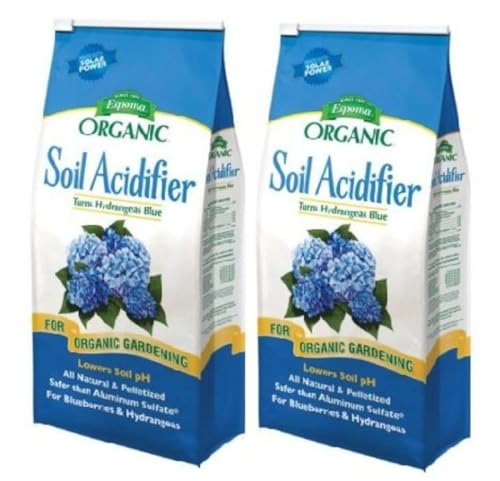
| Espoma Soil Acidifier★ Best Overall | Lowering pH fast | Acidifier (elemental sulfur) | 96 oz (pack of 2) | Yes | Amazon |
| Espoma Evergreen-tone | Feeding established maples | Fertilizer + acidifier | 8 lb bag | Yes | Amazon |
| Coast of Maine Planting Soil | Ready-to-use soil for containers | Soil + compost blend | 20 quarts | Yes (OMRI) | Amazon |
| Espoma Holly-tone 3-Pack | Premium multi-season feeding | Fertilizer + acidifier | 192 oz (3 bags) | Yes | Amazon |
In‑Depth Reviews
1. Espoma Organic Soil Acidifier
Our pick — over 4.5★ from 300+ verified ratings; the strongest balance of quality and price.
The quickest way to turn alkaline soil sour for maples and hydrangeas alike.
If your Japanese maple is planted in ground that leans basic, this bag of granular elemental sulfur is the tool you need. It feeds soil microbes that naturally produce sulfuric acid, lowering pH over a few weeks. The effect is reliable enough that buyers report blue hydrangea blooms after a single application—and the same acidity shift makes maples happy.
It arrives as two 6-pound bags (96 ounces total), so you have enough to treat a mature tree and a bed of azaleas in one go. The granules are easy to sprinkle around the drip line and water in. It is approved for organic gardening, meaning you are not dumping synthetic chemicals into your soil ecosystem.
lowers soil pH
- Straightforward pH correction — elemental sulfur works faster than most organic acidifiers
- Pack of two bags gives generous coverage for the price
- Certified for organic use, so it fits into natural gardening routines
slow to work
- It is a straight acidifier, not a complete fertilizer—you will still need to feed your maple separately
- Results take a few weeks as soil bacteria process the sulfur; it is not instant
acid-loving plants: Lowering soil pH fast and reliably when your soil test shows neutral or alkaline conditions. Best paired with a balanced organic fertilizer for ongoing health.
quick fix needed: You want an all-in-one bag that both acidifies and feeds—this is strictly a pH adjuster.
2. Espoma Organic Evergreen-tone 4-3-4

A dual-purpose fertilizer that feeds and gently acidifies — ideal for established trees.
If your maple is already in reasonably acidic soil but looks sluggish, this 8-pound bag of granular 4-3-4 fertilizer adds both nutrition and sulfur to maintain the proper pH. The 4-3-4 ratio (nitrogen-phosphorus-potassium) promotes leafy growth and root strength without pushing excessive tender growth that can burn in summer heat.
It works well for broadleaf evergreens and acid-lovers like azaleas and rhododendrons—basically the same crew that shares a Japanese maple’s bed. Owners mention that a single fall application carried their evergreens through winter and produced noticeably stronger growth the following spring. The granules are ready to use straight from the bag; no mixing required.
balanced evergreen feed
- Feeds and acidifies at the same time — saves you from buying two products
- The 8-pound bag covers a decent area while staying affordable
- Organic formulation with Bio-tone means slow, steady nutrient release
not for acid lovers
- The odor is noticeable—several owners mention the smell, which is typical of organic fertilizers
- It is designed for acidic-loving evergreens, so if your soil is strongly alkaline, you will still need to acidify first
pine spruce fir: You need a maintenance fertilizer that keeps pH in the right zone while feeding your maple through the growing season.
blueberries: You have a serious pH imbalance; use the straight acidifier first, then switch to this once the pH is in range.
3. Coast of Maine Organic & Natural Planting Soil

Ready-to-use potting soil that already has the right acidity and texture for container maples.
For Japanese maples grown in pots, this 20-quart bag of pre-mixed organic soil is a huge time-saver. It blends composted manure, sphagnum peat moss, and aged bark into a lightweight, well-draining mix that holds moisture without becoming soggy. The pH is pre-adjusted on the low side, which is exactly what acid-lovers like azaleas, blueberries, and maples need.
Owners of blueberry planters found the 20-quart size just right for refreshing tired soil. The bag is OMRI-listed for organic use, so you can feel good about what goes into your containers. It works both as a complete potting medium and as a top-dressing amendment for in-ground beds that need a pH nudge.
rich organic blend
- Pre-mixed and ready to use — no measuring or blending required
- Lightweight texture with perlite for drainage, so maples avoid wet roots
- Organic ingredients with a low pH that berry and maple growers trust
heavy bag
- Acidity levels vary by batch; a minority of customers note the pH is not always as low as expected
- At 20 quarts, it covers a couple of large pots but may not be enough for a full in-ground bed
raised beds: Container Japanese maples where you want a complete, acidic soil out of the bag. Also ideal for topping up raised beds with acid-loving plants.
container gardens: You need a concentrated acidifier for strongly alkaline in-ground soil—this is a planting medium, not a pH adjuster.
4. Espoma Organic Holly-tone 4-3-4 (3-Pack)

The original acid-lover’s fertilizer—reliable, slow-release, and now in a handy 3-pack.
Holly-tone has been the go-to for acid-loving plants for decades, and this 3-pack gives you 12 pounds total (three 4-pound bags). The 4-3-4 analysis with 5% sulfur feeds the tree while maintaining soil acidity. It is designed for spring and fall application, creating a steady nutrient reservoir that the tree draws from over months.
Owners use it on blueberries, hydrangeas, azaleas, and Japanese maples with consistent results. The granules are easy to top-dress around the drip line, and the organic ingredients (bone meal, poultry manure, alfalfa meal) break down naturally. Reviewers point out that it produces noticeably more berries and healthier foliage compared to synthetic alternatives.
convenient 3-pack
- Decades-tested formula from a trusted brand — Espoma has been making this since 1929
- Three-bag pack gives good value if you have multiple acid-loving plants to feed
- Slow-release organic ingredients mean fewer applications and less risk of burning
same as single
- At 4 pounds per bag, you will need several bags for a large in-ground maple
- It has a noticeable organic fertilizer smell, which some find unpleasant during storage
multiple shrubs: Ongoing maintenance feeding of Japanese maples, azaleas, and blueberries in beds where pH is already in range. The 3-pack keeps you stocked for the whole season.
single plant: Your soil test shows pH above 6.5; bring the pH down before relying on a maintenance fertilizer.
Understanding the Specs
N-P-K Ratio (Fertilizer Analysis)
This is the three-number code on any fertilizer bag—nitrogen (first number), phosphorus (second), potassium (third). For Japanese maples, a balanced ratio like 4-3-4 or 5-3-4 works well. The nitrogen supports leaf growth, phosphorus helps roots and blooms, and potassium strengthens overall health. A higher first number (like 10-10-10) pushes too much soft growth that maples cannot support, so stick with the lower numbers.
Elemental Sulfur vs. Sulfate
Elemental sulfur is a fine yellow powder or granule that soil bacteria slowly convert into sulfuric acid, lowering pH over a few weeks. It is the safest way to drop pH without shocking the plant. Sulfate (like ammonium sulfate) works faster but can salt the soil if overused. If your goal is long-term acidity for a Japanese maple, look for “elemental sulfur” on the ingredient list.
Organic Input Material Registration
If you grow edibles like blueberries under your Japanese maple, an OMRI Listed (Organic Materials Review Institute — a third-party certification that checks for organic standards) label means the compost contains no synthetic chemicals, no sewage sludge, and no toxic ingredients. Products labeled “OMRI Listed” or “Registered Organic Input Material” are independently verified, so you can trust what goes into your soil.
Granule Size and Application Method
Granular products are easier to spread evenly than powders—less dust, less drift, and you can see exactly how much you have applied. They break down with rain and irrigation, so you do not need to mix or dissolve anything. Just scatter around the drip line (the edge of the tree’s canopy) and water in. For pots, pre-mixed soils with sphagnum peat or perlite are better because they already have the right texture.
FAQ
Can I use regular garden compost for a Japanese maple?
How often should I apply acidifier to my Japanese maple?
Will Holly-tone make my hydrangeas turn blue too?
Is the Coast of Maine soil organic certified?
How long does elemental sulfur take to lower soil pH?
Can I use Evergreen-tone on a Japanese maple in a pot?
What is the difference between Espoma Soil Acidifier and Espoma Holly-tone?
Will the fertilizer smell attract animals?
Final Thoughts: The Verdict
If you want one dependable pick, the japanese maple compost winner is the Espoma Organic Soil Acidifier because it tackles the single biggest issue—alkaline soil—with a simple, organic, and highly effective granular sulfur formula that owners consistently trust. If you prefer a maintenance fertilizer that feeds while it acidifies, grab the Espoma Evergreen-tone. And if you need a ready-to-use soil for a container maple, the Coast of Maine Planting Soil is the one to reach for.
How We Picked
We do not accept paid placement. Every pick is matched to a real buyer and a real use-case; we do not hands-on test units.
Sources & Methodology
Specifications: manufacturer listings and product documentation. Review insights: verified customer reviews, as of July 2026. Pricing: not shown on this page (it changes often); check the current price via the retailer link.
As an Amazon Associate, Lawn Gear Lab earns from qualifying purchases. This does not affect which products we feature.