
There is a distinct difference between a tool that merely cuts and one that severs plant fibers so cleanly the wound heals faster. Japanese gardening tools embody this philosophy—each blade forged from specialized steel, heat-treated to a precise hardness, and ground to an acute edge that glides through dense roots and woody stems without crushing the surrounding tissue. The market is flooded with look-alikes, but the real distinction lies in the metallurgy, the forging lineage, and the ergonomics honed over generations of garden masters.
I’m Rikta — the co-founder and writer behind Lawn Gear Lab. I’ve spent hundreds of hours cross-referencing blade steels, handle geometries, and heat-treatment specs, then sifting through owner experiences to separate the truly heirloom-grade tools from the mass-market imitations that dull after a single season.
Whether you are a bonsai practitioner needing micro-precision or a landscaper prying out deep taproots, the right forged blade transforms your daily work. Here is your definitive guide to the best japanese gardening tools on the market, ranked by material science and real-world performance.
How To Choose The Best Japanese Gardening Tools
Selecting a Japanese garden tool is fundamentally different from picking a generic Western brand. The decision revolves around three pillars: the steel’s metallurgical pedigree, the heat-treatment precision (HRC rating), and the handle-to-blade balance that determines whether the tool becomes an extension of your hand or a source of fatigue. Beginners often focus on brand names alone, but the true quality signal is the specific alloy and the forging origin.
Steel Grade and Hardness (HRC)
The hardness of the blade, measured on the Rockwell C scale (HRC), directly dictates edge retention and brittleness. Premium Japanese tools typically range from HRC 58 to HRC 62. At HRC 60+, the steel holds a razor edge through heavy cutting but requires careful maintenance to avoid chipping. Tools using AUS-8 stainless steel (HRC 58–60) strike the best balance for outdoor gardeners—corrosion-resistant yet hard enough to slice through roots without frequent sharpening. Yasugi specialty steel (YCS3) pushes hardness further for bonsai precision, while carbon steel variants demand diligent oiling but achieve the sharpest possible edge.
Tool Geometry: Hori-Hori vs. Pruners vs. Shears
Japanese garden tools are task-specific by design. A hori-hori knife features a concave, spear-point blade with one serrated edge and one straight edge—optimized for digging, prying, slicing roots, and measuring planting depth via etched inch markers. Bypass pruners with scissor-style blades create a clean cut that minimizes stem crush and promotes faster plant healing; look for a cutting capacity of at least 5/8-inch for woody branches. Bonsai shears have long, slim blades and short handles to reach deep into dense foliage without disturbing adjacent branches, and hedge shears use long, flat blades with a pivot bolt that allows blade tension adjustment and eventual replacement.
Handle Material and Tang Construction
Full-tang construction—where the steel blade runs the entire length of the handle—is non-negotiable for heavy prying and digging tasks like those performed by a hori-hori. Handles crafted from Pakkawood (resin-impregnated hardwood) offer permanent water and corrosion resistance while maintaining a warm, grippy surface. All-metal handles on shears and pruners reduce weight and prevent rot but can become cold in wet conditions. Ergonomic PVC or rubberized grips on bypass pruners reduce hand strain during extended trimming sessions. For traditionalists, untreated hardwood handles provide the classic feel but require periodic oiling to prevent drying and cracking.
Quick Comparison
On smaller screens, swipe sideways to see the full table.
| Model | Category | Best For | Key Spec | Amazon |
|---|---|---|---|---|
| Nisaku NJP651 Hori Hori | Hori-Hori Knife | All-purpose digging and weeding | HRC58, 7.25-inch blade | Amazon |
| SUIZAN Bypass Pruning Shears | Pruning Shears | Precise branch trimming | 15mm cutting capacity | Amazon |
| TONMA Ashinaga Bonsai Scissors | Bonsai Shears | Delicate bonsai pruning | AUS-8 steel, HRC 59±1 | Amazon |
| A.M. Leonard Deluxe Soil Knife | Soil Knife | Professional landscaping | 300-lb blade strength | Amazon |
| Wazakura Yasugi Steel Twig Scissors | Bonsai Scissors | Master-level twig pruning | YCS3 alloy tool steel | Amazon |
| TONMA Hori Hori Garden Knife | Hori-Hori Knife | Heavy-duty digging and prying | AUS-8 steel, full tang | Amazon |
| ARS HS-KR1000 Hedge Shears | Hedge Shears | Professional hedge shaping | 180mm replaceable blades | Amazon |
In‑Depth Reviews
1. Nisaku NJP651 Hori Weeding & Digging Knife

The Nisaku NJP651 represents the gold standard for the modern hori-hori, blending traditional Japanese forge techniques with an HRC58 hardened stainless steel blade that resists rust and scratch damage better than most carbon steel equivalents. At 10.6 ounces with a 7.25-inch blade, it carries enough mass to drive through compacted soil and tangled root systems without feeling unwieldy. The concave blade geometry—one side beveled sharp for slicing, the other serrated for aggressive cutting—is a hallmark of authentic Japanese design, and the etched inch markers across the blade let you gauge planting depth directly without a separate ruler.
Long-term owners consistently report that the steel maintains its gloss and edge after a full year of heavy use that includes prying rocks, cutting sod, and severing woody roots. The full-tang wood handle provides a secure grip even when wet, though it benefits from periodic oiling to prevent the wood from cracking in dry climates. The included premium leather sheath is a cut above the nylon pouches offered with budget hori-hori knives, with a snug fit that holds the blade securely during transport. The 10.6-ounce weight gives the knife a reassuring heft that aids in prying tasks.
The serrated edge is a double-edged feature—excellent for sawing through thick roots and tough weeds, but it requires a round file or diamond rod for sharpening, unlike the straight edge which can be honed on a standard stone. Users who leave the knife wet or dirty after digging will notice the start of surface staining on the exposed steel sections, so a quick rinse and dry each session is essential for longevity. The spear-point tip is aggressive and effective for prying, but it demands careful control when working near irrigation lines or underground cables.
What works
- HRC58 hardened stainless steel holds a sharp edge through heavy use without rusting.
- Dual-edge design (straight and serrated) covers slicing, sawing, and digging tasks.
- Full-tang wood handle and premium leather sheath provide lasting durability and safe carry.
What doesn’t
- Wood handle requires periodic oiling to prevent cracking in arid conditions.
- Serrated edge needs a round file for resharpening, not a standard stone.
2. Wazakura Yasugi Steel Twig Bonsai Scissors

Hand-forged by third-generation artisans in Sanjo, Niigata—a region synonymous with Japanese metalworking since the 17th century—the Wazakura Yasugi Steel Twig Scissors use YCS3 alloy tool steel, a specialty steel produced exclusively in Japan’s Proterial plant. The manufacturing process removes phosphorus and sulfur impurities that degrade cutting performance, then forges and rolls the steel repeatedly under hot processing to create a blade that is both extra strong and wear-resistant. At just 5.22 ounces with a 2.05-inch blade length, these scissors are featherlight and designed for the precision work that bonsai demands.
The long, slim handle profile lets you reach deep between branches without damaging surrounding foliage, and the steel-on-steel pivot joint delivers smooth, friction-free operation. Users report that the edge severs wood fibers so cleanly that the plant heals faster, which is critical for bonsai where every cut leaves a permanent scar. The scissors arrive pre-oiled from the factory and require light oiling after each use to prevent rust on the high-carbon steel surface and the pivot joint. The all-metal construction means there is no wood or plastic component to degrade over time.
The 5.22-ounce weight is noticeably lighter than most general-purpose pruners, which is ideal for extended trimming sessions but means the tool lacks the leverage for cutting branches thicker than a pencil. Some users note a minor play in the pivot pin that makes tip-level cutting on soft, thin materials slightly imprecise—though the same users confirm the scissors perform flawlessly on harder, woody twigs. The rectangular cross-section of the handles can feel angular in the palm after hours of use, so gardeners with larger hands may prefer a more contoured grip design.
What works
- Yasugi YCS3 specialty steel offers extreme wear resistance and long-lasting sharpness.
- Ultra-light 5.22-ounce weight reduces hand fatigue during delicate pruning sessions.
- Hand-forged by third-generation Japanese artisans with recognized provenance.
What doesn’t
- High-carbon steel requires diligent oiling to prevent rust formation.
- Minor pivot play reported in some units affects ultra-fine tip cutting on soft material.
3. TONMA Hori Hori Garden Knife
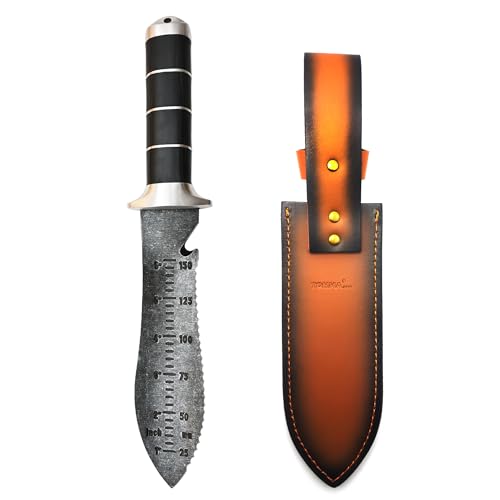
The TONMA Hori Hori Garden Knife elevates the traditional Japanese digging knife by using AUS-8 stainless steel heat-treated to HRC 58±1, giving it a superior combination of edge retention and corrosion resistance compared to standard stainless steel tools. The full-tang blade runs the entire length of the Pakkawood handle, meaning this knife can withstand the 300-plus pounds of prying force that professional landscapers routinely apply when lifting sod, splitting root balls, or breaking hardpan clay. The concave blade profile is identical in spirit to the classic Nisaku, but the AUS-8 alloy is noticeably harder and more resistant to edge rolling.
Users consistently describe the knife as “hefty and solid,” with a weight that cuts confidently through weed fabric and deep taproots without requiring a separate saw. The Pakkawood handle—a high-strength composite of hardwood and resin—offers permanent moisture resistance, so it will never crack or swell like untreated wood handles exposed to wet soil. The included cowhide leather sheath is thicker and more secure than the standard Nisaku sheath, with a snug fit that prevents accidental blade release during belt carry. The etched depth markings on the blade are crisp and easy to read even after repeated scrubbing.
The primary drawback is the sheath attachment: it uses a belt loop rather than a clip, which can make removal and re-sheathing slightly slower than a clip-on design. At 12.5 inches overall, the knife is on the longer side for a hori-hori, which can be slightly awkward when working in tight raised beds or between densely planted rows. The AUS-8 steel is rust-proof under normal conditions, but leaving the blade embedded in damp soil overnight will still promote minor surface spotting, so a quick rinse and wipe-down after each session remains the best practice.
What works
- Japanese AUS-8 stainless steel at HRC 58 provides excellent edge retention and rust resistance.
- Full-tang Pakkawood handle is waterproof and impervious to cracking or swelling.
- Heavy-duty blade plows through roots, sod, and compacted soil with ease.
What doesn’t
- Sheath uses a belt loop instead of a clip, making quick access slower.
- Overall 12.5-inch length can feel cumbersome in narrow raised beds.
4. SUIZAN Bypass Pruning Shears 8-inch

Crafted in a Japanese town known for its 250-year blade-making history, the SUIZAN Bypass Pruning Shears pack professional-grade performance into a compact 8-inch, 7.36-ounce body. The bypass cutting mechanism—where the upper blade slides past the lower blade like scissors—produces a clean cut that minimizes stem crush and promotes faster healing, making it ideal for pruning fruit trees, flowering shrubs, and bonsai. The high-grade steel blade is hardened and honed to slice through branches up to 15 millimeters (just over 5/8-inch) thick without requiring a second squeeze.
Users consistently highlight the rubberized PVC handle grips as a standout feature, providing excellent traction even when working with wet hands or wearing gloves. The heavy steel spring returns the blades to the open position reliably after every cut, reducing the effort required for repetitive trimming sessions. At just over 7 ounces, the shears are light enough to carry in a pocket or apron, yet the steel construction gives them a solid feel that cheaper lightweight pruners lack. Multiple owners report purchasing additional units after the first pair because the performance and price point make them ideal as backup shears or gifts.
The serrated blade edge is present on only one side, which is fine for clean branch cuts but limits the shears’ ability to grip and tear fibrous material like a full-serrated knife would. Some users note that the latch lock at the base of the handle can be stiff to engage with one hand, though it holds securely once snapped into place. The high-carbon steel blade is not stainless—users who forget to wipe and oil the blades after cutting wet wood may see surface rust develop within a few days. The 15-millimeter cutting capacity is adequate for most garden work but will struggle on branches thicker than a pinkie finger.
What works
- Authentic Japanese blade steel creates clean bypass cuts that speed plant healing.
- Ergonomic rubberized PVC grips reduce hand fatigue during extended use.
- Lightweight 7.36-ounce design with robust steel spring action.
What doesn’t
- Carbon steel blade requires diligent oiling to prevent surface rust.
- Latch lock can be stiff to engage with a single hand.
5. ARS HS-KR1000 Professional Hedge Shears

The ARS HS-KR1000 is a purpose-built hedge shear that prioritizes weight reduction and blade geometry above all else. At an astonishingly light build—thanks to magnesium-aluminum alloy handles—these shears reduce the arm fatigue that typically accompanies hedge trimming sessions lasting longer than 30 minutes. The 180-millimeter blades are forged from alloy steel with a proprietary blade treatment that extends edge life significantly, and the pivot bolt allows periodic blade tension adjustments to compensate for normal wear. Replaceable blades mean the tool’s lifespan is not tied to a single set of cutting edges.
Experienced landscapers report that the HS-KR1000 cuts through leafy growth and twigs under 1/8-inch thickness with virtually no resistance—comparing the feel to cutting through soft butter. The continuous metal handle design eliminates the weak point where handle meets blade, a common failure area on cheaper shears with plastic or wooden grips. The brushed finish alloy steel resists rust better than carbon steel, though the blade edges will still darken over time if not cleaned and oiled after each use. The included blade sheath protects the edge during storage and transport.
The 180-millimeter blade length is slightly shorter than some Western hedge shears, which means you must make more passes on tall hedges to maintain a uniform line. Users with small hands particularly appreciate the manageable size, but those accustomed to wide, sweeping cuts may find the shorter stroke limiting. The literature included with the shears is printed primarily in Japanese, with only minimal English instruction—owners need to rely on online maintenance guides for blade replacement procedures. The alloy steel composition is more prone to resin buildup when cutting sticky pines or sap-heavy branches, requiring a solvent dip and plastic scraper for thorough cleaning.
What works
- Magnesium-aluminum alloy handles make these the lightest premium hedge shears tested.
- Replaceable blades extend tool life indefinitely and reduce long-term costs.
- Pivot bolt allows precise blade tension adjustment for consistent cutting.
What doesn’t
- Shorter 180mm blade requires more passes on large hedges compared to Western models.
- Alloy steel blades require regular solvent cleaning to prevent resin buildup.
- Instruction manual is primarily in Japanese with minimal English guidance.
6. TONMA Ashinaga Bonsai Scissors
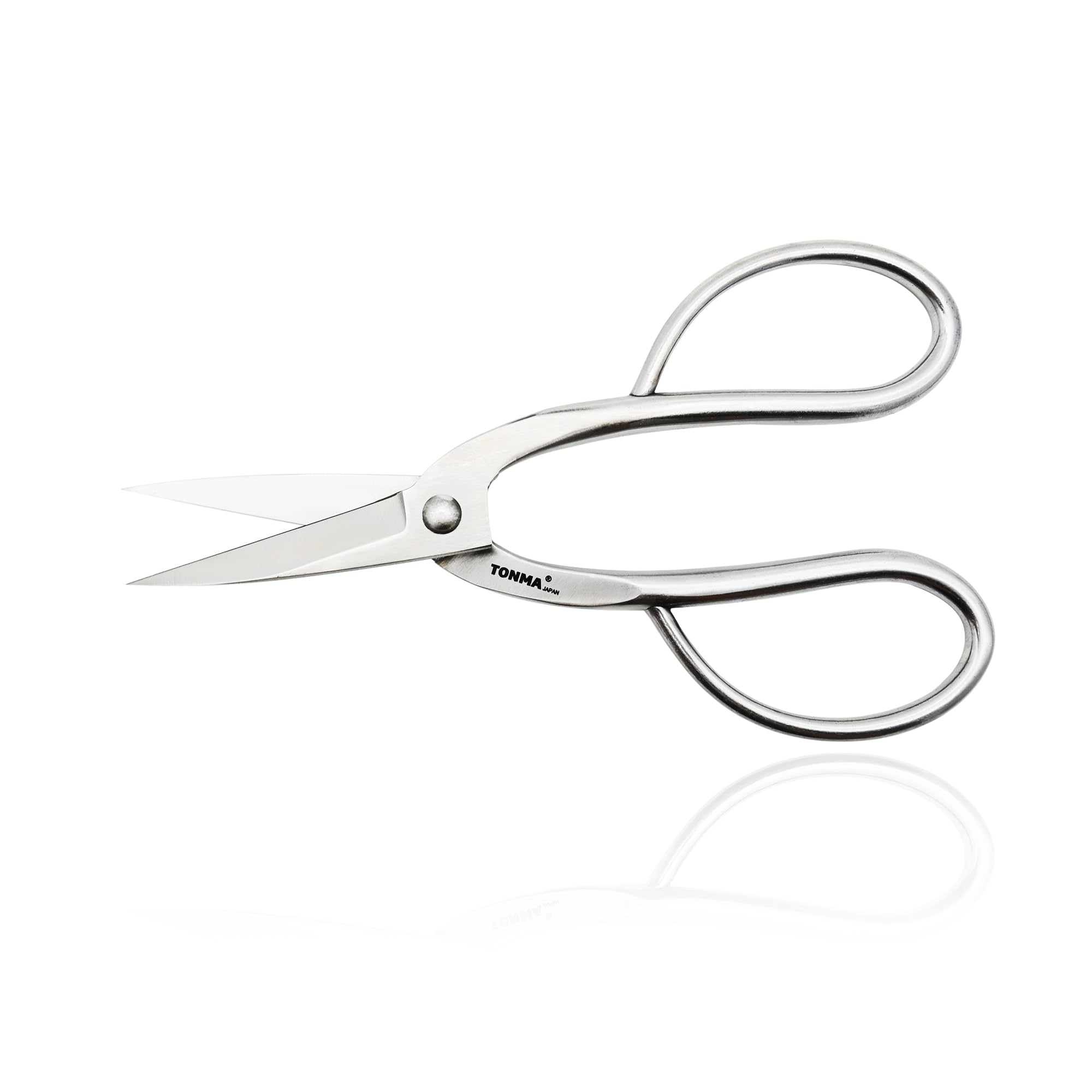
The TONMA Ashinaga Bonsai Scissors represent an unusually affordable entry point for genuine AUS-8 stainless steel Japanese garden tools—most shears in this steel grade sit at a higher price point. The one-piece forged construction from solid high-strength AUS-8 stainless steel gives these shears a 4.5-millimeter blade thickness and HRC 59±1 hardness, a combination that delivers both strength and corrosion resistance. The “ashinaga” (long-legged) blade design extends the reach into dense bonsai canopies, while the all-metal ergonomic handles ensure a comfortable grip that will never rot, swell, or peel.
Users report that the scissors handle heavy tasks well beyond typical bonsai trimming—some have used them to cut dahlia tubers and orchids, and the blades show no sign of wear or loosening after repeated use. The stainless steel construction requires much less maintenance than carbon steel equivalents; a simple wash with water and a towel dry is sufficient for most garden sessions. The lack of a spring mechanism keeps the design simple and durable, though it means the user must manually open the blades after each cut, which can slow down rapid repetitive trimming compared to spring-loaded models.
The straight blade edge lacks the micro-serrated teeth that some gardeners prefer for gripping slick stems, so very thin or wet plant material can slip slightly between the blades during cutting. The all-metal handle, while durable, has no rubber or plastic padding, which may cause discomfort during marathon pruning sessions lasting over an hour. The 8-inch overall length is typical for bonsai shears, but users with extra-large hands may find the handle span slightly too narrow for a full four-finger grip. The included lifetime warranty is a strong confidence signal for a tool at this price point.
What works
- Genuine Japanese AUS-8 stainless steel provides rust resistance with high edge hardness.
- One-piece forged construction with 4.5mm blade thickness offers exceptional durability.
- Very low maintenance compared to carbon steel bonsai tools.
What doesn’t
- No spring mechanism slows down high-speed repetitive cutting.
- All-metal handles can become uncomfortable during extended use without padded grips.
- Straight blade edge may struggle to grip thin, wet plant stems without slipping.
7. A.M. Leonard Deluxe Soil Knife

The A.M. Leonard Deluxe Soil Knife is the favorite digging companion of master gardeners and professional landscapers for good reason: the 6-inch stainless steel blade is rated to withstand 300 pounds of pressure, making it one of the strongest soil knives available without venturing into full-size spade territory. The bright orange composite handle is impossible to lose in leaf litter or mulch, and the integrated wide safety guard prevents your hand from slipping onto the blade during forceful prying motions. Dual edges—a deep serrated side for sawing roots and a tapered slicing side for clean cuts—give the knife genuine multitasking ability that extends beyond simple weeding.
Users consistently describe this as the “most used gardening tool” in their arsenal, a statement that holds up across hundreds of verified reviews. The spear-point shape excels at piercing compacted soil and removing stones, while the twine-cutting notch and depth gauge markings mean you rarely need a second tool for planting bulbs or cutting twine. Experienced landscapers report surviving extreme misuse—including prying concrete and levering out large rocks—without the blade bending or the handle cracking. The knife’s weight distribution feels balanced in the hand, with the handle providing enough leverage to break dry, crusty soil without transferring shock to the wrist.
The knife does not include a sheath, which is a notable omission at its price point—owners must purchase a separate holster or fashion a DIY edge protector for safe belt carry. The bright orange handle, while highly visible, is made from a composite that can show scuff marks and wear patterns over time, though this is entirely cosmetic and does not affect function. The serrated edge is aggressive enough to cut through weed fabric and small roots but lacks the fine points of a dedicated hori-hori serration pattern, so users who primarily dig in rocky soil may prefer a tool with a thicker, more pronounced serration set. The lifetime warranty is only valid when purchased directly from A.M. Leonard, not through third-party resellers on Amazon.
What works
- 300-pound pressure-rated stainless steel blade handles heavy prying and root cutting.
- Bright orange composite handle provides excellent visibility and a secure grip with safety guard.
- Deep serrated edge and tapered slicing edge cover a wide range of landscaping tasks.
What doesn’t
- No sheath included—safe belt carry requires a separate purchase.
- Lifetime warranty valid only through direct purchase from A.M. Leonard, not Amazon.
- Composite handle shows cosmetic scuff marks with heavy use.
Hardware & Specs Guide
Blade Hardness (HRC) and Steel Types
The Rockwell C scale measures blade hardness, and for Japanese garden tools the sweet spot is HRC 58 to HRC 61. Tools below HRC 56 will dull quickly when cutting woody roots or bamboo, while tools above HRC 62 become brittle and prone to chipping if twisted during prying. AUS-8 stainless steel (HRC 58–60) is the most versatile yard-grade alloy because it combines good edge retention with natural corrosion resistance. Yasugi specialty steel (YCS3) pushes hardness to HRC 60–62 for precision tools that never leave the workshop. Carbon steel can reach HRC 62+, but every scratch is a potential rust site—owners must wipe, dry, and oil after each session without exception.
Tang Construction and Handle Ergonomics
Full-tang construction means the steel blade extends through the entire handle, transferring prying forces directly to the user’s hand without a weak joint. Partial-tang or rat-tail tang tools will snap at the handle junction when lateral pressure is applied during root prying or sod lifting. Pakkawood handles—resin-impregnated hardwood—offer the traditional warmth of wood with zero water absorption, preventing swelling and cracking that affects natural hardwood handles. PVC and rubberized grips reduce vibration on pruners and shears, but they can degrade under UV exposure if left in direct sunlight. All-metal handles on shears and scissors eliminate rot risk but transmit cold, and they lack the slight compressibility that padded handles provide for joint comfort.
FAQ
What steel type is best for Japanese gardening tools that will be used outdoors?
How often should I sharpen Japanese garden pruners and shears?
Can I use Japanese hori-hori knives to cut through roots and rocks?
Final Thoughts: The Verdict
For most gardeners, the best japanese gardening tools winner is the Nisaku NJP651 Hori Hori because its HRC58 hardened stainless steel, dual-edge versatility, and premium leather sheath deliver the ideal balance of durability, sharpness, and traditional craftsmanship at a price that doesn’t punish experimentation. If you want razor-sharp precision for bonsai and detail work, grab the Wazakura Yasugi Steel Twig Scissors. And for heavy-duty landscaping or prying out stubborn stumps, nothing beats the TONMA Hori Hori Garden Knife with its full-tang AUS-8 steel construction.