
Specs are compiled from manufacturer listings and verified buyer reviews and can change over time — please confirm the key details on the product page before buying.
A Japanese garden shovel isn’t just a tool; it’s a precision instrument designed to make tough soil, stubborn roots, and delicate transplanting feel easy. The real challenge is cutting through the market hype to find one that actually holds its edge and doesn’t snap on the first thick root.
I’m Rikta — the founder and writer behind Lawn Gear Lab. This guide is built by comparing the manufacturers’ published specifications and the patterns across verified customer reviews, so you get each pick’s real strengths and trade-offs instead of marketing spin.
After looking at the steel quality, handle durability, and real-world feedback for dozens of models, these are the best options for anyone searching for the japanese garden shovel that truly performs season after season.
Our Picks at a Glance


How To Choose The Best Japanese Garden Shovel
Finding the right one means looking past the shape and seeing how the tool is built for actual abuse in the dirt. Three things matter most.
Full Tang vs. Partial Tang
A full-tang blade extends all the way through the handle, making the tool one solid piece of metal. This design prevents the head from snapping off when you pry up a rock or lever out a deep root. Cheaper tools often use a partial tang or just glue the blade into the handle — those break quickly under heavy use.
Blade Material and Steel
The steel type determines how sharp the edge gets and how long it stays that way. High-carbon stainless steel offers a good balance of rust resistance and edge retention. Premium picks use Japanese AUS-8 steel, which holds a razor edge through a full season and resists chipping in rocky soil.
Tool Type: Hori-Hori vs. Sickle vs. Cultivator
A hori-hori knife is a straight blade with serrated and sharp edges — best for cutting roots, weeding, and transplanting. A nejiri kama (weeding sickle) has a curved blade designed for slicing through weeds at the root with a sweeping motion. A hand cultivator has tines for breaking up soil. Choose the shape that matches your main task: all-purpose digging points to a hori-hori, while clearing large patches of weeds favors a sickle.
Quick Comparison
| Model | Best For | Blade Steel | Blade Length | Handle Material | Amazon |
|---|---|---|---|---|---|
| WORKPRO Hori Hori★ Best Overall | All-around heavy digging & cutting | Stainless Steel | 7 inches | TRP (rubberized) | Amazon |
| Corona Tools Hori KnifeBest Value | Reliable weeding & planting | Stainless Steel | — | Plastic | Amazon |
| Garden Helper Narrow TrowelTraditional Craft | Precise transplanting & bulb planting | Japanese Steel | — | Wood | Amazon |
| Japanese Weeding Tool Nejiri Gama | Fast shallow weed removal | Carbon Steel (double-layered) | — | Wood | Amazon |
| ROYTOA Hori Hori | Sturdy wood-handled multi-tasker | Stainless Steel | 7 inches | Walnut Wood | Amazon |
| SUIZAN Nejiri Kama Sickle | Precision weeding in tight spaces | Two-layer Japanese Carbon Steel | — | Japanese Oak or Zelkova Wood | Amazon |
| STRFOG Hori Hori | Portable all-in-one garden/camp tool | Stainless Steel | 7 inches | Wood | Amazon |
| HACHIEMON Hoe & Cultivator | Breaking up hard clay & cultivating | Alloy Steel | 3.0 – 3.2 inches | Wood | Amazon |
| TONMA Hori Hori | Heirloom quality & heavy duty root work | Japanese AUS-8 Steel (HRC: 58±1) | 7.2 inches | Pakkawood | Amazon |
In‑Depth Reviews
1. WORKPRO Hori Hori Garden Knife
Our pick — over 4.5★ from 950+ verified ratings; the strongest balance of quality and price.
The WORKPRO replaces a trowel, saw, and weeder with one serious 7-inch blade.
This tool gets the top spot because it does everything well without costing a fortune. The 7-inch stainless steel blade has two distinct edges: one sharp side for slicing through twigs and roots, and a serrated side that saws through tough material. That double-edged design means you grab one tool, not three, when heading out to the garden. Buyers report it is “the BEST gardening hand tool that I have purchased in years,” pointing out how it digs through hard ground and scoops up dirt with ease.
The handle is made from TRP (a rubberized material), giving you a comfortable, non-slip grip even when your hands are wet or muddy. A hole at the top lets you hang it on a hook in the shed. It also comes with an Oxford sheath that has a belt loop, so you can keep it on your hip and avoid accidental cuts when you are moving between tasks.
Depth markings in both inches and millimeters run right on the blade, making it simple to plant bulbs or seedlings at the exact depth they need. The forged full-tang construction means the metal runs all the way through the handle, so you can pry and lever without worrying about the handle snapping. At roughly 8.6 ounces, it has enough heft to feel solid but not so much that it wears your wrist out.
Why It Wins
- Double-edged blade (sharp + serrated) handles cutting and sawing in one tool.
- Full-tang stainless steel construction gives you confidence when prying out deep roots.
- Comfortable, non-slip TRP handle with a hang hole for easy storage.
- Includes a protective Oxford sheath with a belt loop for safe, hands-free carry.
The Trade-Off
- Some owners note the blade edges may not be sharp enough from the start for pruning woody branches.
Start here if: you want a single, durable hand tool that digs, cuts, weeds, and saws — the best combination of build quality and versatility at a fair price.
Think twice if: you need a tool specifically for pruning thick, woody branches; a dedicated pruner may work better for that task.
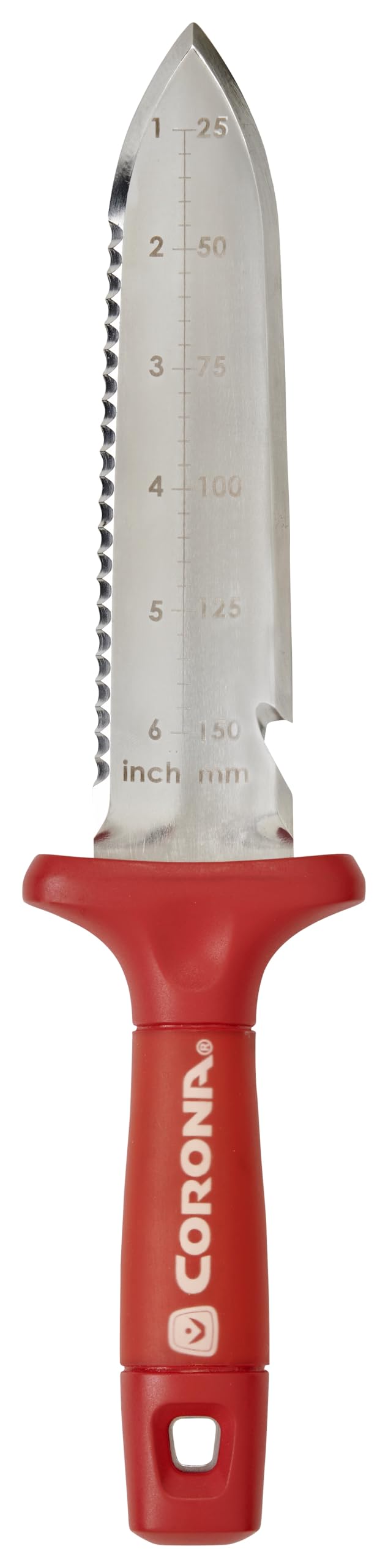
2. Corona Tools CT15409 Hori Garden Knife, Red
A no-rust, sharp-as-new knife that stays reliable even after years of use.
The value here is not about the price tag alone — it is about a tool that does not quit. The stainless steel blade stays sharp and, as one owner put it, “even after years of use, I’m not seeing any rust.” That long-term durability is the real savings. The serrated edge slices through tough roots, while the precision pointed tip makes it easy to dig out weeds at the root without disturbing nearby plants.
The bright red handle does double duty: its ergonomic shape gives you a secure, non-slip grip, and the color makes the tool easy to spot in mulch, grass, or a packed tool bag. At 12 inches total length, it strikes a balance between reach and control, fitting well in smaller hands while still providing leverage for deeper digging.
Owners consistently praise its quality and sturdiness, with many calling it the “number one tool for my garden belt.” It is especially effective at getting down to the root of dandelions and other stubborn weeds. A few note it is slightly heavier than expected, but that weight translates to confidence when twisting and prying.
Why It Delivers
- Stainless steel blade resists rust, with owners reporting zero corrosion after years of use.
- Serrated edge and pointed tip excel at deep weed removal and precision planting.
- Bright red, ergonomic handle is easy to find and comfortable to hold.
The Trade-Off
- Plastic handle may not feel as premium as wood, but it keeps the tool light and affordable.
Grab this for: a budget-friendly workhorse that holds up over years of regular weeding, digging, and planting without rusting.
Look elsewhere if: you prefer the feel of a natural wood handle or need a wider, stronger blade for heavy prying.
3. Garden Helper Narrow Garden Trowel Hand Tool
A Japanese classic with a soil stopper that keeps dirt in the bed, not on your knees.
Garden Helper has been making tools in Japan since 1960, and this narrow trowel shows why that heritage matters. The blade is made from Japanese steel and features a serrated edge on one side for cutting through small roots when you hit them while digging. The narrow shape (just 2 inches wide) lets you work between tightly spaced plants without damaging their neighbors.
The wood handle fits naturally in your palm and provides solid leverage without bending, even when you lean into it. A unique soil stopper at the base of the blade prevents dirt from spilling up over your hand while you work — a small detail that makes a real difference when you are on your knees for an hour. The blade also has measurement markings (inches and millimeters) to help you plant bulbs at the correct depth.
Long-time gardeners praise it as the “best trowel in 30+ years of gardening,” specifically noting its sturdiness and the usefulness of the serrated edge. However, durability gets mixed feedback — while many find it sturdy, a few owners mention the blade breaking after a few uses. Treating it gently in rocky soil and storing it dry seems to be the key to longevity.
Why It Stands Out
- Japanese steel blade with a serrated edge handles small root cutting during planting.
- The soil stopper keeps dirt from spilling onto your hands, improving comfort and work speed.
- A narrow profile allows for precise work in tight flower beds and raised garden boxes.
The Trade-Off
- Mixed durability reports suggest it is best for looser soil and gentle digging, not heavy prying.
Reach for this if: you do a lot of precise bulb planting and transplanting in established beds and want a tool with a traditional Japanese feel.
skip it if: your garden has heavy clay or lots of rocks; the blade may not survive that level of abuse.
4. Japanese Weeding Tool Nejiri Gama
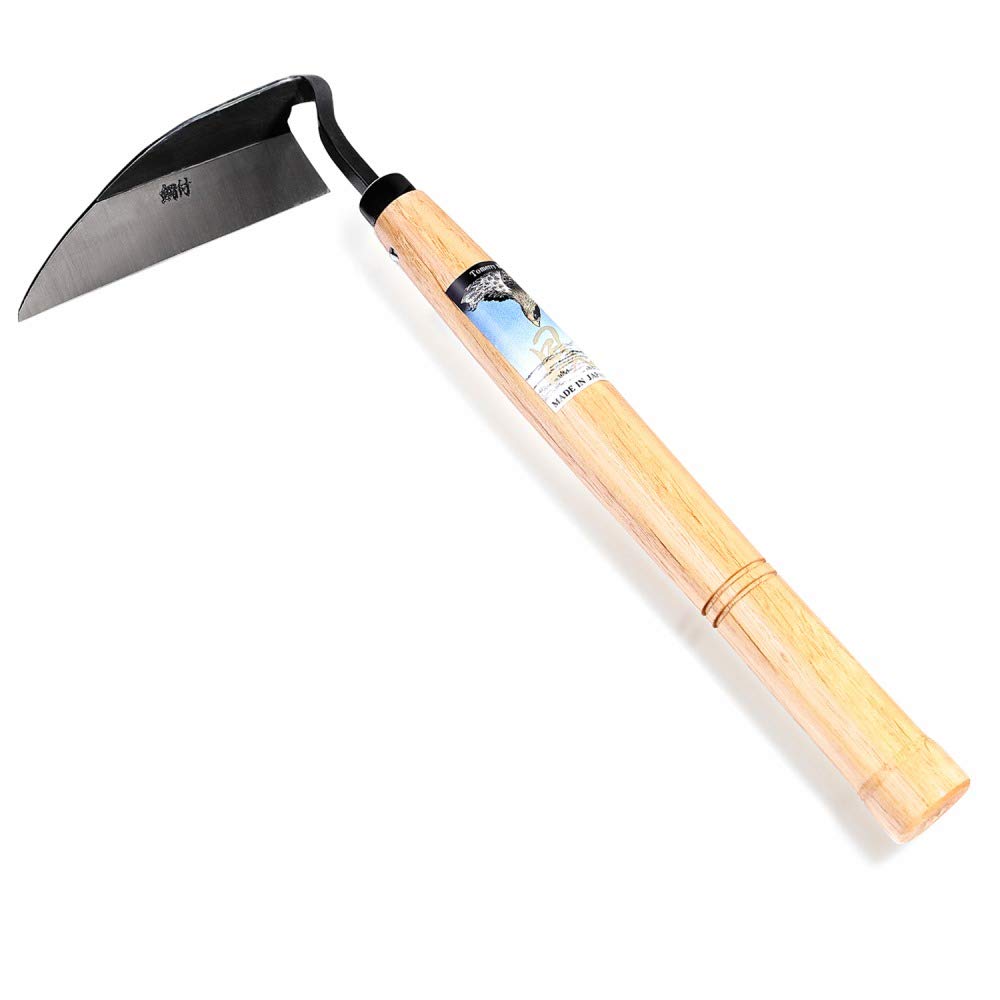
A traditional blacksmith-made sickle that halves the time spent clearing shallow weeds.
This nejiri kama (weeding sickle) is crafted in a Japanese blacksmith’s factory using double-layered steel — carbon steel for a sharp, lasting edge bonded to a mild steel body for toughness. The result is a blade that stays razor-sharp through heavy use and can be repeatedly sharpened over its lifetime. Buyers describe it as cutting through weeds “like butter,” and many report finishing their weeding tasks in half the time.
At 6.7 ounces and roughly 12 inches long, it is lightweight and easy to maneuver one-handed. The curved blade is designed for a sweeping motion that slices weeds off just below the soil surface, making it ideal for clearing large patches of shallow-rooted weeds like chickweed or crabgrass. The wooden handle provides a classic, secure grip.
The sharpness of the blade receives the most positive feedback, although a few owners note it could be sharper from the start. One owner mentioned the blade chipped during use on tough grass. Treating it as a slicing tool for weeds rather than a digging bar for rocks will keep it performing well.
What It Does Best
- Double-layered carbon steel blade takes and holds an exceptionally sharp edge.
- Lightweight design (6.7 oz) makes it easy to use for extended weeding sessions.
- Sweeping sickle motion clears weeds much faster than hand-pulling or standard digging.
The Catch
- The blade is narrow and best for shallow roots; it is not designed for deep digging or prying up large rocks.
Ideal for: anyone battling large patches of annual weeds in flower beds or vegetable gardens who wants a fast, satisfying way to clear them.
Not for: digging planting holes, transplanting, or working in soil full of hidden rocks that could chip the thin blade.
5. ROYTOA Hori Hori Garden Knife
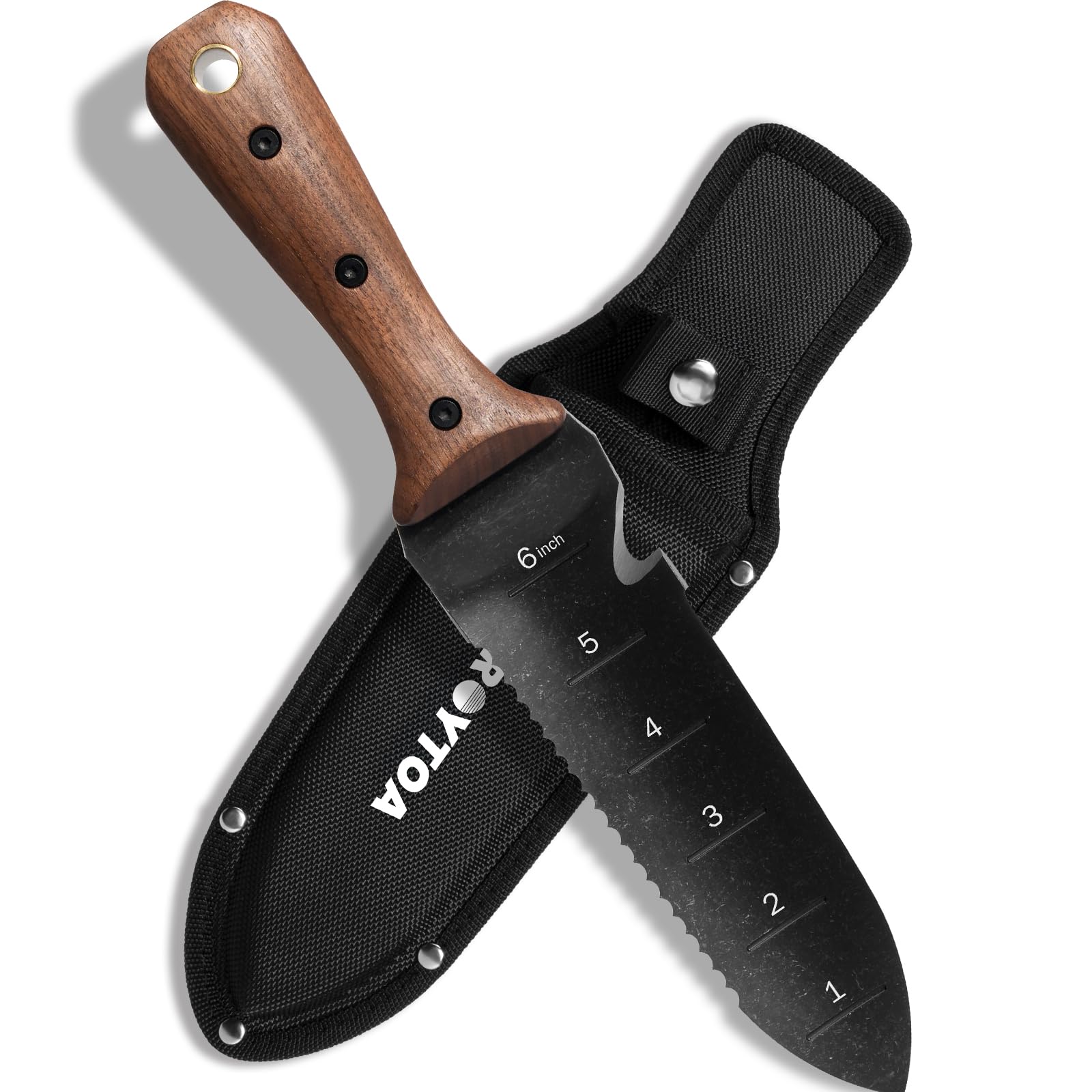
A beautifully balanced walnut-handled hori hori that feels like an extension of your arm.
This knife pairs a 7-inch rust-proof stainless steel blade with a full-tang walnut wood handle secured by three metal rivets. The full-tang design means the metal runs the entire length of the handle, giving you the strength to pry and lever without fear of the handle snapping. The walnut provides a comfortable, warm grip that gets better as it ages.
The curved blade shape is ideal for scooping out soil when transplanting, and the depth markings (in inches) printed on the blade help you plant at the right depth every time. One side is razor-sharp for slicing, while the other is serrated for cutting through tough roots. Owners praise its durability, noting the blade finish remained intact after a full summer of use with no scratches or rust.
Weighing in at about 1.12 pounds, it has a nice heft that helps it dig into hard soil with less effort from you. The sheath is well-made for carrying and storage, and the hanging hole on the handle makes it easy to hang in the garage. Keep in mind the sharp edges require caution — a few owners mention it is sharp enough to cause a cut if handled carelessly.
What Stands Out
- Full-tang walnut wood handle with three rivets for maximum strength and a classic look.
- Curved stainless steel blade excels at scooping, digging, and transplanting.
- Includes a protective sheath with a belt loop for safe carry.
The Catch
- The blade is extremely sharp straight from the box — safe storage is a must.
Choose this for: a premium-feeling, wood-handled hori hori that combines strength, beauty, and all-day comfort.
Consider alternatives if: you prefer a lighter tool for quick, repetitive tasks around potted plants.
6. SUIZAN Nejiri Kama Weeding Sickle 13”

A 13-inch sickle forged with 400-year-old sword-making tradition that chews through heavy clay.
SUIZAN’s sickle comes from a town with over 400 years of sword-making history, and the blade’s quality reflects that legacy. The two-layer Japanese carbon steel is honed by artisans to an exceptional sharpness that slices through roots and heavy clay soil with ease. One owner working in tough clay soil reported it works “super well,” enough to make them want a long-handled version too.
The 13-inch length gives you good reach without requiring you to bend over too far, making it easier on your back during long weeding sessions. The handle is made from Japanese oak or zelkova wood — natural materials that provide a comfortable, solid grip. At just 7.05 ounces, it is light enough to use one-handed for precise work around delicate plants without damaging them.
While quality and effectiveness are the most praised aspects across hundreds of reviews, some owners note that it is not the most ergonomic tool in its design — a minor trade-off for its precision. The included carrying pouch is a bit tight, which can present a safety risk when sheathing the extremely sharp blade.
The Strengths
- Artisan-forged two-layer carbon steel blade offers professional-grade sharpness.
- Lightweight (7.05 oz) and 13 inches long for easy, back-friendly weeding.
- Trusted by Japanese professionals for precision work in home gardens and flower beds.
The Weakness
- The narrow shape is designed for slicing, not digging or prying; it is a specialist weeder, not an all-purpose tool.
Best for: the serious gardener who wants an authentic, high-quality sickle for fast, efficient weeding, especially in dense or heavy soil.
Less ideal if: you need one tool that does everything — this is a weeding specialist, not a multi-tool.
7. STRFOG Hori Hori Garden Knife
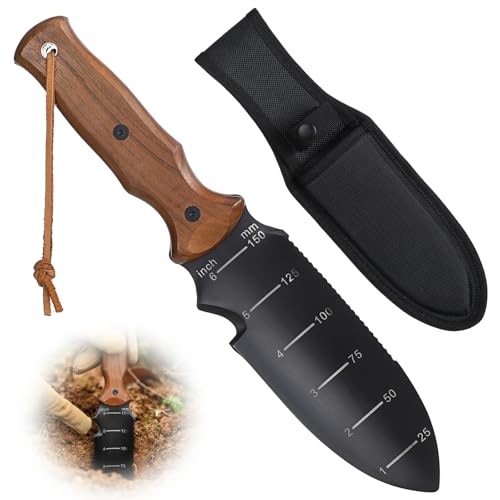
A lightweight hori hori with a leather strap and belt clip that goes from garden to campsite.
This tool is built for the person who does not just garden but also hikes, camps, and uses their tools everywhere. The 7-inch stainless steel blade is curved for effective digging and scooping, while the dual-scale measurement (inches and millimeters) makes precision planting simple. It comes with an EDC (Everyday Carry) sheath that features a belt clip and a leather strap, so it stays secure whether you are in the yard or on a trail.
The ergonomic wood handle offers a comfortable, secure grip that holds up during longer sessions. One owner summed it up perfectly: “I cannot garden without this knife. It replaces five different tools in my bag.” The blade cuts through tough roots, and the scooped shape works well for digging. The tool feels incredibly sturdy and handles compacted dirt without bending.
Weighing in at 10.9 ounces, it is lighter than many full-steel hori horis, which makes it easier to carry on a belt all day. The rust-resistant blade and limited lifetime warranty add confidence for outdoor adventurers. The primary trade-off is that the light weight may not suit someone who prefers a heavier blade for heavy prying.
Why It Fits
- Lightweight at 10.9 oz with an EDC sheath including belt clip — easy to carry anywhere.
- Combines a sharp edge and serrated edge for versatile cutting and digging.
- Limited lifetime warranty for long-term confidence.
The Catch
- Lighter weight means less momentum for breaking into extremely hard, compacted soil.
Perfect for: the active outdoor person who wants a single, portable gardening tool that works equally well in a raised bed and at a campsite.
Not ideal if: you need a heavy-duty tool for prying up large rocks or digging in extremely dense clay all day.
8. HACHIEMON Japanese Craftsmanship Hand Tool Hoe and Cultivator

A hand-forged cultivator and hoe in one that turns hard clay into loose soil without crawling.
This tool is a hybrid: a sharp flat blade on one end for cutting weeds at the surface, and two strong tines on the other for breaking up and cultivating the soil. The 15.4-inch total length is long enough to let you work from a standing or seated position, rather than crawling on your knees. Owners with heavy clay soil call it the “best tool in my entire shed,” noting it handles rocks and roots with ease.
Produced in a traditional Japanese blacksmithing factory, the alloy steel blade is super sharp right from the start. The flat head slices through roots cleanly, while the tines catch weed roots and turn soil. The wooden handle provides a solid grip, and the tool has a moderate, balanced weight (1.15 pounds) that makes it easy to use for extended periods without tiring your arm.
The sharpness and effectiveness are the most praised aspects, with buyers noting it stays sharp after all-day use. However, durability is a mixed topic — while many find it solid, a number of customers note the handle breaking after a few uses. Handle fragility is the main risk with this otherwise excellent tool.
What Works
- Combines a sharp hoe blade and cultivating tines in one hand-forged Japanese tool.
- 15.4-inch length lets you work standing or from a rolling seat — less strain on your back and knees.
- Handles clay, rocks, and roots better than many standard garden hoes.
The Risk
- Multiple reports of the handle breaking after limited use; it may need careful handling or a replacement handle over time.
Go for this if: you have tough, rocky, or clay-heavy soil and want a dual-purpose tool that can both weed and cultivate without switching implements.
Hold off if: you need a tool that will survive years of abuse without any handle maintenance or replacement.
9. TONMA Hori Hori Garden Knife [Made in Japan]
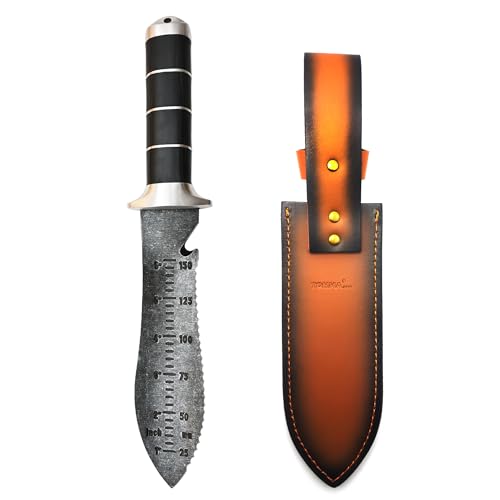
Built with Japanese AUS-8 steel and a leather sheath, this is the last hori hori you will ever buy.
This is the premium choice for the gardener who wants a true heirloom tool. The blade is made from Japanese AUS-8 stainless steel with a hardness rating of HRC 58±1 — that is the same quality steel used in high-end kitchen knives, giving it exceptional edge retention and wear resistance. The traditional Japanese quenching process adds toughness, making it break-resistant while staying rust-proof.
The blade is 7.2 inches long and concave in shape, making it ideal for scooping out soil. One side is beveled sharp for slicing, the other is serrated for cutting through tough roots and even weed fabric. Engraved inch markers help you plant at the correct depth. The tool comes with a premium cowhide leather sheath that is thick and secure, protecting the blade during storage and transport.
The Pakkawood handle (a high-strength composite material) is ergonomically shaped and offers permanent corrosion resistance. Owners describe it as “heirloom quality” — a hefty, solid tool that cuts through deep roots with confidence. The weight is substantial, which many appreciate for digging, but a few note it is heavier than they expected. Backed by a lifetime warranty.
The Best Features
- Japanese AUS-8 steel (HRC 58±1) delivers professional-grade sharpness and edge retention.
- Concave 7.3-inch blade is ideal for scooping, and the Pakkawood handle resists corrosion permanently.
- Premium cowhide leather sheath and a lifetime warranty make this a true buy-it-for-life purchase.
The Trade-Off
- Substantial weight and heft may feel tiring for quick, light weeding tasks.
Buy this for: the highest quality build, a lifetime of heavy use, and a tool that feels special every time you pick it up.
Choose a lighter option if: you garden mostly in pots or raised beds where a lighter, more nimble tool is easier to manage.
Understanding the Specs
Full Tang vs. Partial Tang
Full tang means the blade metal extends all the way through the handle, making the tool one solid piece. This is critical for a Japanese garden shovel because you will use it for prying and leveraging against rocks and roots. A partial-tang or glued handle is much more likely to snap under that kind of stress, ruining the tool and potentially causing injury.
Blade Steel Types
Stainless steel resists rust but can be harder to sharpen to a razor edge. High-carbon steel takes a sharper edge but requires more care to prevent rust. Japanese AUS-8 steel is a premium choice that combines excellent edge retention (HRC 58-60) with good corrosion resistance. The steel type directly affects how often you have to sharpen the tool and how long it lasts in wet soil.
FAQ
What is the difference between a hori-hori knife and a Japanese weeding sickle?
Is a full-tang handle necessary for a Japanese garden shovel?
How do I clean and care for my Japanese garden shovel?
Can I use a Japanese garden shovel to cut through roots and weed fabric?
Why are some Japanese garden tools so sharp right from the start?
What is the best Japanese garden shovel for heavy clay soil?
Is a wood handle better than a plastic or rubber handle?
Can I use a Japanese hori-hori knife for camping or hiking?
Final Thoughts: The Verdict
For most people, the japanese garden shovel winner is the WORKPRO Hori Hori because it pairs a full-tang stainless steel blade with a comfortable TRP handle and an affordable price — a combination that thousands of owners have already proven works year after year. If you want a premium, heirloom-quality tool with Japanese AUS-8 steel that you can hand down, grab the TONMA Hori Hori. And for fast, satisfying weed clearing without bending over, the SUIZAN Weeding Sickle is the one to reach for.
How We Picked
We do not accept paid placement. Every pick is matched to a real buyer and a real use-case; we do not hands-on test units.
Sources & Methodology
Specifications: manufacturer listings and product documentation. Review insights: verified customer reviews, as of July 2026. Pricing: not shown on this page (it changes often); check the current price via the retailer link.
As an Amazon Associate, Lawn Gear Lab earns from qualifying purchases. This does not affect which products we feature.