
Specs are compiled from manufacturer listings and verified buyer reviews and can change over time — please confirm the key details on the product page before buying.
If you are serious about your garden, you already know the difference between a clean snip and a ragged tear. A ragged cut invites disease that can kill a prized rose or bonsai. A clean cut heals quickly, keeping the plant healthy. That is the promise of a well-made Japanese pruning shear, upheld by centuries of craftsmanship.
I’m Rikta — the founder and writer behind Lawn Gear Lab. This guide is built by comparing the manufacturers’ published specifications and the patterns across verified customer reviews, so you get each pick’s real strengths and trade-offs instead of marketing spin.
We have combed through the data on dozens of models to find the nine that genuinely deliver on that promise. Whether you are deadheading petunias or shaping a hundred-year-old juniper, this guide to the best japanese garden pruning shears will point you straight to the right pair for your hands and your budget.
Our Picks at a Glance
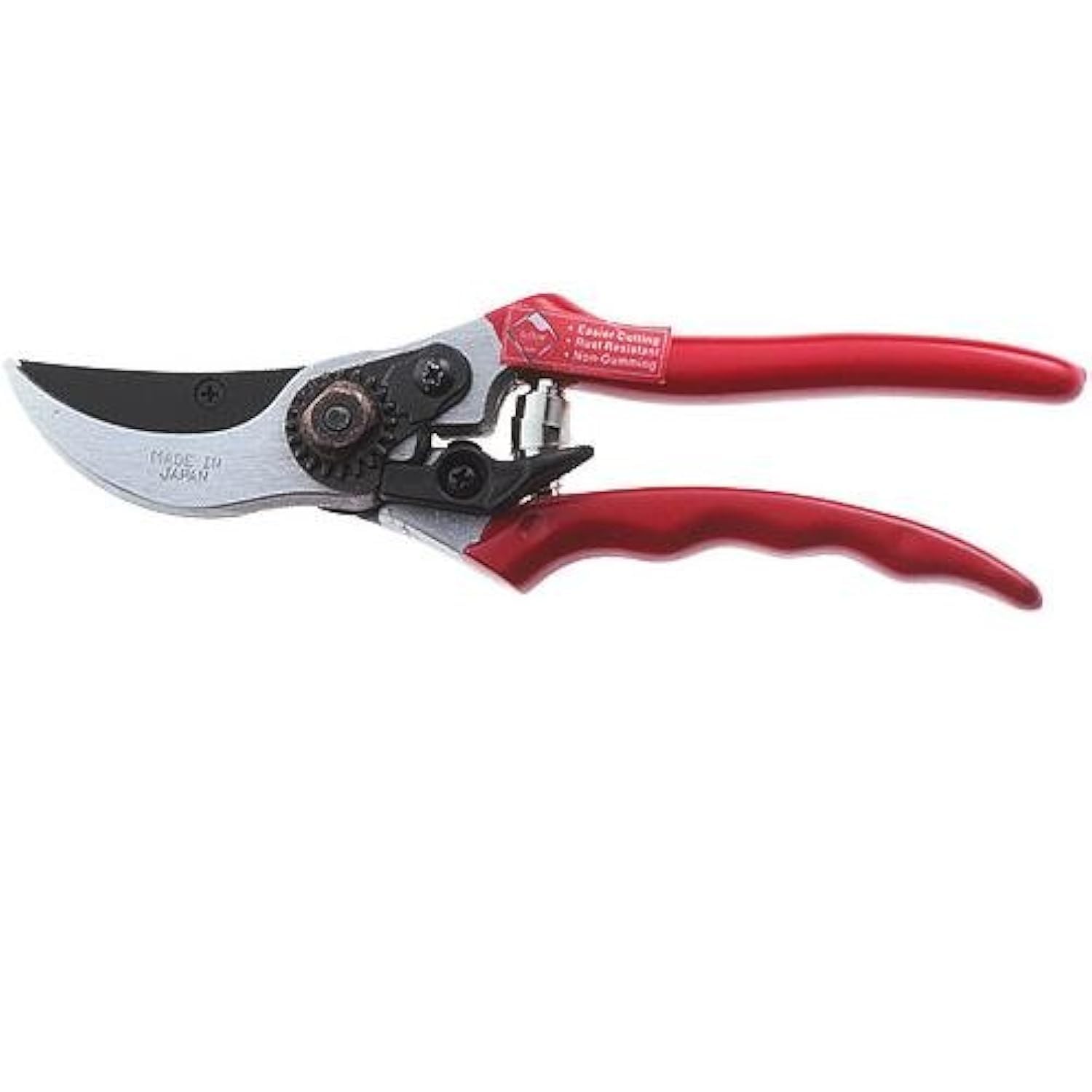

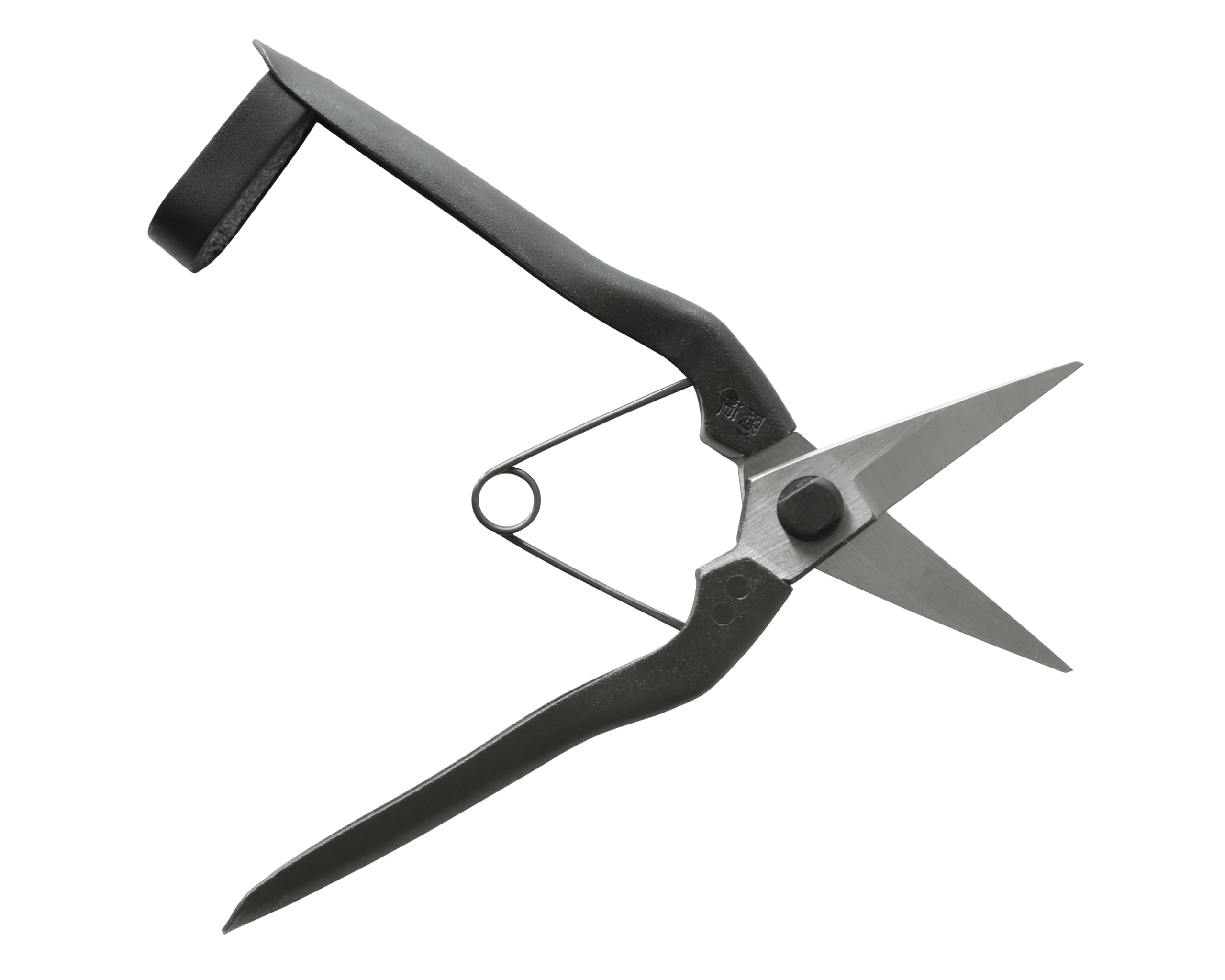
How To Choose The Best Japanese Garden Pruning Shears
You need shears that cut cleanly through a branch without crushing it, fit your hand so you can work for an hour without cramping, and use a steel that stays sharp even after hitting sap and dirt. Beginners often grab the shiniest pair on the rack and later wonder why the blades are gummed with sap or chipped on a woody stem. A little upfront knowledge prevents that frustration.
Blade Type: Bypass vs Anvil
For live, green growth — flowers, shrubs, young branches — you want a bypass shear. The moving blade slides past the fixed one like scissors, leaving a clean cut that heals quickly. Anvil shears have a blade that closes against a flat surface; they crush the stem slightly, which is fine for dead wood but not for living plants you care about. Every pick in this list is a bypass design because that is what a Japanese garden demands.
Steel Quality and Maintenance
Japanese shears use high-carbon steel — harder than stainless, able to take a finer edge, and much sharper for much longer. The trade-off is that carbon steel rusts if you neglect it. A quick wipe with a dry cloth after each session and an occasional drop of oil is all it takes. If that sounds like too much effort, look for a fluorine-coated blade, which resists rust and repels sap.
Handle and Grip
If the handle does not fit your hand, the shear is useless. You want a comfortable, non-slip grip that lets you cut for an hour without pain. Aluminum handles keep the weight low; vinyl or rubber coatings add comfort. Some shears are built with smaller hands in mind — a crucial detail if you have arthritis or simply shorter fingers. Read the owner experiences closely on this point.
Quick Comparison
| Model | Best For | Cutting Capacity | Blade Steel | Weight | Amazon |
|---|---|---|---|---|---|
| Samurai KS-4T★ Best Overall | All-Around Performance | 25 mm (1″) | Teflon-Coated Stainless | 0.57 lb | Amazon |
| Saboten 7.9″Budget Champion | Budget Value | 20 mm (3/4″) | Carbon Steel w/ Fluorine | 0.53 lb | Amazon |
| Okatsune No.207Bonsai Specialist | Bonsai & Detail Work | 45 mm (1.8″) | Special Carbon Steel | 4.2 oz | Amazon |
| TONMA 8″ | Heavy-Duty Cutting | 1″ (25 mm) | Japan SK5 Stainless | 0.62 lb | Amazon |
| SUIZAN 8″ | Traditional Craftsmanship | 15 mm (5/8″) | Japanese Steel | 7.36 oz | Amazon |
| Kimura Samurai | Premium Yasugi Steel | 20 mm | Yasugi Steel (61 HRC) | 230 g | Amazon |
| YAMASAN Suiryu | Hand-Forged Artistry | 7.87″ Blade Length | Blue Carbon Steel | 200 g | Amazon |
| KAKURI 8″ | Classic w/ Leather Sheath | 2.3″ Blade | Hand-Forged Carbon | 10.2 oz | Amazon |
| Wablade Cushion-Spring | Perfect Hand Feel | 0.59″ (15 mm) | Forged Alloy Steel | 0.54 lb | Amazon |
In‑Depth Reviews
1. Samurai 8 1/2″ Bypass Pruner Shear KS-4T
Our pick — over 4.5★ from 150+ verified ratings; the strongest balance of quality and price.
This crowd favorite slices through half-inch branches easily.
This is the shear you reach for when you need one tool to handle everything from a delicate rose stem to a tough, woody branch. The Teflon-coated stainless steel blade gives it a cutting capacity of 25 mm — that is a full inch of clean, easy power. Owners consistently compare it to premium European brands like Felco, but at a more accessible price point, and the praise for its quality is the single most-repeated theme across hundreds of reviews.
The red rubber handle is ambidextrous and comfortable enough for long sessions, and the overall build is described as sturdy and dependable. It weighs half a pound, so it does not fatigue your arm during an afternoon of shaping shrubs. The only real trade-off is the locking tab: a few owners mention it is sensitive enough that a gloved hand can nudge it to “locked” mid-cut. It is a minor annoyance on an otherwise superb tool.
What Wins People Over
- easy power on branches up to a full inch thick — buyers report it “goes through 1/2” branches like they’re butter”
- Teflon coating keeps the blade gliding through sap and debris without sticking
- Lifetime quality and value that rivals pruners costing twice as much
The One Quirk
- Locking tab is a bit too easy to engage with gloves on, requiring a quick re-adjustment during use
Reach for this if: you want a single, versatile pair that handles daily garden trimming with zero fuss.
Look elsewhere if: a finicky safety lock would drive you crazy — though for most, it is a non-issue.
2. Saboten Japanese Pruning Shears 7.9″
Entry-level price with pro-level sharpness and comfort.
Do not let the budget-friendly price fool you. This Saboten shear punches well above its weight class, starting with a razor-sharp, heat-treated carbon steel blade that is coated in fluorine. The fluorine is the secret weapon — it makes sap and plant resin slide right off, so the blade action stays smooth even when you are cutting pine or fruit trees. Cleanup takes seconds. The cutting capacity is 20 mm (3/4 of an inch), which is plenty for standard pruning.
What wins people over most is the combination of quality and pure sharpness — it is one of the highest-rated aspects. One owner sums it up simply: “best clipper I have ever bought for that price.” The 7.9-inch length and lightweight body are a gift for gardeners with smaller or arthritic hands. A florist chimed in with “I love them!!!!!” which tells you the precision is there for delicate work, too.
Why It Stands Out
- Fluorine coating actively repels sap and gunk — the blade stays clean mid-job
- Excellent ergonomics for smaller hands or arthritic joints; very low fatigue
- Cuts live and dead wood with minimal effort, staying sharp for a long time
Trade-Off
- Officially rated for 20 mm branches, so not the choice for heavy two-inch limbs
Grab this if: you want premium Japanese steel and a comfortable grip without spending a lot.
skip it if: you regularly cut branches thicker than a pinky finger — you need the extra capacity of the Samurai.
3. Okatsune Professional Snips, No.207
The undisputed king of precision for bonsai and delicate snips.
If your work is measured in millimeters — wiring a bonsai branch, deadheading a single spent bloom, snipping herbs without bruising the stem — this is your tool. The Okatsune No.207 has a blade length of 45 mm, which is more than twice the cutting width of the Saboten snips, giving you a 2.2x gap in reach for getting deep into dense foliage. Yet the whole tool weighs a featherlight 120 grams (4.2 oz). Owners say it is “perfect for detail / bonsai work” and that it stays sharp enough for clean cuts every single time.
The sharpness and quality are the two most-praised aspects here. The carbon steel blade takes a fine edge and holds it for months of daily use. The honest trade-off is the blade durability discussion: a few owners mention chipping on very hard, woody stems, and the carbon steel will darken if not wiped and oiled. The leather lock strap is also a minor complaint. But for the precise, delicate cutting it is built for, this snip is a genuine joy.
Precision Highlights
- Long, narrow 45 mm blade reaches into tight spots that bulkier shears cannot access
- Weighs barely 4 oz — you forget it is in your hand after an hour of trimming
- Sharp, clean cuts every time; customers note years of service with proper care
Cautions
- Brittle if misused on thick dead wood — the blade can chip on heavy stems
- Metal handles get slippery without gloves, and the leather strap can tear
The right pick for: bonsai enthusiasts, florists, and anyone who needs surgical precision.
Not for: heavy pruning of thick, woody branches — save this for the delicate work.
4. TONMA Bypass Pruning Shears 8″
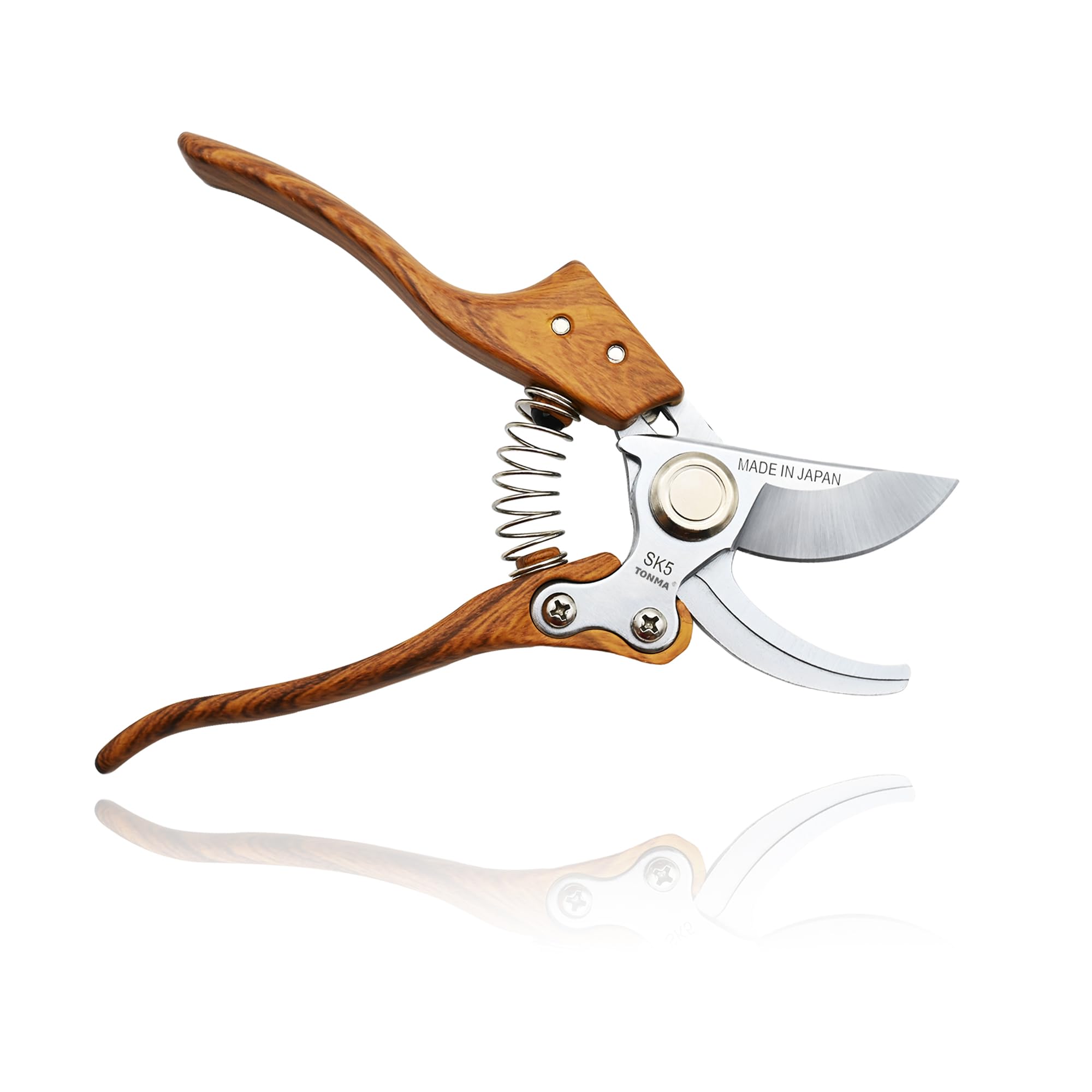
For when you need to muscle through inch-thick branches without a struggle.
The TONMA is a beast, plain and simple. It uses Japanese SK5 stainless steel and is rated to cut branches up to a full inch in diameter. That is a heavy-duty capability that puts it ahead of most of the other shears here. The standout feature is the ergonomic aluminum alloy handle with an imitation wood grain finish. It is designed to reduce hand pain over long trimming sessions, and the safety lock has a tight clip that does not slide easily.
Quality and sharpness are the highest-rated aspects, with owners saying these shears “work every bit as good as they look” — some even hang them on the wall like art. The catch is that the cutting performance and ease of use receive mixed feedback. While many find it a pleasant tool, a few users describe the handling as slightly awkward. One note: the holder clip can release too easily from a pocket, so it works better stored in a pouch or on a hook.
Strengths
- SK5 steel and 1-inch cutting capacity make it the strongest cutter in this lineup
- Beautiful wood-grain aluminum handles reduce fatigue and feel great in hand
- Lifetime service included — a rare safety net at this price tier
Things to Know
- Handling comfort is subjective — some find the shape a little awkward
- Pocket clip is not secure enough for reliable carry during a walk around the yard
Ideal for: clearing overgrown shrubs and cutting thicker limbs where other shears would struggle.
Think twice if: you need a pocket-friendly snip for quick, frequent cuts — the TONMA is built for power sessions.
5. SUIZAN Bypass Pruning Shears 8″

Forged in a town with 250 years of blacksmith history — you feel it in every cut.
The SUIZAN shear comes from a region in Japan renowned for blade-making since the Edo period. That heritage shows in the Japanese steel blade that owners consistently describe as sharp, precise, and capable of making clean cuts through both dead and live wood. The bypass design keeps the cut clean for the plant’s health. At 7.36 oz and 8 inches long, it is lightweight enough for extended sessions without strain.
The quality and sharpness are the top-rated aspects by a wide margin. One owner with small hands noted that the “excellent gripping” makes bush pruning easy. The honest caveat is that the steel requires care — a few owners have reported issues with blades corroding if left wet. This is not a tool you toss in a damp shed and forget about. But if you treat it right, it rewards you with professional-grade performance that outperforms cheaper alternatives.
Heritage and Handling
- Authentic Japanese forging from a 250-year-old blade-making region
- Excellent ergonomics for smaller or medium-sized hands
- Sharp, precise cuts on both live and dry branches with minimal effort
Care Required
- High-carbon steel needs thorough drying after use to prevent rust and corrosion
A fine match for: gardeners who appreciate traditional craftsmanship and do not mind a little blade maintenance.
Pass if: you want a stainless tool you can leave in the rain — this one needs drying.
6. Kimura 8″ Samurai Garden Pruning Shears

Yasugi steel forged to 61 HRC — the same hardness as a traditional samurai blade.
The Kimura Samurai series is manufactured in Sakai, Japan, and it is a popular choice for professional gardeners across Japan. The headline feature is the Yasugi steel blade, a material traditionally used during the Samurai era, heat-treated to 61 HRC for extreme edge retention. That hardness means the blade stays razor-sharp through heavy use, resisting sap buildup and rust better than standard carbon steel. The cutting capacity is 20 mm.
Owners call it “heavy duty, sharp” and expect it to last a long time. The non-slip vinyl-coated aluminum handles are lightweight and ergonomic, designed specifically to help people with arthritis or carpal tunnel. One buyer replaced cheap ratcheting pruners that snapped on a dead lilac branch and found the Kimura instantly capable. The only note of caution is a single owner who felt the build was not quite on par with the similar-looking Okatsune — but the vast majority rate it excellent.
Elite Steel
- Yasugi steel at 61 HRC delivers outstanding sharpness and wear resistance
- Ergonomic vinyl handles reduce strain — good for arthritis or carpal tunnel
- Lifetime warranty backs a heavy-duty, durable construction
Point of Consideration
- Some owners feel the overall finishing is a step behind the Okatsune at a similar price
Best suited for: anyone who wants the historic prestige of Yasugi steel with modern ergonomic comfort.
Consider carefully if: absolute precision and refinement are your top priorities — compare it directly with the Okatsune.
7. YAMASAN KYOTO UJI Suiryu Bonsai Scissors

Made by hand in a 370-year-old blacksmith town — a true artisan’s tool.
This is not a factory stamping. The YAMASAN Suiryu is the work of Shiro Tsurumaki, a third-generation blacksmith from the Echigo Sanjo Blacksmith Group, who hand-crafted each scissor using traditional techniques. The blade uses blue carbon steel — a premium material that resists wear far longer than standard steel — and the joints are stainless steel to prevent misalignment and rust. The result is a 7.87-inch scissor that excels at leaf cutting, root trimming, and bonsai care.
Owners describe it as a “solid piece of tool” that is “very sharp” and produces enough power for thicker branches. The large, smooth curved ring handles are easy to grip and less tiring over time. The only limitation noted is that the size is better suited for small to medium branches and light foliage work, rather than precision cutting in extremely tight foliage. The exceptional build quality is universally praised, and the craftsmanship story adds a wonderful layer of meaning to your purchase.
Artisan Quality
- Hand-forged by a third-generation blacksmith using blue carbon steel
- Large, smooth handles reduce hand fatigue during long sessions
- Versatile for planting, leaf cutting, root work, and bonsai care
Use-Case Limitation
- Not built for very tight, intricate precision work in dense foliage
Perfect for: the gardener who values handmade artistry and needs a versatile, durable scissor for general garden work.
Not the best fit for: detail bonsai wiring and tight-spot snips — the Okatsune is more surgical.
8. KAKURI Japanese Pruning Shears 8″

Hand-forged Japanese steel bundled with a genuine leather sheath for carry.
The KAKURI arrives as a complete package: a pair of Japanese carbon steel shears that are hand-forged by professional craftsmen in Sanjo, Japan, plus a natural cowhide leather sheath. The blade is 2.3 inches long, and the shear weighs 7.7 oz (10.2 oz with the sheath). Owners say these shears are “very high quality” and that you “get what you pay for.” One delighted gift recipient reported pruning “just about every hedge in our yard multiple times” and the shears still cut like butter.
The quality and cutting performance are the standout traits. The sharpness is remarkable, but it comes with the classic high-carbon steel caveat: they rust fairly quickly if you do not wipe them dry after use. The steel handles lack a comfort grip, but most owners find them fine when wearing gloves. The leather sheath fits for right-hand carry, but lefties can reverse the belt loop. This is a wonderful heirloom-quality tool if you are diligent about maintenance.
Heritage Package
- Hand-forged by Japanese craftsmen in Sanjo, Japan
- Includes a genuine leather sheath for convenient and safe carrying
- Extremely sharp — reviewers point out easy cutting through extensive use
Maintenance Note
- High carbon steel rusts quickly if not dried and oiled after every use
- No ergonomic rubber coating on the steel handles
Reach for this if: you appreciate the romance of a hand-forged tool and enjoy the ritual of caring for fine steel.
pass on it if: you want a low-maintenance, wipe-and-forget shear that can handle a little moisture.
9. Wablade Japanese Pruning Shears 7.9″ (Cushion-Spring)
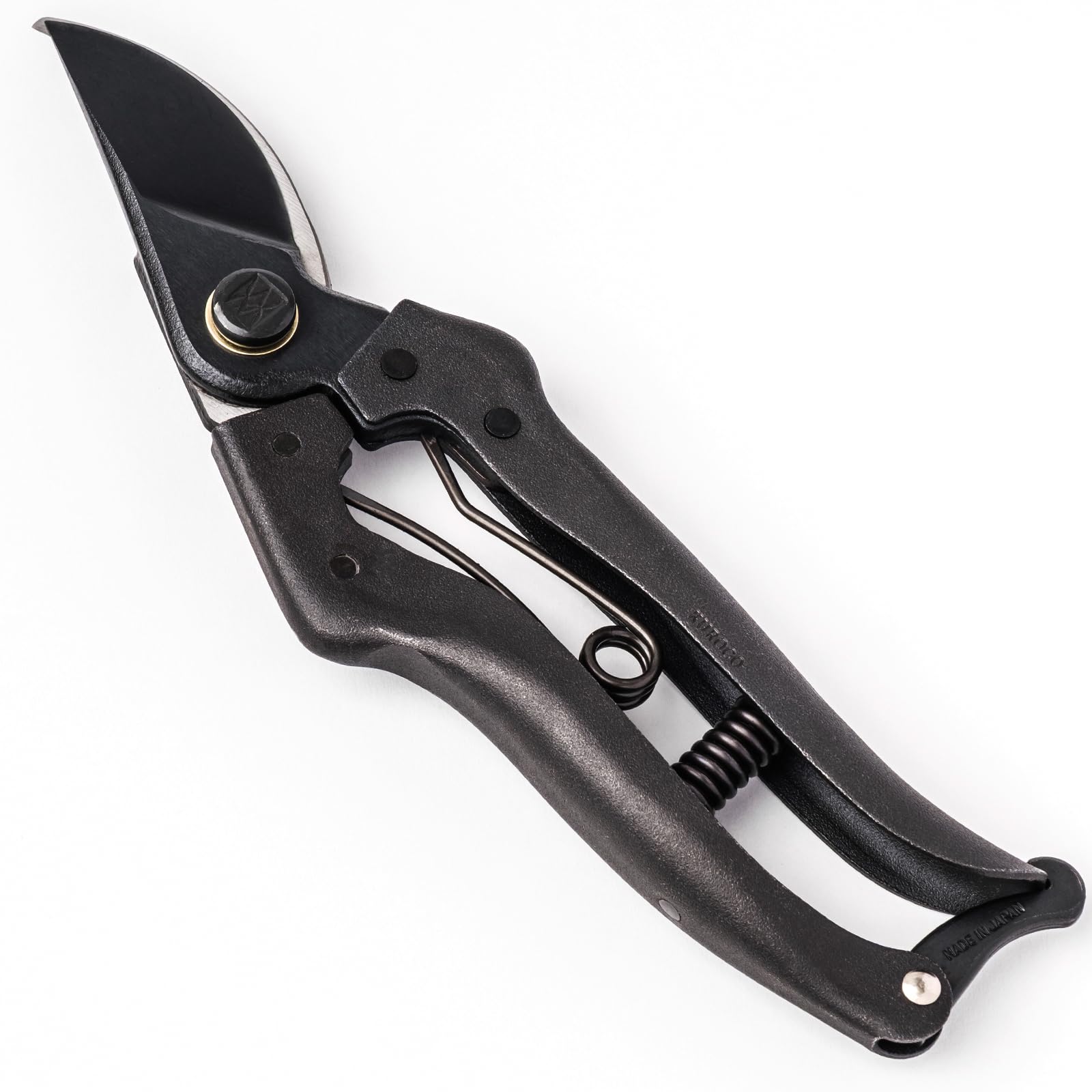
The near-perfect rating says it all — this is a joy to hold and use.
The Wablade Cushion-Spring model is a masterclass in design refinement. It features a forged alloy steel blade made in Japan, carefully adjusted by skilled craftsmen for perfect blade alignment and feel. The unique cushion spring softens the impact of each cut, reducing vibration and hand fatigue. It is purpose-built for live branches up to 0.59 inch (15 mm), making it ideal for pruning, bonsai care, and flower trimming. The blade lock keeps the blades closed securely in storage.
Every single owner review is a five-star celebration. One buyer called it “the last pruner you’ll ever buy,” praising the ultra-razor-sharp blade, high-quality construction, and stable grip that caused no hand fatigue even during extended use. The cushion spring is not a gimmick — it genuinely changes the feel of the cut. The only limitation is the 15 mm cutting capacity, which means it is not for heavy limb removal. But for the work it is designed for, it is simply delightful.
Refined Engineering
- Cushion spring absorbs impact for a smoother, more comfortable cutting motion
- Exceptionally sharp alloy steel blade, hand-adjusted by Japanese craftsmen
- Perfectly balanced for small to medium hands; incredibly comfortable grip
Capacity Limit
- Maximum cut of 0.59 inch (15 mm) means it is not for thick, heavy branches
Best for: the discerning gardener who wants the most comfortable pruning experience possible for routine, everyday cuts.
Not the one if: you regularly need to cut branches thicker than your thumb — that calls for the TONMA or Samurai.
Understanding the Specs
Cutting Capacity
This is the maximum branch thickness the shear can cut in a single squeeze. It is usually measured in millimeters or inches. A 20 mm (3/4 in) shear is fine for flowers, soft shrubs, and bonsai. A 25 mm (1 in) shear like the Samurai or TONMA can handle tougher, woody growth. Do not exceed the rated capacity — it strains the pivot and can chip the blade.
Blade Steel and Coatings
Japanese high-carbon steel is harder and sharper than stainless, but it rusts if neglected. Fluorine coatings (like on the Saboten) create a non-stick surface that repels sap and resists corrosion. Teflon coatings serve a similar purpose. Yasugi steel is a specific premium alloy with excellent edge retention. A higher HRC (hardness) number means the steel stays sharper longer but can be more brittle.
FAQ
What is the difference between bypass and anvil pruning shears?
How long do Japanese carbon steel blades stay sharp?
Can I use Japanese pruning shears left-handed?
Which is better for bonsai: snips or full-size shears?
How do I clean and maintain my Japanese pruning shears?
What does “Made in Japan” actually mean for these tools?
Are fluorine-coated blades better than regular ones?
Can I sharpen Japanese pruning shears at home?
Final Thoughts: The Verdict
For most people, the japanese garden pruning shears winner is the Samurai KS-4T because it pairs a superb cutting capacity with Teflon-coated stainless steel and has the highest owner praise for its all-around performance. If you want the absolute best value for a razor-sharp tool that is kind to smaller hands, grab the Saboten 7.9″. And for pure, surgical precision in your bonsai or flower garden, the Okatsune No.207 is the one to reach for.
How We Picked
We do not accept paid placement. Every pick is matched to a real buyer and a real use-case; we do not hands-on test units.
Sources & Methodology
Specifications: manufacturer listings and product documentation. Review insights: verified customer reviews, as of July 2026. Pricing: not shown on this page (it changes often); check the current price via the retailer link.
As an Amazon Associate, Lawn Gear Lab earns from qualifying purchases. This does not affect which products we feature.