
You step into the garden, coffee in hand, ready to check on your tomatoes — and half the leaves look like miniature lace. Cabbage worms, aphids, or spider mites are chewing through weeks of work. The fastest fix isn’t a harsh chemical that worries you about dinner. This guide breaks down the sprays that actually stop garden pests while keeping your vegetables safe to eat.
I’m Rikta — the co-founder and writer behind Lawn Gear Lab. This guide is built by comparing the manufacturers’ published specifications and the patterns across verified customer reviews, so you get each pick’s real strengths and trade-offs instead of marketing spin.
Whether you are battling caterpillars, aphids, or fungal diseases, knowing which insecticide for vegetable garden to reach for can mean the difference between a prize harvest and a wasted season.
How To Choose The Best Insecticide For Vegetable Garden
Choosing a spray for your vegetables comes down to three things: what pest you are fighting, whether you want an organic option, and how much effort you want to put into mixing and applying it. Here is what to think through before you buy.
Match the Active Ingredient to the Pest
Not all insecticides work the same way. Bacillus Thuringiensis (Bt) is a bacteria that only kills caterpillars and worm-type insects when they eat treated leaves — it is harmless to bees and earthworms. Spinosad is another bacteria-based ingredient that works on caterpillars, leaf miners, thrips, and fire ants. Neem oil smothers soft-bodied insects like aphids and mites and also prevents fungal diseases like powdery mildew. If you need one product that handles insects, mites, and fungus, look for a neem oil concentrate.
Check for Organic Certification on the Label
If you want to grow vegetables organically, look for the OMRI (Organic Materials Review Institute) listed seal. This means the product meets USDA organic standards. Bt, Spinosad, and horticultural oil are all approved for organic gardening. Conventional options like Malathion are powerful but come with stronger precautions about protective gear and timing.
Decide Between Ready-to-Use and Concentrate
Ready-to-use formulas come in a spray bottle and require zero mixing — ideal for small gardens or spot treatments. Concentrates save money for larger plots because you mix a small amount with water in a tank sprayer or hose-end sprayer. The catch is simple: convenience versus value. A 1-gallon concentrate can make dozens of gallons of finished spray, while a 32-ounce ready-to-use bottle covers a few beds.
Quick Comparison
On smaller screens, swipe sideways to see the full table.
| Model | Category | Best For | Key Spec | Amazon |
|---|---|---|---|---|
| Bonide All Seasons Spray Oil | Premium Pick | Year-round smothering of aphids and mites | 32 oz ready-to-spray mineral oil | Amazon |
| Monterey Spinosad | Top Performer | Leaf miners and caterpillars | 8 oz concentrate OMRI listed | Amazon |
| Monterey B.t. (8 oz) | Best Value | Caterpillars on broccoli, kale, cabbage | 8 oz concentrate OMRI listed | Amazon |
| Monterey BT (16 oz) | Compact Pick | Larger gardens needing more Bt concentrate | 16 oz concentrate (2x the 8 oz bottle) | Amazon |
| Garden Safe Fungicide3 | Most Versatile | Fungus, insects, and mites in one | 1 gallon ready-to-spray neem oil | Amazon |
| Monterey Take Down | Fast Acting | Spider mites and aphids on contact | 32 oz ready-to-use pyrethrin + canola oil | Amazon |
| Hi-Yield Malathion | Budget Champion | Stubborn scale and spider mites | 32 oz concentrate 55% Malathion | Amazon |
In‑Depth Reviews
1. Bonide All Seasons Horticultural & Dormant Spray Oil, 32 oz Ready-to-Spray

32 oz ready-to-spray, year-round protection makes this the top pick for gardeners who want one bottle that handles insects, mites, and fungal disease across both growing and dormant seasons. The Bonide All Seasons Spray Oil smothers soft-bodied aphids, mites, and fungal spores like rust, greasy spot, and botrytis by coating them with a refined mineral oil that leaves no toxic residue on tomatoes or peppers. One buyer reports it “took care of the black bean aphids on my Spanish Broom” overnight, and another noted it “shined my leaves too,” so plants look healthier after treatment.
The honest limit: the built-in hose-end sprayer is poorly calibrated, according to multiple buyers — it empties too fast and wastes product. Using a separate pump sprayer is a smarter long-term move. For anyone who wants one bottle that handles insects, mites, and fungal disease across the whole season without synthetic chemicals, this is the spray to keep on the shelf. If you only need to kill caterpillars on kale, the Monterey B.t. is a more targeted option.
This is the one versatile oil spray that earns its shelf space all year long.
Why it’s great
- Controls insects, mites, and fungal disease in a single 32-ounce bottle.
- Safe to use year-round, including dormant season and growing season.
- Mineral oil leaves no toxic residue — approved for organic gardening.
Good to know
- Hose-end sprayer is poorly designed; buyers recommend a pump sprayer.
- Requires thorough pre-wetting of plants for even absorption.
2. Monterey – Spinosad Insecticide – Garden Insect Spray Concentrate, 8 oz
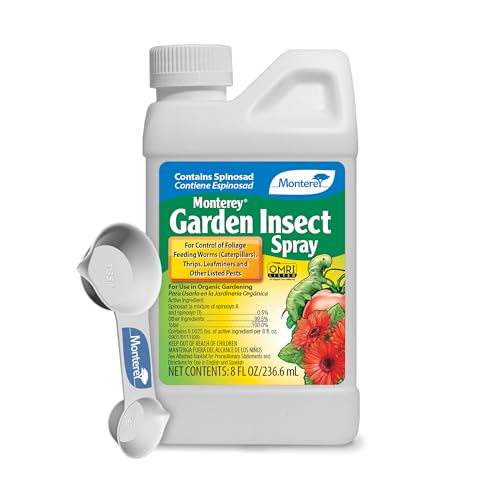
Where the Bonide smothers everything, the Monterey Spinosad targets specific chewing insects like caterpillars, leaf miners (larvae that tunnel inside leaves), and codling moths (worms that ruin apples) without wiping out your entire garden ecosystem. Its active ingredient, spinosad (a bacteria produced by fermentation), is OMRI-listed for organic gardening and breaks down fast in sunlight so it won’t linger on your vegetables. One reviewer says they “finally found something that gets rid of leaf miners” and notes that reapplying weekly stopped new infestations for months — a clear win over less effective sprays.
This concentrate makes 8 fluid ounces of product, so you mix a small amount with water in a trigger sprayer or backpack sprayer to cover vegetables, fruit trees, and ornamentals. The formula works on harvester ants too, though it is labeled for fire ants, and buyers confirm it eradicates satellite colonies quickly. It has virtually no smell, which matters when you are spraying right up to harvest time.
Choose this over the Bonide if your primary problem is leaf miners, codling moths, or caterpillars that chew visible tunnels in leaves — the spinosad goes to work faster on these specific pests. Just know it is a concentrate and you need a separate sprayer, which is one extra step compared to the ready-to-use Bonide. If your issue is aphids or fungus, the Garden Safe Fungicide3 is a better fit.
Where it shines
- Fast-acting on leaf miners, caterpillars, codling moths, and fire ants.
- OMRI-listed for organic gardening — safe for use on vegetables.
- Odorless and breaks down rapidly in sunlight.
Worth noting
- Concentrate requires a separate sprayer for mixing and application.
- Not effective on fungal diseases or spider mites.
3. Monterey B.t. Bundled with Measuring Spoon – Caterpillar & Worm Killer, 8 oz
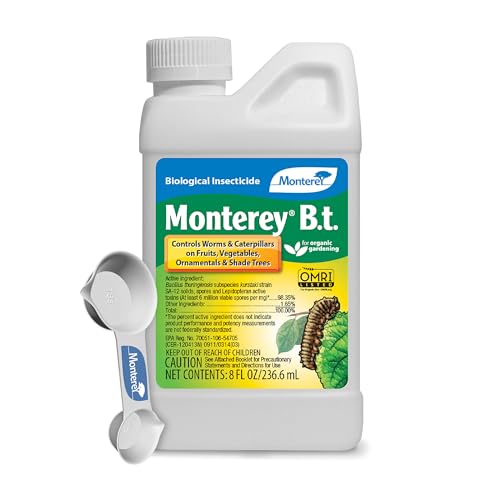
If cabbage loopers or bagworms are your garden’s #1 enemy — and they often are for broccoli, kale, and cabbage growers — Monterey B.t. is your surgical strike. It contains Bacillus Thuringiensis (a naturally occurring soil bacteria), which caterpillars eat and then stop feeding within hours, dying in a couple of days. One buyer reports, “BT effectively killed cabbage looper worms that decimated flower seedlings last year,” and the same user says their seedlings are now thriving. Another reviewer says, “I can’t garden without it now.”
This 8-ounce concentrate comes with a measuring spoon for easy mixing and treats a wide range of crops including lettuce, tomatoes, melons, and mustard greens. Unlike broad-spectrum sprays, Bt has zero effect on honeybees, ladybugs, or earthworms when used as directed — because the bacteria only activates in the alkaline gut of a caterpillar.
What stands out here is the combination of precision targeting and organic approval. You get a product that kills exactly the pest you want dead and leaves the beneficial insects alone. For gardeners who want to avoid harming pollinators while protecting their collards, this is the clear choice. skip it if you need to fight aphids or spider mites — the Bonide or Monterey Take Down are better for those. The standout spec: Bt’s bacteria activates only in a caterpillar’s alkaline gut, leaving every honeybee, ladybug, and earthworm untouched.
What stands out
- Kills only caterpillars and worm-type insects — safe for bees and earthworms.
- OMRI-listed organic; includes a measuring spoon for accurate mixing.
- Works on cabbage looper, bagworm, gypsy moth, and many more.
The trade-offs
- Ineffective against aphids, mites, or any non-caterpillar pest.
- Short residual activity; reapply after rain or every 5-7 days.
4. Monterey BT – Bacillus Thuringiensis for Organic Worm and Caterpillar Control, 16 oz Concentrate

The most important number on this bottle is 16 fluid ounces — exactly double the 8 ounces of the smaller Monterey B.t. concentrate. That means if your garden has multiple beds of tomatoes, broccoli, and brassicas, this larger size saves you from buying refills mid-season. After spraying his tomatoes per the label, one buyer found “several caterpillars dead” within two days, confirming the bacteria works as promised.
The downside you accept is the same short lifespan as any Bt product: Bacillus Thuringiensis breaks down in sunlight after a few hours, so you should spray in late evening and mix only what you will use that night. A savvy reviewer noted that Bt “targets only caterpillars, not beneficial insects” and used it combined with net bags to control pickleworm on squash. The 16-ounce bottle means you have enough concentrate on hand for the entire season without worrying about running out when an infestation hits.
At this price point and volume, you get more active product per dollar than the 8-ounce version, making it the smarter buy for medium gardens. If you are already using a tank sprayer and handling multiple crops, the extra capacity pays off fast. If your garden is just a few tomato pots, the 8-ounce B.t. is enough and cheaper.
The upsides
- 16-ounce concentrate delivers 2x the volume of the standard 8-ounce Bt bottle.
- Targets caterpillars and worms only — safe for bees, earthworms, and birds.
- OMRI-listed and mixes easily with water for tank sprayers.
Keep in mind
- Bt degrades in sunlight; apply in the evening for best results.
- Does not work on aphids, mites, or any non-caterpillar pest.
5. Garden Safe Brand Fungicide3, 1 Gallon, Fungicide, Insecticide and Miticide
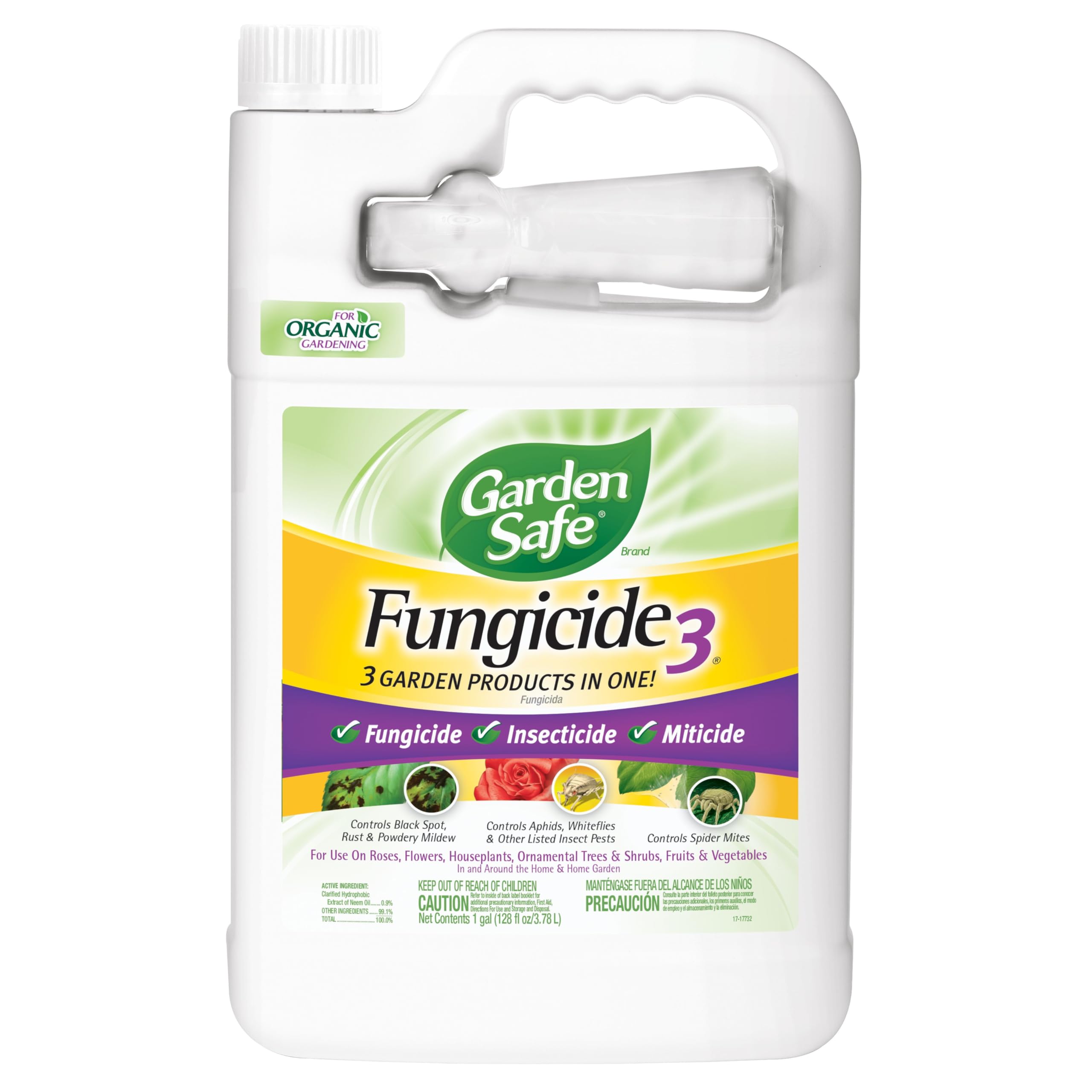
What you get at this lower price is 128 fluid ounces of ready-to-spray neem oil — a three-in-one product that handles fungus, insects, and mites in a single pass. That is 8 times the liquid volume of the 16-ounce Monterey BT concentrate, so a single jug covers an entire large vegetable patch and fruit tree area without needing to mix concentrates. The active ingredient, clarified hydrophobic neem oil extract, smothers aphids and spider mites while also preventing black spot, rust, and powdery mildew.
What you give up is precision: neem oil works on contact and does not discriminate between pests and beneficial insects. A buyer warns it “works too well; use less than half recommended dose” and mentioned burned leaves when sprayed during daytime heat. The attached sprayer also drew complaints for having a short, coiled hose that makes reaching distant plants annoying. Several reviewers purchased a separate sprayer and got much better results.
This product delivers the best price-to-performance ratio among the versatile sprays because a single gallon does the job of three separate bottles. For a gardener who wants one jug to handle powdery mildew on zucchini, aphids on peppers, and spider mites on beans, the Garden Safe Fungicide3 is the smartest gallon you can buy. It is perfect for the budget buyer who wants a single, ready-to-use solution for the most common vegetable garden problems without buying separate fungicides, insecticides, and miticides.
Why we’d pick it
- Triple action: fungicide, insecticide, and miticide in one ready-to-use gallon.
- Contains neem oil extract — kills eggs, larvae, and adult insects.
- 128 fluid ounces treats a large garden without mixing.
A few caveats
- Built-in sprayer is poorly designed; buyers recommend a pump sprayer.
- Can burn leaves if applied in direct sunlight or at full strength.
6. Monterey Take Down Garden Spray RTU, 32 oz Ready-to-Use
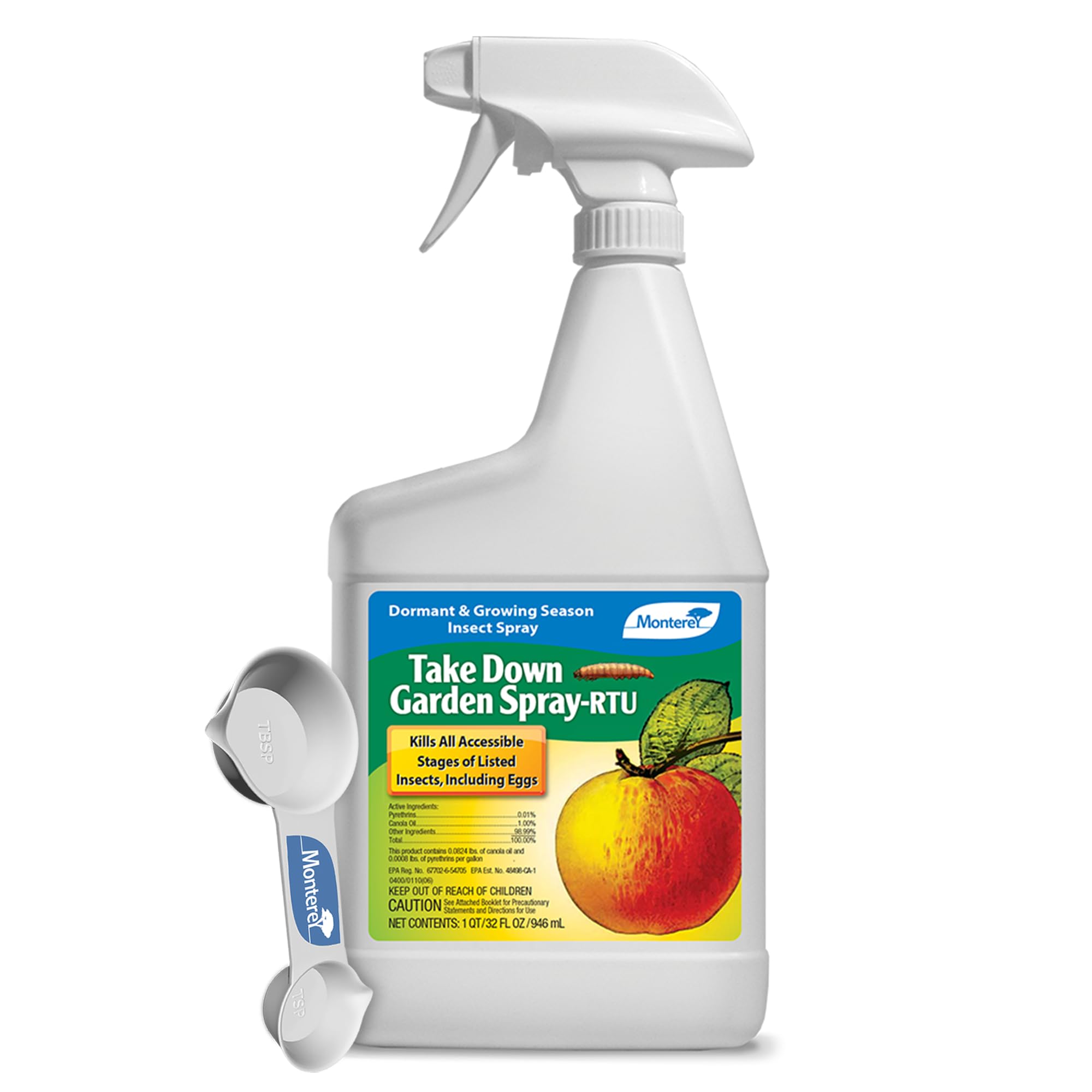
This spray is the one you reach for when you spot spider mites or aphids in the morning and want them gone by afternoon. It contains 0.01% pyrethrins (a natural insecticide extracted from chrysanthemum flowers) plus 1.00% canola oil, which together cause rapid paralysis on contact with most soft-bodied insects. One buyer used it on carnivorous plants and said, “Take down killed my bugs” — a strong test for any spray, since those plants are sensitive to chemicals. Another reviewer confirms it “killed spider mites in 2 weeks” with spraying every 3 days.
Monterey Take Down is non-persistent, meaning it breaks down quickly in sunlight and does not build up in the soil or on your vegetables. Users recommend spraying at night because the pyrethrin degrades fast under UV light. A reviewer who switched to this after Neem oil failed on aphids on sundews said two treatments plus repotting solved the infestation completely. The 32-ounce ready-to-use bottle has a simple trigger sprayer — no mixing, no hose attachment.
The honest limit is that you need to spray more frequently — every 3 to 4 days during active infestations — because the product does not stick around. For gardeners who want a fast, organic knockdown power for spot treatments without keeping a concentrate and sprayer setup, this is the ideal grab-and-go solution. If you need something that lasts longer, the Bonide All Seasons Oil covers you for up to 2 weeks.
Strong points
- Fast-contact knockdown using natural pyrethrins from chrysanthemums.
- Ready-to-use trigger sprayer — no mixing or measuring needed.
- Non-persistent; breaks down quickly, safe for beneficial insects when dry.
Before you buy
- Requires frequent reapplication (every 3-4 days) during heavy infestations.
- Pyrethrin degrades in sunlight — spray in late evening for best results.
7. Hi-Yield 55% Malathion Spray, 32 oz
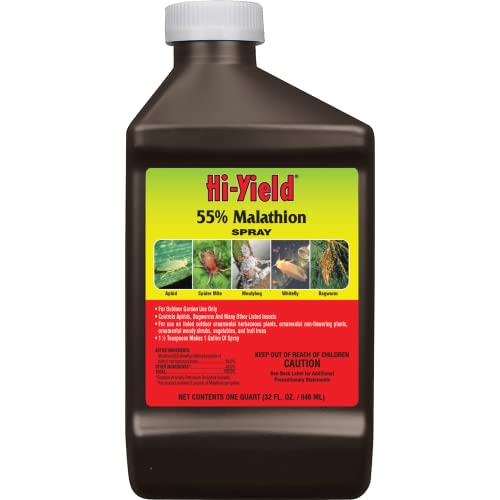
On price per ounce of active ingredient, the Hi-Yield Malathion is the most economical option in this lineup — a 32-ounce bottle of 55% Malathion concentrate that goes a very long way when diluted. This is the heavy artillery for situations where organic options have failed, particularly against stubborn scale insects and red spider mites. One reviewer calls it “Kryptonite for mosquitoes” and confirms it keeps the yard pest-free all summer when sprayed around the foundation.
What that money actually gets you is a synthetic organophosphate that kills a very broad range of insects on contact. It works on aphids, thrips, spider mites, lace bugs, and mosquitoes. The trade-off, and buyers are honest about this, is that Malathion is a suspected carcinogen that requires serious caution. One user who deployed it “as a last resort” says you must wear full protective gear and recommends hiring a licensed professional if you are unsure. Unlike every other product on this list, it is not suitable for organic gardening and should never be applied when rain is expected in the next 24 hours.
The one clear reason to choose this over everything else is if you have a severe, recurring infestation of spider mites or scale that organic sprays have not been able to touch.
What we like
- High 55% Malathion concentration — very cost-effective for large areas.
- Kills a broad range of insects including scale, spider mites, and mosquitoes.
- Works where organic sprays have failed on stubborn infestations.
The downsides
- Not organic; a suspected carcinogen requiring full protective gear.
- Do not apply within 24 hours of predicted rain.
Understanding the Specs
Active Ingredient
This is the chemical or bacteria that actually does the killing. Common options include Bacillus Thuringiensis (Bt) for caterpillars, Spinosad for leaf miners and thrips, neem oil for aphids and fungus, pyrethrins for fast contact knockdown, and Malathion as a broad-spectrum synthetic. Always match the ingredient to the pest you are targeting — using a caterpillar-only spray on spider mites will waste your time.
Concentrate vs. Ready-to-Use (RTU)
Concentrates require mixing with water in a sprayer and generally cost less per application. RTU bottles come pre-mixed with a trigger or hose-end sprayer for convenience. A 1-gallon RTU like the Garden Safe Fungicide3 covers a large garden immediately, while an 8-ounce concentrate of Spinosad or Bt can make several gallons of finished spray when you need it.
OMRI Listed
Products marked OMRI Listed have been reviewed by the Organic Materials Review Institute and comply with USDA organic standards. If you are growing vegetables for your family and want to avoid synthetic residues, look for this seal. Bt, Spinosad, neem oil, and horticultural oil are all OMRI-approved.
Unit Count (Fluid Ounces)
This tells you the total volume of product in the bottle. For concentrates, a higher unit count means more shelf life and less frequent repurchasing. For RTU, the unit count is the final volume you can spray without dilution. The 128-ounce Garden Safe jug is 8 times larger than the 16-ounce Monterey BT concentrate, so consider your garden size before choosing.
FAQ
Can I use these sprays on the day I harvest vegetables?
Will these insecticides kill honeybees and ladybugs?
How often should I reapply insecticide on my vegetable garden?
Final Thoughts: The Verdict
When it comes down to it, the insecticide for vegetable garden winner is the Bonide All Seasons Spray Oil because it smothers aphids, mites, and fungal diseases year-round with a single 32-ounce bottle that hooks to your hose. If you have a specific caterpillar or leaf miner problem, grab the Monterey Spinosad for its fast, organic knockdown power. And for a versatile three-in-one that handles fungus, insects, and mites in large gardens, the standout is the Garden Safe Fungicide3 gallon jug.