
Specs are compiled from manufacturer listings and verified buyer reviews and can change over time — please confirm the key details on the product page before buying.
Spider mites are tiny, but they can turn a thriving indoor garden or backyard vegetable patch into a webbed, yellow mess within days. The real challenge is finding a treatment that actually kills all life stages — eggs, larvae, and adults — without harming your plants, your pets, or your family in the process. This guide cuts through the marketing claims to identify the most effective insecticide for spider mites based on real-world performance and verified specs.
I’m Rikta — the founder and writer behind Lawn Gear Lab. This guide is built by comparing the manufacturers’ published specifications and the patterns across verified customer reviews, so you get each pick’s real strengths and trade-offs instead of marketing spin.
The seven options below range from a gentle 16-ounce ready-to-use spray to a heavy-duty gallon jug, and you will learn exactly which one fits your specific infestation level, plant type, and safety comfort zone.
Our Picks at a Glance

How To Choose The Best Insecticide For Spider Mites
Before you buy, understand the two main battle strategies: contact killers that must hit the mite directly, and systemic products that the plant absorbs so it becomes toxic to the pest from the inside. Your choice depends on how bad the infestation is, what you are growing, and your tolerance for strong chemicals.
Contact vs. Systemic Action
A contact miticide must be sprayed directly onto every mite and egg to work — if you miss a spot, they survive. Translaminar products move through the leaf surface, offering a bit of forgiveness. Systemic controls are absorbed by the plant’s roots or leaves and travel through the sap, killing mites that feed anywhere on the plant, but they are often too strong for edibles.
Active Ingredient Safety
Neem-oil-based sprays (like the Garden Safe Fungicide3) are organic and gentle enough for vegetables up to the day of harvest, but they require thorough coverage. Synthetic options (like Syngenta Avid) are extremely potent and long-lasting, but you must wear protective gear and never spray them on plants you plan to eat.
Concentrate or Ready-to-Use
Ready-to-use sprays are perfect for a handful of houseplants — no mixing, no measuring. Concentrates are far more economical if you have a large garden, multiple beds, or a recurring mite problem. The Organic Insecticide & Fungicide concentrate, for example, makes eight gallons of spray from one 16-ounce bottle.
Quick Comparison
| Model | Best For | Liquid Volume | Item Weight | Item Form | Amazon |
|---|---|---|---|---|---|
| Fertilome (12245) Triple Action★ Best Overall | 3-in-1 protection for fruit trees | 16 oz | 1 lbs | Liquid | Amazon |
| Syngenta Avid 0.15ECNuclear Option | Nuclear option for severe outbreaks | 8 oz | 9.3 oz | Spray Concentrate | Amazon |
| Lost Coast Plant Therapy 1 Gal | Suffocation action, no immunity buildup | 128 oz (1 Gal) | — | Spray | Amazon |
| Garden Safe Fungicide3 1 Gal | Organic neem oil, large garden volume | 128 oz | — | Liquid | Amazon |
| Athena IPM Plant Pest Control | Ready-to-use, safe for pets and kids | 32 oz | — | Liquid | Amazon |
| Bonide Systemic Insect Control | Long-lasting systemic for ornamentals | 16 oz | 1 lbs | Spray Concentrate | Amazon |
| Organic Insecticide & Fungicide | Budget-friendly concentrate for edibles | 16 oz | 1.1 lbs | Liquid Concentrate | Amazon |
In‑Depth Reviews
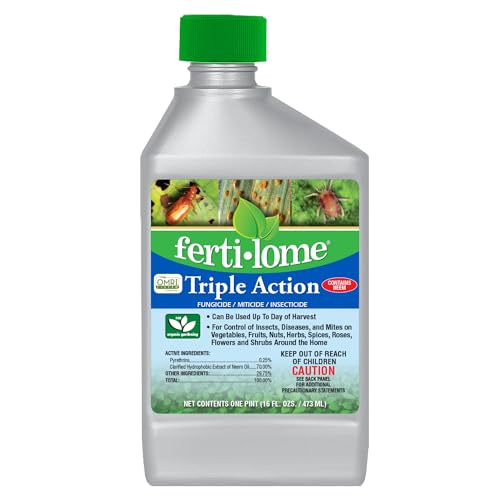
1. Fertilome (12245) Triple Action (16 oz)
Our pick — over 4.5★ from 800+ verified ratings; the strongest balance of quality and price.
The 802-review, 4.6-star classic that long-time fruit tree growers keep coming back to.
Buyers trust this spray has been around for years. One longtime user said: “I have used this produce for years works well on our apple trees.” It is a 3-in-1 product that controls spider mites, aphids, leafminers, and a long list of other pests while also preventing powdery mildew, rust, and leaf spot. The label recommends reapplying on a 7 to 14 day schedule for best results.
At 16 ounces, the bottle is smaller than the Garden Safe gallon, and the same reviewer noted the product is “getting pretty expensive” over time. For a large orchard, you will need multiple bottles, making the per-ounce cost higher than buying a gallon of the Garden Safe. But if you have a handful of fruit trees or rose bushes and value a proven, reliable formula, this is a solid, straightforward pick.
Long track record: A trusted 3-in-1 miticide/insecticide/fungicide that apple and fruit tree growers have relied on for years.
Cost per ounce: The 16-ounce concentrate is more expensive per application than buying a gallon of neem oil — less economical for large gardens.
Best for: The home grower with a small collection of fruit trees or roses who wants a proven, easy-to-use formula they know works.
Not ideal for: Large gardens that require volume — you will run through this bottle quickly and pay a premium to replace it.
2. Syngenta Avid 0.15EC Miticide/Insecticide
The industry-leading professional miticide that kills spider mites at just three drops per liter.
You reach for this when every other spray has failed. Its active ingredient moves through the entire leaf (a translaminar action, meaning it penetrates the leaf surface to reach the underside), so it protects the leaf backs where mites hide, not just the sprayed side. One reviewer who grows nearly 150 dahlias called Avid “the best defense against spider mites” and said it needs three applications over a month to break the mite life cycle.
There is a serious catch. This is the most potent product on the list, and it demands respect. Buyers report wearing a hazmat suit, goggles, gloves, and a respirator when applying. One reviewer noted you should wait four hours before re-entering the treated area. Unlike the Garden Safe Fungicide3 below, which is safe on vegetables up to harvest, Avid is not labeled for food crops — use it strictly on ornamentals and non-edible plants.
Compared to the Fertilome Triple Action, the Avid is far more concentrated — a hobbyist said a tiny 8-ounce bottle lasts years — but it costs roughly three times as much. If you have a small houseplant collection, this is overkill. If spider mites are destroying your prized ornamentals or cannabis, this is your single most effective option in the guide.
Professional-grade potency: A few drops per liter eliminate severe infestations that over-the-counter sprays cannot touch, with effects lasting about one month.
Safety first: Requires full hazmat gear and is not safe for edible plants — use only on ornamentals and non-food crops.
Reach for it if: You have a severe, recurring spider mite problem on non-edible plants and want the most effective chemical solution available.
Look elsewhere if: You need to treat vegetables or herbs, or you prefer a product you can use without protective gear.
3. Lost Coast Plant Therapy 1 Gallon

The suffocation-based miticide that mites cannot build resistance to, rated 4.7 out of 5 stars.
This is a contact killer with a unique mechanism: it suffocates and dehydrates mites, eggs, and larvae on contact. Because it works through physical action rather than a chemical poison, the manufacturer states that insects can never become immune. One reviewer with more than 25 years of cannabis growing experience called it “the only one that actually killed spider mites” after trying M-one, Memoil, and Zerotol.
It is lab-tested by CW Analytical and found to leave no residue, meaning you can spray on the day of harvest if applied properly under low heat conditions. The trade-off is the price — it is the most expensive per-ounce option here — and it demands thorough saturation. If you miss a single mite, it survives. The bottle holds one full gallon (128 fluid ounces), giving you plenty of volume for a large grow room or garden.
No resistance buildup: Suffocates mites physically, so they cannot evolve immunity — a significant advantage over synthetic chemicals.
Harvest-day safe: Leaves no residue per lab testing, making it safe for food crops and cannabis when applied correctly.
Choose this for: Large, valuable crops where mites have developed resistance to every other spray you have tried.
skip it if: You are treating a small infestation of houseplants — the upfront cost is hard to justify for light use.
4. Garden Safe Fungicide3 1 Gallon
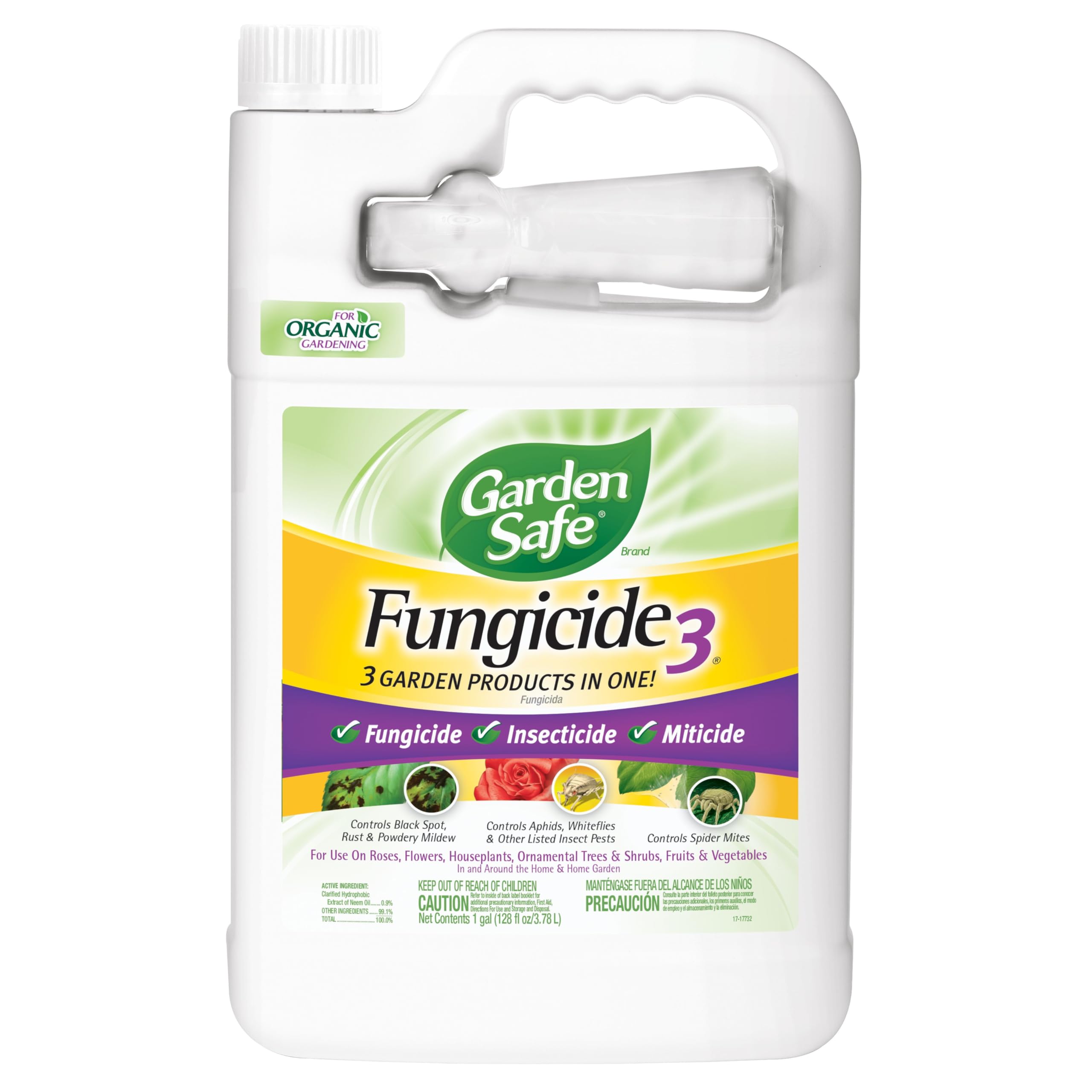
The gallon-sized neem oil spray that serves as three products in one for organic gardeners.
This is the most versatile and best-value pick for a typical home gardener. It does three jobs — fungicide, insecticide, and miticide — in a single bottle, and the active ingredient is clarified hydrophobic extract of neem oil, which is approved for organic gardening. You get a full 128 fluid ounces, which is eight times more liquid than the Fertilome Triple Action’s 16 ounces at a similar per-ounce cost. Reviewers report it works well on orchids, roses, tomatoes, blueberries, and hibiscus.
That said, owners mention the included sprayer is poorly designed — one review described it as having “about 4 inches of coiled product to reach out to your plant” and called it dumb design. Consider using your own sprayer. Also, some users mentioned it burned sensitive plants when used in direct daytime heat, so apply it in the evening or on overcast days. Unlike the Lost Coast Plant Therapy above, mites can eventually build some tolerance to neem oil if you use it exclusively.
Three-in-one value
- Serves as fungicide, insecticide, and miticide — covers mites, aphids, black spot, rust, and powdery mildew
- 128 oz is enough to treat a large garden for an entire season
- Neem oil is safe for use on vegetables and fruits up to harvest day
Watch the sprayer
- Bottle’s built-in sprayer is widely criticized as frustrating to use
- Can burn plant leaves if applied in direct sunlight or at too high a concentration
Best for the organic gardener: If you have a mix of ornamentals, vegetables, and fruit trees and want one product that handles mites, fungus, and insects all at once.
Not for: Severe, treatment-resistant mite infestations — you will need a stronger miticide like the Syngenta Avid for outbreaks that have already taken hold.
5. Athena IPM Plant Pest Control Ready-to-Use Spray
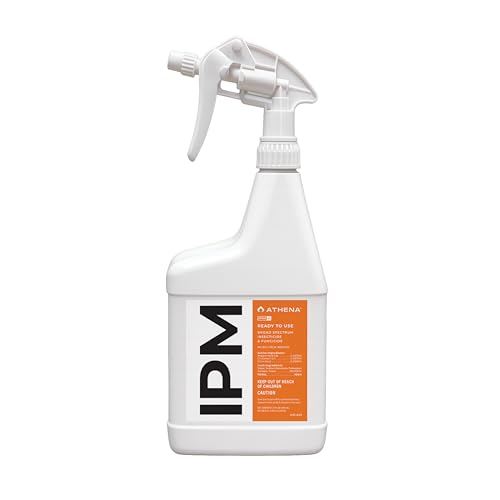
The no-mix, no-measure spray that uses EPA 25(b) minimum-risk ingredients for low-maintenance indoor use.
If you need something gentle enough to use around pets, children, and indoor houseplants, this is your pick. The formula is made in the USA with EPA 25(b) minimum risk ingredients (the EPA’s classification for products with very low toxicity that do not need a warning label), meaning it does not require a signal word on the label. You simply shake and spray — no mixing, no measuring, no special equipment. A reviewer living in a rural area said “I love that it is safe for my animals!” and another called it the best product they have used for marijuana plants.
The trade-off is that it is a contact spray, so it only works on mites you directly hit. For severe infestations where mites are buried deep in leaf crevices, you may need the translaminar coverage of the Syngenta Avid above. The 32-ounce bottle is ready to use, so you get less volume for your money compared to a concentrate, but the convenience and safety profile justify the swap for small indoor gardens.
Zero hassle, zero worry: Works on contact without requiring any mixing, and the 25(b) formulation is safe for pets and children when used as directed.
Light-duty limitation: Best for prevention and light infestations — heavy outbreaks need a more penetrating product.
Grab it when: You need a simple, safe spray for houseplants or a small vegetable garden and do not want to mess with concentrates or harsh chemicals.
Pass if: You have a large garden, a heavy infestation, or need something that works systemically from within the plant.
6. Bonide Systemic Insect Control Concentrate
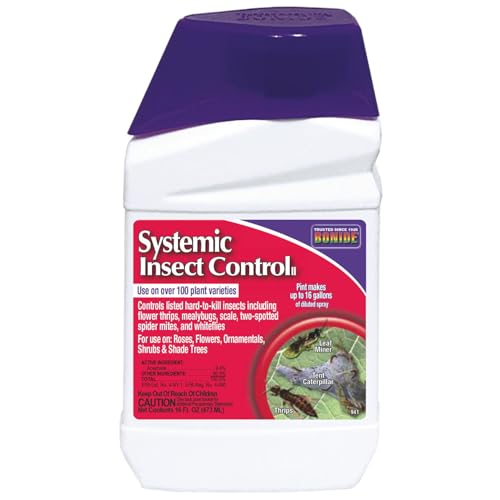
The systemic concentrate that turns your ornamental plants into a lethal trap for spider mites from the inside out.
Unlike contact sprays that wash off or miss hidden mites, this product works systemically — you mix it with water, apply it to the soil, and the plant absorbs it through the roots. Any mite that bites the plant ingests the chemical and dies. A buyer reported it “eliminated fungus gnats immediately” and another said a single soil and leaf treatment eliminated an indoor scale infestation with no bugs seen after two months.
The key limitation is that Bonide explicitly says this is not for use on vegetable or fruit plants. It is labeled strictly for flower beds, roses, shrubs, and ornamental plants. The smell is another real issue — one buyer mentioned it “smells like actual poop, noticeable indoors.” Compare this to the Organic Insecticide & Fungicide below, which is odorless and safe for edibles, but requires more frequent application because it is a contact spray, not systemic.
Long-lasting systemic action: One soil application provides protection that continues even after rain or overhead watering, unlike contact sprays that need reapplication every 7 to 10 days.
Smell and safety: The odor is unpleasant, and the product must never be used on vegetables, herbs, or fruit plants.
Ideal for: Ornamental flower beds, roses, and shrubs where you want long-lasting protection without spraying leaves every week.
Avoid if: You grow any edible plants, have a small enclosed space where the smell could linger, or need to treat an immediate heavy outbreak.
7. Organic Insecticide & Fungicide Concentrate (16 oz)

The odorless two-pack concentrate that kills spider mites in seconds and stretches across a whole season.
This is the budget hero of the list. A single 16-ounce bottle of the insecticide concentrate makes eight gallons of spray at a rate of two tablespoons per gallon. A buyer said they used “10 drops in 32oz water” and watched bugs shrivel and die within five to ten seconds. Another reviewer mentioned the product has no scent and comes with clear instructions, making it easy to mix with the fungicide half of the pack for a combined application.
The weight difference between this and the Fertilome Triple Action is tiny — 1.1 pounds versus 1 pound (about 10% more) — but the real value gap is in the yield. While the Fertilome is a small ready-to-use bottle, this concentrate lets you control the strength and produce a huge volume of spray for far less money. The catch is that it is a contact killer, so coverage must be thorough, and the label says it does NOT control Japanese beetles.
Thrifty on volume
- 16 oz concentrate yields 8 gallons of ready-to-use spray — the biggest total volume for the money
- Kills on contact within seconds; odorless and fine for indoor use
Contact-only limits
- Must hit every mite directly — no systemic or translaminar protection
- Not effective against Japanese beetles, and weekly reapplication is needed for ongoing control
Smart money pick: Ideal for the budget-conscious gardener who needs a large volume of effective, odorless, plant-safe spray for edibles and ornamentals alike.
Not for: Anyone who wants a one-and-done application — you will need to reapply on a schedule, preferably every 7 to 10 days.
Understanding the Specs
Liquid Volume
This is the total amount of product you get in the bottle, measured in fluid ounces. A 16-ounce bottle is a standard small size for concentrates, while a full gallon (128 fluid ounces) gives you a season’s worth of ready-to-use spray. Concentrates like the Organic Insecticide & Fungicide make multiple gallons of finished spray — check the label for the dilution rate (for example, 2 tablespoons per gallon of water).
Item Form: Concentrate vs. Ready-to-Use
This tells you if you need to mix the product with water (concentrate) or spray it straight from the bottle (ready-to-use). Ready-to-use sprays like the Athena IPM are convenient for a few houseplants, but concentrates give you far more spray per dollar. A 16-ounce concentrate that mixes at a rate of 2 tablespoons per gallon makes 8 gallons of finished spray, which is a huge difference in coverage area.
Translaminar Action
A translaminar product is absorbed by the top surface of a leaf and moves through to the underside, where spider mites typically hide and lay eggs. The Syngenta Avid uses this mechanism, which means it continues killing mites even if you miss the underside during spraying. This is a step up from a simple contact spray, but it is not the same as a systemic that moves through the entire plant via the roots.
Systemic Action
Systemic products like the Bonide Systemic Insect Control are absorbed by the plant’s roots and travel in the sap to every leaf and stem. A mite that bites any part of the plant ingests the chemical and dies. This provides excellent long-term protection even after rain, but it also means the chemical stays inside the plant for weeks, which is why systemic products are generally not labeled for use on food crops.
FAQ
Can I use these spider mite sprays on vegetable plants I plan to eat?
How often should I reapply miticide to fully eliminate spider mites?
Is neem oil safe for pets and children around the garden?
What is the difference between a miticide and an insecticide?
Will these sprays kill spider mite eggs or just the adults?
Can I mix miticide with fertilizer or fungicide for a single application?
Why do some spider mite sprays smell so bad?
How do I know if my spider mites are resistant to a particular spray?
What protective gear do I need when applying miticide?
Can I use these spider mite sprays on my indoor houseplants?
Final Thoughts: The Verdict
For most people, the insecticide for spider mites winner is the Garden Safe Fungicide3 1 Gallon because it combines the volume of a full gallon, the organic safety of neem oil, and triple-action coverage for mites, insects, and fungus at a per-ounce price that beats the smaller bottles. If you want a systemic that lasts for weeks on your ornamental plants, grab the Bonide Systemic Insect Control. And for a severe, treatment-resistant outbreak on non-edible plants, the standout is the Syngenta Avid 0.15EC.
How We Picked
We do not accept paid placement. Every pick is matched to a real buyer and a real use-case; we do not hands-on test units.
Sources & Methodology
Specifications: manufacturer listings and product documentation. Review insights: verified customer reviews, as of July 2026. Pricing: not shown on this page (it changes often); check the current price via the retailer link.
As an Amazon Associate, Lawn Gear Lab earns from qualifying purchases. This does not affect which products we feature.