
Specs are compiled from manufacturer listings and verified buyer reviews and can change over time — please confirm the key details on the product page before buying.
Your garden can survive a lubber grasshopper swarm, but you have to act before the young nymphs climb and scatter. These big, slow insects can strip a young plant down to a stem in a single day, and the best insecticide for lubber grasshoppers works on contact or as a bait. Pick a synthetic spray for broad, fast control or an OMRI-listed soap for organic gardens.
I’m Rikta — the founder and writer behind Lawn Gear Lab. This guide is built by comparing the manufacturers’ published specifications and the patterns across verified customer reviews, so you get each pick’s real strengths and trade-offs instead of marketing spin.
You’ll see how a 32-ounce concentrate compares with a 16-ounce soap and a granular bait, so you can match the right weapon to your yard. Find the insecticide for lubber grasshoppers that fits how you garden and how much ground you need to protect.
Our Picks at a Glance
How To Choose The Best Insecticide For Lubber Grasshoppers
Lubbers are unusually large and slow, which makes them easier to hit than smaller pests, but their appetite is so fierce that timing matters more than anything. You want a product that either kills on contact when sprayed directly or is eaten as bait, and you want to apply it while the young black nymphs are still clustered.
Match the chemistry to your garden style
A synthetic concentrate like lambda-cyhalothrin (a nervous-system poison that kills many pests fast) gives you broad power over multiple insects at once, but it comes with a strong odor and a need for careful handling. An insecticidal soap made from potassium salts of fatty acids works by breaking down the insect’s outer shell, leaving beneficial insects alone, and it is OMRI-listed, meaning it is compliant for organic gardening.
Think in coverage, not just bottle size
A 32-ounce concentrate can treat up to 1,000 square feet per half-ounce of insecticide, which makes it the economical choice for a large lawn. A 16-ounce soap concentrate is far smaller, but because you dilute it so heavily, it still lasts most of the season for a typical home garden.
Bait vs. spray: who you’re fighting
Granular baits are scattered on the ground and work well against young lubbers that feed low, but they are slower and rely on the insect eating them. Sprays deliver immediate results on contact, which matters when the adults are already chewing through your plants.
Quick Comparison
| Model | Best For | Volume | Form | Active Ingredient | Amazon |
|---|---|---|---|---|---|
| Hi-Yield 32010★ Best Overall | Broad home & garden defense | 32 fl oz | Liquid Concentrate | Lambda-cyhalothrin | Amazon |
| Safer 5118-6 | Organic & edible gardens | 16 fl oz | Soap Concentrate | Potassium Salts of Fatty Acids | Amazon |
| Southern Ag Mole Cricket Bait | Young lubbers in the lawn | 3.6 lb | Granular Bait | 5% Carbaryl | Amazon |
In‑Depth Reviews
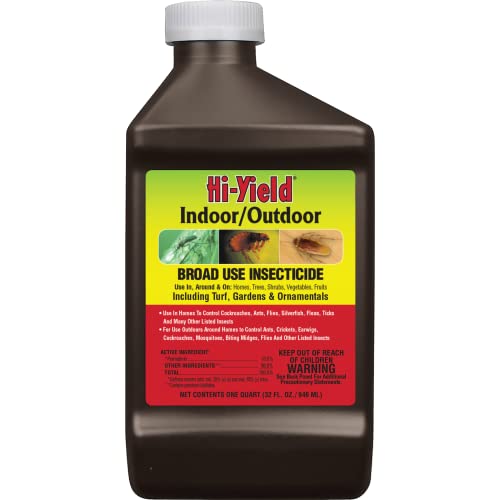
1. Hi-Yield (32010) Indoor/Outdoor Broad Use Insecticide, 32 oz
Our pick — over 4.5★ from 400+ verified ratings; the strongest balance of quality and price.
This 32-ounce concentrate covers up to 1,000 square feet per half-ounce to stop a swarm fast.
This 32-ounce concentrate kills lubbers on contact and also targets ticks, mosquitoes, termites, fleas, and cockroaches. It treats up to 1,000 square feet per half-ounce of insecticide, which makes it the most economical choice here for larger yards — far more ground than the 16-ounce soap below can stretch to.
Mixing is straightforward since it readily combines with water and works in a tank-type or power sprayer, so you can cover a whole lawn without refilling constantly. Buyers report seeing results quickly, and one gardener specifically notes it works well against lubber grasshoppers on top of its other targets.
The trade-off is a strong odor that lingers after spraying. As owners put it: “Smells really loud so try to spray when you’re going to leave the house.” That strong odor is the price of its power, and one careful user mentioned feeling sick after touching a sprayed doorknob, so gloves and ventilation matter here.
What gives it the edge
- Covers up to 1,000 square feet per half-ounce — the most ground per bottle here
- Knocks down a wide range of pests beyond lubbers, from fleas to termites
- Effectiveness is what wins people over, far ahead of any other talking point
What to weigh first
- The smell is genuinely strong — spray and leave the area
- A synthetic chemical, so it needs careful handling around pets and surfaces
Reach for it when: you have a big lawn or a widespread pest problem and want one spray that handles lubbers plus everything else.
Hold off if: you garden organically or want a zero-odor option — the scent here is unmistakable.
2. Safer 5118-6 Insect Killing Soap Concentrate

This OMRI-listed soap kills soft-bodied pests on contact without harming edible plants.
If you grow vegetables, herbs, or fruit you plan to eat, this 16-ounce soap concentrate is the safest route to lubber control because it is OMRI Listed and compliant for organic gardening, and it can be used right up until the day of harvest. Its active ingredient, potassium salts of fatty acids (a substance that breaks down soft insect shells), works by weakening the insect’s outer shell and dehydrating it on contact, which is why it leaves beneficial insects alone.
It kills grasshoppers, aphids, whiteflies, thrips, spider mites, and earwigs while staying gentle on flowers, herbs, vegetables, and houseplants. The catch is that 16 fluid ounces is half the volume of the Hi-Yield bottle, so while it is wonderfully economical once diluted (about 2.5 ounces makes a gallon), you will refill it sooner on a very large property.
Owners mention dramatic results, with one severe aphid infestation roughly 90 percent dead by day one and fully gone by day three. The wise notes stand out: dilute it properly to avoid leaf burn, avoid spraying in direct sun, and let the concentrate warm up if it solidifies in cold storage.
Why it wins trust: effectiveness is the most-praised quality, and reviewers repeatedly confirm their plants look healthier after use, not worse.
The one adjustment: follow the dilution ratio carefully — over-concentration is the fastest way to burn leaves.
Choose this if: your garden is edible and you refuse to choose between killing pests and eating clean food.
Think again if: you need to blanket a huge acreage in one pass — the 16-ounce bottle goes further diluted, but the 32-ounce spray covers more ground faster.
3. Southern Ag Mole Cricket Bait, 5% Carbaryl, 3.6 Pound Bag
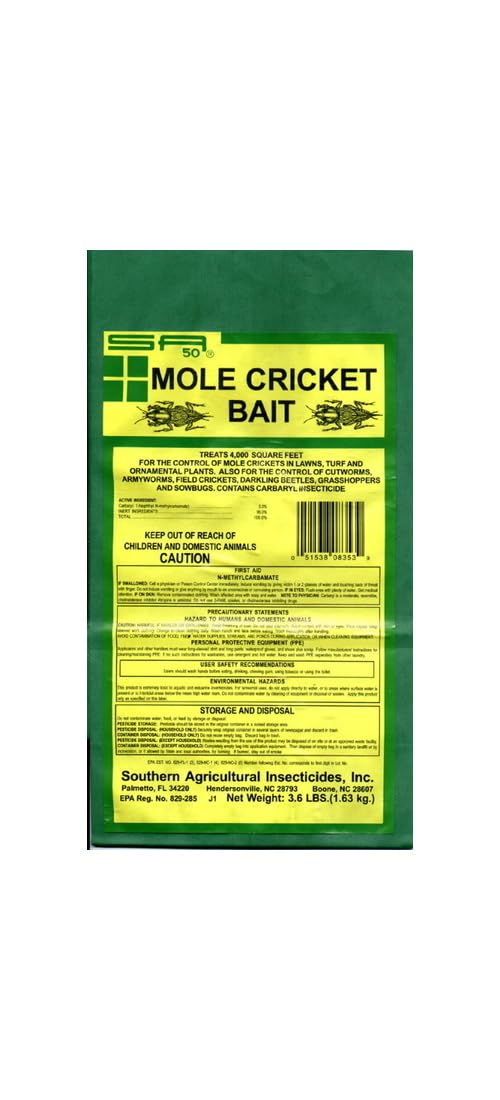
This granular bait targets young lubbers feeding low in the grass with a simple scatter application.
This 3.6-pound bag of granules takes a different approach than the sprays above: instead of coating plants, you spread bait on the ground and let the insects eat it. The label lists grasshoppers among its targets alongside mole crickets, cutworms, armyworms, field crickets, and sowbugs, so it fits a lawn-care routine that already fights multiple soil pests.
It is the heaviest and most durable option here, and one owner reports that after spreading it, the little black young lubbers in the yard were noticeably fewer — exactly the stage when a bait works best, before the nymphs climb and scatter. You can use it on lawns, ornamentals, vegetables, and other crops, which makes it versatile when your pest problem runs across the whole property.
The limits are slower results and the need for gloves and a mask when spreading. Bait takes longer to show results than a contact spray since it depends on the insect feeding, and reviewers advise wearing gloves and a mask when spreading any chemical — a sensible precaution for a 5 percent carbaryl product.
Where it shines
- Targets young lubbers at the ground level where baits work best
- Spreads over lawns, ornamentals, vegetables, and other crops
- A 3.6-pound bag gives you plenty of product for repeated applications
Where it lags
- Slower than a contact spray — it relies on the insects eating the bait
- Needs gloves and a mask when spreading, per buyer advice
Best suited for: the lawn-first gardener who wants to knock out mole crickets and young lubbers in one granular pass.
Not ideal for: an immediate rescue of plants already under attack — that calls for a contact spray instead.
Understanding the Specs
Contact Kill vs. Bait
A contact insecticide kills when the insect is directly sprayed or touches a treated surface, which gives you immediate visible results. A bait works only when the insect eats it, so it is slower but can be more thorough for ground-feeding nymphs. For a lubber swarm already on your plants, a contact spray is the faster rescue; for prevention across a lawn, a bait covers more ground with less effort.
Volume and Dilution
Concentrates always look small, but the real measure is how much finished spray you get after mixing. The Hi-Yield treats up to 1,000 square feet per half-ounce of insecticide, while the Safer soap makes about a gallon from roughly 2.5 ounces of concentrate. A higher volume per treatment means fewer refills and lower cost per application on a big yard.
Active Ingredients
Lambda-cyhalothrin is a synthetic pyrethroid (a laboratory-made insecticide based on a natural flower compound) that attacks the insect’s nervous system, delivering broad, fast control across many pest types. Potassium salts of fatty acids, by contrast, physically break down the insect’s outer shell and dehydrate it — a mechanism that spares beneficial insects and fits an organic garden. Carbaryl is a carbamate (another nerve-affecting insecticide) that disrupts the nervous system and is delivered here as a 5 percent granular bait.
OMRI Listing
When a product is OMRI Listed, it has been reviewed and found compliant for use in organic gardening. That matters if you grow food, because it means you can spray close to harvest time without worrying about synthetic residue. The Safer soap carries this listing and can be used up until the day of harvest, which is a decisive advantage in an edible garden.
FAQ
Will the Hi-Yield spray harm my pets if they walk on treated grass?
Can I use the Safer soap on vegetables I plan to eat soon?
Is the Southern Ag bait effective against adult lubber grasshoppers?
How do I mix the Hi-Yield concentrate for a sprayer?
Why does the Safer soap need to be diluted so carefully?
Which product covers the most ground per bottle?
Does the Safer soap kill beneficial insects like bees?
How often should I reapply the Safer soap during the season?
Is the Southern Ag bait safe to spread near my vegetable garden?
What is the fastest way to stop a lubber swarm already eating my plants?
Final Thoughts: The Verdict
For most yards, the insecticide for lubber grasshoppers winner is the Hi-Yield 32010 because its 32-ounce concentrate covers up to 1,000 square feet per half-ounce and knocks out lubbers plus a long list of other pests in one pass. If you want an organic option that is safe for edible plants, grab the Safer 5118-6 — it is OMRI Listed, gentle on plants, and usable right up to harvest. And for young lubbers feeding low in the lawn, the Southern Ag mole cricket bait is the one to reach for, though it works slower than a direct spray.
How We Picked
We do not accept paid placement. Every pick is matched to a real buyer and a real use-case; we do not hands-on test units.
Sources & Methodology
Specifications: manufacturer listings and product documentation. Review insights: verified customer reviews, as of August 2026. Pricing: not shown on this page (it changes often); check the current price via the retailer link.
As an Amazon Associate, Lawn Gear Lab earns from qualifying purchases. This does not affect which products we feature.