
Specs are compiled from manufacturer listings and verified buyer reviews and can change over time — please confirm the key details on the product page before buying.
Leafhoppers are tiny, wedge-shaped insects that can do surprising damage to your garden. They jump sideways when disturbed, they fly away fast, and they suck the life out of leaves, leaving them speckled, curled, or stunted. Finding the right product to stop them is the whole challenge — some sprays work on contact, some work from the roots up, and a few do both. This guide compares the top-rated options so you can pick the one that fits your garden size, your pest pressure, and your comfort with different active ingredients.
I’m Rikta — the founder and writer behind Lawn Gear Lab. This guide is built by comparing the manufacturers’ published specifications and the patterns across verified customer reviews, so you get each pick’s real strengths and trade-offs instead of marketing spin.
We focus on the products that actually list leafhoppers on the label, break down how they work, and help you choose the best insecticide for leafhoppers for your specific yard and garden.
Our Picks at a Glance

How To Choose The Best Insecticide For Leafhoppers
Leafhoppers are fast and mobile, so timing and chemistry matter. You want something that either kills them on contact when you spray or stays inside the plant to poison them as they feed. Here is what to watch for.
Contact Kill vs. Systemic Action
Contact sprays hit the leafhopper directly and work fast — good for an active outbreak. But they often miss the insects that jump away or hide on the underside of leaves. Systemic insecticides, in contrast, are absorbed by the roots or leaves and travel through the plant’s sap. When a leafhopper bites into a treated leaf, it gets the chemical. This gives longer control, often for a season, because new growth stays protected.
Active Ingredient and Crop Safety
Each leafhopper product uses a different chemical (Spinosad, Imidacloprid, Dinotefuran, potassium salts of fatty acids, garlic extract). Some are softer on beneficial insects and safe for edibles up to the day before harvest. Others are broad-spectrum and better suited for ornamentals. Check the label — if you grow vegetables or fruit trees, you want a product that lists your specific crop and has a short pre-harvest interval.
Concentrate vs. Ready-to-Use
A pint of concentrate can make over six gallons of finished spray, which is far more economical if you have a large garden or many trees. Ready-to-use bottles are convenient for spot-treating a few pots or a small bed, but you pay a premium for the water. For recurring leafhopper pressure on a vegetable patch or orchard, a concentrate that mixes with water is usually the better value.
Quick Comparison
| Model | Best For | Active Ingredient | Type | Coverage | Amazon |
|---|---|---|---|---|---|
| Bonide Captain Jack’s Orchard Spray★ Best Overall | All-in-one disease + insect control | Sulfur & Pyrethrin | Concentrate | Up to 12.8 gal | Amazon |
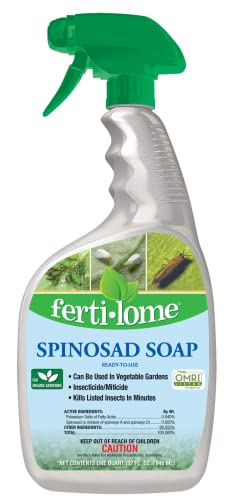
| Ferti-lome Spinosad SoapTop Performer | Immediate contact kill | Spinosad & Soap | Ready-to-Use | 32 oz | Amazon |
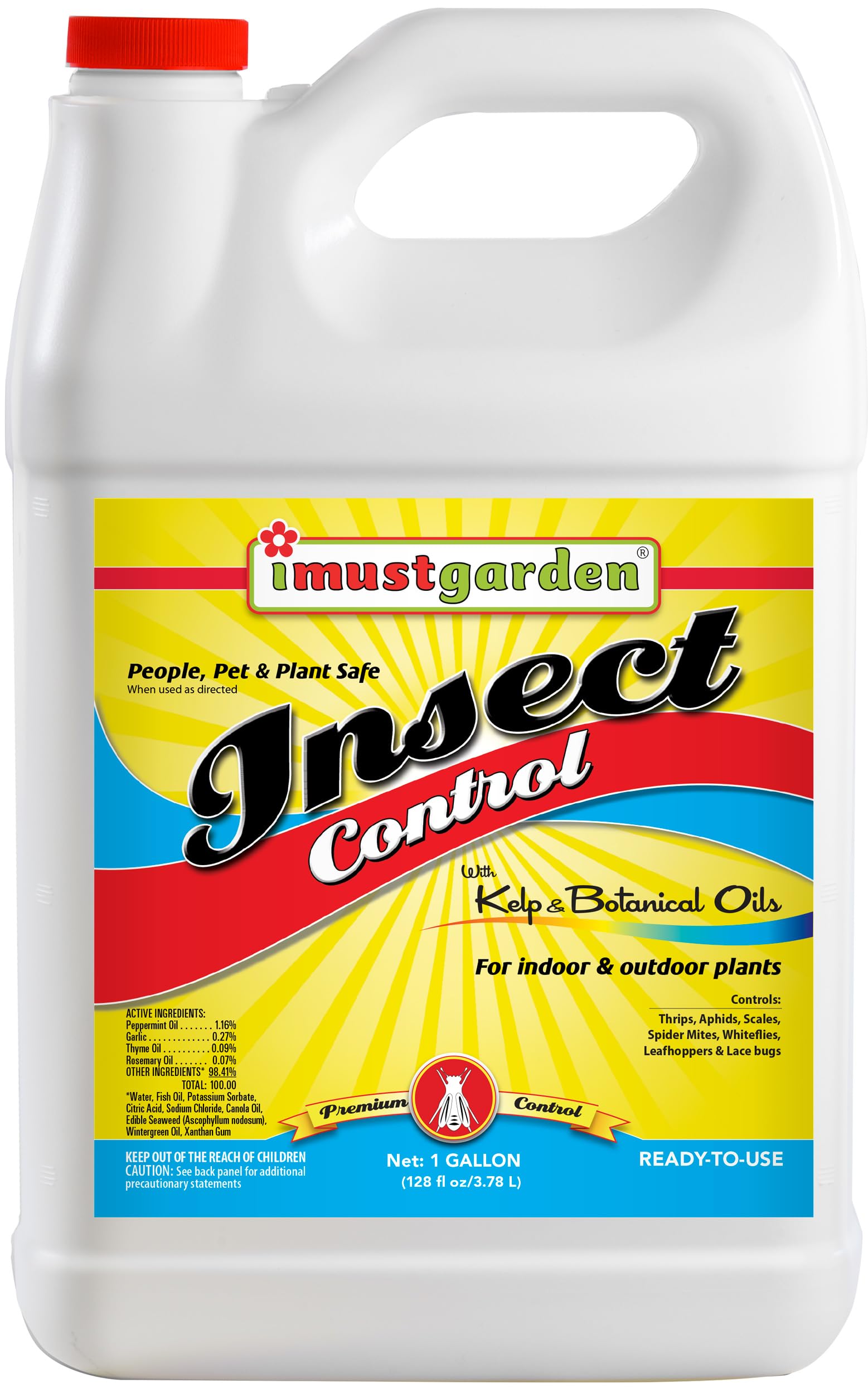
| I Must Garden Insect ControlBest Value | Large area, natural ingredients | Botanical Oils | Ready-to-Use | 1 Gallon | Amazon |
| Monterey Horticultural Oil | Dormant & growing season | Petroleum Oil | Ready-to-Spray | 32 oz (makes ~2 gal) | Amazon |
| Monterey Once A Year | Year-long systemic control | Imidacloprid | Soil Drench Concentrate | 1 qt | Amazon |
| Monterey Fruit Tree Soil Drench | Edible crops & trees | Imidacloprid | Soil Drench Concentrate | 1 Gallon | Amazon |
| Garlic Barrier Concentrate | Large-scale organic repelling | Garlic Extract | Concentrate | 1 Gal (makes up to 20+ gal) | Amazon |
| Valent Safari 20SG | Heavy-duty professional control | Dinotefuran 20% | Granule / Spray | 12 oz | Amazon |
In‑Depth Reviews
1. Bonide Captain Jack’s Citrus, Fruit & Nut Orchard Spray, 32 oz Concentrate
Our pick — over 4.5★ from 950+ verified ratings; the strongest balance of quality and price.
Covers both leafhoppers and fungal diseases in one economical jug.
This is the broad-spectrum solution for the gardener who wants to fight bugs and blight with a single product. The 32-ounce concentrate makes up to 12.8 gallons of finished spray, so a small bottle goes a long way across fruit trees, vegetables, and ornamentals. It handles leafhoppers alongside beetles, caterpillars, spider mites, thrips, and scale — and on the disease side it tackles powdery mildew, rust, blight, and leaf spots. Buyers report that “the leaf spots on my apple tree are disappearing and it is noticeably greener,” which captures the dual punch this spray delivers.
The downside is that a 32-ounce bottle can run out fast on a larger orchard — you have to mix and reapply regularly. And while it is safe for use up to the day before harvest, some owners wish the bottle was bigger for the price. But for a mid-sized garden with mixed pest and disease pressure, this is the most versatile play.
What wins people over is effectiveness — over 70 owners single it out. The few mixed notes mention plant damage if over-applied, so stick to the label dilution of 2.5 fluid ounces per gallon.
Triple-Duty Power
- Controls leafhoppers plus many other insects and mites
- Fights powdery mildew, rust, blight, and leaf spots too
- Economical concentrate: 32 oz makes 12.8 gallons
Real-World Trade-Offs
- Requires consistent reapplication for ongoing outbreaks
- Bottle size feels small for owners with many trees
Best for: Gardeners who want one all-in-one spray for leafhoppers and common fruit tree diseases.
Think twice if: You have a very large orchard — the 32 oz concentrate needs frequent refills at scale.
2. Fertilome (16076) Spinosad Soap Insecticide Ready to Use, 32 oz
Knocks leafhoppers down on contact with a certified organic formula.
This ready-to-use spray combines Spinosad with potassium salts of fatty acids — a one-two punch that works on contact against leafhoppers, adelgids, ants, aphids, caterpillars, Colorado potato beetles, and dozens more. It is OMRI Listed for organic gardening, so it fits into a food-growing routine without chemical worry. Owners mention “it worked remarkably well — right on contact first use,” though they note the need to alternate with an oil spray to prevent resistance.
The 32-ounce trigger bottle is ready to spray from the start, which makes it ideal for spot-treating a small vegetable bed or a few infested shrubs. The catch? At 32 ounces it does not cover large areas cheaply — one owner says one container covered two applications for four trees. For a bigger garden, you will want to buy the concentrate version next.
Effectiveness gets the most owner praise by far — and the formula is gentle enough on plants that it is a standard recommendation for leaf miners and caterpillars on ornamentals.
Ready When You Are
- Works on contact — you see results fast
- OMRI Listed for organic production
- Controls a very broad range of chewing insects
What to Know
- Small bottle runs out quickly on larger gardens
- Owners recommend rotating with another product to avoid resistance
Reach for this if: You need an instant-contact organic spray for a small-to-medium garden and spot treatments.
Look elsewhere if: Your leafhopper problem covers a large orchard or field — you want a concentrate.
3. I Must Garden Insect Control, 1 Gallon Ready to Use
A full gallon of natural spray that covers roses and ornamentals without mixing.
If you are looking for a plant-based option that is ready to pour and spray, this gallon jug delivers 128 fluid ounces of botanical oil formula. It kills and repels leafhoppers, aphids, whiteflies, mites, gnats, and scale on contact, and the natural ingredients make it safe to use indoors and outdoors. One owner says “my roses were being eaten and ruined, I tried this and it works perfectly.”
The mixture has a noticeable scent (botanical oils) and some buyers find it pleasant while others dislike it. Effectiveness is mixed in the reviews — it works well for many, but a few report it did not eliminate heavy whitefly or leafhopper pressure on the first try. Think of it as a good first-line repellent and contact killer for mild to moderate infestations, not a nuclear option for a severe outbreak.
For the price and the gallon volume, it is a solid value for a natural product you can use straight from the bottle on potted plants, shrubs, and flower beds.
The big plus: A full gallon ready to use — no mixing, no measuring, no concentrate math.
Who it fits: Home gardeners with roses, ornamentals, and light leafhopper pressure who want a natural approach.
Who should pass: Anyone facing a heavy, established leafhopper population — you may need a stronger systemic product.
4. Monterey Horticultural Oil RTS, 32 oz
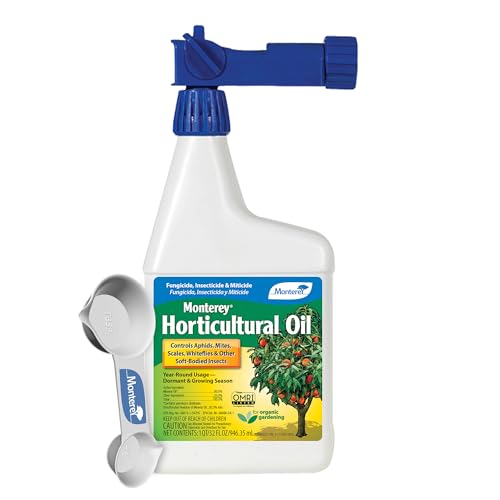
Smothers leafhopper eggs and soft-bodied adults across two seasons.
You get a ready-to-spray oil that coats and suffocates leafhoppers, aphids, spider mites, scale, whiteflies, and thrips — and it works especially well on eggs. Its standout feature is dual-season flexibility: you can apply it during the dormant season (before leaves emerge) to kill overwintering eggs, and again during the growing season when leafhoppers are active. One owner sums it up: “so far it’s been very effective in keeping the bugs at bay — this is the first year I’m going to get apples I can eat.”
The OMRI Listed formula is safe for organic use, but the sprayer produces a fan pattern that is useless for distances over six feet — so tall trees are tough to reach unless you use a separate hose-end attachment. The oil can also leave marks on painted surfaces if you overspray.
Despite these quirks, it earns high effectiveness marks from owners and is a favorite for a targeted, low-toxicity approach on fruit trees, citrus, and ornamentals.
The standout feature: Works in both dormant and growing seasons to break the leafhopper life cycle.
Grab this for: A late-winter dormant spray to prevent leafhoppers before they hatch, then follow up in spring.
Skip it for: Tall trees beyond 6 feet — the built-in sprayer pattern is not designed for height.
5. Monterey Once A Year Insect Control II, 1 Quart
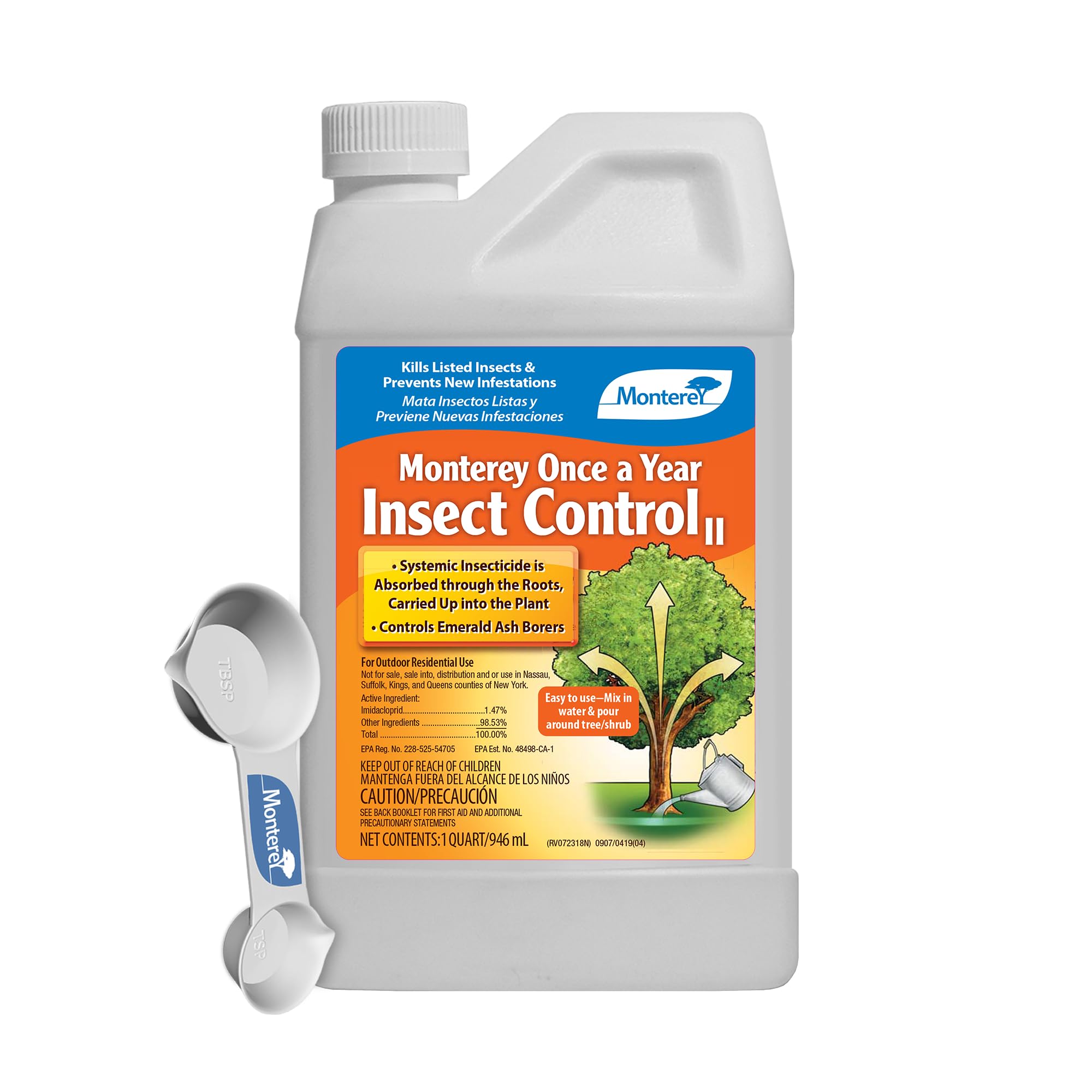
Root-absorbed protection that keeps leafhoppers off your trees all season.
This is the classic low-maintenance systemic. You mix the concentrate with water in a bucket, pour it around the base of the tree or shrub, and the Imidacloprid is absorbed through the roots and moves up into the entire plant — including new growth. Leafhoppers that feed on a treated plant get the chemical and die. One owner reports “bugs and beetles gone in 2 days” on a honey locust tree, and another says it works “far better than Bayer Advanced tree and shrub product.”
The big advantage is that you do not need to spray or time applications to leafhopper activity — the plant stays protected for roughly a year. The trade-off is that it is a broad-spectrum systemic, so it can affect beneficial insects like bees if applied to flowering plants. Use it only on trees and shrubs that are not in bloom, and read the label for specific crop lists. A few owners mention defective batches where the emulsion had curdled — so shake well and test a small amount before mixing the whole bottle.
Year-Long confidence
- Single application protects trees and shrubs for an entire year
- Systemic action reaches every leaf, even new growth
- No spraying — just a soil drench
Important Caveats
- Do not apply to blooming plants — harmful to pollinators
- Check the emulsion before mixing; some units arrive curdled
Ideal for: Busy homeowners who want to protect fruit and shade trees with one annual treatment.
Not for: Vegetable gardens or flowering plants during the growing season — pick a contact spray instead.
6. Monterey Fruit Tree & Vegetable Systemic Soil Drench, 1 Gallon
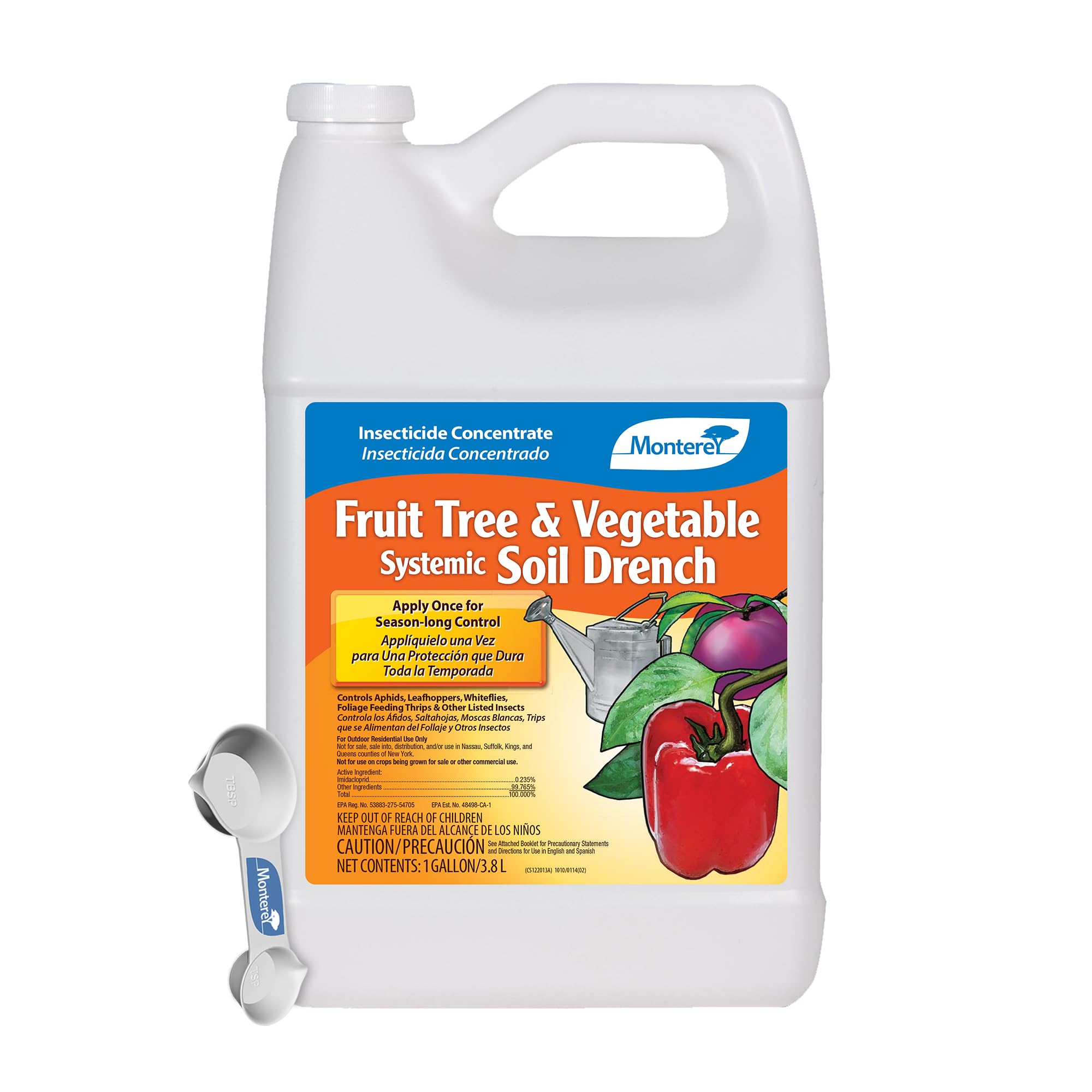
A one-gallon systemic drench labeled for vegetables, herbs, and fruit trees.
Unlike the quart-sized Once A Year product above, this gallon jug is specifically labeled for a much wider range of edible crops: citrus, grapes, berries, stone fruits, bananas, avocados, and dozens of vegetables and herbs like basil, kale, lettuce, and cauliflower. You mix it with water and pour it around the base — no spraying needed. The Imidacloprid (a systemic insecticide that travels up through the plant) kills leafhoppers that feed on treated foliage. One owner describes it: “this stuff really works! It saved my fruit trees also.” Another reports it saved a 7-foot avocado tree from a severe lace bug infestation after neem and soap failed.
Because it is a systemic, it stays active in the plant for a full year and even protects new growth. The main concern some buyers raise is using Imidacloprid on food crops — one reviewer notes their vegetables were “stunningly beautiful” but they hesitated to eat them until the chemical dissipated. Follow the label’s pre-harvest interval to be safe. This is the most comprehensive food-crop systemic drench on the list.
What stands out: Label includes a long list of vegetables and herbs — not just trees — making it unusually versatile for a systemic.
Best for: Serious vegetable and fruit growers who want season-long protection without repeated spraying.
Consider carefully if: You are concerned about systemic chemicals in your produce — a contact spray or garlic repellent may fit better.
7. Liquid Garlic Insect Repellent Concentrate (Garlic Barrier), 1 Gallon

Commercial-strength garlic concentrate that repels leafhoppers on a massive scale.
This is the outlier on the list — it is not a poison; it is a smell-based repellent. The concentrated garlic extract mixes with water and is sprayed onto plants, where the odor deters leafhoppers, aphids, beetles, thrips, whiteflies, and even birds. It is OMRI Listed for organic use and the one-gallon concentrate covers huge areas (the label says it dilutes heavily for farms and orchards). Owners like that it is pet-friendly and easy to apply. One review says “it certainly does help to keep the bugs away from the area I sprayed.”
The catch is that it is a repellent, not a contact killer. If leafhoppers are already established and feeding, garlic will not kill them — it may just push them to an untreated part of your garden. Some buyers in heavy mosquito and bug zones found it ineffective. The garlic odor fades in about a day and does not transfer to the taste of food crops, but it is noticeable during application.
For a preventive program on a large property, this is a unique tool. Think of it as a perimeter defense, not a rescue spray.
The edge: Covers acres of farmland or a large garden with a single gallon — class-leading scale potential.
Reach for this: If you manage a large organic garden or orchard and want to repel leafhoppers before they arrive.
Skip if: You already have a heavy leafhopper infestation — you need a contact kill or systemic product to eliminate them first.
8. Valent Safari 20SG Insecticide, 12 oz

A fast-acting professional systemic for stubborn leafhopper infestations.
When everything else fails, this is the heavy artillery. The active ingredient is Dinotefuran at 20% concentration — a highly potent systemic that is absorbed faster than Imidacloprid and moves through the plant rapidly. It targets leafhoppers, adelgids, aphids, borers, lace bugs, scale, whiteflies, and more. Buyers describe it as “the chemical equivalent of calling in an orbital strike from space.” It is used professionally on orchids, sago palms, oak trees, and sycamores, often after other products have failed.
The granular formula dissolves in water for use as a spray or soil drench. The cost is significant — this is the premium pick by a wide margin — and it requires careful handling (protective gear is recommended). It is also toxic to bees if sprayed on blooms, so use it only on non-flowering plants or as a soil drench. But for a severe leafhopper outbreak on valuable specimen trees or a stubborn scale problem, owners say it is worth every cent.
The effectiveness rating across owners is strong, and the concentrated 12-ounce bottle lasts a long time because you use small amounts per gallon.
Decisive Power
- 20% Dinotefuran — fast-acting systemic that reaches every plant part
- Works on resistant pests, including flatheaded borers and sharpshooters
- Highly concentrated — 12 oz goes a long way
Know Before You Buy
- Top of the price range — an investment, not a casual purchase
- Requires protective gear and careful application
Who it saves: Gardeners with a heavy, resistant leafhopper infestation on valuable trees or ornamentals.
Who it does not suit: Small-scale users with mild pest pressure — the cost and toxicity are overkill for a few rose bushes.
Understanding the Specs
Contact vs. Systemic
Contact sprays kill only the leafhoppers you hit directly. They are great for quick knockdown but need reapplication because the spray does not reach every leaf or new growth. Systemic products are taken up by the roots or leaves and travel inside the plant. Leafhoppers die when they start feeding, even on parts you never sprayed. The trade-off: systemics last longer but can affect pollinators if used on flowering plants.
OMRI Listed
This seal means the product has been reviewed and approved for use in certified organic production under the USDA National Organic Program. It does not mean the product is non-toxic — it means the ingredients are considered allowed for organic farming. Both Spinosad and horticultural oils carry this listing, while synthetic chemicals like Imidacloprid and Dinotefuran do not.
Concentrate vs. Ready-to-Use
A concentrate (like Bonide Captain Jack’s or Garlic Barrier) must be mixed with water at a specific ratio before spraying. It costs less per gallon of finished spray and covers more area. A ready-to-use product comes pre-mixed in a trigger or hose-end bottle. It is more convenient for small jobs but you pay a premium for the water. For leafhoppers, which can pop up across a whole garden, a concentrate is usually the more economical choice.
Pre-Harvest Interval
This is the minimum number of days you must wait between applying the insecticide and harvesting edible crops. Labels list it for each crop type. Products like Bonide Captain Jack’s can be used up to the day before harvest on some plants, while others require a longer wait. Always check this number if you are treating vegetables, herbs, or fruit trees.
FAQ
What is the best time to treat leafhoppers?
Will these products harm honeybees or pollinators?
How often should I reapply a contact spray for leafhoppers?
Can I use these products on vegetables I plan to eat?
What is the difference between Imidacloprid and Dinotefuran?
Is garlic spray as effective as chemical insecticides for leafhoppers?
Do I need a special sprayer for concentrates?
Can I mix two different insecticides together for better control?
Final Thoughts: The Verdict
Across the board, the best insecticide for leafhoppers is the Bonide Captain Jack’s Orchard Spray because it combines leafhopper control with disease prevention in an economical concentrate that works on fruit trees, vegetables, and ornamentals. If you want immediate contact kill with an organic formula, grab the Ferti-lome Spinosad Soap. And for a once-a-year systemic solution that protects edibles without spraying, the Monterey Fruit Tree & Vegetable Soil Drench is the one to reach for.
How We Picked
We do not accept paid placement. Every pick is matched to a real buyer and a real use-case; we do not hands-on test units.
Sources & Methodology
Specifications: manufacturer listings and product documentation. Review insights: verified customer reviews, as of July 2026. Pricing: not shown on this page (it changes often); check the current price via the retailer link.
As an Amazon Associate, Lawn Gear Lab earns from qualifying purchases. This does not affect which products we feature.