
Few things are as disheartening as watching striped or spotted cucumber beetles methodically strip your squash blossoms and cucumber vines. These persistent pests not only decimate foliage but also transmit bacterial wilt, collapsing plants from the inside out before you’ve harvested a single fruit. Reaching for the wrong spray wastes time and money — you need a targeted killer that matches the beetle’s life cycle, feeding habits, and sudden population explosions.
I’m Rikta — the co-founder and writer behind Lawn Gear Lab. My process here involved cross-referencing active-ingredient chemistry (neem oil, pyrethrins, malathion, acephate, and enzyme-based formulas) against real-world feedback on cucumber beetle suppression, analyzing concentration ratios, spray coverage specs, and residual kill windows to determine what truly works under vine-crop pressure.
After hours of comparing label rates and hundreds of verified owner reports, these are the seven formulations that stand up to the beetle threat. This guide walks you through the best insecticide for cucumber beetles to protect your cucurbit patch with confidence.
How To Choose The Best Insecticide For Cucumber Beetles
Cucumber beetles are fast, mobile, and prone to rebounding if you only kill the adults. Selecting the right product means matching the active ingredient to your crop stage, the beetle’s lifecycle, and how often you want to reapply. Here are the deciding factors.
Contact Kill vs. Systemic Absorption
Contact insecticides (pyrethrins, malathion, neem oil) must physically hit the beetle to work. They act fast and degrade quickly — useful for knocking down a visible outbreak, but they miss beetles hiding under leaves or in blossoms. Systemic options (acephate in Bonide Systemic Insect Control) are absorbed into the plant tissue so beetles ingest the poison as they feed. This gives you residual protection against larvae and newly arrived adults, though acephate is not labeled for edible fruits and vegetables, limiting its use to ornamental squash vines and gourds.
Residual Life and Rainfastness
Cucumber beetles arrive in waves. A product that washes off after the first shower forces you back out with the sprayer repeatedly. Fast-acting contact sprays that are rainfast within one hour (like BioAdvanced Tree & Shrub) offer a practical edge in humid, rain-prone growing zones. By contrast, oil-based neem coatings (Bonide Captain Jack’s Neem Max, Monterey Neem Oil) create a physical film that resists light rain but can degrade more quickly under intense sun.
Safety on Edible Cucurbits
If you plan to eat your cucumbers, melons, squash, or pumpkins, the label matters more than the price tag. Neem oil (OMRI-listed) and enzyme-based formulas (The Amazing Doctor Zymes Eliminator) allow application up to the day of harvest and are safe for bees once dried. The Eliminator also carries an OMRI listing for organic production. Malathion (Hi-Yield) has a pre-harvest interval — you must read the specific crop interval on the label before picking fruit. Pyrethrin (Bonide Garden Insect Spray) degrades quickly in sunlight and has a short pre-harvest interval, making it a strong middle-ground choice for vegetable gardens.
Quick Comparison
On smaller screens, swipe sideways to see the full table.
| Model | Category | Best For | Key Spec | Amazon |
|---|---|---|---|---|
| Eliminator Natural Insecticide | Enzyme Concentrate | Organic gardens & final growth weeks | OMRI Listed, residue-free | Amazon |
| Monterey Neem Oil RTU | Ready-to-Use Oil | Edible crops & mildew prevention | 32 oz RTU, harvest-day safe | Amazon |
| Bonide Pyrethrin Garden Spray | Pyrethrin Concentrate | Fast knockdown on visible adults | 16 oz concentrate, broad spectrum | Amazon |
| Bonide Captain Jack’s Neem Max | Ready-to-Spray Neem | Hose-end coverage on mature vines | 16 oz RTU, kills all life stages | Amazon |
| Bonide Systemic Insect Control | Systemic Concentrate | Ornamental squash & flower beds | 16 oz concentrate, makes 16 gal | Amazon |
| Hi-Yield 55% Malathion | Malathion Concentrate | Heavy outbreaks on non-bearing plants | 32 oz, 55% malathion | Amazon |
| BioAdvanced Tree & Shrub | RTU Systemic Spray | Protecting ornamental vine foliage | 32 oz RTU, rainproof in 1 hour | Amazon |
In‑Depth Reviews
1. Eliminator Natural Insecticide & Fungicide
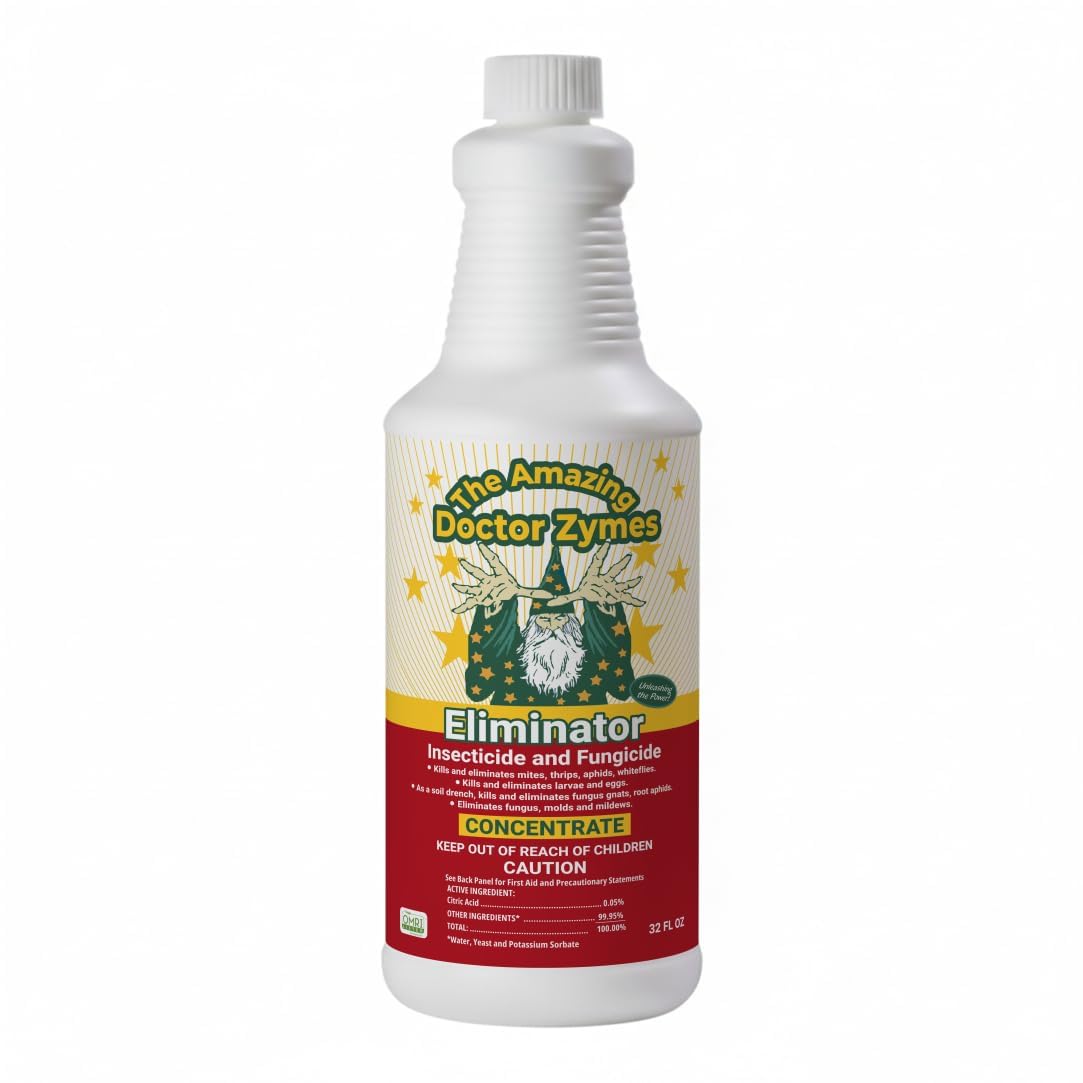
The Eliminator concentrate from The Amazing Doctor Zymes breaks the mold of conventional insecticides by using natural enzyme technology (citric acid based) rather than synthetic neurotoxins or suffocating oils. This 32-ounce bottle dilutes into multiple gallons of spray, and it’s OMRI Listed — meaning you can drench your cucumbers, squash, and melons right up to harvest without worrying about chemical residue or burning trichomes on late-stage fruit. Verified owners report it wiped out spider mites and aphids after just two applications in a 14-day foliar regimen, and one grower noted it cleared a severe mite infestation that persisted for six months.
For cucumber beetle control specifically, this product works best as a contact spray that targets eggs, larvae, and adults by disrupting their protective cuticle. The lack of an oil base means it won’t clog stomata under intense summer heat — a problem with heavy neem applications on tender vine leaves. The 4.5-star average across over 800 ratings speaks to its reliability, though some users mention it took a couple treatments to fully suppress aphid populations, suggesting beetles may also require persistence. The sweet, mild smell is a welcome change from the pungent odor of other organic sprays.
At the premium end of the price spectrum, this is the most versatile and residue-conscious option if you’re balancing cucumber beetle pressure with a desire to keep your harvest clean. It also handles powdery mildew, making it a dual-purpose tool that saves you from buying separate fungicides. Just be prepared for multiple applications during heavy beetle flights — enzyme-based formulas have shorter residual life than synthetic systemic options.
What works
- OMRI Listed and safe for harvest-day use on edible cucurbits
- Oil-free formula prevents leaf burn in hot weather
- Controls both insects (beetles, aphids, mites) and fungal diseases
What doesn’t
- Premium price per ounce compared to neem or pyrethrin concentrates
- Shorter residual kill window requires more frequent reapplication during heavy beetle waves
2. Monterey Neem Oil RTU – 32 oz
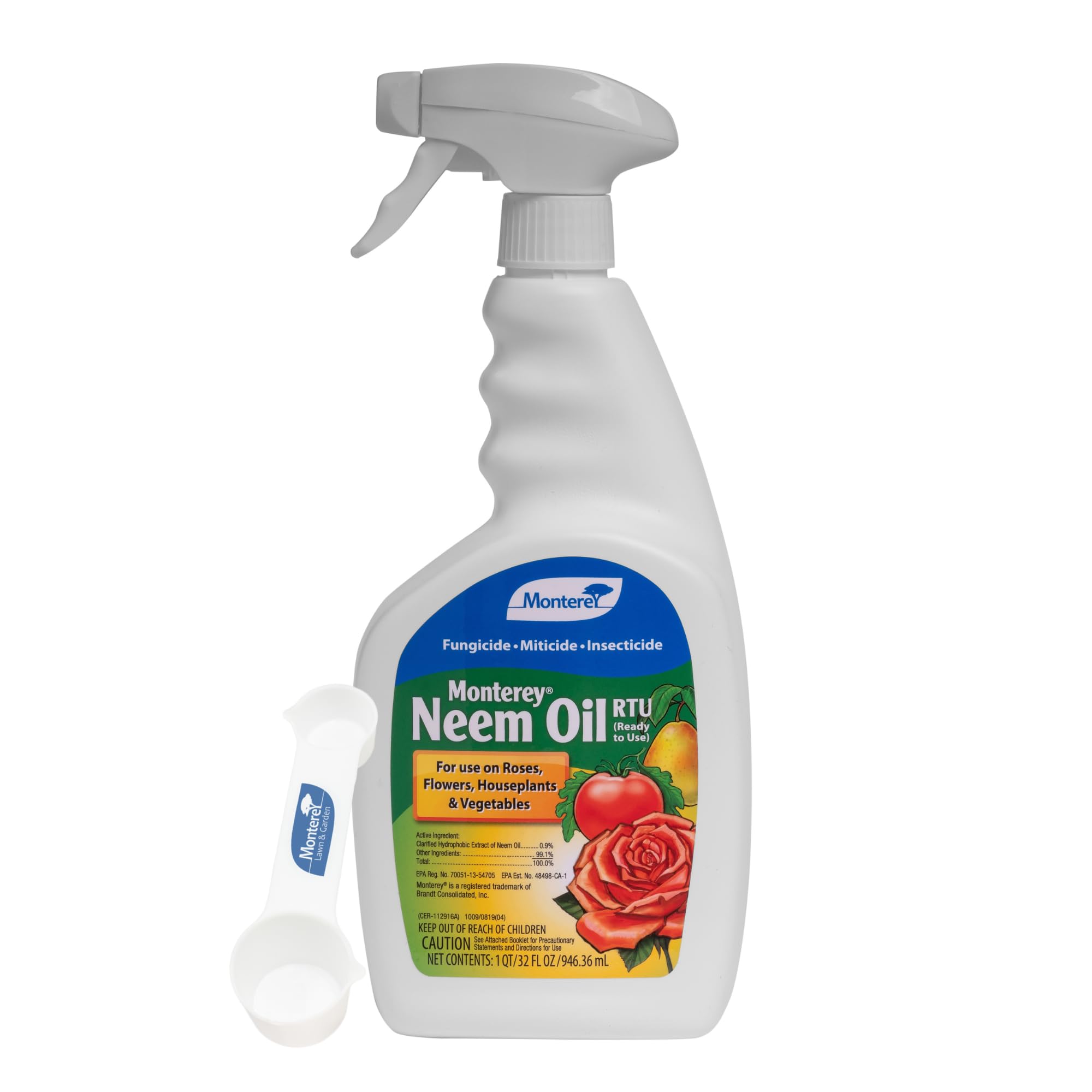
Monterey’s ready-to-use neem oil takes the guesswork out of dilution — just shake, spray, and cover all leaf surfaces. The cold-pressed neem oil creates a physical barrier that suffocates cucumber beetle eggs and larvae while repelling adults from feeding. At 32 ounces, it covers a surprising number of mature vine plants, and the included garden measure spoon adds convenient precision for any container-mixing needs you might have later. Owners consistently praise its effectiveness against both powdery mildew and soft-bodied insects, with one reviewer calling it “effective for combatting both caterpillars and powdery mildew” on tomatoes.
Neem oil’s multi-stage action sets it apart from contact-only killers: it disrupts beetle feeding behavior immediately and inhibits egg-laying over the following days. This makes it particularly useful for protecting young cucumber transplants that are most vulnerable to wilt-transmitting beetles. However, the strong, somewhat unpleasant odor (often described as “diaper-like” or “pungent”) lingers until it dries — a minor inconvenience for the level of control it provides. Some users also note that neem struggles against spider mites compared to dedicated miticides, but for cucumber beetles, it delivers consistent results when applied every 5 to 7 days.
Compared to Bonide Captain Jack’s Neem Max, this Monterey formulation is ready-to-use rather than hose-end — meaning you apply with a trigger sprayer and get more targeted coverage on the undersides of leaves where beetles hide. It’s the mid-range choice for gardeners who want OMRI-consistent organic protection without buying a concentrate and a separate sprayer. Just be aware that oil-based sprays can cause leaf burn if applied in full sun, so spray in the evening or early morning.
What works
- Acts as both insecticide and fungicide (controls powdery mildew on squash)
- No mixing required — spray straight from the bottle
- Safe to use on edible fruits and vegetables up to harvest day
What doesn’t
- Strong, lingering odor that persists until dry
- Can burn tender leaf tissue if applied during peak sunlight
3. Bonide Pyrethrin Garden Insect Spray Concentrate

When cucumber beetles suddenly swarm and start shredding blossoms overnight, pyrethrin delivers the fastest knockdown of any option on this list. Derived from chrysanthemum flowers, this concentrated 16-ounce bottle from Bonide kills adult beetles on contact by attacking their nervous systems. The label lists a broad range of target insects, and real-world feedback from Florida gardeners confirms its effectiveness against ants, aphids, and borers in lilacs — a strong signal it handles tough beetle exoskeletons. One reviewer specifically mentions using it to protect an apple tree from mites with a biweekly spray schedule.
Pyrethrin’s rapid degradation in sunlight is both a strength and a limitation. It breaks down within hours, so it’s safe for beneficial insects and pollinators once the spray has dried, but it also means you need to time applications carefully. Spraying in the late evening gives the product several hours of darkness to work before UV light neutralizes it. For vegetable gardens, the short pre-harvest interval makes it practical for use even on cucumbers and melons nearing maturity, provided you follow the label’s waiting period.
This concentrate mixes with water at specified rates, so you can adjust strength based on beetle pressure — a flexibility that ready-to-use sprays cannot match. For the price per gallon of mixed spray, this is one of the most cost-effective fast-response tools in the mid-range tier. However, because pyrethrin lacks residual activity, you must pair it with a repellent or systemic strategy (like neem oil applied a few days later) to prevent re-infestation from migrating adults.
What works
- Immediate contact kill on adult beetles and larvae
- Short environmental persistence — safe for bees after drying
- Cost-effective concentrate makes many gallons of spray
What doesn’t
- No residual protection — beetles can return the same day
- Breaks down quickly in sunlight, requiring evening or shaded applications
4. Bonide Captain Jack’s Neem Max – 16 oz RTU
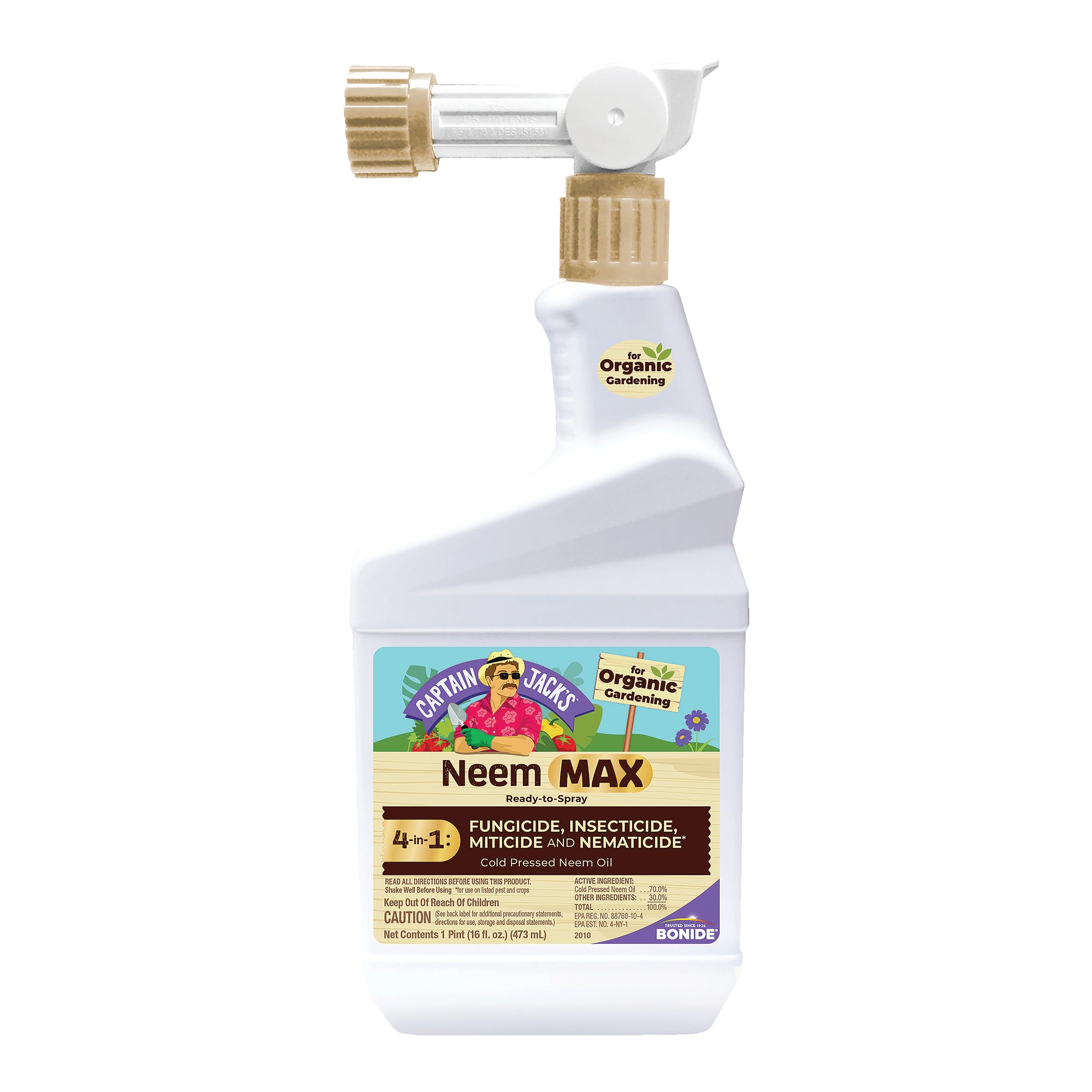
Captain Jack’s Neem Max is the budget-friendly entry point for gardeners who want neem oil’s proven effectiveness without buying a separate sprayer. The hose-end design meters the correct dilution automatically — you simply attach it to your garden hose, pull the trigger, and cover large areas of mature vines fast. The 4-in-1 formula acts as an insecticide, fungicide, miticide, and nematicide, giving it utility beyond cucumber beetles for those dealing with concurrent powdery mildew or aphid outbreaks. Reviews highlight its success against Japanese beetles on apple trees and mold in flower beds.
The 16-ounce bottle treats a surprisingly large area because the hose-end siphoning concentrates the product. But some users report issues with aspiration — the viscous cold-pressed neem oil can struggle to draw through the hose-end tube. One reviewer solved this by removing the tube and holding the bottle upside down to let gravity assist. This is a design quirk worth knowing before your first use, but it doesn’t affect the spray’s efficacy once mixed. The product kills eggs, larvae, and adults, which is critical for breaking the cucumber beetle lifecycle before the next generation emerges.
Because this is a ready-to-spray product, you sacrifice the ability to fine-tune concentration — it’s fixed at the factory dilution rate. For light to moderate beetle pressure, that’s perfectly adequate. For heavy infestations that require a stronger mix, a concentrate like the Bonide Pyrethrin or a standalone neem concentrate would give you more control. Still, for sheer convenience and price per treated area, this is the most accessible neem option on the list.
What works
- Hose-end design covers large vine patches quickly
- Multi-action formula targets all beetle life stages plus fungal diseases
- Lowest entry price for a complete ready-to-use system
What doesn’t
- Viscous oil can struggle to aspirate through the hose-end tube
- Fixed dilution rate limits strength adjustment for severe infestations
5. Bonide Systemic Insect Control Concentrate – 16 oz

For non-edible ornamental squash vines, gourds, and flower beds where cucumber beetles cause aesthetic damage, this acephate-based systemic from Bonide delivers the longest residual protection of any product reviewed. The 16-ounce concentrate makes 16 gallons of finished spray — an incredible value per treatment. Acephate is absorbed into the plant’s vascular system, so beetles that chew on treated leaves ingest a lethal dose even if the spray missed them. Verified users report it wiped out bagworms on arborvitae and stopped “roll worms” on canna lilies within days.
The smell is notoriously potent — multiple reviews describe it as “unbelievably strong” and “like actual poop.” This is the trade-off for the systemic activity and endurance of acephate. It’s also not labeled for edible vegetables or fruit, so you cannot use it on cucumber plants that will bear fruit for consumption. The label restricts use to ornamental flowers, shrubs, roses, and non-bearing trees. If your goal is purely protecting decorative vine leaves on a trellis or maintaining show-quality gourd appearance, this is the most effective option.
Application timing matters: acephate works best as a soil drench or foliar spray applied early in the season before beetle populations explode. The built-in measuring cup makes mixing straightforward, but you must spray in shaded conditions to avoid leaf “burn” from sun interaction during drying. For the mid-range price point, this offers the highest concentration of active ingredient per dollar, but only for the ornamental niche.
What works
- Systemic absorption protects new growth that beetles target
- Makes 16 gallons — exceptional value per treatment
- Kills pests quickly and provides extended residual control
What doesn’t
- Not labeled for edible cucurbits or any vegetable that bears fruit
- Extremely strong, persistent odor during and after application
6. Hi-Yield 55% Malathion Spray – 32 oz
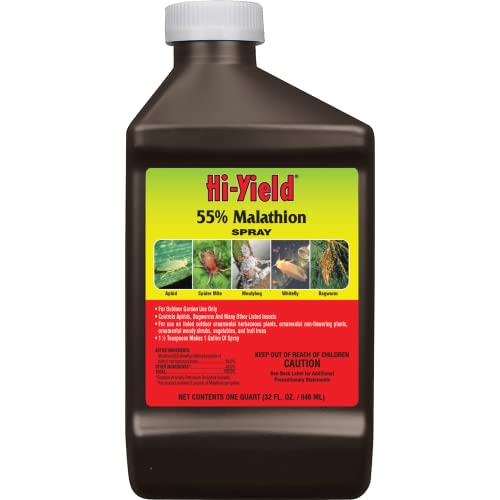
Malathion is a generations-old organophosphate that still crushes hard-to-kill insect outbreaks when other products fail. This Hi-Yield 32-ounce concentrate packs 55% malathion — the highest active concentration in this lineup — and is labeled for use on vegetables, fruit trees, ornamentals, and shrubs. Verified reviews report it works where other approaches failed, particularly on stubborn scale, spider mites, and mosquitoes. One user specifically noted it performed “better than Ortho” for maintaining season-long pest control on bushes.
The power of malathion comes with significant caveats. It’s a known suspected carcinogen, and the label requires protective gear (gloves, long sleeves, eye protection) during mixing and application. You must also avoid spraying when rain is predicted for the next 24 hours to prevent runoff. For edible crops, strict pre-harvest intervals apply — you need to check the label for each specific crop. It is not a casual weekly spray; this is a last-resort product for when cucumber beetles have overwhelmed your organic options or when bacterial wilt is spreading through the patch.
Despite the risks, the price per ounce of active ingredient makes malathion the most economical option for large vegetable gardens or multi-acre squash plantings where beetle pressure is extreme. The 32-ounce bottle lasts multiple seasons if stored properly. Just be prepared for the safety protocols and register with your state’s pesticide reporting if required. For home gardeners with moderate beetle problems, the other products on this list offer sufficient control without the chemical load.
What works
- Extremely effective on beetles, mites, and scale that resist other products
- High 55% concentration treats very large areas affordably
- Broad label approval for vegetables, fruits, and ornamentals
What doesn’t
- Requires full protective gear during mixing and application
- Strict pre-harvest intervals — must read label for each crop
7. BioAdvanced Tree & Shrub Insect Killer – 32 oz RTU

BioAdvanced (formerly Bayer Advanced) built this ready-to-spray formula for trees and shrubs, but it works well on ornamental vine foliage where cucumber beetles feed. The active ingredient provides both contact kill and systemic action, with a long-lasting formula that continues protecting against listed insects for up to two weeks. The standout feature is its rainproof-in-one-hour claim — a huge advantage for humid growing regions where afternoon thunderstorms can wash away less tenacious sprays. Verified reviewers praise its effect on dogwood trees and red maples for eliminating beetle stress and restoring normal leaf growth.
The 32-ounce hose-end bottle simplifies application, but like the Bonide Neem Max, the fixed dilution rate means you cannot increase strength for heavy infestations. It’s best used as a preventive measure applied early in the season when beetles first emerge, rather than as a curative knockdown after a population explosion. The product is labeled for trees, shrubs, and ornamentals — it is not intended for edible vegetable gardens, so use it on decorative pumpkin vines or ornamental gourds only.
For the mid-range price, you’re paying for convenience and rainfastness. If you have a mixed landscape with ornamental squash vines climbing a trellis next to dogwoods or maples, this single bottle can protect multiple plant types. But if your primary target is a vegetable cucumber patch, look at the neem or pyrethrin options instead for direct edibility safety.
What works
- Rainproof within one hour — stands up to afternoon storms
- Systemic action provides up to two weeks of residual protection
- Easy hose-end application covers ornamental vines fast
What doesn’t
- Not labeled for edible vegetable crops or fruit-bearing cucurbits
- Fixed dilution rate limits adjustment for heavy beetle pressure
Hardware & Specs Guide
Understanding the language on the label helps you pick the right weapon for your specific beetle pressure. Below are the critical specs explained.
Active Ingredients and Their Chemistry
Cold-Pressed Neem Oil (Bonide Captain Jack’s Neem Max, Monterey Neem Oil RTU) works by suffocating insects and disrupting feeding/hormones. It kills eggs, larvae, and adults but requires thorough coverage. Pyrethrins (Bonide Pyrethrin Garden Spray) are plant-derived neurotoxins that provide rapid knockdown but degrade in hours. Acephate (Bonide Systemic Insect Control) is a synthetic organophosphate absorbed into plant tissue — potent and systemic but restricted to ornamentals. Malathion (Hi-Yield 55%) is another organophosphate with broad crop labeling but higher human toxicity. Enzymes/Citric Acid (The Amazing Doctor Zymes Eliminator) break down insect cuticles and fungal cell walls — safe for harvest-day use but require frequent reapplication.
Pre-Harvest Intervals (PHI) and Edible Safety
Every insecticide label lists a PHI: the minimum number of days between last spray and harvest. For neem oil and enzyme-based products (OMRI-listed ones in particular), the PHI is often zero — you can spray up to the day you pick. Pyrethrin has a short PHI (commonly 0 to 1 day depending on the crop). Malathion has longer intervals that vary by crop (often 7 to 14 days). Systemic products containing acephate are typically not allowed on edible fruiting vegetables at all. Always verify the specific crop on the label — the PHI for cucumbers may differ from the PHI for summer squash on the same bottle.
FAQ
Can I use neem oil to kill cucumber beetle larvae in the soil?
What is the best time of day to spray insecticide for cucumber beetles?
How often must I reapply insecticide to protect cucumbers from beetles?
Final Thoughts: The Verdict
For most gardeners, the best insecticide for cucumber beetles winner is the Eliminator Natural Insecticide & Fungicide because it combines OMRI-organic safety on edible crops with the ability to knock down beetles, mildew, and fungal issues using a single concentrated enzyme formula. If you want a ready-to-use, harvest-day-safe neem that handles both beetles and powdery mildew on squash leaves, grab the Monterey Neem Oil RTU. And for a rapid knockdown when beetles swarm and threaten blossoms overnight, nothing beats the Bonide Pyrethrin Garden Spray concentrate.