
Specs are compiled from manufacturer listings and verified buyer reviews and can change over time — please confirm the key details on the product page before buying.
You spot the first curled yellow leaf on your tomato plant. Flip it over and there they are — a colony of aphids sucking the life out of your summer harvest. The right spray stops them without poisoning your dinner plate, and that is exactly what this guide sorts out for you.
I’m Rikta — the founder and writer behind Lawn Gear Lab. This guide is built by comparing the manufacturers’ published specifications and the patterns across verified customer reviews, so you get each pick’s real strengths and trade-offs instead of marketing spin.
This guide covers the potassium salts of fatty acids that kill soft-bodied pests on contact, which formulas stay gentle on your edibles, and which brands the gardening community actually trusts. You will find the best insecticidal soap for vegetable gardens that fits your specific pest problem and budget.
Our Picks at a Glance

How To Choose The Best Insecticidal Soap For Vegetable Gardens
Spraying your tomatoes with the wrong soap can burn the leaves or leave residue you do not want near your dinner. Here are the three specs that separate a helpful spray from a garden mistake.
Concentrate vs Ready-to-Use: Which Saves You More
A ready-to-use bottle is grab-and-go — perfect for a small raised bed or a few pots on the patio. A concentrate (which you mix with water in a pump sprayer) gives you dozens of refills from one bottle, making it the smarter buy if you have a big vegetable patch or expect to spray all season. Read the label: a 16-ounce concentrate can make several gallons of spray, while a 32-ounce ready-to-use bottle covers a smaller area before it runs dry.
OMRI Listing: What the Organic Label Actually Means
OMRI stands for the Organic Materials Review Institute. When a product carries an OMRI Listed seal, an independent third party has verified that every ingredient is allowed under USDA organic production rules. It does not mean the soap is “safer” in a health sense — it means you can spray it on your broccoli up to the day you pick it and still call your garden organic.
Potassium Salts of Fatty Acids: The Only Active Ingredient That Matters
Nearly every insecticidal soap on this list kills bugs the same way: with potassium salts of fatty acids (a fancy name for soap). The difference between brands depends on the percentage of that active ingredient, whether the formula adds a second compound (like spinosad or seaweed extract) for tougher pests, and the quality of the surfactants (chemicals that help the spray stick to leaves) that keep the spray clinging to the leaf surface long enough to dry out a bug.
Quick Comparison
| Model | Best For | Form | Active Ingredient | Volume | Amazon |
|---|---|---|---|---|---|
| Ferti-lome Spinosad Soap★ Best Overall | Chewing insects & caterpillars | Concentrate | Spinosad + Potassium Salts | 16 fl oz | Amazon |
| Safer Insect Killing Soap ConcentrateTop Performer | Severe aphid infestations | Concentrate | Potassium Salts of Fatty Acids | 16 fl oz | Amazon |
| NATRIA Insecticidal SoapBest for Houseplants | Mealybugs on houseplants | Ready-to-use | Potassium Salts of Fatty Acids 1% | 48 fl oz (2×24) | Amazon |
| Safer Insect Killing Soap w/ Seaweed | Gentle leaf treatment | Ready-to-use | Potassium Salts of Fatty Acids | 32 fl oz | Amazon |
| Ferti-lome Natural Guard | Small-scale targeted spray | Ready-to-use | Potassium Salts of Fatty Acids | 8 fl oz | Amazon |
| Southern Ag Insecticidal Soap | Homesteaders & repeat treatments | Concentrate | Potassium Salts of Fatty Acids | 16 fl oz | Amazon |
| Ecoworm Horticultural Soap | Leaf cleaning & general pest control | Concentrate | Potassium Soap | 34 fl oz | Amazon |
| Trifecta Crop Control | Spider mites & powdery mildew | Ready-to-use | Essential Oil Blend | 64 fl oz (2×32) | Amazon |
| Garden Safe Insecticidal Soap | Multi-pack coverage | Ready-to-use | Potassium Salts of Fatty Acids | 192 fl oz (6×32) | Amazon |
In‑Depth Reviews
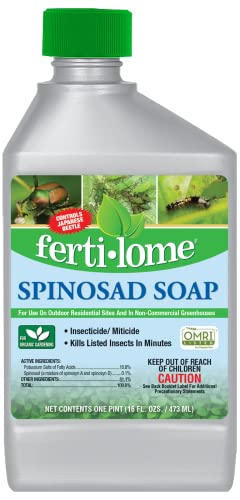
1. Fertilome (16052) Spinosad Soap Insecticide
Our pick — over 4.5★ from 200+ verified ratings; the strongest balance of quality and price.
The two-in-one poison that kills caterpillars chewing on your kale without torching the leaves.
What makes this pick special is the double active ingredient — Potassium Salts of Fatty Acids at 0.940% plus Spinosad at 0.005%. The soap knocks down soft-bodied aphids and leafhoppers, while the spinosad (a naturally occurring soil bacterium) handles the tougher chewing insects like bagworms, tent caterpillars, and Colorado potato beetles that leave your eggplants looking like lace. Buyers report that a single 16-fluid-ounce container mixed as a concentrate handled two full applications on four trees and several plants, with bug activity nearly stopped after the second spray. The crowd favorite — a 4.6-star score across hundreds of owners — backs up the claim that this is the only thing that eliminates the orange-and-black caterpillars munching on oleander leaves.
There is a catch you need to plan around. The spinosad component works through ingestion, so the pest has to eat treated foliage to die — it is not a contact-only killer. That means thorough coverage of both leaf surfaces matters. And the manufacturer recommends rotating this with a neem oil spray to prevent insects from building resistance, which adds another product to your shed. But for vegetable gardeners fighting a mixed bag of aphids AND caterpillars, the dual-mode formula wins over almost every single rival.
Best for mixed infestations: This earns the top spot because it tackles both soft-bodied pests (aphids, leafhoppers) and chewing insects (caterpillars, bagworms, Colorado potato beetle) in one mix, saving you from buying separate sprays. The OMRI Listed certification means you can use it right up to harvest on your vegetables, fruits, and citrus without worrying about organic compliance.
The fine print: The bottle is only 16 fluid ounces — a 3.0x volume gap compared to the NATRIA ready-to-use at 48 fluid ounces — so you need to mix it yourself and it runs out faster if you are covering a big garden. A few owners mention that the hose-attached sprayer makes application easy but you have to rinse it thoroughly after each use to avoid clogging.
Reach for this if: your vegetable patch has a mix of aphids, caterpillars, and beetles and you want one OMRI Listed concentrate that handles them all without needing a separate spray for each pest.
Look elsewhere if: you prefer a grab-and-spray ready-to-use bottle or you are only fighting aphids and want a simpler, cheaper single-ingredient soap.
2. Safer 5118-6 Insect Killing Soap Concentrate
The aphid apocalypse cure that cleared a severe infestation in three days flat.
This is the heavy hitter for when you discover an entire broccoli stalk crawling with aphids. The active ingredient is straight Potassium Salts of Fatty Acids at a concentration high enough that 2.5 ounces makes a full gallon of spray. Owners mention that a severe aphid infestation was 90% dead by day one and completely gone by day three — with zero chemical burns on the plants. The concentrate format means the 16-ounce bottle lasts much longer than any ready-to-use spray, making it the economical choice if you spray a large vegetable garden every season. This product also targets a wide range: aphids, earwigs, grasshoppers, harlequin bugs, leafhoppers, mealy bugs, mites, plant bugs, psyllids, sawfly larvae, soft scales, spider mites, squash bugs, blossom thrips, whiteflies, and even ants at higher concentrations.
The trade-off is that this soap is a pure contact killer — the insect must be hit directly with the spray or it walks away unharmed. That makes the undersides of leaves critical targets. Some customers note leaf burn if they spray in direct hot sun or use too strong a mix, so the recommended dilution of 2-4 tablespoons per gallon matters. The formula also has a noticeable smell that some find strong, though it fades after drying. Despite those quirks, the sheer volume of positive owner experience — effectiveness is the most-discussed feature by a wide margin — makes this the go-to for anyone who wakes up to a full-scale aphid invasion.
What wins people over
- Kills aphids on contact — 90% dead by day one, all gone by day three in severe cases
- Concentrate format stretches 16 ounces into multiple gallons of spray, making it far more economical than ready-to-use options
- OMRI Listed so you can spray up to the day of harvest on vegetables, herbs, and fruit
- Does not kill beneficial insects like bees and ladybugs once the spray dries
The honest limits
- Must hit the pest directly — it only works on contact, not by ingestion or residual coating
- Can burn tender leaves if sprayed in direct sunlight or at too high a concentration; dilute carefully
- Bottle is smaller than many photos suggest at 16 fluid ounces, though the concentrate makes up for it
Grab this for: a raging aphid or spider mite outbreak where you need fast, thorough knockdown and you want one bottle to last the whole season.
skip it if: you only have a few houseplants or a tiny herb pot — a ready-to-use spray would be less hassle than mixing concentrate.
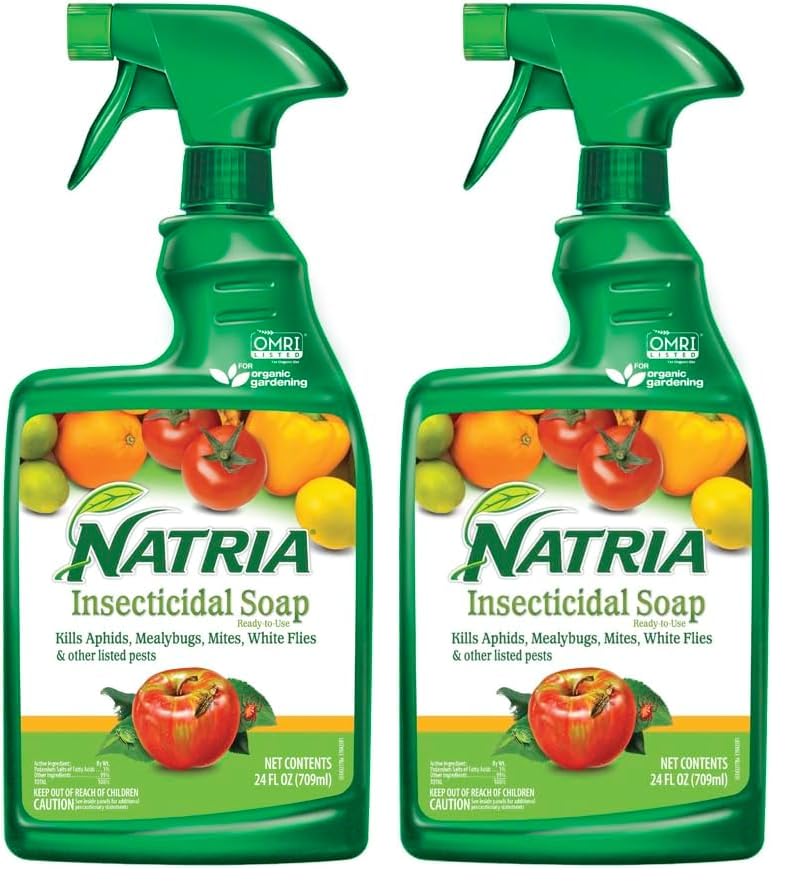
3. NATRIA Insecticidal Soap, Ready-to-Use
The ready-to-use spray that finally cleared mealybugs after everything else failed.
This two-pack gives you 48 fluid ounces of pre-mixed spray (24 ounces each) with 1% Potassium Salts of Fatty Acids — a slightly higher concentration than some competitors. The biggest win here is the convenience: no measuring, no mixing, no storing concentrate. Just pull the trigger and spray. And it works. Reviewers point out that a persistent mealybug infestation that resisted other pesticides was finally crushed by spraying the plant and soil every other day — visible bugs were gone in two weeks, and the infestation cleared after six weeks of twice-weekly application. The plants recovered over the following months. The fast-acting formula kills listed insects in minutes, and the nested spray nozzle makes coverage easy on indoor plants and outdoor vegetables alike.
The weak point is the sprayer hardware. A common gripe across reviews is that the trigger bottle stops spraying well before the liquid runs out — one owner had to transfer the remaining half-bottle to another container mid-use. That is frustrating when you are mid-battle with a pest outbreak. And while the soap is safe enough to use up to the day of harvest, 48 ounces goes fast if you are covering a large vegetable garden. This is really a product for the indoor gardener or small-patch vegetable grower who values grab-and-go convenience over raw volume.
Best for indoor and small-scale use: The 1% active ingredient hits hard against mealybugs, aphids, mites, and whiteflies without requiring any mixing or measuring. The two-pack gives you a backup bottle for follow-up sprays. OMRI Listed means it is safe for edible plants up to harvest day.
The catch: The spray nozzle is prone to failing before the bottle is empty — several shoppers say needing to transfer the liquid to a different sprayer. At 48 fluid ounces total, this is not the most economical choice for large gardens; a concentrate would stretch further for the same money.
Reach for this if: you need a grab-and-spray solution for houseplants, a small raised bed, or a stubborn mealybug problem that other sprays could not touch.
Look elsewhere if: you are covering a large vegetable garden or you hate dealing with faulty spray nozzles — a concentrate and a good pump sprayer would serve you better.
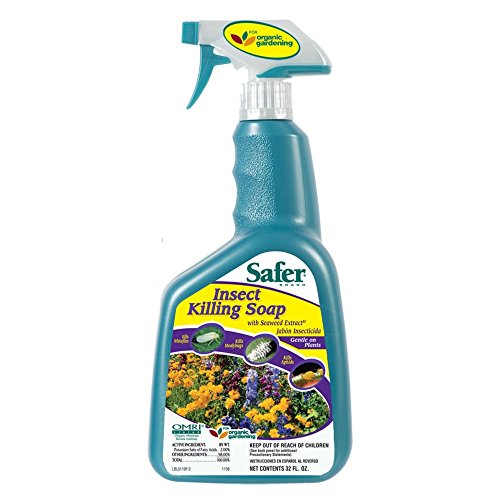
4. Safer Insect Killing Soap With Seaweed Extract
The soap that feeds your leaves while it kills the bugs — seaweed extract included.
This is the only ready-to-use spray on the list that adds seaweed extract to the potassium salts formula. The result is a treatment that not only kills soft-bodied insects on contact but also leaves a trace of nutrients that can green up the foliage. Buyers report no plant burn at all, and some noticed their leaves looked healthier and greener after spraying. The 32-ounce bottle is generous for a ready-to-use product, and the spray is easy to apply directly to infested stems and leaves. One owner fighting a massive grasshopper infestation called it “as good or better than any that I have used” for a natural treatment.
The trade-off is that this is a contact-only killer, so you need to hit the pest directly. Whiteflies and gnats required two applications (initial spray, wait three days, rinse, then respray after two days) for full elimination. And while the 32 ounces feels generous, it goes fast when you are spraying every plant in a vegetable patch. This is best suited for the gardener who wants a gentle, nutrient-boosting option for a medium-sized bed or container garden rather than a massive acreage.
Why owners love it
- Seaweed extract improves leaf color and health while the soap kills pests — a two-in-one treatment
- Ready-to-use with no mixing required; just spray and go
- Gentle on plants — no reported leaf burn even with repeated use
- Works on a wide range: whiteflies, gnats, mites, grasshoppers, and more
The honest limits
- Contact-only killer — you must spray the pest directly; hidden bugs survive
- 32 ounces is not much coverage for a large vegetable garden; you may need multiple bottles per season
Best for: gardeners who want a gentle, nutrient-enriched spray that cleans leaves and fights pests without any mixing hassle — ideal for container vegetables and ornamentals.
Not ideal for: large-scale infestations or big gardens where a concentrate would stretch further for the same money.
5. VPG Fertilome Natural Guard (40704) Insecticidal Soap

The tiny bottle for tight spots — 8 ounces of precision spray for small-scale pest control.
This is the smallest-volume product on the list at just 8 fluid ounces, and that is either its charm or its limitation depending on your garden size. The ready-to-use formula targets lace bugs, spiders, mites, aphids, leafhoppers, and earwigs. It is OMRI Listed and safe for fruit trees, vegetables, nut trees, ornamentals, shrubs, berries, flowers, and citrus, both indoors and out. The active ingredient is potassium salts of fatty acids, and the manufacturer claims it is environmentally friendly and safe for use around the home.
The honesty call: this product has the most divided owner feedback. While some call it effective, a verified buyer reported that even at half the recommended dosage the product severely damaged a spinach crop. Another owner saw the grass around their plant turn brown. Those are real experiences that matter for a vegetable gardener. The positive reviews mention good results on gardenias and when combined with neem oil. This soap seems to be a formula that requires careful dilution and timing — possibly better suited for tougher, established plants than for tender seedlings and leafy greens.
Best for spot treatment: The 8-ounce bottle is small enough to toss in a gardening apron pocket for quick hits on specific pests. It targets a wide range including lace bugs, spider mites, aphids, leafhoppers, and earwigs. OMRI Listed for organic use on vegetables and fruit trees.
The risk: Multiple owners mention leaf and crop damage even at reduced dosages. This is not the safest choice for tender leafy greens like spinach. The bottle is tiny — 8 ounces will not cover a full garden bed.
Reach for this if: you need a tiny bottle for a specific spot treatment on sturdy ornamentals or mature fruit trees where you can test a small area first.
Skip it for: young seedlings, delicate leafy greens, or any vegetable patch where you cannot afford accidental leaf burn — the risk is real and documented.
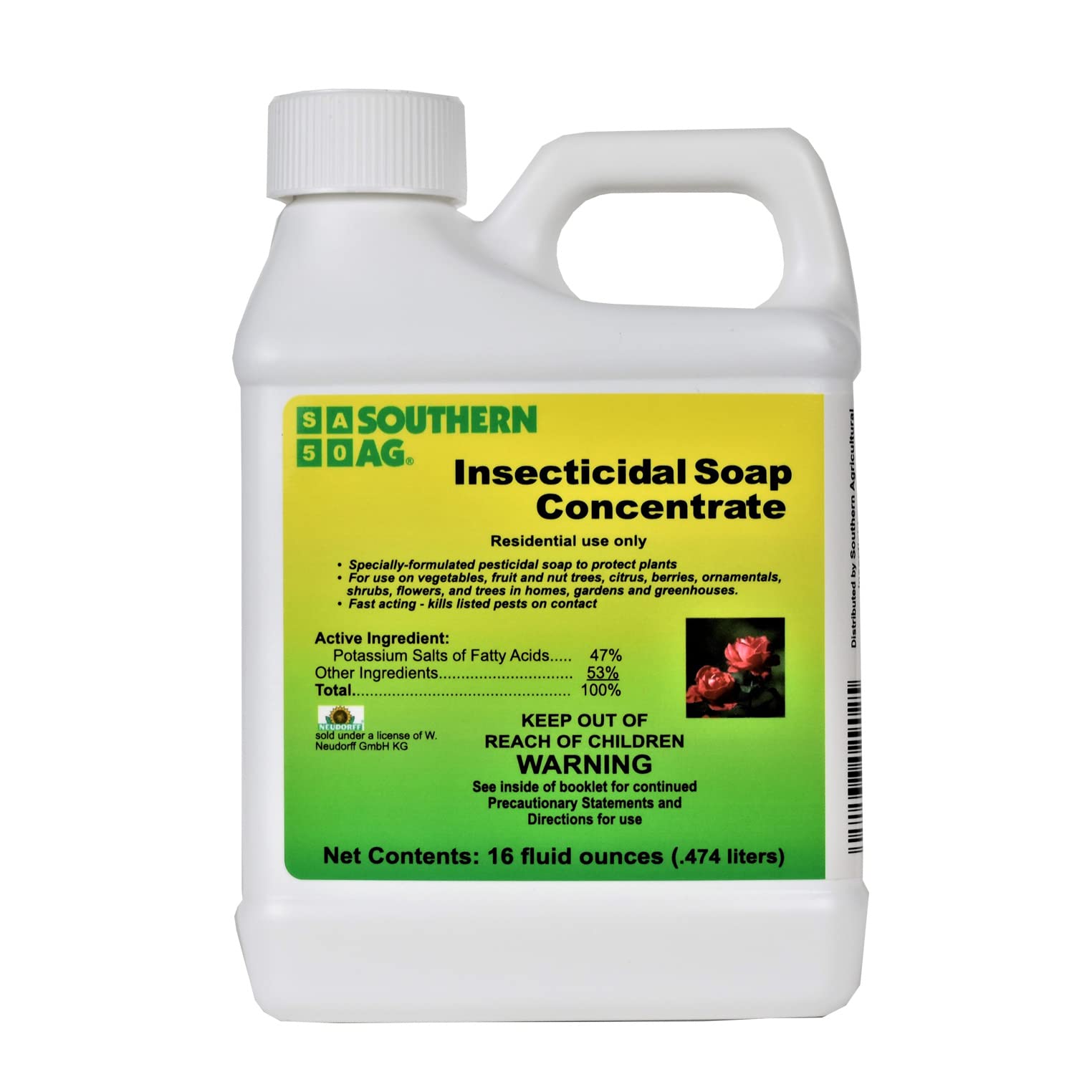
6. Southern Ag Insecticidal Soap Concentrate
The thick, highly concentrated soap that one owner says is way better than homemade.
Southern Ag is a name gardeners trust in the Southern US, and this concentrate lives up to that reputation. It is a fast-acting contact killer for both insects and mites, formulated thick enough that customers note it is “concentrated to the point that it is thick” — a sign of a potent mix. One owner who had been fighting aphids on their crepe myrtle for a year finally got a full flowering tree after a few sprays. Another switched to this from homemade insecticidal soap and says “this one is way better,” noting it works on a variety of insects and does not wash off once it dries.
The honest catch: it takes 4 tablespoons to make a single quart of spray, so that 16-ounce bottle goes fast if you are fighting a heavy infestation. One owner warns the product goes quickly when used at full strength for an outbreak. You are paying for a high-quality concentrate, but you need to be judicious with mixing. The 26 total ratings are a small sample, so the 4.4-star score is less proven than the crowd-tested Safer concentrate above it.
What impresses owners
- Described as “way better” than homemade soap by experienced gardeners
- Once dried, the spray does not wash off in rain or watering
- Works on a variety of insects including aphids, mites, and more
- Thick, concentrated formula suggests high potency per ounce
The drawbacks
- Requires 4 tbsp per quart — a heavy mix ratio that drains the bottle fast on large gardens
- Small review sample (26 ratings) means the 4.4-star score is less statistically solid than more popular options
Best for: homesteaders and experienced gardeners who appreciate a thick, potent concentrate they can trust not to wash off — particularly effective on crepe myrtle aphids.
Less ideal for: new gardeners or those covering a large area on a budget — the mix ratio means you replace bottles often.
7. Ecoworm Horticultural Soap Concentrate
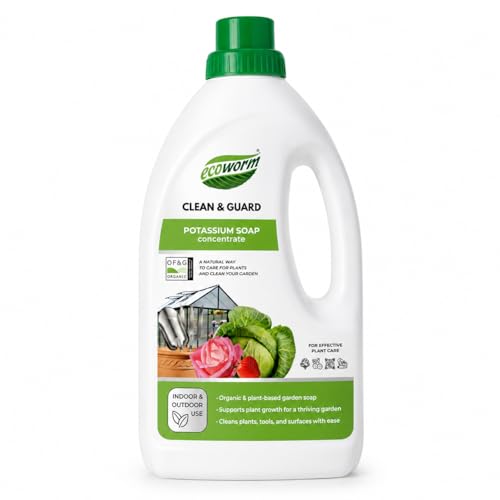
The big-bottle concentrate that also cleans leaf dust and gardening tools.
This is the largest concentrate bottle on the list at 34 fluid ounces (just over a quart), and it serves double duty as both a pest spray and a leaf cleaner. The active ingredient is a potassium soap concentrate. The mixing ratio is flexible: the label calls for 200-600 ml of soap per 10 liters of water, which lets you adjust strength depending on whether you are cleaning dust off houseplant leaves or fighting an active infestation. The maker claims it works on indoor plants, vegetables, herbs, flowers, and greenhouse plants, and the formula is biodegradable. Reviewers point out that pests disappear within 24 hours.
The limitation is the data. Only 55 ratings sit behind the 4.5-star score, and most reviews are short with minimal detail. One owner wishes for a larger size, which is a good sign that the product works but also a note that the current bottle may not last long enough for heavy users. The lack of OMRI Listing on the label (the data does not mention it) means this is not explicitly certified for organic production, though the biodegradable plant-care claim aligns with organic values.
Best for dual use: This concentrate cleans sticky deposits and dust off leaves while controlling pests — a useful two-in-one for houseplant enthusiasts. The 34-ounce bottle is the largest concentrate volume here, and the flexible mix ratio lets you dial in strength per job.
The caveat: No explicit OMRI Listing means organic gardeners should verify with the manufacturer. The review base is thin (55 ratings) relative to the more proven options above. Not ideal for heavy-duty pest infestations given the smaller owner consensus.
Reach for this if: you want a single big bottle for both pest control and leaf cleaning on houseplants and a small vegetable garden, and you are comfortable without an OMRI seal.
Look elsewhere if: organic certification is non-negotiable for you or you need a proven heavy hitter for a major aphid outbreak.
8. Trifecta Crop Control Insecticidal Soap (2 Pack)

The essential oil blend that doubles as a fungicide for powdery mildew.
This is the only product on the list that straddles the line between insecticidal soap and fungicide. The plant-based essential oil formula targets spider mites, aphids, whiteflies, fungus gnats, AND powdery mildew — making it a complete crop protection spray in one bottle. The 2-pack delivers 64 fluid ounces total of ready-to-use spray. Shoppers say that it saved tomato and pepper plants with persistent application, and one grower called it “the gold standard in my grow room,” noting it cleans dust, dries quickly, and prevents mold and mildew. The quick-dry formula leaves no residue or lingering odor, and it is safe for edible crops and biodegradable.
The serious trade-off is cost and application frequency. The formula kills adult spider mites on contact but does not kill the eggs, so you need to spray daily — not every three days as the label suggests — to break the life cycle. That daily requirement makes the bottle run out fast, and several owners flag it as expensive for the coverage you get. One reviewer calculated they would need multiple bottles per week for a full treatment and returned the product. This is a premium solution for smaller, high-value gardens or grow rooms where you are willing to pay for the dual pest-and-mildew protection.
what separates it
- Dual-action formula kills both soft-bodied pests AND powdery mildew — unique on this list
- Made with natural essential oils; quick-dry with no residue or lasting smell
- Safe for edible crops up to harvest; biodegradable
- Trusted by cannabis growers for sensitive flowering plants
Where it falls short
- Does not kill spider mite eggs — requires daily spraying to eliminate the life cycle, which is labor-intensive
- Expensive per treatment; the 2-pack can run out in one week if you are covering multiple plants at the recommended 2-4 oz per gallon
- Bottle size is deceptive — the 4 oz bottle per pack is small for the coverage area many gardeners need
Best for: indoor grow rooms, greenhouse operators, and gardeners fighting both spider mites and powdery mildew simultaneously — the dual-action formula is genuinely unique.
Not for: budget-conscious vegetable gardeners or anyone covering a large outdoor patch — the daily spray schedule and high cost make it impractical at scale.
9. Garden Safe Brand Insecticidal Soap (Pack of 6)
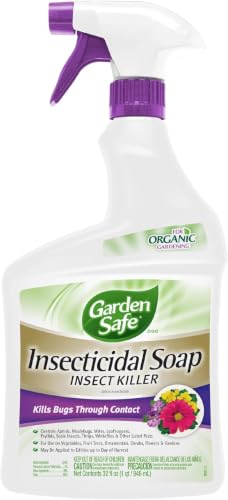
The six-pack that keeps spraying when the season turns into a siege.
This is the volume king: six 32-ounce ready-to-use bottles giving you 192 fluid ounces total of insecticidal soap. The active ingredient is Potassium Salts of Fatty Acids, and each bottle is a no-mix, no-measure grab-and-spray solution. It controls aphids, mealybugs, mites, leafhoppers, psyllids, scale insects, thrips, whiteflies, and other listed pests. It is OMRI Listed for organic gardening and can be used up to and including the day of harvest on vegetables, fruit trees, ornamentals, shrubs, and flowers. One owner who had coreopsis horribly infested with spider mites reported the bugs were dead within hours.
The downside is the spray nozzle quality. Multiple buyers report that the spray bottle nozzles are made poorly and fail before the liquid is gone — a frustrating problem when you are mid-treatment. And this product is not a universal solution: one owner with eggplant pests reported that neither this spray nor sticky traps helped at all, and they eventually turned to a different treatment. The formula is a basic fatty-acid soap with no added spinosad or essential oils, so it is most effective against soft-bodied pests and less useful against tougher chewers or fungal issues.
Best for big gardens on a budget: The six-pack gives you 192 fluid ounces of ready-to-use, OMRI Listed spray — perfect for a large vegetable patch where you want to keep a bottle in every shed and one in the house. It is effective against common soft-bodied pests and safe to use up to harvest day.
The honest frustrations: The spray nozzles are a recurring weak point — several owners mention they fail partway through the bottle. And it is a basic soap with no added active ingredients, so it cannot handle tough caterpillars or fungal issues the way the Spinosad or Trifecta picks can.
Reach for this if: you need a bulk supply of basic, organic-compliant insecticidal soap for a large garden and you are OK replacing a spray nozzle occasionally.
Look elsewhere if: you are fighting tough caterpillars or want a single premium bottle with a sturdy sprayer — the Garden Safe formula is simple and the nozzles are not built to last.
Understanding the Specs
Potassium Salts of Fatty Acids
This is the scientific name for a specific kind of soap that kills soft-bodied insects. When you spray it on an aphid or a spider mite, the soap molecules break down the insect’s waxy outer shell (the cuticle), causing it to dehydrate and die within minutes. The beauty of these salts is that they break down quickly in the environment and leave no toxic residue on your vegetables — you can wash your harvest and eat it the same day. The percentage on the label (like 0.940% or 1%) tells you how concentrated the soap is; a higher number means more killing power but also a higher risk of leaf burn on tender plants.
OMRI Listed
OMRI — the Organic Materials Review Institute — is an independent non-profit that verifies whether a product’s ingredients are allowed under USDA organic production rules. When you see the OMRI Listed seal on a bottle of insecticidal soap, it means a third party has checked the formula and confirmed it contains no synthetic pesticides, GMOs, or prohibited substances. For the home vegetable gardener, this is the simplest shortcut: you can spray an OMRI Listed product on your tomatoes, peppers, and lettuce right up to the day you harvest without worrying about violating organic practices. Not all insecticidal soaps carry this seal, so if organic certification matters to you, check for the logo on the label.
FAQ
Will insecticidal soap harm my bees or ladybugs?
Can I use insecticidal soap on the same day I harvest vegetables?
Why did my leaves turn brown after spraying?
How often should I spray for an active infestation?
Is concentrate or ready-to-use more economical for a large vegetable garden?
Will insecticidal soap kill caterpillars and tomato hornworms?
Can I mix insecticidal soap with neem oil or other sprays?
Does insecticidal soap expire or lose potency over time?
How do I spray the undersides of leaves without hurting my back?
Can I use insecticidal soap on indoor houseplants and my outdoor vegetable garden with the same bottle?
Final Thoughts: The Verdict
For most gardeners, the best insecticidal soap for vegetable gardens is the Ferti-lome Spinosad Soap because the dual-mode formula kills both soft-bodied pests AND chewing caterpillars in one OMRI Listed mix — and the crowd of 4.6-star owners confirms it works. If you are waking up to a raging aphid infestation and need fast knockdown at the best value per gallon, grab the Safer Insect Killing Soap Concentrate. And for the indoor gardener fighting mealybugs on houseplants who wants a ready-to-use no-hassle spray, the NATRIA Insecticidal Soap is the one to reach for.
How We Picked
We do not accept paid placement. Every pick is matched to a real buyer and a real use-case; we do not hands-on test units.
Sources & Methodology
Specifications: manufacturer listings and product documentation. Review insights: verified customer reviews, as of July 2026. Pricing: not shown on this page (it changes often); check the current price via the retailer link.
As an Amazon Associate, Lawn Gear Lab earns from qualifying purchases. This does not affect which products we feature.