
Specs are compiled from manufacturer listings and verified buyer reviews and can change over time — please confirm the key details on the product page before buying.
You are ready to reclaim your yard. The goal is simple — stop nosy neighbors from peering in, hide the AC unit or trash cans, and do it without a contractor or a second mortgage. The problem is that most cheap screening quickly turns into a flapping, faded, or flimsy mess that actually makes your property look worse. That is why this guide skips the filler and purely compares three fundamentally different approaches to an inexpensive privacy fence: a fabric screen that installs in minutes, a real wood panel that adds charm, and a rigid PVC enclosure that disappears utility gear.
I’m Rikta — the founder and writer behind Lawn Gear Lab. This guide is built by comparing the manufacturers’ published specifications and the patterns across verified customer reviews, so you get each pick’s real strengths and trade-offs instead of marketing spin.
You will see exactly which product is best for your specific need — full-length yard coverage, a tidy hiding spot for pool equipment, or a natural-looking backdrop — and the honest trade-off each one brings to the table.
Our Picks at a Glance
How To Choose The Best Inexpensive Privacy Fence
An affordable privacy fence can either transform your yard or become its biggest eyesore. The right choice depends entirely on what you are trying to accomplish — are you screening a full chain-link fence, hiding a single AC unit, or creating a small garden nook?
Start with Your Coverage Area and Surface
A fabric privacy screen (like the Keten roll) is the only economical option if you need to cover a long stretch of fence. A single 6ft x 50ft roll blankets an entire chain-link or welded-wire fence without needing posts or power tools. For a small, defined area — say, hiding a pool pump or propane tank — a rigid wood or PVC panel gives you structure and a finished look that fabric cannot match.
Know the Material Trade-offs
Polyethylene mesh is light, breathable, and lets air and water pass through, so it does not trap moisture against your existing fence. Wood adds natural beauty and rigidity but requires re-staining every six months to maintain its appearance. PVC (polyvinyl chloride) is waterproof, corrosion-resistant, and easy to clean, though some buyers find it feels less sturdy than wood at the same price point.
Look at the Weight and Assembly
The numbers tell the story here. The wood panel weighs 20 pounds and can be assembled in about 90 minutes with just a mallet. The PVC enclosure weighs 64.9 pounds — that is 3.2 times heavier — and includes multiple panels and a grooved slide-in system. The fabric screen weighs almost nothing and goes up with zip ties. Your comfort with assembly time and physical effort should shape your choice.
Quick Comparison
| Model | Best For | Material | Weight | Size (HxW) | Amazon |
|---|---|---|---|---|---|
| Keten 6X50FT Privacy Screen★ Best Overall | Covering long stretches of chain-link fence | Polyethylene mesh | Light (fabric) | 72in x 600in (single roll) | Amazon |
| Concord Cedar Wood Privacy Screen | Hiding utility gear with natural charm | Wood (cedar) | 20 lb | 60.5in x 38.625in (single panel) | Amazon |
| VEVOR Outdoor Privacy Screen | Enclosing AC units / pool equipment | PVC | 64.9 lb | 50in x 50in (per panel, 3 panels) | Amazon |
In‑Depth Reviews
1. Keten 6X50FT Fence Privacy Screen
Our pick — 4.5★ from 400+ verified ratings; the strongest balance of quality and price.
A 50-foot roll that turns a cyclone fence into a private wall in an afternoon.
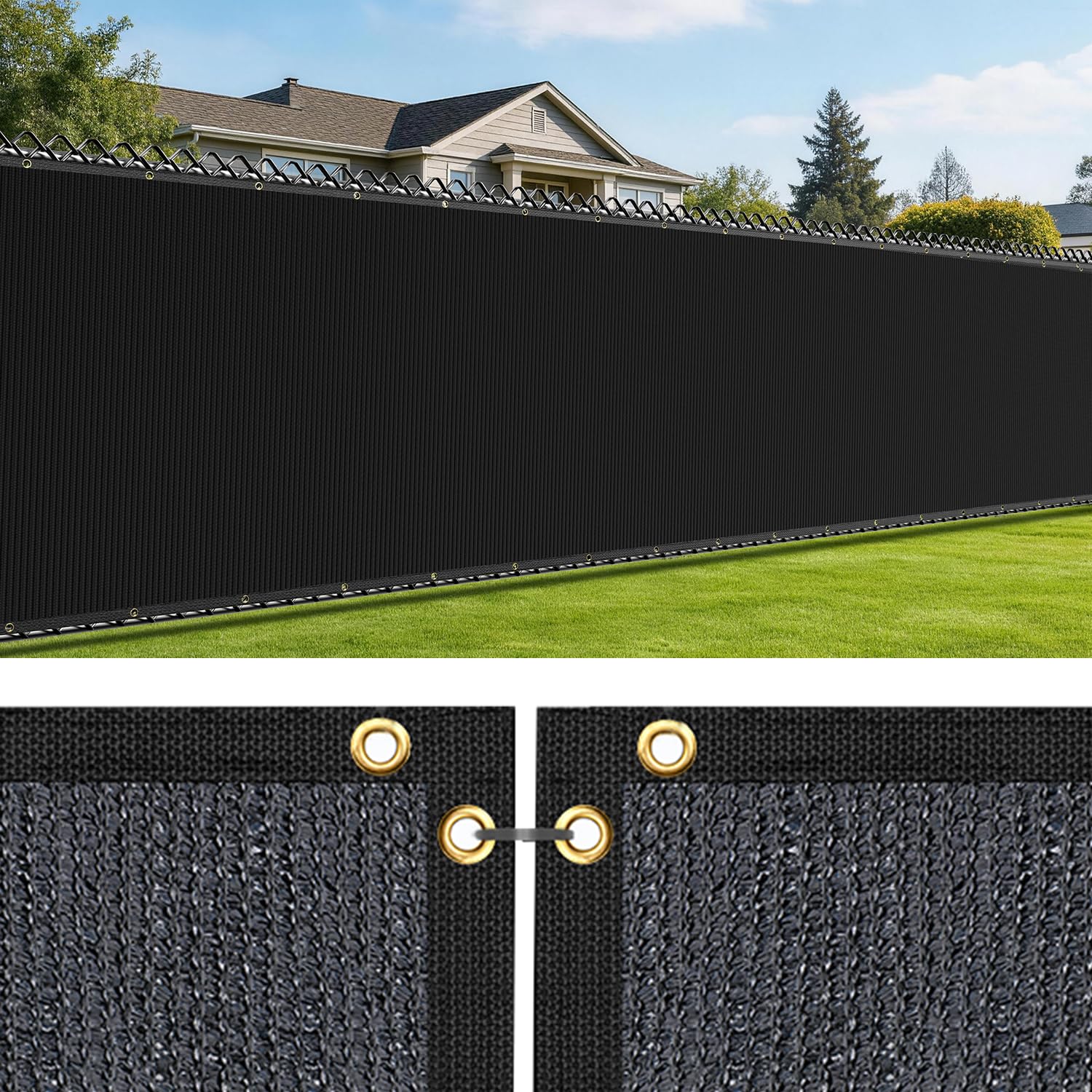
This is the straightforward fix for the most common backyard problem — a chain-link fence that offers zero privacy. The roll is 6ft high by 50ft long, enough to cover an entire side of a typical suburban yard. The polyethylene fabric is knitted at 170 GSM (grams per square meter, a measure of density), which gives it enough heft to stay put in the wind without feeling like a flimsy tarp. It is breathable, so water and air pass through, preventing mold buildup on your existing fence.
Brass grommets (small metal-reinforced holes used for fastening) are spaced 12 inches apart vertically and 24 inches horizontally, with two at every corner to stop the wind from tearing the fabric. The edges are reinforced with black double-stitched binding. Buyers confirm it blocks “most headlights” and provides “excellent privacy,” with one owner noting it “covered the full length of my cyclone fence.” The included zip ties are a mixed point — they work for most people, but a few would prefer stronger ties if you live in an area with extreme gusts.
The Smart Buy Move
- Covers 300 square feet — enough for a full yard in one package
- Breathable weave means no trapped moisture against your fence
- Brass grommets at every corner chew through wind without tearing
The Fine Print
- The included zip ties are workable but not premium
- Owners note dogs can still partly see through if that matters
Grab this if: you need to screen a long stretch of chain-link or welded-wire fence cheaply and fast.
Think twice if: you want a rigid structure that stands on its own — this attaches to an existing fence.
2. Concord Cedar Wood Privacy Screen, 5ft H x 3.2ft W

Real cedar slats that look like a permanent installation but go in with a mallet.
This is the pick if you want the look of actual wood without the hassle of digging post holes. At 5ft tall (60.5 inches) and about 3.2ft wide (38.625 inches), a single panel is the right size to hide a trash can enclosure, a propane tank, or a pool pump. The wood is FSC certified (Forest Stewardship Council, meaning it comes from responsibly managed forests), and because it is real cedar, no two boards share the same grain or knots — which beats the uniform plastic look of vinyl alternatives.
Assembly takes roughly 90 minutes using just a mallet and the included ground stakes — no digging required. The trade-off is that cedar demands maintenance: you must apply a transparent or semi-transparent exterior stain every six months to keep the wood from graying. Buyers report it is “perfect for covering our propane tanks” and praise it as “easy instructions & a cinch to put together.” The most mentioned upside is assembly (a strong 139 mentions), followed closely by appearance. Sturdiness gets 84 mentions, but the sentiment is mixed — while many call it sturdy, a minority wish it felt stiffer against heavy wind.
The honest take: This is the most attractive way to hide a small eyesore without a contractor. Just do not skip the staining schedule.
Reach for this if: looks matter most and you have one or two items to screen — AC units, trash bins, pool gear.
Look elsewhere if: you want a maintenance-free solution; cedar needs stain every six months to keep its color.
3. VEVOR Outdoor Privacy Screen, 50in H x 50in W, 3-Panel PVC
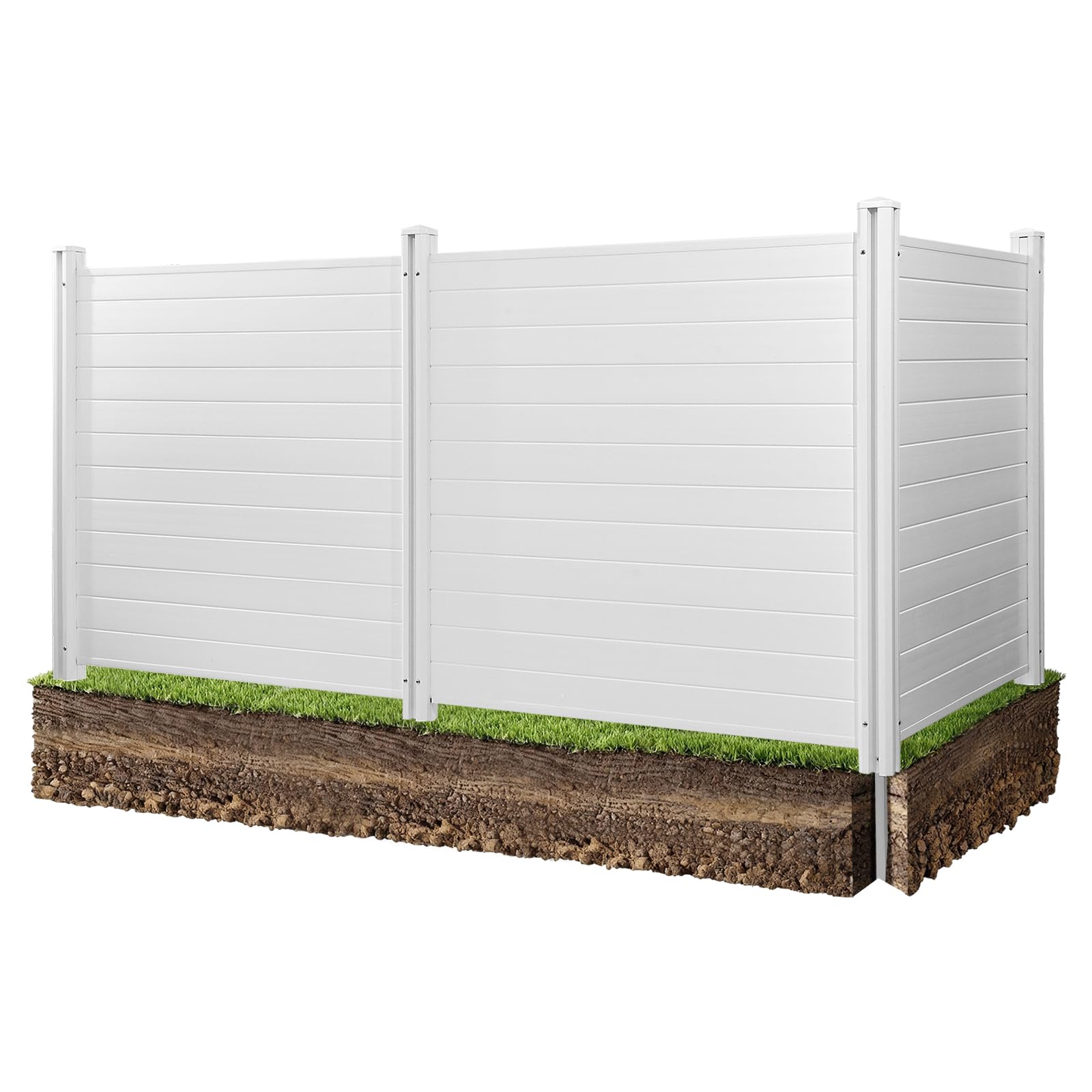
A rigid white PVC surround that makes pool equipment and AC units disappear cleanly.
This is the heaviest-duty option of the three — each of the three panels measures 50in x 50in, and the set weighs a significant 64.9 pounds. The material is premium PVC, which means it is waterproof, corrosion-resistant, and rust-resistant. Unlike iron or wood, it will not rot or flake. The 27.5-inch galvanized metal ground stakes are designed to be driven at least 20 inches into the soil, giving it real wind resistance once installed. You can arrange the three panels in an L-shape (90 degrees) to wrap around a corner or a straight line (180 degrees), and you can add more panels later to expand the coverage.
The standout feature is the slide-in grooved design — panels slide together and screw in place without any drilling. That said, assembly earns 71 positive mentions but also 22 negative mentions about the instructions. The recurring note from owners is that post measurements must be precise; a misalignment can snap the panel connectors. One buyer called it “very easy to put together” and “looks great,” while another found the instructions confusing and missing pieces. The durability aspect gets 67 mentions, split between positive and negative — some call it sturdy in strong winds, others call it fragile during installation. At roughly (based on the data), several owners feel it looks more expensive than it is, which is the common verdict.
The bottom line: When installed carefully, this is the best-looking, most weather-resistant way to disappear an AC unit or trash enclosure. Go slow during assembly — rush it and you may crack a connector.
Best for: homeowners who want a clean, HOA-friendly enclosure for pool equipment or HVAC units without digging posts.
skip it if: you are not patient with a tape measure during assembly, or you need to cover a large open fence line (choose the Keten fabric roll instead).
Understanding the Specs
GSM (Grams per Square Meter) — Fabric Density
This number tells you how tightly woven a privacy screen is. A higher GSM means a thicker, heavier fabric that blocks more light and flaps less in the wind. The Keten screen uses 170 GSM polyethylene, which owners mention is heavy enough to stay taut but breathable enough to let rain pass through. Lower-GSM screens are cheaper but tend to sag and fade faster.
No-Dig vs. Permanent Installation
“No-dig” systems use ground stakes or slide-in panels so you do not need to mix concrete or rent a post-hole digger. Both the Concord wood panel (included stake system) and the VEVOR PVC enclosure (27.5-inch galvanized stakes) fall into this category. This is a huge money-saver if you rent, move often, or just want a weekend project — but it also means the fence is less rigid than a concrete-set post fence.
Material: PVC vs. Wood vs. Polyethylene
Each material has a different job. Polyethylene mesh (the Keten screen) is lightweight, breathable, and meant to be attached to an existing structure. PVC (the VEVOR) is rigid, waterproof, and corrosion-resistant — easier to clean than wood, but heavier and more expensive. Real cedar (the Concord) offers natural beauty and aroma, but it needs a fresh coat of stain every six months to hold its color.
FAQ
How do I install a no-dig privacy screen on concrete or a hard surface?
Can I leave a polyethylene fabric screen up all year?
How many Concord wood panels do I need to hide an air conditioner?
Does the VEVOR enclosure hold up in a hurricane-level wind?
Will a fabric privacy screen stop dogs from barking at each other?
What does “90% blockage” actually mean for a privacy screen?
Can the Keten screen be cut to a custom length?
How do I clean a PVC privacy fence without scratching it?
Which of these three is the cheapest and most effective for a 100ft fence line?
Final Thoughts: The Verdict
For most buyers, the inexpensive privacy fence winner is the Keten 6X50FT Privacy Screen because it solves the biggest problem (full-yard visibility) at the lowest cost and effort. If you want real wood grain to hide a pool pump or propane tank, grab the Concord Cedar Wood Privacy Screen. And for a rigid, maintenance-free enclosure around your AC unit that passes HOA inspection, the VEVOR PVC Privacy Screen is the one to reach for.
How We Picked
We do not accept paid placement. Every pick is matched to a real buyer and a real use-case; we do not hands-on test units.
Sources & Methodology
Specifications: manufacturer listings and product documentation. Review insights: verified customer reviews, as of July 2026. Pricing: not shown on this page (it changes often); check the current price via the retailer link.
As an Amazon Associate, Lawn Gear Lab earns from qualifying purchases. This does not affect which products we feature.