
Bagged potting soil is often a gamble: too dense, riddled with fungus gnats, or packed with cheap filler that turns into concrete after a single watering. The best inexpensive potting soil cuts through that noise — delivering proper aeration, moisture control, and a pH your plants can actually use without draining your wallet on boutique brands.
I’m Rikta — the co-founder and writer behind Lawn Gear Lab. I’ve spent countless hours cross-referencing ingredient lists, particle sizes, and verified owner reports to isolate which sub- mixes genuinely deliver on drainage and nutrition for indoor and container plants.
After analyzing dozens of blends, these seven bags are the only ones I’d recommend for the best inexpensive potting soil that balances texture, feeding duration, and real value per quart.
How To Choose The Best Inexpensive Potting Soil
Shopping by price alone is a trap. The cheapest bag at the big-box store is often just shredded bark and dust that compacts within weeks. A truly cost-effective potting mix balances three things: particle size for aeration, water-holding capacity without sogginess, and a pH range suited to the plant you are growing.
Texture and Drainage: The Particle Size Rule
The most common failure of budget potting soil is a uniform, muddy texture. You want visible particles — perlite, pumice, pine bark, or coarse sand. These create air pockets that let roots breathe and prevent waterlogging. If the bag feels like fine beach sand when you squeeze it, the drainage is poor. A mix with variety in particle sizes, especially 1/8-inch to 1/4-inch bark or perlite chunks, indicates better engineering for container life.
Feeding Duration and Fertilizer Content
Many inexpensive bags include a synthetic slow-release fertilizer branded as “feeds for up to 6 months.” That can be useful for heavy feeders like tomatoes or fast-growing houseplants, but it backfires with plants sensitive to salt buildup (peace lilies, ferns). Organic mixes rely on worm castings or composted manure, which release nutrients more gently. If you prefer to control your own feeding schedule, choose an organic base without pre-added chemical fertilizer.
pH and Plant-Specific Formulations
A universal “all-purpose” mix is typically adjusted to a pH between 6.0 and 6.8, which suits most foliage plants. But African violets, for example, prefer a more acidic range (6.0–6.5) and thrive in mixes containing sphagnum peat moss and no lime. Vegetable soils often include garden lime to bump pH toward 7.0. Matching the pH to your plant type matters more with budget soils because they lack the buffering capacity of premium blends.
Quick Comparison
On smaller screens, swipe sideways to see the full table.
| Model | Category | Best For | Key Spec | Amazon |
|---|---|---|---|---|
| Coast of Maine Veggie | Organic | Tomatoes & containers | 20 quarts with composted manure | Amazon |
| Perfect Plants Indoor | Premium | Bug-free houseplants | 4 qt with pine bark & coco coir | Amazon |
| DUSPRO 7-in-1 | Specialty | Aroids & monstera | 2 qt with pumice & worm castings | Amazon |
| Miracle-Gro Indoor | Conventional | General houseplants | 6 qt, feeds for 6 months | Amazon |
| Soil Sunrise Peace Lily | Specialty | Peace lily recovery | 8 qt with sand & lime | Amazon |
| Espoma African Violet | Organic | African violets | 4 qt with yucca extract | Amazon |
| Midwest Hearth Violet Mix | Entry-Level | Budget violet repotting | 4 qt with vermiculite | Amazon |
In‑Depth Reviews
1. Coast of Maine Organic Planting Soil

Coast of Maine delivers 20 quarts of composted manure and sphagnum peat that holds moisture without becoming sludge — a rare combination at this volume. The organic compost base provides enough nitrogen for tomatoes and heavy feeders to show visible new growth within days, yet the pine bark inclusions keep drainage open enough for container use.
Multiple verified buyers mention that heirloom tomato seeds germinate faster and that the mix retains a fluffy texture even after repeated watering cycles. The only consistent complaint is that the bag can arrive with a few live gnats, which a quick neem oil drench resolves. For the price per quart, this is the most versatile organic option for anyone growing vegetables or ornamentals in pots.
The OMRI listing confirms no synthetic chemicals, and the aromatic wood content naturally deters some soil pests. If you are filling several 8-inch containers, this bag covers more ground than any other premium organic mix in this roundup.
What works
- 20-quart volume beats every competitor on cost-per-quart
- Composted manure provides immediate nutrient release
- Lightweight, fluffy consistency does not compact
What doesn’t
- Some batches arrive with fungus gnat larvae inside
- Overpriced for small single-pot repotting jobs
2. Perfect Plants Indoor Plant Soil 4qt

Perfect Plants stands apart from the cheap generic bags because it arrived completely free of fungus gnats in nearly every verified review — a claim that Miracle-Gro and some organic competitors cannot match. The mix combines pine bark, coco coir, perlite, sand, and garden lime into a light, airy texture that drains fast enough for snake plants and aloe yet retains enough moisture for spider plants and peace lilies.
Several owners specifically note that aglaonema and philodendron produce new leaves within weeks after repotting, and the bag’s resealable zipper keeps the soil fresh for months between uses. The 4-quart size is small — perfect for two or three medium pots — but the ingredients are clearly sourced and blended, not just sifted bark dust.
The only trade-off is the price per quart, which lands higher than the bulk bags from Coast of Maine or Miracle-Gro. But if your priority is a guaranteed gnat-free start, that premium is easily justified.
What works
- Zero reports of fungus gnats — rare for bagged soil
- Light, fluffy texture with excellent drainage for aroids
- Resealable bag extends shelf life significantly
What doesn’t
- Small 4-quart bag is expensive per quart
- Dries faster in plastic pots than peat-heavy soils
3. DUSPRO 7-in-1 House Plant Soil 2QRT
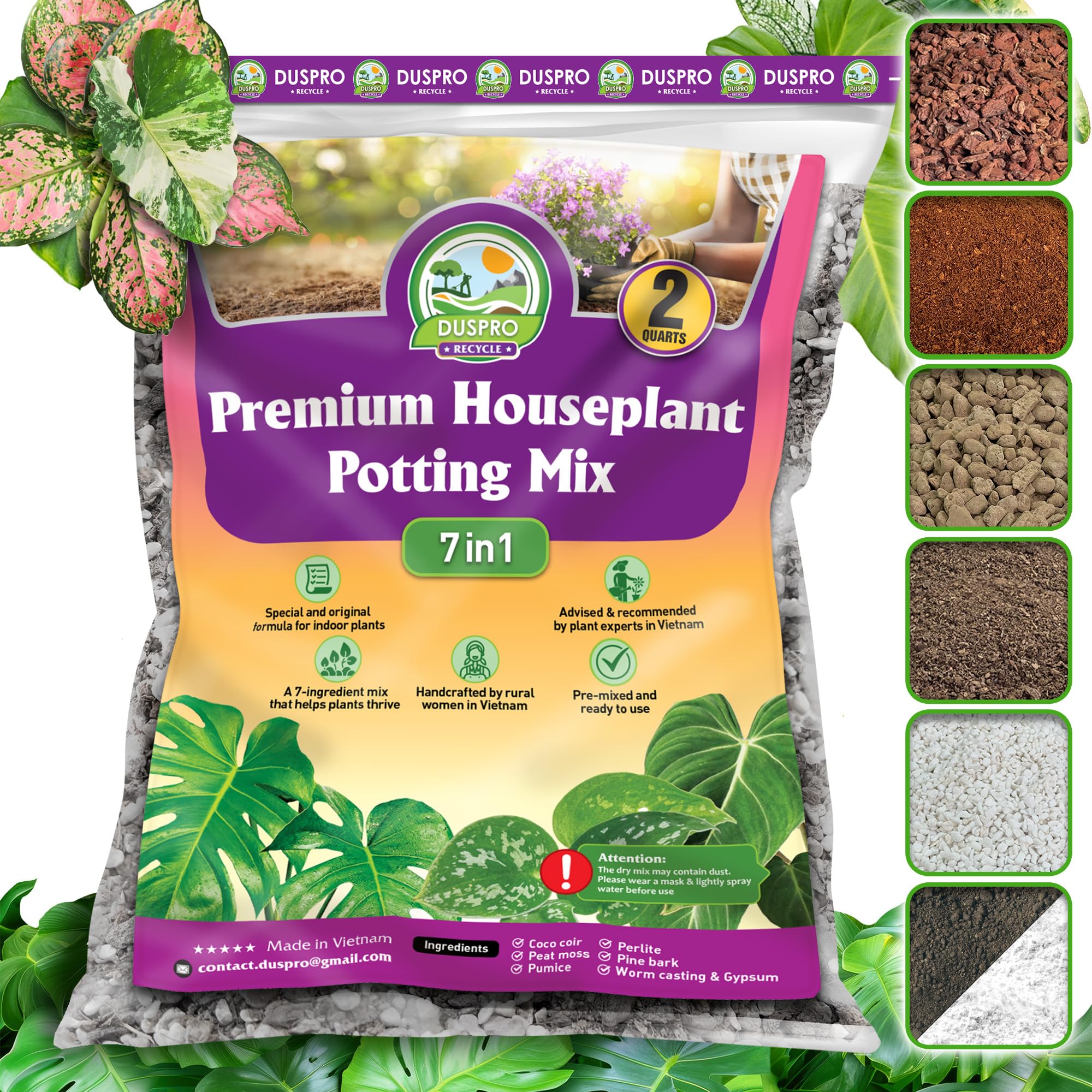
DUSPRO’s 7-in-1 blend is the chunkiest mix in this lineup, built around coco coir, peat moss, perlite, pumice, worm castings, pine bark, and gypsum. The pumice and pine bark create large air pockets that monsters and philodendrons love, while the worm castings supply a steady trickle of organic nutrients without the risk of salt burn from synthetic fertilizer.
Verified reviews consistently report that plants push out new leaves within two to three weeks of repotting, and that the soil remains mold-free for six months. The bag is noticeably dusty on first pour — misting the mix before use solves that — and the 2-quart size is best for a single large pot or a few small containers.
What sets DUSPRO apart from the Midwest Hearth or Espoma options is the presence of both pumice and perlite, which provides superior drainage for tropicals that hate wet feet. If you are repotting aroid plants like philodendron or monstera, this is the most effective inexpensive mix for that specific use case.
What works
- Pumice + perlite provides superior aeration for aroids
- Worm castings feed gently without synthetic chemicals
- No mold or mildew reported after months of use
What doesn’t
- Very dusty on first pour — needs misting before use
- Only 2 quarts, not cost-effective for large plantings
4. Miracle-Gro Indoor Potting Mix 6qt (2-Pack)
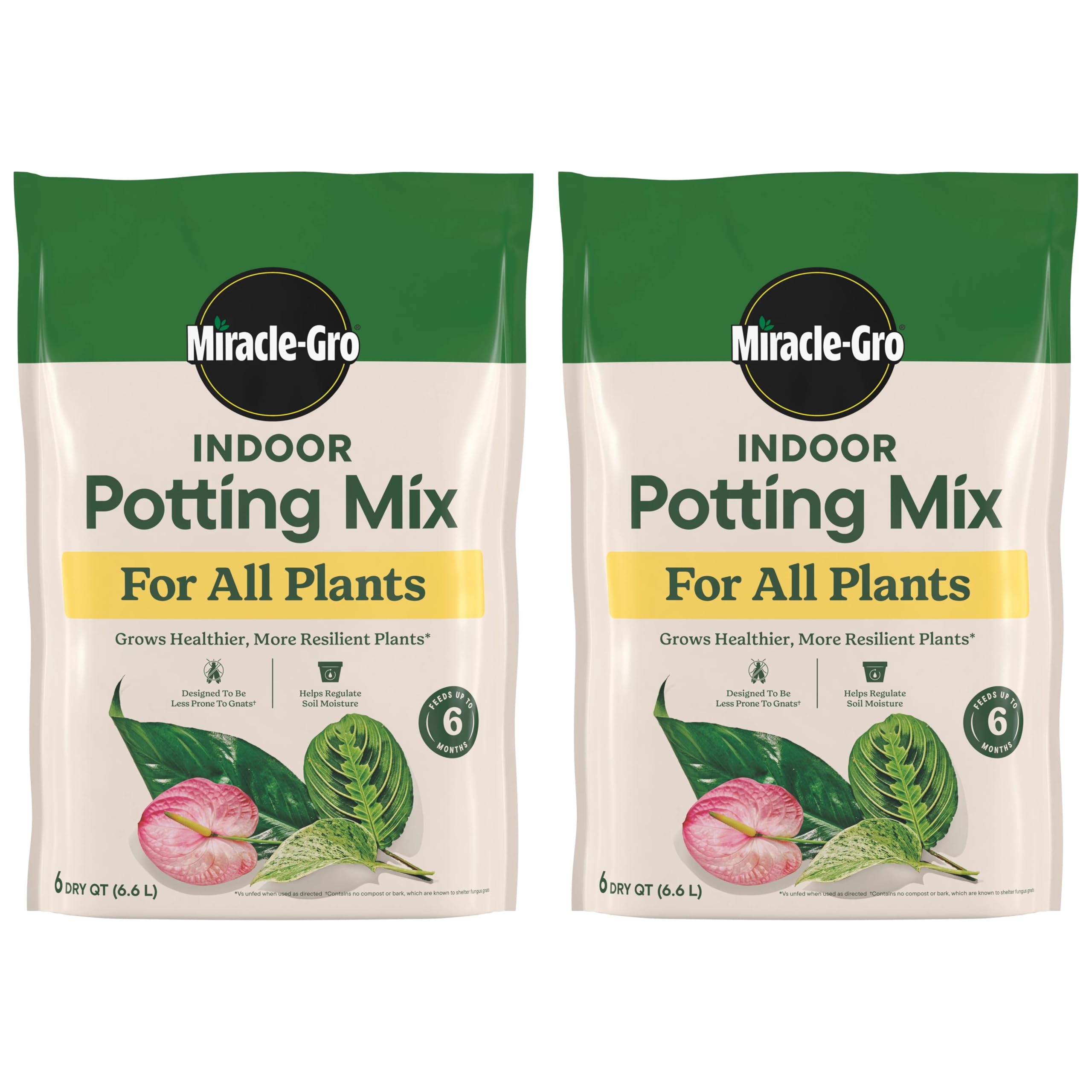
Miracle-Gro’s Indoor formula is the most widely available inexpensive potting soil for a reason: it works reliably for general houseplants without the clumps, sticks, or bark chunks that plague cheaper all-purpose soils. The blend of sphagnum peat moss, coconut coir, and perlite creates a consistent texture that drains well while retaining enough water for ferns and pothos. The synthetic fertilizer feeds for up to six months, eliminating the need for liquid feeding in that period.
Reviews overwhelmingly praise the predictable performance — plants settle in quickly and look greener within a week. The main downside is the dust: multiple users report that the mix is noticeably dusty when poured, and the 6-month fertilizer can cause leaf burn on sensitive plants like succulents unless you mix in extra sand or perlite.
The two-pack is the smart buy if you have multiple pots to fill. At roughly six quarts per bag, you can fill eight 4-inch containers per bag, making it the most economical option for large-scale repotting.
What works
- Feeds plants for six months — no extra fertilizer needed
- No compost or bark means fewer fungus gnat carriers
- Light, consistent texture works for most houseplants
What doesn’t
- Dusty pour can be irritating during repotting
- Too wet for succulents and cacti without amendment
5. Soil Sunrise Peace Lily Potting Soil 8qt
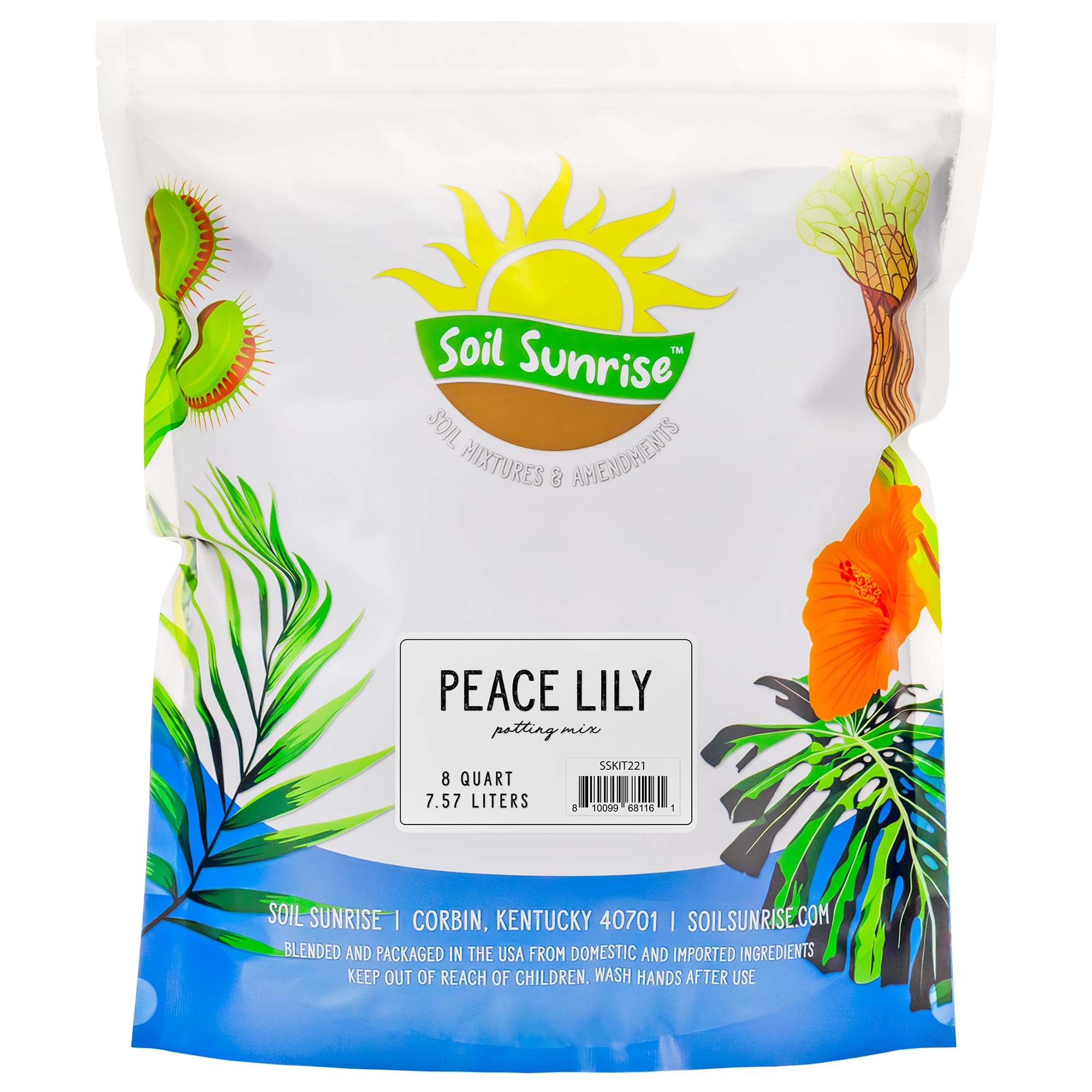
Soil Sunrise formulates this mix specifically for Spathiphyllum, combining pine bark, peat moss, perlite, sand, and lime to hit the pH and drainage balance peace lilies need. The sand and bark create enough coarse structure to prevent root rot, while the peat moss retains the consistent moisture peace lilies demand. Multiple reviews report that dying plants revived with new sprouts within weeks after repotting.
The 8-quart bag is generous for the price, roughly double the volume of similar specialty mixes from Espoma or Midwest Hearth. However, several owners note that the bag feels small relative to the cost — this is a premium-priced soil for a specific plant, not a value bulk buy.
Unlike many specialty soils, this one arrives without heavy synthetic fertilizer, giving you control over feeding. That makes it a solid choice for anyone who wants to avoid pre-mixed nutrients while still getting a substrate tailored to peace lily physiology.
What works
- Sand and lime provide ideal pH for peace lilies
- No synthetic fertilizer — you control the feeding
- Light, airy texture revives root-bound plants quickly
What doesn’t
- Expensive per quart compared to all-purpose soils
- Only useful for Spathiphyllum and similar plants
6. Espoma Organic African Violet Mix 4qt

Espoma’s African Violet mix is a rich blend of sphagnum peat moss, humus, perlite, and yucca extract that consistently revives neglected violets. Verified owners report that 20-year-old plants that had not bloomed in months put out fresh flowers within weeks after repotting. The yucca extract acts as a natural wetting agent, improving water penetration without compacting the peat.
The 4-quart bag is the smallest volume in the review, and at the price point it is clearly aimed at dedicated violet growers rather than general use. That said, the ingredients are organic and free of synthetic chemicals, and the company has been a reliable name in natural organics since 1929.
If you have a collection of African violets or similar Gesneriads, this mix is the most effective low-cost option for encouraging consistent flowering. Just be aware that the bag only covers about four 4-inch violet pots.
What works
- Yucca extract improves water distribution in dry peat
- Revives old violets and triggers rapid blooming
- 100% organic with no synthetic fertilizer
What doesn’t
- Only 4 quarts — expensive for larger collections
- Not suitable for general houseplants or aroids
7. Midwest Hearth African Violet Natural Potting Soil 4qt

Midwest Hearth keeps it simple: peat moss, perlite, and vermiculite blended at a pH controlled specifically for African violets. The vermiculite adds water-holding capacity that the perlite alone cannot match, making this a good choice for growers who tend to underwater. Multiple reviews mention that miniature violets recovered and started blooming after repotting, and the texture is noticeably soft and light without large bark pieces.
Where this mix falls short is the cost-per-quart. While it is the cheapest bag in the absolute price, the 4-quart volume means you are paying a higher rate per quart than the Espoma product. Several owners explicitly say it is “pricey” for the amount delivered, though they acknowledge the quality is solid.
For a single violet repotting or a small collection, this is a fine entry-level choice. But if you need to repot several plants, the Espoma or Soil Sunrise bags offer better value for a similar price.
What works
- Vermiculite retains moisture better than plain peat
- pH balanced specifically for African violets
- Soft, light texture with no large bark chunks
What doesn’t
- High cost per quart for only 4 quarts
- Not versatile — only useful for Gesneriads
Hardware & Specs Guide
Peat Moss vs. Coco Coir
Peat moss is cheaper and retains water longer, but its harvesting is environmentally destructive and it repels water when dry. Coco coir rehydrates instantly and has better air-filled porosity, but it adds almost no nutritional value. Inexpensive mixes often use peat as the primary base to keep cost down, while premium budget blends include coir for consistency. If you tend to underwater plants, choose a peat-heavy mix; if you overwater, coir-based formulas dry faster.
The Role of Perlite and Pumice
Perlite is the white popcorn-like volcanic glass that improves drainage and aeration. Inexpensive soil often contains small-grade perlite that breaks down after a year. Pumice is heavier, lasts longer, and does not float to the surface, but it costs more. Budget mixes with both perlite and pumice (like DUSPRO) offer the best long-term aeration, but bagged soils with only perlite are perfectly fine for annual repotting cycles.
FAQ
Can I use inexpensive potting soil for succulents and cacti?
How do I prevent fungus gnats from bagged potting soil?
Does pre-fertilized soil really feed plants for six months?
Final Thoughts: The Verdict
For most gardeners, the best inexpensive potting soil winner is the Coast of Maine Organic Planting Soil because it delivers 20 quarts of compost-enriched organic mix at a lower per-quart cost than anything else in this guide. If you want a guaranteed gnat-free mix for houseplants, grab the Perfect Plants Indoor Soil. And for repotting fussy aroids like monstera, nothing beats the chunky aeration of the DUSPRO 7-in-1.