
Specs are compiled from manufacturer listings and verified buyer reviews and can change over time — please confirm the key details on the product page before buying.
The problem with cheap garden edging is that it usually looks cheap — thin plastic that buckles, fades, or pops out after one rain. You want a crisp, tidy border that keeps mulch in and grass out, without spending a fortune or fighting with flimsy materials. The trick is knowing which materials and designs actually hold up over a season (or two).
I’m Rikta — the founder and writer behind Lawn Gear Lab. This guide is built by comparing the manufacturers’ published specifications and the patterns across verified customer reviews, so you get each pick’s real strengths and trade-offs instead of marketing spin.
Every option here is affordable enough to leave you with cash left over for plants, and durable enough to justify the time you spend installing it. This is the straight truth on the best inexpensive garden edging available right now.
Our Picks at a Glance

How To Choose The Best Inexpensive Garden Edging
You can get garden edging that stays straight and looks good without spending a lot. The key difference between a smart buy and a waste of money depends on three things: the material, how you install it, and the stakes that hold it in place.
Material: Plastic, Metal, or Resin
Plastic edging (usually HDPE or PE) is the lightest and cheapest, but thickness matters — look for at least 2.5mm if you want it to hold a curve without buckling. Metal edging (galvanized steel) costs a little more but resists rust (especially with a coating) and stands up to string trimmers. Resin edging that mimics stone or brick offers the best looks without the weight of real masonry, but it can feel pricey per foot.
Stakes: The Real Weak Link
A 40-foot coil of edging is useless if the stakes snap when you hammer them in. Plastic stakes break often — look for metal or nylon spiral stakes if you have hard or rocky soil. Many kits include just enough stakes for a straight run, so budget for extras when you are building curves.
Height: What You See vs. What You Bury
A 4-inch tall edging strip sits about 2 inches above ground after you bury the bottom lip. That is fine for keeping mulch in place and marking a visual boundary. But if you need to stop aggressive grass roots (like bermuda), you want at least 6 inches of height so the buried portion is deep enough to block roots from spreading.
Quick Comparison
| Model | Best For | Material | Length | Height | Amazon |
|---|---|---|---|---|---|
| Beuta Landscape Edging★ Best Overall | Realistic stone look | Resin | 48″ per section | 4″ | Amazon |
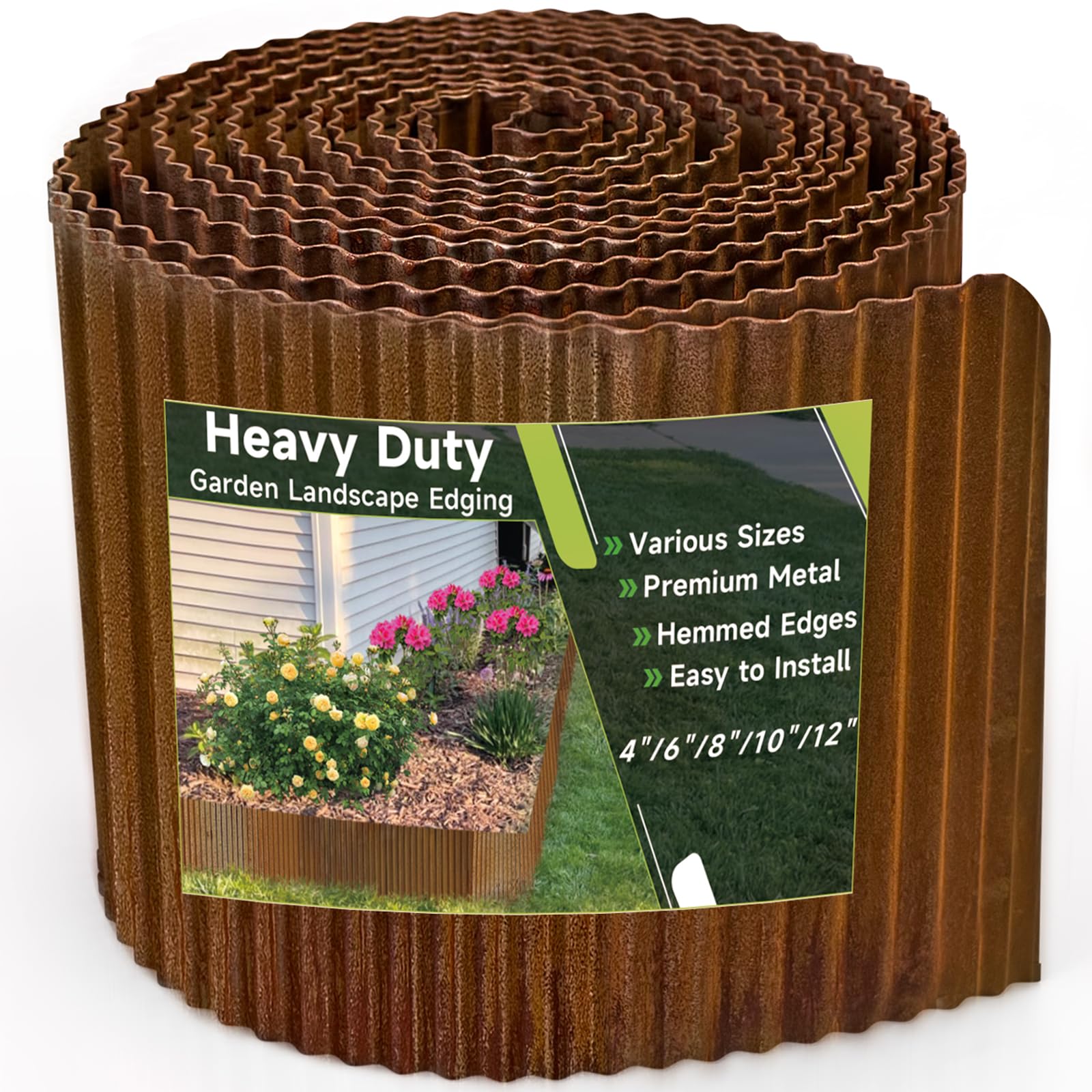
| Corrugated Garden EdgingBest Root Barrier | Aggressive root barrier | Metal | 40 ft | 6″ | Amazon |
| Master Mark Terrace Board | Long straight runs | HDPE Plastic | 40 ft | 4″ | Amazon |
| Land Guard Corrugated Edging | Maximum coverage per dollar | Metal | 50 ft | 6″ | Amazon |
| FunFanso Landscape Edging Kit | No-dig white border | PE Plastic | 40 ft | 5″ | Amazon |
| Anleolife Landscape Edging | Thick root barrier | Plastic | 40 ft | 5″ | Amazon |
| shsyue Garden Edging | Extra-long coverage with many stakes | HDPE | 66 ft | 4″ | Amazon |
In‑Depth Reviews
1. Beuta Landscape Edging
Our pick — over 4.5★ from 900+ verified ratings; the strongest balance of quality and price.
Each six-brick section looks convincingly like real cut stone, yet weighs just 10.4 ounces.
What wins people over is the appearance — this is the edging that makes visitors ask “where did you get those stones?” The resin bricks come in 48-inch sections that interlock, so you can form curves or straight lines without any visible seam. Three spikes per six-brick piece keep it anchored, and buyers report it holds its shape through all seasons in every climate. Installation is a breeze: you set it in a shallow trench, tap it level, and backfill. The top sits 2.25 inches tall, which gives a clean visual boundary for flower beds and pathways without looking obtrusive.
Compared to the rolled plastic options below, the Beuta demands a bit more prep work (you need a straight trench), but the payoff is a finished edge that does not look like a spool of garden hose. The crowd favorite here — nearly a thousand owners back it — and the most-discussed praises center on how natural it looks. The single trade-off is the per-section cost: if you are edging a very long run (say, 60 feet or more), the total adds up faster than a continuous coil edging.
The Real- Stone Look
- Realistic sandstone finish fools the eye from a few feet away
- Lightweight at 10.4 ounces per section — easy to carry and position
- Interlocking design keeps sections aligned even after freeze-thaw cycles
The Honest Catch
- More expensive per linear foot than coil-style plastic edging
- Requires a level trench for the best finish — not a true no-dig product
Best for: Anyone who wants the high-end masonry look without hauling real stones — perfect for front-yard flower beds and visible garden borders where appearance matters most.
Think twice if: You are edging a very large lawn on a tight budget and just need a basic grass barrier; a coiled plastic option will cover more ground for less money.
2. Corrugated Garden Edging (GTSABWAY)
At 8 inches tall, it is the only option owners trust to keep bermuda grass roots out of flower beds.
You get 40 feet of galvanized steel that arrives with a pre-rusted patina — the rustic orange-brown look that blends into garden soil and develops deeper color as it ages. The metal is thick enough to feel substantial, but flexible enough to bend into curves without cracking. Installation involves wetting the soil or digging a shallow trench, then pushing the edging in by hand or tapping it with a rubber mallet. Owners mention that the 6-inch version keeps out aggressive rhizome roots like bermuda grass, provided you run the string trimmer along the outside edge periodically.
This is a noticeably heavier product than the plastic coils — 5.39 kilograms — so you feel the quality when you unroll it. The rounded rolled top edge means no sharp metal, a detail owners appreciate during installation. The thing everyone raves about is the clean, modern line it creates, especially for raised beds and gravel pathways. The trade-off: a few owners note the pre-rusted finish can vary in color from one production batch to another, so if you buy multiple rolls, inspect them together before installing.
Tank-Like Build
- Galvanized steel with rolled safety edges — no sharp burrs
- Pre-rusted patina looks intentional and ages gracefully
- 6-inch height gives real root-barrier depth when buried
What to Watch For
- Pre-rusted finish can vary slightly between rolls
- Heavier than plastic — expect to use a mallet for installation
Reach for this if: You are fighting invasive grass or need a sturdy, permanent-looking border that can take a hit from a weed trimmer.
Look elsewhere if: Your soil is extremely rocky or you want a bright, painted finish — the pre-rusted look is deliberately weathered.
3. Master Mark Terrace Board
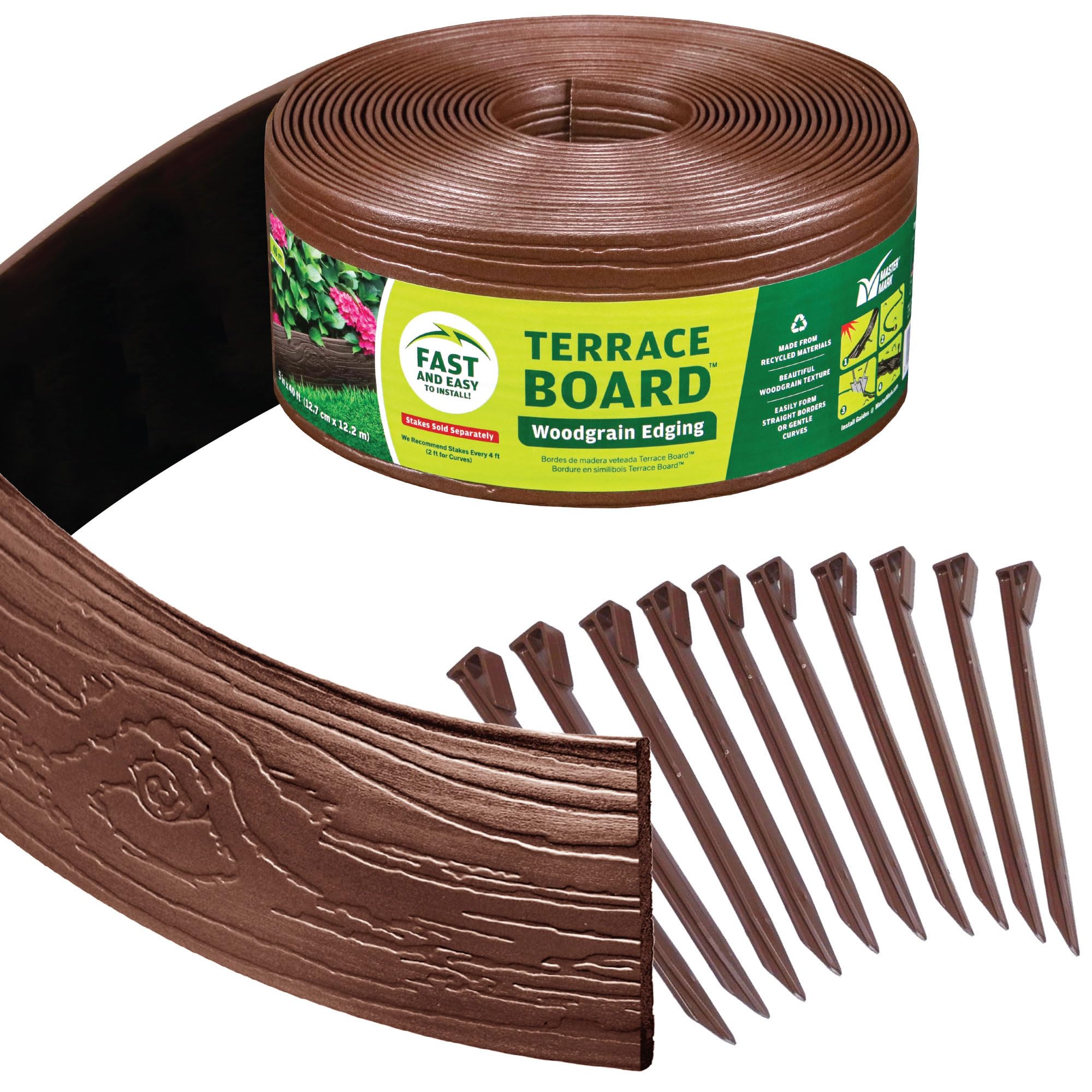
The coiled plastic strip that is cheaper per foot than almost anything else, yet holds up season after season.
Forty feet of 4-inch-tall HDPE plastic with a textured wood-grain finish, this is the old reliable of low-cost garden edging. The plastic is about 5/32-inch thick — not flimsy, but not stiff enough to hold a perfect straight line without stakes every few feet. The trick owners share is leaving it in the sun for about an hour before installation; heat removes the coil memory and makes it lie flat. Ten stakes come in the box, but buyers almost universally agree you need to buy a second pack if you are building curves — the included stakes are spaced for a straight run.
Compared to the Beuta resin sections above, the Master Mark covers more ground (40 feet vs. 4 feet per section) at a fraction of the cost per foot. The trade-off is appearance — it looks like a plastic board, not like stone. But for separating a vegetable garden from the lawn, or for a long straight edge along a driveway, it does the job without complaint. The most-discussed praise is how easy it is to install: dig a narrow trench, bury the bottom lip, and hammer the stakes. The manufacturer is a midwest company with over 50 years in lawn and garden products, which shows in the consistent quality.
Straight Shooter: This is the pick for long, straight borders where you care more about function than looks. Extra stakes are a must if you have curves.
Get it for: Large areas, vegetable beds, or anywhere you need a lot of edging on a strict budget. The color can vary slightly between production batches, so unroll rolls together before installing a continuous run.
4. Land Guard Corrugated Garden Edging
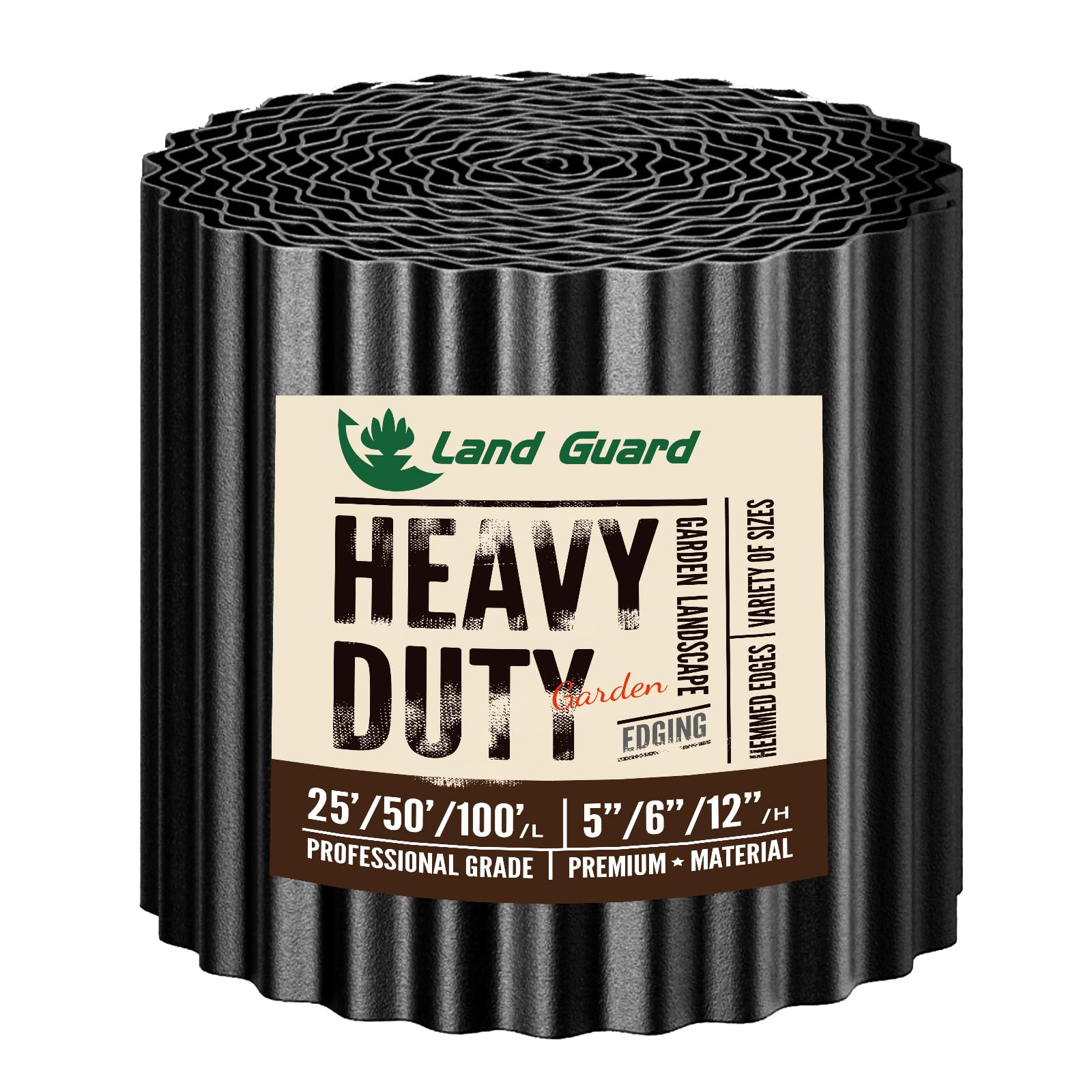
A full 50 feet of black corrugated steel — the longest single-roll metal option in this list — for about the same price as the 40-foot rolls.
This edging gives you ten extra feet of coverage compared to the GTSABWAY above, and it uses a 3D ripple design that adds structural stiffness so it holds its shape in the ground. The black coating resists rust and stays looking fresh, unlike the pre-rusted finish of product 2. Owners praise how sturdy it feels — one called it “heavy duty” for the price — and the installation follows the same trench-and-tap method. You can cut it with aviation shears for custom lengths quickly.
The honest difference between this and the GTSABWAY depends on aesthetics: this one is black and modern, the other is rustic and weathered. The 50-foot length makes it the most economical per-foot metal option here, and the black finish hides soil splashes well. A few owners note the coating can scratch during installation if you are not careful, but the underlying galvanized metal still resists rust. The strongest praise centers on the value: you get metal sturdiness for just a few dollars more than cheap plastic coils.
Budget Metal Winner: More feet, less money, black finish that blends into most landscapes. Not as visually striking as pre-rusted, but more versatile for modern garden designs.
Grab this for: Straight runs and gentle curves where you want maximum length per dollar and a clean, modern black line. The corrugated design adds strength that plain flat metal lacks.
5. FunFanso Landscape Edging Kit
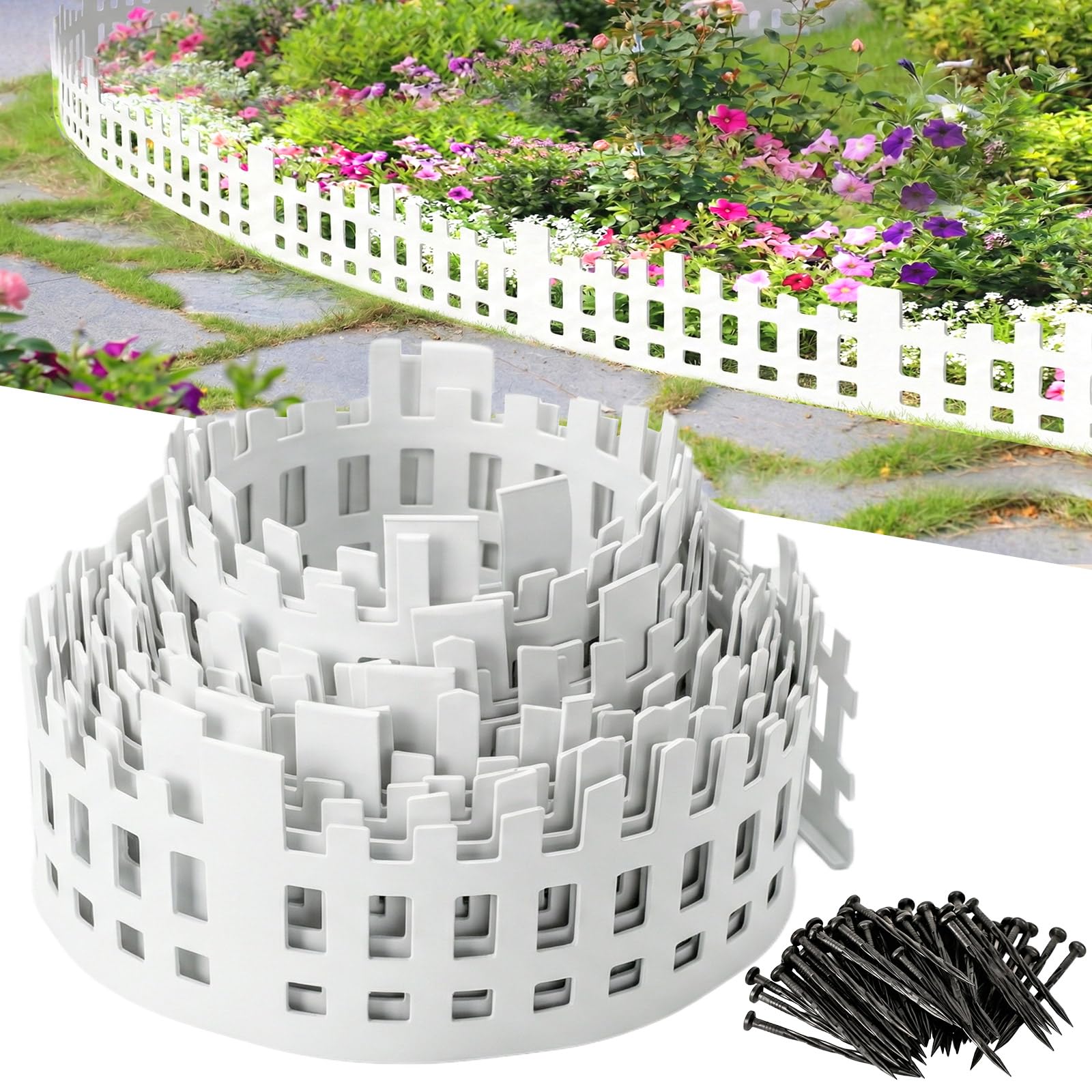
White plastic edging that requires no digging — just hammer the stakes and go — making it the fastest install in the roundup.
The standout spec here is the 72 stakes included in the box — far more than any other option. That means you can secure every few inches along curves without buying extras. The 5-inch tall white border creates a crisp, clean line that stands out against dark soil and green grass, making it a popular choice for front-yard pathway borders and cottage-style flower beds. The PE plastic is flexible enough to bend into tight curves, and owners consistently say the no-dig installation was a lifesaver for weekend projects.
The recurring weakness is the stakes themselves: many customers note that the plastic stake tips break off when hammered into hard or dry soil. The advice that emerges from the review pages is to pre-drill holes with a metal stake or a screwdriver before driving the stakes. For soft loamy soil, they work fine right from the start. The quality of the edging strip itself draws strong praise — it is thicker than bargain-bin edging and holds its shape well once staked. If you love the crisp white farmhouse look, this is the affordable way to get it, but factor in a little extra effort for the stakes.
Speedy Setup
- No trenching — just position and hammer stakes
- 72 stakes included — enough for tight spacing along a 40-foot run
- White finish brightens garden beds and pathways
Know Before You Install
- Plastic stake tips can snap in hard soil — pre-drilling helps
- White shows dirt splashes more than black or brown edging
Reach for this if: You want a fast weekend project with a bright, clean border and you have soft soil. The included stakes are generous enough for curves.
Think twice if: Your ground is rocky, heavy clay, or full of tree roots — you will likely break stakes during installation.
6. Anleolife Landscape Edging
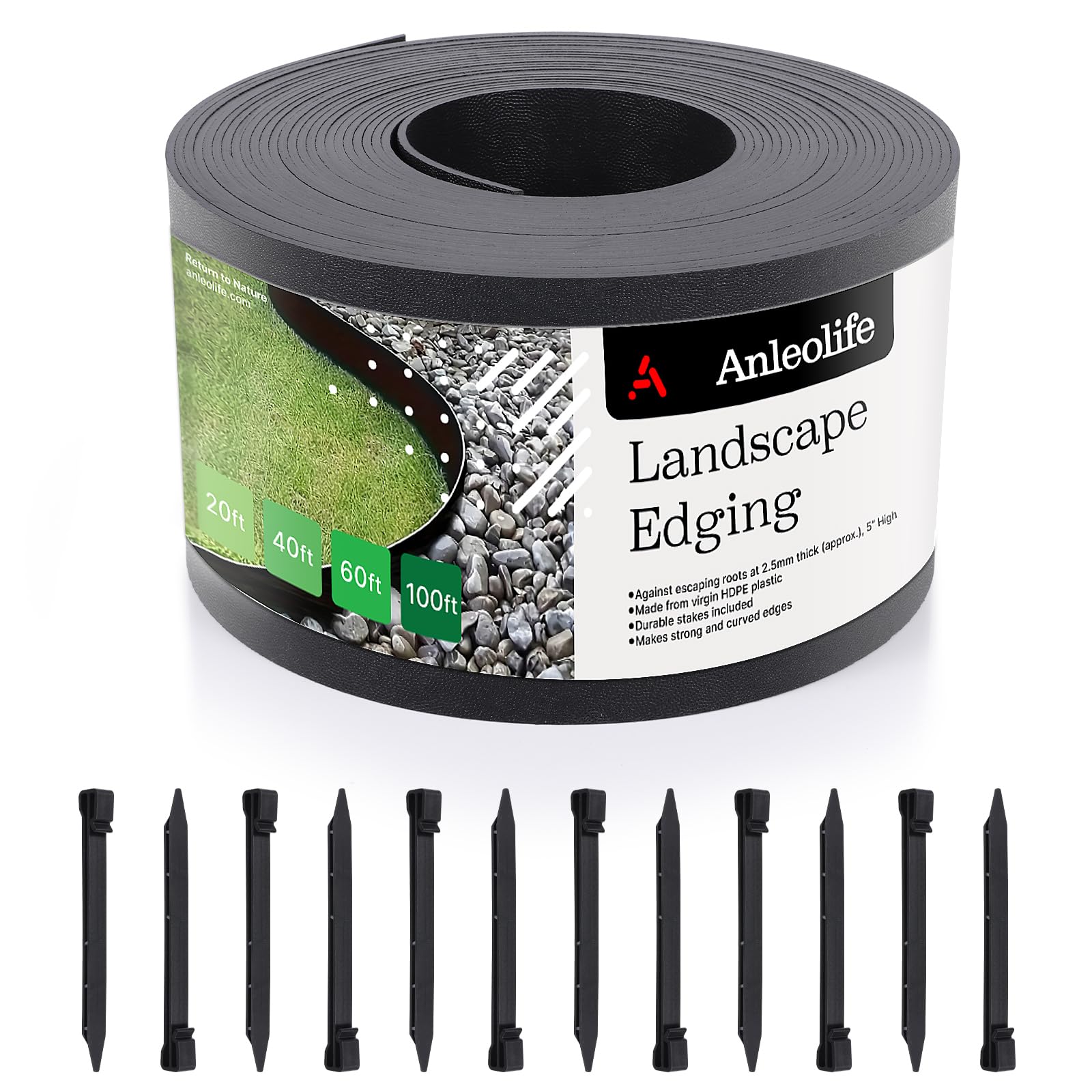
At 2.5mm thick, this is the beefiest plastic edging in the lineup — built to stop roots and hold curves without sagging.
Most plastic edging is around 1.5mm to 2mm thick. The Anleolife jumps to 2.5mm, which makes it noticeably stiffer and more resistant to buckling. The 5-inch height gives a solid root barrier for flower beds, and the matte black finish disappears into the soil so you notice the border, not the material. The included 12 stakes feel adequate for a straight line, but owners note that one of the stakes sometimes arrives broken, and the edging’s stiffness makes it harder to hold tight curves without more stakes than the box provides.
The advice from experienced owners is to let the coil warm in the sun for a full day before you try to shape it — that softens the plastic just enough to form smooth curves. For straight lines, the thickness is an advantage: it does not wave or ripple like thinner plastics. The biggest complaint is the stakes: plastic ones break under a mallet, and several owners resorted to zip-tying the edging to existing fences instead. Go in expecting to buy metal stakes separately if your soil is hard, and you will get a very solid plastic barrier that lasts.
Plastic Heavyweight: The thickness is real and it makes a difference in durability. The stakes are the weak point, so plan for replacements.
Best for: Straight borders where you want the thickest plastic available to keep out shallow roots. Warm the coil before bending for curves.
Not ideal for: Tight, intricate curves on a large project — you will need extra stakes (and stronger ones) to hold the shape.
7. shsyue Garden Edging Borders
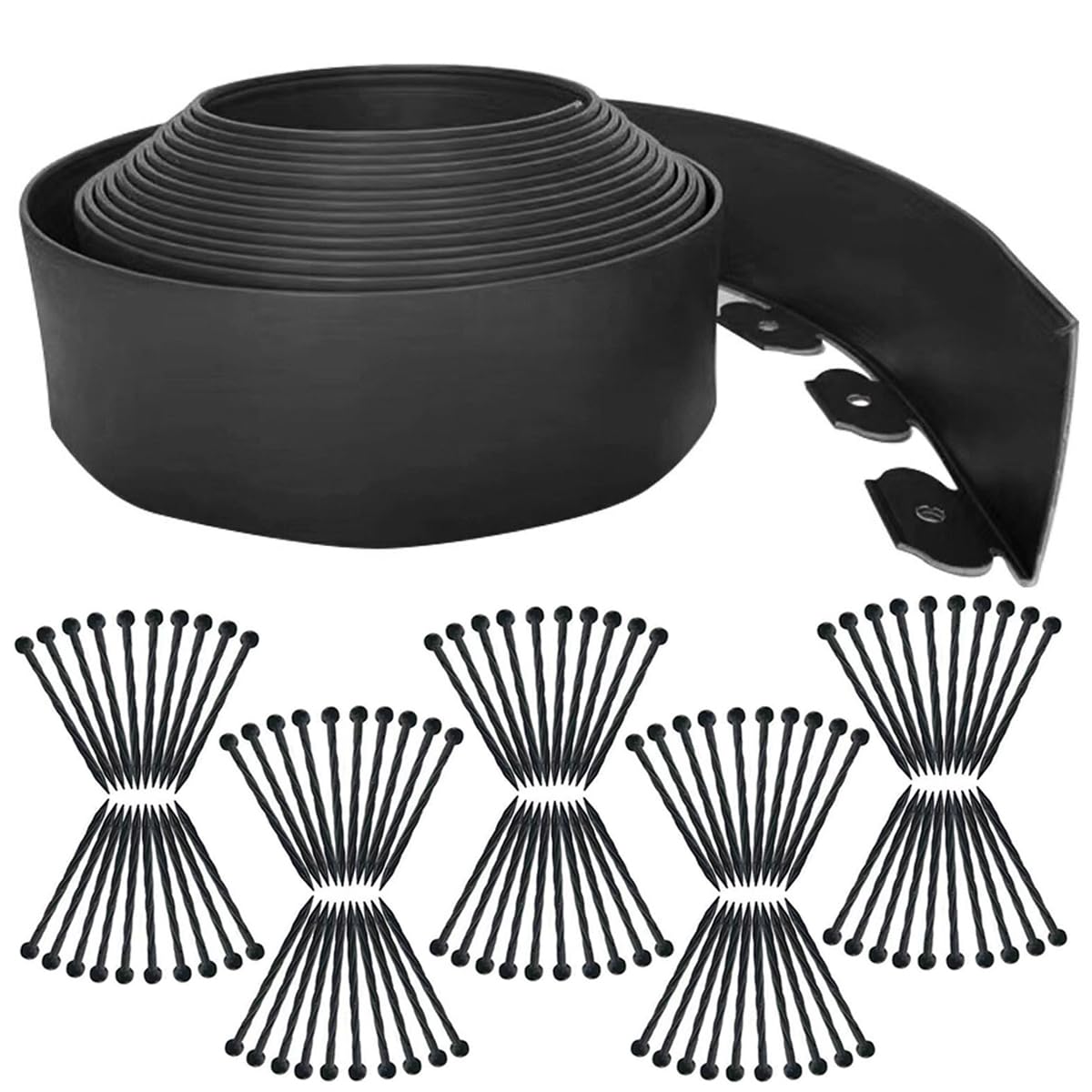
Sixty-six feet of edging with 100 spiral stakes — enough coil to wrap around a substantial garden without buying a second roll.
The length is the headline: 66 feet of 4-inch-tall HDPE edging. That is 50% more coverage than the standard 40-foot rolls, and the 100 included spiral stakes are a real upgrade over flat plastic stakes. Spiral (auger-style) stakes grip the soil much better in loose or sandy ground and are less likely to snap when driven in. The no-dig installation — just position and stake — works on most soil types, including uneven or sloping ground, as long as you follow the instructions.
Owners consistently say the edging itself is easy to work with and creates a clean, organized look around trees and flower beds. The material is flexible enough for curves, and the black color stays looking neat. The mixed feedback centers on the thinness of the plastic — some buyers find it sturdier than they expected, while others call it cheap-feeling for the price. The stakes, while better than flat plastic ones, can still break if you hammer them straight down into rocky soil; pre-drilling is again the solution. For the sheer coverage and the 100 spiral stakes, this is the best value if you have a large perimeter to edge.
Massive Coverage
- 66 feet — edges a large garden without a second roll
- 100 spiral stakes included, which grip better than flat stakes
- No-dig installation works on uneven and sloping ground
One Reality Check
- Plastic stakes can snap in hard soil despite the spiral design
- Material feels thinner than some owners expect for the price
Get it for: Large flower-bed perimeters or long property-line borders where a single 66-foot roll saves you from buying and joining two separate coils.
skip it if: You want a heavy-duty plastic that feels dense — the Anleolife at 2.5mm is substantially thicker for a similar total cost over a shorter run.
Understanding the Specs
Height vs. Buried Depth
Garden edging is often listed at its full height (say, 6 inches), but you bury about 2 inches of that in the ground. So a 6-inch edging gives you roughly 4 inches visible above the soil line. If you need to block creeping grass roots, aim for at least 6 inches of total height — the buried portion acts as a deeper root barrier. For simple decorative separation, 4 inches is usually enough.
Material: Thickness & Coatings
Plastic edging thickness is measured in millimeters — 1.5mm is bargain-basement; 2.5mm feels substantial and holds curves better. Metal edging is typically galvanized steel (zinc-coated to resist rust) or pre-weathered with a patina. A painted or coated finish on metal adds another layer of corrosion protection, but scratches can expose bare metal. Resin or composite edging mimics stone or wood but is lighter than real masonry — look for a UV-stabilized material if it gets full sun.
FAQ
How do I keep plastic garden edging from buckling in summer heat?
Can I install garden edging without digging a trench?
What is the best height for keeping mulch in flower beds?
Are metal garden edging and plastic edging installed the same way?
How many stakes do I really need for a 40-foot run?
Will plastic edging crack in freezing winter weather?
How do I cut metal garden edging to a custom length?
Can garden edging stop tree roots from growing into flower beds?
Will white garden edging fade in the sun?
How do I join two sections of edging together?
Final Thoughts: The Verdict
The honest bottom line: the inexpensive garden edging that delivers the most curb appeal for the effort is the Beuta Landscape Edging because it genuinely looks like real stone without the weight or the cost. If you are fighting invasive grass and want a permanent metal barrier, grab the GTSABWAY Corrugated Edging. And for the largest perimeter on a tight budget, the Land Guard 50-foot metal roll gives you the most coverage per dollar.
How We Picked
We do not accept paid placement. Every pick is matched to a real buyer and a real use-case; we do not hands-on test units.
Sources & Methodology
Specifications: manufacturer listings and product documentation. Review insights: verified customer reviews, as of July 2026. Pricing: not shown on this page (it changes often); check the current price via the retailer link.
As an Amazon Associate, Lawn Gear Lab earns from qualifying purchases. This does not affect which products we feature.