
Specs are compiled from manufacturer listings and verified buyer reviews and can change over time — please confirm the key details on the product page before buying.
Fixing a ragged flower bed border usually means a choice between a flimsy plastic roll that pops up after one rain, or a metal option that costs a small fortune. The good news is that in 2025, you can get a clean, defined edge—the kind that makes the whole yard look intentional—without spending big. The trick is knowing which material and installation method fits your specific soil, how much curve you need, and how much abuse the edging will take from a mower or a dig-happy dog.
I’m Rikta — the founder and writer behind Lawn Gear Lab. This guide is built by comparing the manufacturers’ published specifications and the patterns across verified customer reviews, so you get each pick’s real strengths and trade-offs instead of marketing spin.
You want to keep your mulch in the flower bed and your grass out of it, without spending a lot. These nine budget-friendly options are the most reliable ways to do that, and each one is a candidate for the title of the very best inexpensive flower bed edging you can buy right now.
Our Picks at a Glance


How To Choose The Best Inexpensive Flower Bed Edging
Your choice depends on two things: how much visual pop you want and if you need a physical barrier against invasive roots (looking at you, bermudagrass). A low-profile plastic strip is great for a simple lawn-to-mulch separation. A taller metal or rigid plastic border actually blocks rhizomes (underground stems that spread sideways) from sneaking under your plants. Also consider installation: no-dig options (just pound stakes in) are much faster than edging that requires you to dig a trench and backfill.
Height Matters More Than You Think
Anything 2 inches or shorter is basically a visual guide—it will hold mulch in place, but grass roots will crawl right under it. For a true barrier, look for edging that is at least 4 inches tall. If you are seriously battling bermudagrass or other aggressive spreaders, you want a 6-inch or 8-inch option that sits deep enough to block root travel.
Material: The Metal vs. Plastic Trade-off
Plastic edging (usually made from HDPE, a high-density polyethylene, or PE, a standard polyethylene) is flexible, easy to cut, and rust-proof. But it can become brittle after a few seasons of UV (ultraviolet sunlight) exposure. Thicker plastic or recycled HDPE is a major upgrade. Metal edging (like corrugated steel or wrought-iron-style panels) gives a far more elegant, permanent look and holds up to string trimmers. But it can be harder to form into tight curves, and it will eventually rust if not pre-rusted or coated correctly. The “pre-rusted” look is actually a design choice that prevents further corrosion.
Quick Comparison
| Model | Best For | Height | Total Length | Material | Amazon |
|---|---|---|---|---|---|
| 18″H x 22″W Decorative Metal Fence★ Best Overall | Classic, decorative border & pet barrier | 18 in | 9.17 ft | Powder-coated metal | Amazon |
| EasyFlex Pound-In EdgingTop Install | Quick DIY with bonus anchoring stakes | 4.5 in | 20 ft | Recycled plastic | Amazon |
| Master Mark Terrace Board (Brown)Wood Grain | Wood-grain look with USA build quality | 4 in | 40 ft | HDPE plastic | Amazon |
| 2″ x 40′ Plastic Edging | Basic lawn-to-mulch separation | 2 in | 40 ft | PE / Nylon | Amazon |
| Corrugated Garden Edging | Heavy-duty root barrier with rustic style | 6 in | 40 ft | Pre-rusted steel | Amazon |
| Master Mark Terrace Board (Black) | Reliable, taller weed barrier | 5 in | 40 ft | HDPE plastic | Amazon |
| 66FT Garden Border Edging Kit | Long runs with lots of anchoring | 1.5 in | 66 ft | PE plastic | Amazon |
| 6In Tall White Edging Kit | Decorative interlocking panels for small beds | 6 in | 20 ft | PP plastic | Amazon |
| Landscape Edging 33FT Tall | Tall no-dig flexibility with a generous stake count | 4 in | 33 ft | HDPE plastic | Amazon |
In‑Depth Reviews
1. 18″H x 22″W Decorative Metal Garden Border Fence
Our pick — 4.5★ from 950+ verified ratings; the strongest balance of quality and price.
The wrought-iron look that keeps dogs out and neighbors impressed.
This is the one that transforms a simple garden edge into a statement. Each of the five panels is 22 inches wide and 18 inches tall, made from metal with a durable powder-coated finish that resists rusting. You get 9.17 feet of fencing total, and because the panels interlock with rings on the side, you can set it in curves or straight runs without any digging or tools—just push the spikes into the soil. Unsurprisingly, appearance is the single most praised aspect among owners (130 mentions), and quality of construction comes a close second (125 mentions).
At 8.6 pounds for the set, it is heavy enough to feel substantial but light enough to reposition. The biggest practical win is the height: at 18 inches, it genuinely stops small pets from hopping over into flower beds—a point owners make repeatedly, with one buyer saying “I have it all around my flower beds in my back yard… it keeps my fur babies out.” The honesty note here is that the 64 mentions of durability are a mixed bag: most say it weathers well, but a few have received panels with broken finials (the decorative top knobs).
It is not a linear foot-for-foot comparison with a flat plastic strip; at 18 inches tall this is a different category of product—a short fence rather than ground-level edging. What wins people over is that it “looks expensive” while being genuinely easy to install and reinstall.
Why Owners Love It
- Tool-free installation—interlocking panels just push into the soil
- Powder-coated metal finish resists rust and stands up to weather
- Tall enough (18 in) to function as a small pet barrier
The Caveat
- Some units have arrived with broken top finials—inspect on delivery
- At 9.17 feet, covering a large perimeter means buying multiple sets
Best for anyone who wants: a decorative, pet-proof border that is instantly impressive and requires zero tools to install.
Think twice if: you need to edge a very long, straight run on a budget—the per-foot cost here is higher than a plastic coil.
2. EasyFlex Pound-In Landscape Edging with Bonus Anchoring Stakes – 20‑Foot
The fastest way to a clean edge—just score, pound, and walk away.
If speed is your priority, this is the kit. The main coil is 20 feet long and 4.5 inches tall, made from recycled plastic that is both sturdy and flexible enough to follow tight curves around trees. The big difference is the “bonus stake kit” which includes six anchoring stakes—giving you noticeably more stability from the start. Installation is genuinely simple: score the soil with a shovel, then pound the edging into place with a rubber mallet. No trench-digging, no backfilling.
Installation is the top-cited strength (35 positive mentions), with owners calling it the easiest edging they have ever used. The collective advice from the review pages is to lay the roll in the sun for a while so the plastic warms up and becomes more pliable before you start. A minor point: the 20-foot roll actually covers closer to 15 feet after accounting for overlaps and curves, so plan accordingly. A couple of buyers have noted that the thickness is inconsistent from one roll to the next, with some sections being thinner and bending easily.
What puts this ahead of the basic 2-inch rolls is the extra height. At 4.5 inches, it holds rocks and mulch in place effectively, and it stands up to string trimmers without cracking, as long as you let it warm up in the sun first.
Why It’s Fast
- Scores and pounds in—no trench-digging required
- Six bonus anchoring stakes for better hold than standard kits
- Durable recycled plastic withstands string trimmers
What to Know
- Some reviews report missing bonus stakes—check the box on arrival
- Inconsistent thickness between rolls; sun-warming is essential for a straight line
Reach for this if: you want a weekend-morning project that delivers a clean 4.5-inch border in under an hour.
Look elsewhere if: you need a solid barrier against invasive roots—this is a visual and containment edge, not a deep rhizome block.
3. Master Mark Terrace Board – 4 in. x 40 ft. Brown
The HDPE board that looks like stained wood but lasts like industrial plastic.
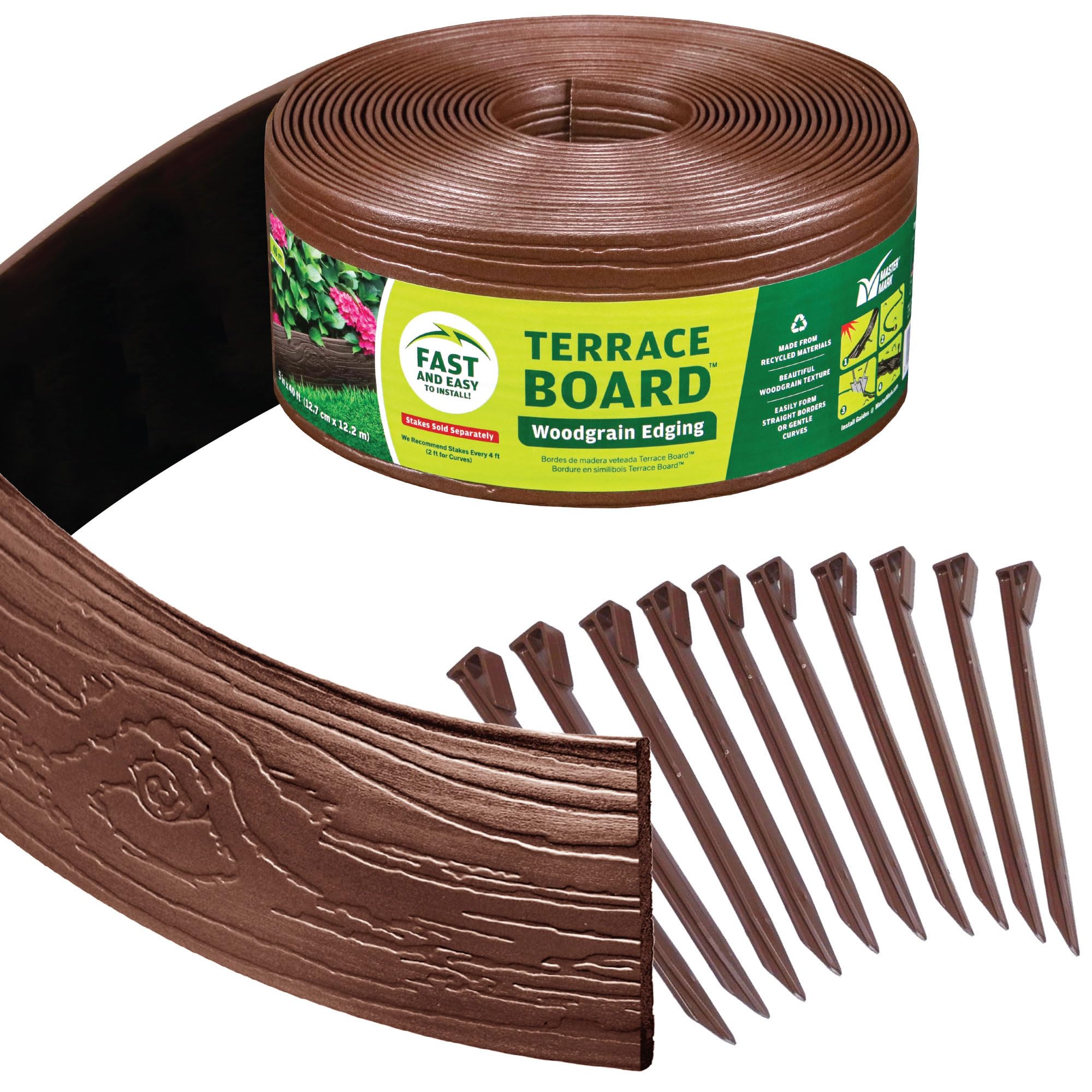
Master Mark has been making this terrace board since 1966, and the experience shows. This 40-foot coil is 4 inches tall and made from tough HDPE plastic (high-density polyethylene), a material that is rigid enough for straight runs yet flexible enough for gentle curves. The stand-out feature is the textured wood-grain finish on the brown variant—owners consistently say it “looks like real wood” from a few feet away, which is a huge plus for anyone who wants a natural aesthetic without paying for timber that will rot.
The real engineering win is the 5/32-inch thickness. Buyers report that after 20 minutes in the sun, the coil memory relaxes, and the board flattens out and installs like a dream with a rubber mallet. The only consistent complaint is the stingy stake count: you get 10 stakes for 40 feet, which means spacing them about every 4 feet. For a straight section that is fine, but for curves or loose soil you will want to buy a bag of extra stakes.
The Upside
- Authentic wood-grain texture that blends into natural landscapes
- Thick HDPE (5/32 in) stays rigid for straight lines while bending for curves
- Manufactured in the USA from recycled plastic
The Downside
- Only 10 stakes included for 40 feet—plan to buy extra
- Color shade can vary between batches; noticeable if you order multiple rolls
Best for: natural-look gardens where you want a wood aesthetic without the maintenance—this is a 40-foot terrace board that holds up through seasons.
skip it if: you are on extremely rocky soil; pounded stakes need decent dirt to grab.
4. Corrugated Garden Edging – 6 in. x 40 ft. Pre-Rusted
The steel barrier that stops bermudagrass cold while collecting compliments.
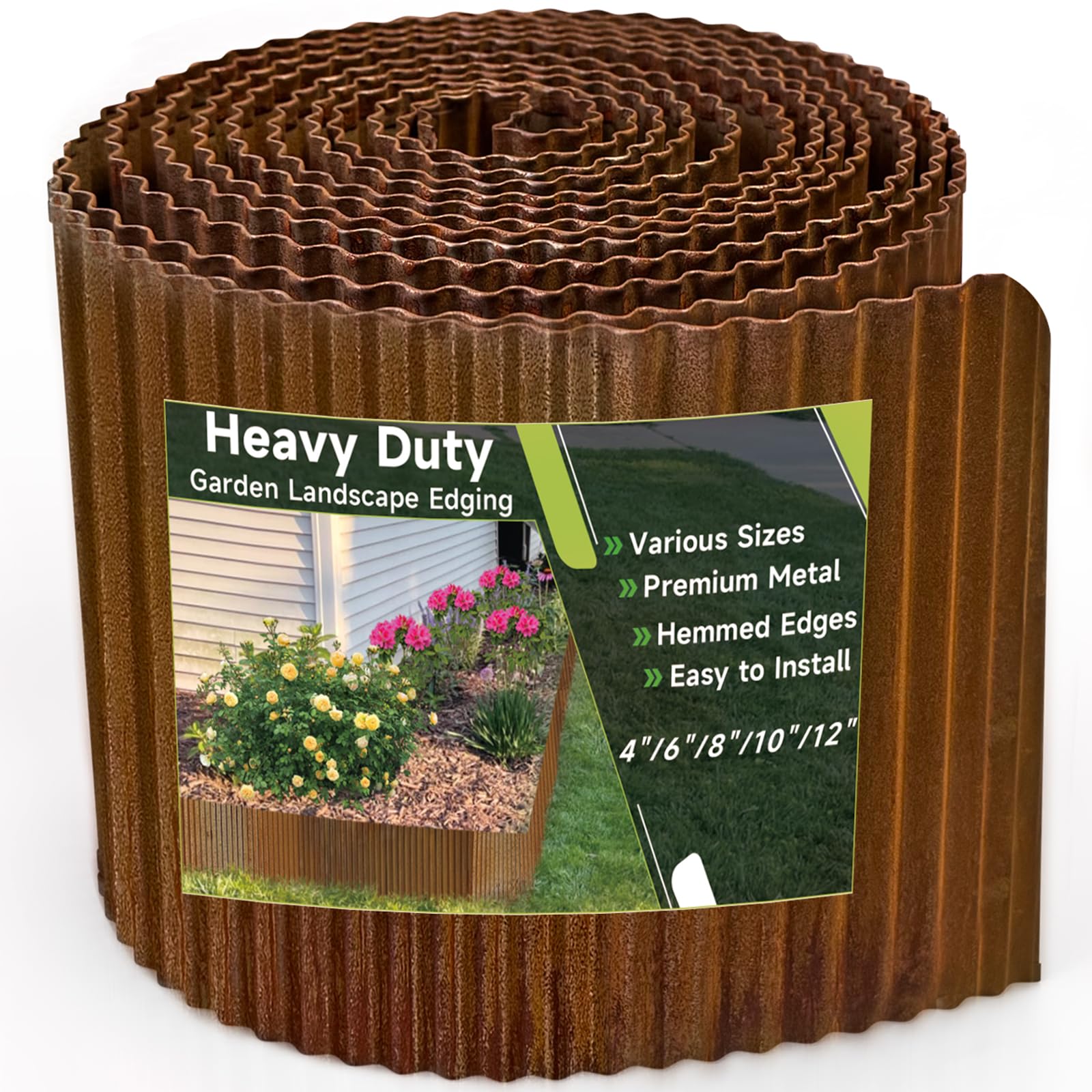
When the problem is aggressive grass rhizomes sneaking into your bed, plastic is not the answer—steel is. This coil is 6 inches tall and 40 feet long, made from pre-rusted corrugated steel. The rust is intentional: it stops further corrosion so the edging keeps its character without falling apart. Owners who are battling bermudagrass report that the 6-inch height, if installed with an inch or so above grade, sits deep enough to block creeping roots. Installation is straightforward: cut the soil line with a flat shovel, align the steel, and pound it in with a mallet and a 2×4 block.
The “pre-rusted” finish develops a deeper patina over time, which owners consistently describe as “rustic” and “attractive.” The R-shaped rolled top and bottom edges mean no sharp edges after cutting (though you should still wear cut-resistant gloves). The material is heavy—5.39 kg per coil—and that weight translates to wind resistance and longevity. The most common practical tip from buyers is to wet the soil first for easier insertion. One safety note: if you cut the steel with metal shears, the raw edge is very sharp; be prepared to file it down or cap it.
What Excels
- At 6 inches tall, it is a serious barrier for invasive grass and roots
- Pre-rusted finish creates an attractive patina and stops further corrosion
- Rolled top and bottom edges reduce laceration risk during handling
What to Prepare For
- Cut edges are razor-sharp—you must wear gloves and deburr them
- Heavier than plastic (5.39 kg) and harder to bend into very tight circles
Reach for this if: you are fighting bermudagrass or need a permanent, heavy-duty separation that looks like it belongs in a rustic garden.
Think twice if: you want to match a very clean, modern landscape—this wears an industrial-rustic look.
5. MASTER MARK Terrace Board – 5 in. x 40 ft. Black

The black HDPE board that buries deep enough to lock out weeds.
Think of this as the taller, more aggressive sibling of the brown Master Mark board. It is the same proven HDPE plastic, but this version stands 5 inches tall instead of 4, and it is black rather than wood-grain brown. The extra inch is meaningful: at 5 inches, you are meant to bury about 1.5 inches of it below ground level, which leaves a 3.5-inch visible barrier that sits below root level and blocks creeping weeds and grass. The manufacturer specifically states this design is intended to “get below the root level.”
Quality scores the highest among owner mentions (66 positive), followed closely by its effectiveness as edging (43). People who reuse this product across multiple beds call it “perfect” and “easy to install,” and note that a box knife cuts it cleanly. The frequent note from repeat buyers is that the material has gotten thinner over the years compared to older batches—while still good, it is not quite as thick as it used to be. Again, 10 stakes for 40 feet is the recurring criticism; if your ground is loose or you are making many curves, you will want to supplement.
Why It Works
- 5-inch height gives you a below-ground root barrier with a visible 3.5-inch edge
- Cuts easily with a box knife for custom lengths
- Recycled HDPE resists chipping, fading, and rotting through seasons
The Annoyance
- 10 stakes for 40 feet is not enough for curves or loose soil—budget for more
- Long-time users note the plastic has become thinner compared to older production runs
Best for: creating a tall, clean barrier against grass creep in beds that need a no-nonsense separation. The 5-inch height is a real advantage.
pass on it if: you want a decorative above-ground look—this is meant to be partially buried for stability.
6. 2″ x 40′ Plastic Landscape Edging Border Black, 40 Spikes

The 40-foot roll that delivers serious length without serious cost.
This is the longest single roll in the lineup at 40 feet, and it is also the shortest in height at only 2 inches. The trade-off is clear: you cover a lot of ground very cheaply, but you are not getting a root barrier. What you are getting is a clean visual line between lawn and flower bed—and a very easy one to install. Because the edging is only 2 inches tall, you do not need to dig a trench; you just unroll it, let it warm in the sun to become flexible, lay it in your desired shape, and hammer the 8-inch nylon spiral spikes through the pre-drilled holes. One buyer summarized the biggest appeal: “I loved not having to try to partially bury edging!”
The edging material is made of PE and rubber—flexible enough to follow curves easily. The 40 spiral nylon spikes are tough and reusable, which is a major plus because many competing kits only give you stakes for every third or fourth hole. The modest height means that a riding mower can drive over it without damage, a point multiple owners confirmed. The only frustration: some owners mention receiving the order as two 20-foot rolls rather than a single 40-foot roll, which is just a minor splicing issue for most.
What We Like
- 40-foot roll plus 40 stakes gives you the best coverage-per-dollar of any pick here
- Nylon spiral spikes won’t rust or deteriorate—reusable for years
- Low profile (2 in) means mowers can drive right over it
What It’s Not
- At 2 inches, it offers no real barrier against creeping roots or aggressive grass
- Some customers note the included stakes are spread thin—one every 4 feet
Grab it if: you simply need a long, cheap visual divider to keep mulch from washing into the lawn—this 40-foot roll does that job perfectly.
Avoid it if: you have bermudagrass or aggressive running grasses that need to be blocked at the root level.
7. Bonviee 66FT Garden Border Edging Kit with 100 Anchoring Spikes
Two 33-foot rolls and a hundred stakes—the ultimate coverage kit.
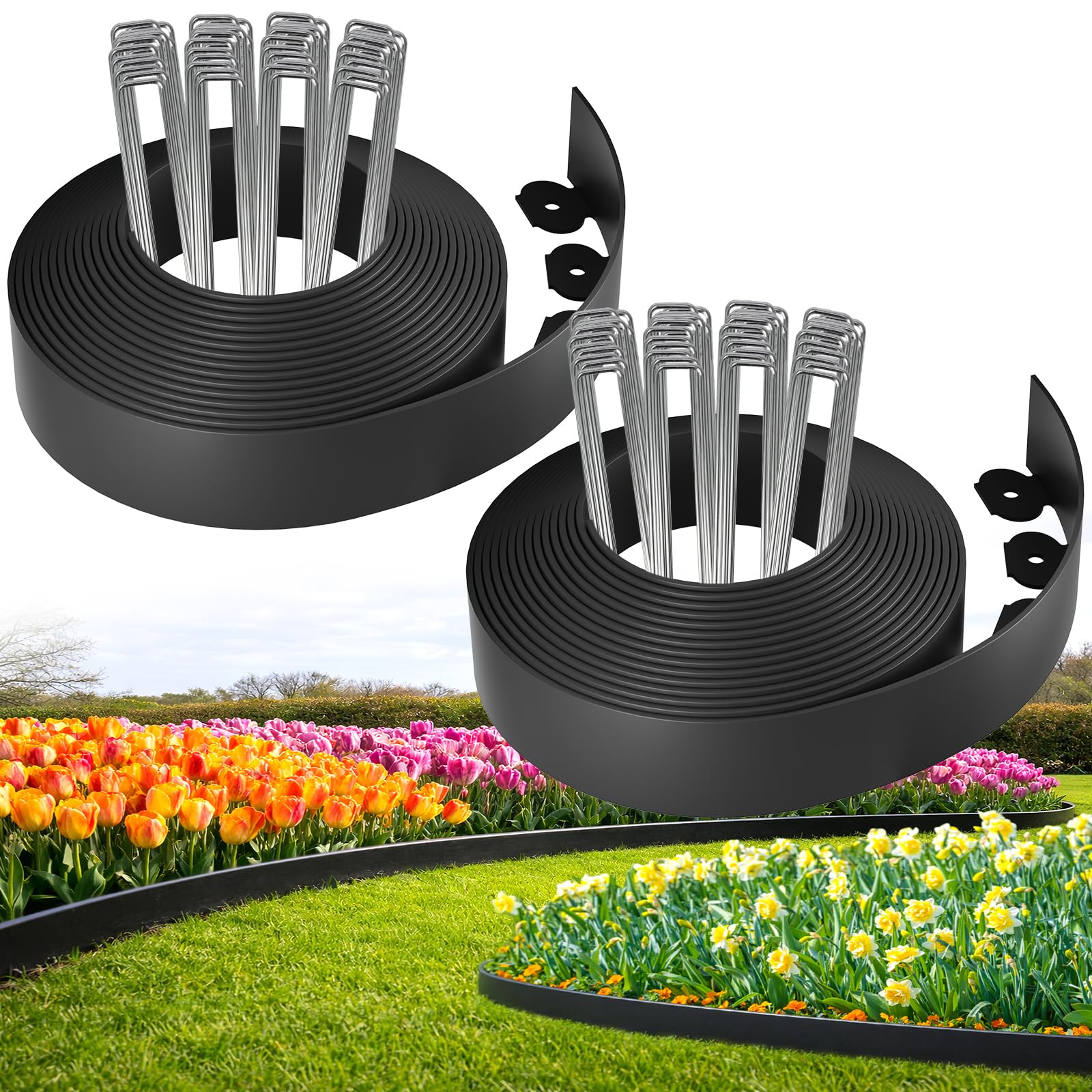
If you are edging a large perimeter and hate running out of stakes midway, this is your kit. It comes as two rolls that combine for 66 feet of edging, plus 100 anchoring spikes (which works out to one spike for roughly every 2 holes on the edging strip). That is more anchoring hardware than any other plastic edging on this list, and it makes a real difference on loose ground or windy sites. The edging itself is 1.5 inches tall and made from flexible PE plastic—it is purely a lawn-to-bed visual divider, not a root barrier.
Owners consistently call installation “very easy,” noting that the flexible plastic bends easily around flower beds and pathways. The real-world consensus is that this is the best value-per-linear-foot for large-scale projects where you need a tidy separation between grass and garden. The only caution: while the edging itself is durable, some owners reported that the included plastic stakes can snap if you hammer them straight down into hard, dry soil. The fix is to wet the ground first or use a metal pilot stake.
Why It Leads on Coverage
- 66 total feet across two rolls—double what most kits offer
- 100 anchoring stakes provide rock-solid hold on curves and straight runs
- PE plastic won’t rust and is easy to cut with scissors or a knife
Small Caveats
- At 1.5 inches tall, it is more of a visual guide than a functional barrier
- Plastic stakes can snap in hard soil—pre-drilling is recommended
Best for: large gardens where speed and coverage matter more than height. Two rolls cover a lot of ground fast.
Look elsewhere if: bermudagrass or invasive roots are your problem—this short edging won’t stop them.
8. AMURS 6-Inch Tall 20Ft White Landscape Edging Border

White interlocking panels that add clean color to small flower beds.
Most edging on this list is black or brown, but this is the rare white option that actually earns its keep. It comes as 20 individual interlocking panels that are each 12.16 inches wide and 6 inches tall, for a total run of 20 feet. The panels are made from PP plastic (polypropylene) that is stable and resists crushing. Each piece interlocks with the next, and you secure them with the included stakes—20 stakes come in the box. The manufacturer says the stakes can withstand 60 mph wind, which is a specific claim we don’t see from the other plastic kits.
Owners love how easy assembly is—you can use a single panel or link several together, making it very flexible for small odd-shaped beds. The white color shows up beautifully against dark mulch and green grass. The recurring complaint, however, is about the securing spikes themselves: some owners describe them as “some of the most worthless plastic imaginable” and recommend replacing them with tent stakes for any install that isn’t a circle. If you build the panels into a circle, the geometry keeps them stable; straight runs on soft ground need better stakes.
What Stands Out
- White color creates a crisp, bright border that contrasts nicely with dark soil
- Interlocking panels allow you to use only as many as you need
- PP plastic resists crushing and is rated to withstand 60-mph winds
Where It Struggles
- Included securing stakes are flimsy—plan to replace or reinforce them
- Individual panels are short (12.16 in each); 20 feet total may not cover large perimeters
Best for: a small, focal-point flower bed where you want a decorative white border that is easy to install without tools.
it’s not for you if: you need to edge a long, straight run—the interlocking panels can drift without extra staking support.
9. Landscape Edging 33FT [Extra Tall 4IN High] – Black
Tall 4-inch HDPE edging with enough stakes to hold a curve.
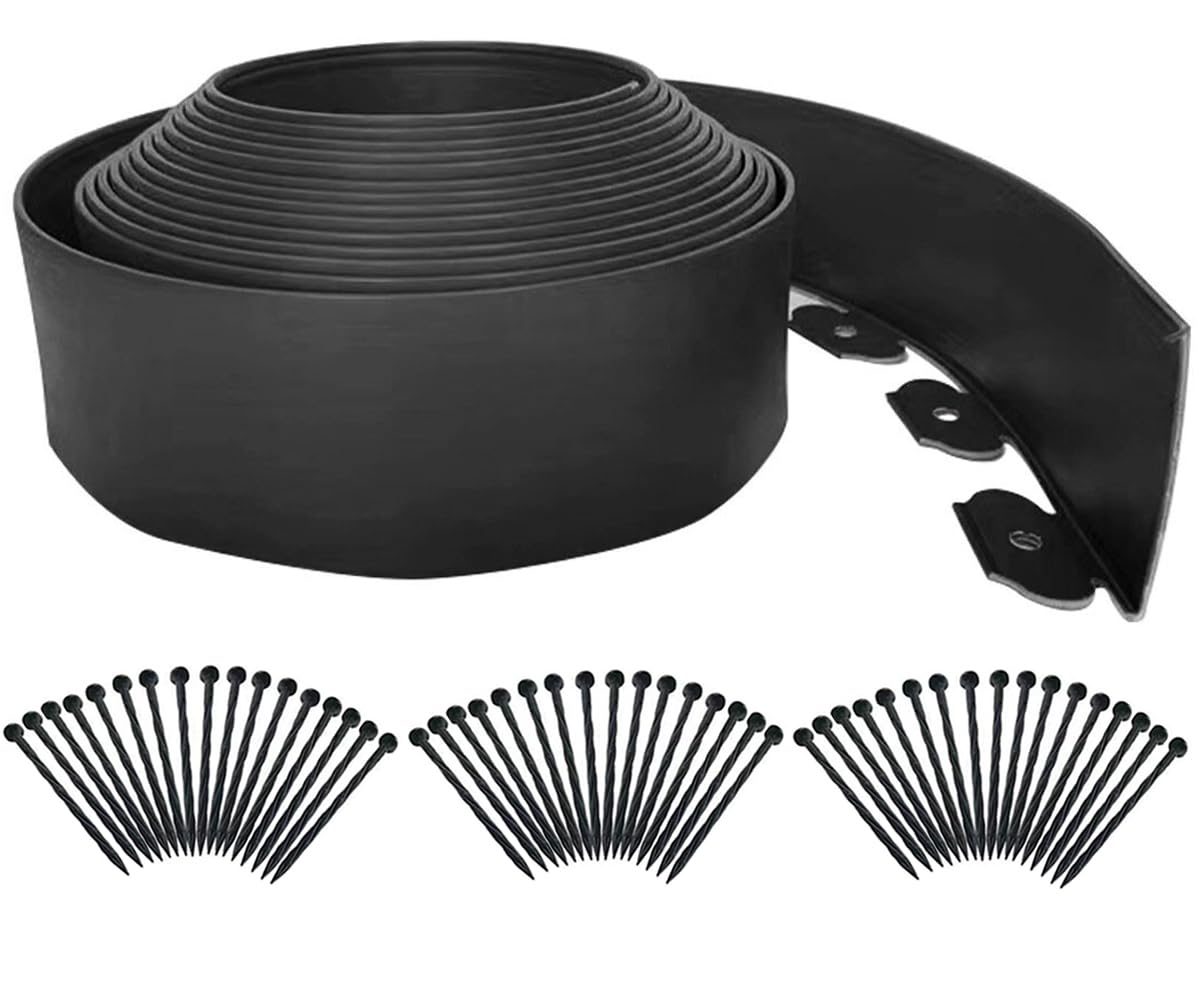
This kit strikes a nice balance between height and coverage: you get 33 feet of 4-inch-tall HDPE edging, plus 50 spiral nylon stakes (each 8 inches long). The HDPE material is the same durable plastic used in Master Mark boards, and the 4-inch height is enough to contain mulch and create a meaningful visual separation. At 50 stakes, you have enough hardware to secure a curve every foot or so, which solves the biggest frustration with many budget kits that skimp on anchors. The manufacturer says it can be used on uneven or sloping ground without digging.
Installation is as simple as bending the edging to your desired shape and hammering the stakes into the ground. Owners say the flexible material is easy to cut with a box cutter and “makes the garden look much cleaner and more organized.” The main pain point echoed in the reviews: the plastic spiral stakes break if you hammer them directly into hard ground. The workaround—pre-drilling with a metal stake or wetting the soil first—is widely shared by experienced owners. Most consider it a minor hassle given the affordable price and the professional-looking result.
Why It’s a Good Deal
- 4-inch tall HDPE edging offers real containment and visual separation
- 50 spiral nylon stakes are enough to secure curves tightly
- Works on uneven or sloping ground without trenching
One Frustration
- Plastic stakes can break when hammered into hard, dry soil—pre-drill or wet the ground
- Some owners find the material feels thinner/cheaper than premium HDPE brands
Best for: anyone who wants a tall, no-dig edging with enough hardware to actually secure it—33 feet covers a lot of bed.
Think twice if: you are working in rocky, compacted soil; the break-prone stakes will test your patience.
Understanding the Specs
Height (inches)
The single most important number on the package. A 2-inch edging is purely a visual guide—it keeps mulch off the lawn but grass roots crawl right under it. A 4-inch edging starts to function as a real barrier, especially if you bury about 1.5 inches of it (giving you a 2.5-inch visible lip above grade). Edging that is 6 inches or taller is a serious root block, capable of stopping aggressive spreaders like bermudagrass.
Stakes / Anchoring Spikes
The number of stakes included in a kit tells you how stable your edge will actually be. Many budget kits give you a stake for every 4 feet—fine for a perfectly straight run on loamy soil, but useless for curves or sandy ground. A good rule: you want at least one stake per 2 feet for curved beds, and extra stakes for any section that crosses a slope. The material of the stake matters too: spiral nylon spikes grip better than smooth plastic pins.
HDPE vs PE vs PP Plastic
HDPE (high-density polyethylene) is the gold standard for plastic edging. It is rigid enough to hold a straight line, flexible enough to bend for curves, and resists UV degradation better than standard PE (polyethylene). PP (polypropylene) is also tough and crush-resistant but can be more brittle. Standard PE is the cheapest and most flexible plastic, but it will become brittle and crack faster in direct sunlight—a consideration if your edging sits in full sun year-round.
No-Dig vs Trench Installation
“No-dig” means you simply pound the edging or stakes into the soil with a mallet—no trenching, no backfilling. This is faster and less messy, but it only works well in loose or loamy soil. A trench-and-backfill install (dig a narrow slot, place the edging, pack soil around it) is more work, but it gives you a much straighter, more permanent line that stays put in rocky or clay-heavy ground.
FAQ
How tall should flower bed edging be to stop grass?
Do I have to dig a trench to install plastic edging?
Will metal garden edging rust over time?
How many feet of edging do I need for my flower bed?
What is the difference between HDPE and regular PE plastic edging?
Can I install edging on a slope?
Is white edging a bad idea because it shows dirt?
Can I cut plastic edging to a custom length?
Final Thoughts: The Verdict
If you want one dependable pick, the best inexpensive flower bed edging is the 18-inch Metal Garden Border Fence because it solves two problems at once—it creates a beautiful, elegant flower bed edge and it keeps small pets out. If you want a classic, tool-free installation that the crowd loves, EasyFlex Pound-In Edging with its bonus stakes is the weekend warrior’s dream. And if you are battling aggressive bermudagrass and need deep steel protection, the Corrugated Garden Edging at 6 inches tall is the one to reach for.
How We Picked
We do not accept paid placement. Every pick is matched to a real buyer and a real use-case; we do not hands-on test units.
Sources & Methodology
Specifications: manufacturer listings and product documentation. Review insights: verified customer reviews, as of July 2026. Pricing: not shown on this page (it changes often); check the current price via the retailer link.
As an Amazon Associate, Lawn Gear Lab earns from qualifying purchases. This does not affect which products we feature.