
Specs are compiled from manufacturer listings and verified buyer reviews and can change over time — please confirm the key details on the product page before buying.
Killing your houseplants with kindness — drowning them — is the number one mistake, and standard pots make it too easy. Self-watering pots solve that by handing the watering schedule over to a simple wicking system, so your plant drinks what it needs when it needs it. The right one saves you from wilted leaves on one end and root rot on the other, and it makes leaving for a long weekend stress-free.
I’m Rikta — the founder and writer behind Lawn Gear Lab. This guide is built by comparing the manufacturers’ published specifications and the patterns across verified customer reviews, so you get each pick’s real strengths and trade-offs instead of marketing spin.
The three picks below cover everything from a compact four-pack for a windowsill herb garden to a large triple-size set for a living room fiddle leaf fig. This guide cuts through the options to find the best indoor self-watering pots for your specific space and plant type.
Quick Picks
- montresor 12/10/8 Inch Self Watering Pots — Best Overall
- T4U 4 Inch Self Watering Plant Pot, 4 Pack — Best Value Pack
- KvyusFlourish Self Watering Pots, 6-Pack 6.7” — Best Mid-Range Set
How To Choose The Best Indoor Self-Watering Pots
Picking the right self-watering pot depends on matching the pot’s size and moisture system to the specific plant you own. A pot that keeps a Peace Lily happy can rot the roots of a succulent, so knowing these three factors will save you money and heartache.
Size and Reservoir Capacity
The pot diameter and the water reservoir (the tank under the soil) must match your plant’s root ball and its thirst. A 4-inch pot is good for small African violets, while a 12-inch pot is needed for a large snake plant. The bigger the reservoir, the longer you can go between refills — some pots store enough water for 5–11 days, others for up to two weeks.
Water Level Visibility
A clear water level window on the outside of the pot lets you check the water supply without pulling the plant out or sticking a finger in the dirt. This simple feature stops you from guessing whether the reservoir is empty and helps you catch a dry spell before the plant wilts.
Material and Build Quality
Most self-watering pots are made from plastic (polypropylene or PET). Look for UV-resistant and heat-resistant plastic if the pot will sit in a sunny window. The inner pot should have drainage holes and a wick slot so the cotton rope can reach the water. Durable plastic that does not crack after a year matters more than the color or finish.
Quick Comparison
| Model | Best For | Pot Diameter | Number of Pots | Water Level Window | Amazon |
|---|---|---|---|---|---|
| montresor 12/10/8 Inch | Large plants & living room focal points | 8, 10, 12 inches | 3 | Yes | Amazon |
| T4U 4 Inch 4 Pack | Small plants & budget-friendly starter set | 4 inches | 4 | Yes (Clear outer pot) | Amazon |
| KvyusFlourish 6.7” 6-Pack | Medium plants & busy plant owners | 6.7 inches | 6 | Yes | Amazon |
In‑Depth Reviews
1. montresor 12/10/8 Inch Self Watering Pots
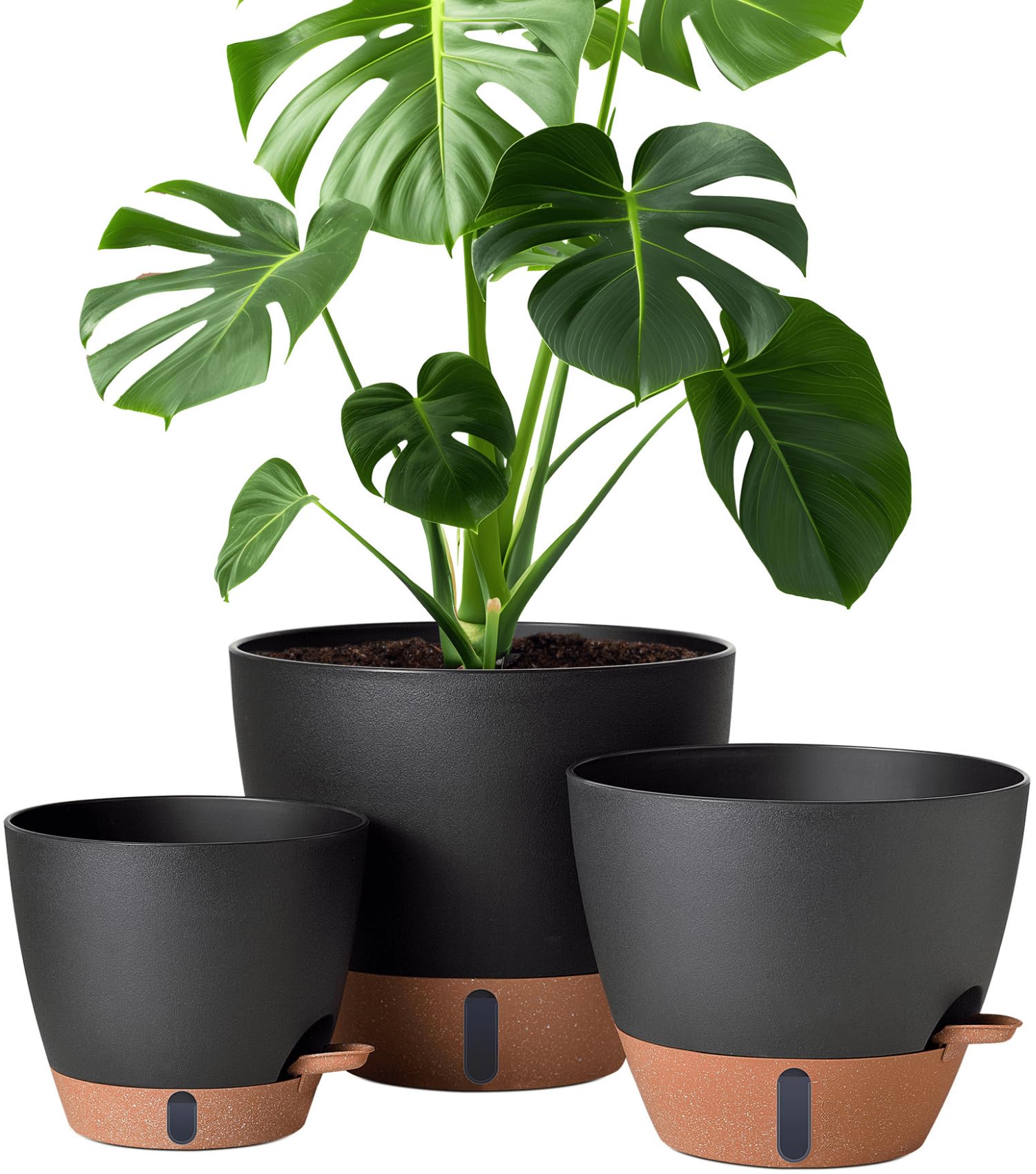
A three-pot set that scales from a kitchen basil plant to a living room fiddle leaf fig — and covers both with one purchase.
This set covers tabletop and floor plants in one buy, unlike the T4U pack below which only handles 4-inch pots. You get three sizes — 8-inch for counter herbs, 10-inch for bathroom pothos, and 12-inch for a floor fiddle leaf fig. Each pot uses a cotton wick (a thick rope) that pulls water from a detachable reservoir (a removable water tank), and a transparent water window on the side lets you see the level at a glance. The maker claims the reservoir maintains 5–11 days of moisture, so a weekend trip is no problem. Reviewers report the system is “very easy” and that their plants thrive, though one notes “the soil stays very moist so it might not be a good choice for plants that like drier soil but my Peace Lily loves it.”
Built from lightweight heat-resistant polypropylene (PP) plastic, the pots have multi-vent drainage holes (slits that let extra water escape) and a leak-proof locking tray to protect your shelves. The 12 x 12 x 10 inch outer dimensions of the largest pot mean it takes up noticeable floor space, but the minimalist black finish blends well. One buyer describes the plastic as “thin but durable” and appreciates that the self-watering works without letting roots sit in water. The main assembly trick is lining up the bottom pieces correctly — a few reviewers found the bottom a bit tricky to get together, but once snapped in place, the system runs smoothly.
Why It Wins
- Covers 8, 10, and 12 inch sizes in one set — fits any room
- Clear water level window shows when to refill
- Detachable reservoir with cotton wick for 5–11 days of moisture
The Catch
- Soil stays very moist — not suitable for succulents or cacti
- Bottom pieces can be a bit tricky to snap together
Grab this if: you want a complete set for multiple plants (herbs on the counter, a pothos in the bathroom, a fiddle leaf fig in the living room) and prefer a single purchase over mixing brands.
Look elsewhere if: your plants need dry soil between waterings, or you only need small 4-inch pots for a windowsill.
2. T4U 4 Inch Self Watering Plant Pot, 4 Pack

Four compact 4-inch pots for under — a cheap way to keep African violets happy without guessing water.
Each of these pots measures 3.98 x 3.98 x 4.65 inches, making them ideal for a small windowsill or a desk. The design uses a cotton rope that wicks water from a reservoir below, and because the outer pot is clear PET material (a see-through type of plastic), you can see the water level without any extra window. Buyers report the self-watering works well and keeps plants moist without overwatering, with one noting they last 7–10 days and need refilling every 2–3 weeks. Another reviewer who owns over 100 plants says the durable plastic shows no cracks after a year of use.
Made from polypropylene (PP) with a polished finish, the pots are lightweight enough to move around easily. The inner pot has a slot for the wick and can be lifted out for top watering if you prefer. Unlike the montresor set above, which comes in three sizes, the T4U pack gives you four identical 4-inch pots — better for a uniform collection of small plants. Buyers appreciate the “modern ribbed black design” but note that the white inner cup is slightly visible through the translucent black outer pot.
These pots handle African violets, monsteras, philodendrons, and alocasias well, according to reviews. The brand recommends the design for beginners and busy plant lovers, and the UV-resistant plastic holds up in sunny windows. A few owners mention they wish the inner cups were white for a cleaner look, but the function gets consistent praise.
Solid starter buy: Four durable, self-watering pots at a low price point with good reviews — perfect for trying self-watering for the first time on small plants.
The only real downside: At 4 inches, these are too small for any plant that outgrows a 4-inch nursery pot, so plan to repot larger plants into the montresor set.
3. KvyusFlourish Self Watering Pots, 6-Pack 6.7”

Six 6.7-inch pots let you see the roots and go two weeks without refilling — a standout for a medium-sized plant collection.
Each pot measures 6.7 x 6.7 x 5.6 inches — bigger than the T4U 4-inch pots but still tabletop-friendly — and comes in one of six colors (White, Black, Grey, Blue Gold, Rose Gold, Grey Gold). The self-watering system uses a built-in cotton wick that draws water up to the roots, and a clear water level indicator on the side shows you when to refill. The maker says the reservoir stores enough water for up to two weeks, which is longer than the 5–11 day range of the montresor set. Buyers confirm the system works well, though one noted “inconsistent sizing: 5″ pot smaller than previous 4″ pot.”
A standout feature here is the transparent wick inner pot with drainage holes — it lets you see the roots and check for rot without disturbing the plant, something the T4U pots do not offer. The included white pebbles and extra wick add value, according to reviewers. The plastic is lightweight (the whole set weighs about 1 pound) and durable enough to survive a drop. One reviewer uses these for African violets and Hoyas that like consistently damp soil, and reports healthier plants compared to standard pots.
These pots are best for medium-sized houseplants like pothos, spider plants, and orchids. The slit sidewalls in the inner pot promote air circulation around the roots, which helps prevent rot in moisture-sensitive plants. Consider the T4U pack if you only need small 4-inch pots, but if you want six pots at a generous 6.7-inch size with root visibility, this set delivers more value.
What Stands Out
- Transparent inner pot lets you check root health without repotting
- Six pots in stylish colors for a cohesive look
- Up to two weeks of water storage between refills
Watch Out For
- Inconsistent sizing — one buyer found a 5″ pot smaller than a previous 4″
- Some units arrived with a broken inner pot
Perfect for: plant parents with a collection of medium-sized houseplants who want to see their roots and go up to two weeks between waterings.
Not ideal if: you need a single large pot for a floor plant or you want all identical sizes — the T4U pack gives you four identical 4-inch pots for less.
Understanding the Specs
Pot Diameter and Volume
The diameter — measured in inches across the top — tells you what size plant will fit. A 4-inch pot fits a small African violet or a baby snake plant, while a 12-inch pot handles a full fiddle leaf fig. The volume (measured in cubic centimeters for some pots) roughly indicates how much root space the plant has. Bigger diameter means more soil, more root room, and longer water duration.
Water Reservoir and Wicking System
A reservoir is the water tank at the bottom of the pot. A cotton wick (a thick rope) sits in the reservoir and soaks water up into the soil through capillary action (the same process that pulls water up a paper towel). The size of the reservoir determines how many days you can go without refilling — some last 7–10 days, others up to two weeks. A water level window or a clear outer pot lets you see when the reservoir is empty without guessing.
FAQ
How does a self-watering pot work?
Can I use self-watering pots for succulents or cacti?
How often should I refill the water reservoir?
Do I still need drainage holes in a self-watering pot?
Can I leave the house for a week with self-watering pots?
Are self-watering pots better than regular pots?
What size self-watering pot should I choose?
How do I clean a self-watering pot?
Will the plastic pot crack in a sunny window?
Can I use self-watering pots outdoors?
Final Thoughts: The Verdict
If you want one dependable pick, the best indoor self-watering pots winner is the montresor 12/10/8 Inch Set because it covers tabletop and floor plants alike with a clear water window and 5–11 days of moisture. If you want a cheap starter set for small plants, grab the T4U 4-Pack. And for a mid-range six-pack with a clear root-viewing inner pot, the KvyusFlourish 6-Pack gives you up to two weeks of water and root visibility in one package.
How We Picked
We do not accept paid placement. Every pick is matched to a real buyer and a real use-case; we do not hands-on test units.
Sources & Methodology
Specifications: manufacturer listings and product documentation. Review insights: verified customer reviews, as of July 2026. Pricing: not shown on this page (it changes often); check the current price via the retailer link.
As an Amazon Associate, Lawn Gear Lab earns from qualifying purchases. This does not affect which products we feature.