
Specs are compiled from manufacturer listings and verified buyer reviews and can change over time — please confirm the key details on the product page before buying.
The number one reason indoor plants die isn’t neglect — it’s the wrong soil holding too much water and starving the roots of air. Picking the right indoor potting soil can mean the difference between yellow, drooping leaves and a plant that explodes with new growth, so getting the mix right is the single best thing you can do for your leafy collection.
I’m Rikta — the founder and writer behind Lawn Gear Lab. This guide is built by comparing the manufacturers’ published specifications and the patterns across verified customer reviews, so you get each pick’s real strengths and trade-offs instead of marketing spin.
Whether you own a fussy Monstera or a resilient snake plant, the right indoor potting soil keeps roots aerated, drains excess water quickly, and feeds your plant over time. Below are the very best options for every type of houseplant you might own, broken down by what they do best.
Quick Picks
- Craft Aroid Potting Mix- Elite Organic Alocasia — Best Overall
- Coast of Maine Organic & Natural Bar Harbor — Top Performer
- Miracle-Gro Potting Mix 3-Pack (8 qt. per bag) — Best Display
- Forbidden Cereal Aroid Potting Mix 6.5QT — Premium Pick
How To Choose The Best Indoor Potting Soil
Not all bagged soil is the same. A mix that makes a succulent thrive can drown a tropical Monstera. Here is what to check before you buy.
Drainage and Aeration Are Everything
Roots need oxygen as much as they need water. A good indoor mix uses chunky ingredients like bark, pumice, or perlite (lightweight volcanic glass beads that create air pockets) to keep water moving through instead of pooling at the bottom. If the bag feels heavy and dense in your hand, it will likely stay wet too long for most houseplants.
Organic vs. Synthetic Ingredients
Organic potting soils use natural compost, worm castings, and kelp meal to feed plants slowly over time, rather than a quick chemical dose. Many growers prefer organic mixes because they support beneficial microbes in the soil that help roots take up nutrients. Peat-based organic mixes are traditional, but peat-free options using coco coir (a fiber from coconut husks) are becoming popular for sustainability.
Understanding “Chunky” for Aroids
Plants like Monsteras, Philodendrons, and Alocasias — called aroids — naturally grow up trees in the wild, so their roots are used to lots of air. These plants need a chunky mix with large pieces of bark or tree fern fiber that allow water to drain in seconds. Standard fine-grain potting soil can suffocate these roots and cause rot.
Quick Comparison
| Model | Best For | Volume | Weight | Key Ingredient | Amazon |
|---|---|---|---|---|---|
| Craft Aroid Potting Mix | Chunky Aroids & Tropicals | 2 Quarts | 2 Pounds | Douglas Fir Bark & Pumice | Amazon |
| Coast of Maine Bar Harbor Blend | Versatile Container & Veggies | 16 Quarts | 14 Pounds | Lobster & Crab Shell Meal | Amazon |
| Miracle-Gro Potting Mix 3-Pack | General Outdoor & Indoor Pots | 8 qt. per bag | — | Fertilizer (feeds 6 months) | Amazon |
| Forbidden Cereal Aroid Mix | Premium Aroids & Monsteras | 7.1 Liters | — | 8 Organic Amendments | Amazon |
In‑Depth Reviews
1. Craft Aroid Potting Mix- Elite Organic Alocasia, Philodendron, Monstera Soil Mix
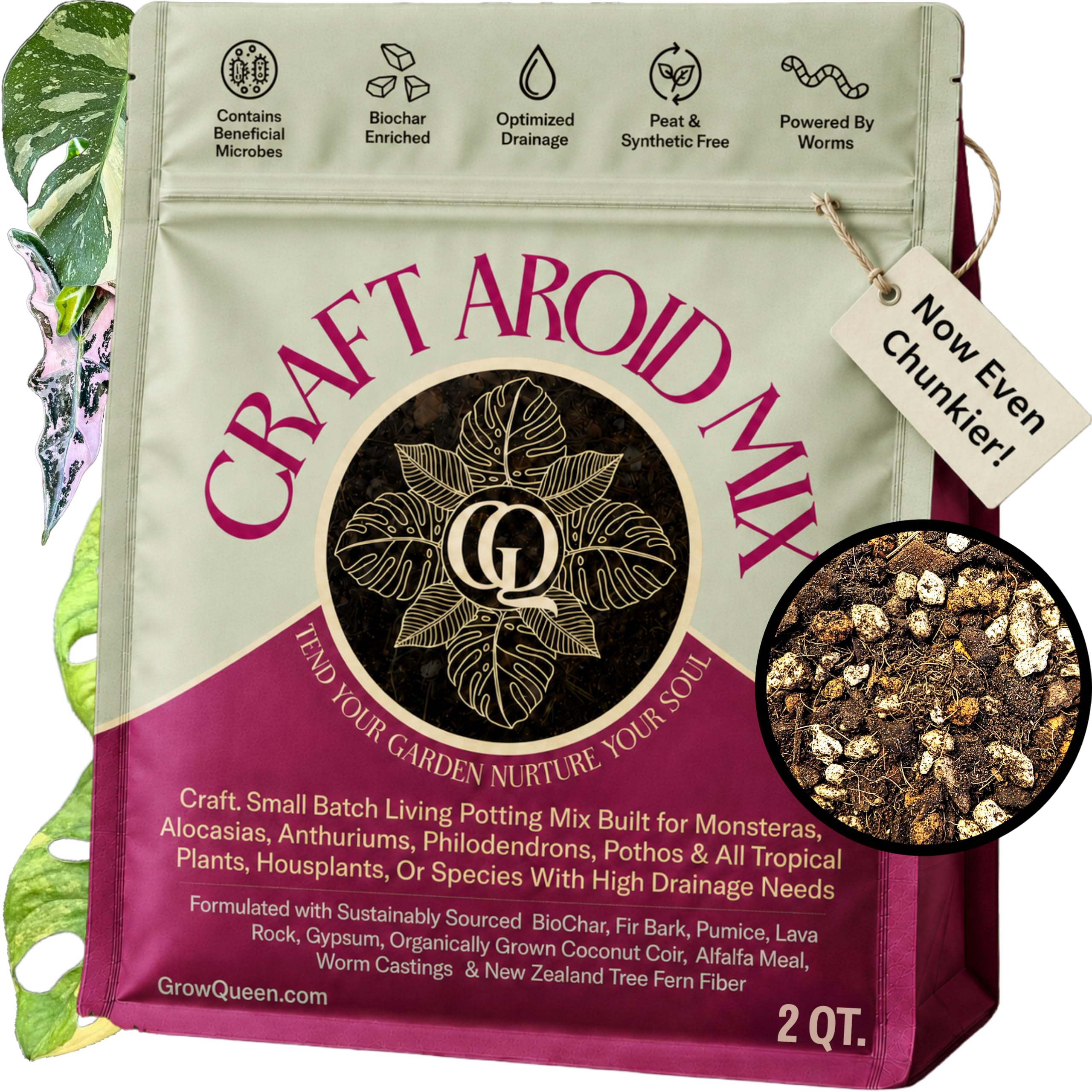
The chunky, peat-free specialist that makes overwatering almost impossible.
This mix from Grow Queen is the right answer for anyone who owns tropical houseplants like Monsteras, Philodendrons, or Alocasias. It uses large Douglas fir bark fines, lava rock, and pumice (a lightweight volcanic rock that improves drainage) to create air channels so wide that water flows through instantly. That structure means you would have to work hard to drown your plant, which is the main reason most indoor plants fail. It is also peat-free and perlite-free, using eco-friendly pumice and lava rock instead — a smart choice if you want to avoid the environmental harm of peat mining.
Buyers report this mix is consistently high quality across multiple orders, with a fresh earthy smell and no bugs or mold. One owner noted that for larger plants (in pots bigger than 6 inches), the mix retains too much moisture and never dries fully, causing root rot after two months — so this is best for small to medium pots. At just 2 Quarts (2 Pounds), it is a small bag compared to the 14-pound Coast of Maine option below, so factor that in if you are repotting a big collection.
The mix includes certified organic coco coir washed more times for salt removal than competitors, along with New Zealand Tree Fern Fiber that neutralizes soil pH down to 6.0, mimicking the natural acidity tropical plants love. It is ready to use straight out of the bag and safe around pets.
What Works
- Light, chunky texture with excellent aeration for aroid roots
- Peat-free and perlite-free — uses sustainable pumice and lava rock
- Ready to use with no mixing; pet-friendly and non-toxic
- Certified organic coco coir with low salt content
What to Watch
- Small 2-quart bag goes fast for larger jobs
- Not ideal for plants in pots larger than 6 inches (moisture retention issue)
Who it wins for: Owners of small to medium aroids (Monstera, Philodendron, Alocasia, Pothos) who want a peat-free, ready-to-use, chunky mix that prevents root rot.
One real limit: In bigger pots the mix can stay wet too long for larger plants — buy the Coast of Maine below if you are filling large containers.
2. Coast of Maine Organic & Natural Bar Harbor Blend Potting Soil
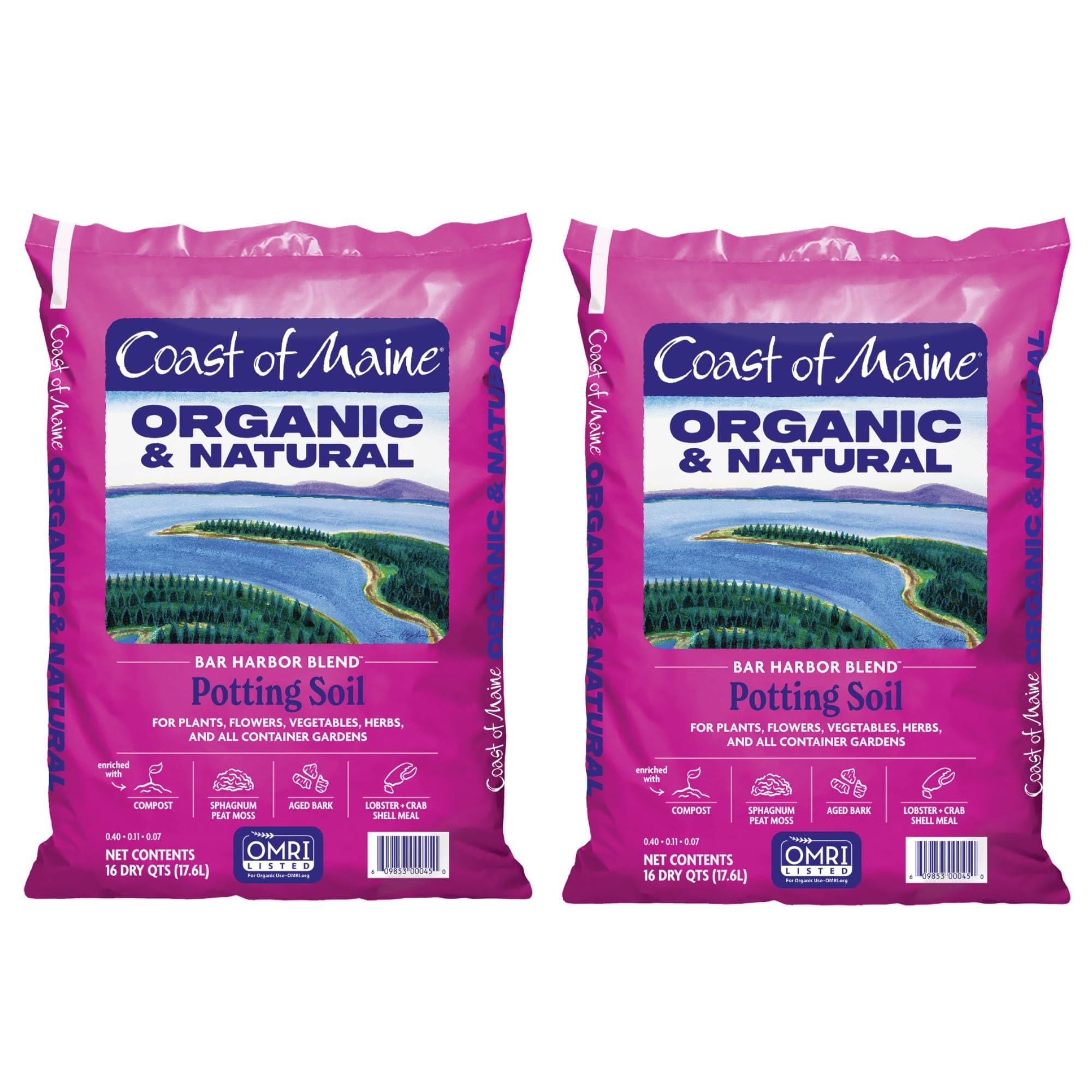
The nutrient-rich workhorse that fed eight potato plants and still had leftovers.
This is the multipurpose heavyweight that handles everything from indoor pots to raised vegetable beds. At 16 Quarts and 14 Pounds, it weighs 14 pounds compared to the Craft Aroid mix’s 2 pounds — a lot more soil for filling large containers. The formula uses sphagnum peat moss, compost, perlite, lobster and crab shell meal, and kelp meal, giving it a dark, rich color and a steady supply of natural slow-release nitrogen. Unlike many bagged soils, it is approved for organic gardening and works indoors or outdoors.
Owners mention this soil is “super nice feeling” and packed with nutrients. One reviewer noted two bags were enough to mound up 8 potato plants and still have extra for 2 more planters. Another said their tomatoes never looked so good after switching from a “top brand.” The mix includes perlite for drainage and aeration, but it is not as chunky as a dedicated aroid mix — so it works best for general container plants, herbs, and veggies rather than fussy tropicals. Reviewers also note there were no unexpected weeds sprouting from the bag, which is a common annoyance with cheaper soils.
Coast of Maine has been making soil since 1996 with a focus on sustainable, regenerative practices. This Bar Harbor Blend is a solid choice if you want one bag that does everything: indoor houseplants, outdoor containers, and edible gardens — and you do not want to buy multiple specialized mixes.
Strengths
- Large 16-quart bag offers excellent value for big jobs
- Rich organic blend with compost, kelp, and shellfish meal
- No weeds or bad smell reported by buyers
- Works indoors and outdoors for veggies, herbs, and flowers
Catch
- Not chunky enough for aroids that need super-fast drainage
- Contains peat moss (not peat-free)
Reach for this when: You need one versatile, organic soil for a mix of indoor pots, raised beds, and container vegetables — and you value big bag size and rich natural feeding.
Skip it for: Fussy tropical plants like Monsteras that require a chunkier, peat-free aroid formulation.
3. Miracle-Gro Potting Mix 3-Pack (8 qt. per bag)

The classic three-pack that feeds your container plants for half a year.
Miracle-Gro is the household name in potting soil for a reason: this mix contains fertilizer that feeds plants for up to 6 months, meaning you do not have to remember to add plant food every few weeks. The company claims it “Grows Plants Twice As Big!” compared to unfed plants. This is a standard, fine-textured potting mix — not chunky like the aroid blends above — so it works best for general container flowers, vegetables, shrubs, and common houseplants that are not too picky about drainage.
Customers note this is a reliable soil that does not pack down hard over time, keeping the texture loose so water reaches the roots. One reviewer specifically likes ordering the smaller 8-quart bags to avoid lugging around big heavy bags. Each bag fits two 8-inch containers. Keep in mind that this is designed more for outdoor container plants and general indoor pots — it is not tune for tropical aroids that demand fast-draining chunky mixes. The fine texture holds more moisture, which can be an issue for plants like succulents, cacti, or Monsteras.
This 3-pack gives you three separate bags of 8 quarts each, making it easy to use one at a time without the rest drying out. If you have a mix of easy houseplants and outdoor containers and want built-in feeding, this is a convenient no-thought option.
Benefits
- Built-in fertilizer feeds plants for up to 6 months
- Fine texture stays loose and drains well for general plants
- Convenient 3-pack of smaller bags for easy handling
Limitations
- Not chunky enough for aroids or plants needing fast drainage
- Contains synthetic fertilizer (not an organic mix)
Best suited for: Casual gardeners and houseplant owners who want one all-purpose mix with built-in feeding for flowers, herbs, vegetables, and common indoor plants.
Not for: Enthusiasts growing tropical aroids like Monsteras or Alocasias, or anyone seeking a peat-free or organic formulation.
4. Forbidden Cereal Aroid Potting Mix 6.5QT – Chunky High-Draining Soil
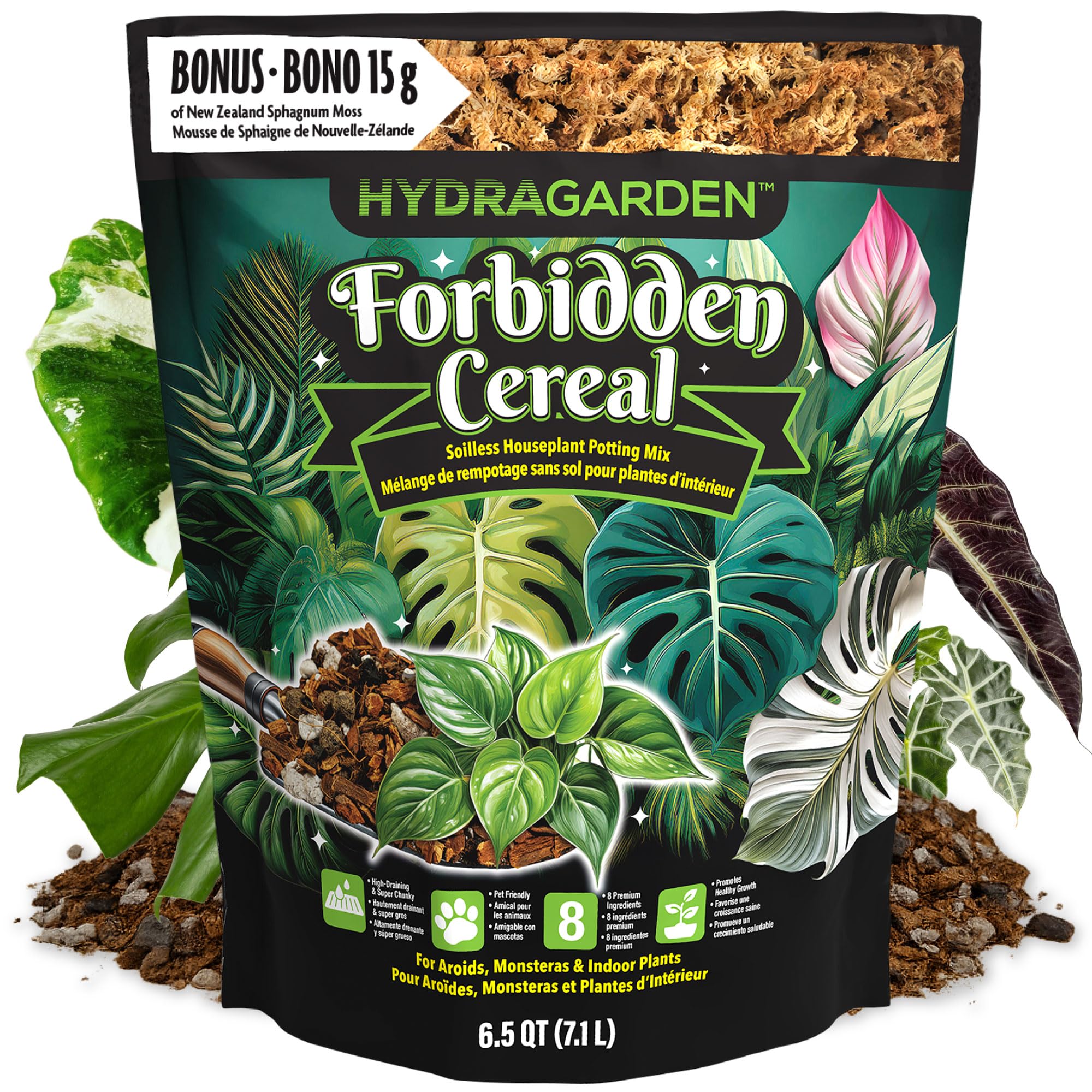
The “Earth’s Chunkiest” mix that made a Monstera triple in size in six months.
If you treat your indoor plants like family and want the absolute best, this is the premium pick. Forbidden Cereal uses 8 organic amendments — including hand-sorted Douglas fir bark, fine and coarse perlite, triple-washed coco coir, horticultural charcoal (biochar), worm castings, and New Zealand sphagnum moss. It is peat-free and “soilless,” meaning it contains no actual dirt — just structured components designed to let water drain in seconds while keeping the roots oxygenated. The brand calls it “Earth’s Chunkiest Potting mix,” and the large bark pieces live up to that billing.
Reviewers point out serious results. One reviewer gave a six-month update: their Monstera tripled in size and grew “roots thick as fingers.” A plant collector and seller calls this their top choice for aroid mix, noting that Anthuriums thrive in it. The one consistent complaint is the price — it is a premium product for a relatively small bag (7.1 Liters), and some buyers feel it is expensive for the volume. The sphagnum moss comes separately on top rather than mixed in, so you can decide whether to use it as a moisture-retaining topper or root-level addition. This level of customization is rare in bagged soil.
This mix is tune for Monsteras, Pothos, Snake Plants, Philodendrons, Alocasias, Orchids, and other tropical indoor plants. If you have spent good money on a rare plant and do not want to risk cheap soil, this is the insurance policy that pays off in root health.
Why It Excels
- 8 premium organic ingredients for professional-grade aroid care
- Extremely chunky texture prevents root rot and promotes explosive root growth
- Peat-free; separated sphagnum moss adds custom moisture control
- Shoppers say rapid growth — Monstera tripled in 6 months
The Trade-Off
- Premium pricing for the bag size; splurge-worthy but not budget-friendly
Reach for it when: You own expensive or rare aroids (Monsteras, Anthuriums, Alocasias) and want the most aerated, chunky, peat-free mix available to boost root health and growth.
Think twice if: You are on a tight budget or need a large volume of soil for many pots — the bag size is small relative to the price.
Understanding the Specs
Drainage & Aeration
This is the most important quality in indoor potting soil. Chunky ingredients like bark, pumice, and perlite create large air pockets so water drains quickly and roots get oxygen. Without enough aeration, roots suffocate and rot. A simple test: wet a handful of the mix — if water runs out immediately, it is well-draining. If water pools on top, it holds too much moisture for most houseplants.
Peat vs. Peat-Free
Sphagnum peat moss has been the standard soil base for decades because it holds moisture and has an acidic pH that many plants like. But harvesting peat releases carbon dioxide and destroys bog ecosystems. Peat-free alternatives like coco coir (coconut husk fiber) and bark are more sustainable and often drain better. If sustainability matters to you, look for a peat-free label.
Organic Matter & Fertilizer
Ingredients like worm castings, compost, kelp meal, and shellfish meal provide natural slow-release nutrients that feed plants over weeks without chemical burns. Synthetic fertilizers in standard potting soil deliver nutrients faster but can build up salts that damage roots over time. Organic soils also support beneficial soil microbes that help roots absorb nutrients more efficiently.
Bag Size & Value
Indoor potting soils range from 2-quart bags for small repotting jobs all the way up to 16-quart and larger bags for serious container gardening. A 2-quart bag might fill one or two medium pots, while a 16-quart bag can fill several large containers. Match the bag size to your project — buying a huge bag for one small plant wastes money, while a tiny bag for a big container will leave you short.
FAQ
Can I use outdoor potting soil for indoor plants?
How do I know if my potting soil needs more drainage?
What is the difference between potting soil and potting mix?
How often should I repot my indoor plant with fresh soil?
Is peat-free potting soil better for the environment?
Can I use aroid mix for succulents or cacti?
Why does my potting soil have mold on top?
Should I add perlite to a potting mix that already has it?
How do I store leftover potting soil?
Is it worth paying more for organic potting soil?
Final Thoughts: The Verdict
For the majority of shoppers, the indoor potting soil winner is the Craft Aroid Potting Mix because it hits the balance of chunky, peat-free drainage and organic ingredients at a fair price — perfect for the most popular indoor plants. If you want a massive bag that handles vegetables, flowers, herbs, and general houseplants all in one, grab the Coast of Maine Bar Harbor Blend. And for premium plant parents who want the chunkiest mix possible to boost root growth on rare aroids, the standout is the Forbidden Cereal Aroid Mix — just expect to pay for the quality.
How We Picked
We do not accept paid placement. Every pick is matched to a real buyer and a real use-case; we do not hands-on test units.
Sources & Methodology
Specifications: manufacturer listings and product documentation. Review insights: verified customer reviews, as of July 2026. Pricing: not shown on this page (it changes often); check the current price via the retailer link.
As an Amazon Associate, Lawn Gear Lab earns from qualifying purchases. This does not affect which products we feature.