
Specs are compiled from manufacturer listings and verified buyer reviews and can change over time — please confirm the key details on the product page before buying.
Choosing the wrong bag of dirt is the fastest way to turn a thriving Monstera into a droopy mess. The real problem isn’t water or light — it is air. Roots need to breathe as much as they need moisture, and most generic bags from the big-box store pack down into a dense, waterlogged brick that suffocates them. The best indoor plant soil mixture does one job above all others: it stays open and porous so water runs through freely while holding just enough moisture between drinks.
I’m Rikta — the founder and writer behind Lawn Gear Lab. This guide is built by comparing the manufacturers’ published specifications and the patterns across verified customer reviews, so you get each pick’s real strengths and trade-offs instead of marketing spin.
Whether you are rescuing a peace lily from the brink or potting up cuttings from a friend, the right indoor plant soil mixture makes the difference between roots that rot and roots that run.
Our Picks at a Glance
How To Choose The Best Indoor Plant Soil Mixture
The secret to a good indoor mix is not complicated. You need chunky bits that create air pockets, fine material that holds a little moisture, and enough nutrient content to fuel growth without burning delicate roots. Here are the three specs to look for on the bag.
Drainage & Aeration
The fastest way to kill a houseplant is to drown the roots in soil that stays wet too long. Look for ingredients like perlite (those small white volcanic rocks), pumice, coarse sand, or pine bark fines. These create physical gaps in the mix so water runs through instead of pooling. A mix that feels light and fluffy in your hand is a good sign — heavy, dense soil means trouble.
Moisture Retention
You still want the soil to hold enough water so you are not watering daily. Coco coir and sphagnum peat moss are the standard ingredients for this job. They absorb water like a sponge and release it slowly to the roots. The trick is balance: too much retention and you get root rot, too little and your plant dries out between every watering.
Base Nutrients
Most indoor mixes include a mild fertilizer to get new plants started. Worm castings are a popular natural source — they release nutrients slowly without the harsh chemical burn that can shock fresh cuttings. Some bags also include kelp meal or lobster shell meal for a broader nutrient profile. If you see a mix labeled “no slow-release fertilizer,” that means you will need to add your own plant food after a few months.
Quick Comparison
| Model | Best For | Volume | Key Ingredients | Texture | Amazon |
|---|---|---|---|---|---|
| Coast of Maine Bar Harbor★ Best Overall | Container gardens & raised beds | 16 quarts (2-pack) | Peat moss, compost, perlite, kelp meal | Rich & fluffy | Amazon |
| DUSPRO 7in1 House Plant MixChunkiest Blend | Tropical & aroid plants | 2 quarts | Pine bark, pumice, coco coir, worm castings | Chunky & porous | Amazon |
| Craft Organic Houseplant MixPeat-Free Power | All indoor plants, peat-free | 2 quarts | Douglas fir bark, lava rock, pumice, worm castings | Chunky & airy | Amazon |
| Perfect Plants Snake Plant Soil | Snake plants & succulents | 4 quarts | Coco coir, pine bark, perlite, sand | Fast-draining | Amazon |
| Avalution Potting Soil Mix | General potting & propagation | 9 quarts | Coco coir, peat moss, perlite, rice hull charcoal | Light & fluffy | Amazon |
| Soil Sunrise Peace Lily Mix | Peace lilies specifically | 8 quarts | Pine bark, peat moss, perlite, sand | Moisture-retaining | Amazon |
| Noot Potting Soil Mix | Rapid root growth & high-end plants | 1 gallon | Coconut chips, coarse perlite, bio-organic nutrients | Pre-soaked & chunky | Amazon |
| Perfect Plants Indoor Plant Soil | All houseplant varieties | 8 quarts | Pine bark, coco coir, perlite, sand | Lightweight & airy | Amazon |
| Midwest Hearth Premium Potting Mix | Seed starting & general use | 8 quarts | Peat moss, perlite, vermiculite | Light & fluffy | Amazon |
In‑Depth Reviews
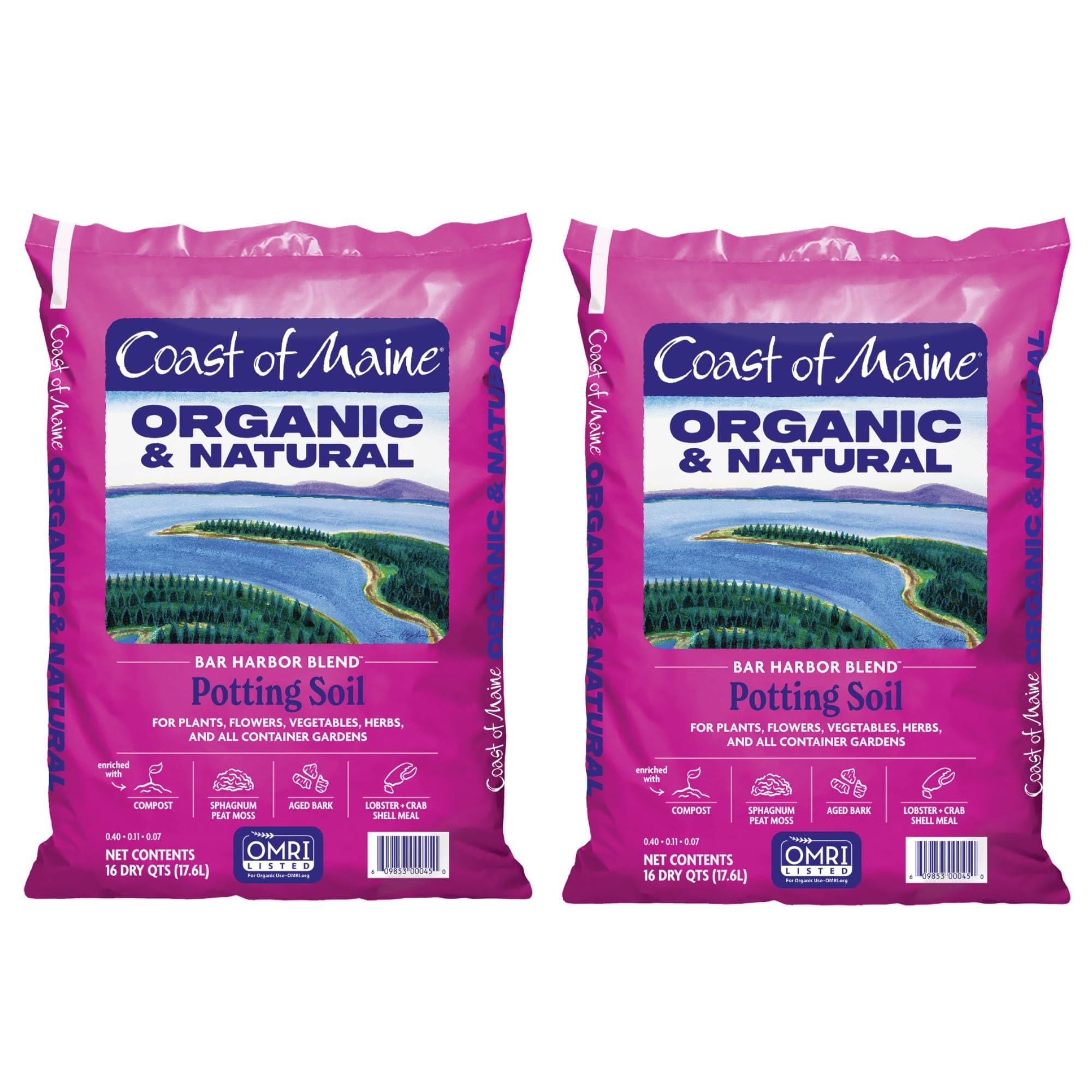
1. Coast of Maine Bar Harbor Blend Potting Soil
Our pick — over 4.5★ from 550+ verified ratings; the strongest balance of quality and price.
The bag that keeps tomato plants leafier than a top brand ever managed.
This is the one that makes experienced gardeners switch loyalties. The blend starts with sphagnum peat moss and compost, then adds perlite for drainage plus lobster and crab shell meal and kelp meal as natural slow-release nitrogen sources. It means your plants get consistent feeding over time without you mixing in extra fertilizers every two weeks. Buyers report that two bags were enough to mound up eight potato plants and still have extra for two more planters — the 16-quart 2-pack goes a long way.
The texture is noticeably dark and rich, not full of sticks like some budget bags. It works for vegetables, indoor plants, herbs, hanging baskets, and raised beds equally well. The crowd favorite holds a strong rating, and what wins people over is the sheer quality — well over fifty owners single out the soil’s richness and how clean and weed-free it arrives. One owner put it simply: “My tomatoes never looked so good!”
The honest trade-off is that this is a more general organic mix, not a chunky fast-draining blend for aroids. If you are growing a Monstera or orchid that needs super airy bark-heavy soil, you will want to pick something chunkier. But for most houseplants, herbs, and container vegetables, this is the gold standard.
Rich organic blend
- Rich organic ingredients — lobster, crab, and kelp meal feed plants for months
- Excellent value in the 16-quart 2-pack format
- No weeds, no sticks, no unpleasant odor
Heavy bag weight
- Not a chunky aroid mix — too dense for plants that need extreme drainage
- Some bags can arrive with minor pest activity (rare but noted)
Large containers: you want a single high-quality soil for every indoor and outdoor container plant — veggies, herbs, flowers, and houseplants alike.
Small pots: your collection is mostly Monstera, Alocasia, or other aroids that demand a gritty, bark-heavy, super-fast-draining chunky mix.
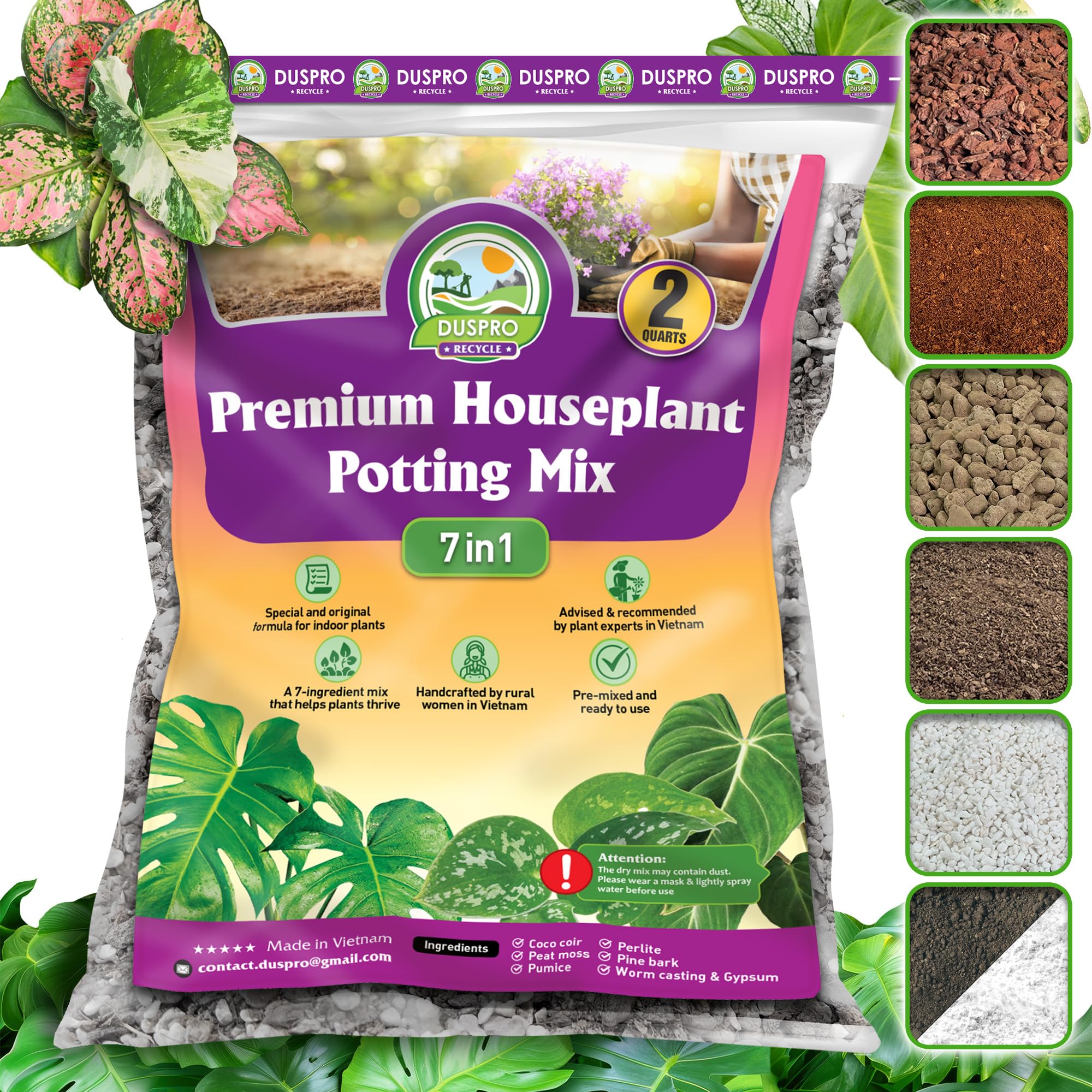
2. DUSPRO Pre-Mixed 7in1 House Plant Potting Mix
The chunkiest bag on the shelf — roots get all the air they can breathe.
This is a 7-in-1 blend that skips the fine powder and goes straight for texture. Pine bark, pumice, coco coir, perlite, worm castings, gypsum, and peat moss come pre-mixed so you never have to measure and combine separate bags. The result is a loose, open soil that drains fast and keeps roots well-oxygenated. Owners mention that large Monsteras in this mix only need water every two weeks, and small pots stretch to ten or twelve days between drinks.
The dustiness is real — a quick mist of water on the bag before opening keeps the particles down. Once the plant is potted and watered, the dust settles and the soil performs exactly as intended. Owners also note that no mold or mildew appeared over a six-month period, which is a strong sign of good aeration. The 2-quart bag is on the small side, fitting about two 6-inch pots, but the blend itself earns high marks for quality and consistency.
All-in-one mix: anyone with aroid plants — Monsteras, Philodendrons, Pothos, and similar tropicals that hate sitting in wet soil. The chunky texture is exactly what they need to avoid root rot.
Dries quickly: shake the bag well before opening because the rocks and bark settle during shipping. Also, the bag is dusty on first pour, though that clears up after the first watering.
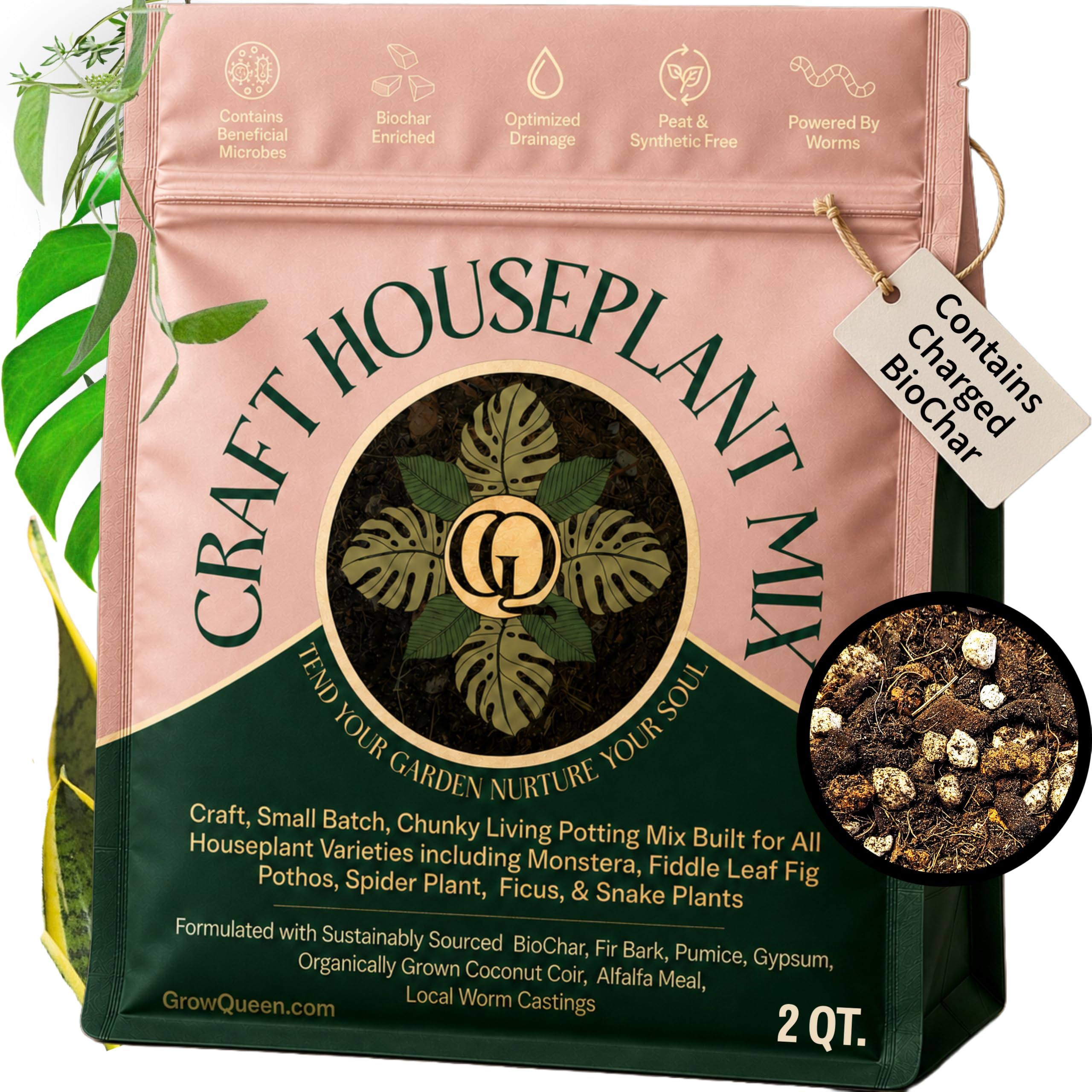
3. Craft Organic Houseplant Potting Mix by Grow Queen
Most soil bags are bone-dry and hydrophobic, meaning water beads off the top instead of soaking in. The ingredients skip peat and perlite entirely — instead you get Douglas fir bark fines, lava rock, pumice, and premium organic worm castings. The result is a chunky, open texture that drains instantly while still holding enough moisture for steady growth.
Owners rave about the quality, with nearly fifty reviews highlighting the clean ingredients and fast results. A Monstera Thai Constellation owner reported the plant “thrived” and unfolded a new leaf shortly after repotting. The mix is also less prone to fungus gnats because it does not stay soggy. It is a smaller 2-quart bag, so expect to pay a bit more per quart — but the performance is consistent enough that many buyers plan to transition their whole collection over time.
Handcrafted quality: plant parents who value clean, sustainable ingredients and want to avoid the dusty mess of perlite.
Pricey option: the bag is noticeably small for the price. If you have a large collection or big pots, you will need multiple bags.
4. Perfect Plants Organic Snake Plant Soil

So fast-draining that even a snake plant’s spare roots stay safe.
Snake plants are among the easiest houseplants to kill with kindness — they prefer to be dry. This mix is formulated specifically for them, using coco coir, pine bark chips, perlite, and sand to drain excess water quickly after every watering. It contains no slow-release fertilizer, which is exactly right for a plant that thrives on neglect. Customers note seeing new growth and healthier leaves after transplanting, and the bag comes in a heavy-duty resealable design that keeps the soil fresh for future use.
The quality is the most-praised aspect, with over thirty owners noting the rich texture and lack of funky smell. The 4-quart size is generous for multiple pots. A frequent comment is that the soil drains so well that you will need to water more often than you would with a dense general mix. That is a feature, not a bug — but it does mean checking soil moisture weekly rather than every other week.
Snake plant ready: you grow snake plants, ZZ plants, or other succulents that rot in standard potting soil. The coarse sand and perlite create the drainage these plants depend on.
Limited use: you need a general all-purpose mix for moisture-loving ferns or peace lilies. This dries out too fast for plants that like consistently damp roots.
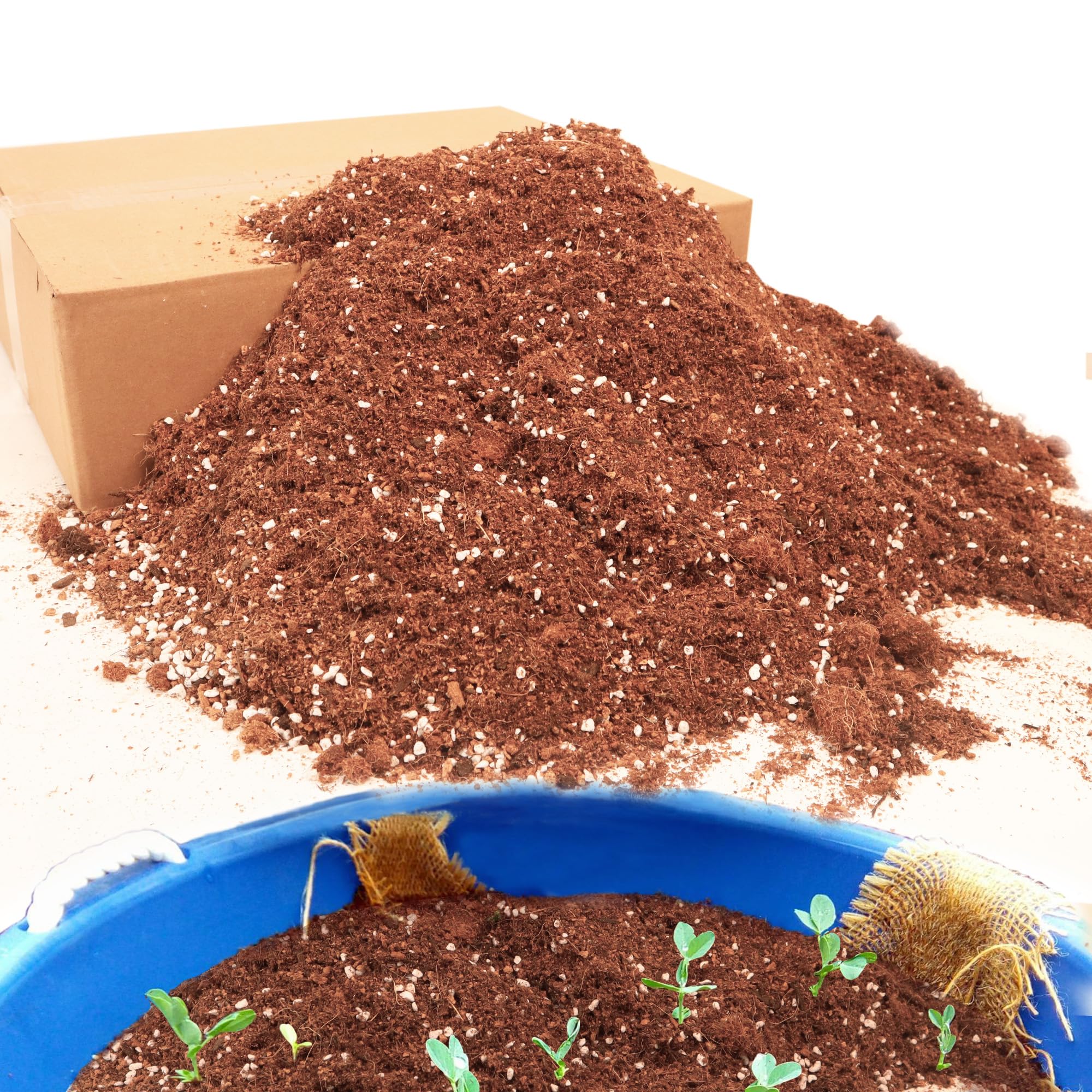
5. Avalution Potting Soil Mix
Five ingredients, one price — your morning coffee likely costs more per quart.
This mix uses a five-part formula: 55% coconut coir fiber, 12% peat moss, 11% perlite, 11% vermiculite, and 11% rice hull charcoal. The rice hull charcoal is the unusual ingredient here — it adds porosity and light aeration without breaking down quickly like peat does. Owners describe it as “soft, airy and fluffy” and note that it is much cleaner than big-box brand soil. The color is a little reddish from the rice hulls, but the performance is what matters.
The 9-quart bag gives you more volume than most premium mixes at a friendlier cost per quart. It works well for Hoyas, Pothos, propagations, and general houseplants. The moisture retention is moderate — the soil holds water for a few days but does not stay soggy. A few owners wish the bag was larger, and the absorbency gets mixed feedback from growers who want either faster or slower drainage. If it feels too dense for your plants, you can mix in extra perlite or pumice.
Lightweight texture: budget-conscious plant owners with a mix of species. The large bag and lightweight texture make it ideal for propagation trays, large pots, and general repotting.
Needs fertilizer: not chunky enough for heavy aroid growers. Consider it a high-quality general mix, not a specialized aroid blend.
6. Soil Sunrise Peace Lily Potting Soil Mix
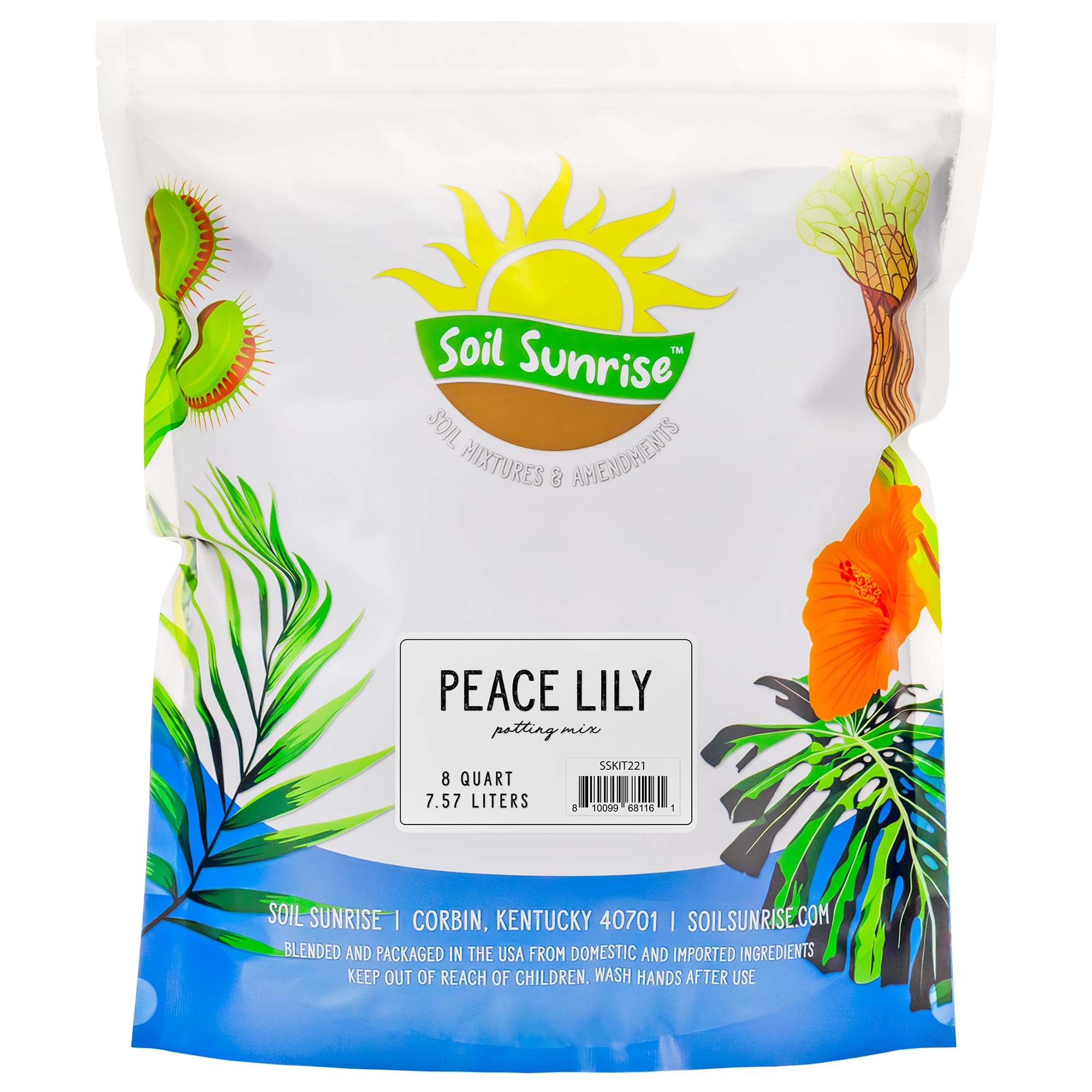
The bag that brought a dying peace lily back with new sprouts.
Peace lilies are notoriously dramatic, and they need a soil that holds moisture without drowning the crown. This blend uses pine bark, peat moss, perlite, sand, and lime to create a moisture-retaining, nutrient-rich environment. The lime helps balance the pH, which is important because peat moss can turn acidic over time. Reviewers point out that plants “doubled in size over spring and summer” and that even a peace lily on its deathbed came back with new growth after repotting.
The 8-quart bag gives you decent volume for the price. Plant health is the most praised aspect, with over twenty owners noting visible improvement. The catch is that some buyers find the bag small for the cost, and a few mention that drainage could be better for their specific setup. If you are repotting a single large peace lily, this bag is perfect — just don’t expect it to stretch across a whole shelf of plants.
Peace lily tuned: you have a peace lily that needs a fresh start. The pH-balanced ingredients and natural composition are a good match for this specific plant’s needs.
Soggy risk: you need a fast-draining mix for aroids or succulents. This is designed to retain moisture, which is the opposite of what those plants want.
7. Noot Potting Soil Mix
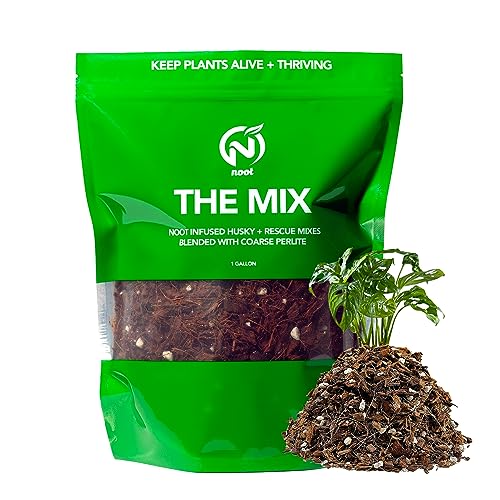
The mix that comes soaked in microbial life — ready to spark instant root growth.
Noot takes a different approach. It arrives pre-soaked with organic nutrients, minerals, and 16 strains of beneficial bacteria and fungi. The base is larger coconut chips and fibers mixed with coarse perlite, giving it an open, airy structure that drains fast. Owners who switched from standard soil report that fungus gnats and root rot disappeared entirely, and plants showed noticeable new growth within weeks. The pre-moistened state means no dry hydrophobic clumps — you open the bag and pot immediately.
The downside is the price. A 1-gallon bag goes fast, and the smell is a recurring point — some describe it as “awful” or “slight,” though it fades after potting. It is best reserved for your most valuable plants. One owner uses it only on the plants that need it most due to the cost, reporting that their Monstera produced four large healthy leaves after the switch. The resealable bag helps store leftovers without drying out.
Unique formula
- Pre-inoculated with 16 strains of beneficial microbes for faster root development
- Eliminated fungus gnat and root rot issues for multiple owners
- No mixing or amending needed — ready out of the bag
Strong smell
- Small bag for the cost — you will use it quickly on large plants
- Noticeable odor from the organic pre-soak (fades after potting)
8. Perfect Plants Indoor Plant Soil
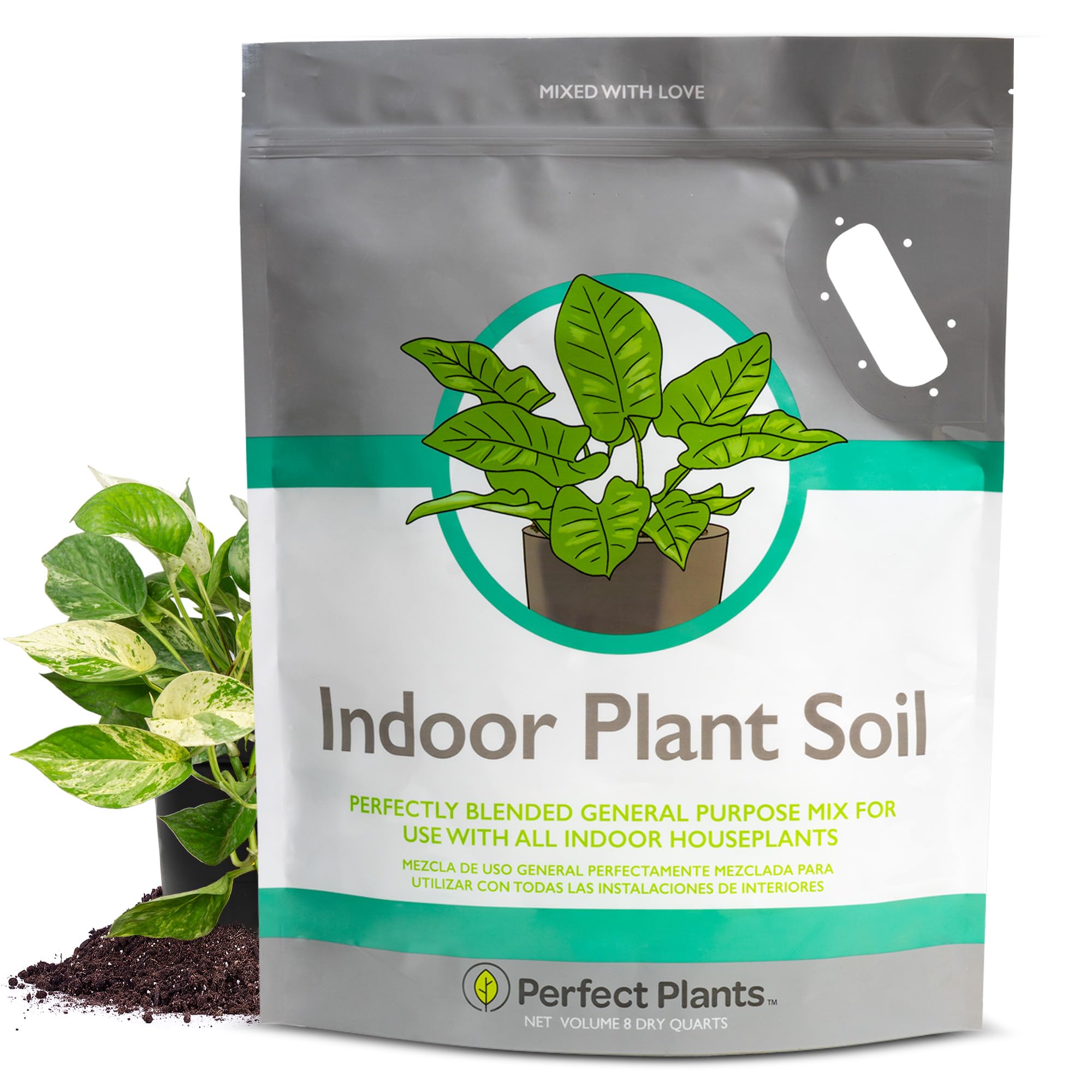
The one owners call “completely bug-free” — a relief after gnat-infested bags.
Nothing ruins the joy of repotting like opening a bag and seeing tiny black flies. This mix from Perfect Plants earns consistent praise for arriving clean and bug-free, with over a dozen owners specifically mentioning the absence of gnats. The ingredients are pine bark, coco coir, perlite, sand, and garden lime — a straightforward blend that works across all common houseplant varieties. It drains well while holding enough moisture for health, and the texture is light and fluffy straight from the bag.
Versatility is a strong point. Owners use it successfully for Monstera, Aloe, Spider Plants, African Violets, Aglaonema, and ivy. The 8-quart bag is a practical size — one owner used half a bag to repot a medium ivy and had the rest stored for future use. The value for money gets mixed reactions, but the quality rating is high, and owners consistently say their plants look healthier after transplanting. The resealable bag keeps the soil fresh between uses.
Indoor balanced: you have been burned by gnat-infested bags from other brands. This one arrives clean and stays that way. It is also a great general houseplant soil for beginners who want one mix that works for everything.
Pebble layer: some owners wish the price per quart were lower. For the quality and the bug-free guarantee, most consider it worth the premium.
9. Midwest Hearth Premium Potting Soil Mix

The same formula professional growers use — at a price that does not sting.
This is a straightforward, no-nonsense mix made with peat moss, perlite, and vermiculite. The pH is balanced to work across a broad spectrum of plants, and the texture is light and fluffy — ideal for seed starting and young root systems. Shoppers say that petunias germinated quickly in it, and plumerias are thriving after repotting. The bag is resealable and easy to open, which matters when you are working with small pots and frequent top-offs.
The 8-quart bag size gets mixed feedback: some find it just right for a few pots, while others wish it were larger for the price. It is made in the USA, and owners note it arrives weed-free and bug-free. One recurring comment is that the soil does not harden around roots like some cheaper brands do, which makes future repotting easier. If you need a clean, reliable general mix for seed starting, propagation, or mixed containers, this is a solid choice.
Midwest reliable: seed starting and general-purpose use where a light, fluffy texture gives delicate roots room to spread. The pH-controlled formula takes the guesswork out of balancing your soil.
Dense pack: the 8-quart bag is smaller than it looks. If you are filling several large pots, order multiple bags or consider a larger-volume option.
Understanding the Specs
Perlite & Aeration
Perlite is the small white volcanic rock you see in most potting mixes. Its job is to create air pockets so roots do not sit in water. A mix with visible perlite drains faster and stays lighter than dense garden soil. Some premium mixes use pumice or lava rock instead — they do the same job but are heavier and less likely to float to the surface over time.
Coco Coir vs Peat Moss
Both ingredients hold water, but they come from different sources. Coco coir is made from ground coconut husks — it is sustainable, rehydrates easily, and does not turn acidic over time. Peat moss is harvested from bogs, holds more water, but can become hydrophobic when dry (water beads off instead of soaking in). Many premium indoor mixes use coir for its consistency and eco-friendly profile.
Worm Castings & Nutrients
Worm castings are essentially composted worm manure — they release nitrogen, phosphorus, and potassium slowly without burning roots. A mix with worm castings gives your plants a gentle nutrient boost for several months before needing fertilizer. Without them, you will need to add liquid plant food after about eight weeks.
Bag Volume vs Pot Size
A 2-quart bag fills roughly two 6-inch pots. A 4-quart bag covers three to four medium pots. An 8-quart bag handles six to eight small pots or one large 10-inch pot. Always check the volume before ordering — a premium mix in a small bag may cost more per quart than a value mix in a large bag.
FAQ
What is the difference between garden soil and potting mix?
Can I use cactus soil for all my houseplants?
How often should I repot my indoor plants with fresh soil?
Why does some potting soil smell bad?
What is the white stuff floating in my potting soil?
Can I reuse old potting soil from a dead plant?
How do I stop fungus gnats in my potting soil?
What does “pre-moistened” potting soil mean?
Is organic potting soil better for indoor plants?
How much soil do I need for a 10-inch pot?
Final Thoughts: The Verdict
Across the board, the indoor plant soil mixture winner is the Coast of Maine Bar Harbor Blend because it combines rich organic ingredients with enough perlite for drainage and enough volume to cover both houseplants and container vegetables — all at a price that undercuts most premium bags. If you want a chunky fast-draining mix for aroids like Monstera and Philodendron, grab the DUSPRO 7in1 for its open texture and peat-free composition. And for a budget-friendly general mix that handles everything from propagation to large pots, the Avalution 9-quart bag offers the best volume-to-cost ratio on this list.
How We Picked
We do not accept paid placement. Every pick is matched to a real buyer and a real use-case; we do not hands-on test units.
Sources & Methodology
Specifications: manufacturer listings and product documentation. Review insights: verified customer reviews, as of July 2026. Pricing: not shown on this page (it changes often); check the current price via the retailer link.
As an Amazon Associate, Lawn Gear Lab earns from qualifying purchases. This does not affect which products we feature.