
Specs are compiled from manufacturer listings and verified buyer reviews and can change over time — please confirm the key details on the product page before buying.
Growing your own tomatoes indoors means picking the right structure from the start. Tomato plants need deeper root zones and sturdier support than leafy greens, so a system that works for basil can choke a full-sized tomato vine before it fruits. You need a hydroponic system made for these bigger, hungrier plants — one that gives the roots oxygen, the stems a trellis, and you the confidence that your countertop jungle will actually yield fruit.
I’m Rikta — the founder and writer behind Lawn Gear Lab. This guide is built by comparing the manufacturers’ published specifications and the patterns across verified customer reviews, so you get each pick’s real strengths and trade-offs instead of marketing spin.
Tomato plants grow tall, heavy, and thirsty, so you need a hydroponic system that can support them without constant refills or staking failures. Below are eight systems that handle those demands, each chosen after comparing specs and real owner feedback to help you pick the right hydroponic system for tomatoes for your space and skill level.
Our Picks at a Glance

How To Choose The Best Hydroponic System For Tomatoes
Tomatoes are not beginner-level hydroponic plants. They are heavy feeders with large root systems that need constant oxygen and room to stretch. The wrong system leaves you with stunted plants or pump failures at the worst moment. Here is what to check before you buy.
Water Reservoir Capacity
Tomatoes drink a lot. A small 2.5-liter tank will run dry in a day once the plant is fruiting, leaving you on a strict daily refill schedule. Look for a minimum of 5 gallons per plant for DWC buckets or a 10-liter tank if you are using a countertop system. Bigger water volume also keeps nutrient levels and pH more stable between top-ups.
Height Adjustability and Trellis Support
A tomato vine can grow 4 to 6 feet tall indoors. The light arm needs to rise with the plant, so check the maximum height of the grow light. Systems that stop at 12 or 16 inches will force the leaves right into the LEDs, causing light burn. A built-in trellis or support sticks save you from having to rig your own cage later.
Pump Type and Airflow
In Deep Water Culture, the air pump is the plant’s lungs. An 8W pump with a good air stone delivers enough oxygen to prevent root rot in a 5-gallon bucket. For nutrient film or drip systems, a quiet submersible pump with a timer keeps the water moving without overheating. Check that the pump is rated for the total number of buckets or the height of the tower.
Quick Comparison
| Model | Best For | Water Capacity | Max Height | Plant Sites | Amazon |
|---|---|---|---|---|---|
| SUNCOZE Smart★ Best Overall | High-volume countertop | 10 L | 25 in | 20 | Amazon |
| E SUPEREGROW TallTall Tower | Towering growth on floor | 2.5 L | 31.5 in | 6 | Amazon |
| PVC-U Pipe 36-SiteHigh Yield Design | High yield per square foot | — | — | 36 | Amazon |
| Mars Hydro DWC 2-Bucket | Simple single-plant control | 5 gal each | — | 2 | Amazon |
| Spider Farmer DWC 7-Gal | Extra root room per plant | 7 gal each | 19.69 in | 2 | Amazon |
| VIVOSUN DWC 4-Bucket | Multi-plant DWC with drip | 5 gal each | — | 4 | Amazon |
| GENORTH A-Type 72-Site | Outdoor bulk production | — | 43 in | 72 | Amazon |
| VEVOR DWC 8-Bucket | Large-scale fruiting runs | 5 gal each | — | 8 | Amazon |
In‑Depth Reviews
1. SUNCOZE Smart Hydroponics Growing System
Our pick — over 4★ from 100+ verified ratings; the strongest balance of quality and price.
The countertop workhorse that holds more water than anything in its class.
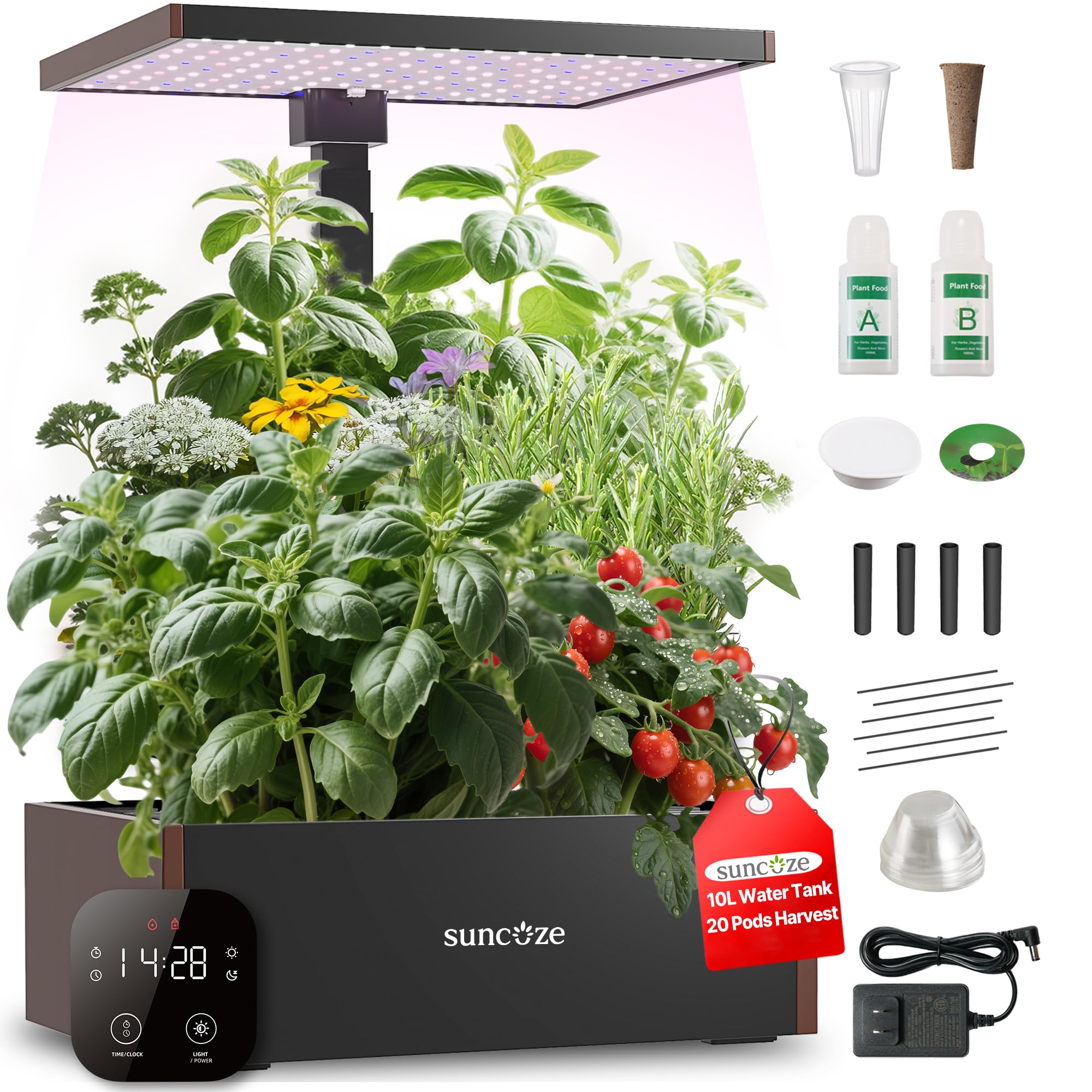
This system gives you a 10-liter tank — four times the capacity of the E SUPEREGROW tall system — so you are not refilling daily once your tomatoes start drinking. The light tower extends from 8.6 inches up to 25 inches, which gives determinate tomato varieties the headroom they need to flower without brushing the LEDs. Twenty pods mean you can grow a mix of cherry tomatoes and companion herbs in one unit.
The thing owners praise most is overall quality, with a strong second shout-out for ease of use. Buyers report that the system is great for beginners and that their biggest success is lettuce, but they also note that the light connection can be finicky — the panel requires the poles to be aligned just right. The 30W LED has four brightness levels, so you can dial it down for seedlings and crank it up for fruiting. At this price with a 10-liter reservoir, it holds a clear edge on the E SUPEREGROW for anyone who wants less maintenance.
What wins people over
- Massive 10-liter reservoir cuts refill frequency
- Adjustable light reaches 25 inches for tall tomatoes
- Owners rate build quality and ease of use highly
The honest trade-off
- Light panel can turn off if pole connections are not perfectly seated
- Instruction booklet is sparse for true first-timers
Reach for this if: you want a countertop system with the largest water tank in this guide — so you can leave tomato plants for days without refilling — and enough spacing to let them grow without crowding.
Look elsewhere if: you need a floor-standing tower or you plan to grow indeterminate vines that exceed 25 inches before harvest.
2. E SUPEREGROW Tall Hydroponics Growing System Kit
A floor-standing tower built for vining crops that need proper height.
This is the pick for indeterminate tomato varieties that climb. The stand reaches 31.5 inches tall with a trellis included, so you can train a single vine upward and give it the support it needs. Two planter sections offer enough floor space for a tomato and a pepper side-by-side. The double-layer structure with a built-in water pump circulates more oxygen to the roots than a basic wick system.
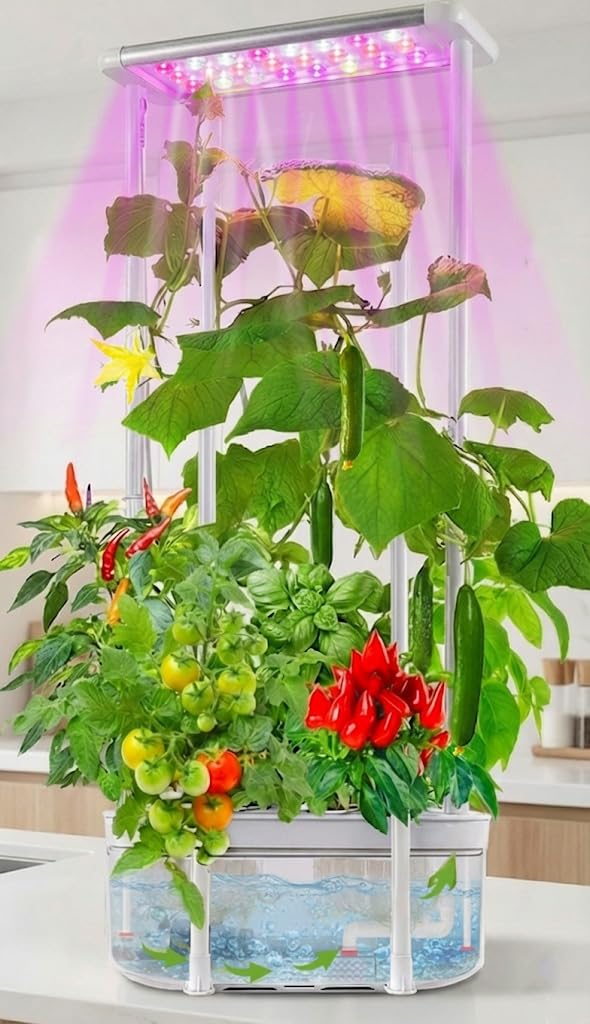
The catch is the 2.5-liter reservoir — compared to the SUNCOZE’s 10 liters, you will be topping this off every day or two once the plants are big. Owners mention that the pump is quiet on a normal day but that a pump failure during a vacation killed one plant. The 60-degree lens on the LED concentrates light well, and you get three timer settings (12h, 16h, and 24h) plus two brightness levels. For a grower focused on a single tall tomato plant, this tower gives the vertical room that a countertop cannot.
Best fit for: a dedicated indoor grower who wants to trellis one or two tall tomato vines and does not mind smaller daily water checks.
Grab it for: the built-in trellis and the tallest extendable light stand in this lineup.
skip it if: you need large water capacity — the 2.5-liter tank demands frequent refills compared to DWC buckets.
3. Hydroponics Growing System Kit 36 Plant Sites
A modular pipe system that packs 36 plants into one vertical rack.
If you have balcony space and want to run a small tomato operation, this PVC-U pipe system uses a nutrient film technique to circulate water through horizontal tubes. The 2.5-inch tube diameter is wide enough for bell peppers and small tomato varieties. Assembly is straightforward, but customers note that the last horizontal tube may need trimming and that the PVC connectors are brittle when you dismantle the system for cleaning.
The biggest concern from owners is algae growth — the white pipes let light through, and the shallow pipe angle can cause poor drainage. One reviewer noted losing 30 strawberry plants to root rot and recommends switching to rockwool instead of the included grow sponges. The pump works, but some units arrive with a pump that stops running after the first cleaning. For a beginner wanting to dip into pipe-based hydroponics, this kit offers a lot of sites for the money, but you should plan to seal the pipe joints and swap the growing medium.
Honest take: a budget-friendly pipe kit with a high plant count that needs aftermarket modifications (sealant, black tape, rockwool) to perform reliably long-term.
Choose this for: getting the most plant sites per dollar for outdoor or balcony use with small-fruiting tomatoes.
Think twice if: you want a leak-proof, low-maintenance system — plan on adding sealant and upgrading the pump.
4. Mars Hydro DWC Hydroponics Grow System 2 Buckets

A simple two-bucket DWC setup that gives each tomato its own oxygenated universe.
Deep Water Culture is the gold standard for fruiting plants, and this Mars Hydro kit delivers two 5-gallon buckets with an 8W air pump. That pump pushes air through high-quality air stones to keep dissolved oxygen levels high, which tomato roots need to avoid rot during long fruiting cycles. The top drip kit ensures even hydration during the early growth stage before the roots reach the reservoir.
The aspect that owners praise most is the setup process — everything is pre-drilled and the inline check valves have “IN” markings to prevent backflow mistakes. A few buyers mention minor water leaks from the bucket tops and that the air pump is moderately loud. At 4.3 stars across 223 ratings, this is a crowd-tested entry point for anyone moving from a countertop system to individual bucket control. The short air pump cord means you will want an extension cord or a nearby outlet.
Why owners stick with it
- Setup is the most positively reviewed aspect — clean pre-drilled buckets
- 8W pump keeps oxygenation high for heavy-feeding tomatoes
- Top drip kit supports seedlings before roots reach the deep reservoir
The real-world drawbacks
- Air pump hums audibly — not silent
- Short power cord limits placement options
Best for: a first-time DWC grower who wants a reliable, straightforward two-bucket system for a pair of tomato plants.
Not ideal if: noise sensitivity matters — place the pump on a foam pad or in a separate cabinet.
5. Spider Farmer DWC Hydroponics Growing System Kit 2 Buckets
The 7-gallon bucket that gives tomato roots the elbow room they crave.
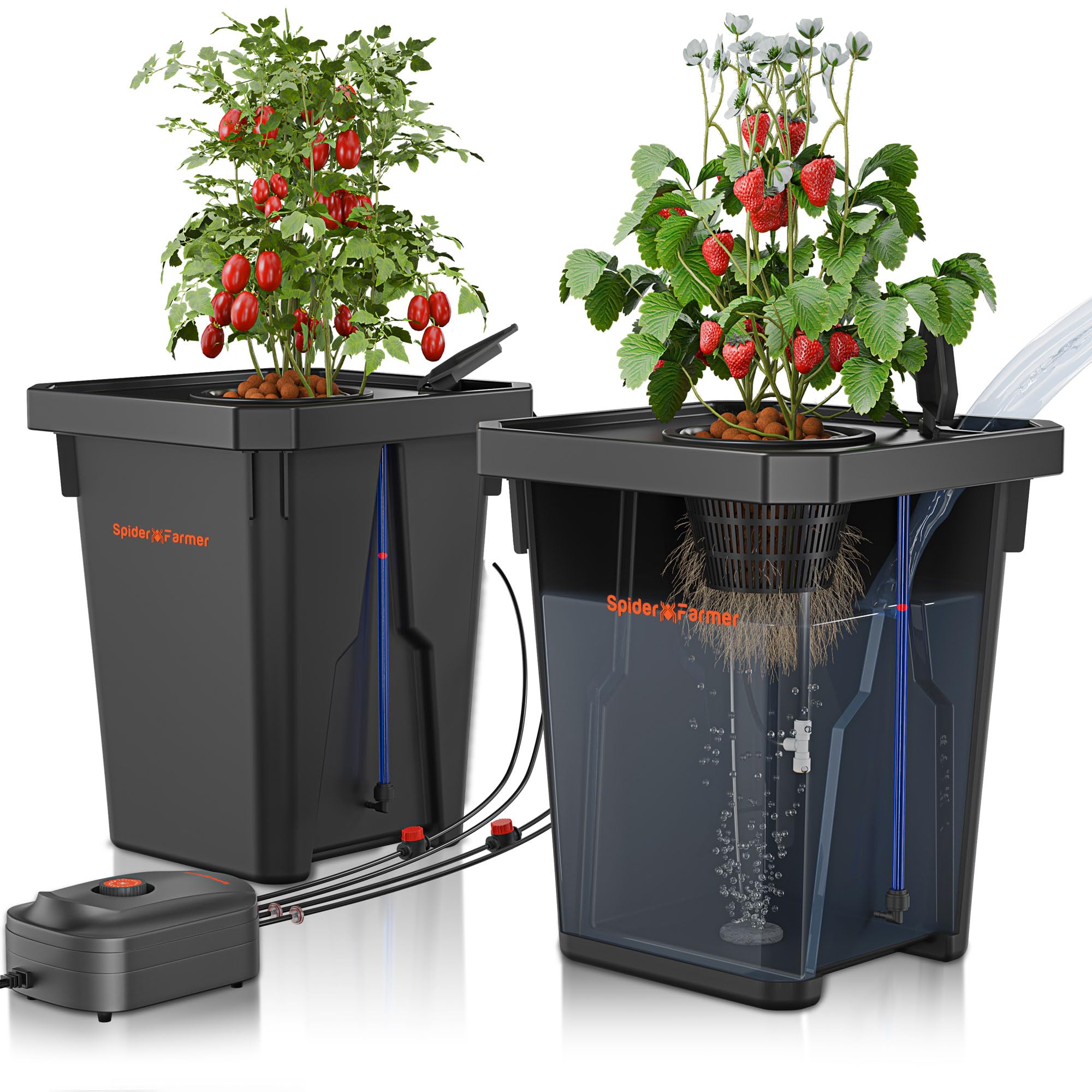
Two gallons more per bucket than the Mars Hydro system means an extra 40% water volume, which translates to more stable nutrient levels and fewer top-ups during the hot flowering phase. The triangular cover flips open for easy refills and pH checks without removing the entire lid — this is a genuine convenience the Mars Hydro buckets lack. The 6-inch net cup is made of high-tenacity PP that stays stiff even under a heavy fruit load.
Quality and ease of assembly are the two most-praised aspects here, and owners describe the design as sturdy and well-packed. The honest limitation is that the 6-inch net cups are too shallow to anchor a full tomato cage, so you will need to add stakes or a DIY trellis. One owner who grew four tomato plants noted that branches broke under fruit weight before they added stakes. The 8W air pump is adjustable, and the top drip ring lets you fine-tune irrigation speed for each plant.
Our read: each bucket holds the largest individual volume in this guide (exact capacity not stated by the maker), and the triangular fill cover makes topping up easy without removing plants. But tomato plants get top-heavy, so you will need to add stakes or a trellis — the system does not include support.
Reach for this if: you want maximum water volume per plant for deep, stable root growth and fewer refills.
Look elsewhere if: you expect the included hardware to support a full tomato cage — you will need to build your own support system.
6. VIVOSUN DWC Hydroponics Grow System 4 Buckets

A four-bucket DWC kit that lets you run a small tomato patch with one pump.
This VIVOSUN system uses a recirculating top drip design combined with Deep Water Culture, so each 5-gallon bucket gets constant nutrient circulation and aeration from a single 15W air pump. The pump pushes 25 L/min of air through four lines, which is significantly more airflow than the 8W pumps on the smaller kits. That extra power makes a difference when all four buckets are filled with thirsty tomato roots.
Quality and performance are the top two positively mentioned aspects, and owners say it is super easy to set up. The main complaint is noise — the air pump is loud, and some owners note they can hear it through walls. The included 1-inch ball air stones are too small for a 5-gallon bucket; many owners swap them for 4-inch disc stones. With 817 ratings, this is the most-reviewed DWC kit in the guide, and the consensus is that it works well once you accept the pump noise and upgrade the stones.
What the crowd loves
- 4 buckets with one pump simplify multi-plant management
- 15W pump delivers strong 25 L/min airflow
- Owners praise build quality and overall performance
The honest drawbacks
- Air pump is noticeably loud — plan to muffle or relocate it
- Stock air stones are undersized for 5-gallon buckets
Best for: a grower who wants to run four plants in individual buckets without buying four separate pumps.
pass on it if: you need a silent setup for a living room or bedroom — this pump hums.
7. GENORTH A-Type Hydroponics Growing System Kit

The A-frame design that prevents upper plants from shading the lower rows.
This is the largest kit by physical footprint — 41 x 21 inches at the base and 43 inches tall — and it uses an A-type design so every plant tier gets direct light exposure. The dark blue PVC pipes block sunlight to prevent algae growth, which is a direct fix for the algae problem seen in the white-pipe system. The anti-dry-burning pump and adjustable timer let you set unattended watering cycles.
Buyers praise assembly as the easiest part, followed by the solid build quality. Reviewers point out that the pipe joints do not leak even without extra sealant — unusual for this type of system. The main drawbacks: 72 planting sites are far too many for full-size tomato plants (you will want to use only every other port), and the system ships without a water tank, basket covers, starter nutrients, or grow lights. This is a bare-bones platform designed for outdoor use, where sunlight replaces the need for a grow light and you supply your own reservoir and nutrients.
Perfect for: a greenhouse or sunny balcony grower who wants to boost plant count per square foot with a sturdy, leak-free A-frame.
Choose this for: outdoor or greenhouse bulk production of smaller tomato varieties where sunlight is the primary light source.
it’s not for you if: you need an all-in-one kit — this is a pipe frame only, with no included lights or water tank.
8. VEVOR DWC Hydroponic System 8 Buckets
The eight-bucket DWC monster for growers who want a mini farm.
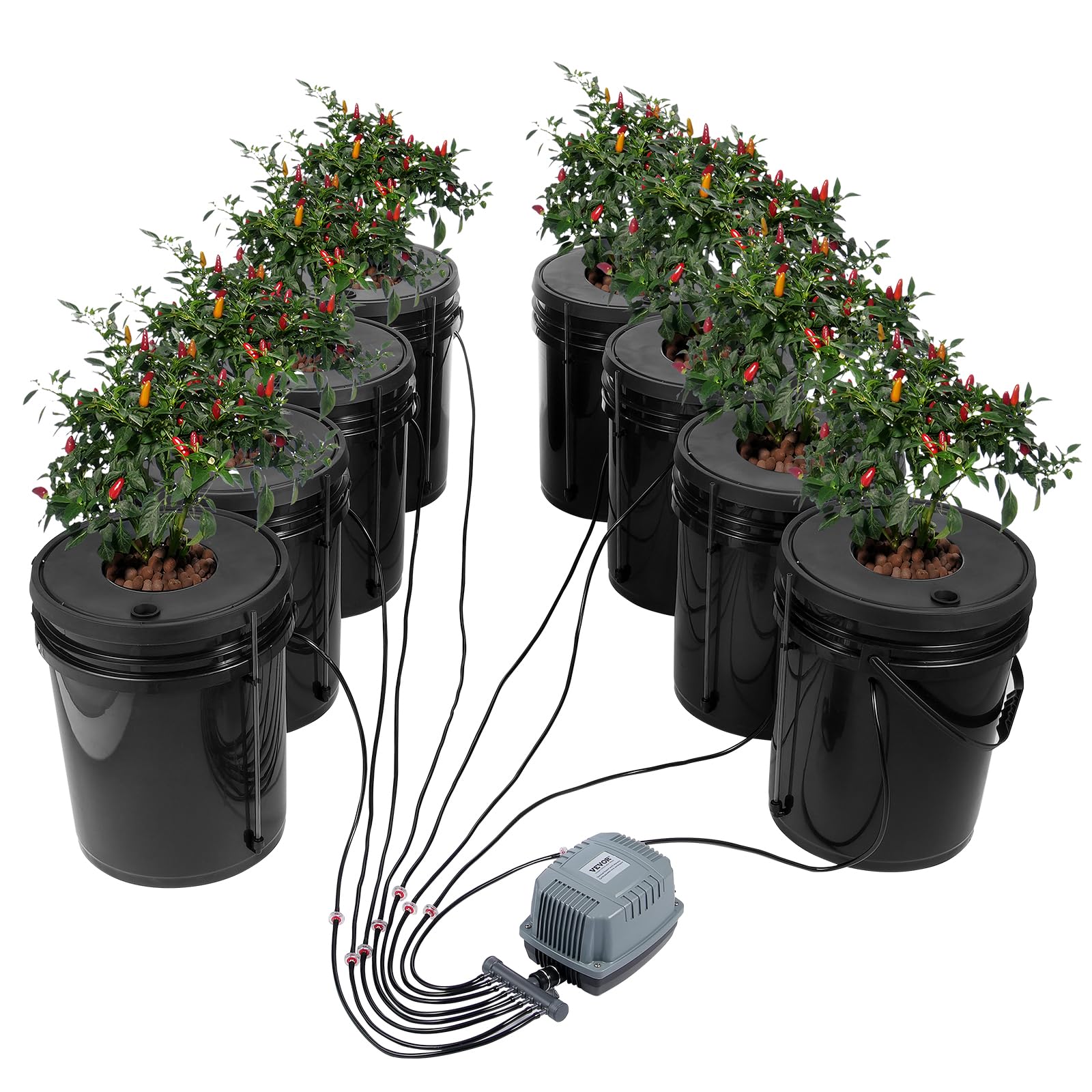
This is the highest-capacity system in the guide — eight individual 5-gallon buckets, each with its own air stone and water level indicator, all fed from one 10W pump that pushes 25 L/min. That is 40 gallons of total root space, enough for a serious tomato run. The buckets use thick light-proof PP plastic that blocks algae growth, and the recirculating design connects them so one water change treats the whole row.
The air pump is the biggest sticking point across reviews — owners describe it as extremely loud, audible through walls, and several shoppers say they replaced it with a quieter unit. Setup is involved due to the sheer number of connections, and the instructions are poor. The water level devices work well, and the inline check valves prevent reverse flow. At 4.3 stars across 862 ratings, this is the most-reviewed DWC kit alongside the VIVOSUN, and the crowd’s message is clear: the buckets are great, the pump needs replacing.
Where it excels
- Eight buckets give you massive scale from one kit
- Thick light-proof PP buckets prevent algae inside
- Water level indicators on every bucket make monitoring easy
The trade-off to know
- Included air pump is very loud — many owners swap it immediately
- Assembly instructions are unclear and the pump is hard to connect
Reach for this if: you want the highest plant capacity in a single DWC purchase and are comfortable replacing the pump with a quieter model.
Look elsewhere if: you need a quiet, all-in-one kit — factor the cost of a replacement pump into your budget.
Understanding the Specs
Water Reservoir Capacity
The size of the water tank determines how stable your nutrient solution stays and how often you need to refill. For tomatoes, bigger is always better — a 10-liter tank on a countertop system needs refilling every 2-3 days for mature plants, while a 5-gallon DWC bucket can go 5-7 days. Systems with small 2.5-liter reservoirs will require daily attention once the plant is fruiting.
Grow Light Height Adjustment
This is the maximum distance between the light panel and the base of the system. Tomato plants can stretch 24 to 48 inches indoors, so a light that stops at 16 inches will cause leaf burn. Look for at least 24 inches of travel. A system with a trellis or support sticks adds structural help for heavy fruit branches without needing a separate cage.
FAQ
Can I grow full-sized beefsteak tomatoes in a countertop hydroponic system?
How often do I need to change the water in a tomato hydroponic system?
Do I need to add a trellis or cage to a hydroponic system for tomatoes?
Is an 8W air pump enough for a multi-bucket DWC system?
Can I use tap water in my hydroponic tomato system?
What is the difference between DWC and NFT for tomato growing?
Why do tomato plants need more light than lettuce in hydroponics?
Should I choose a system with a top drip kit or just deep water culture?
Final Thoughts: The Verdict
For most buyers, the hydroponic system for tomatoes winner is the SUNCOZE Smart Hydroponics System because its 10-liter tank and 25-inch adjustable light tower offer the best balance of capacity and ease for countertop tomato growing. If you want single-plant control with deeper root zones, grab the Spider Farmer 7-Gallon DWC. And for large-scale runs with eight buckets, the VEVOR DWC 8-Bucket System is the one to reach for — just budget for a quieter pump.
How We Picked
We do not accept paid placement. Every pick is matched to a real buyer and a real use-case; we do not hands-on test units.
Sources & Methodology
Specifications: manufacturer listings and product documentation. Review insights: verified customer reviews, as of July 2026. Pricing: not shown on this page (it changes often); check the current price via the retailer link.
As an Amazon Associate, Lawn Gear Lab earns from qualifying purchases. This does not affect which products we feature.