
Specs are compiled from manufacturer listings and verified buyer reviews and can change over time — please confirm the key details on the product page before buying.
Forget what you know about dirt. Hydroponic planting medium is the unsung hero of soilless gardening — it’s the physical anchor that holds your plants upright while delivering water, air, and nutrients directly to the roots. The wrong choice leads to root rot, stunted growth, or a system that clogs in a week, while the right one turns your setup into a low-maintenance green machine.
I’m Rikta — the founder and writer behind Lawn Gear Lab. This guide is built by comparing the manufacturers’ published specifications and the patterns across verified customer reviews, so you get each pick’s real strengths and trade-offs instead of marketing spin.
Whether you’re running a countertop herb garden or a full deep-water-culture system, finding the best hydroponic planting medium means matching the texture, water retention, and aeration to what your specific plants actually need — and these nine picks cover every scenario from seed starting to bioactive vivariums.
Our Picks at a Glance


How To Choose The Best Hydroponic Planting Medium
Picking a medium is about matching texture to your system. A flood-and-drain setup needs chunky, fast-draining clay pebbles, while a seed-starting tray needs something fine and absorbent like rockwool. Think about how often you want to water — dense media hold moisture longer but risk rot if airflow is poor.
Match Particle Size to Your Root Stage
Fine media (rockwool plugs, grow sponges) cradle tiny seedlings and cuttings so delicate roots don’t dry out. As plants mature, larger media like LECA (lightweight expanded clay aggregate) pebbles — typically 8–20 mm across — create air pockets that let roots breathe in deep-water culture or flood-and-drain beds.
Weigh Water Retention Against Drainage
Every medium holds a different amount of water. Sponges and rockwool can stay wet for days, which is great for germination but bad for mature roots that need oxygen between cycles. Clay pebbles drain fast and hold moisture only on their porous surface, making them ideal for plants that dislike wet feet.
pH Stability and Dust Management
Most clay-based media are pH neutral straight out of the bag — they won’t drift your nutrient solution. Rockwool, on the other hand, has a naturally high pH and needs a thorough pre-soak to bring it down to the 5.5–6.5 range your plants want. Dust is a common complaint across all dry media; a quick rinse before first use solves it every time.
Quick Comparison
| Model | Best For | Material | Size / Pieces | Weight / Volume | Amazon |
|---|---|---|---|---|---|
| Josh’s Frogs LECA★ Best Overall | Vivariums & Drainage | Expanded Clay | 4 Quarts | ~2–3 lbs | Amazon |
| Grodan Mini BlocksTop Performer | Seed Starting | Rockwool | 2″ x 2″ x 1.5″, 24 Pack | 8 oz | Amazon |
| Leca Clay Orchid MediaOrchid Pick | Orchids & Semi-Hydro | Expanded Clay | 0.3–0.5″ Pebbles | 4 lbs | Amazon |
| Growell Grow Sponges | AeroGarden Replacement | Peat Sponge | 120 Pods, 0.9″ x 2.58″ | 9.8 x 6.6 x 1.9″ Box | Amazon |
| Riare Clay Balls | Reptile Bioactive Tanks | Expanded Clay | 4–16 mm Diameter | 10 lbs | Amazon |
| Grodan A-OK Plugs | High-Volume Propagation | Rockwool | 1.5″ Plugs, Sheet of 98 | 12 oz | Amazon |
| Voulosimi Clay Pebbles | DWC Hydroponics | Expanded Clay | 0.3–0.5″ Pebbles | 18 lbs | Amazon |
| PowerGrow Hydro Clay | General Hydroponics | Expanded Clay | Pebbles | 10 lbs (10 Liters) | Amazon |
| Geolite GMGC45L | Large-Scale Systems | Expanded Clay | 8–20 mm Uniform | 45 Liters (1.5 Cu. Ft.) | Amazon |
In‑Depth Reviews
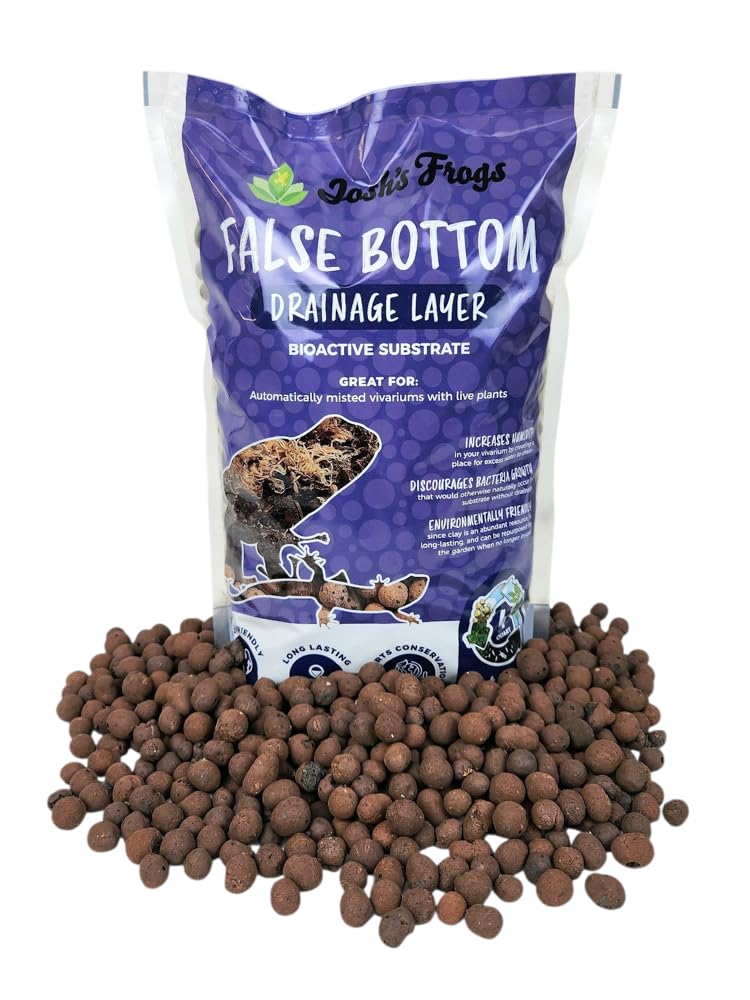
1. Josh’s Frogs False Bottom – LECA Expanded Clay Pebbles (4 Quarts)
Our pick — over 4.5★ from 900+ verified ratings; the strongest balance of quality and price.
The crowd favorite that keeps vivariums perfectly moist and roots dry.
This bag of expanded clay pebbles solves the most common terrarium problem: soggy soil that rots roots. You pour a layer at the bottom of your tank, and it creates a false bottom — a reservoir where excess water collects while the substrate above stays airy. It works exactly the same way in a hydroponic flood-and-drain table, giving roots a consistent drink without drowning them. Buyers report that “one 5-quart bag per vivarium was exact amount needed,” which means no guesswork on coverage.
The crowd consensus — a stellar 4.8 stars across more than 900 owners — zeroes in on quality and effectiveness above all. What wins people over is the near-zero dust after rinsing and the fact that each pebble holds its shape without crumbling. It’s also notably lighter than lava rock, so a full tank bottom won’t weigh down a glass enclosure.
The one honest caveat is the bag itself: it is not resealable, so you’ll want a gallon zip lock on hand for the leftovers. That is a small trade-off for a medium that does exactly what it promises.
Why It Wins
- Porous clay creates a perfect drainage layer that prevents soggy soil
- Lightweight — much lighter than lava rock, so it won’t stress glass tanks
- Minimal dust after a quick rinse; ready to use right away
The Only Trade-Off
- Bag lacks a resealable closure; you will need a separate container for storage
Reach for this if: you are building a bioactive terrarium, vivarium, or any flood-and-drain system where a reliable, clean drainage medium is non-negotiable.
Think twice if: you need a medium for seed starting — the pebbles are too large and free-draining for delicate seedlings.
2. Grodan Wrapped Mini Blocks 2″ x 2″ x 1.5″ Pack of 24
Fat, fibrous cubes that turn seedlings into strong transplants.
Each 2″ x 2″ x 1.5″ block is a compressed mat of rockwool — stone spun into threads that hold water like a sponge while keeping plenty of air pockets for oxygen. The thing everyone raves about here is the consistent firmness and shape; these blocks hold together far better than cheaper alternatives that crumble in your hands. The plastic wrap around each cube helps preserve that shape and the internal air channels, so roots have an easy path to expand.
A key real-world detail: the top hole is firm enough that emerging sprouts can shear off against the rockwool if you do not soften the opening slightly. Owners who took a moment to loosen the fibers around the hole saw perfect germination rates. That minor technique makes all the difference between a block that works and one that frustrates.
The included pair of nitrile gloves is a nice bonus for handling the dry rockwool, though a few packs arrive without them. For the quality you get at this price, the blocks are widely considered the standard for cloning and seed propagation.
Standout Strengths
- Firm, dense rockwool holds its shape and resists crumbling
- Each cube is individually wrapped to protect air pockets during shipping
- Excellent for cloning and seed germination — roots fill the block rapidly
One Thing to Watch
- If you do not soften the top hole, emerging sprouts can shear off at the stem
Best for: hydroponic growers who need a reliable, uniform rockwool block for cloning cuttings or starting seeds before transferring to a larger system.
skip it if: you want a reusable medium — rockwool is single-use and not biodegradable.
3. Leca Clay Orchid/Hydroponic Grow Media – 4 lbs.
The semi-hydro staple that transforms finicky orchids into year-round bloomers.
This 4-pound bag of clay pebbles is built specifically for orchids and semi-hydroponic setups. The porous structure of each pebble acts as both an air pump and a water reservoir — roots get oxygen between watering cycles and a steady sip of moisture when the reservoir below evaporates. Owners mention that Phalaenopsis orchids (the classic moth orchid) respond beautifully, with thick roots and year-round flower spikes after switching from bark to this LECA.
The package dimensions are 13.03 x 7.4 x 3.54 inches, compared to the Grodan Mini Blocks at 12 x 4.2 x 3.4 inches, but the real value here is the pebble size — ballpark 0.3 to 0.5 inches across, which is spot-on for medium to large Cattleyas and Laelias. It is dusty straight out of the bag, so plan on a thorough rinse before use. As buyers put it: “very little dust, easy to rinse and use right away” — a quick wash under a hose removes the fines in under a minute.
The only real disagreement among owners is the perceived value: some think 4 pounds is a steal compared to local garden centers, while others wish the listing gave volume instead of weight to make comparison easier.
Designed for orchids: the pebble size and porous texture are tune for semi-hydroponic orchid culture, eliminating watering guesswork.
Honest downside: the bag is dusty on first open; budget ten minutes for rinsing before potting your plants.
4. Growell Grow Sponges, 120 Pack Hydroponic Pods

120 pre-dried sponges that slide into any countertop hydroponic system.
These compressed peat sponges are the direct replacement for AeroGarden pods and dozens of similar countertop systems. After soaking for about five minutes, each sponge expands to 0.9 inches in diameter and 2.58 inches in height — the exact dimensions needed to fit standard pod holders. Customers note growing lettuce, grape tomatoes, basil, mint, and even sugar baby watermelon in these sponges, which shows how versatile the peat material is across different plant types.
The value proposition is clear: 120 sponges in one box means you go through multiple growing cycles without reordering. What wins most buyers over is the fit — they swell to the right size and grip the pod holder without slipping. The mixed feedback centers on germination consistency; some owners had every seed pop, while others had zero sprout in the same batch. The recurring advice is to soak the sponges thoroughly and keep the humidity dome on until you see green.
Mold can develop if the sponges stay excessively wet in stagnant air, so airflow matters. For the price per unit, these are a solid backup for any countertop gardener.
Why It’s a Bargain
- 120-piece pack covers many growing cycles without repurchasing
- Expands to fit standard 0.9-inch pod holders in most countertop systems
- Made from pH-balanced peat that supports broad plant variety
The Consistency Catch
- Germination success varies — some sponges sprout reliably, others do not
- Mold can appear if the sponges stay wet with poor airflow
Reach for this if: you own an AeroGarden or similar countertop system and want a cost-effective, high-count refill that fits out of the bag.
Think twice if: you need 100% predictable germination for valuable seeds — test a few sponges first before planting your entire batch.
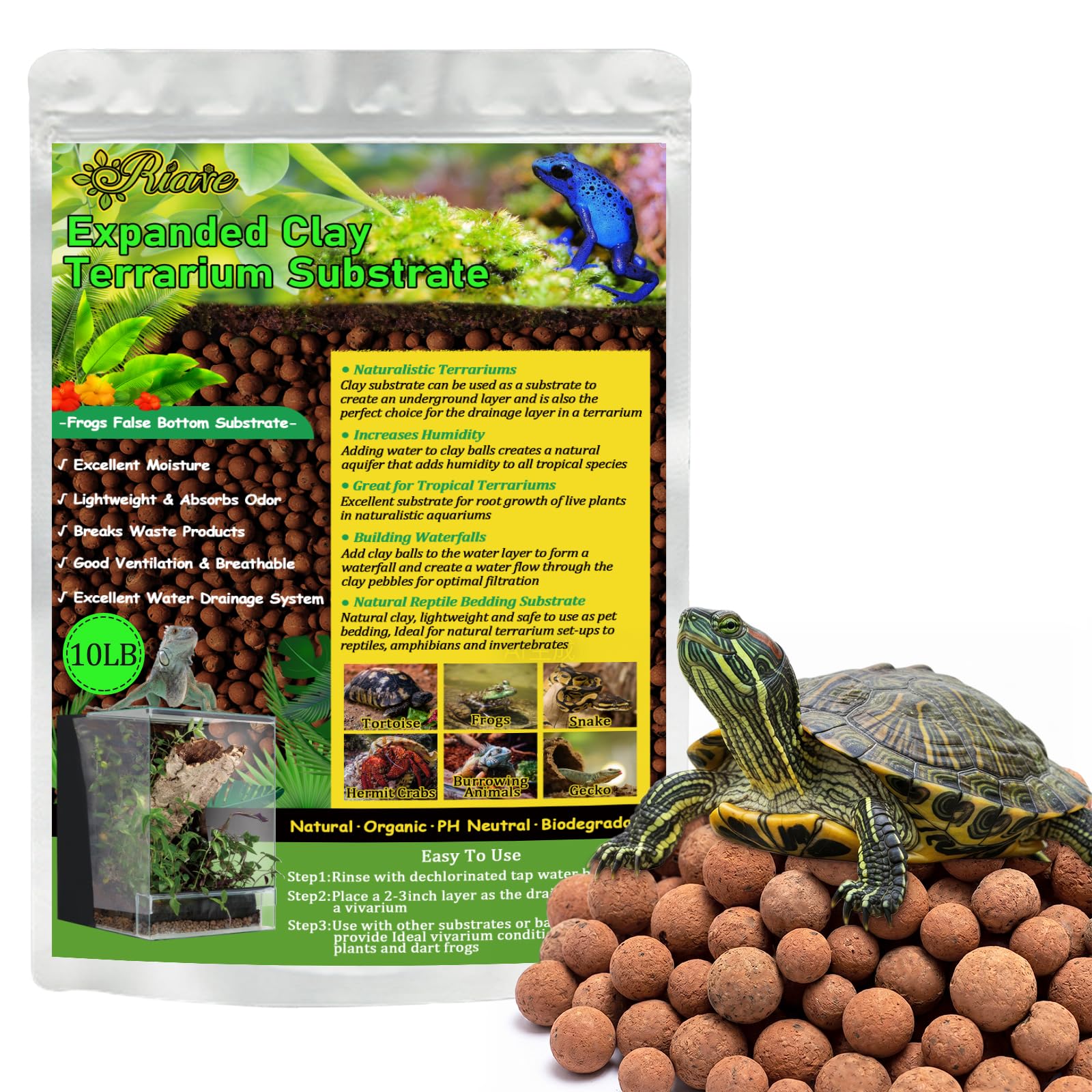
5. Riare 10LBS Expanded Clay Balls Terrarium Substrate
Ten pounds of pH-neutral clay that turns reptile tanks into living ecosystems.
These 4-to-16-millimeter clay pebbles are kiln-fired from natural clay, which makes them strong enough to support a thick layer of substrate above without collapsing. The primary job here is to function as a false bottom — you pour a 1.5-inch layer, cover it with mesh, then add your ABG mix or coconut husk on top. Reviewers point out that a single 10-pound bag filled a 40-gallon bioactive ball python tank exactly, which is impressive coverage for the weight.
The resealable foil pouch is a practical detail that the Josh’s Frogs bag lacks — you can close it after use and store the remainder without hunting for a zip-lock. Buyers specifically praise the low dust and the uniform pebble size, noting that “wasn’t dusty and the package is resealable.” A few found the pebbles smaller and darker than the product photos suggest, but that is a visual quirk, not a functional issue.
This is a dedicated bioactive enclosure medium first, a hydroponic medium second. If your goal is a planted reptile tank with a thriving cleanup crew, this is the one to beat.
Purpose-built for reptiles: the kiln-fired clay creates a durable, non-dusty false bottom that holds moisture without compacting.
Honest note: the pebbles are on the smaller side of the range; if you prefer larger pieces for visual effect, this may not match the photo.
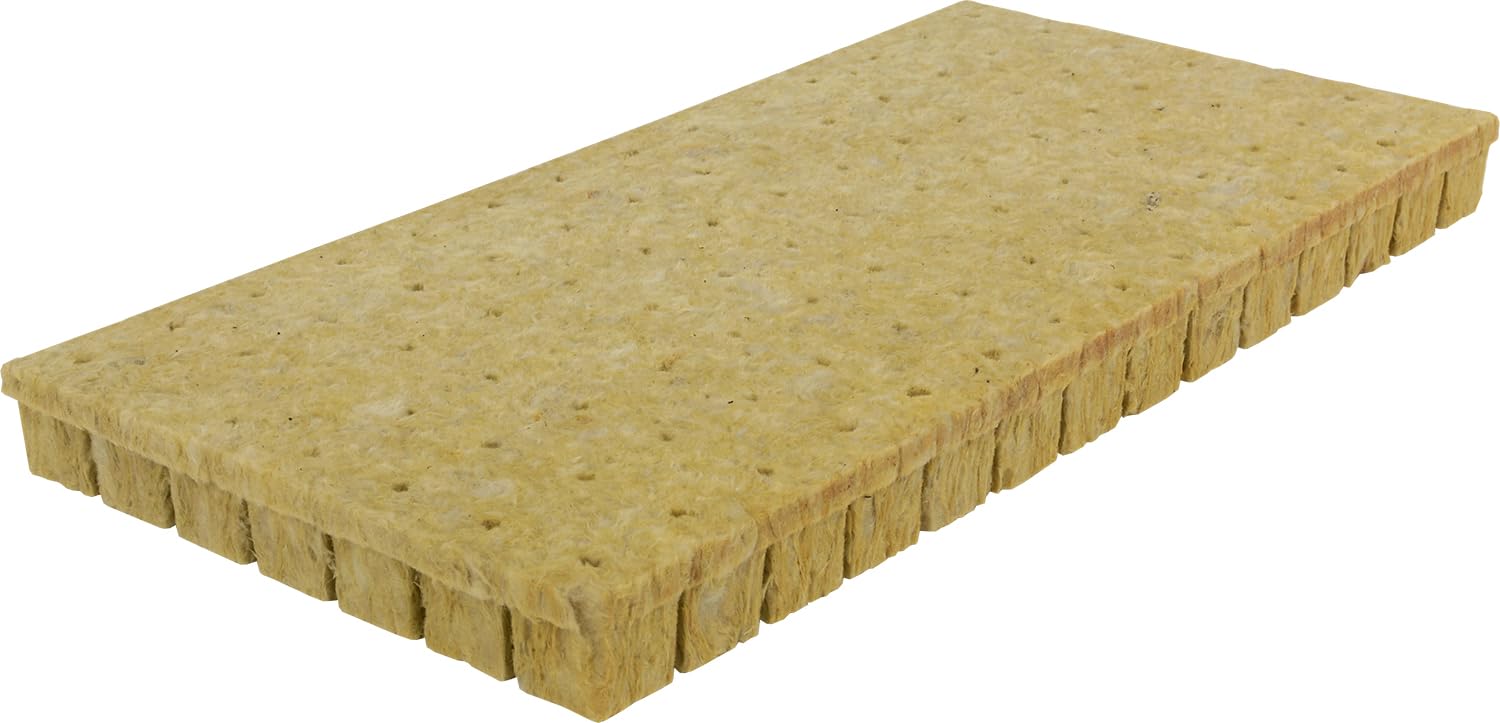
6. Grodan A-OK 36/40 1.5 Inch Starter Plugs, Sheet of 98
Ninety-eight single-use plugs in one sheet, ready for mass germination.
This sheet of Grodan rockwool plugs is designed for high-volume seed starting and cloning before you “block on” the plants into larger cubes. Each plug is 1.5 inches tall with a V-shaped top hole that guides roots downward and discourages tangling. The entire sheet measures 20 inches by 9.8 inches, so it fits standard 1020 propagation trays with minimal overhang. Shoppers say that basil thrives in these plugs, along with cilantro, dill, and chives in aquaponics setups.
The material here is the same spun stonewool that made Grodan a standard in commercial horticulture — it absorbs nutrient solution readily while retaining enough oxygen for explosive root growth. The individual plugs separate easily by hand, though some owners had to break the sheet to fit non-standard racks. A critical note: rockwool dust is a respiratory irritant, so wear a mask when cutting or handling the dry sheet.
With functionality mentioned across 74 positive owner experiences, this is the volume choice for anyone running multiple trays of seedlings.
Volume Advantage
- 98 plugs in one continuous sheet for efficient, high-density planting
- V-shaped center hole discourages root tangling during early growth
- Holds roots securely while allowing easy separation for transplanting
Consider This
- Dry rockwool dust is hazardous — always wear a mask and work in a ventilated area
- Plugs may need trimming to fit certain seed-starting trays
Best for: serious propagators who need to start dozens of seedlings or clones at once in a uniform, reliable medium.
pass on it if: you prefer a reusable or biodegradable medium — rockwool is single-use and does not break down.
7. Voulosimi Clay Pebbles Hydroponic Rocks – 18LB

Nearly 18 pounds of clay that make deep-water culture setups a breeze.
This is the bulk option for hydroponic growers who need to fill multiple net pots or line the bottom of large flood-and-drain tables. The pebbles are sized between 0.3 and 0.5 inches — roughly 8 to 16 mm — and they are pH neutral, non-toxic, and sterile straight out of the bag. Owners running deep-water culture (DWC) setups in standard 5-gallon buckets confirm that a layer of these pebbles effectively blocks light from reaching the nutrient reservoir below, preventing algae growth.
The main performance difference versus the Josh’s Frogs or Riare options is the consistency of the pebble size. Owners note that the beads are “all about the same size and very little dust” compared to other brands, which means less sorting and fewer fines to wash away. The trade-off is that 18 pounds of clay requires serious rinsing — the dust layer can be heavy, and a 24-hour soak followed by several water changes is the recommended prep.
For the sheer volume per dollar, this is the pick for growers who go through media fast.
Bulk Benefits
- 18-pound bag provides excellent coverage for multiple DWC buckets or large trays
- Consistent pebble size with minimal dust after rinsing
- pH neutral and kiln-fired for long-term reusability
Prep Required
- Dust is significant on first open — expect to rinse thoroughly and soak for up to 24 hours
- Weight of 17.69 pounds makes the bag heavy to maneuver without a second pair of hands
Reach for this if: you run a deep-water culture or flood-and-drain system with multiple plant sites and need a cost-effective bulk clay medium.
Think twice if: you have a small countertop setup — 18 pounds is overkill for a 6-pod AeroGarden.
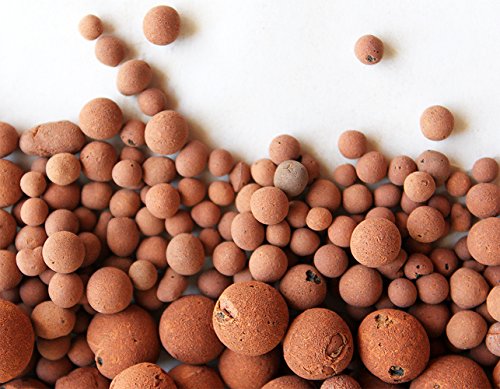
8. PowerGrow Systems Hydro Clay Pebbles – 10 lbs.
Ten pounds of agricultural-grade clay that holds up to repeated use.
PowerGrow Systems certifies this LECA for agricultural use, which means it meets a higher standard of consistency than generic clay pebbles sold as decorative rocks. The 10-pound bag provides roughly 10 liters of material — enough to create a solid drainage layer in an 18-by-36-inch bio enclosure or fill a set of large net pots for a hydroponic rail system. Owners note that the pieces vary in shape and some arrive broken, but performance is unaffected because the porous surface area still does its job.
The dust factor here is average — not the worst, not the best. Buyers repeatedly say “dusty, but rinsing easily resolves,” so a quick wash before first use is mandatory. The packaging, however, is the most common irritation: the pebbles come in a thin plastic bag inside a cardboard box, which makes storage awkward. Most owners end up transferring the media to a plastic bin right away.
For the price per volume, this is a solid mid-range option that performs identically to pricier reptile-branded LECA.
Agricultural certification: the clay is tested and certified for hydroponic and aquaponic use, not just decoration.
Honest downside: the thin inner bag makes storage a hassle — plan to transfer to a sturdy container immediately.
9. Geolite GMGC45L Clay Pebble Grow Media – 1.5 Cu. Ft.

A 45-liter Italian-made bag that delivers uniform pebbles for serious systems.
This is the largest bag in the lineup at 1.5 cubic feet — roughly 45 liters of expanded clay pebbles made in Italy from all-natural clay. The 8–20 mm uniform size range is ideal for drip systems, deep-water culture, flood-and-drain tables, and wicking beds. The kiln-firing process creates a hard, durable shell that resists flaking, and the low EC (electrical conductivity) levels mean it won’t mess with your nutrient solution’s balance.
The thing that stands out here is the consistency. Most clay media bags have a wide size range with lots of fines at the bottom; Geolite maintains a tight 8–20 mm spread, which gives uniform air pockets across the entire grow bed. Owners confirm that after months of use, only a couple of pebbles ever sank — a sign that the structure stays intact. The recurring gripe is dustiness; the pebbles arrive “dirty or dusty” and need a thorough wash before use, but that is standard for any clay media at this volume.
If you are filling a large flood table or multiple deep-water culture systems, this single bag replaces several smaller purchases.
Why Size Matters
- 45-liter bag covers large flood-and-drain tables and multiple DWC buckets
- Uniform 8–20 mm pebbles create consistent airflow and drainage
- Made in Italy from kiln-fired natural clay with low EC for stable pH
The Volume Trade-Off
- Dusty on arrival — plan for a thorough rinse session before first use
- Pebbles tend to float, so this is not ideal for pond applications or submerged setups
Reach for this if: you run a large-scale hydroponic setup and want the most media per purchase with reliable, uniform pebble size.
Think twice if: you only need a small drainage layer for a single terrarium — this bag will leave you with far more than you need.
Understanding the Specs
LECA — Lightweight Expanded Clay Aggregate
LECA is the most common hydroponic medium for good reason. The clay is kiln-fired at high temperatures, which turns it into a hard, porous pebble that holds water on its surface while leaving large air gaps between each piece. That structure gives roots both oxygen and moisture in the same container. LECA is pH neutral, reusable after a rinse, and heavy enough to anchor tall plants without tipping over. The main drawback is dust: every bag has some fines that need washing out before the pebbles go into your system.
Rockwool (Stonewool)
Rockwool is made by spinning molten rock into fibers, then compressing those fibers into cubes, blocks, or slabs. The result is a material that holds 70–80% water while still retaining 20–30% air, which is ideal for seed germination and cloning. The fibers wick moisture upward, so a shallow water tray keeps the entire block damp. The catch: rockwool has a naturally high pH (around 7.5–8.0) that needs to be pre-soaked in pH-adjusted water (5.5–6.5) before use. It is not biodegradable and the dry fibers create a respiratory hazard — always wear a mask when handling it dry.
FAQ
Can I reuse clay pebbles after one grow cycle?
How do I adjust the pH of rockwool before planting?
What size clay pebbles should I use for deep-water culture?
Will these media work in an AeroGarden or similar countertop system?
How long does expanded clay pebble media last before it needs replacing?
Is rockwool safe for organic hydroponic systems?
What is the difference between a false bottom and a drainage layer?
Can I mix different media types in the same system?
Why do my clay pebbles smell musty after a few weeks of use?
Final Thoughts: The Verdict
If you want one dependable pick, the best hydroponic planting medium is the Josh’s Frogs LECA Pebbles because it combines proven quality, near-zero dust, and a 4.8‑star owner consensus that makes it the default choice for bioactive and hydroponic drainage layers. If you want a dedicated seed-starting medium, grab the Grodan Mini Blocks for their firm, consistent rockwool cubes. And for large-scale hydroponic setups, the Geolite 45-Liter Bag gives you the most volume per purchase with uniform pebble sizing that commercial growers trust.
How We Picked
We do not accept paid placement. Every pick is matched to a real buyer and a real use-case; we do not hands-on test units.
Sources & Methodology
Specifications: manufacturer listings and product documentation. Review insights: verified customer reviews, as of July 2026. Pricing: not shown on this page (it changes often); check the current price via the retailer link.
As an Amazon Associate, Lawn Gear Lab earns from qualifying purchases. This does not affect which products we feature.