
Specs are compiled from manufacturer listings and verified buyer reviews and can change over time — please confirm the key details on the product page before buying.
Walking through your home and seeing plants that look tired, stretched, or just plain sad despite your best efforts is frustrating. The usual suspects — too much or too little water — get all the blame, but the real problem is often just weak light. A standard lamp bulb simply does not put out the specific wavelengths your plants need to photosynthesize and thrive. The fix is swapping to a bulb built for the job, and the right one turns a dim corner into a thriving indoor garden without any complicated setup.
I’m Rikta — the founder and writer behind Lawn Gear Lab. This guide is built by comparing the manufacturers’ published specifications and the patterns across verified customer reviews, so you get each pick’s real strengths and trade-offs instead of marketing spin.
You want your seedlings to sprout, your winter herbs to keep producing, or a houseplant to finally bloom — and the right hydroponic grow bulbs give you the exact light spectrum and intensity to replace the sun. These picks do it without turning your living room into a disco.
Our Picks at a Glance


How To Choose The Best Hydroponic Grow Bulbs
You match the bulb’s light output to what you are growing. A bulb that works beautifully for a low-light pothos might be too weak for a tomato seedling. Here are the three most important factors to think about.
Understand PPF — the real measure of power
Wattage tells you how much electricity the bulb uses, not how much useful light it delivers for plants. The number that matters is PPF (Photosynthetic Photon Flux), measured in micromoles per second. A higher PPF means the bulb delivers more usable light. A bulb with 50 µmol/s can drive fruiting and flowering, while a 16 µmol/s bulb is better suited for seedlings and leafy greens. Always check the PPF spec, not just the wattage equivalent.
Match the spectrum to the growth stage
Full-spectrum bulbs that look white to your eyes are the most versatile. They contain both the blue wavelengths (around 400-500nm) that drive leafy growth and the red wavelengths (around 600-700nm) that trigger flowering and fruiting. Avoid the old-style “blurple” bulbs that cast a disorienting pink-purple glow — they work, but most people prefer a bulb that lights a room naturally.
Check the beam angle for coverage
A bulb with a 60-degree beam angle concentrates light into a tight spot, which is great for a single tall plant but forces you to place the bulb farther away to cover a seedling tray. Wider angles like 120 or 230 degrees spread light over a larger area, so you can place the bulb closer and still cover multiple small pots evenly.
Quick Comparison
| Model | Best For | PPF | Wattage | Beam Angle | Amazon |
|---|---|---|---|---|---|
| GE PAR38 Flood★ Best Overall | Heavy fruiting & winter survival | 50 µmol/s | 40W equiv | — | Amazon |
| ALIDE A19 3-PackBudget Champion | Budget multi-plant coverage | 23 µmol/s | 10W | 230° | Amazon |
| Bioluz LED A19 9WLiving Room Pick | Soft-white living space lighting | — | 9W | 120° | Amazon |
| SANSI A21 24W | High PPFD in a compact bulb | — | 24W | 60° | Amazon |
| Philips PAR38 15.5W | Even, wide-angle coverage | — | 15.5W | 50° | Amazon |
| GE BR30 2-Pack | Space-saving for shelves | 16 µmol/s | 9W | 110° | Amazon |
| Lonwon PAR38 30W | Intense bloom-boosting power | — | 30W | — | Amazon |
| Barrina Pendant 25W | Hanging setup with timer | — | 25W | — | Amazon |
In‑Depth Reviews
1. GE Grow LED Light Bulb, PAR38 Flood Light
Our pick — over 4.5★ from 550+ verified ratings; the strongest balance of quality and price.
The heavyweight champion for anyone serious about fruiting plants indoors.
This GE PAR38 delivers a whopping 50 micromoles per second of PPF — a 2.2x gap over the next strongest bulb on this list. That kind of output makes it an ideal pick for tomatoes, cucumbers, peppers, and citrus trees that need real punch to flower and set fruit. It puts out a natural white light instead of the harsh purple glow of older grow bulbs, so it does not look out of place in a living room. Buyers report it runs cool enough to leave on all day and keeps plants like Monsteras and snake plants thriving through the winter.
The catch is its size and weight. The PAR38 floodlight shape is noticeably larger and heavier than a standard A19 bulb, so you need a sturdy clamp lamp or fixture that can hold it securely. It pulls 40 watts equivalent, and some owners note it gets warm near the heat sink — though no one calls it dangerous. The warmth is actually a sign the high-quality heat sink is doing its job.
Reliability is the top praise here — more than 20 owners single it out specifically, and the lighting quality follows close behind. At 4.8 stars across over 550 ratings, this is the most-loved bulb in the lineup by a clear margin.
What wins people over
- Highest PPF in this list at 50 µmol/s — built for fruiting and flowering
- Natural white light that blends into your home decor
- Rated for 25,000 hours of life
- Owners consistently report bigger, faster plant growth
What to consider
- Heavy PAR38 body needs a sturdy fixture
- Wider beam spread means keep it 24-30 inches from plants
Reach for this if: you are growing anything that flowers or fruits — tomatoes, peppers, citrus — and you want one bulb that can genuinely replace a sunny window through the winter.
Think twice if: you only need gentle light for a single low-light houseplant like a ZZ plant or snake plant; the GE BR30 below is a more proportional match.
2. ALIDE A19 LED Grow Lamp 3-Pack
Three bulbs that cover a lot of ground without covering you in purple light.
This ALIDE 3-pack is the most affordable way to spread grow light across a shelf or a small hydroponic setup. Each bulb delivers 23 micromoles per second of PPF (photosynthetic photon flux — the amount of usable light for plants) with a massive 230-degree beam angle — the widest in this comparison — so a single bulb can cover a broad seedling tray or several small pots on a rack. It uses just 10 watts per bulb yet the brand claims a 100-watt equivalent brightness at 1,000 lumens. The spectrum is a mix of red, blue, and 5000K white LEDs, which means it avoids the harsh pinkish cast of cheaper blurple-only bulbs.
The build is standard A19 size, so it screws into any normal lamp without a second thought. Owners praise how it fits into non-standard fixtures and track lights with no fuss. One review mentions it “caused Hoya Sarawak to bloom profusely for 11 months with massive hand-sized leaves” — a strong sign that the red spectrum is doing real work for flowering plants. The multi-pack value gets consistent praise, and the bulbs run cool enough to touch.
The trade-off is that 23 µmol/s is at 23 µmol/s versus the GE PAR38 at 50 µmol/s, so it is better suited to seedlings, greens, and houseplants than heavy-fruiting crops. A few owners mention receiving a dead bulb in a bulk box, recommending you buy the single sets rather than the multi-pack to avoid that risk.
balance for: anyone starting out or outfitting a shelf of herbs, lettuce, and low-light houseplants without spending much. The 230° beam angle is a genuine advantage for even coverage — you can place it close and still hit every pot.
3. Bioluz LED A19 9W Full Spectrum Bulb (3-Pack)
A grow bulb that doubles as your favorite reading lamp — warm, soft, and discreet.
Most grow bulbs lean into a cool daylight or clinical white, but the Bioluz LED stays at 3000K (soft white) — the same warm tone you choose for a cozy living room lamp. That makes it an ideal pick if you want to put a grow bulb in a bedside or desk lamp without changing the room’s feel. It operates at just 9 watts and produces extremely low heat, which owners mention is a key plus for confined indoor spaces or terrariums. The beam angle is 120 degrees, a nice middle ground that lights a medium-sized plant without wasting light on the ceiling.
Brightness is the top aspect across hundreds of reviews, and owners note it works well for cuttings — one saw a philodendron cutting sprout substantial roots in just 10 days. Another buyer ran one as their bedside reading lamp for over four years, calling it dim enough for comfort but still effective for a nearby plant. The 3-pack is FCC and RoHS compliant and UL listed, so safety certifications are solid.
The honest limit: at 9 watts and no published PPF figure, this is a supplemental-light bulb, not a primary grow light for heavy producers. It shines when you need to give a few houseplants a boost in a dark corner. A few customers note bulbs snapping when turned on — treat the glass carefully. The warm color also earns mixed reactions; some find it too yellow compared to natural daylight bulbs.
Grab this for: a single desk plant, a shelf of succulents, or a bathroom philodendron where you simultaneously want a warm ambient light. It is a grow bulb that hides in plain sight.
Not for: a hydroponic lettuce tray or a seed-starting setup that needs intense, focused light — you want a higher PPF bulb for that job.
4. SANSI 24W Grow Light Bulb with Optical Lens

Brute-force brightness in a bulb that almost looks like natural sunlight.
The SANSI 24W packs a 200-watt equivalent punch into an A21 bulb shape, with a Color Rendering Index (CRI) of 97 — nearly perfect color accuracy that makes plants look vibrant and natural under it. It uses a patented ceramic heat sink (Chip on Ceramic technology) to handle heat more efficiently than standard aluminum boards, and the ceramic body is flame-retardant to V0 grade. PPFD is listed at 227 µmol/s/m² at one foot, and the 60-degree beam angle concentrates that intensity into a tight area, which is ideal for a single larger plant. Owners say it is noticeably brighter and warmer than a GE 2-pack grow light, and variegated plants like Thai Constellation monsteras hold their variegation well under it.
The concentrated 60-degree beam is the defining spec here — it puts serious light on one target but does not spread far. This is a spotlight, not a floodlight. It also gets hot enough that you should not touch the aluminum heat sink during operation. ETL listing (a safety certification from Intertek) and a 5-year after-sale service add confidence.
Heat output is a mixed topic in reviews — some find it runs cool to the touch, others note the heat sink gets very warm. Both can be true: the body dissipates heat well, which means it pulls heat away from the LEDs and onto the sink. That is effective engineering but means the bulb surface gets warm. A couple of owners mention the bulb is too intense for close placement — you need distance to avoid stressing small plants.
Best for: a single demanding plant like a fiddle-leaf fig or a large monstera that needs a direct high-PPFD source. The near-perfect CRI and daylight color make it a treat for the human eye, too.
Stick with a wider beam if: you want to cover a whole shelf of small pots — the SANSI is a surgical tool, not a blanket.
5. Philips LED Plant Grow Light Bulb PAR38

A 50-degree beam that hits the whole plant, not just the top leaf.
Philips designed this PAR38 bulb with a 50-degree beam angle — a deliberate choice they explain as preferable to narrower beams because it distributes intensity evenly across the entire plant, not just a hot spot in the center. The 5000K daylight color is bright and clean, and the CRI of 92 is high enough that the light looks natural. It delivers 1,325 lumens at just 15.5 watts, with an estimated annual energy cost of. Rated for 25,000 hours, it lasts a long time without dimming.
Owners say it covers a wide area at 6 to 20 inches, handling several small to medium plants at once — succulents, orchids, pothos, and peace lilies all get a mention. One owner revived a dying echeveria using it. It also runs cool and is Energy Star certified. The catch is weight: many buyers call it heavy, and it needs a sturdy fixture. A clamp lamp with a weak plastic socket will struggle to hold it securely. A few reports of bulbs shattering on arrival or after a while, so handle with care and buy from a seller with a good return policy.
Compared to the GE PAR38 above, the Philips produces a lower PPF (not published, but its 60W equivalent and 1,325 lumens suggest it is gentler) and a narrower 50-degree beam. Where the GE floods a wide area, the Philips concentrates more gently. Which you choose depends on whether your plant needs intensity or even coverage.
Go with this if: you have a cluster of houseplants on a plant stand or a wide low table and want a bulb that lights them all evenly without burning the center one.
Choose the GE PAR38 instead if: your plant is in a fruiting or flowering phase and needs the higher PPF of 50 µmol/s to produce real results.
6. GE Grow Lights for Indoor Plants, BR30 2-Pack

The shorty floodlight that fits where a PAR38 cannot.
A BR30 bulb is shorter and fatter than a PAR38, making it a better fit for tight greenhouse shelves or enclosed light fixtures where a long bulb sticks out awkwardly. This GE BR30 2-pack draws just 9 watts per bulb and delivers a balanced PPF of 16 micromoles per second — enough for leafy greens, herbs, seedlings, and low-light houseplants. The 110-degree beam angle is wide enough to cover a shelf of small pots without hot spots. Reviewers point out that six hours a day of this light stops leaf yellowing and drives new growth even in homes with almost no natural light.
The light is a natural white (no purple cast), and the bulbs run cool enough to touch. They are noticeably long for BR30 shape — some owners note they do not fit under very low greenhouse shelves — but they work great in ceiling fixtures or standing lamps. A few mentions of the bulb being too bright for close placement: keep it at least 18 inches away or you risk burning leaves.
This GE BR30 holds a massive 4.6-star rating with over 19,000 ratings — easily the highest review count in this comparison by a wide margin. That volume of feedback gives strong confidence that the bulb delivers reliably for most people. The trade-off is it lacks the intensity of the PAR38; it is a targeted tool for greens and propagation, not for fruiting plants.
The right fit for: seed starting on a basement shelf, a kitchen counter herb garden, or any low-clearance spot where a PAR38 bulb is too tall. The 2-pack price is excellent value for covering two shelves.
7. Lonwon PAR38 30W Grow Light Bulb
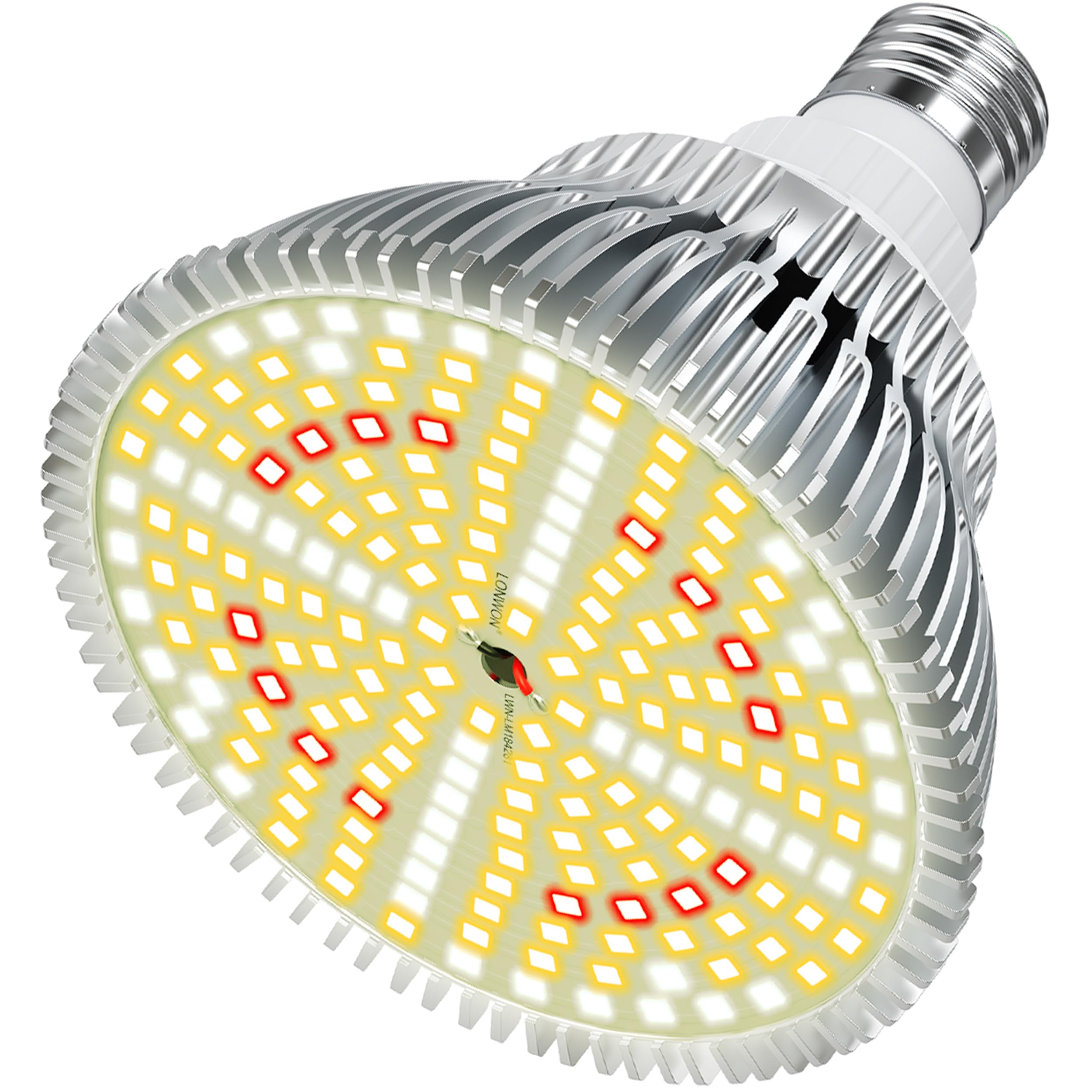
A 30-watt beast tuned to turn flowers into fruit.
The Lonwon PAR38 is a 30-watt monster (320-watt equivalent) that pumps out 1,300 µmol/m²/s at just 6 inches. It is intentionally tuned with enhanced 660nm and 730nm red wavelengths specifically to push plants into blooming and fruiting. The A21-size body is 4.7 inches wide and packs 184 high-brightness LEDs. The 4000K natural light tone means it does not cast the harsh purple glow that some red-heavy bulbs produce. Owners say it is “extremely bright” and plants “love it” — one buyer used three of them to start tomatoes, strawberries, and celery indoors.
The catch is that 30W generates noticeable heat. The bulb stays cool to the touch overall, but the aluminum heat sink can get warm. A few shoppers say individual LED burnouts after several weeks of heavy use — though the warranty response gets high marks, with replacement bulbs shipped in two days. Reliability is a mixed topic, with 23 mentions around the theme; a handful of flickering reports also surface. At full retail, this is the most powerful standard-screw bulb here by wattage, but you pay for that intensity with a slightly higher risk of early failure in some units.
Quality and brightness are the top positives, and owners consistently note that their indoor plants survive and produce through winter with this bulb. If you need heavy light for a single fruiting plant and want a standard E26 solution, this is the most wattage you can find in this shape.
Buy this for: a single large plant that you want to push into heavy flowering or fruiting — a jalapeño on a winter windowsill or a strawberry tray that needs intense light.
Look at the GE PAR38 instead if: you want proven long-term reliability from the biggest name in lighting and the 50 PPF rating to back it up.
8. Barrina LED Grow Light Bulb with Timer & Hanging System

A pendant light that treats your plants to a 14-hour sun schedule.
The Barrina is not just a bulb — it is a complete hanging system with a 16.4-foot power cord and a built-in timer that offers 4, 9, or 14-hour settings that repeat daily. The full-spectrum light spans 380nm-780nm with a CRI of 98+, about as close to natural daylight as you can get in a bulb. It uses 120 pieces of 0.5-watt LED chips to produce a PPFD of 385 µmol/s/m² at 8 inches and 2,100 lumens of brightness from just 25 watts. The aluminum lampshade handles heat dissipation and has a V0 flame-retardant grade.
Owners love how the light makes their plants “push a few days after installation” and appreciate that it does not flicker. The hanging design is ideal for a grow tent or a dedicated plant corner where you can suspend the light above a tray. The 5000K daylight white looks clean and blends with home decor. The recurring issue is the timer reliability — some units shut off randomly or fail to turn on, and a power interruption resets the timer, requiring you to re-set it each time. The company is responsive with replacements, but the timer is the most-mentioned negative by a wide margin.
Lifespan is a notable weak point here, with the highest negative mention count in this comparison (22 mentions). Some buyers report the light failing after about two years. For a fixture at this price point, the expectation is longer. If you want the convenience of a hanging system and a timer, this is the only all-in-one option on the list — but budget for a potential replacement down the line.
Perfect for: a small grow tent, a dedicated plant shelf, or a basement setup where you want a tidy hanging solution with an automatic light cycle. The high CRI makes it great for starting seeds and leafy greens.
Skip if: you want a bulletproof bulb that lasts a decade, or you prefer to control timing with your own smart plug and do not want to pay for a built-in timer you may not trust.
Understanding the Specs
PPF and PPFD — The Real Light Measurement
PPF (Photosynthetic Photon Flux) tells you how many photons of usable light the bulb emits every second, measured in micromoles per second (µmol/s). A higher number means more light for your plants. PPFD (Photosynthetic Photon Flux Density) is a spot measurement of how much of that light lands on a specific area, measured in µmol/s/m². Think of PPF as the bulb’s total output and PPFD as how intense the light is at a given distance. For leafy greens and herbs, 15-25 µmol/s is often enough; for flowering and fruiting plants, look for 40 µmol/s or more.
CRI (Color Rendering Index)
CRI measures how accurately a light source shows colors compared to natural sunlight, on a scale of 0 to 100. A CRI of 80 is decent, 90+ is excellent, and 98+ is near-perfect. High CRI does not help the plant — plants use specific red and blue wavelengths regardless — but it matters enormously for how the plant looks to your eyes. A bulb with CRI 97 makes a red flower look vivid red, not dull brownish-red. If your grow light is in a visible living space, prioritize CRI of 90 or higher.
FAQ
Can I use any LED bulb as a grow light?
How far should I place the bulb from my plants?
What is the difference between full spectrum and blurple bulbs?
Does a higher wattage always mean a better grow bulb?
Can I screw a PAR38 bulb into any lamp?
How long do LED grow bulbs typically last?
Do I need a timer for my grow bulb?
What size bulb fits a standard desk lamp?
Can I use these bulbs for starting vegetable seeds?
Will these bulbs work in a grow tent?
Final Thoughts: The Verdict
Across the board, the hydroponic grow bulbs winner is the GE PAR38 Flood Light because it delivers the highest PPF (50 µmol/s) in a bulb that produces natural white light and carries genuine reliability from the most trusted name in lighting. If you want to cover a broad shelf without spending much, grab the ALIDE A19 3-Pack. And for a pre-built hanging solution with an auto timer that blends into your decor, the Barrina Pendant is the one to reach for.
How We Picked
We do not accept paid placement. Every pick is matched to a real buyer and a real use-case; we do not hands-on test units.
Sources & Methodology
Specifications: manufacturer listings and product documentation. Review insights: verified customer reviews, as of July 2026. Pricing: not shown on this page (it changes often); check the current price via the retailer link.
As an Amazon Associate, Lawn Gear Lab earns from qualifying purchases. This does not affect which products we feature.