
Specs are compiled from manufacturer listings and verified buyer reviews and can change over time — please confirm the key details on the product page before buying.
After one messy, pest-filled season with soil, you likely want a cleaner base for your hydroponic garden. Coconut fiber gives you a sterile, airy medium that holds moisture without turning into mud and lets roots breathe. But the variety — compressed bricks, pre-formed pucks, loose chips, and flat grow mats — makes choosing hard. This guide matches nine top-reviewed options to your specific grow setup, so you know exactly which one to buy.
I’m Rikta — the founder and writer behind Lawn Gear Lab. This guide is built by comparing the manufacturers’ published specifications and the patterns across verified customer reviews, so you get each pick’s real strengths and trade-offs instead of marketing spin.
That means helping you find the best hydroponic coconut fiber for your setup, budget, and skill level — whether that is a giant 10-pound brick for a full grow tent or a pack of pre-sized starter pucks for a countertop AeroGarden.
Our Picks at a Glance


How To Choose The Best Hydroponic Coconut Fiber
Picking the right coconut fiber depends on matching its form to your gear and understanding a few key numbers in the specs. Here is exactly what to look for.
Form Factor: Brick, Puck, Mat, or Chip
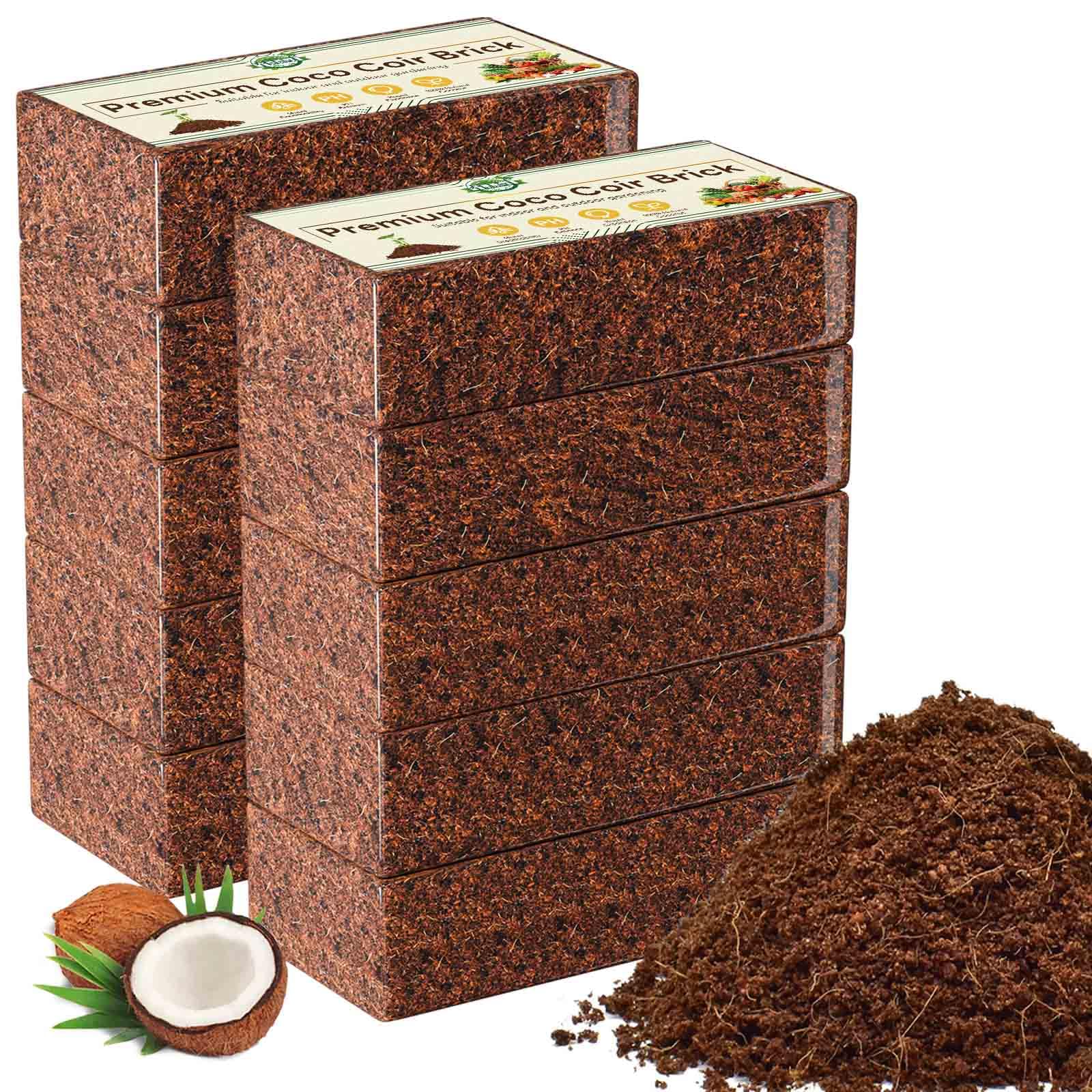
Compressed bricks give you the most volume per dollar — a single 10-pound block can expand into several cubic feet (for example, enough to fill 7–10 standard seed trays). Pucks are pre-measured discs for seed starting and small AeroGarden-style systems. Coco chips are chunkier pieces that trap more air, making them ideal for orchids and tropicals. Grow mats are flat sheets designed for microgreen trays where you want a uniform surface. Your system decides the shape.
Salt Level and EC
Coconut fiber naturally contains salts from the ocean environment where the husk grew. High salt levels can burn delicate roots and stunt growth. Look for fiber labeled “low EC” (electrical conductivity, a measure of dissolved salt) or “triple-washed” — this means the manufacturer has rinsed the material to remove those salts. An EC below 0.5 is considered safe for any seedling or cutting, so roots stay healthy.
Buffered vs. Unbuffered
Some coconut fiber is “buffered”, which means it has been pre-treated with calcium and magnesium so it does not steal those nutrients from your plants during the first days. Unbuffered fiber will try to exchange its own sodium for your nutrients, causing a temporary deficiency. For hydroponic systems, buffered fiber saves you the trouble of a pre-soak with calmag solution (calcium and magnesium supplement).
Expansion Ratio
A compressed block of coconut fiber can expand to anywhere from 5 to 15 times its dry volume. Knowing the expanded volume — measured in quarts or gallons — lets you buy the right amount for your tray count or pot size without guessing. A 10-pound brick that expands to 75 quarts fills roughly 7 to 10 standard seed trays, so you get predictable coverage.
Quick Comparison
| Model | Best For | Expanded Volume | Dry Weight | Form Factor | Amazon |
|---|---|---|---|---|---|
| CANNA Coco Brick 40L★ Best Overall | Serious growers | 40 liters | 8 liters dry | Compressed brick | Amazon |
| Halatool 10-Pack BricksBest Value | Multi-use / convenience | 56.56 cu in each | ~1.4 lb each | Compressed bricks (10pk) | Amazon |
| GROW!T JSCC2 Coir ChipsTop Performance | Orchids / tropicals | 0.05 cubic meters | 5.2 pounds | Chunky chips | Amazon |
| Minute Soil 100mm Block | Small pots / cat grass | 4.25 gallons | 26 oz | Compressed block | Amazon |
| Minute Soil 40mm Pucks (30pk) | Seed starting | 5.5 quarts | 26 oz | Compressed pucks | Amazon |
| Vivlly Coco Coir Brick 10LB | Large volume / value | 75 quarts | 10 pounds | Compressed brick | Amazon |
| EVERECOO Grow Sponges (100pk) | AeroGarden replacements | — | 200g | Pre-shaped sponges | Amazon |
| Gro-Med OMRI Block 10LB | Organic gardens | 80 quarts | 11 pounds | Compressed brick (food added) | Amazon |
| Envelor Coco Grow Mats (10pk) | Microgreens | — | — | Grow mat sheets | Amazon |
In‑Depth Reviews
1. CANNA Coco Brick 40L Expandable
Our pick — over 4.5★ from 550+ verified ratings; the strongest balance of quality and price.
The grower-favorite brick that consistently delivers pest-free, clean medium — and buyers rate it higher than the Vivlly for reliability.
You get a sterile base for serious indoor growing starting with an 8-liter dry brick that expands to 40 liters. The big benefit: growers consistently report the absence of the pests and diseases that plague traditional soil. One experienced indoor cultivator wrote, “Coco outperformed soil for cannabis: zero pests/disease vs. mites, N toxicity, calmag deficiency, fungus gnats.” The brick breaks down easily, holds moisture without turning soggy, and owners say they reuse it after a simple rinse and de-rooting.
Reviewers most often praise the quality and consistency. The fiber is clean, earthy-smelling, and free of the dust and fungus that cheaper brands sometimes carry. It breathes well enough that many growers skip adding perlite (a volcanic rock that improves drainage) entirely. The trade-off is the price — it sits at a premium relative to generic blocks. But the near-perfect rating from hundreds of buyers makes a strong case that the price buys confidence.
One-brick solution: For someone who wants a reliable, sterile base for serious indoor growing and is willing to pay for proven results.
The honest trade-off: The 40L expanded volume is smaller than the Vivlly 10LB brick that yields 75 quarts, so heavy-volume gardeners may burn through it faster.
Reach for this if: you need a clean, pest-free fiber for a high-value crop like cannabis or tomatoes and want the highest-rated option available.
Look elsewhere if: you are filling large raised beds and need maximum volume per dollar — the Vivlly or Gro-Med bricks give you more quarts for less.
2. Halatool 10-Pack Coco Coir Brick
A ten-pack of bricks you open one at a time — so you never waste a whole block.
If you dislike wrestling with a single massive block that must be broken apart, this multi-pack is a smarter approach. Each 1.4-pound brick absorbs 8 to 10 times its weight in water and swells into a usable amount for several pots. Buyers praise the moisture retention, especially under the intense Florida sun, noting that plants “do a lot better” compared to standard potting mixes. The size of each brick — roughly 7.8 x 3.9 x 1.97 inches — makes them easy to store on a shelf without dedicating a whole closet.
One owner noted the brick “expanded and it was more than I needed,” which highlights how far a single brick stretches. Mixed with perlite or other soil components, it becomes a budget-friendly base for any container garden. The only real caveat is that each brick is unbuffered, so you will want to add a calmag supplement for the first week if you are running a strict hydroponic nutrient schedule.
Portion-perfect: Ideal for someone who maintains several small indoor pots or wants to test coconut fiber without committing to a huge block.
The fine print: The bricks lack the triple-wash treatment of CANNA or Gro-Med, so expect a little more dust and a slightly higher salt level — a quick pre-soak solves it.
Grab this for: casual houseplant owners, reptile-habitat builders, or anyone who wants coconut fiber in manageable, single-use portions.
Skip it for: a large-scale hydroponic grow where salt sensitivity and consistency are critical — pick CANNA instead.
3. GROW!T JSCC2 Organic Coco Coir Planting Chips
The chunky, airy chip that resists mold and holds humidity — a much coarser texture than the fine CANNA brick.
Most coconut fiber on this list breaks down into a fine, soil-like texture. GROW!T goes in the opposite direction — this is a block of chunky coco chips that stay separate, creating large air pockets for roots that need serious drainage. Orchid and tropical-plant owners call it the best coco mulch they have tried, noting “less compacted, same volume” and “zero dust.” The chips also resist fungus and mold better than the fine stuff, which makes them a favorite for snake bedding and terrariums as well.
When used as a hydroponic medium, the chips provide even moisture retention while allowing water to drain freely — no standing water at the bottom. The 5.2-pound block expands significantly after a soak, though the chips are too coarse for seed starting or aeration in garden soil. Buyers report “excellent harvest on patio garden” and fewer pests compared to soil. The trade-off is the chunkiness: it does not work well in small AeroGarden pods or tight net cups.
Airflow champion: Perfect for growers who prioritize root oxygenation over water-holding capacity, or for anyone using it as a top dressing for humidity-loving tropicals.
The downside: The volume is listed at 0.05 cubic meters, which is smaller than the 10-pound bricks — you get less material for the price.
Choose this for: orchids, anthuriums, snake enclosures, or any system where the growing medium stays chunky.
Pass on it for: seed starting or AeroGarden refills where fine fiber is required.
4. Gro-Med OMRI Organic Coco Coir Block (10LB)
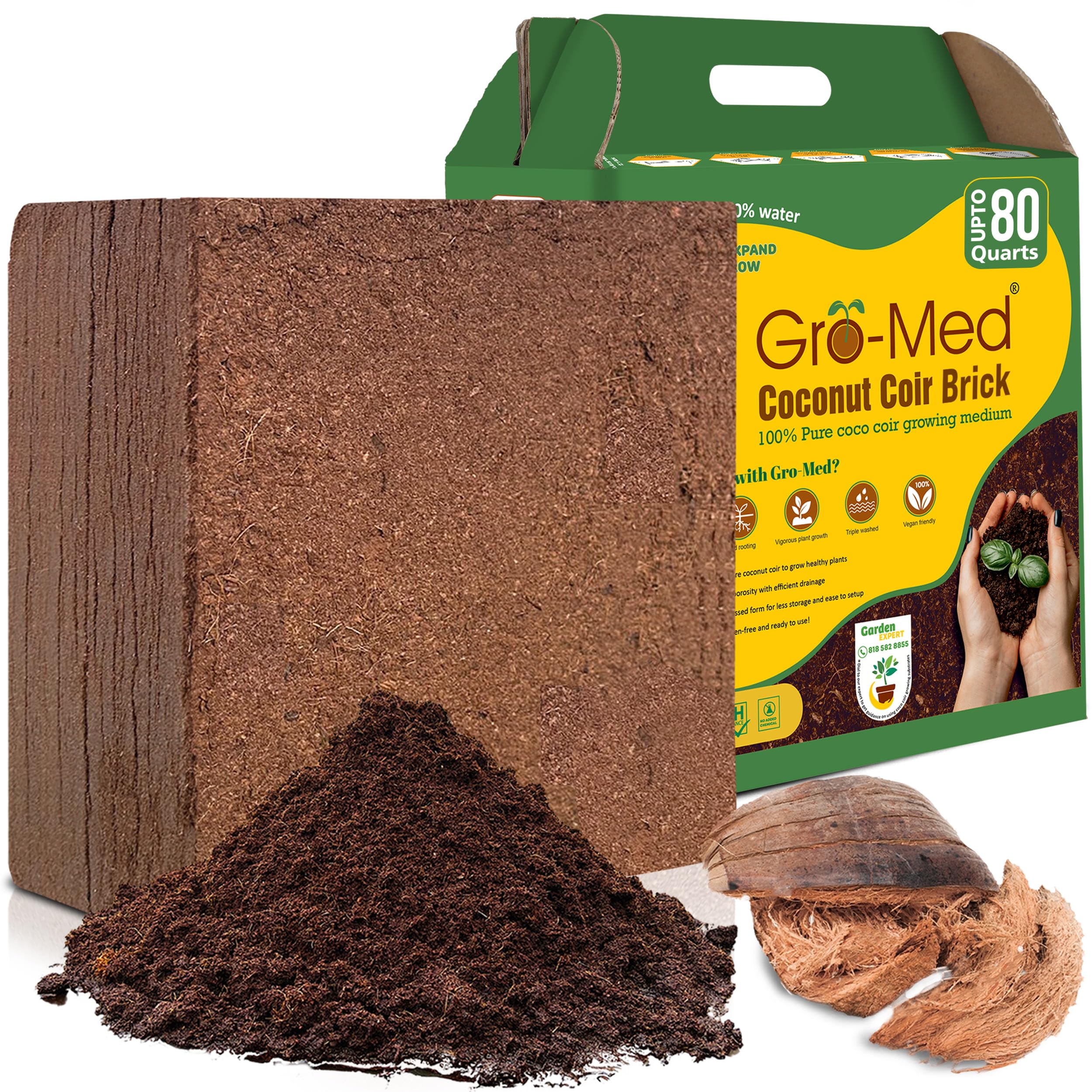
The ready-to-grow block that includes natural plant food so you skip the first feed — the largest volume per single brick in this guide.
Gro-Med solves the one frustration that every other brick on this list creates: the need to immediately add fertilizer. Most coconut fiber is “empty” — it holds roots but provides zero nutrition. This 11-pound block is pre-blended with natural, plant-based food, saving you the trip to the nutrient shelf. It expands to 80 quarts in roughly 10 to 15 minutes, making it the highest-yielding single block here by volume — beating the Vivlly 10LB by 5 quarts.
The fiber is triple-washed, which keeps the EC low and roots safe from salt burn. Owners rate the quality highly and call it a “great value,” especially for raised beds and indoor houseplants. One grower germinated five lemon trees from seed in two weeks using this medium. The catch is the brick is hard; several owners note you need a screwdriver and hammer to break off a piece if you do not want to hydrate the entire block. Store the excess dry and chip off only what you need to avoid mold from sitting wet coir.
All-in-one simplicity: The pre-added food makes it the most beginner-friendly choice for someone new to coco who might skip the calmag soak otherwise.
The practicality trade-off: The brick’s density means you really do need a tool to break it — expect a small workout before you get to the “just add water” step.
Pick this if: you want the biggest yield per dollar and the convenience of pre-added nutrients for an organic garden setup.
Steer clear if: you run a precise hydroponic nutrient schedule and prefer total control over what goes in — the pre-blended food may interfere with your formula.
5. Vivlly Coco Coir Brick (10 LB / 75 Qt)

The 10-pound block that turns into 75 quarts of fluffy medium — a 13.6x gap over the Minute Soil 100mm block.
For sheer bulk, this Vivlly brick is the volume champion among standard 10-pound blocks. It expands to 75 quarts (roughly 2.5 cubic feet) when hydrated with 3 to 4 gallons of warm water — enough to fill 7 to 10 standard seed trays. The fiber is triple-washed to an EC (electrical conductivity) below 0.5, which makes it immediately safe for seedlings without an extra rinse cycle, so you do not risk salt burn. Owners use it for everything from mycology (mushroom growing, as it separates fairly easily) to vegetable starts, with one gardener mixing it with peat moss and worm castings to make a custom soil blend.
Quality and value for money are the two most-praised aspects. The low salt level and neutral pH between 5.5 and 6.5 mean it works as a direct peat moss replacement without acidity adjustments. The main mixed feedback revolves around breakability — some owners find the compressed brick hard to crumble evenly, and germination results are occasionally inconsistent if the brick was not fully hydrated. The fiber is also unbuffered, so expect a calmag addition for the first week in hydro systems.
Volume king: The best physical expansion ratio among the bricks, giving you the most potting material for your dollar.
The inconsistency note: Because it is not buffered, germination rates can vary — a pre-soak with calmag makes it more reliable.
Buy this for: filling raised beds, large container gardens, or any project where you need cubic feet of medium cheaply.
Avoid if: you are germinating expensive seeds and need guaranteed, uniform results — CANNA is safer for precision.
6. Mountain Valley Seed Co Minute Soil 100mm Block
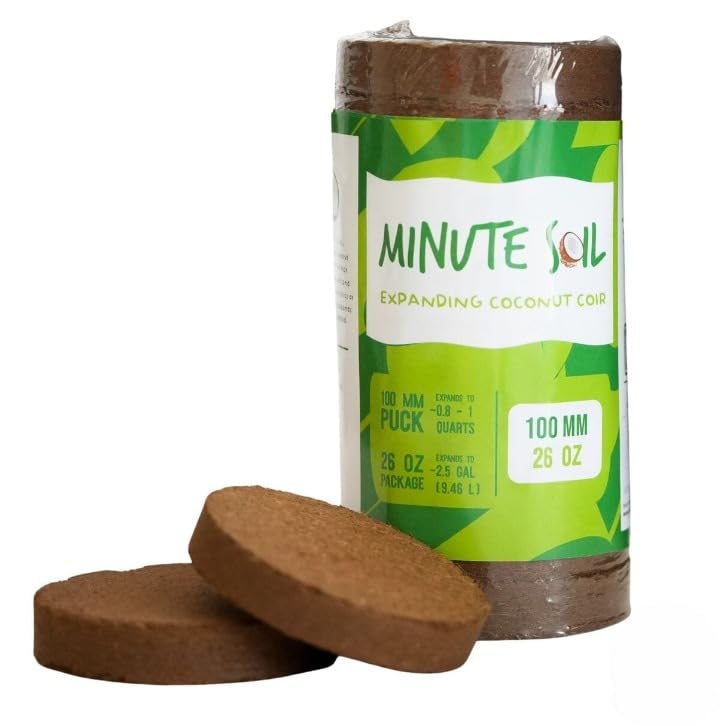
A compact 26-ounce block portioned perfectly for one-potted-plant projects — the smallest volume here, but zero waste.
Not everyone needs a 10-pound brick that turns into 75 quarts of medium. For smaller projects — a few houseplants, a batch of cat grass, a single grow-bag tomato plant — this 26-ounce block is exactly right. It expands to 4.25 gallons of fluffy fiber, and owners love that “they are smaller packages unlike the bricks I’ve purchased before.” It is OMRI listed for organic use, and the fiber is raw and non-amended, meaning you control all the nutrients.
The block hydrates in minutes, and plants respond fast. One owner started seeds on September 20th and reported “just 2 days in things started growing.” The texture holds water well, which is a nice buffer for over-enthusiastic watering. A few buyers even use it in composting toilets for its ability to absorb and compact. The criticism is minor: it is a smaller volume than the 40-liter CANNA or the 75-quart Vivlly, so heavy users will need multiple blocks. But at this price, buying two still undercuts most single large bricks.
No-waste size: Ideal for a casual grower who wants just enough medium for a few pots without storing half a brick of unused coir.
The volume limit: At 4.25 gallons expanded, it covers about half of what a standard 10-pound brick does — plan accordingly if you are filling a 4×4 bed.
Reach for this if: you have a small indoor garden, a few houseplants, or want to try coconut fiber for the first time without overcommitting.
skip it if: you need a large volume for a full hydroponic system — the Vivlly or Gro-Med bricks give you 3x to 4x more medium per box.
7. Minute Soil 40mm Pucks (30 Pack)
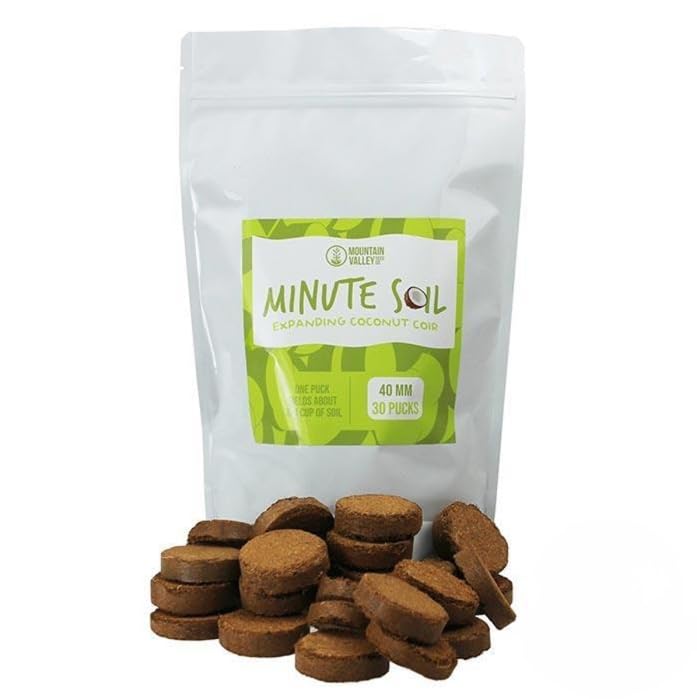
Pre-measured pucks that make seed starting as simple as adding water to a disc — no breaking bricks or measuring.
This bag of 30 compressed coco coir discs is the easiest entry point on the list. Each 40mm puck swells to roughly three-quarters of a cup of growing medium when you add one-third cup of water — no measuring, no mess, no leftover batch. The full bag rehydrates to about 5.5 quarts of fiber. Owners call it “exactly what I needed to add a bit more soil to houseplants without having to carry bags of potting soil,” and the lack of odor makes it clean for indoor use.
The pucks absorb fast and are raw and non-amended, so you add your own fertilizer. Cat-grass growers love the organic certification and the fact the fiber is sourced from the US. The biggest friction is the price-per-quart: some owners note it is “expensive for soil” compared to a bulk brick. You are paying for the convenience of pre-shaped, no-break discs. If you are a heavy-volume grower, a single brick costs less per quart — but for a weekend gardener starting a tray of basil, this is the best experience.
Zero-fuss germination: The pucks eliminate the two worst parts of coconut fiber: breaking a hard brick and measuring the right amount of water.
The price trade-off: You pay a premium for individual pucks — about 3x more per quart than a bulk brick.
Perfect for: beginners, AeroGarden owners who want a dirt-free seed start, or anyone starting just a tray or two of seeds.
Not ideal for: filling large beds or hydroponic systems that need quarts of loose fiber — get a brick instead.
8. EVERECOO Grow Sponges (100 Pack)
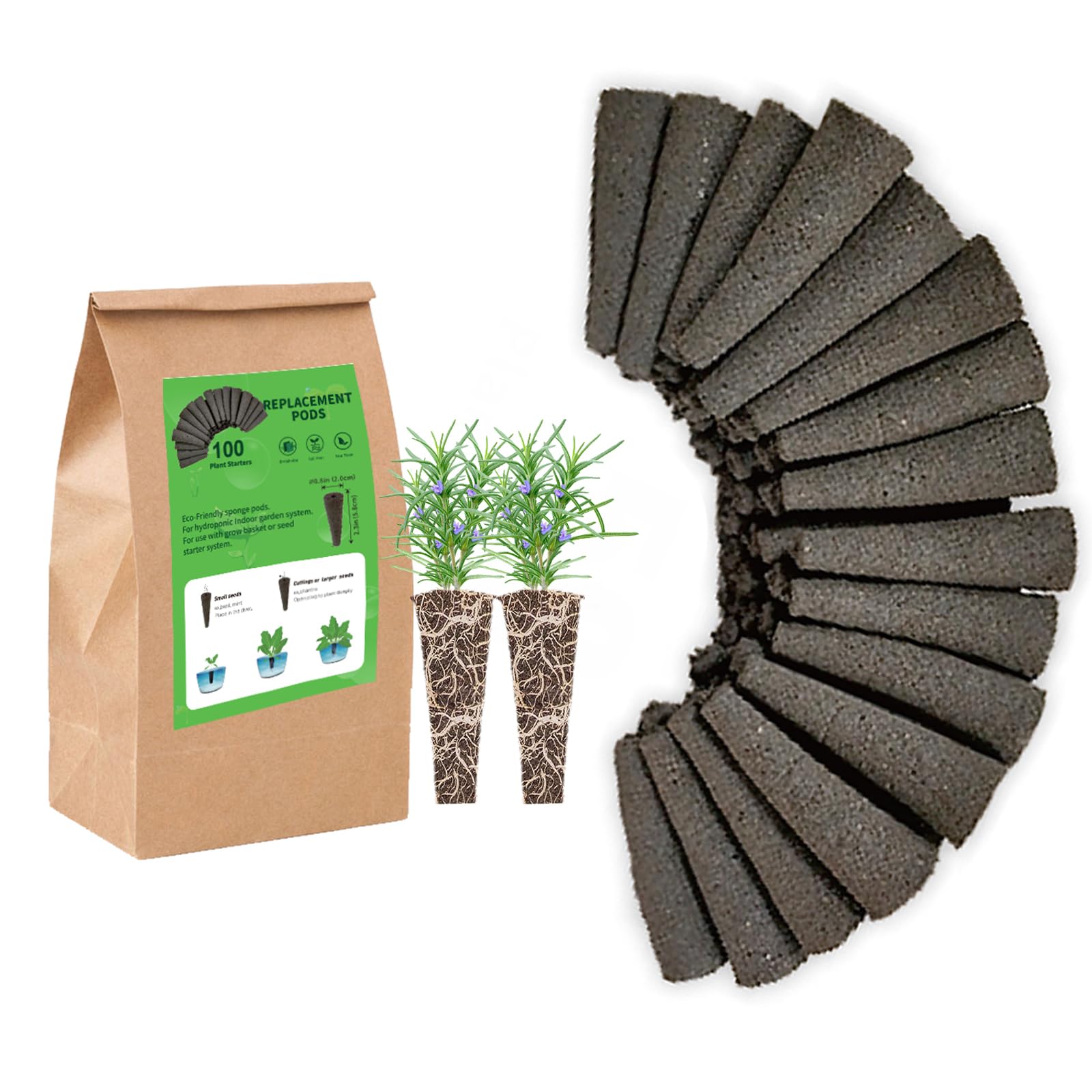
A hundred coconut-fiber sponges that drop straight into AeroGarden pods — the cheapest refill per start versus brand-name sponges.
If you own an AeroGarden or a similar countertop hydroponic system, this is the easiest refill option. Each pre-shaped sponge is made from natural coconut fiber, and the 100-pack includes 200g of fiber total. The sponges fit all standard AeroGarden models with a drainage hole already in place. Owners mention “identical growth rate” to the brand-name Aerogarden sponges and note the germination rate is “so high.” One long-time buyer has been using them for years with “no issues,” growing lettuces that come up perfectly every time.
The value is clear: you get 100 growing starts for roughly the same price as 50 branded sponges. The fiber does have a tendency to grow mold if the system is not ventilated — mold resistance is the most-discussed negative aspect by count. Owners who run a fan or a clean pump report no mold issues, but stagnant water creates trouble. The sponges also do not decompose well, with one aquaponics user finding them intact in compost “even a couple years later.”
Plug-and-play value: For AeroGarden owners, this is the cheapest unlimited refill option with a proven track record.
The mold caveat: These need airflow to stay clean — do not use them in a sealed, non-circulating setup.
Get these if: you run an AeroGarden and want a cost-effective, well-fitting seed-starting sponge that works as well as the brand’s own.
Look elsewhere if: you need loose coconut fiber for a tray, a bed, or a deep-water culture system — these are specifically shaped for pod systems.
9. Envelor Coco Coir Fiber Grow Mat (10 Pack)

Flat mats that turn a standard 10×20 tray into a no-mess microgreen farm — no shifting or clumping like loose fiber.
For microgreen growers, loose coconut fiber is a hassle — it shifts, clumps, and makes harvesting messy. These pre-formed mats solve that. Each mat is 10 x 20 inches, designed to fit the most common microgreen tray size perfectly (though some customers note needing light trimming with shears). The fiber is natural, with low EC and balanced pH, and it retains moisture while supplying oxygen to the roots. One owner used it as mulch lining in potted plants and reported roots growing “exceptionally well.”
The mats are easy to work with and do not turn smelly or moldy during the grow cycle. The main complaints center on thickness — some owners find the mats thinner than expected compared to previous purchases, and cutting them to fit non-standard trays requires heavy-grade shears. For the standard 10×20 setup, however, they drop in and hydrate fast. The 10-pack gives you enough coverage for a full rotation of 10 trays, which is a solid run for a home microgreen operation.
Clean growing surface: The flat, uniform mat eliminates the mess of loose fiber and makes harvesting microgreens a pull-and-cut operation.
The fit note: If you use non-standard trays, expect to trim every mat — standard 10×20 trays fit without modification.
Buy for: a dedicated microgreen setup where cleanliness and ease of harvest matter more than bulk volume.
Pass for: any grow that requires deep medium — these mats are thin and designed for shallow-rooted greens, not tomatoes or peppers.
Understanding the Specs
EC (Electrical Conductivity)
This is the number that tells you how much salt is still in the fiber after processing. A low EC — ideally under 0.5 — means the manufacturer has rinsed the coco coir well, and your seedlings will not get root burn (damage from salt). High-EC fiber needs a pre-soak with a calcium-magnesium supplement to displace those salts before planting.
Buffered vs. Unbuffered
Coconut fiber naturally holds on to sodium from its ocean origins. “Buffered” fiber has been pre-treated with calcium and magnesium, so it does not pull those nutrients away from your plants in the first week. Unbuffered fiber requires an overnight soak with a calmag solution (calcium and magnesium supplement) to force the sodium out. Buffered saves you a step but costs slightly more.
Expansion Ratio
A compressed block can expand anywhere from 5 to 15 times its dry volume. This number matters because it tells you how much usable medium you will get from a single brick. A block labeled “expands to 75 quarts” gives you roughly 2.5 cubic feet of grow medium — enough to fill a 4×4 raised bed to a depth of about 9 inches.
OMRI Listing
The Organic Materials Review Institute (OMRI) listing means the product is approved for use in certified organic production. If you grow organic herbs, vegetables, or microgreens, this certification guarantees no synthetic chemicals or prohibited additives were used in the processing of the coconut fiber.
FAQ
Is coconut fiber better than peat moss for hydroponics?
Do I need to wash coconut fiber before use?
How much water does a coco coir brick need to expand?
Can I reuse coconut fiber after a grow cycle?
What is the difference between coco coir and coco chips?
Will coconut fiber mold or attract pests?
What pH should my nutrient solution be for coco coir?
Can I mix coconut fiber with perlite or vermiculite?
How long does a compressed coco brick last in storage?
Is OMRI-listed coconut fiber necessary for home gardens?
Final Thoughts: The Verdict
For most buyers, the hydroponic coconut fiber winner is the CANNA Coco Brick 40L because it combines the highest owner satisfaction with a proven track record for clean, pest-free grows. If you want the most volume per dollar and do not mind a little prep work, grab the {“@context”: “https://schema.org”, “@graph”: [{“@type”: “ItemList”, “name”: “9 Best Hydroponic Coconut Fiber”, “url”: “https://lawngearlab.com/best-hydroponic-coconut-fiber/”, “numberOfItems”: 9, “itemListElement”: [{“@type”: “ListItem”, “position”: 1, “name”: “CANNA Coco Brick 40L Expandable”, “url”: “https://lawngearlab.com/best-hydroponic-coconut-fiber/#product-1”}, {“@type”: “ListItem”, “position”: 2, “name”: “Halatool 10-Pack Coco Coir Brick”, “url”: “https://lawngearlab.com/best-hydroponic-coconut-fiber/#product-8”}, {“@type”: “ListItem”, “position”: 3, “name”: “GROW!T JSCC2 Organic Coco Coir Planting Chips”, “url”: “https://lawngearlab.com/best-hydroponic-coconut-fiber/#product-7”}, {“@type”: “ListItem”, “position”: 4, “name”: “Gro-Med OMRI Organic Coco Coir Block (10LB)”, “url”: “https://lawngearlab.com/best-hydroponic-coconut-fiber/#product-6”}, {“@type”: “ListItem”, “position”: 5, “name”: “Vivlly Coco Coir Brick (10 LB / 75 Qt)”, “url”: “https://lawngearlab.com/best-hydroponic-coconut-fiber/#product-4”}, {“@type”: “ListItem”, “position”: 6, “name”: “Mountain Valley Seed Co Minute Soil 100mm Block”, “url”: “https://lawngearlab.com/best-hydroponic-coconut-fiber/#product-2”}, {“@type”: “ListItem”, “position”: 7, “name”: “Minute Soil 40mm Pucks (30 Pack)”, “url”: “https://lawngearlab.com/best-hydroponic-coconut-fiber/#product-3”}, {“@type”: “ListItem”, “position”: 8, “name”: “EVERECOO Grow Sponges (100 Pack)”, “url”: “https://lawngearlab.com/best-hydroponic-coconut-fiber/#product-5”}, {“@type”: “ListItem”, “position”: 9, “name”: “Envelor Coco Coir Fiber Grow Mat (10 Pack)”, “url”: “https://lawngearlab.com/best-hydroponic-coconut-fiber/#product-9”}]}, {“@type”: “Product”, “position”: 1, “name”: “CANNA Coco Brick 40L Expandable”, “image”: “https://m.media-amazon.com/images/I/61W4lRLqWRL.jpg”, “brand”: {“@type”: “Brand”, “name”: “CANNA”}, “url”: “https://www.amazon.com/dp/B010OG1MVA/”, “offers”: {“@type”: “Offer”, “url”: “https://www.amazon.com/dp/B010OG1MVA/”}}, {“@type”: “Product”, “position”: 2, “name”: “Halatool 10-Pack Coco Coir Brick”, “image”: “https://m.media-amazon.com/images/I/810kGc5pxYL.jpg”, “brand”: {“@type”: “Brand”, “name”: “Halatool”}, “url”: “https://www.amazon.com/dp/B0C2TR1PZB/”, “offers”: {“@type”: “Offer”, “url”: “https://www.amazon.com/dp/B0C2TR1PZB/”}}, {“@type”: “Product”, “position”: 3, “name”: “GROW!T JSCC2 Organic Coco Coir Planting Chips”, “image”: “https://m.media-amazon.com/images/I/71Jz06LYexL.jpg”, “brand”: {“@type”: “Brand”, “name”: “GROW!T”}, “url”: “https://www.amazon.com/dp/B0049XH0FM/”, “offers”: {“@type”: “Offer”, “url”: “https://www.amazon.com/dp/B0049XH0FM/”}}, {“@type”: “Product”, “position”: 4, “name”: “Gro-Med OMRI Organic Coco Coir Block (10LB)”, “image”: “https://m.media-amazon.com/images/I/912JMCs-BrL.jpg”, “brand”: {“@type”: “Brand”, “name”: “Gro-Med”}, “url”: “https://www.amazon.com/dp/B0CLYVTZT3/”, “offers”: {“@type”: “Offer”, “url”: “https://www.amazon.com/dp/B0CLYVTZT3/”}}, {“@type”: “Product”, “position”: 5, “name”: “Vivlly Coco Coir Brick (10 LB / 75 Qt)”, “image”: “https://m.media-amazon.com/images/I/81-s0mnlWES.jpg”, “brand”: {“@type”: “Brand”, “name”: “Vivlly”}, “url”: “https://www.amazon.com/dp/B0927CQ8LK/”, “offers”: {“@type”: “Offer”, “url”: “https://www.amazon.com/dp/B0927CQ8LK/”}}, {“@type”: “Product”, “position”: 6, “name”: “Mountain Valley Seed Co Minute Soil 100mm Block”, “image”: “https://m.media-amazon.com/images/I/415-jOLlNxL.jpg”, “brand”: {“@type”: “Brand”, “name”: “Mountain”}, “url”: “https://www.amazon.com/dp/B07JGHGP95/”, “offers”: {“@type”: “Offer”, “url”: “https://www.amazon.com/dp/B07JGHGP95/”}}, {“@type”: “Product”, “position”: 7, “name”: “Minute Soil 40mm Pucks (30 Pack)”, “image”: “https://m.media-amazon.com/images/I/416ERnOHX6L.jpg”, “brand”: {“@type”: “Brand”, “name”: “Minute”}, “url”: “https://www.amazon.com/dp/B07JFTCLBD/”, “offers”: {“@type”: “Offer”, “url”: “https://www.amazon.com/dp/B07JFTCLBD/”}}, {“@type”: “Product”, “position”: 8, “name”: “EVERECOO Grow Sponges (100 Pack)”, “image”: “https://m.media-amazon.com/images/I/71TrI1qx2+L.jpg”, “brand”: {“@type”: “Brand”, “name”: “EVERECOO”}, “url”: “https://www.amazon.com/dp/B09M8L62K1/”, “offers”: {“@type”: “Offer”, “url”: “https://www.amazon.com/dp/B09M8L62K1/”}}, {“@type”: “Product”, “position”: 9, “name”: “Envelor Coco Coir Fiber Grow Mat (10 Pack)”, “image”: “https://m.media-amazon.com/images/I/61v1xDSUtGL.jpg”, “brand”: {“@type”: “Brand”, “name”: “Envelor”}, “url”: “https://www.amazon.com/dp/B07MT6BPD5/”, “offers”: {“@type”: “Offer”, “url”: “https://www.amazon.com/dp/B07MT6BPD5/”}}, {“@type”: “FAQPage”, “mainEntity”: [{“@type”: “Question”, “name”: “Is coconut fiber better than peat moss for hydroponics?”, “acceptedAnswer”: {“@type”: “Answer”, “text”: “Coconut fiber (coir) is renewable and has a neutral pH between 5.5 and 6.5, while peat moss is acidic and requires lime to adjust the pH. Coir also holds water more evenly and rehydrates faster after drying out. Peat moss is cheaper but less sustainable.”}}, {“@type”: “Question”, “name”: “Do I need to wash coconut fiber before use?”, “acceptedAnswer”: {“@type”: “Answer”, “text”: “If the fiber is labeled \”triple-washed\” or \”low EC,\” you can use it immediately after rehydrating. Unwashed or unbuffered fiber should be soaked in water with a calcium-magnesium supplement for a few hours to displace excess sodium that could burn young roots.”}}, {“@type”: “Question”, “name”: “How much water does a coco coir brick need to expand?”, “acceptedAnswer”: {“@type”: “Answer”, “text”: “A standard 10-pound brick needs roughly 3 to 4 gallons of warm water to fully expand to its rated volume (usually between 75 and 80 quarts). Smaller bricks and pucks need proportionally less — about one-third cup of water per 40mm puck.”}}, {“@type”: “Question”, “name”: “Can I reuse coconut fiber after a grow cycle?”, “acceptedAnswer”: {“@type”: “Answer”, “text”: “Yes, and many growers do. CANNA’s brick was noted as reusable after a simple rinse to remove old roots and de-rooting. The fiber does not break down quickly — one owner found EVERECOO sponges intact in compost after two years. Rinse thoroughly, soak in a mild hydrogen peroxide solution to sterilize, and re-buffer before the next cycle.”}}, {“@type”: “Question”, “name”: “What is the difference between coco coir and coco chips?”, “acceptedAnswer”: {“@type”: “Answer”, “text”: “Coco coir is the fine, dust-like fiber that holds water like a sponge. Coco chips are larger, chunkier pieces that create air pockets and drain faster. Chips are best for orchids, tropicals, and reptile bedding. Coir is better for seed starting, hydroponics, and mixing into potting soil.”}}, {“@type”: “Question”, “name”: “Will coconut fiber mold or attract pests?”, “acceptedAnswer”: {“@type”: “Answer”, “text”: “Coconut fiber is naturally resistant to mold and fungus compared to peat moss, but any wet medium in a stagnant environment can grow mold. The EVERECOO sponges show that airflow is critical — owners who run a fan or open vents see no mold, while sealed setups do. Pest problems are rare because coir is sterile at the start, unlike soil that may carry larvae.”}}, {“@type”: “Question”, “name”: “What pH should my nutrient solution be for coco coir?”, “acceptedAnswer”: {“@type”: “Answer”, “text”: “Coco coir has a natural pH between 5.5 and 6.5. Most hydroponic nutrients are formulated for this range. Aim for a solution pH of 5.8 to 6.2 for optimal nutrient uptake. Coco is more forgiving than rockwool if your pH drifts slightly.”}}, {“@type”: “Question”, “name”: “Can I mix coconut fiber with perlite or vermiculite?”, “acceptedAnswer”: {“@type”: “Answer”, “text”: “Yes, and many growers do. Mixing coir with perlite improves drainage and adds air pockets for root oxygenation. A 70/30 coir-to-perlite ratio is common for a balanced medium. Vermiculite will increase water retention further, which is useful for seedlings but may cause soggy roots in larger pots.”}}, {“@type”: “Question”, “name”: “How long does a compressed coco brick last in storage?”, “acceptedAnswer”: {“@type”: “Answer”, “text”: “Indefinitely, as long as it stays dry. The compressed brick is shelf-stable for years if sealed or stored in a dry place. Once hydrated, it should be used within a few weeks or it can develop mold. That is why multi-packs like the Halatool 10-pack are smart — you open one brick at a time and keep the rest dry.”}}, {“@type”: “Question”, “name”: “Is OMRI-listed coconut fiber necessary for home gardens?”, “acceptedAnswer”: {“@type”: “Answer”, “text”: “Only if you care about organic certification for your produce. For a home vegetable garden, an OMRI listing guarantees no synthetic chemicals were used, which is confidence. For ornamental plants or non-organic grows, it is not strictly necessary — but many growers choose it anyway for the quality guarantee.”}}]}]}