
Specs are compiled from manufacturer listings and verified buyer reviews and can change over time — please confirm the key details on the product page before buying.
If you want explosive garden growth, hydrolyzed fish fertilizer is the organic go-to — the trick is picking one that feeds hard without reeking or scorching your plants. The real question most gardeners face isn’t whether fish fertilizer works; it’s which formula delivers the biggest nutrient punch while staying gentle enough for tender seedlings and indoor use. You want a product that builds soil life, boosts blooms, and doesn’t leave your yard smelling like a dock at low tide.
I’m Rikta — the founder and writer behind Lawn Gear Lab. This guide is built by comparing the manufacturers’ published specifications and the patterns across verified customer reviews, so you get each pick’s real strengths and trade-offs instead of marketing spin.
Here are the top-rated bottles that solve the classic fish fertilizer problems, so you can confidently pick the best hydrolyzed fish fertilizer for lush leafy growth.
Our Picks at a Glance
How To Choose The Best Hydrolyzed Fish Fertilizer
Pick a fish fertilizer by matching its NPK ratio to what you grow, then check the mixing ratio so you don’t burn young roots. The label’s three numbers — nitrogen, phosphorus, potassium — tell you exactly where the plant’s energy goes.
Understand the NPK Ratio First
The numbers like 2-3-1 represent the percentage of nitrogen, phosphorus, and potassium. A higher first number (nitrogen) pushes leafy green growth, which is why most fish fertilizers land around 2-3-1 or 2-0.5-1.25. Match the ratio to your crop: leafy greens want more nitrogen, while fruiting plants benefit from the phosphorus boost.
Check the Mixing Ratio and Dilution
A concentrate that requires only 1 ounce per gallon is far more economical than one needing 4 ounces per gallon. Dense, concentrated formulas deliver more feeds per bottle, but they demand careful measuring. Beginners should look for forgiving dilution rates that won’t punish an overgenerous pour.
Decide How Much Smell You Can Handle
Fish fertilizer odor ranges from mildly earthy to aggressively pungent. Salt-brined emulsions tend to carry the strongest stench, while fermented formulas often smell sweet-sour and milder. If you plan on feeding indoor plants, a gentler aroma matters more than you might think.
Quick Comparison
| Model | Best For | NPK Ratio | Mixing Ratio | Item Weight | Amazon |
|---|---|---|---|---|---|
| Neptune’s Harvest Fish & Seaweed★ Best Overall | Balanced growth, indoor + outdoor | 2-3-1 | 1 oz per gallon | 10 pounds | Amazon |
| GS Plant Foods Liquid Fish | Reviving struggling plants | 2-3-1 | 4 oz per gallon | 8.4 pounds | Amazon |
| Maxicrop Liquid Fish | Long-time hobbyist favorite | — | — | — | Amazon |
| Pacific Bounty Organic Liquid Fish | Odor-sensitive indoor feeding | 2.0-0.5-1.25 | 2-4 tbsp per gallon | 8.3 pounds | Amazon |
In‑Depth Reviews
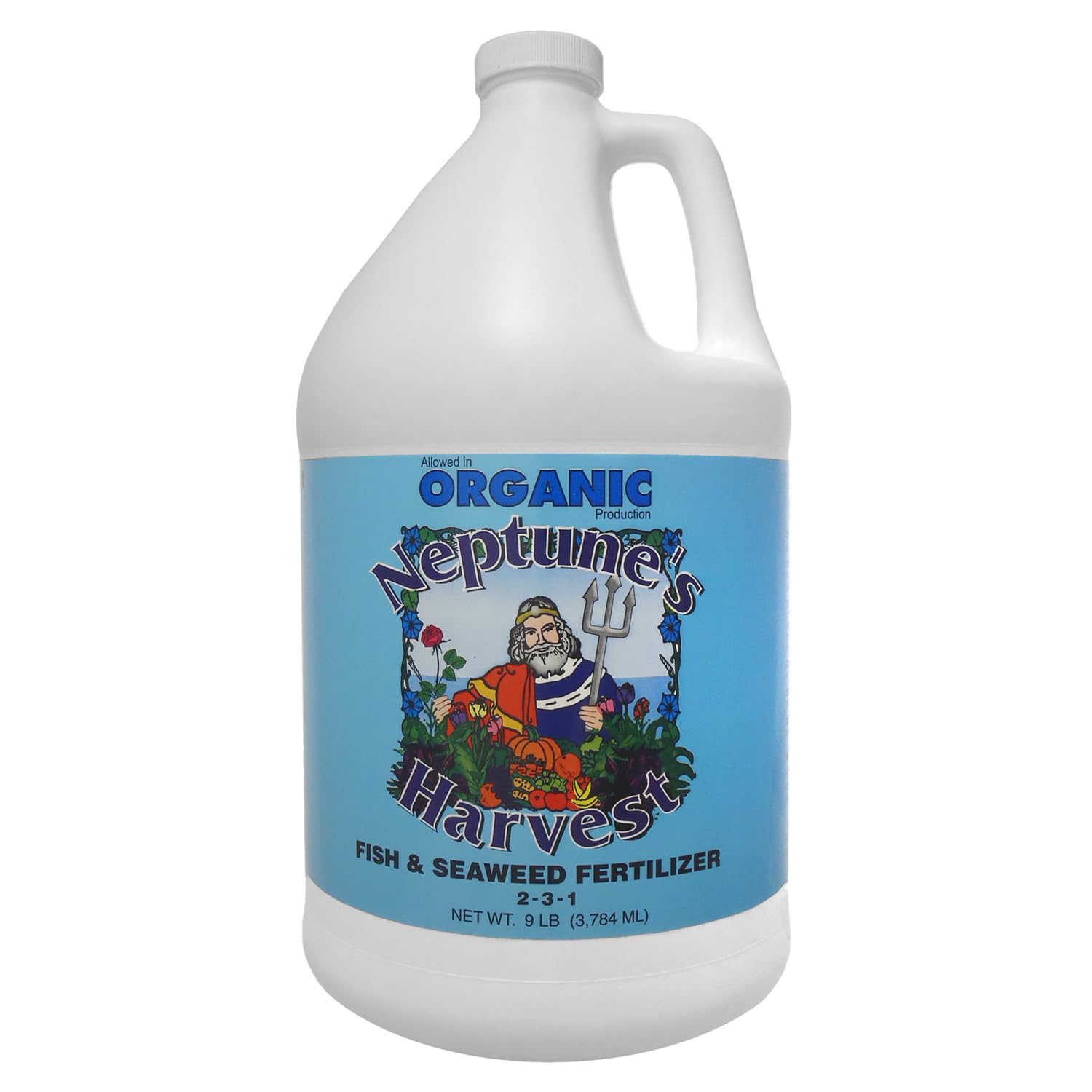
1. Neptune’s Harvest Fish & Seaweed Liquid Fertilizer (2-3-1)
Our pick — over 4.5★ from 7,000+ verified ratings; the strongest balance of quality and price.
A proven crowd favorite blending hydrolyzed fish with seaweed for vigorous all-around growth.
This gallon jug blends 75% fish with 25% seaweed to feed vegetables, flowers, lawns, and indoor plants with a balanced 2-3-1 NPK. The mix delivers steady nutrition through the season, and the organic formula is safe to use around kids and pets. What wins people over is the sheer quality — owners rave about healthier roots, stronger stems, and noticeably more blossoms than they got from other fertilizers.
You only need 1 ounce per gallon of water, which makes this concentrated bottle stretch further than most competitors. For indoor plants, dilute just 1 tablespoon per gallon and feed weekly; outdoors, use 1/8 cup per gallon every 1-2 weeks. The liquid works as a soil drench or a foliar feed, so you can adapt it to whatever your garden throws at you.
The recurring gripe is the odor — it smells strongly fishy when you mix it, and a few gardeners admit it’s not pleasant for indoor use. The heavy 10-pound jug is noticeably weightier than the GS Plant Foods alternative at 8.4 pounds, so plan your shelf space accordingly. Treat the concentration with respect: even 1/2 teaspoon per cup burned 6-inch tomatoes, causing purple leaves overnight, so buyers report you should always measure carefully rather than eyeball the pour.
What Owners Swear By
- Promotes fast root development and lush foliage growth
- Improves soil structure and feeds beneficial microbes over time
- Versatile enough for lawns, containers, and houseplants
- OMRI Listed for certified organic growing
Where It Tests Your Patience
- Strong fishy smell lingers after mixing
- Highly concentrated — sloppy measuring risks burning seedlings
- Heavy 10-pound jug is awkward to handle and store
Reach for this if: you want one dependable fertilizer that feeds everything from tomatoes to indoor ferns with a single jug.
Look elsewhere if: you’re highly sensitive to fish odor or want a lighter bottle for easy pouring and storage.
2. GS Plant Foods Liquid Fish Fertilizer (2-3-1)
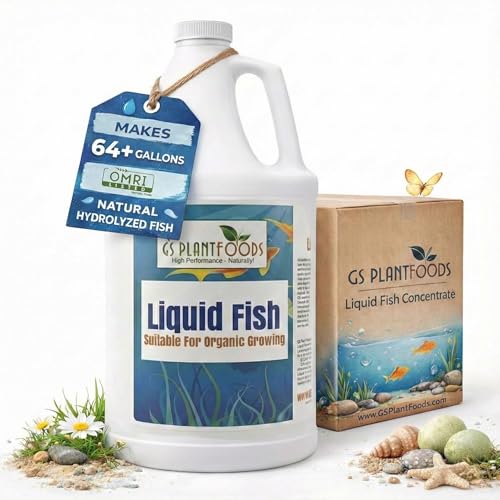
An organic lifesaver that revives struggling plants with rapid new growth and lush foliage.
This OMRI and NOP certified concentrate is built around a straightforward 2-3-1 NPK from hydrolyzed fish, and it shines brightest when your plants are struggling. Its effectiveness shines in rescue scenarios: dying cycads formed new leaves, hops rebounded in 1.5 weeks, and tomatoes responded immediately. It’s an easy win for reviving stressed ornamentals or pushing vegetables into overdrive.
The mixing ratio is a simple 4 ounces per gallon, and you can apply it to soil or foliage with a watering can, sprayer, or hose-end applicator. It’s suitable for nearly every growing method imaginable — containers, raised beds, greenhouses, hydroponics, and indoor houseplants. The 1-gallon jug weighs 8.4 pounds, which makes it a touch lighter than the Neptune’s Harvest alternative at 10 pounds.
The honest trade-off is the smell, which owners describe as extreme — like a turtle tank. The odor fades within days, but you’ll want to mix it fresh every time because a stored mix can mold overnight. Durability gets mixed reviews: some find the jug lasts quite a while, while a handful report bottles exploding upon opening, so open it over a sink and away from your face.
Why Gardeners Grab It
- Fast-acting rescue formula for stressed or dying plants
- Doubles as a foliar feed or soil drench
- Suitable for hydroponics, raised beds, and containers
- No synthetic chemicals, additives, or fillers
The Sticky Parts
- Pungent, turtle-tank-level odor when mixing
- Mixed solution molds overnight if stored
- Occasional reports of pressurized bottles leaking or exploding on opening
Best for: gardeners nursing sick plants back to health who want visible new growth within a couple weeks.
Not ideal for: anyone who needs a low-odor indoor feed or prefers a longer-lasting pre-mixed solution.
3. Maxicrop Liquid Fish Fertilizer

An enzymatically digested classic earning decades of loyalty from serious flower and vegetable growers.
Maxicrop makes its liquid fish fertilizer by enzymatically digesting fish protein, which open up a rich source of organic nutrients and beneficial compounds that boost plant vigor and soil microbial activity. Gardeners have trusted this gallon jug since the early 1990s, and they keep coming back because it delivers deep green leaves and thriving blooms on everything from Red Zinger Hibiscus to azaleas and oleanders. It’s a pick built on quiet, consistent reliability rather than flashy features.
This one earns praise for the packaging as much as the formula — the sturdy, leak-proof gallon container arrives well-sealed for shipping, which is a relief given the fragile jugs some competitors ship. It mixes well with seaweed emulsion, so you can build a custom feeding program. Owners also notice the fishy odor keeps deer and wildlife away from their beds, which is a handy bonus if you garden in critter-heavy areas.
The smell is strong but dissipates within a few hours, making it more tolerable for outdoor use than some of the heavier concentrates. This jug has a smaller owner base than the top two picks, so the performance data is thinner — but the people who buy it tend to buy it for years. If you want a straightforward organic fish feed with a proven track record and a container that won’t leak in transit, this is your gallon.
Editor’s Read: A dependable, no-drama organic feed with a cult following among long-time gardeners who value consistent results and a sturdy jug.
Who It Skips: This one suits outdoor beds best, and it’s not the strongest choice if you need a precise NPK label or a low-odor indoor formula.
Pick this if: you want a proven, leak-proof gallon that mixes well with seaweed for a custom feed program.
Think twice if: you need a labeled NPK ratio or a formula mild enough for sensitive indoor plants.
4. Pacific Bounty Organic Liquid Fish Fertilizer
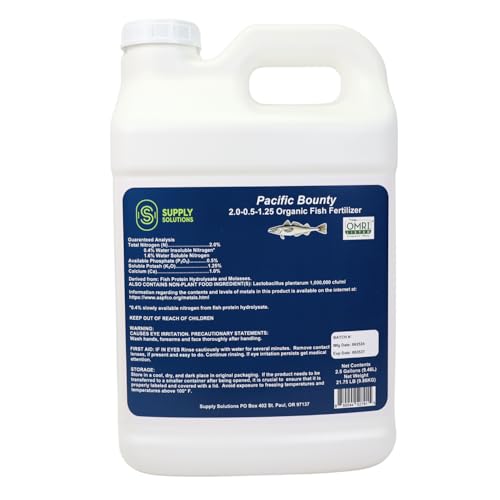
A fermented fish feed with a mild aroma that indoor gardeners can tolerate.
Pacific Bounty takes a different route than the salt-brined emulsions: it ferments wild-caught fish with non-GMO cane molasses, creating a sweet-sour aroma instead of the harsh fish stench that sends people running. The result is a 2.0-0.5-1.25 NPK liquid rich in lactic acid bacteria that balance soil pH between 3.5 and 4.5 and help shield roots from harmful pathogens. A retired horticulturist calls it the best fish fertilizer they’ve used, with tomato plants growing huge and fruit-laden while unfed neighbors stay half the size.
The dilution is forgiving — just 2 to 4 tablespoons per gallon of non-chlorinated water, applied every 2 to 4 weeks to compost piles, raised beds, containers, trees, and shrubs. The nitrogen is water-soluble and immediately available, so plants take it up fast without the burn risk that comes with heavier concentrates. It’s versatile across houseplants, garden vegetables, fruit trees, and even hydroponic setups, and the 8.3-pound jug covers a solid 100 square feet.
The practical catch is the solids: this formula has enough suspended fish material to clog the 1/8-inch holes of a standard sprinkler can, so owners apply it via bucket with swirling to keep everything suspended. There’s also a lone quality-control report of jugs arriving half full and previously opened, which is worth checking on delivery. If you’re feeding indoors and can’t handle a room that smells like a fish market, this is the one to reach for.
Standout Strength: The mild sweet-sour fermentation scent makes indoor feeding genuinely pleasant, unlike every other bottle on this list.
The Work-Around: Fish solids demand a bucket-and-swirl application method to avoid clogging your watering can.
Choose it for: indoor plant feeding or any scenario where a strong fishy odor would be a deal-breaker.
You’ll want more grit if: you prefer a fine, solids-free liquid that pours cleanly through any sprayer or can.
Understanding the Specs
NPK Ratio
The three numbers on the label stand for nitrogen, phosphorus, and potassium percentages. Nitrogen fuels leafy green growth, phosphorus builds strong roots and blooms, and potassium supports overall plant health. A balanced 2-3-1 ratio is ideal for general-purpose feeding of vegetables and flowers, while a lower ratio like 2.0-0.5-1.25 leans heavier on nitrogen for steady foliage growth.
Hydrolyzed vs. Emulsion
Hydrolyzed fish fertilizer is processed with enzymes or heat to break down fish protein into plant-ready nutrients, which tend to be gentler on soil life. Fish emulsion is a simpler manufacturing byproduct that often carries a stronger odor. Both feed plants well, but hydrolyzed formulas often build soil microbes better over time.
FAQ
How often should I apply hydrolyzed fish fertilizer?
Will fish fertilizer burn my plants if I use too much?
Is hydrolyzed fish fertilizer safe for indoor plants?
What is OMRI Listed and why does it matter?
Can I use fish fertilizer on lawns?
Why does my fish fertilizer smell so strong?
What is the difference between fish fertilizer and seaweed fertilizer?
How long does a 1-gallon jug of fish fertilizer last?
Will fish fertilizer attract pests or animals to my garden?
Can I mix fish fertilizer with other organic amendments?
Final Thoughts: The Verdict
For most gardeners, the hydrolyzed fish fertilizer winner is the Neptune’s Harvest Fish & Seaweed because it pairs a proven 2-3-1 NPK with the versatility to feed vegetables, flowers, lawns, and indoor plants from a single concentrated gallon. If you want an organic rescue formula for struggling plants, grab the GS Plant Foods Liquid Fish. And for odor-sensitive indoor feeding, the Pacific Bounty is the one to reach for.
How We Picked
We do not accept paid placement. Every pick is matched to a real buyer and a real use-case; we do not hands-on test units.
Sources & Methodology
Specifications: manufacturer listings and product documentation. Review insights: verified customer reviews, as of July 2026. Pricing: not shown on this page (it changes often); check the current price via the retailer link.
As an Amazon Associate, Lawn Gear Lab earns from qualifying purchases. This does not affect which products we feature.