
Specs are compiled from manufacturer listings and verified buyer reviews and can change over time — please confirm the key details on the product page before buying.
If you are growing hostas, you know the goal is big, bold, and deeply colored leaves packed tightly together — not thin, yellowing foliage that gets chewed by the end of August. The right fertilizer is what turns a mediocre patch into a showpiece, and the numbers on the bag (N-P-K, which stands for the ratio of nitrogen to phosphorus to potassium) say everything about how your plants will respond. A blend higher in nitrogen pushes leafy growth, while more phosphorus and potassium support root strength and blooms.
I’m Rikta — the founder and writer behind Lawn Gear Lab. This guide is built by comparing the manufacturers’ published specifications and the patterns across verified customer reviews, so you get each pick’s real strengths and trade-offs instead of marketing spin.
You want big, healthy hosta leaves that fill your shade garden without scorching the roots. The right hosta fertilizer delivers that by matching its nutrient formula (the ratio of nitrogen, phosphorus, and potassium) to your soil type and how often you water.
Quick Picks
- Miracle-Gro Water Soluble All Purpose Plant Food — Best Overall
- Instant Plant Food Self-Dissolving Tablets — Easiest to Use
- Cz Garden 4-10-10 Bulb and Bloom Fertilizer — Blooms-First Formula
- Hi-Yield Garden Fertilizer 8-10-8 (3.3 lb.) — Garden Versatile
How To Choose The Best Hosta Fertilizer
Hostas are heavy feeders that thrive on nitrogen, which drives that lush, wide-leaf growth you are after. But picking the right bag means understanding a few key details before you start scooping.
Understand the N-P-K ratio
The three numbers on any fertilizer package represent the percentage of nitrogen (N), phosphorus (P), and potassium (K) inside. For hostas, you want the first number (nitrogen) to be the highest or at least equal to the others. A ratio like 24-8-16 delivers a strong nitrogen push for foliage, while a 4-3-6 is milder and works better for potted indoor plants. Stick to a higher first number if your main goal is bigger, greener leaves.
Pick the right form for your routine
Fertilizer comes in powder, granule, or tablet form. Powders dissolve instantly in water and give you full control over strength — great if you water by hand weekly. Granules sit on the soil and dissolve slowly with each watering, which means less frequent applications but slower results. Tablets are the simplest: drop one in your watering can and let it dissolve with no measuring at all. Choose the form that matches how often you are willing to feed your plants.
Check the coverage area
A container that says it covers 1,200 square feet is overkill for a single small bed, while a 4-tablet pack is perfect for a few large pots. Match the package size to your actual garden area so you do not end up with a bag that goes stale before you finish it.
Quick Comparison
| Model | Best For | N-P-K Ratio | Item Form | Weight | Amazon |
|---|---|---|---|---|---|
| Miracle-Gro All Purpose (3 lb.) | Lush Hosta Leaves | 24-8-16 | Powder | 3 Pounds | Amazon |
| Instant Plant Food Tablets (4 ct.) | Indoor Hostas | 4-3-6 | Tablets | 0.48 oz | Amazon |
| Cz Garden 4-10-10 (4 lb.) | Blooming Perennials | 4-10-10 | Granules | 4 Pounds | Amazon |
| Hi-Yield Garden 8-10-8 (3.3 lb.) | Tomato Gardens | 8-10-8 | Granules | 3.3 Pounds | Amazon |
In‑Depth Reviews
1. Miracle-Gro Water Soluble All Purpose Plant Food (3 lb.)

The nitrogen powerhouse that turns hosta patches into a deep-green spectacle.
If your hostas are looking pale or sparse, this is the one to reach for. The 24-8-16 ratio delivers a heavy dose of nitrogen (the first number) while also supplying phosphorus and potassium for root and flower support. The nitrogen content here is at 24-8-16 NPK versus the 4-3-6 tablet formula — a massive gap that explains why hostas in shaded beds respond so fast. You mix the blue granules with water: half a teaspoon per gallon for indoor pots, or one and a half tablespoons per one and a half gallons for outdoor beds. Buyers report measuring two tablespoons per gallon and applying every two weeks with great results.
One 3-pound container covers roughly 1,200 square feet of garden area, so a single bag handles a sizable hosta border for a whole season. The powder dissolves completely in water with no gritty residue, and owners mention that even when they over-fertilize a little they see no damage. The catch is that this is a synthetic quick-release formula — you will need to reapply every 10 to 14 days during the growing season for consistent results. That is a small hassle for the fastest, most dramatic leaf growth you will get from any product here.
Unlike the granular options that slowly dissolve with watering, Miracle-Gro is ready the moment you pour it on, giving you immediate control over feeding strength and timing.
Leaf-Building Machine: The highest nitrogen content of any pick here makes it the undisputed choice for hosta foliage density and color.
Application Cadence: Requires mixing and biweekly applications — not a low-maintenance solution for busy gardeners.
Reach for this when: You want the fastest, most visible leaf greening for outdoor hosta beds and do not mind mixing granules into a watering can every two weeks.
Look elsewhere if: You need a slow-release granular that feeds over months without reapplying, or you prefer an organic approach.
2. Instant Plant Food Self-Dissolving Tablets (4-Pack)
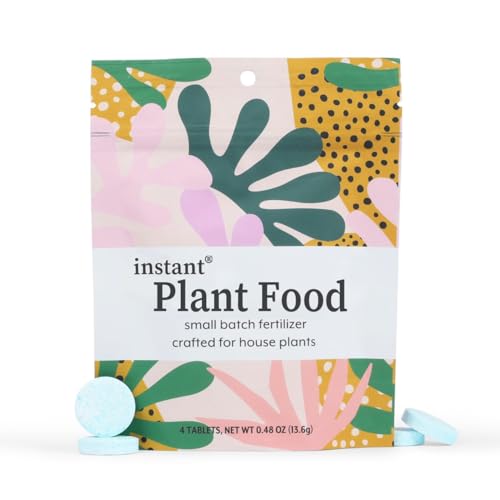
Drop a tablet in water and walk away — no measuring, no mess, no guesswork.
For potted hostas that live indoors or on a shaded patio, this is the simplest feeding method you will find. Each self-dissolving tablet is pre-proportioned with a 4-3-6 N-P-K blend, so you never scoop, spill, or mix. Drop one tablet into a glass of water or a small watering can, let it dissolve, and pour. There is zero odor and no residue left behind. Customers note that the tablets revived withering plants within days, with leaves greening and stems strengthening noticeably fast.
The formula is milder than the Miracle-Gro powder — 4-3-6 versus 24-8-16 — which makes it a better fit for indoor plants that cannot handle a strong nitrogen blast. One tablet feeds a large houseplant or several small ones for up to three months, so a four-pack covers a whole season for a modest collection. The tablets are certified vegan and cruelty-free, and one percent of sales go to environmental causes, for anyone who weighs that into a purchase.
The trade-off is coverage: you get just four tablets in the pack. If you have a large outdoor hosta bed, this solution runs out fast and the mild formula will not produce the same leaf bulk as a high-nitrogen powder. Stick with this for your favorite indoor hosta or a collection of small pots.
No-Fuss Feeding: Perfect for beginners or anyone who hates measuring fertilizers — each tablet is a perfect dose.
Volume Limitation: Only enough for a few large plants; not practical for whole garden beds or rows of hostas.
Best for: The indoor hosta grower who wants a clean, simple feeding routine with no powders or granules to handle.
skip it if: You are feeding a large shade garden or outdoor border — you will run out of tablets quickly and need a stronger nitrogen push.
3. Cz Garden 4-10-10 Bulb and Bloom Fertilizer (4 lb.)

Two percent iron and a bloom-focused ratio that makes flowers explode — ideal for hosta beds with companion blooms.
If your hosta garden includes flowering perennials like astilbe, heuchera, or daylilies, this granular formula shifts the balance toward bloom production. The 4-10-10 ratio is low in nitrogen and high in phosphorus and potassium, which tells the plant to put energy into flowers rather than leaves. It also contains two percent iron (a micronutrient — a tiny amount of a nutrient plants need in very small quantities) along with other trace micronutrients, which help deepen leaf color without adding more nitrogen. The result is a well-rounded bed that blooms heavily while the hosta foliage stays a healthy, dark green.
At four pounds, this is one of the heavier bags here — it is 4 pounds versus the Miracle-Gro’s 3 pounds. But the trade-off is that the granules are a slow-release form, so you sprinkle them on the soil and they break down gradually with each watering. That means fewer applications over the season. Reviewers point out that this fertilizer got bougainvillea blooming and growing amazingly, and that nothing else worked on some stubborn plants until this was applied.
The catch for pure hosta growers is the low nitrogen number (4). Hostas are primarily foliage plants, and a phosphorus-heavy formula will not drive the same massive leaf growth that a 24-8-16 delivers. Use this in mixed beds where you want your flowers to shine alongside your hostas.
Bloom Booster
- High phosphorus (10) pushes flower production for companion perennials
- Iron and micronutrients deepen leaf and petal color
- Slow-release granules mean less frequent applications
Low Leaf Power
- Nitrogen content is too low to drive the big hosta leaves most gardeners want
- Heavier bag at 4 lbs may be more than a small bed needs
Reach for this when: Your hosta bed also contains flowering plants like daylilies or astilbe and you want both leaves and blooms to thrive.
Look elsewhere if: Your garden is hostas only and your single priority is big, lush leaves — you need a higher first number.
4. Hi-Yield Garden Fertilizer 8-10-8 (3.3 lb.)
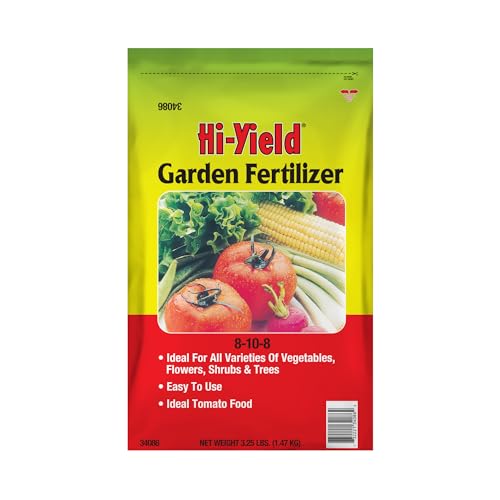
An all-rounder granular that works on hostas, tomatoes, and trees without burning.
Hi-Yield sits in a middle ground that the other products here do not cover: it is not as nitrogen-heavy as the Miracle-Gro powder, but it gives you more leaf support than the bloom-focused Cz Garden bag. The 8-10-8 ratio puts nitrogen (8) and potassium (8) at roughly equal levels, with a modest phosphorus boost at 10. That means it supports decent leaf growth while also encouraging root and flower development, making it a safe pick if you are fertilizing a mix of hostas, vegetables, and shrubs all in one season.
The granules are a slow-release form — shoppers say that they slowly dissolve with watering, so you do not need to mix anything. Just scatter the recommended amount on the soil surface and let rain or irrigation carry it down. For new plants the label says to apply one and three-quarters pounds per 50 square feet; for established plants you use half that amount, roughly every two weeks during the growing season. One reviewer specifically uses it on banana plants and reports darker green leaves with fast growth even in pots.
The limitation for dedicated hosta enthusiasts is the nitrogen level. At 8, it is significantly lower than the 24 in the top pick, so you will not get the same fast, dramatic leaf expansion. Use this if you want one bag that works across your whole garden without having to switch products between beds.
One-Bag Coverage
- Balanced enough for hostas, tomatoes, flowers, trees, and shrubs
- Granules release slowly with watering so you apply less often
- Simple scatter-and-go application
Not Leaf-Specific
- At 8% nitrogen it will not produce the large hosta leaves a high-nitrogen formula delivers
- Not the best choice if hostas are the only plant in your garden
Best for: The gardener who grows hostas alongside vegetables and ornamentals and wants one granular formula that handles everything without burning.
pass on it if: Your garden is hostas only and your goal is maximum leaf size and density — you will get faster results with a higher first number.
Understanding the Specs
N-P-K Ratio
That triplet of numbers on every bag tells you the percentage by weight of nitrogen (N), phosphorus (P), and potassium (K). For hostas, nitrogen is the key — it is what drives lush, broad leaf growth. A ratio like 24-8-16 gives you a powerful nitrogen push, while a 4-3-6 is much milder. If you are growing hostas primarily for their leaves, look for a first number between 8 and 24.
Powder vs Granules vs Tablets
Powders dissolve instantly in water and give you fast, measurable feeding but require mixing each time. Granules sit on the soil and break down with each watering — slower but less work. Tablets are pre-measured doses that dissolve in your watering can with zero effort, ideal for a few potted plants. Pick the form that matches how much time you want to spend and how many plants you are feeding.
FAQ
What N-P-K ratio is best for hostas?
Can I use a tomato fertilizer on hostas?
How often should I fertilize hostas?
Should I use liquid or granular fertilizer for hostas?
Can I over-fertilize hostas?
Do hostas need fertilizer with iron?
Is organic or synthetic fertilizer better for hostas?
Can I use houseplant tablets on outdoor hostas?
How much fertilizer does one hosta plant need?
When should I stop fertilizing hostas in the fall?
Final Thoughts: The Verdict
For most gardeners, the hosta fertilizer winner is the Miracle-Gro Water Soluble All Purpose Plant Food because its 24-8-16 ratio delivers the fastest, most dramatic leaf growth you can buy. If you want a no-mess feeding routine for indoor or potted hostas, grab the Instant Plant Food Tablets. And for mixed flower beds where blooms matter just as much as leaves, the Cz Garden 4-10-10 with added iron is a strong choice.
How We Picked
We do not accept paid placement. Every pick is matched to a real buyer and a real use-case; we do not hands-on test units.
Sources & Methodology
Specifications: manufacturer listings and product documentation. Review insights: verified customer reviews, as of July 2026. Pricing: not shown on this page (it changes often); check the current price via the retailer link.
As an Amazon Associate, Lawn Gear Lab earns from qualifying purchases. This does not affect which products we feature.