
Specs are compiled from manufacturer listings and verified buyer reviews and can change over time — please confirm the key details on the product page before buying.
That powdery white coating showing up on your squash leaves, roses, and crepe myrtles is powdery mildew — a fungal infection that spreads fast and can ruin a whole season of growth before you even notice it. Horticultural oils work by smothering the fungus and its spores, stopping the infection cycle without harsh chemicals. The challenge is picking the right one from a shelf full of sprays, concentrates, and ready-to-use bottles that all promise the same thing.
I’m Rikta — the founder and writer behind Lawn Gear Lab. This guide is built by comparing the manufacturers’ published specifications and the patterns across verified customer reviews, so you get each pick’s real strengths and trade-offs instead of marketing spin.
The best way to keep your garden green and clean from the white stuff is by choosing the right horticultural oil for powdery mildew that fits the size of your yard, the type of plants you are protecting, and how much time you want to spend mixing and spraying.
Our Picks at a Glance

How To Choose The Best Horticultural Oil For Powdery Mildew
You are looking for a spray that kills the existing fungus and protects new growth, but the bottles come in different forms and active ingredients. Here are the three biggest factors that make or break a purchase.
Ready-to-Spray vs Concentrate
A ready-to-spray bottle attaches directly to your garden hose, mixes the oil with water as you spray, and lets you cover a large area without any measuring. It is the easiest option for a weekend gardener with several flower beds and shrubs. A concentrate requires you to mix the oil with water in a pump sprayer, which takes a bit more effort but gives you many more applications per bottle — so the cost per treatment drops dramatically if you have a large yard or many fruit trees to cover.
Active Ingredient: Mineral Oil vs Neem Oil
Mineral oil is the traditional dormant and growing-season oil that smothers insects and fungal spores by physical action. It leaves almost no visible residue and is often the most affordable option. Neem oil comes from the neem tree seed and provides the same smothering effect plus a bitter compound that repels many insects from feeding. Neem oil typically has a stronger odor that fades in a day or two, while mineral oil is nearly odorless. Both are approved for organic gardening.
Multi-Purpose Coverage
A single product that works as an insecticide, miticide, and fungicide saves you from buying separate bottles for aphids, spider mites, and powdery mildew. If you already have pests on your plants, a triple-action spray handles everything in one pass. If your only problem is the white fungus, a dedicated fungicide might be all you need.
Quick Comparison
| Model | Best For | Active Ingredient | Liquid Volume | Form | Amazon |
|---|---|---|---|---|---|
| Fertilome Triple Action (12245)★ Best Overall | Triple-threat pest + mildew control | Pyrethrin + Neem Oil | 16 fl oz | Concentrate | Amazon |
| Captain Jack’s Neem MaxPremium Pick | Tall shrubs & easy hose-end application | Neem Oil | 16 fl oz | Ready-to-Spray | Amazon |
| Summit Year-Round Spray OilBest Value | Budget-friendly mildew + insect control | Petroleum Oil | 32 fl oz | Concentrate | Amazon |
| Bonide All Seasons Spray Oil | Year-round dormant & growing season use | Mineral Oil | 32 fl oz | Ready-to-Spray | Amazon |
| Trifecta Crop Control | Maximum-strength natural formula | Essential Oils | 32 fl oz | Ready-to-Use | Amazon |
| Natria Neem Oil (Pack of 2) | Small gardens & potted plants indoors | Neem Oil | 48 fl oz (total) | Ready-to-Use | Amazon |
| SaferGro Mildew Cure | Targeted powdery mildew treatment | Garlic Extracts & Essential Oils | 32 fl oz | Concentrate | Amazon |
| Fertilome Triple Action RTS (11247) | Large properties & hose-end convenience | Pyrethrin + Neem Oil | 32 fl oz | Ready-to-Spray | Amazon |
In‑Depth Reviews
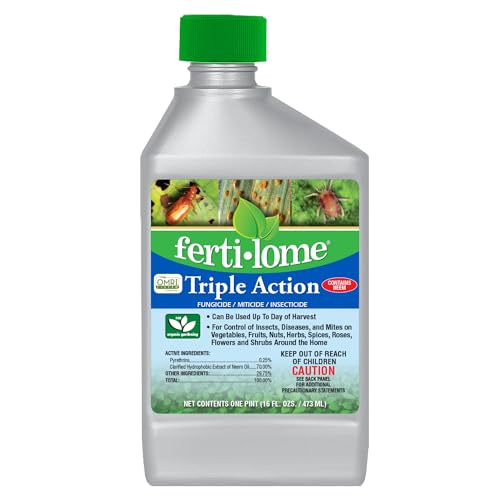
1. Fertilome (12245) Triple Action Insecticide Miticide Fungicide, 16 oz
Our pick — over 4.5★ from 800+ verified ratings; the strongest balance of quality and price.
The triple-duty concentrate that knocks out mildew alongside the bugs that spread it.
This 16-ounce concentrate blends pyrethrin with neem oil to hit insects, mites, and fungal infections in one pass. Buyers report it quickly resolved infestations on diseased tomato plants and chives, and the label covers everything from aphids and spider mites to powdery mildew, rust, and leaf spot. Because it is a concentrate, a single bottle stretches further than any ready-to-spray option — you mix it yourself, so the cost per treatment stays low even when you are covering fruit trees and vegetable beds.
The 7-to-14-day reapplication schedule is easy to keep, and the list of protected plants includes fruits, herbs, vegetables, roses, flowers, and shrubs. The thing owners praise most is the sheer effectiveness — the product simply works on the pests and fungus it promises to handle. The occasional grumble is that the value-for-money debate pops up, but that is almost always from gardeners comparing concentrate prices to ready-to-spray convenience without calculating how many gallons of spray a 16-ounce bottle actually makes.
What wins people over
- Triple action covers insects, mites, and fungus including powdery mildew
- Concentrate stretches far — ideal for multiple fruit trees and vegetable gardens
- Label covers a wide range of plants: fruits, herbs, nuts, vegetables, roses, shrubs
The trade-off to know
- Requires mixing in a pump sprayer — no hose-end attachment included
- Some owners find the price higher than single-purpose sprays
Reach for this if: you want a single concentrate that handles powdery mildew and the pests that stress your plants — it is the best all-in-one value for a medium-to-large garden.
Look elsewhere if: you prefer a grab-and-spray hose-end bottle and do not want to measure and mix each application.
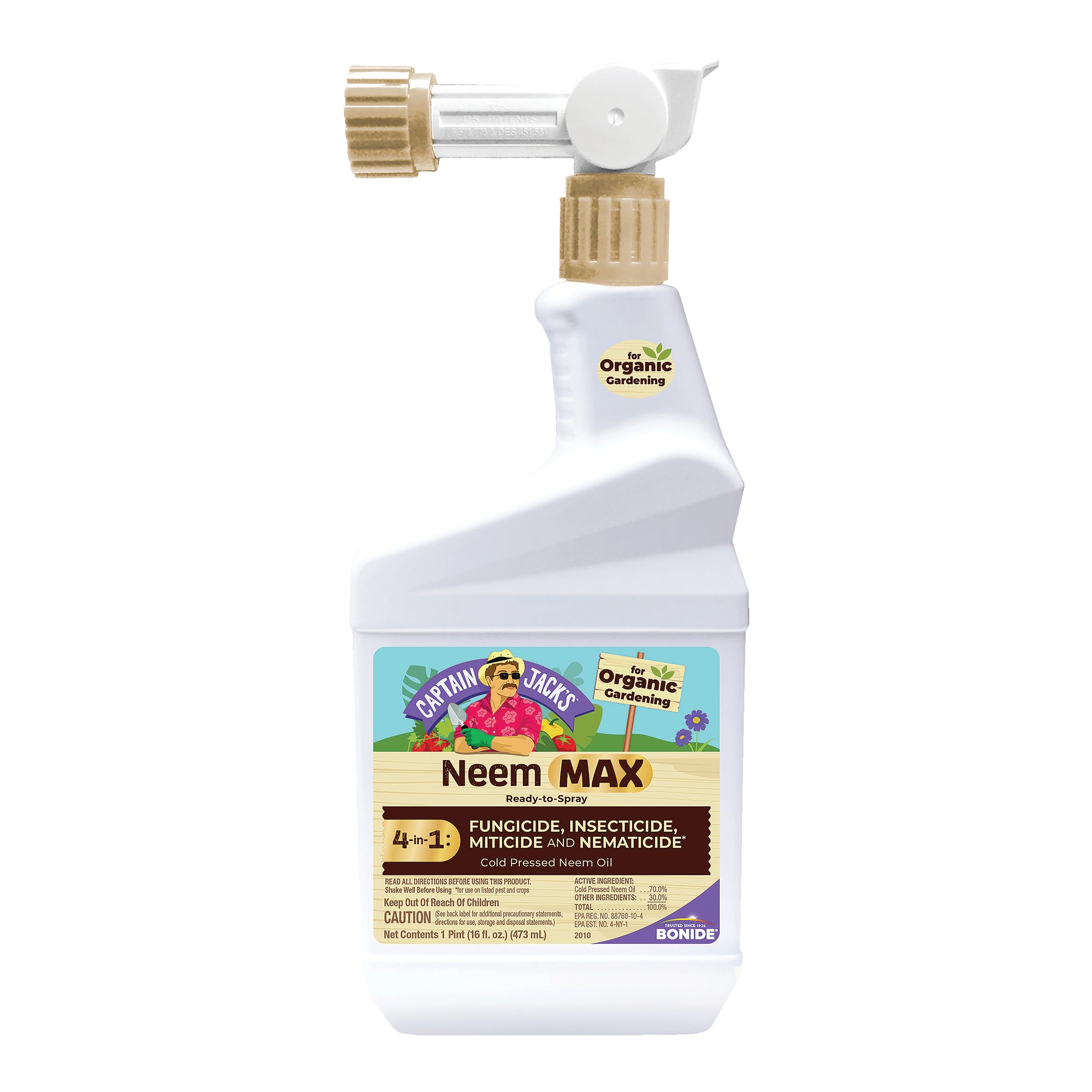
2. Bonide Captain Jack’s Neem Max, 16 oz Ready-to-Spray
The cold-pressed neem oil that reaches tall shrubs without a ladder.
This 16-ounce ready-to-spray bottle attaches to your garden hose, so you can treat tall shrubs and fruit trees without hauling a heavy pump sprayer or climbing a ladder. The active ingredient is cold-pressed neem oil, a plant-based compound that works as a 4-in-1 insecticide, fungicide, miticide, and nematicide. Owners mention it worked great for very tall shrubs and was easy to adjust the spray from the bottle. The formula is approved for organic gardening and can be used on vegetables, fruits, citrus, nuts, and ornamentals.
The mild odor fades in a day or two — far less pungent than some neem concentrates. The catch is that the spray performance gets mixed feedback: a few customers note the hose-end mechanism does not always spray consistently. Shaking the bottle thoroughly before each use usually solves the issue. For the price, you get the convenience of instant mixing and the reach of a hose-end sprayer, which is a big time-saver if you have many tall plants.
Best for tall shrubs: the hose-end reach and neem oil power make this a top choice for anyone with mature bushes and small trees who hates mixing concentrates.
Grab it if: you have tall shrubs or fruit trees and want a hose-end spray that uses cold-pressed neem oil against powdery mildew and insects.
Think twice if: you need a concentrate to cover a very large area — the 16-ounce ready-to-spray format treats a moderate garden.
3. Summit Year-Round Spray Oil for Garden Insects, 32-Ounce Concentrate
The concentrate that makes a little go a long way against mildew and bugs.
You get 32 ounces of concentrated spray oil here, and because you only need a tiny bit per gallon of water, this bottle lasts significantly longer than the 16-ounce Fertilome option. The formula prevents and cures powdery mildew while also controlling aphids, spider mites, scale, whitefly, and fungus gnats. Reviewers point out it works great on roses and hydrangea for powdery mildew and on bearded irises for whiteflies, with next to no scent. The OMRI listing means it is accepted for organic gardening.
One realistic note: some shoppers say that the oil can leave a residue on the soil surface after repeated applications, which is common with oil-based sprays. The packaging has drawn occasional complaints about leaks during shipping, so inspect the bottle on arrival. At this price point for 32 ounces of concentrate, you are getting among the most cost-effective tools for a vegetable garden or flower bed with a mildew problem.
Why it wins on value: 32 ounces of concentrate at a budget-friendly price, and buyers confirm it beats other products on mildew with no harsh odor.
Choose this if: you want the most spray for your money and are fine with a concentrate that requires mixing.
skip it if: the idea of oil residue on the soil bothers you, or you prefer a hose-end ready-to-spray bottle.
4. Bonide All Seasons Horticultural & Dormant Spray Oil, 32 oz Ready-to-Spray

The mineral-oil spray that works from dormant season straight through summer.
This is the most versatile timing option on the list — you can spray it during the dormant stage, green tip stage, delayed dormant stage, and the full growing season. That means you start preventing powdery mildew and overwintering insect eggs in late winter and keep protecting through harvest. The active ingredient is mineral oil, which smothers fungal spores and soft-bodied insects without leaving toxic residues. Buyers report seeing results within a few days on azalea bark scale and that it killed rose disease while shining the leaves.
One owner noted that the hose-end sprayer is poorly calibrated and empties the bottle too fast, recommending a pump sprayer instead for better control. The 32-ounce bottle covers a good area, but the sprayer quirk is worth knowing before your first use. If you have a small yard and want one bottle for all seasons, this is the easiest pick.
What stands out
- Can be used in all four plant growth stages — dormant through active growing
- Mineral oil is nearly odorless and leaves no toxic residue
- Controls both insects and fungal diseases including powdery mildew
The sprayer issue
- Hose-end sprayer empties quickly and is inconsistent — many owners switch to a pump sprayer
- Leaf health gets mixed feedback if applied in hot weather
Ideal for: the gardener who wants one mineral-oil spray for year-round protection and does not mind using their own sprayer.
Not ideal if: you rely on the included hose-end sprayer being accurate — plan to decant into your own sprayer for best results.
5. Trifecta Crop Control Ready to Use, 32 oz

The commercial-grade formula that organic growers swear by for tough mildew.
This ready-to-use spray uses a blend of natural essential oils to suffocate and dehydrate soft-bodied pests and fungal spores, including powdery mildew, spider mites, and botrytis. It is a favorite among cannabis and indoor growers, but works just as well on outdoor butterfly bushes, sunflowers, and vegetable gardens. Owners mention it really worked on butterfly bushes and that the natural ingredients are a big plus, though the odor is a little off-putting until it dries.
The downside is the cost per application — this is a premium product, and owners note you need to spray frequently (every few days) to break the pest life cycle since it does not kill eggs. The fast-drying formula leaves no residue, which is a big advantage for indoor plants and edible crops. For small gardens or high-value plants where you want a non-toxic, maximum-strength option, this is the go-to.
The trade-off: very effective but expensive for large gardens — perfect for a few precious plants or indoor grow rooms where you want zero chemical residue.
Best for: indoor plants, cannabis gardens, and small outdoor beds where you want a plant-based, maximum-strength spray that dries fast.
Skip if: you need to treat a large orchard or many flower beds — the cost per bottle adds up quickly.
6. Natria 706250A Neem Oil Pest and Disease Control, 24-Ounce (Pack of 2)

The no-mix neem oil twin-pack for indoor roses and small potted gardens.
This pack gives you two 24-ounce ready-to-use bottles, so you have a spare ready before the first runs out. It controls aphids, whiteflies, spider mites, and powdery mildew on roses, flowers, fruits, and vegetables. Buyers noticed pests were gone after three days of daily spraying — faster than the label’s seven-day suggestion — with new growth appearing by day four. The neem oil formula is safe to use up to the day of harvest, making it a good choice for edible plants on a patio or balcony.
The ready-to-use format means zero mixing: just shake and spray. The catch is that the bottle size is modest, so heavy use on a large outdoor garden will empty both bottles quickly. A few owners mention some leaves turned yellow despite following the directions, so test on a small section first. For potted plants and a few raised beds, this twin-pack is a convenient grab.
Perfect for small spaces: no mixing, no measuring, and a spare bottle means you are never caught mid-treatment without product.
Reach for this if: you have potted roses, a few vegetable containers, or indoor plants that need neem oil treatment without any mixing effort.
Choose something else if: your garden covers more than a few hundred square feet — the ready-to-use format runs out fast at scale.
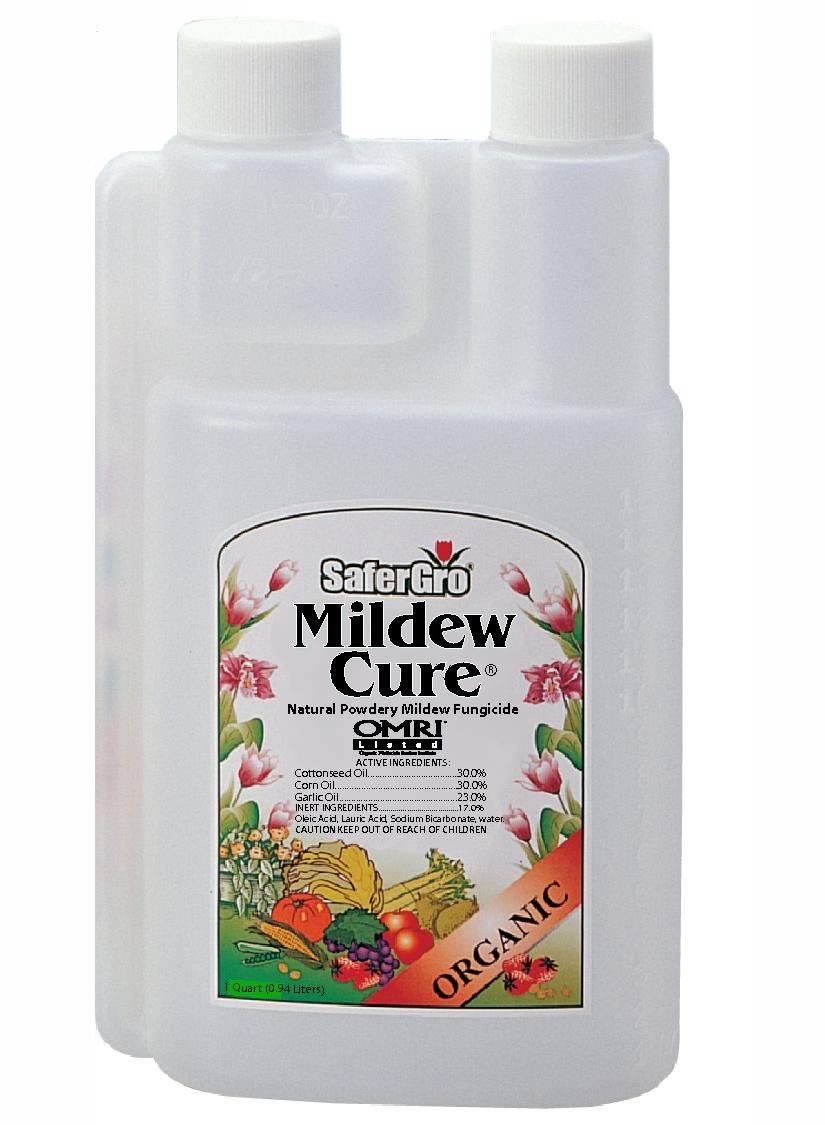
7. SaferGro Mildew Cure, Organic Fungicide, 32 oz Concentrate
The garlic-derived concentrate built specifically to cure powdery mildew.
This is not a general pest spray — it is a targeted fungicide derived from garlic extracts and other essential oils, formulated to provide good control of powdery mildew. Customers note it revived a grape vine that had been destroyed by mildew after just three sprays from May to July, restoring full fruit production. The active ingredients are food-grade materials, so it is about as natural as a fungicide gets.
The strong garlic smell is the obvious trait: it fades, but you will know you sprayed it. Some owners note it keeps powdery mildew at bay but does not always completely remove it from every leaf — regular, thorough application is the key. The 32-ounce concentrate requires mixing, but one bottle goes a long way. If your primary fight is powdery mildew and you want a food-grade solution, this is the most specialized weapon on the list.
What it does best: suppresses and controls powdery mildew on vegetables, fruit trees, and ornamentals using food-grade garlic extracts.
Best for: gardeners whose main issue is powdery mildew and who want a food-grade, garlic-based concentrate rather than a broad-spectrum oil.
Consider another product if: you also need insect control — this is a fungicide only, not a multi-purpose spray.
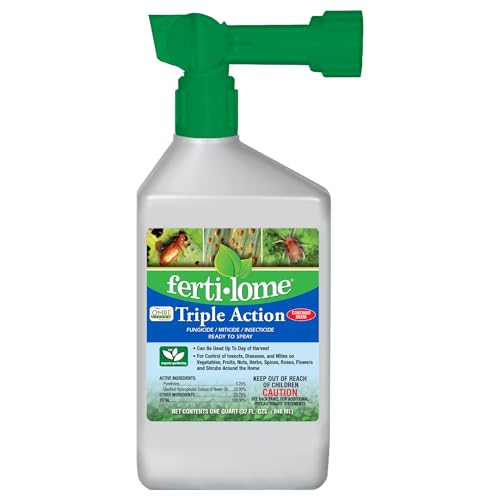
8. Fertilome (11247) Triple Action RTS, 32 oz
The hose-end spray that covered 15 evergreens and still had half a bottle left.
This is the ready-to-spray version of the Fertilome Triple Action, and it comes with a built-in hose attachment nozzle. One owner reported covering 15 evergreens, 5 cherry trees, 8 peach trees, 2 apple trees, 1 plum, 1 nectarine, and 11 roses and still had half a bottle remaining after the first application — the hose-end sprayer reaches up to 20 feet, making tall trees easy. Like the concentrate version, it prevents and protects against powdery mildew, rust, and leaf spot while controlling aphids, spider mites, and other pests.
The main issue is shipping: a few bottles arrived punctured, leaking the product inside the box. That is a packaging concern rather than a product flaw, but it is worth ordering from a seller with good handling. The spray pattern is even and consistent when you remember to shake the bottle periodically during use. For anyone with a large property and many trees, this is the most efficient way to apply triple-action protection.
The big advantage
- Hose-end sprayer reaches 20 feet — easy for tall trees and large shrubs
- Triple action covers insects, mites, and fungus including powdery mildew
- One 32-ounce bottle treated 40+ trees and 11 roses with half left
Watch for
- Shipping damage reported — bottle can arrive punctured and leaking
- Requires periodic shaking during use to keep the spray even
Get this if: you have a large yard with many trees and want a hose-end spray that covers massive area without mixing.
Pass if: you only need to treat a small flower bed or a few potted plants — the 32-ounce bottle is more than you will use.
Understanding the Specs
Active Ingredient Type
The two main families are mineral oil and neem oil. Mineral oil works purely by smothering — it coats the fungal spores and soft-bodied insects, cutting off their air supply. Neem oil does the same but also contains azadirachtin, a compound that repels many insects from feeding and disrupts their growth cycle. Both are allowed in organic gardening, but neem oil has a more noticeable smell that dissipates in a day or two.
Ready-to-Spray vs Concentrate
A ready-to-spray bottle has a hose-end attachment that mixes the oil with water as you spray — you twist it on, turn the water on, and go. A concentrate requires you to measure and mix the oil with water in a separate pump sprayer. Ready-to-spray is faster and easier for small-to-medium gardens. Concentrates give you drastically more applications per bottle, so they are the better value if you are covering a large area or many trees.
Application Timing
Some oils are labeled for dormant-season use only, while others work year-round. Dormant oil is sprayed when the plant is leafless to kill overwintering pest eggs and fungal spores. Growing-season oil is formulated to be gentler on leaves so you can spray during active growth without burning the foliage. A year-round product, like the Bonide All Seasons spray, works at both stages — giving you the most flexibility.
Reapplication Schedule
Horticultural oils do not have long-lasting residual effects — they kill on contact and then break down. Most labels recommend reapplying every 7 to 14 days for active infections. If you are dealing with a severe powdery mildew outbreak, you may need to spray more frequently, sometimes every 3 to 5 days, until the white coating stops appearing. Consistency matters more than the product you choose.
FAQ
Can I use horticultural oil on edible plants like tomatoes and peppers?
Will horticultural oil harm my plants if I spray it in hot weather?
How often do I need to spray to get rid of powdery mildew for good?
What is the difference between dormant oil and growing-season oil?
Can I mix horticultural oil with other sprays like neem oil or soap?
Does neem oil smell bad and how long does the smell last?
Will these oils kill beneficial insects like bees and ladybugs?
How long does a bottle of concentrate last compared to a ready-to-spray bottle?
What is OMRI listed and why does it matter?
Can I use these oils on indoor houseplants?
Final Thoughts: The Verdict
For most buyers, the horticultural oil for powdery mildew winner is the Fertilome Triple Action 16 oz Concentrate because it combines pyrethrin and neem oil into one concentrate that handles both the fungus and the insects, with a proven track record across fruit trees, vegetables, and ornamentals. If you want the grab-and-spray convenience of a hose-end bottle, grab the Bonide Captain Jack’s Neem Max for its tall-plant reach. And for the biggest bang per gallon on an orchard or large vegetable garden, the Bonide Captain Jack’s Fruit Tree Spray in the 64-ounce concentrate size is the one to reach for.
How We Picked
We do not accept paid placement. Every pick is matched to a real buyer and a real use-case; we do not hands-on test units.
Sources & Methodology
Specifications: manufacturer listings and product documentation. Review insights: verified customer reviews, as of July 2026. Pricing: not shown on this page (it changes often); check the current price via the retailer link.
As an Amazon Associate, Lawn Gear Lab earns from qualifying purchases. This does not affect which products we feature.