
Specs are compiled from manufacturer listings and verified buyer reviews and can change over time — please confirm the key details on the product page before buying.
Cleaning a stall is a gritty, repetitive job where the wrong tool punishes you scoop after scoop. A good horse manure rake makes the difference between an arm-aching chore and a quick, clean sweep. This guide breaks down the real trade-offs between steel, plastic, handle length, and tine count so you can pick the one that fits your setup.
I’m Rikta — the founder and writer behind Lawn Gear Lab. This guide is built by comparing the manufacturers’ published specifications and the patterns across verified customer reviews, so you get each pick’s real strengths and trade-offs instead of marketing spin.
Finding the best horse manure rake depends on matching the handle, head, and weight to the exact mucking routine you face every day.
Our Picks at a Glance

How To Choose The Best Horse Manure Rake
The right fork saves you time and back strain. Here are the key specs that separate a daily driver from a tool that sits in the corner.
Tine Count and Spacing
More tines mean you pick up more material per scoop, but the spacing determines how well bedding falls through. For horse manure, you want tines close enough to hold heavy, wet waste but wide enough to let shavings and sawdust sift out. A 10-tine fork with tighter spacing works well for manure, while 18-tine designs are better for loose hay and straw.
Handle Material and Length
Wood offers a traditional feel and some flex but can warp or splinter over time. Fiberglass is lighter and weather-resistant, which is great for outdoor use. Aluminum is the lightest option and ideal for portability, though it can dent. A longer handle (54 to 61 inches) gives you more leverage and saves your back, but shorter users might find it unwieldy.
Head Material
Forged steel heads are incredibly strong and durable, easily handling heavy, wet manure and compacted bedding. Polycarbonate plastic is much lighter, won’t rust, and is gentler on rubber stall mats, but it can snap under extreme loads. Your choice depends on whether you value rugged longevity or a lighter daily carry.
Quick Comparison
| Model | Best For | Tines | Handle Length | Weight | Amazon |
|---|---|---|---|---|---|
| Truper TruTough 30-Inch★ Best Overall | Heavy-Duty Mulch & Compost | 10 | 30 in | 5.5 lbs | Amazon |
| VEVOR Manure ForkBest Value | Lightweight Daily Mucking | 18 | 61 in | 2.56 lbs | Amazon |
| Little Giant DuraFork | Versatile Stable Cleaning | 13.125 in | 52 in | Polycarbonate | Amazon |
| Bully Tools Stall Fork | American-Made Heavy Duty | 18 | 49 in | 0.69 kg | Amazon |
| Tough 1 Pro Pick | Portable Show Use | 3/4-inch spaced | 45 in | 2 lbs | Amazon |
| Truper Tru Tough 54-Inch | Premium Long-Handle Sifting | 10 | 54 in | Forged Steel | Amazon |
In‑Depth Reviews
1. Truper TruTough Ensilage Fork, 10 Tines, 30-Inch
Our pick — over 4.5★ from 300+ verified ratings; the strongest balance of quality and price.
The steel-tined workhorse that turns wheelbarrow loads into four scoops instead of twenty.
You get 10 spring steel tines (a strong steel that flexes and rebounds) and a wood handle built for dense, wet materials like mulch, manure, and compost. The upturned edges on the wide head help hold the load, and the poly D-handle (a plastic D-shaped grip) gives you a firm hold even with gloves on. Buyers report it is so efficient that “4 scoops fill a wheelbarrow” — a huge upgrade from a flat shovel.
At 5.5 pounds, it is the heaviest fork in this lineup, but that weight means durability. The steel head does not flex under pressure, and the wood shaft has a solid feel that plastic handles lack. The trade-off is that the shorter 30-inch handle forces you to bend more than you would with a longer fork. That makes this pick better for ground-level scooping than for a deep stall where you want to stand upright.
What Owners Love
- Wide, upturned head scoops huge loads fast — four passes fill a wheelbarrow
- Sturdy steel construction handles heavy manure, wet compost, and rocks without bending
- Poly D-handle provides a secure, comfortable grip for extended work sessions
The Real Trade-Off
- At 5.5 lbs, it is noticeably heavier than plastic or fiberglass forks
- 30-inch handle means more bending; not ideal for tall users clearing deep stalls
Reach for this if: you need a brute-force tool for moving wet manure, thick mulch, or heavy compost in volume, and you prioritize toughness over weight.
Look elsewhere if: you want a long-handled fork to save your back during daily stall mucking, or you prefer an ultra-lightweight tool.
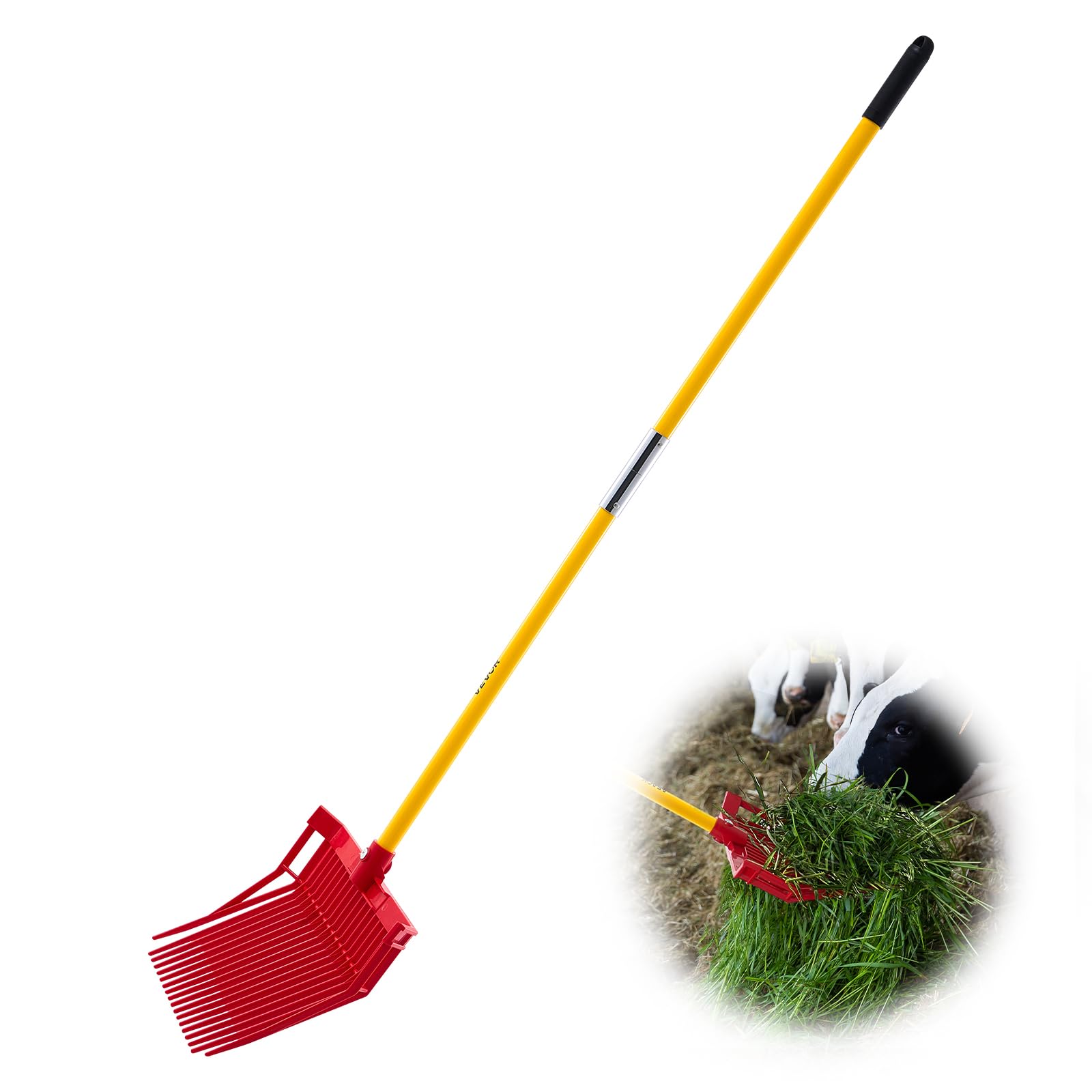
2. VEVOR Manure Fork, 18 Angled Tines, 61-Inch Fiberglass Handle
A featherlight 2.56-pound fork with 18 angled tines that saves your back and your budget.
At just 2.56 pounds, this VEVOR fork is versus the Truper’s 5.5 pounds, yet its 61-inch total length gives you the leverage to stand upright while mucking. The angled tines are designed to grip hay and straw while letting fines (small particles) sift through, and the fiberglass handle resists weather far better than wood.
The crowd favorite is a ranch owner who says they have “purchased dozens of manure forks for my ranch over the years” and calls this the sturdiest model they have ever bought. The main caveat is that the handle screws together, and a few owners mention the connection loosening during use — a dab of thread-locker (an adhesive that prevents screws from vibrating loose) usually fixes it. For the price, this packs a ton of value compared to the more expensive Truper 54-inch.
Why It Wins
- Extremely light at 2.56 lbs — easy on the arms for long cleaning sessions
- 18 angled tines minimize spillage when lifting hay, straw, or manure
- 61-inch handle lets tall users work without bending, reducing back strain
One Thing to Watch
- The screw-together connection can loosen during heavy use; a simple fix but worth knowing
- Plastic head is not built for prying or digging — stick to scooping
Best suited for: the horse owner or barn manager who wants one lightweight, long-handled fork for daily stall cleaning without spending a premium.
skip it if: you need a fork that can handle heavy prying or abuse — this plastic head is for scooping, not digging.
3. Little Giant DuraFork Pitch Fork, Polycarbonate

The polycarbonate (a tough, lightweight plastic) fork with a cult following and enough color options to match your barn aesthetic.
This is the most-reviewed fork in the lineup. The polycarbonate head is tough yet flexible, and the angled tines do a fine job of letting dirt and sand fall through while keeping the manure on top. One owner says they modified theirs with hardware cloth (a wire mesh) and now it “cleans entire run in under 5 minutes.” The tines are 13.125 inches long and 15.125 inches wide, giving you good coverage per scoop — wider than the VEVOR’s head.
Durability and quality are the two most-mentioned points, with over 70 positive mentions for each. A few customers note the tine spacing is wide for cat litter or sand, but for horse manure and straw, it is spot on. The mixed feedback on the handle is note — some wish it came with a handle, so check that before you buy.
The Good
- Durable polycarbonate head resists bending and rust — lasts through years of regular use
- Angled tines provide excellent sifting, dropping sand and shavings back into the stall
- Available in a dozen colors including hot pink, lime green, and berry blue
The Note
- Tine spacing is wide — fine for manure, but too wide for fine bedding like sand or pelleted litter
- Handle quality is mixed; some reviewers point out the wood handle needs replacing after heavy use
Pick this for: a durable, lightweight plastic fork that does not rust and offers great sifting for standard shavings and hay — available in fun colors too.
Consider something else if: your bedding is fine sand, you need ultra-heavy steel for compacted wet manure, or you want a handle included in the box.
4. Bully Tools Stall Fork, 18 Tines, 49-Inch Fiberglass Handle
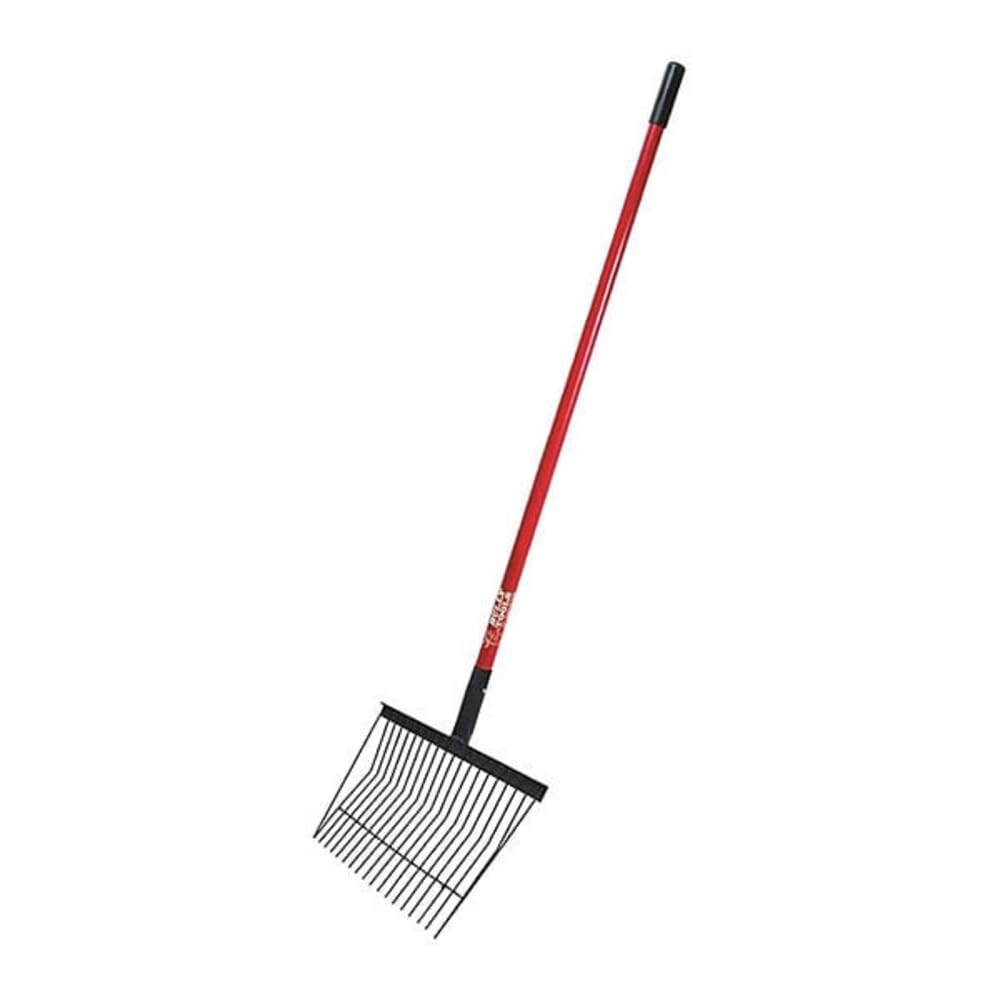
A 100% American-made fork with 18 spring steel tines that scoffs at heavy, wet manure.
Bully Tools builds this with a forged steel head (shaped under high pressure for strength) and a fiberglass handle. It proudly carries a “Made in the USA” stamp. The 18-tine head measures 14.5 inches by 11 inches, giving you a wide, dense scooping surface that excels at picking up heavy manure, hay, and stall bedding. The fiberglass handle is 49 inches from the head, putting total length at 59 inches — plenty of reach for tall users.
The crowd favorite reviews praise its build quality, with one 50-year veteran of stall cleaning calling it the best fork they have used. However, durability is mixed: some shoppers say that the outer tines can snap off under extreme loads or if used for prying. It is also a bit heavier than the VEVOR or Little Giant, so it is more of a power tool than a quick-scoop rake. At 4.1 stars across 99 ratings, it is the lowest-rated pick here, but the positive feedback is strong among those who need its raw strength.
Strengths
- 18 spring steel tines provide excellent strength for heavy, wet manure and compacted bedding
- Fiberglass handle is durable, weather-resistant, and 49 inches long for good leverage
- 100% American-made with a limited lifetime warranty
Weaknesses
- Some buyers report outer tines snapping under heavy prying or extreme loads
- Heavier than plastic/fiberglass alternatives; not the best choice for lightweight mucking
Go for it if: you need a rugged, American-made steel fork for heavy barn work and you are okay with a little extra weight for the strength.
Avoid it if: you are looking for a light, daily-use stall fork for quick cleanups, or if you tend to pry or lever with your fork.
5. Tough 1 Pro Pick Rounded Stall Fork
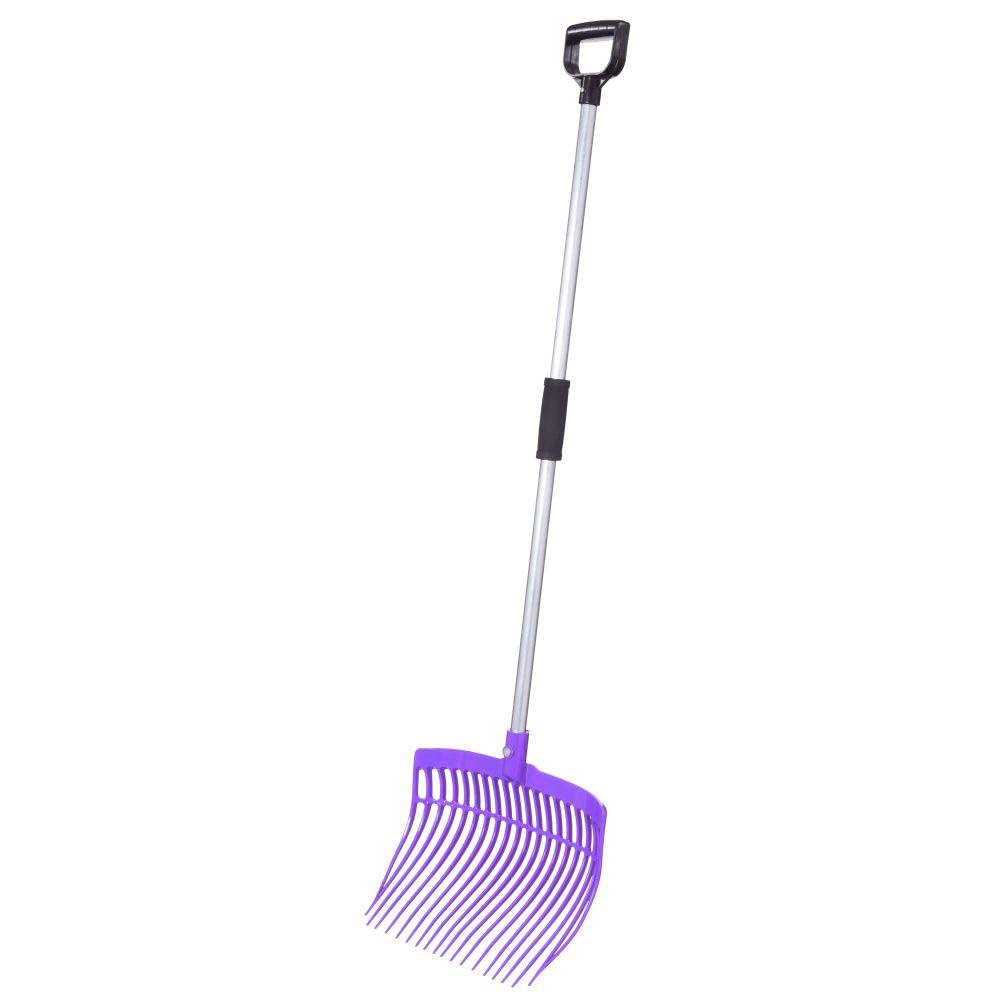
A portable, ultra-light fork designed for horse shows and tight storage, weighing just 2 pounds.
The standout feature is portability. The 45-inch handle comes in two pieces that screw together, and the head is designed to be ultra-lightweight. At just 2 pounds, it is the lightest fork in this roundup, making it a fantastic option for packing to competitions or for smaller-framed users. The tines are spaced at approximately every 3/4 inch, and the brand says it “holds 20% more than standard forks,” though that claim is based on the deeper, rounded head design.
Several owners call it perfect for horse shows because it disassembles into a compact bundle. On the flip side, a few report the small screw holding the head on can vibrate loose, and one owner used a zip tie as a permanent fix. At 4.2 stars across 112 ratings, it is a solid buy, but the screw issue is the main caution — check it before each use.
Pros
- Ultra-light at 2 lbs — the lightest fork here, easy on the arms and back
- Two-piece 45-inch handle breaks down for easy storage and transport
- Rounded, deep head design offers good capacity for manure and bedding
Cons
- Assembly screw can loosen with vibration; some owners use a zip tie as a permanent fix
- Plastic handle feels less durable than wood or fiberglass for heavy daily abuse
Ideal for: horse show competitors, event haulers, or anyone who needs a compact, packable fork that does not hog trunk space.
Not for: heavy-duty daily barn use where the connection screw might work loose — it is a convenience tool, not a brute-force implement.
6. Truper Tru Tough 54-Inch Manure Fork, 10 Tines, Forged Steel
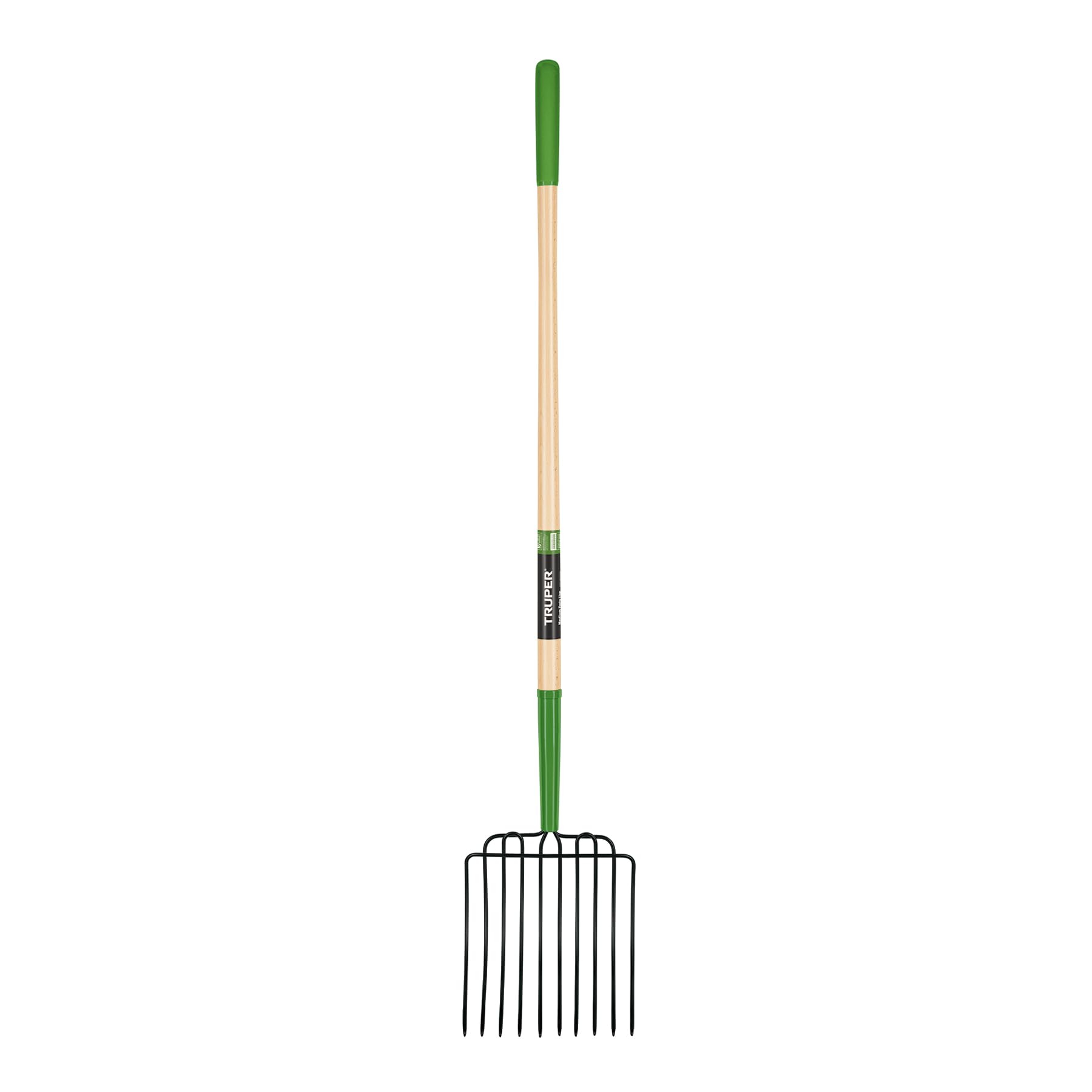
The premium long-handle fork with a forged steel head and ash wood handle for superior leverage and sifting.
You get a 54-inch North American ash wood handle for leverage without bending, plus 10 closely spaced forged steel tines that hold manure while letting shavings and bedding fall through. The head is reinforced with a steel ferrule (a metal collar) so the join does not wobble under heavy loads. This gives you better manure-vs-bedding separation than the wider-tined VEVOR 18-tine model.
Owners consistently praise the quality and effectiveness. The fork digs into wet manure and compacted bedding, and the long handle is a favorite among taller users. The clear lacquer finish on the ash wood protects it from moisture, but the handle is still wood, so do not leave it out in the rain. Weight and handle length get mixed reviews — some shorter users find the 54-inch handle a bit long to control. The Truper brand backs it with a 10-year replacement warranty.
What Stands Out
- Forged steel head with 10 closely spaced tines provides excellent sifting for manure vs. shavings
- 54-inch ash wood handle allows upright, back-saving leverage for tall users
- Reinforced steel ferrule ensures the head stays attached under heavy scooping
The Downsides
- 54-inch handle is unwieldy for shorter users — they have to choke up on the shaft
- Wood handle is heavier than fiberglass and can swell or crack if left in wet conditions
Best for: tall barn owners who want a premium steel fork with a long handle for upright, comfortable scooping and excellent manure-vs-bedding separation.
Reconsider if: you are under 5’5″, or if you need a weatherproof tool that can be left outside without worry.
Understanding the Specs
Tine Count
More tines (like 18) grab more material per scoop, which is great for loose hay or straw. Fewer tines (like 10) with tighter spacing are better for wet manure because the load does not fall through the gaps. Match the tine count to your dominant bedding type.
Handle Material & Length
Wood offers flex and a traditional feel but needs to stay dry. Fiberglass is lighter and weather-proof, making it ideal for outdoor chores. Aluminum is the lightest and is best for portability. A longer handle (54+ inches) saves your back by letting you stand upright; shorter handles (around 30 inches) give you more control for ground-level scooping but require more bending.
Head Material
Forged steel is the strongest option, able to handle heavy, wet manure and compacted bedding without bending. Polycarbonate plastic is much lighter, won’t rust, and is gentler on rubber stall mats, but it can snap under extreme loads or if used for prying. Your choice depends on whether you prioritize durability or a lighter daily carry.
Weight
A heavier fork (5+ pounds) is a brute-force tool for volume moving. A lighter fork (2-3 pounds) lets you work longer without arm fatigue, especially if you are cleaning multiple stalls each day. The trade-off is usually durability — heavy steel forks last longer under abuse than lightweight plastic models.
FAQ
How many tines do I need for a horse manure rake?
Which is stronger: a steel fork or a plastic polycarbonate fork?
Should I get a long or short handle on a manure fork?
Can you use a manure fork for things other than manure?
Does a rounded or flat tine head work better for stalls?
What is the difference between a manure fork and a pitchfork?
How do I prevent the handle from coming loose?
Are expensive manure forks worth the money?
Final Thoughts: The Verdict
For most buyers, the best horse manure rake is the Truper TruTough Ensilage Fork because it offers unbeatable steel durability and massive scooping efficiency at a mid-range price. If you want a lightweight, back-saving option for daily stall cleaning, grab the VEVOR Manure Fork. And for portability and show travel, the Tough 1 Pro Pick is the one to reach for.
How We Picked
We do not accept paid placement. Every pick is matched to a real buyer and a real use-case; we do not hands-on test units.
Sources & Methodology
Specifications: manufacturer listings and product documentation. Review insights: verified customer reviews, as of July 2026. Pricing: not shown on this page (it changes often); check the current price via the retailer link.
As an Amazon Associate, Lawn Gear Lab earns from qualifying purchases. This does not affect which products we feature.