
Specs are compiled from manufacturer listings and verified buyer reviews and can change over time — please confirm the key details on the product page before buying.
You cut a stem from your favorite plant, stick it in water, and wait. Sometimes roots appear fast. Other times the cutting just rots. Plant hormones send the chemical signal that turns a cutting into a new plant, helps a struggling transplant bounce back, or wakes up a dormant bud on an orchid spike.
I’m Rikta, the writer behind Lawn Gear Lab. This article compares the manufacturers’ published specs and patterns across verified customer reviews, so you see each product’s real strengths and trade-offs instead of marketing spin.
Whether you are cloning a fig tree or coaxing an orchid into a second bloom, this guide to the best hormones for plants helps you find the product that fits what you are trying to grow.
Our Picks at a Glance

How To Choose The Best Hormones For Plants
Not every hormone does the same job. Some are designed to get a cutting to form roots fast. Others feed the soil so roots can grow stronger. A few target the dormant buds on an orchid’s spike. Here is how to match the form and active ingredient to what you actually want to happen.
Match the form to your method
Gels cling to a cutting’s stem, which stops the hormone from washing off in a humid propagation chamber. Powders are messier but last on the shelf for years and are easy to dip into. Liquids mix into water for soil drenches or foliar sprays (sprays applied to the leaves), making them the best choice for treating transplant shock or feeding roots on established plants. Pastes are thick and water-resistant, designed to stay put on a node (a point on a stem where a leaf or bud grows) or orchid spike through misting and watering.
Check the active ingredient and its strength
IBA (Indole-3-Butyric Acid) is the industry standard rooting compound. Low concentrations (0.1% to 0.3%) work for softwood cuttings like herbs and houseplants. Mid-range strengths (0.8% to 1.0%) handle semi-hardwood and many evergreens. High concentrations (1.6%) are reserved for the most difficult hardwood cuttings and dormant wood. A product that lists natural IAA (Indole-3-Acetic Acid) is a biological promoter rather than a synthetic hormone, feeding the plant’s own systems rather than signalling directly.
Know when you need more than rooting
If you want to wake up a dormant bud on a bare stem or encourage a new keiki (a baby orchid plant) on an orchid spike, a standard rooting powder or gel will not help — you need a cytokinin-rich paste (a paste made with a shoot-triggering hormone). If your goal is long-term soil health and root mass on established plants, a probiotic powder that contains mycorrhizae (beneficial root fungi) and microbial bacteria does more than a straight hormone. Most rooting compounds focus on one job; these specialty products cover a different part of the growing cycle.
Quick Comparison
| Model | Best For | Form | Active Ingredient | Unit Count | Amazon |
|---|---|---|---|---|---|
| Clonex Rooting Gel★ Best Overall | Propagating cuttings from woody plants and vines | Gel | IBA | 6.76 fl oz | Amazon |
| Big Foot Probiotic Root BoostBest Root Builder | Improving root health and correcting nitrogen deficiency | Powder | Natural IAA | 2 oz | Amazon |
| Garden Safe Take RootBudget Champion | Budget-friendly rooting for roses and ornamentals | Powder | IBA | 4 oz | Amazon |
| Crazy Keiki Cloning Paste | Waking up dormant buds on orchids and houseplants | Paste | Cytokinin | 1 count | Amazon |
| Root Drops | Fast water propagation for houseplant cuttings | Liquid | Rooting hormone and vitamins | 4 oz | Amazon |
| Growth Impact | Reviving stressed plants and transplants | Liquid | Plant hormones and vitamins | 8 fl oz | Amazon |
| Hormex #16 Max-Strength | Rooting difficult hardwood cuttings | Powder | IBA (1.6%) | 1 count | Amazon |
| Stash Blend | Building soil health with a full microbial blend | Powder | IBA, mycorrhizae, bacteria | 8 oz | Amazon |
| Hormodin Rooting Compound | Large-scale propagation of evergreens and shrubs | Powder | IBA (0.8%) | 8 oz | Amazon |
In‑Depth Reviews
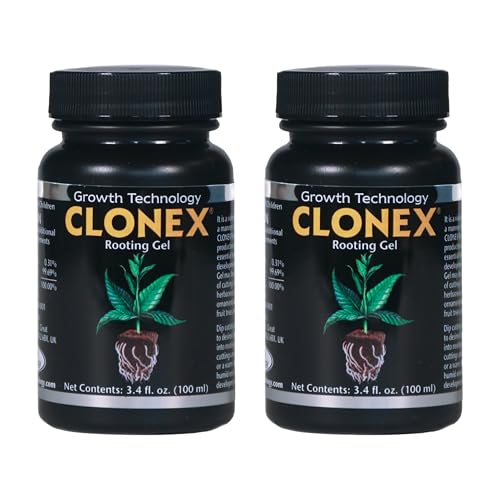
1. Clonex Rooting Gel – High-Performance Rooting Compound for Plant Cuttings, Contains IBA, Promotes Root Initiation & Development – 100ml (2 Pack)
Our pick — over 4.5★ from 350+ verified ratings; the strongest balance of quality and price.
The gel that clings to the cutting and refuses to wash off, giving roots the time they need to form.
This is the standard that nurseries and growers have trusted since 1988 for a reason. The water-based gel formula holds the right level of IBA (Indole-3-Butyric Acid, the synthetic version of the natural rooting signal) right against the stem cut. Unlike a powder that can brush off, the tenacious gel keeps prolonged contact with the plant tissue, which is critical for tough species. Buyers report it is “excellent for propagating fig trees and grape vines,” cutting through species that often resist a simple dip.
The crowd favorite — 4.7 stars across 200+ owners — and what wins people over is the consistently fast rooting and the reduced risk of drying out or mold while the cutting sits in the propagation tray. A plant-lab user even notes it “increased our productivity and success” on California native species. Effectiveness is the most-praised aspect, and the 2-pack gives you a full 6.76 fluid ounces, which is plenty for a season of serious propagation.
Gel boosts roots
- Gel sticks tenaciously, so the hormone stays in contact with the cutting for the entire rooting window
- Trusted by professional growers and a plant lab — proven on commercial-scale propagation
- Fast root development that reduces the drying-out and mold window on vulnerable cuttings
Sticky residue issue
- Does not work as reliably on evergreens as it does on flowering plants and vines — some owners note mixed results on conifers
Top performer: You propagate a mix of softwood and semi-hardwood cuttings — figs, roses, vines, and houseplants — and want the highest success rate from a gel that stays put.
Messy application: All you need is a cheap bulk powder for rosemary and mint cuttings, or you only propagate evergreens (some owners saw little response on those).
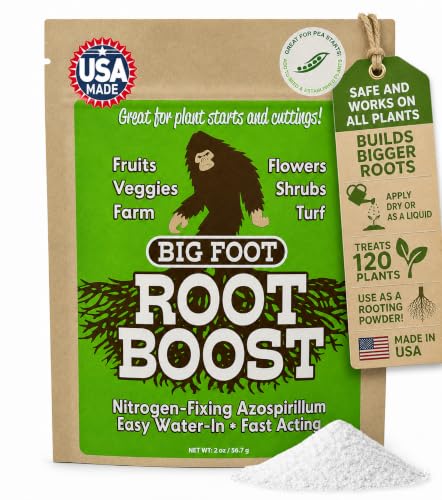
2. Big Foot Probiotic Root Boost Water Soluble Powder for Established Plants and Transplants – Grow Root Size, Increase Nitrogen, Grow New Plants from Cuttings, Pea Inoculant – 2 Ounces
A probiotic powder that feeds the soil biology so your plants grow their own stronger roots.
This is not a synthetic rooting signal — it is a natural producer of IAA (Indole-3-Acetic Acid, the plant’s own rooting hormone) that works through the soil microbiome. The mix ratio is simple: 1 teaspoon per gallon of water. What makes this stand out is the feedback from owners who saw it correct a nitrogen deficiency in 10 days, with new growth turning a deep, healthy dark green. It is effective on transplants, cuttings, and even as a pea inoculant (a substance that introduces beneficial bacteria to legume seeds), and it is certified safe to use around pets and children.
The brand has been formulating mycorrhizal products in Grants Pass, Oregon for over 35 years. The one catch is the unit count — at 2 ounces, the package is smaller than the 4 ounces you get with the Garden Safe twin-pack below. But the concentration means a single bag reportedly lasts over a year for a typical home garden. Effectiveness is the most-praised aspect, and owners consistently say it reduces transplant shock in tomatoes and other seedlings.
Probiotic root boost: Gardeners who want to improve overall soil and root health rather than just force a single cutting to root. The 2-ounce bag (2 oz) versus Clonex’s 6.76 fl oz, but the price-to-longevity ratio is excellent.
Slow initial effect: Anyone who wants an instant dip-and-plant rooting compound for a single cutting — this is a water-soluble powder that feeds the whole system, not a quick stick.
3. Garden Safe Take Root Rooting Hormone, 2-Ounce(2Pack)
The affordable twin-pack that gets your rose and holly cuttings into the ground for pennies per use.
The active ingredient here is the same IBA found in pricier competitors — a natural plant compound that tells cuttings to push roots. At 4 total ounces across two canisters, versus Big Foot’s 2-ounce bag, making it the best sheer volume for the money. Reviews show it works particularly well on rose cuttings and woody ornamentals like pencil holly and fig trees. One owner reported using half a canister per half gallon of water for four newly planted trees and saw fresh leaves and several inches of new growth after transplant shock.
The feedback is not entirely one-sided — quality is the most-praised aspect, but effectiveness gets mixed notices. Several owners note it works best when combined with a gel like Clonex for a DIY rooting paste. A few owners said it helped but they were unsure how much credit the hormone deserved versus other products like anti-transpirant sprays (sprays that reduce water loss from leaves). The powder dissolves cleanly and is not messy during application.
Reliable hormone powder: A solid, low-risk entry point for anyone rooting roses, geraniums, coleus, and most home-garden ornamentals. The two-pack means you have backup for the whole season.
Small container size: Standalone performance is decent, not stellar — some find it mediocre on its own for hard-to-root species and prefer mixing it with a gel.
4. Crazy Keiki Cloning Paste by Southside Plants – Sprout Leaves on Bare Branches with Natural Cytokinin, Hormones & Vitamins – Keiki Paste for Plants and Orchids – 0.25oz

A tiny tube of paste that convinces a bare branch to push new leaves and an orchid to grow a baby.
Every other product on this list focuses on roots — this one focuses on buds. The unique blend of natural cytokinin (a plant hormone that triggers cell division and shoot growth) in a lanolin base (a waxy substance from sheep’s wool that holds the paste on the plant) stays on the node through watering and misting. Apply a dab to a dormant node on a leggy pothos stem, a bare fiddle-leaf trunk, or the spike of a phalaenopsis orchid (a common moth orchid), and in 3 to 4 weeks tiny buds start appearing. The key is to find the axillary bud (the bud where a leaf joins the stem) and apply the paste directly there — owners warn the included instructions are misleading on this point.
Effectiveness on jade plants is fast and reliable, though philodendron and pothos can take 2 to 3 months for 40-50% of treated spots to show growth. That pace requires patience. The paste comes with applicator sticks, and the 0.25-ounce vial lasts a long time because a tiny amount per node is all you need. To get the best results, pair it with good light and consistent watering — the paste creates the opportunity, but the plant needs the right environment to respond.
Cloning paste works: Houseplant enthusiasts and orchid lovers who want to fill out a bare stem, create a keiki (a baby orchid plant) for propagation, or push secondary blooms on an orchid spike.
Thick consistency: You need a standard rooting hormone for cuttings — this does not replace a rooting compound. It also demands precise application to the correct node.
5. Root Drops – Liquid Rooting Hormone for Cuttings | Fast Propagation Drops, Stronger Roots, Less Shock | Works in Water, Soil, Leca, Moss| For all Indoor Houseplants like Pothos, Monstera, Philodendron
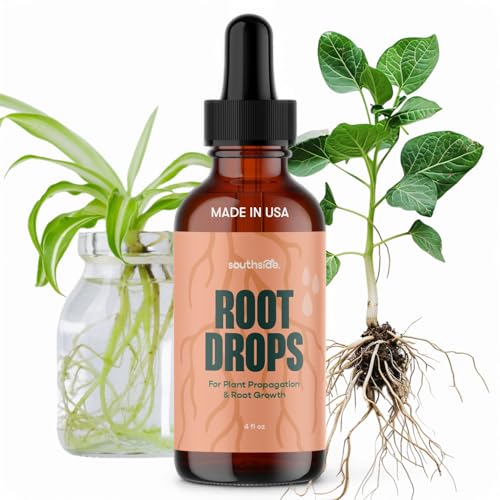
Two drops per cup of water, and your pothos and monstera cuttings root in days instead of weeks.
This liquid is formulated specifically for houseplant propagation — not for woody trees or outdoor ornamentals. The all-natural rooting hormone and vitamin blend works in water, soil, leca (lightweight expanded clay aggregate, a clay pebble growing medium), pon, or sphagnum moss. Just add 2 drops to a cup of water and refresh every 4 to 5 days. The feedback is remarkable: one owner says pothos cuttings with Root Drops showed visible roots in 5 days, while cuttings without the drops had no growth at all. Effectiveness and root growth are the two most-praised aspects by a wide margin.
The bottle is 4 fluid ounces, but because the dose is so small it lasts much longer than bulk powders. It also reduces transplant shock when repotting by adding a dropperful to the water. The brand is handcrafted by two sisters in the USA, and the design is travel-friendly. The bottle size earns mixed feedback — some love how compact it is, others wish it were larger. For the houseplant lover with a modest collection, this 4-ounce bottle is a year’s supply.
Liquid hormone quick: You propagate houseplants like pothos, philodendron, and monstera in jars of water on your windowsill. It turns a weeks-long wait into a 5-day sprint.
Short shelf life: You root outdoor woody cuttings from trees, shrubs, or evergreens — this was not designed for that job.
6. Growth Impact Super Concentrated Vitamin Solution – GS Plant Foods Plant Liquid All Purpose Plant Nutrition Vitamins and Hormones for All Types of Plants, Trees or Turf (8oz)
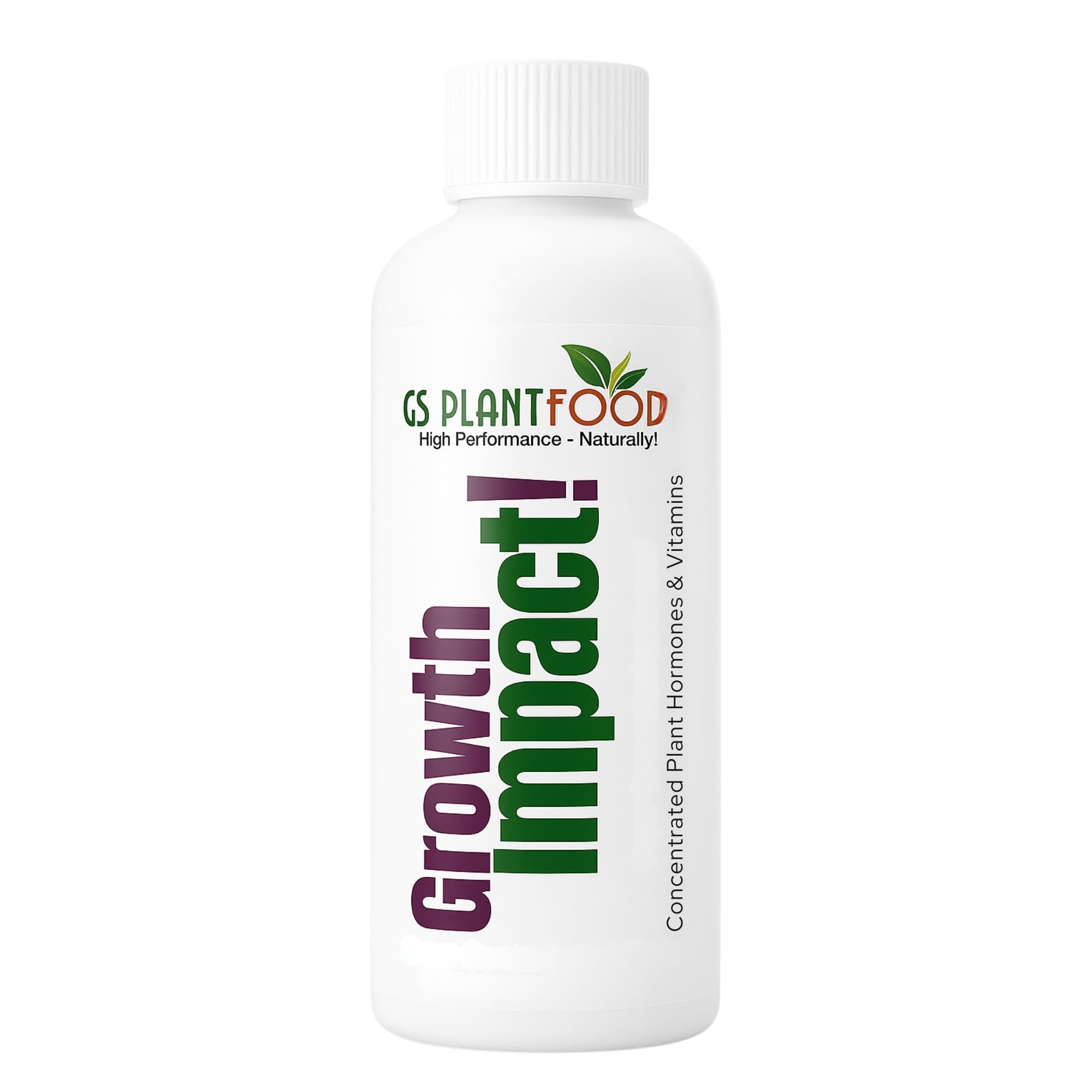
The super-concentrated vitamin tonic that pulls a dying fig or squash plant back from the brink.
This is not a rooting hormone for cuttings — it is a rescue formula. A super-concentrated mix of plant hormones and vitamins (B-vitamins, growth promoters) designed to stop transplant shock, revive heat-stressed plants, and reinvigorate sickly turf. Add just 1/4 teaspoon to a gallon of water (a 1:128 mix ratio) and apply as a soil drench or foliar spray (a spray applied to the leaves). The 8-ounce bottle makes over 250 gallons of ready-to-use solution. One owner from Utah watched six squash plants failing in the heat perk up immediately, and a neighbor’s plants from the same source recovered fully too.
Another owner saved a dying palm tree in Texas — after two days it looked 100% better. The concentrated formula works synergistically with fertilizers, meaning you can add it to your regular feeding schedule without overloading the plant. The single downside is the smaller review count compared to the mass-market products, so the feedback pool is thinner. But for stressed plants already in the ground, this is a proven revival tonic.
Vitamin concentrate strong: Gardeners who have stressed transplants, heat-damaged vegetables, or a prized tree that is suddenly yellowing. It supplements your existing fertilizer routine.
Overdose risk: You only want a root dip for cuttings — this is an all-purpose revival and growth booster, not a dedicated rooting compound.
7. Hormex Rooting Hormone for Cuttings #16 – Max-Strength Powder (1.60% IBA) | Maximum Strength Rooting Hormone, Root Stimulator for Plants, Rooting Powder Compound for Difficult Hardwood Plants & Trees

The strongest rooting powder you can buy over the counter, built for hardwoods that refuse to root.
Most rooting powders hover around 0.1% to 0.8% IBA. Hormex #16 steps it up to 1.6% IBA — the maximum strength for the hardest-to-root cuttings: woody ornamentals, Japanese maples, pomegranates, and dormant leafless wood. The formula has been relied on by gardeners for over 65 years and is made in the USA. One owner reports 100% success on 20 pomegranate cuttings, and another successfully air-layered a Japanese maple by coating the wounded branch with this powder. Air layering (a propagation method where you wound a branch and wrap it with moist moss to grow roots) works well here. You do not need much — a light dip covers the base of the cutting, and the small jar lasts through many propagation cycles.
The mix of feedback is honest: effectiveness and quality are the most-praised aspects, but value for money gets a mixed verdict. Some feel the small container is expensive compared to bulk powders. Others note that other rooting hormones “seem to work better” on less-demanding species, so you only need this max strength when you truly face a stubborn hardwood. For softwood cuttings or common houseplants, a lower-concentration product is kinder to your wallet.
Max strength powder: You propagate Japanese maples, pomegranates, azaleas, rhododendrons, or any wood that has failed with standard rooting powders.
Too potent for some: You only ever root basil, mint, or pothos — the high IBA is unnecessary and you will get better value from a lower-concentration product.
8. Stash Blend Premium Plant Additive Root Hormone for Plants – with Corn-Steep Liquor, Seaweed Powder, Humic Acid, Mycorrhizae, Microbial Bacteria, Soluble Silicon – Ideal for Gardeners and Growers
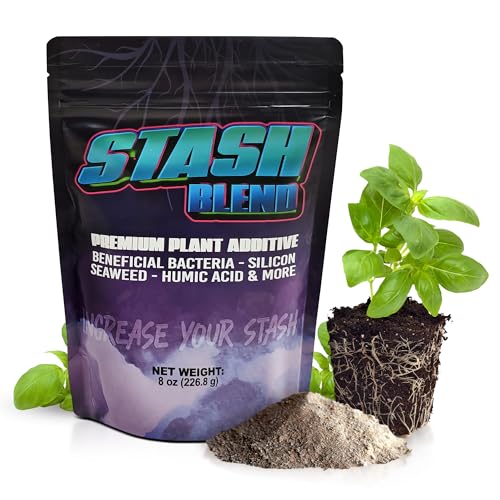
A single-powder replacement for half your nutrient shelf, feeding roots, fungi, and defenses all at once.
This is the most complete product in the list. It contains rooting hormone (IBA from corn-steep liquor and seaweed powder), humic acid (a soil compound that improves nutrient absorption) to improve nutrient uptake, mycorrhizal fungi and beneficial bacteria for soil vitality, and soluble silicon that strengthens cell walls against disease. The mix ratio is 1:32 to 2:32, and the 8-ounce bag will treat a large garden or several cycles of indoor plants. Quality is the most-praised aspect, and owners say it replaces multiple separate additives — except for base nutrients, calmag (calcium and magnesium supplements), and magnesium sulfate — making it a simple, cost-effective blend.
It is designed for serious growers, and that shows in the feedback: one owner using it on cannabis notes that at full strength it is safe for photoperiod plants (plants that flower based on light cycles) but should be used at half strength on autoflowers (plants that flower automatically based on age) to avoid nutrient burn. The brand is partnered with “The Stash Podcast” community. It does not contain a pure rooting hormone concentration like the Hormex #16 — think of it as a balanced soil health and growth formula rather than a single-purpose root dip.
Blend additive versatile: Intermediate to advanced growers who want a comprehensive additive that handles rooting, feeding, and microbial support from one jar.
Mixed results: You just need a quick dip-and-plant rooting powder for a few cuttings — this is a multi-ingredient system designed for ongoing use in a feeding schedule.
9. Rooting Compound (1/2 Pound)

A half-pound jug that treats 17,500 cuttings, built for anyone propagating at serious scale.
This is the value king on a per-cutting basis. The 8-ounce jug contains 0.8% IBA (Indole-3-Butyric Acid), the balance concentration for propagating difficult-to-root evergreens, woody shrubs, and dormant leafless cuttings. The company claims it handles 17,500 cuttings from one jug — you dip the cutting in the powder, tap off the excess, and plant. No measuring, no mixing. Effectiveness gets the most praise, followed directly by rooting performance, and owners mention excellent results on dahlia cuttings, rhododendrons, and a wide variety of woody ornamentals.
The IBA concentration is slightly lower than Hormex #16’s 1.6% but still stronger than most consumer rooting powders. This makes it ideal for mid-difficulty wood — evergreens that resist standard powders but do not require the absolute max strength. One owner, a long-time propagator, confirms it contains IBA, a natural auxin (a growth-regulating hormone) stronger than IAA for hard-to-root species. Note: you should not return unused powder to the jar after dipping to avoid contamination, and gloves are recommended.
Bulk compound cheap: You have a large garden, a greenhouse, or a serious propagation project involving dozens or hundreds of woody cuttings every season.
Messy powder form: You only need a few cuttings a year — the half-pound jug will last multiple lifetimes at that rate and may separate or absorb moisture over time.
Understanding the Specs
IBA Concentration (Indole-3-Butyric Acid)
This is the active ingredient in most rooting compounds. It is a synthetic version of the natural auxin plants produce to signal root growth. The percentage tells you how strong the signal is: 0.1% to 0.3% works for softwood cuttings (herbs, houseplants, coleus); 0.8% is the go-to for semi-hardwood and evergreens; 1.6% is the maximum strength for dormant hardwood cuttings like Japanese maple. Using too high a concentration can actually inhibit rooting, so match the strength to the wood type, not to your enthusiasm.
Form: Gel vs. Powder vs. Liquid vs. Paste
A gel clings to the cutting and stays wet longer, ideal for woody stems in a propagation chamber where you want the hormone to stay in contact with the cambium layer (the growing layer just under the bark). A powder is dry, cheap, and shelf-stable for years, but can easily brush off. A liquid mixes into water for drenching or spraying, making it best for transplant shock and root feeding on established plants. A paste is thick and water-resistant, designed to stay put on a single node or orchid spike where you want new shoots, not roots.
FAQ
Do I really need a plant hormone, or will cuttings root on their own?
Can I use rooting powder on an orchid to grow a keiki?
What is the difference between IBA and IAA?
How long does a jar of rooting hormone powder last?
Can I mix two rooting products together for a stronger effect?
How do I apply a rooting powder without contaminating the whole jar?
Will these products work for hydroponic or aeroponic systems?
What is the best way to treat transplant shock on a new tree or shrub?
Final Thoughts: The Verdict
For most gardeners, the best hormones for plants pick is the Clonex Rooting Gel because its tenacious gel formula gives the highest success rate across the widest range of cuttings, and the 2-pack at 6.76 fluid ounces is enough volume for a season of serious propagation. If you want a probiotic powder that improves soil health and corrects nitrogen deficiency while you grow, grab the Big Foot Probiotic Root Boost. And for reviving a stressed tree or transplant before it gives up, the Growth Impact Super Concentrate is the one to reach for.
How We Picked
We do not accept paid placement. Every pick is matched to a real buyer and a real use-case; we do not hands-on test units.
Sources & Methodology
Specifications: manufacturer listings and product documentation. Review insights: verified customer reviews, as of July 2026. Pricing: not shown on this page (it changes often); check the current price via the retailer link.
As an Amazon Associate, Lawn Gear Lab earns from qualifying purchases. This does not affect which products we feature.