
You have seen the photos — a curved metal frame wrapped in clear plastic that somehow keeps tomatoes alive through a frost. The trick is picking a kit whose frame and cover won’t collapse under snow or tear in the first gust. This guide compares seven models by frame metal thickness (mm), cover weight (GSM — grams per square meter), vent count, and what real buyers report about surviving storms, so you know exactly where your money goes.
I’m Rikta — the co-founder and writer behind Lawn Gear Lab. This guide is built by comparing the manufacturers’ published specifications and the patterns across verified customer reviews, so you get each pick’s real strengths and trade-offs instead of marketing spin.
After weighing frame strength, cover durability, and ventilation on each model, the one that balances size, stability, and value is the best hoop house kits for most home gardeners — and it starts with knowing which numbers actually matter.
How To Choose The Best Hoop House Kits
Buying a hoop house kit means you are betting the plastic cover and metal frame will work together as a system. A weak link in either one can cost you a season of plants. Here are the three numbers to check before you buy.
Frame Metal Thickness and Material
The frame is the skeleton that takes every gust and every pound of snow. Look for galvanized steel (steel coated with zinc to prevent rust) with a wall thickness of at least 0.7 mm — that is the difference between a frame that flexes and one that holds firm. Thinner frames around 0.02 inches (roughly 0.5 mm) bend under moderate wind, so you would need to add your own reinforcement like wooden bases and extra stakes.
Cover Weight and UV Protection
The cover’s thickness is measured in grams per square meter (GSM or g/sqm). A cover rated at 140 to 150 GSM with a UV index rating of 6 (meaning it blocks harmful ultraviolet rays at a higher level) will likely last two to three seasons. A thinner 135 GSM cover with low UV protection may start cracking and peeling after one summer. Check that the cover has double-stitched seams — single stitching tears where the plastic rubs against the frame.
Ventilation and Door Count
Without airflow, the inside of a hoop house can hit 120°F or more on a sunny day, cooking your plants. Aim for at least six roll-up windows (mesh-covered openings you open and close with a Velcro strap) and at least one door that opens on both ends. Two doors let you create cross-ventilation (a breeze flowing straight through the tunnel), keeping the temperature steady even in summer.
Quick Comparison
On smaller screens, swipe sideways to see the full table.
| Model | Category | Best For | Key Spec | Amazon |
|---|---|---|---|---|
| KING BIRD 15x7x7 (Shelves) | Premium | All-season stability with storage | 150 GSM cover, 8 vents, 2 doors | Amazon |
| KING BIRD 15x7x7 | Premium | Wind resistance and dual-door access | 0.7mm frame, 150 GSM cover | Amazon |
| Quictent 25x10x6.6 | Premium | Maximum growing space | 111 lbs frame, dual swing doors | Amazon |
| Outsunny 20x10x7 | Mid-Range | Large budget-friendly coverage | 140 GSM cover, 8 vents | Amazon |
| VEVOR 19.4×9.7×7.4 | Mid-Range | Most ventilation per square foot | 12 roll-up windows | Amazon |
| VEVOR 29.2×9.7×6.5 | Mid-Range | Longest tunnel for rows | 88.2 lbs frame, 12 windows | Amazon |
| Quictent 10x7x7 | Budget | First-time buyer on a budget | 26.5 lbs, 6 windows, 1 door | Amazon |
In‑Depth Reviews
1. KING BIRD Premium 15x7x7 FT with Shelves
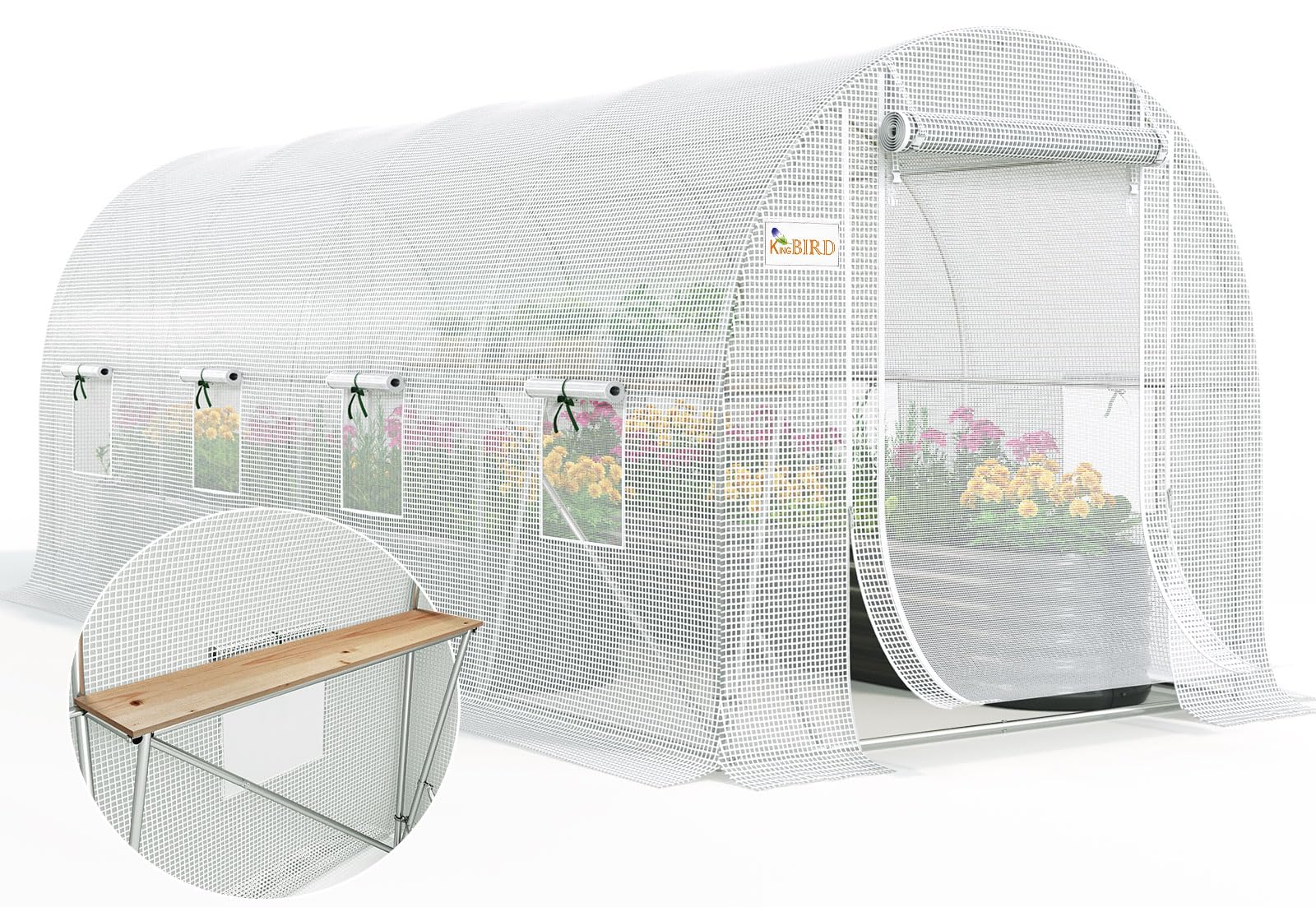
At 15x7x7 feet with two heavy-duty shelves (each holding up to 44 lbs), this is the top pick for gardeners who want built-in storage and structural reinforcement at this size. The 150 GSM cover is the thickest polyethylene plastic in this comparison, resisting tearing longer than a 135 GSM cover, and the shelves double as cross-braces to cut wobble that makes other tunnel greenhouses feel flimsy in a breeze. Owners mention it is a “durable, affordable greenhouse for New England” and that the “clear instructions” made solo assembly possible even for a 78-year-old.
The frame uses galvanized steel with that 150 GSM cover and gives you 8 roll-up screen windows plus doors on both ends — twice the vent count of the Quictent 10x7x7’s 6 windows and 1 door. That two-door layout creates cross-ventilation (a breeze flowing straight through the tunnel) so your plants get airflow even on still summer afternoons.
The honest trade-off is that the zippers and window screens have drawn some complaints about tearing after a few months, and the cover can get loud in high wind (some owners remove it during winter). skip it if zipper durability worries you — the no-shelf version skips the storage but saves on cost. This is the most reinforced hoop house at this size for the price.
Why it’s great
- Built-in shelves reinforce the frame and hold 44 lbs each for pots and tools
- 150 GSM PE cover with UV stabilizer lasts longer than thinner 135 GSM covers
- Two doors and 8 roll-up windows give you cross-ventilation to manage heat
Good to know
- Zippers and screen mesh on windows may tear after extended use
- Plastic cover is loud in wind; some owners remove it for winter
- Instructions are clear but you still need two people for the final cover step
2. KING BIRD Premium 15x7x7 FT (No Shelves)
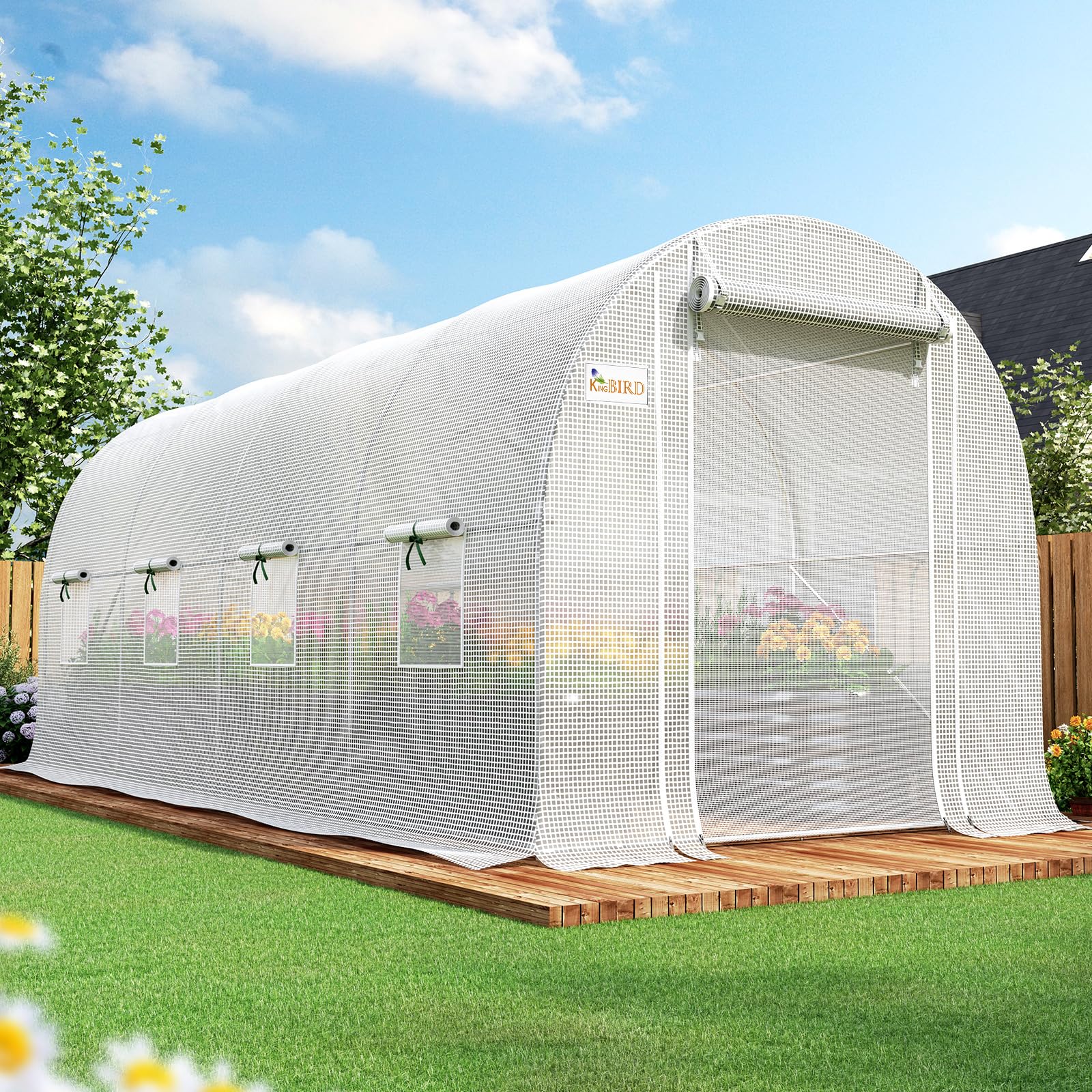
Compared to the top-pick Quictent 10x7x7, this King Bird Premium frame uses the same 0.7 mm thick galvanized steel and 150 GSM PE cover as its own shelved sibling, but at 59.3 pounds it weighs more than double the Quictent’s 26.5 pounds. That heft helps it stay planted, and buyers confirm it “survived extreme wind storms.”
This version skips the shelves but matches the shelved model on the two specs that matter for pure weather resistance: the same 0.7 mm thick galvanized steel frame and the same 150 GSM PE cover. At 59.3 pounds, it weighs more than double the 26.5-pound Quictent 10x7x7, giving it the heft to stay planted. Buyers confirm it “survived extreme wind storms.”
Choose this over the top pick if you plan to supply your own benches or raised beds and you want the heaviest-duty bare-bones frame for the money. The clear weak point across both is the zipper quality — some reviewers found it prone to breaking, but the company did replace covers under warranty. If you prefer the extra structural bracing and storage, the shelf version is the better long-term bet.
Where it shines
- 0.7 mm galvanized steel frame is twice as thick as budget models at 0.35 mm
- 59.3 lbs weight and included stakes keep it grounded in high winds
- 2 doors with #10 upgraded zippers and 8 windows for all-season airflow
Worth noting
- Zipper failures reported; customer service replaced covers for some buyers
- No built-in shelves — you add your own tables or racks
- Cover is loud flapping in strong wind; some remove it for winter storage
3. Quictent 25x10x6.6 FT Premium Greenhouse
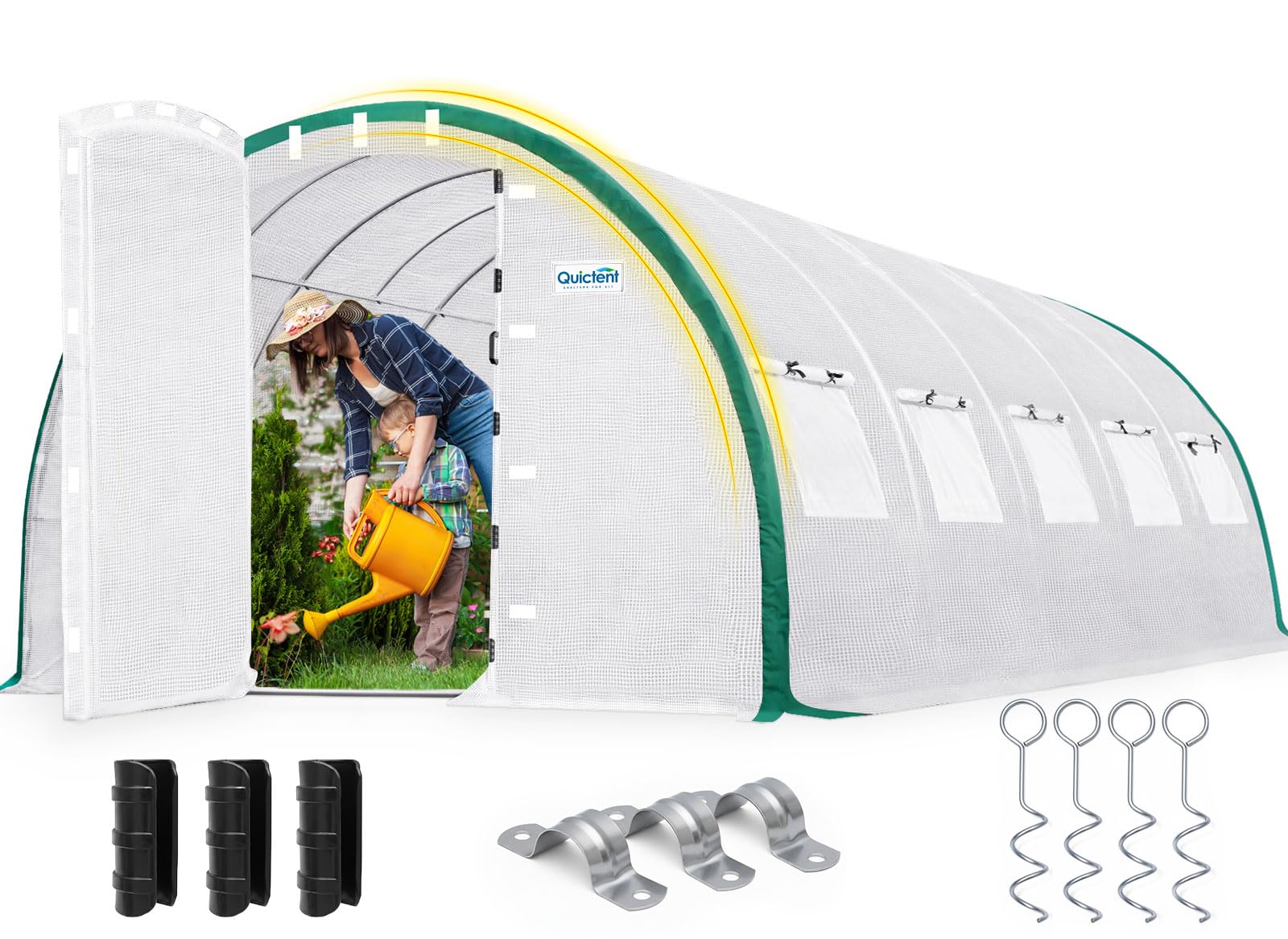
You need to walk a wheelbarrow full of soil through the door — the Quictent 25x10x6.6 gives you a 25-foot-long interior with dual swing-door frames that open a full 180 degrees. No zipper to fight. At 111.2 pounds it is the heaviest kit here, and that weight comes from upgraded 0.7 mm thickened galvanized steel plus extra crossbars across the roof to prevent snow or water from pooling. The 150 GSM PE cover has Oxford seam-reinforcement (extra fabric stitched over stress points) at high-wear areas, plus an 8-inch overlong bottom edge you can bury in soil to lock out drafts. With 10 mesh windows and 2 doors, it offers more ventilation than any model except the VEVOR 29-foot. One reviewer assembled it solo and called it “very well built.”
At 6.6 feet tall, the peak height is a few inches shorter than the VEVOR 7.4-foot model, so if you are over six feet tall you will be stooping near the edges. This is for the grower who prioritizes length over headroom. pass on it if you are tall and want a full-standing tunnel — the VEVOR 19-foot gives you more height.
With a 0.7 mm steel frame, 150 GSM reinforced cover, and 10 mesh windows, this kit weighs 111.2 pounds for a reason: it is built to outlast the season, not just survive it.
What stands out
- 111.2 lb galvanized steel frame with anti-sagging crossbars on the roof
- Dual swing doors open 180° — easier than zipper doors for moving equipment
- 10 mesh windows and 2 doors for the best ventilation in this size class
The trade-offs
- 6.6 ft peak height means taller gardeners will stoop at the sides
- Missing parts reported by a few buyers; seller shipped replacements
- Interior can reach 140°F in direct sun; shade cloth and fans often needed
4. Outsunny 20x10x7 FT Walk-in Greenhouse
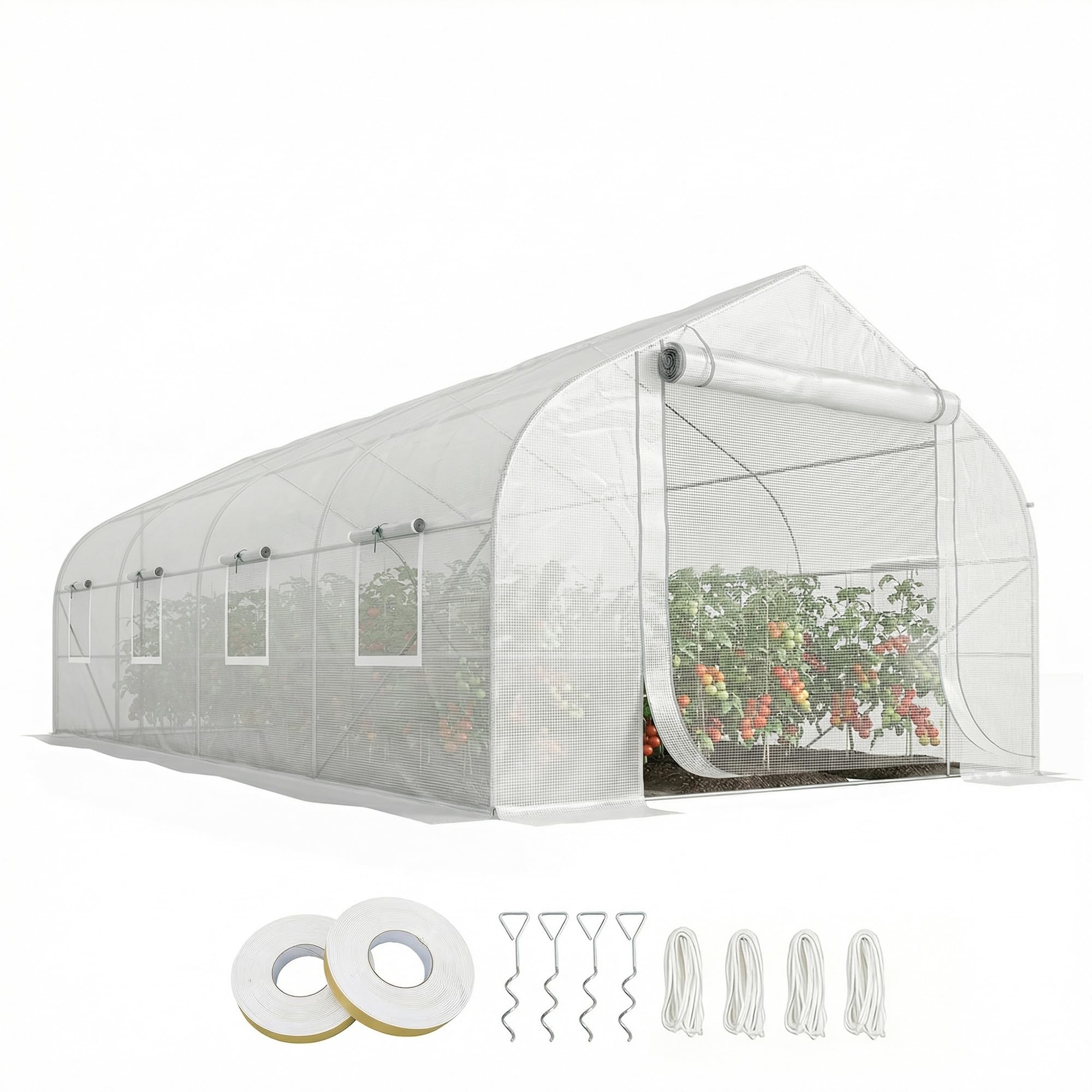
The single number that matters most in this category is 200 square feet of growing space — 33% more floor area than the 15-foot KING BIRD models, for roughly the same cost. The galvanized steel frame has four slant bracing tubes and a front crossbar. The 140 GSM PE cover lets 85% of sunlight through while blocking UV rays.
The catch is that the frame tubing is thinner. Several reviewers noted the metal supports bent or sheared off in wind above 30 mph, and one called it “too weak to make it a week.” You will likely need to add your own anchors, wooden ground stakes, or cinder blocks to keep it planted. If you have a large garden plot and you are willing to reinforce the frame, this gives you the most square footage per dollar.
For a windy field without modifications, the KING BIRD or VEVOR options are safer. The price-to-value read is clear: you get maximum square footage per dollar, but only if you invest extra time and materials into reinforcement.
The upsides
- 20×10 ft footprint offers the most growing area in the mid-range
- 140 GSM PE cover with UV protection and 85% light transmission
- Four slant braces and a front crossbar add stability to the frame
Keep in mind
- Thinner frame tubing bends or shears in winds over 30 mph without reinforcement
- Stakes and ropes included are too light for windy spots; you must add your own
- Some buyers reported the cover tearing at the frame contact points within weeks
5. VEVOR 19.4×9.7×7.4 FT Walk-in Tunnel Greenhouse
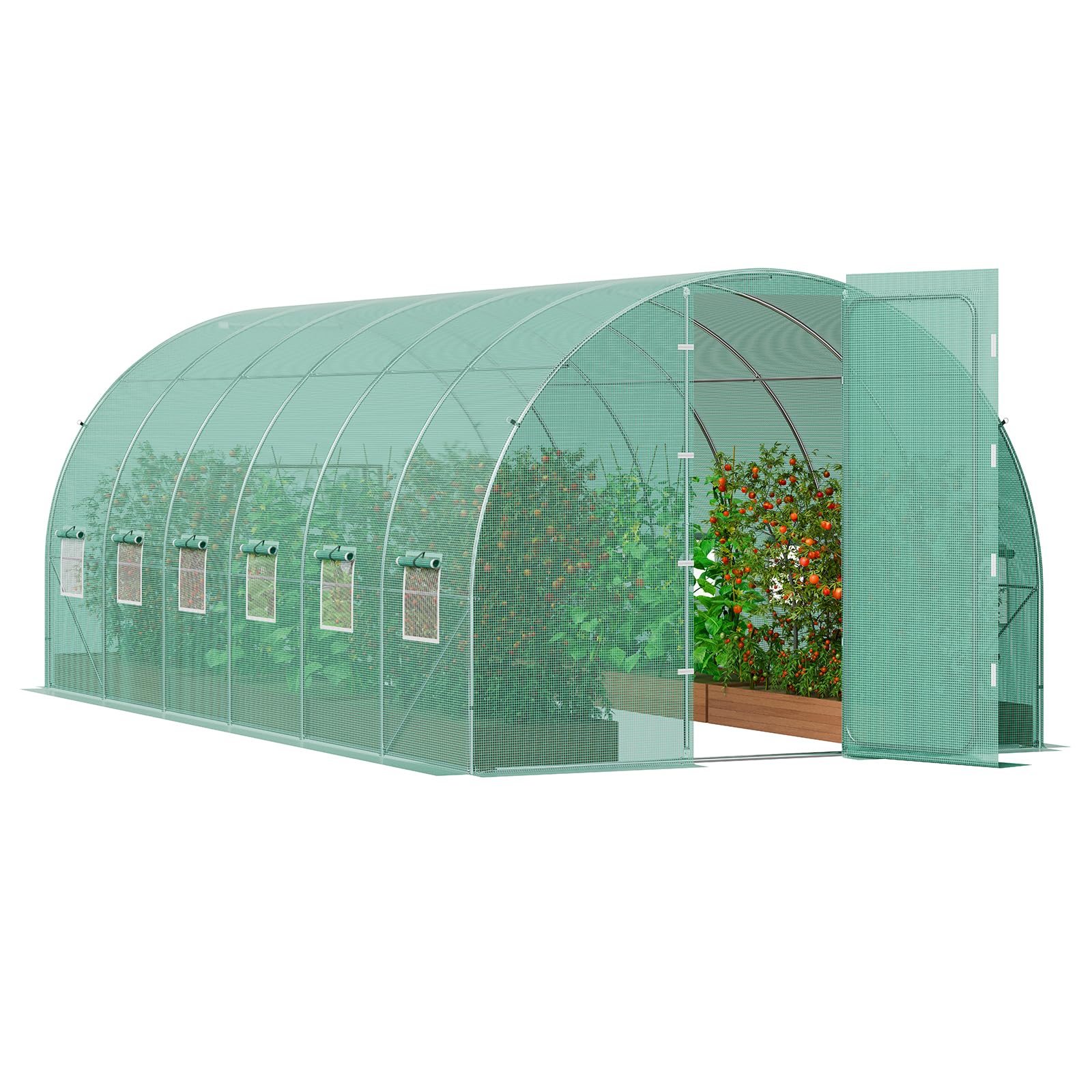
At this lower price you get the largest footprint in the guide (19.4 x 9.7 ft), the tallest peak height (7.4 ft), and the most roll-up windows (12) — enough ventilation to keep plants alive when summer temps hit the 90s. The frame uses 1-inch diameter galvanized pipes with a 0.02-inch wall thickness (about 0.5 mm), plus diagonal bars and U-shaped stakes. A 6-foot-tall gardener can walk the full length without ducking.
Buyers who reinforced theirs with a double 2×6 wooden base reported it withstood 50 mph gusts. Those who set it up as-is on open ground found the thin plastic cover and weak door hinges failed within months — one reviewer described “ripping on 3 sides within 3 months” in windy conditions. Budget for your own reinforcement — a wooden base, cable clamps, t-posts, and shade cloth — before you buy it.
If you are not ready to add a day of DIY upgrades, the KING BIRD models deliver more out-of-the-box stability. This kit is perfect for the budget buyer who wants maximum square footage and ventilation for the dollar and is willing to invest sweat equity in reinforcing the structure.
Why we’d pick it
- 12 roll-up windows provide the best ventilation of any model in this guide
- 7.4 ft peak height lets tall gardeners stand fully upright inside
- 19.4 x 9.7 ft size with a 75 lb frame for moderate wind resistance
A few caveats
- Thin 0.02-inch frame and plastic cover require extensive DIY reinforcement for wind
- Green PE cover absorbs heat — interior can exceed 120°F even with vents open
- Door hinges and Velcro closures are weak points reported by multiple buyers
6. VEVOR 29.2×9.7×6.5 FT Walk-in Tunnel Greenhouse
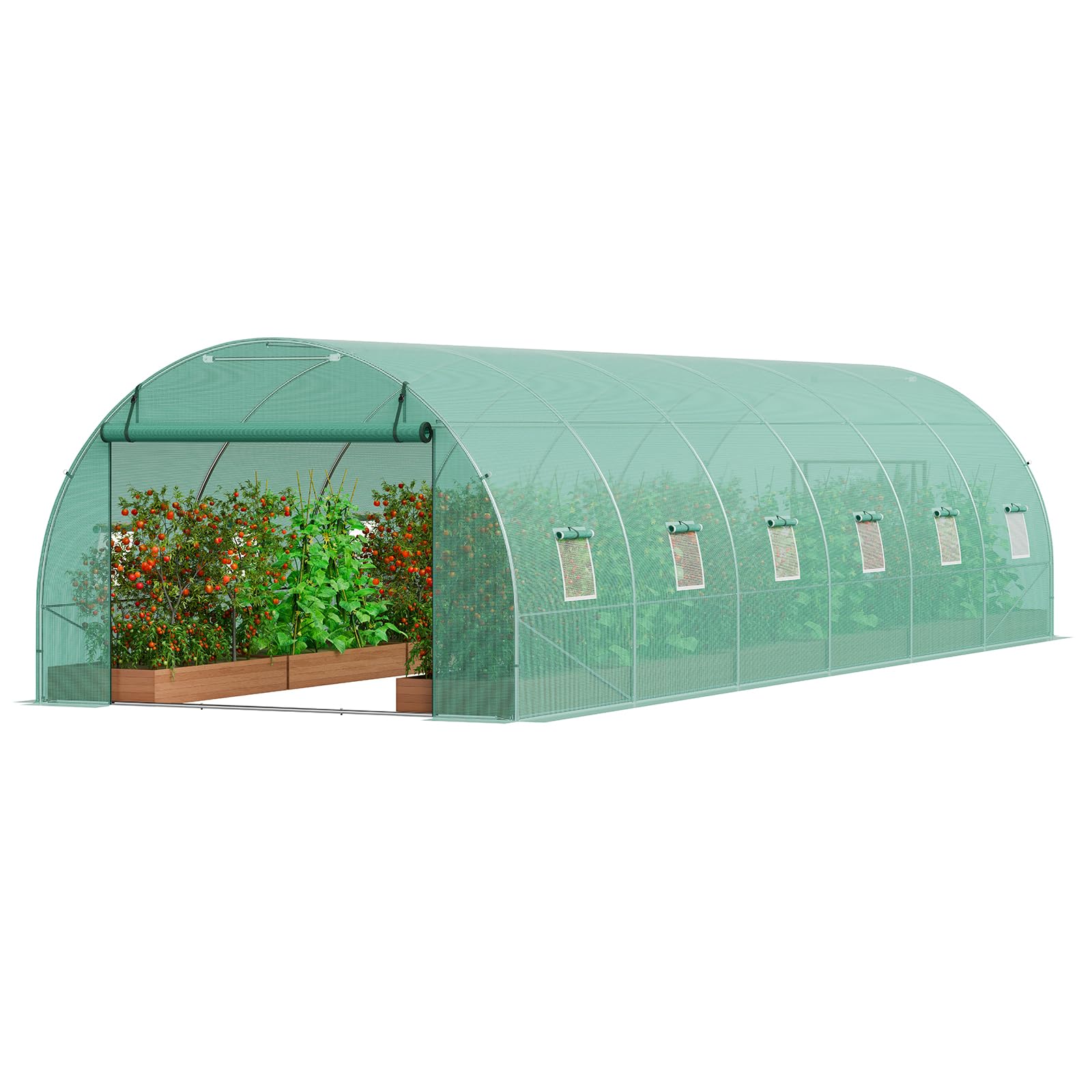
This tunnel is perfect for the gardener who needs maximum row length—29 feet to cover four or five raised rows of tomatoes—and is willing to reinforce the structure from day one. The frame uses the same 1-inch galvanized pipe with 0.02-inch walls as the 19-foot VEVOR, but at 88.2 pounds it is 13 pounds heavier from the extra tubing. The 12 roll-up windows with mesh netting and a large zipper door carry over for airflow, while the 140 GSM PE cover has double-stitched seams (stitching through two layers at stress points) to reduce tearing, and the extended cover edges can be buried in soil for a winter seal.
At 6.5 feet tall, the peak height is the lowest of any premium model—you lose nearly a foot of headroom compared to the VEVOR 19-foot’s 7.4-foot peak, so standing straight is only possible down the center line. This gives you 283 square feet of growing space, making it the longest hoop house in the lineup. If you prioritize length over height and are ready to invest in reinforcement, this is the ultimate row tunnel; if you want a tall walk-in experience, the Quictent 25-footer is a better fit.
Its one weakness: the same structural limitations as the shorter VEVOR—thin frame, weak stakes, and Velcro closures that degrade in sun—require you to add a wooden base, T-posts, and ground anchors for regular wind.
Strong points
- 29.2 ft long tunnel offers the most continuous growing space in this guide
- 12 roll-up windows provide excellent ventilation for a tunnel this long
- 88.2 lb frame with diagonal bars and U-stakes for added stability
Before you buy
- 6.5 ft peak height is the lowest — tall gardeners will stoop near the edges
- Thin frame and cover require significant DIY reinforcement to handle wind
- Door zipper and Velcro closures are prone to failure within months
7. Quictent 10x7x7 FT Essential Greenhouse
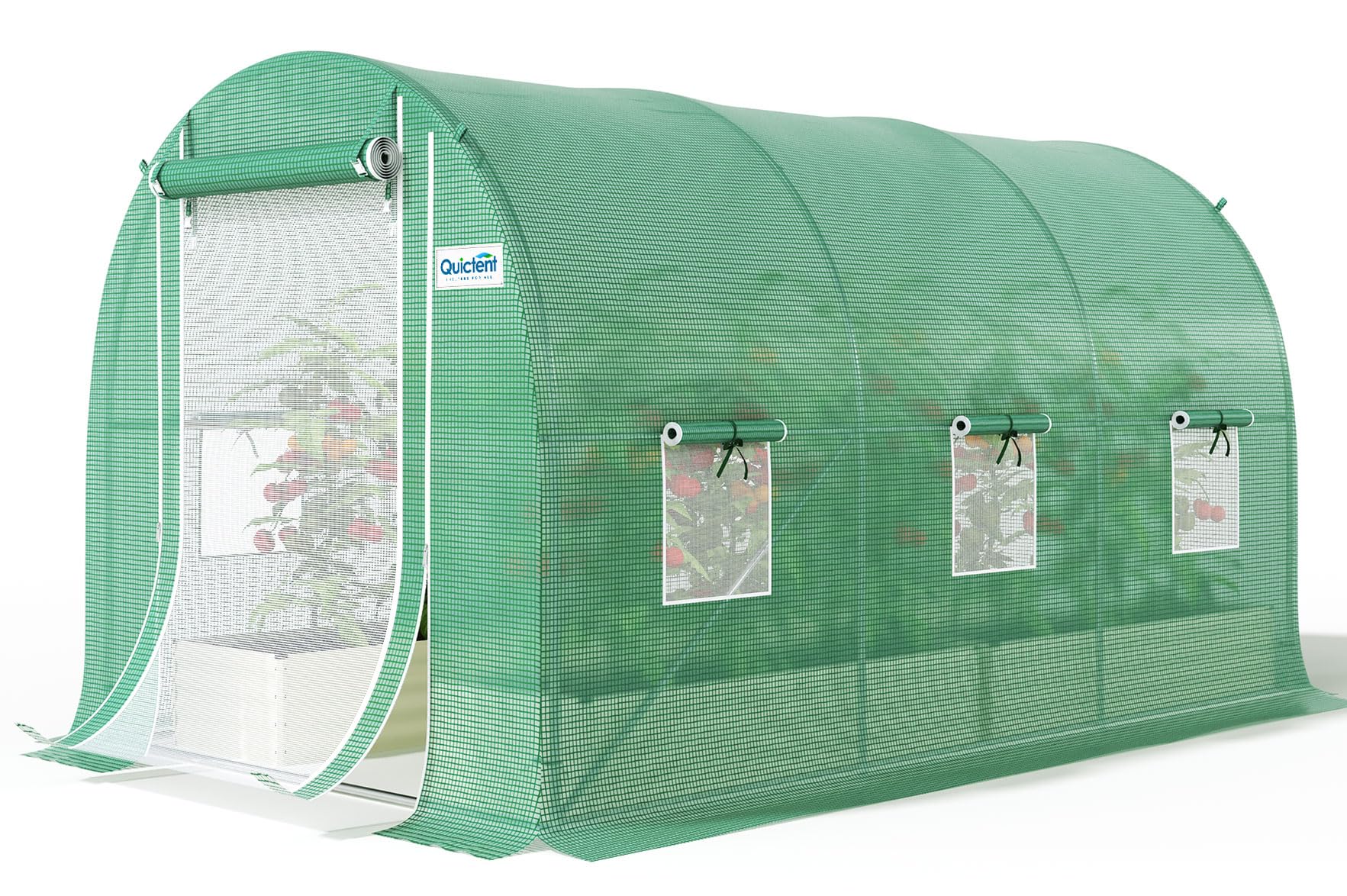
At a fraction of the weight and cost of premium models, the Quictent 10x7x7 gets you started with a galvanized steel frame, a 135 GSM PE cover that is water-resistant and UV-protected, 6 mesh windows, and a zipper door. Customers note the cover “exceeded my expectations” and “should last several years if cared for properly.”
What you give up is frame strength and wind readiness. At 26.5 pounds it is 2.2 times lighter than the 59.3-pound KING BIRD 15-footer, and the thinner metal tubing and minimalist ground stakes leave it vulnerable — one reviewer noted it was “blown away and bent” despite using cinder blocks. The single door and 6 small windows limit cross-ventilation in hot weather. This kit suits a first-time gardener with a sheltered corner (next to a fence or house wall) who wants to test whether a hoop house fits their routine before investing in a larger structure. It is also fine for season extension in mild climates.
The one clear reason to choose it is the lowest entry cost for a functional, covered growing space that lets you try hoop-house gardening without a major commitment.
What we like
- Budget-friendly entry point that still includes a galvanized steel frame
- 135 GSM PE cover is waterproof and UV-protected for basic season extension
- 6 mesh windows plus a zipper door provide adequate airflow for mild climates
The downsides
- 26.5 lb frame is light — easily lifted or blown over without heavy anchoring
- Single door and small window count limit cross-ventilation in hot weather
- Included ground stakes are too weak for exposed or windy locations
Understanding the Specs
Cover GSM (Grams per Square Meter)
This number tells you how thick and durable the polyethylene (PE) plastic cover is. A cover at 140–150 GSM is heavy enough to resist tearing from wind and UV rays for two or three seasons. A 135 GSM cover is thinner and more likely to crack or peel after the first year. Think of it like the difference between a heavy-duty tarp and a lightweight painter’s drop cloth — both cover the ground, but only one survives a season of sun and storms.
Frame Metal Thickness (mm)
The thickness of the galvanized steel tube walls, measured in millimeters (mm), determines how much weight the frame can hold before bending. A frame at 0.7 mm is the standard for wind-resistant kits — it flexes slightly without breaking. Thinner frames around 0.5 mm (often listed as 0.02 inches) hold up in calm conditions but can buckle under a heavy snow load or a 40 mph gust. The frame weight in pounds gives you a rough shortcut: a kit over 59 pounds usually has the thicker tubing.
Number of Vents and Doors
Roll-up windows are mesh-covered openings you raise or lower with a Velcro strap to let hot air escape. More vents mean better temperature control — 8 to 12 windows allow you to cool a tunnel on a 90°F day without unzipping the door. Two doors (one on each end) create cross-ventilation, where a breeze flows straight through the tunnel and pulls heat out. One door and a handful of windows trap more heat, so you may need a fan or shade cloth in hot climates.
UV Protection Index
The UV index rating of a cover (usually listed as “UVI 6” or similar) tells you how well the plastic resists degradation from sunlight. A cover with UVI 6 blocks more ultraviolet radiation and can last two to three years of full sun exposure, while a cover with UVI 1–3 starts breaking down within six months. If your hoop house sits in direct sun all day, look for a cover with a stated UV stabilizer additive — that chemical treatment keeps the plastic from turning brittle and cracking.
FAQ
Do I need to reinforce a hoop house frame or is it ready to use out of the box?
How hot does a hoop house get inside and can I cool it down?
Can I leave a hoop house up all winter or do I have to take it down?
Final Thoughts: The Verdict
Across the board, the best hoop house kits winner is the KING BIRD 15x7x7 with Shelves because it combines a thick 0.7 mm frame, a 150 GSM cover, and two built-in shelves that brace the structure against wobble — giving you the most out-of-the-box stability without requiring you to build your own reinforcements. If you want the absolute longest tunnel for multiple rows of plants, grab the Quictent 25x10x6.6. And for a budget-friendly starter kit in a sheltered yard, the Quictent 10x7x7 is a low-cost way to extend your growing season without overcommitting.