
Specs are compiled from manufacturer listings and verified buyer reviews and can change over time — please confirm the key details on the product page before buying.
The bag of soil you pick is the single biggest decision you’ll make for your plants this season. It either sets off explosive root growth and blooms so thick you can barely see the pot — or it turns into a compacted, waterlogged mess that leaves everything yellow and stunted. The difference depends on a handful of specs, and knowing which matter most saves you a season of heartache.
I’m Rikta — the founder and writer behind Lawn Gear Lab. This guide is built by comparing the manufacturers’ published specifications and the patterns across verified customer reviews, so you get each pick’s real strengths and trade-offs instead of marketing spin.
Whether you’re repotting a 20-year-old fiddle-leaf fig, starting a veggie patch in raised beds, or filling a bank of hanging baskets on the porch, finding the right high quality garden soil means matching texture, nutrient load, and drainage to exactly what you plan to grow.
Our Picks at a Glance


How To Choose The Best High Quality Garden Soil
The single biggest mistake new gardeners make is grabbing any bag off the shelf without looking at the ingredients list. That bag of “potting mix” is not the same as “garden soil,” and neither one will work well if you use it for the wrong job. Here is what actually separates the good stuff from the filler.
Texture is Everything
Good soil feels light and crumbly in your hand, not heavy or sticky. That airy texture comes from ingredients like perlite (those little white volcanic rocks) and sphagnum peat moss or coco coir. Air pockets in the soil let roots breathe and excess water drain out. If the bag feels like wet concrete when you squeeze it, roots will suffocate and rot.
Nutrient Source: Slow-Release vs Synthetic
Some soils feed your plants with composted manure, worm castings, kelp meal, or fish emulsion — natural sources that break down slowly. Others rely on synthetic fertilizer pellets that dump a quick dose of nitrogen then wash away. For long-term health in containers, you want the organic approach, but for a quick-season annual basket, a synthetic-boosted mix can work fine.
Organic Matters — But Not for the Reason You Think
An OMRI-listed bag means it was made without synthetic pesticides or fertilizers. That is good for the environment and for edibles. But the real reason to buy organic soil is the microbial life. Organic compost and worm castings introduce beneficial bacteria and fungi that help roots access nutrients. That living ecosystem is what turns good soil into great soil.
Quick Comparison
| Model | Best For | Volume | Key Ingredients | Weight | Amazon |
|---|---|---|---|---|---|
| FoxFarm Ocean Forest★ Best Overall | All container plants | 1.5 cu ft | Aged forest products, sandy loam, earthworm castings | 34 lb | Amazon |
| Coast of Maine Veg & TomatoTop Performer | Tomatoes & vegetables | 20 qt | Composted manure, sphagnum peat moss | Lightweight | Amazon |
| Midwest Hearth Premium MixSeed Starter | Seed starting & herbs | 8 qt | Peat moss, vermiculite, perlite | 1.25 kg | Amazon |
| Michigan Peat General Purpose | Big container gardens | 50 lb bag | Reed sedge peat, perlite, sand, starter fertilizer | 50 lb | Amazon |
| Brut Organic Potting Soil | Foliage & indoor plants | 1 cu ft (21 qt) | Worm castings, Azomite, kelp | — | Amazon |
| Coast of Maine Bar Harbor Blend | Flowers, herbs, raised beds | 16 qt (2-pack) | Lobster/crab shell meal, kelp meal, compost | 14 lb | Amazon |
| Wonder Soil Coco Coir Block | Seed starting & microgreens | 72 qt expanded | Coco coir, worm castings, mycorrhizae, kelp | 10 lb (dry) | Amazon |
| Old Potters Organic Compost | Heavy feeders & in-ground soil amendment | 24 qt (25 lb) | Plant-based compost | 25 lb | Amazon |
| Miracle-Gro Potting Mix (3-Pack) | Annuals & quick containers | 8 qt x 3 | Sphagnum peat moss, perlite, fertilizer | — | Amazon |
In‑Depth Reviews
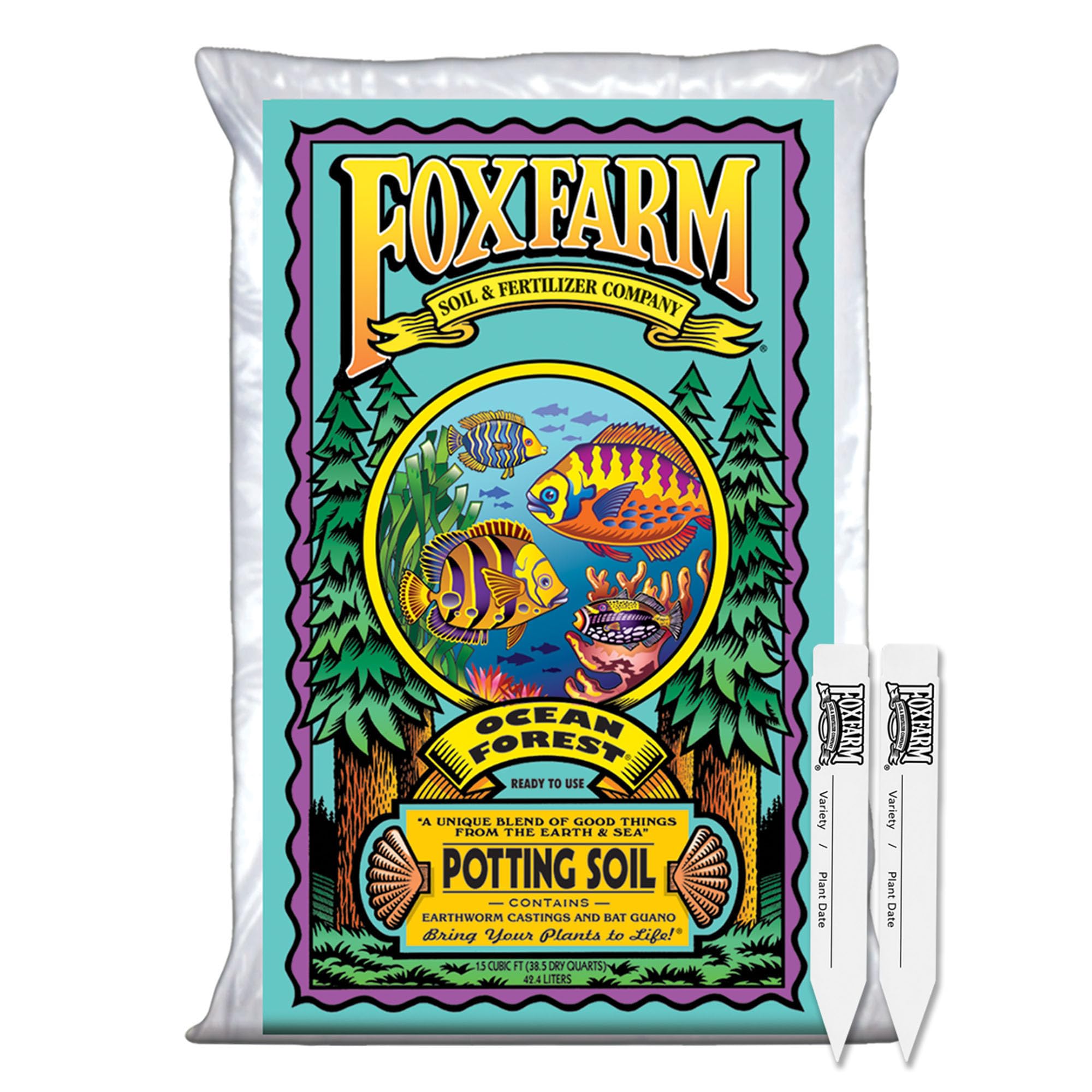
1. FoxFarm Ocean Forest Potting Soil with 2 Plant Tags
Our pick — over 4.5★ from 10,000+ verified ratings; the strongest balance of quality and price.
The gold standard that side-by-side tests keep proving against the big-box competition.
Pull open a bag of this and the first thing you notice is the texture — it feels alive, packed with aged forest products, sphagnum peat moss, perlite, and sandy loam that together create a structure water moves through easily. That sandy loam is the secret to preventing root rot because it gives excess water a fast exit path. The 1.5 cu ft bag comes with two plant tags for labeling varieties and planting dates, a small detail serious growers appreciate.
What really sets this apart is the nutrient cocktail straight from the sea and soil: fish emulsion, crab meal, shrimp meal, earthworm castings, kelp meal, and oyster shell. Buyers report a side-by-side test where Fox Farm soil “outperformed Miracle-Gro in a tomato plant test” — same-size plants at planting, same watering, dramatically different results later. The consensus among owners is clear: plants that go into Ocean Forest simply look happier, with deeper green leaves and faster growth. The only real hesitation is the cost — it runs higher than basic mixes — but the majority of buyers consider it worth every bit of the premium.
The biggest surprise for new users is that this stuff comes ready to go right out of the bag. No amendments, no mixing. Just open, plant, and watch things take off. An occasional report of gnats or other bugs appears, but it is rare enough that the crowd of 10,000+ raters still landed at a near-perfect score overall.
Ocean Forest nutrient-rich: This is the crowd favorite for a reason — 4.8 stars across 10,000+ owners, and it holds that ranking by delivering consistent results bag after bag. The thing is heavy at 34 pounds, which is worth knowing if you have to haul it up stairs or across a yard, but that weight is the price of all those rich, water-holding ingredients.
reach for this if: you want a proven, nutrient-dense mix that works for everything from houseplants and seedlings to tomatoes in pots — and you are willing to pay for the best.
think twice if: you need to fill a massive raised bed on a budget (the per-cu-ft cost is real) or you are sensitive to potential fungus gnats from organic amendments.
2. Coast of Maine Organic & Natural Planting Soil for Vegetables & Tomatoes
Lightweight foam-like texture that lets tomatoes and zucchini explode without the heavy lift.
This is not your typical heavy black soil. The Coast of Maine tomato and vegetable blend is strikingly lightweight — buyers describe it as a “lightweight foil” for potting in 5-gallon pots. The base of sphagnum peat moss and composted manure creates an aerated structure that drains well while holding onto enough moisture for thirsty fruiting plants. At 20 quarts it covers a solid number of containers; the bag sits at 2.5 times the volume of the Midwest Hearth mix, giving you far more coverage for the price tier it occupies.
The OMRI-listed organic label matters here because it means no synthetic fertilizers or pesticides, which is exactly what you want when growing food you are going to eat. Owners mention that tomatoes, zucchini, and peppers planted in this stuff show “visible rapid growth” and thrive with no stress. The composted manure provides a slow-release nutrient base while the peat moss keeps the whole thing light enough that you can lift full pots without breaking your back. The trade-off is that some bags contain undecomposed twigs and small woody bits — one owner notes you may want to pick those out if you are direct-seeding fine crops like carrots.
The recurring honest note from experienced gardeners is that fungal gnats can sometimes show up, which is a common risk with any compost-heavy organic soil. A few buyers also found the price steep for the volume compared to basic big-box blends, but for organic vegetable growers, the results tend to justify the cost.
Coast Maine organic: If your garden is built around edible plants in containers — tomatoes, peppers, zucchini — this is the blend that delivers. Rich without being heavy, organic without being weak. The main thing to know is that it is not a cheap bulk filler; it is a precision tool for plants that need both drainage and steady food.
best suited for: container vegetable gardens, especially heirloom tomatoes and peppers that need the extra drainage and nutrient density.
not the pick if: you are on a strict budget or need a sterile, gnats-free starting mix — this is a living organic product with all the benefits and minor risks that come with that.
3. Premium Potting Soil Mix with Peat Moss, Vermiculite, Perlite (Midwest Hearth)
The lightest, fluffiest mix in this list — made for tender roots and early germination.
This 8-quart bag is on the small side, and that is exactly the point. It is formulated for precision work: seed starting, small pots of herbs, and plants that need a gentle, aerated environment. The three-ingredient trifecta of sphagnum peat moss, vermiculite, and perlite gives you a mix that holds moisture without ever getting soggy, and it stays fluffy — it does not harden around roots the way heavier soils can. The pH is pre-balanced for a broad spectrum of plants, so you do not have to worry about acidity swings killing off delicate seedlings.
Customers note that daylilies planted in this sprouted and grew almost immediately, and one owner found it “great for my germinating petunias.” The resealable bag is a nice touch for a product you likely will not use all at once, since 8 quarts goes fast but not in a single session. The same formulation used by professional growers is the pitch, and the reviews back it up — the roots stay loose and airy rather than getting choked.
The catch is the value equation. Several reviewers point out the size feels underwhelming for the price. But if you are starting seeds or tending a few houseplants rather than filling a whole raised bed, this is exactly the volume you need.
peat moss blend
- Light, fluffy texture that stays loose and never compacts around roots
- pH balanced so you don’t need to test or amend before planting
- No weeds or bugs reported in the mix — clean out of the bag
size reality
- 8 quarts is a small volume — covers maybe a couple of medium pots
- Cost per quart runs higher than bulk options
- Some owners find the bag smaller than expected on arrival
grab this for: seed starting trays, petunias, herbs, and any situation where you want a consistent, sterile, pH-neutral base that roots can spread through easily.
skip for: large container projects or raised beds — you will run through the bag fast and the cost adds up.
4. Michigan Peat General All Purpose Premium Potting Soil with Perlite

The 50-pound bag that serious container gardeners have trusted for decades.
This is the straight-talking workhorse of the group. A 50-pound bag of dark, rich reed sedge peat blended with perlite and sand — no fancy ingredients, no storytelling. It includes both starter and slow-release fertilizers so your plants get an immediate boost followed by steady feeding over weeks. For anyone growing more than 200 dozen flowers a year (yes, that is a real reviewer’s scale), this is the bag they buy when their local greenhouse supplies dry up.
The texture is distinctly different from the fluffy FoxFarm or Coast of Maine blends. It feels heavier and wetter in the bag, and it compacts more significantly after watering, making moisture-check a little trickier. That moisture retention is a double-edged sword: most shoppers say plants doing fine for months, but a few find it holds too much water for plants that prefer drier feet. The consistency feedback runs mixed for the same reason.
Michigan Peat’s BACCTO line has been around long enough that gardeners with half a century of experience call it the best they have found. That is real brand loyalty. The sand content adds weight and structure, so do not expect the same airy feel as a peat-perlite-vermiculite mix.
Michigan Peat versatile: Quality — 71 buyers call it out as the top positive aspect. The value is strong for the sheer volume, and the fertilizer pre-mix means you do not have to remember to feed for a while.
best fit for: big container gardens, mass plantings of annual flowers, and anyone who needs a reliable, pre-fertilized mix in bulk while staying affordable.
not ideal for: succulents, cacti, or any plant that needs sharp drainage and a light, airy root zone.
5. Brut Organic Potting Soil 1 CU FT
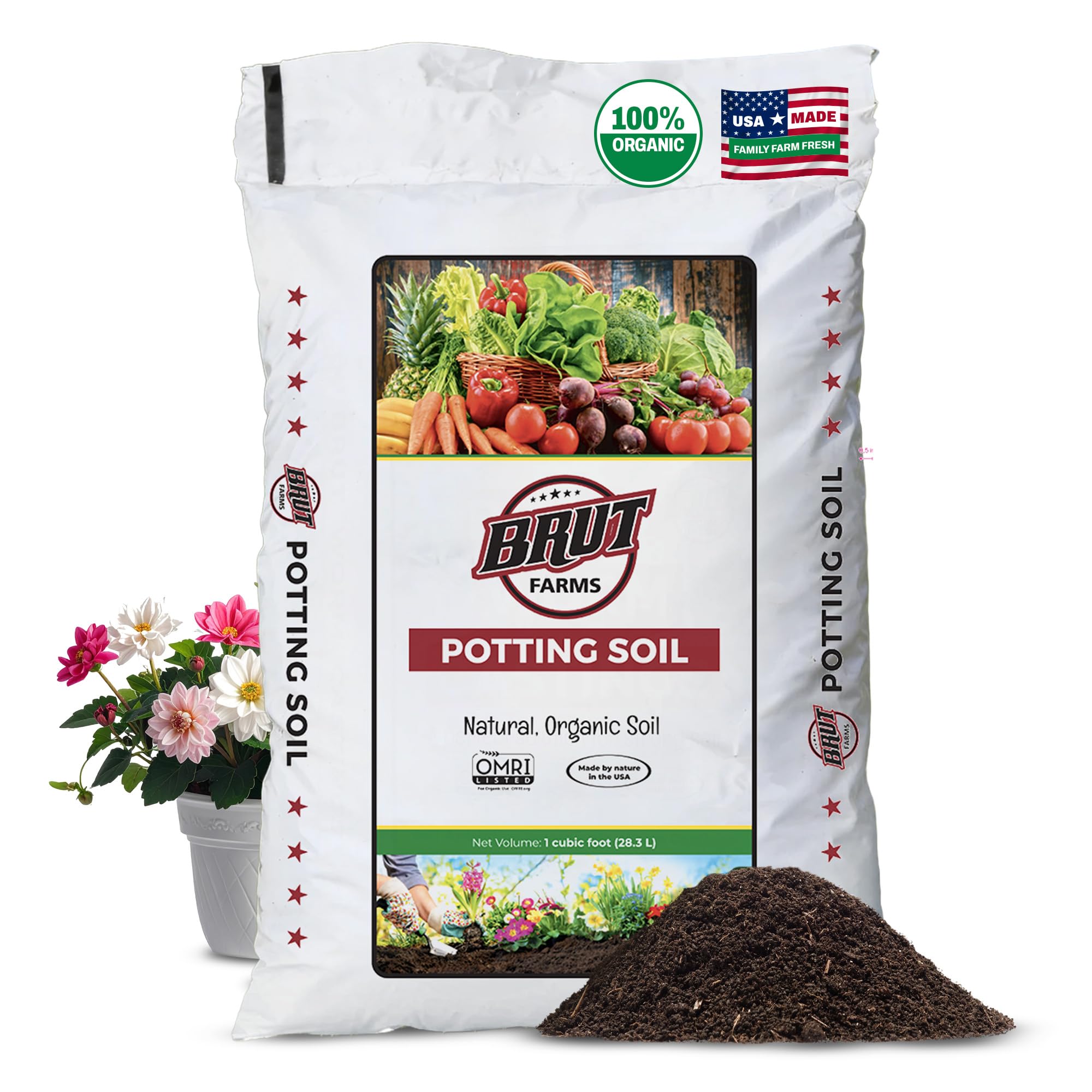
This is “black gold” — filled with worm castings, kelp, and Azomite for root-level nutrition.
Brut Organic Potting Soil looks different as soon as you open the bag. It is dark, almost black, with no visible sticks, wood chips, or synthetic fertilizer prills. The ingredients list reads like a superfood menu: microbe-rich worm castings, Azomite (a natural trace mineral powder), and kelp meal. All of it is OMRI-listed and free from synthetic chemicals. The pH sits naturally balanced between 6.3 and 6.5, which covers most vegetables, herbs, and houseplants without adjustment.
The color is the first thing owners mention — 18 of them call it out specifically, with one describing it as “black gold.” The soil quality is the most-praised aspect, cited 54 times. Plants fed with this mix show rapid deep green leaves and noticeable new growth within days. One owner noted their tomato plants in 4-inch pots absolutely loved it, with visible results that justified the higher cost. The 21-quart bag is a good middle volume — bigger than a seed-starting bag but not overwhelming like the 50-pound options.
The honest reality is that the organic richness comes with a potential downside. A few reports mention the fish and bone meal in the mix can attract flies if the soil is moved outside, and some buyers experienced fungus gnats. The consensus among experienced users is that a top layer of sand or gravel prevents the issue, but it is something to be aware of if you are using it indoors. The shipping experience also gets mixed marks — a minority of bags arrive damaged or late.
One thing owners love is that there are no wood pieces or artificial additives. You open the bag and it is pure, dark organic matter ready to plant into.
reach for this if: you want the richest organic base available for indoor plants, herbs, or raised beds, and you are comfortable managing the minor pest risks that come with potent organic amendments.
look elsewhere if: you need a sterile, inert starting mix or you plan to use the soil entirely indoors with no top dressing.
6. Coast of Maine Organic & Natural Bar Harbor Blend Potting Soil
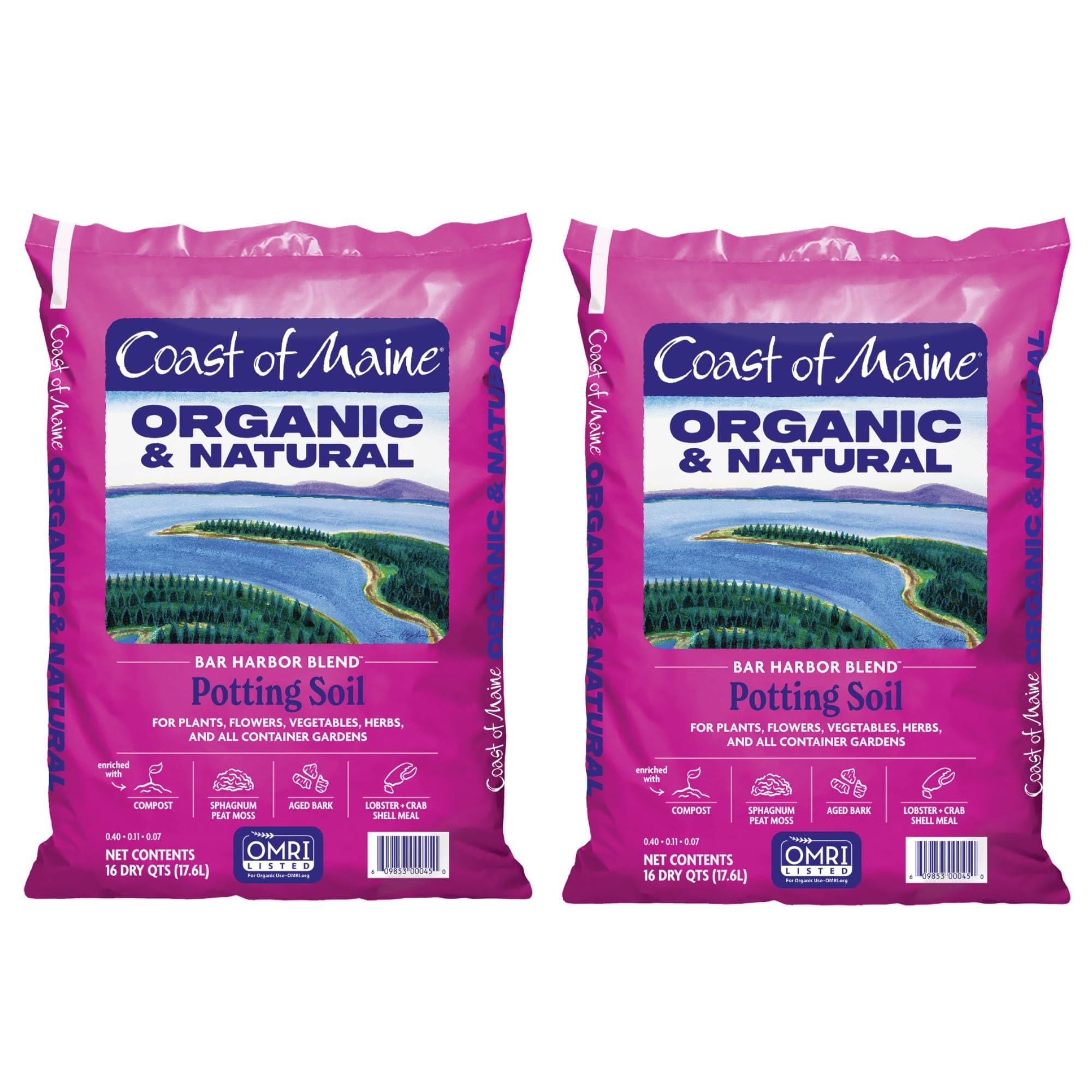
The coastal seafood-infused soil that makes tomato and potato plants outgrow everything else in the garden.
This is the one that smells like the Maine coast — in a good way. The Bar Harbor Blend combines sphagnum peat moss, compost, perlite, and the signature ingredients: lobster and crab shell meal and kelp meal. The shell meal provides a slow-release source of calcium and chitin, which naturally deters soil pests. The 16-quart bag comes as a 2-pack, so you get two bags in one order, enough volume to mound up eight potato plants with some left over for extra planters.
Buyers consistently report that everything planted in this stuff grows more than expected. Tomatoes, potatoes, peas, and container flowers all show rapid, vigorous growth. The dark color indicates a high compost content with low peat moss, and the perlite, coco coir, and compost are well-balanced — no bad odor, no unexpected weeds sprouting from the mix. One long-time gardener who swore by a “certain top brand” says they will never go back after trying this.
The quality rating sits at the top of this list — the crowd of owners gives it the highest score here, and the quality aspect is the most-praised by far at 56 mentions. Plant growth and value for money each get 12 mentions, with owners noting it is rich without being full of sticks like some competitors. There is a small minority of reports where plants did not survive, but those appear to be rare relative to the overwhelming positive consensus.
One thing to know: the bag from Coast of Maine runs at a premium price point. It is not a budget bulk option, but for container gardeners who want the best possible ingredients in their potting mix, the results speak for themselves.
best for: container vegetable gardens, raised beds, and anyone who wants a rich, naturally pest-resistant organic mix with proven results. The shellfish-based nutrients give it a unique edge for flowering and fruiting plants.
not the pick if: you need to fill a large garden bed on a tight budget or if you are looking for a lighter, more basic seed-starting mix.
7. WONDER SOIL Compressed Coco Coir Block
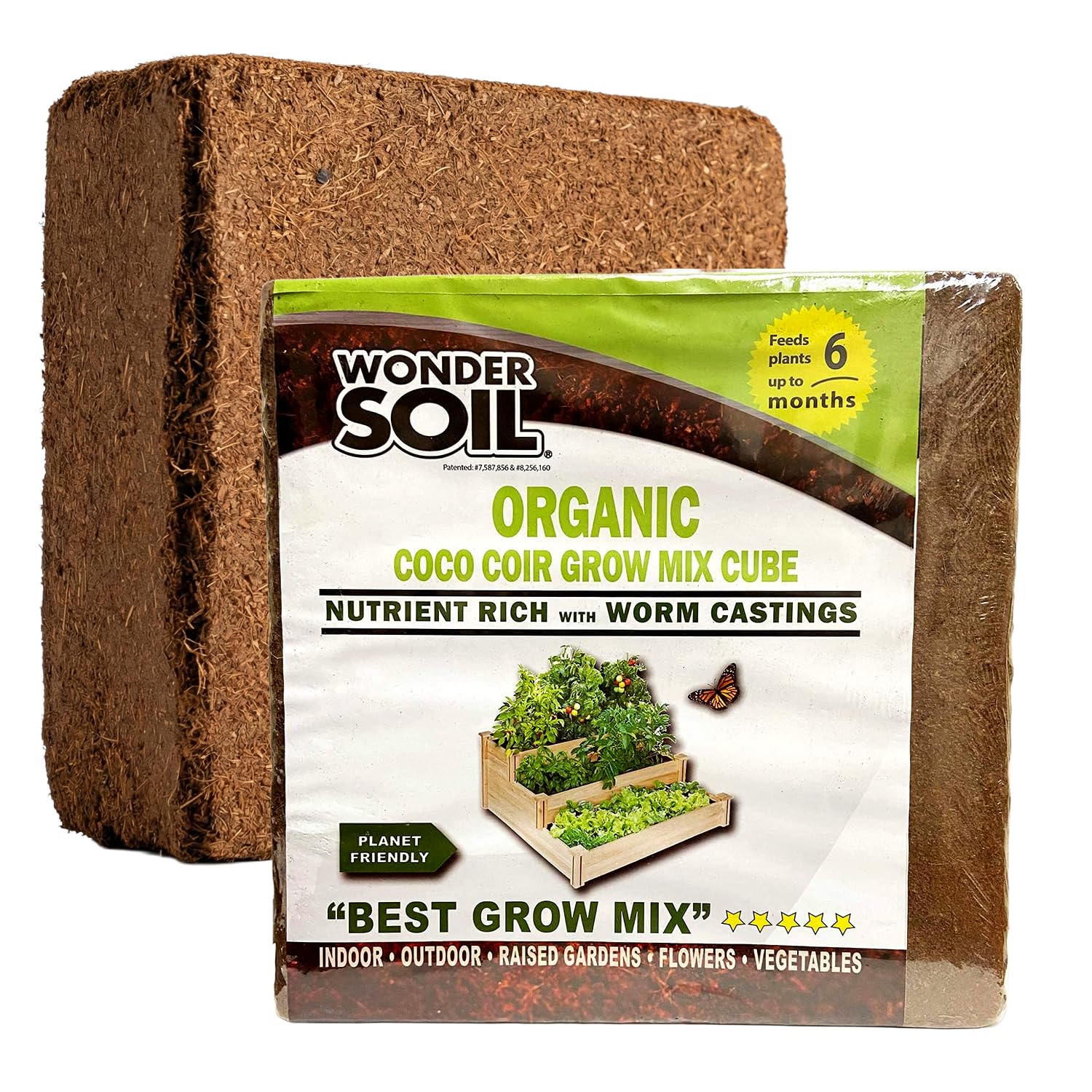
A 10-pound dry brick that turns into 18 gallons of soil — the ultimate space-saving grow medium.
This is not a bag of wet dirt. It is a compressed block of coco coir (coconut husk fiber) that looks tiny until you add water, then it expands to 72 quarts — seven times its original size. The block weighs just 10 pounds dry, so shipping and storage are dramatically easier than any pre-moistened bag. Unlike plain coco coir, Wonder Soil comes pre-loaded with worm castings, mycorrhizae (beneficial root fungi), and kelp that feed plants for up to four months.
The practical advantage is huge if you have limited storage or you are starting a large garden at once. One buyer reports filling three 14-inch pots and still having leftover soil from a single block. Another used just a corner of the block and made enough soil for all their seedlings. The water absorption is excellent, and the fast-draining nature of coco coir makes it ideal for wicking water — a method where water moves upward from a reservoir into the soil on its own.
The honest note that surfaces repeatedly is that some blocks can arrive with spider mites. Not every buyer reports it, but it is consistent enough across reviews to be worth knowing. The fix is to treat the soil with a miticide before planting if you are concerned. Compared to competitor brands like Mother Earth, some owners find this block produces slightly less volume per pound, but the pre-loaded nutrients are a real time saver.
Quality is the top praise at 45 mentions, followed by effectiveness at 22. The fact that it is dry and compressed means you can keep a block on a shelf all winter and have fresh soil ready in spring — no lugging heavy wet bags from the store.
perfect for: seed starting, microgreens, indoor plants, and anyone who wants to store a large volume of growing medium in a tiny space. The pre-loaded nutrients save you from having to mix in fertilizers.
be aware: the compressed block needs thorough rehydration (it takes a lot of water), and the occasional pest report means you may want to sterilize or treat before planting sensitive crops.
8. Old Potters Organic Compost – Plant Based Potting Soil
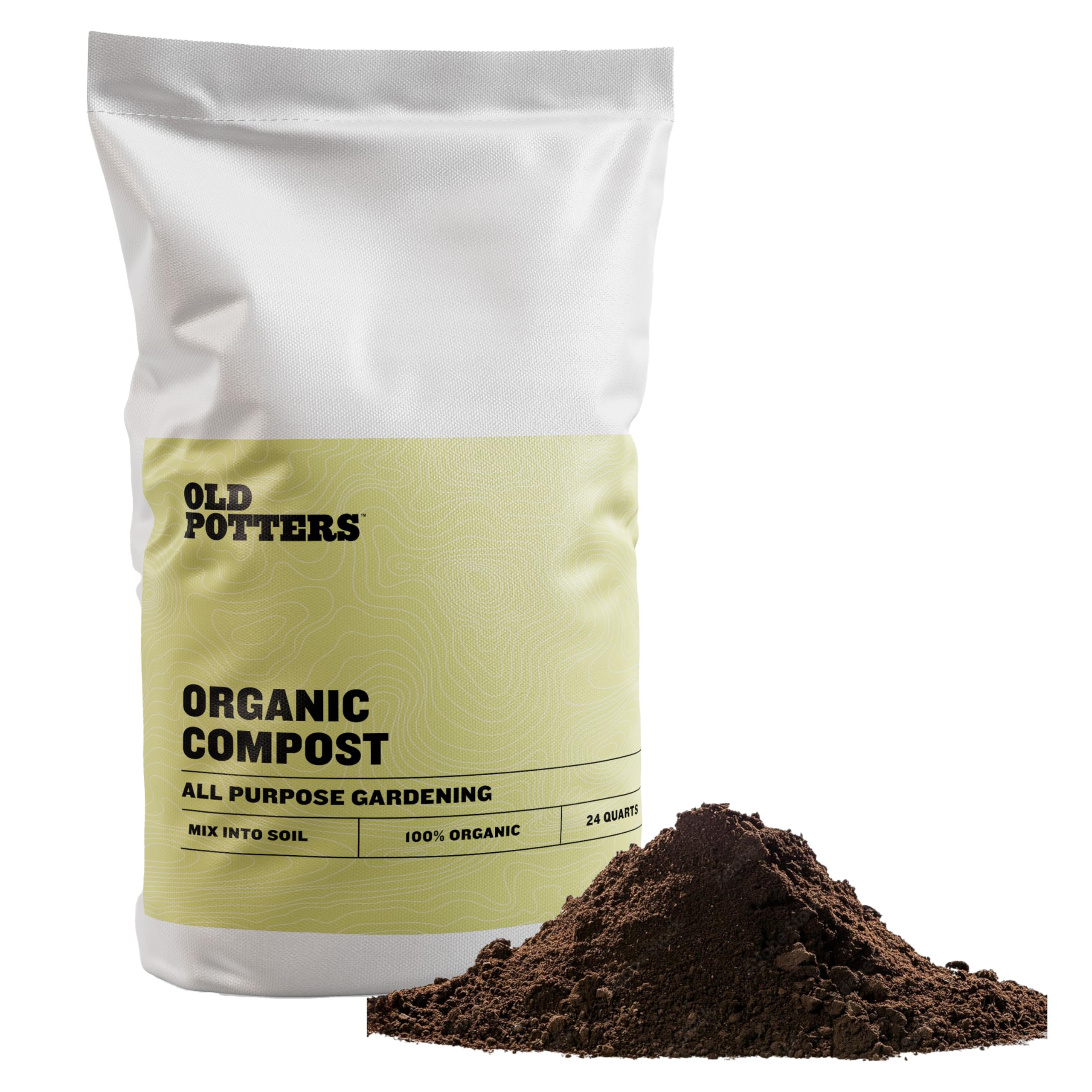
Plant-based compost that turns heavy clay into something roses actually grow in.
This is not a potting mix in the traditional sense — it is pure, 100% organic plant-based compost. The bag is 25 pounds of dark, nutrient-rich material designed to improve aeration, water retention, and nutrient availability in existing soil. Use it as a soil amendment in heavy clay or sandy ground, or as a top dressing for containers. The OMRI-listed organic certification means no synthetic chemicals touched this stuff at any stage.
The reviews tell a story of dramatic transformations. Gardeners in harsh climates — zone 7a with extreme heat, flooding, drought, and cold — mixed this compost with worm castings and mycorrhizal fungi and watched their roses grow “vigorously” and bloom early. Banana plants that were dormant indoors suddenly put out three new leaves after being potted in this. The quality aspect gets 35 mentions, and plant growth follows at 22, with owners noting it takes a sterile potting mix and turns it into a living, feeding environment.
The honest trade-off is the smell. “Awful smell” appears in reviews often — a strong, lingering odor even after the bag is resealed. For outdoor use in the garden, it fades and is worth it for the results. For indoor use, you may want to keep the bag in a garage or shed. A few buyers also note the texture is clumpy with clayish bits that need to be broken up manually before use. And some plants — particularly roses during the adjustment period — can show stress from the concentration of organic matter, so start with a light mix.
The value for money gets mixed feedback at 13 mentions, reflecting that this is a premium-priced compost compared to basic garden center bags. But the 24-quart size at 25 pounds is a solid volume for amending a decent-sized bed.
best used for: amending poor existing soil, feeding heavy feeders like banana plants and roses, and building organic matter into raised beds.
not the best fit for: straight use in pots without mixing with perlite or aeration agents, or for indoor use where the smell could be bothersome.
9. Miracle-Gro Potting Mix (8 qt. 3-Pack)

The name everyone knows — now in three smaller bags that are easier to carry than one big one.
Miracle-Gro is the brand that defines the category for most people, and this 3-pack of 8-quart bags gives you convenience and portability. Each bag fills two 8-inch containers, so the set covers six pots. The mix feeds plants for up to 6 months, which means you do not have to remember to fertilize after planting — the nutrients are built into the soil itself. The company claims it “Grows Plants Twice As Big” compared to unfed plants, and the formula is built around sphagnum peat moss and perlite for that classic light, draining structure.
The versatility is the real selling point. Buyers use it for both outdoor containers and indoor planting, reporting that it drains well and does not pack down hard over time. One owner specifically prefers the smaller bags so they do not have to “lug around the large ones” — a real consideration if you have limited strength or mobility. The quality gets 32 mentions as the top positive aspect, and plant health follows at 17.
The real-world feedback is mostly positive, but the bag size is the most-discussed catch. At 8 quarts each, the bags are genuinely small. Owners who expected a bulk volume are often disappointed by the size, and the value for money gets mixed reviews — some find it decent for the price, others consider it very pricey for what you get. That is the trade-off of the three-pack format: convenience and portability come at a higher per-quart cost than a single large bag.
If you are filling a dozen large pots, this is not the most economical route. But for a few containers, a few houseplants, or a small herb garden, the reliability and built-in feeding make it a no-brainer choice. The soil stays loose and airy, and the results are consistently good.
Miracle-Gro reliable
- Built-in fertilizer feeds for up to 6 months — no extra steps
- Light, well-draining texture that does not compact over time
- Smaller bags are easy to carry and store
synthetic feed
- 8-quart bags are small — each covers just two 8-inch pots
- Per-quart cost is higher than buying a single large bag
- Some buyers find the value underwhelming for the price
pick this for: small container projects, houseplants, and anyone who wants the convenience of built-in feeding without having to mix or measure. The lightweight bags are genuinely easier to handle.
skip it if: you need to fill large pots or raised beds — the per-quart cost adds up fast and you will be buying multiple packs.
Understanding the Specs
Volume vs Weight: What the Bag is Actually Telling You
Soil bags are labeled two ways — by volume in quarts or cubic feet, and by weight in pounds. The weight tells you more about the moisture content and the density of ingredients (sand is heavy, peat moss is light) than about how much growing space you get. A 50-pound bag of Michigan Peat may hold less actual root space than a 34-pound bag of FoxFarm because the sand content adds weight without adding volume. For containers, always compare by volume (quarts or cubic feet), not by the pound.
Aeration Ingredients: Perlite vs Vermiculite vs Sand
Perlite is the little white volcanic popcorn that creates air pockets. It keeps soil light and fast-draining — great for most container plants. Vermiculite is the tan, flaky mineral that holds water like a sponge. It is excellent for seed starting and moisture-loving plants. Sand adds weight and drainage but no water retention. Look at which aeration ingredient the bag uses to predict whether the soil will stay fluffy (perlite) or hold onto water (vermiculite) — and match that to your plant’s needs.
Organic Matter: Compost, Peat Moss, and Coco Coir
Decomposed organic matter is what feeds the soil food web. Composted manure, worm castings, and plant-based compost add slow-release nutrients and beneficial microbes. Sphagnum peat moss lowers pH and holds water but is not renewable on a human timescale — coco coir does the same job and is a byproduct of coconut farming, making it the more sustainable choice. A soil heavy in peat will stay acidic, while one based on coco coir tends toward neutral pH.
Nutrient Longevity: When Does the Feeding Stop?
Some soils include synthetic fertilizer that feeds instantly and lasts weeks. Others rely on compost and castings that break down over months. The key difference: fertilizer-fed soils work great for the first season but leave you with depleted soil the next year. Compost-based soils improve with age as the organic matter continues to decompose and feed the microbial network. For perennials and long-term containers, the organic approach has a clear advantage.
FAQ
Can I use potting mix directly in the ground?
How do I know if a bag of soil has good drainage?
What does OMRI listed mean on a bag of soil?
Is it normal for potting soil to have bugs or fungus gnats?
How long does a bag of potting soil last once opened?
Can I mix different brands of garden soil together?
What is the difference between potting soil, garden soil, and topsoil?
Why do some soils have added perlite and others do not?
Should I add fertilizer to potting soil that already has slow-release feed?
How much soil do I need to fill a standard raised bed or pot?
Final Thoughts: The Verdict
For most gardeners, the high quality garden soil winner is the FoxFarm Ocean Forest Potting Soil because it delivers the most consistent, nutrient-rich results for everything from houseplants to vegetable containers, backed by the highest rating volume in this category. If you want a specialized organic mix for edible plants, grab the Coast of Maine Vegetable & Tomato Soil. And for anyone who needs to start seeds or wants a sterile, pH-perfect base for small containers, the Midwest Hearth Premium Potting Mix is the one to reach for — just know that 8 quarts goes quicker than you think.
How We Picked
We do not accept paid placement. Every pick is matched to a real buyer and a real use-case; we do not hands-on test units.
Sources & Methodology
Specifications: manufacturer listings and product documentation. Review insights: verified customer reviews, as of July 2026. Pricing: not shown on this page (it changes often); check the current price via the retailer link.
As an Amazon Associate, Lawn Gear Lab earns from qualifying purchases. This does not affect which products we feature.