
Specs are compiled from manufacturer listings and verified buyer reviews and can change over time — please confirm the key details on the product page before buying.
If your shrub only puts out two flowers a year, or your tomato vine is all leaves and no fruit, the likely culprit is a phosphorus shortage—the nutrient plants need most when setting buds and fruit. A high phosphorus organic fertilizer fixes that by feeding the bloom cycle with natural ingredients, not synthetic salts. Here are eight trusted organic bloom boosters, so you can pick one that fits your garden without wrestling with fertilizer labels.
I’m Rikta — the founder and writer behind Lawn Gear Lab. This guide is built by comparing the manufacturers’ published specifications and the patterns across verified customer reviews, so you get each pick’s real strengths and trade-offs instead of marketing spin.
Flowering plants need a higher phosphorus ratio to push out buds, and high phosphorus organic fertilizer delivers that targeted nutrition that keeps blooms coming all season long.
Our Picks at a Glance


How To Choose The Best High Phosphorus Organic Fertilizer
Every fertilizer bag carries three numbers, like 2-5.5-5.5 or 4-10-7. The first is nitrogen (leaf growth), the second is phosphorus (roots and blooms), and the third is potassium (overall health). For flowering and fruiting, the middle number is the one doing the heavy work.
Decode the NPK Ratio
A bloom formula always has a higher middle number than the first. That tells you the plant is getting a bigger share of phosphorus right when it needs it most. A balanced all-purpose feed, like 10-10-10, spreads its energy everywhere — you want the focused boost instead.
Match the Form to Your Routine
Dry amendments, like powders and granules, release their phosphorus slowly and feed the soil biology as they break down. Top-dress them and water in, and you are set for weeks. Liquid concentrates work faster and are ideal for container plants and hanging baskets, but demand more frequent mixing and application.
Check the Source, Not Just the Numbers
Organic phosphorus comes from things like bone meal, fish bone, or mined rock phosphate. Each breaks down at a different pace in your soil. The right source depends on your gardening style — a patient top-dresser does great with a slow-release meal, while someone chasing quick color might prefer a liquid that works in days.
Quick Comparison
| Model | Best For | NPK Ratio | Form | Weight | Amazon |
|---|---|---|---|---|---|
| GreenGro Pride Lands Bloom★ Best Overall | Bud density & terpenes | 2-5.5-5.5 | Powder | 2 lbs | Amazon |
| Espoma Organic Bloom!Best Liquid | Hanging baskets | 1-3-1 | Liquid | 16 oz | Amazon |
| Dr. Earth Flower GirlTop Performer | Fruit trees | 4-10-7 | Powder | 4 lbs | Amazon |
| Miracle-Gro Performance Organics Blooms | Quick visible results | 5-7-10 | Granules | 2.5 lb | Amazon |
| Espoma Organic Bone Meal | Bulbs & new beds | 4-12-0 | Powder | 10 lb | Amazon |
| Gaia Green Power Bloom | Tomatoes & vegetables | 2-8-4 | Powder | 2 kg | Amazon |
| FoxFarm Happy Frog Fruit & Flower | Container gardens | 4-9-3 | Granules | 8 lbs (2-pack) | Amazon |
| Down To Earth Fish Bone Meal | Large gardens & rows | 4-12-0 | Granules | 25 lbs | Amazon |
In‑Depth Reviews
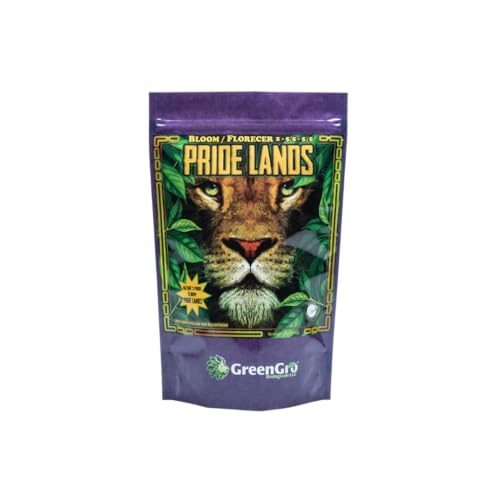
1. GreenGro Pride Lands Bloom 2-5.5-5.5
Our pick — over 4.5★ from 550+ verified ratings; the strongest balance of quality and price.
The bloom booster that brings living soil biology to every feeding.
This is the pick when you want your flowers and fruit to get phosphorus plus a whole underground ecosystem working for them. Its 2-5.5-5.5 NPK (a ratio where the middle number, phosphorus, clearly leads) is paired with beneficial microbes, biochar, and mycorrhizae — a lineup that most competing dry amendments, including Gaia Green Power Bloom, simply leave out. Those extras are what feed your plant and the soil it lives in at the same time.
Growers report denser flowers and heavier harvests, with a weekly top dress through week 8 of bloom rivaling pricier liquid programs. Its P/K-forward profile drives fruit set in tomatoes, peppers, squash, and berries, and it is CDFA-approved for edibles from first flower through harvest.
It works as a complete standalone base — top dress once per week, water in, and let the biology do the rest. No measuring liquid nutrients, no pH adjustment. At 2 pounds (32 ounces), it weighs exactly half of the Dr. Earth Flower Girl bag at 4 pounds, but the concentrated microbe load is what serious growers keep coming back to.
What wins people over
- Almost 40 buyers single out overall quality — it is the most-praised trait by a clear margin
- Microbes, biochar, and mycorrhizae in one bag, ingredients most rivals skip
- Works for cannabis, vegetables, and ornamentals alike
The honest limits
- Two-pound bag goes faster than the 4 lb Dr. Earth option if you have a big garden
- Powder form needs a weekly top-dress habit to get the full benefit
Grab it for: bloom-focused growers who want one all-in-one organic amendment with living biology, ready to top-dress weekly
Think twice if: you want the biggest possible bag for the money — the Dr. Earth Flower Girl below gives you 4 pounds instead of 2
2. Espoma Organic Bloom! 16-Ounce Concentrate
A fast liquid bloom feed that shines on fussy hanging baskets.
When a plant needs phosphorus now, not in three weeks, a liquid concentrate is the answer, and this 16-fluid-ounce bottle from Espoma is the easiest way to deliver it. Its 1-3-1 analysis is built around phosphorus, with natural proteins boosted by kelp extracts and humic acids. Dilute one capful in a gallon of water, and you have a gentle bloom feeding for every flowering plant you own.
Hanging baskets are where this one earns its keep — annuals and perennials in containers respond fast, and buyers report that fuchsias put out endless blooms and lantanas produce noticeably more flowers. It is a registered Organic Input Material with no sludges or toxic ingredients. The rich plant benefits are the most-discussed trait in the reviews, far ahead of anything else.
Unlike the dry powders in this guide, this is a liquid feed you apply every 2-4 weeks during the growing season, keeping pace with fast-growing plants. It works in both containers and garden beds, so pair it with a granular fertilizer for slow-release nutrition plus a quick liquid boost when buds are forming.
The trade-off: owners are candid that it gives off a noticeable odor, so it is best mixed outdoors and kept away from children and pets during application. The payoff is a registered organic liquid that outperforms the synthetic brands for many gardeners — owners mention it beats Miracle-Gro hands down on their flowers.
Reach for this if: you garden mostly in containers and hanging baskets and want a fast, easy-to-measure liquid that is approved for organic use
Look elsewhere if: you dislike strong odors—the granular picks here are nearly smell-free.
3. Dr. Earth Flower Girl Bud & Bloom Booster 4-10-7
The 4-pound organic workhorse that turns shy fruit trees into heavy producers.
Dr. Earth Flower Girl brings the highest phosphorus ratio in this lineup’s powder category — 4-10-7 — and backs it with a 100% organic, handcrafted blend that is certified organic and Non-GMO Project Verified. The bag is explicitly safe for people and pets, with no GMOs, chicken manure, or sewage sludge—ideal for play-space gardens.
The proof is in the fruit: customers note dragon fruit trees that went from three blooms one year to twenty-five the next after switching to this formula, and experienced dahlia gardeners recommend it outright. It feeds everything — vegetables, flowers, bedding plants, potted plants, trees, and shrubs — so it doubles as your go-to bloom booster across the whole property.
At 4 pounds (64 ounces), this bag holds exactly twice the product of the GreenGro Pride Lands Bloom at 2 pounds (32 ounces) — same 2.0x gap for the same kind of top-dress routine. That makes it the smarter buy if you have a larger garden, even though it lacks the microbe and biochar extras that give GreenGro its edge in soil biology.
Straight read: the plant benefits and plant health are the two most-praised aspects by a wide margin, and the value-for-money mentions are all positive. The one recurring note is that some owners find it attracts flies — worth working it into the soil rather than leaving it on the surface.
Best for: anyone with fruit trees, shrubs, or a mixed flower garden who wants the strongest phosphorus push in a pet-safe, certified organic powder
Consider the catch: if you dislike any chance of flies around your beds, work the powder in well or choose the granule options below
4. Miracle-Gro Performance Organics Blooms 5-7-10
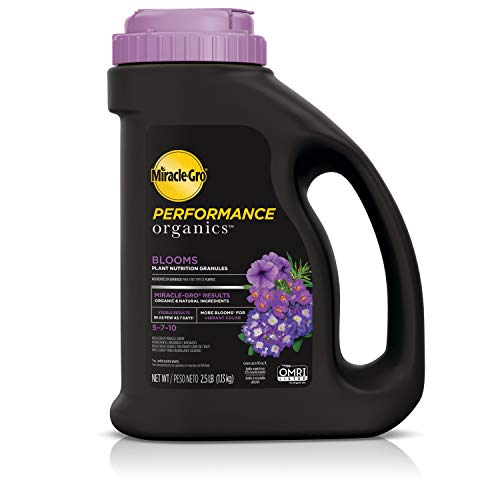
The organic granule that delivers Miracle-Gro speed with a 5-7-10 bloom boost.
The name on the bag is famous for fast results, and this OMRI-listed organic granule lives up to it. The 5-7-10 ratio tips toward phosphorus and potassium, and reviewers point out visible changes in a week or two — butterfly bushes and mandevillas that refuse to bloom finally pop, and canna lilies respond with vigorous growth. It covers up to 165 sq. ft., so one bag goes a long way.
This is the easiest feed in the lineup to just scatter and forget: reapply every 4-6 weeks and water regularly. The effectiveness is the most-praised aspect, which tracks with the buyer reports of ginormous blooms within two weeks. For gardeners who want the brand’s famous reliability but prefer organic and natural ingredients, this is the compromise done right.
Next to the Espoma liquid above, this is a different rhythm entirely — granules you work into the soil versus a liquid you mix every couple of weeks. The 2.5-pound bag sits between the 2-pound GreenGro and the 4-pound Dr. Earth, making it a sensible middle ground for a medium-sized garden.
What owners love
- Fast — noticeable bloom growth within one to two weeks
- Easy scatter-and-water application, no mixing required
- OMRI-listed organic ingredients in a trusted brand
The honest limits
- An occasional container arrives with a loose inner seal — check before storing
- 5-7-10 has the lowest phosphorus focus in this group per pound
Pick it for: container gardeners who want organic feed with the speed and ease of the classic Miracle-Gro experience
Skip it for: hardcore ratio hunters — the Dr. Earth and bone meals above deliver a stronger phosphorus punch per scoop
5. Espoma Organic Bone Meal 4-12-0

The old-school bulb-and-root builder with a phosphorus-heavy 4-12-0 punch.
Bone meal is the classic organic phosphorus source, and this 10-pound bag from Espoma is the purest expression of it — 100% all-natural domestic bone meal with no fillers or additives. The 4-12-0 ratio is the highest phosphorus share in this whole guide, which makes it the go-to when you are planting bulbs, starting a new bed, or coaxing roots into fresh soil.
Mix a teaspoon per bulb into the soil at planting, and the phosphorus and calcium release slowly all season. Shoppers say thriving tomatoes, dahlias that love it, and pomegranate trees that respond well—plus the value stands out: a 10-pound bag is one of the largest, most economical choices for gardeners with big plots.
The effectiveness and quality are the two most-praised traits in the reviews, and unlike the liquid Espoma above, this one draws no complaints about odor. It is a registered Organic Input Material, made in the USA by a natural-organics leader since 1929.
The classic move: work this into the soil at planting and let it feed all season — it is the finest complement to a liquid feed, giving you slow-release phosphorus where the roots actually are. Note that with 0 potassium, it is a specialist, not a complete diet.
Reach for this if: you are planting bulbs, roses, or a new garden bed and want the deepest, slowest phosphorus release money can buy in a 10 lb bag
Look elsewhere if: you need a complete macronutrient package — the 4-10-7 Dr. Earth and 5-7-10 Miracle-Gro both add potassium this lacks
6. Gaia Green 2-8-4 Power Bloom

The grower-favorite powder that built 8-foot tomato towers.
Gaia Green Power Bloom is a favorite among serious gardeners, and the 2-8-4 ratio (2% nitrogen, 8% phosphorus, 4% potassium) shows why—high phosphorus and potassium push flowering and fruiting hard. Buyers report 8-foot tomato and pepper plants, exceptionally healthy potatoes, and a garden overhaul owners call a standout.
The 2-kilogram (4-liter) bag is a dry powder formulated specifically for flowering and fruiting plants, and it improves soil health and microbial activity as it feeds. It shines on tomatoes, flowers, and vegetables equally, making it the workhorse for a food garden that needs consistent phosphorus through a long season.
Next to the Down To Earth fish bone meal below, this is a richer, more balanced formula with potassium added — the fish bone meal is a strict 4-12-0 with no K at all. If you are choosing between the two for a vegetable patch, the 2-8-4 gives you a more complete diet in a smaller, easier-to-store package.
Why growers stay loyal: the phosphorus and potassium pairing (2-8-4) is purpose-built for bloom, and owners who pair it with the matching 4-4-4 all-purpose formula report the strongest, healthiest plants they have ever grown. It is a dry amendment, so plan a top-dress schedule rather than instant results.
Best for: vegetable and fruit gardeners who want a proven, balanced bloom formula that keeps plants healthy and towering through the season
Consider this: if you want the absolute highest phosphorus number per scoop, the bone meals at 4-12-0 beat this — but they skip the potassium entirely
7. FoxFarm Happy Frog Fruit & Flower 4-9-3
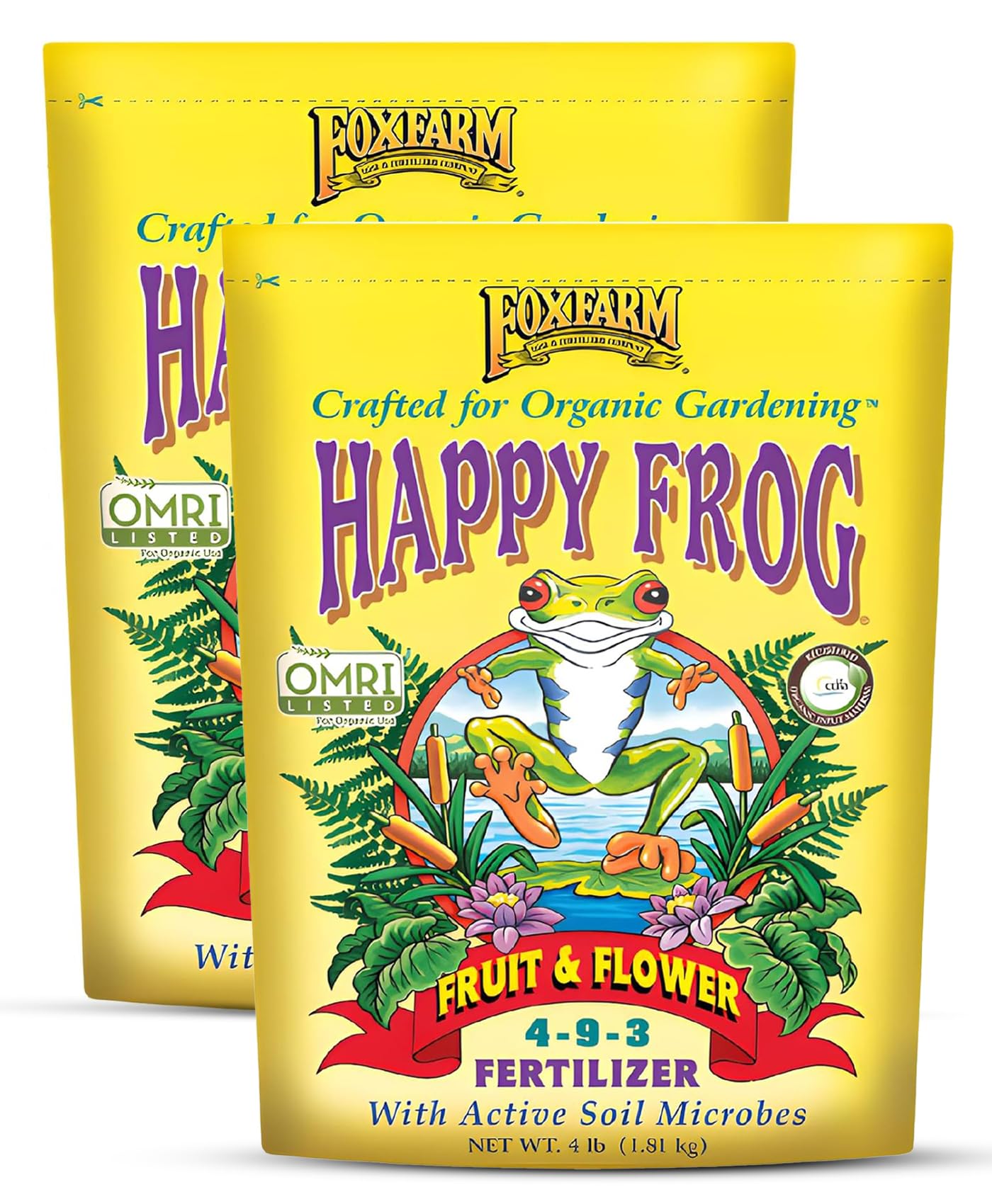
The OMRI-listed granules that container gardens visibly thrive on.
FoxFarm has made premium plant food since 1984, and the Happy Frog Fruit & Flower formula is their bloom specialist. With a 4-9-3 NPK, mycorrhizal fungi to boost root efficiency, and OMRI-listed organic credentials, it is the pick for gardeners who want abundant flowers and fruit without mixing a single liquid. Its 8-pound two-pack is the biggest granule option in this group.
Owners mention that container gardens — where nutrition runs out fastest — simply flourish, with one calling it the best fertilizer they have used in their pots and everything thriving. It supplies nitrogen for sustained growth through the season, phosphorus for vibrant blooms, and the fungi to help roots pull more water and nutrients from the soil. Customers note it even protects tiny tree frogs in the garden, a recommendation from a garden specialist for that reason.
Quality is the most-praised aspect here, and owners note it performs as well as more expensive brands. The trade-off is that while it simplifies gardening to a monthly sprinkle, feedback on both odor and value is mixed — some find it pricey for the bag size. If you spread the 8 pounds across a season of container feeding, though, the cost-per-feed stays reasonable.
The straight take: for container gardeners who want a no-mix, sprinkle-and-forget organic feed with mycorrhizae, this is the strongest option in the lineup. The 8-pound two-pack also out-lasts the smaller Gaia Green and GreenGro bags, so the higher upfront cost stretches further.
Grab it if: you grow in pots, planters, or any setup where roots run out of room and nutrition fast — the mycorrhizal fungi are a genuine edge
Hesitate if: you are on a tight budget for a huge in-ground garden — the 10 lb Espoma bone meal gives you more pounds per dollar
8. Down To Earth Organic Fish Bone Meal 4-12-0
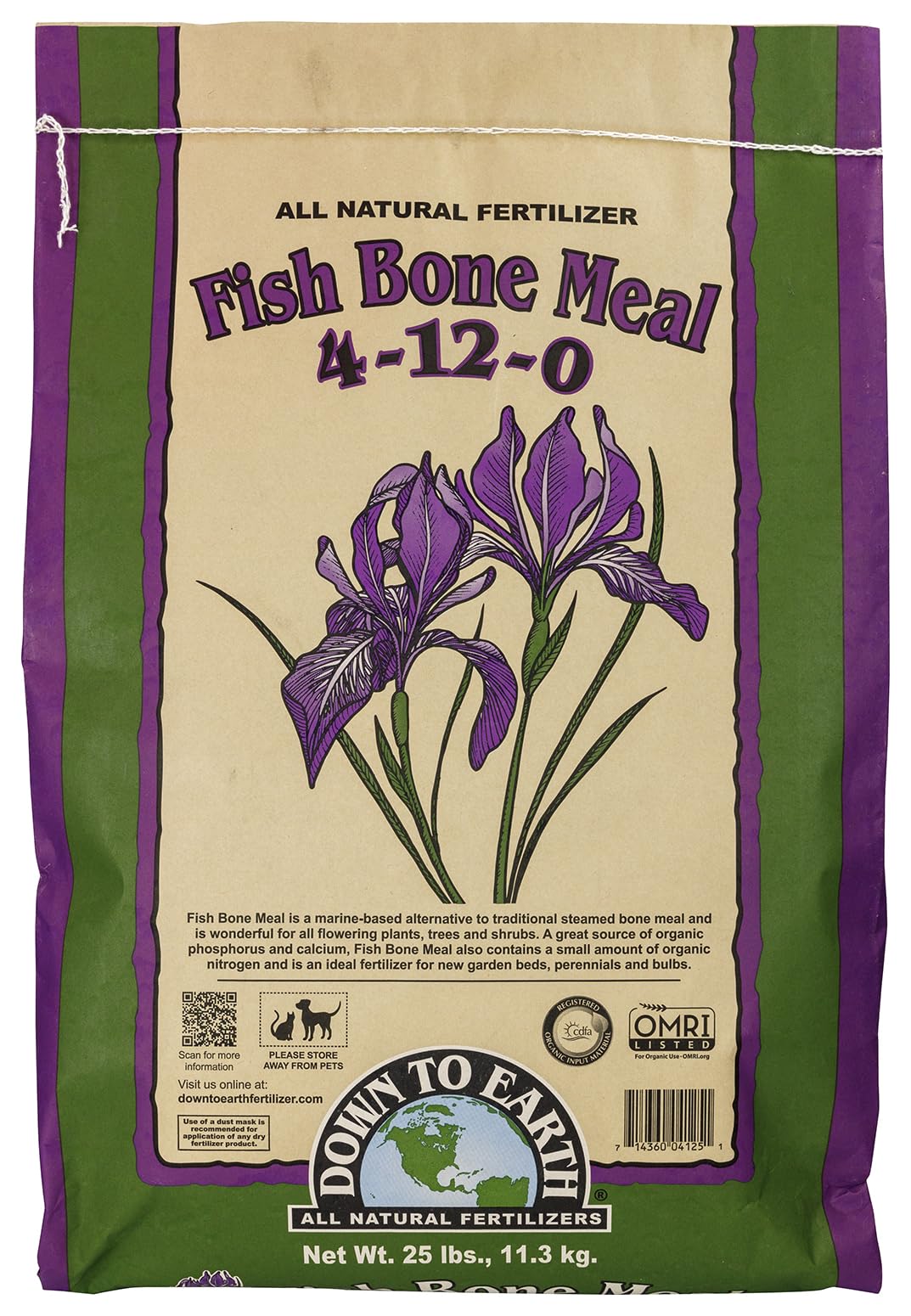
The 25-pound marine powerhouse for gardens that need serious phosphorus volume.
When your garden spans rows, not pots, this 25-pound bag of fish bone meal is the most economical way to deliver a 4-12-0 phosphorus punch. It is a marine-based alternative to traditional steamed bone meal, rich in organic phosphorus and calcium, and wonderful for all flowering plants, trees, and shrubs. The calcium is a bonus — it helps prevent blossom rot in tomatoes.
Reviewers point out tomato plants reaching 12-14 feet, oversized peppers, and yellow squash hitting 6 inches in 4 weeks from seed. Apply 1-2 tablespoons per gallon, work it into new garden beds, rows, and perennials, and the phosphorus fuels both root development and bloom development. It dissolves quickly and needs no scratching in, which keeps the job simple.
Next to the GreenGro at 2 pounds, this is a completely different scale — 25 pounds of granules versus a 32-ounce bag of powder. If you are feeding a large in-ground garden, this is the value king. The honest caveat is the smell: shoppers say a strong fish odor that dissipates after watering, so it is best applied with old clothes and away from the wind.
Why it earns its place
- 25 lbs of organic phosphorus at the highest value-per-pound in this guide
- Dissolves instantly, no need to scratch it into soil
- Root-boosting phosphorus helps plants take to new soil and grow faster
The honest limits
- Expect a strong fish smell during application — it fades after watering
- 4-12-0 is a specialist feed with no potassium, so pair it with a balanced nutrient
Best for: big vegetable gardens, new beds, and anyone planting rows of tomatoes, peppers, or garlic who wants the most phosphorus per dollar
Think twice if: you garden in a small space — 25 pounds is a decade of feeding for a couple of containers, and the smell is real
Understanding the Specs
NPK Ratio
The three numbers on every fertilizer bag stand for nitrogen, phosphorus, and potassium. For a high phosphorus organic fertilizer, the middle number is the star — it fuels root growth and bloom development, which is what produces high-quality fruit and flowers. A ratio like 4-10-7 or 4-12-0 tells you the phosphorus leads the mix, unlike a balanced 10-10-10 that spreads nutrition evenly. The lower the first number, the less leafy growth you encourage, which is exactly what you want when plants are setting buds.
Dry Amendment vs Liquid Concentrate
Powders and granules break down slowly in the soil, feeding your plants over weeks and building soil biology as they go. Liquids deliver phosphorus fast, showing visible results in days, but need mixing every couple of weeks. Dry forms are the classic choice for beds, bulbs, and rows — you top-dress and water in. Liquids shine in containers and hanging baskets where you want quick color. Choosing between them is really a question of how much time you want to spend mixing versus scattering.
Beneficial Additives
Some bloom boosters add microbes, biochar, and mycorrhizae — living fungi and organisms that help roots absorb more water and nutrients from the soil. These extras feed the soil ecosystem alongside the plant, which can mean healthier growth over time. They are a genuine differentiator between products with identical NPK numbers. If you garden in tired, compacted soil, these additives often make the biggest visible difference.
Phosphorus Sources
Organic phosphorus comes from bone meal (steamed animal bones), fish bone meal (a marine alternative), or mined rock phosphate. Each breaks down at a different rate in your soil. Bone meal is the classic slow-release choice for bulbs and new beds. Fish bone meal adds calcium alongside phosphorus and dissolves faster. The source matters as much as the number — it determines how quickly your plants actually get the nutrient.
FAQ
What does high phosphorus do for my flowering plants?
Which NPK ratio should I look for in a bloom booster?
What is the difference between bone meal and fish bone meal?
How often should I apply a high phosphorus organic fertilizer?
Will a high phosphorus fertilizer burn my plants?
Can I use a high phosphorus fertilizer on vegetables and fruit trees?
What is the difference between a bloom booster and an all-purpose fertilizer?
Is it safe to use these fertilizers around pets and children?
How long does it take to see results from a high phosphorus fertilizer?
Which form is better for container plants and hanging baskets?
Final Thoughts: The Verdict
For most gardeners, the high phosphorus organic fertilizer winner is the GreenGro Pride Lands Bloom—the only powder here with a 2-5.5-5.5 phosphorus lead plus microbes, biochar, and mycorrhizae, so it feeds both plants and soil. For a fast liquid in hanging baskets and containers, choose the Espoma Organic Bloom!. And for a large in-ground vegetable garden needing serious phosphorus volume, the Down To Earth Fish Bone Meal is your pick.
How We Picked
We do not accept paid placement. Every pick is matched to a real buyer and a real use-case; we do not hands-on test units.
Sources & Methodology
Specifications: manufacturer listings and product documentation. Review insights: verified customer reviews, as of July 2026. Pricing: not shown on this page (it changes often); check the current price via the retailer link.
As an Amazon Associate, Lawn Gear Lab earns from qualifying purchases. This does not affect which products we feature.