
Specs are compiled from manufacturer listings and verified buyer reviews and can change over time — please confirm the key details on the product page before buying.
Hibiscus are heavy feeders — not giving them the right food causes yellow leaves, dropped buds, and zero blooms. This guide puts the top best hibiscus plant food options side by side, from instant-action powders to no-mess capsules. You get the real NPK numbers (the three-number nutrient ratio on the label), real owner experiences, and a clear choice for your garden style.
I’m Rikta — the founder behind Lawn Gear Lab. This guide compares the manufacturers’ published specs and patterns across verified customer reviews. You get each pick’s real strengths and trade-offs, not marketing spin.
The front-runner — a 4.7-star water-soluble powder (dissolves instantly in water) that covers 2,200 sq. ft. — leads the list. But there are strong alternatives if you want organic feed, liquid feed, or long-term slow-release pellets. finding the best hibiscus plant food means matching the NPK ratio (the three numbers for nitrogen, phosphorus, and potassium) and the form to your plant’s stage and your patience for mixing.
Our Picks at a Glance

How To Choose The Best Hibiscus Plant Food
Hibiscus plants need a specific blend of nutrients to push out those large, iconic blooms. The wrong mix gives you lots of leaves and no flowers, or worse, burns the roots. Here is what to look for.
Understand the NPK Ratio
Every fertilizer label shows three numbers, like 10-10-10 or 10-52-10. Nitrogen (the first number) drives leaf growth. Phosphorus (the middle number) fuels root development and flower production. Potassium (the last number) supports overall plant health and disease resistance. For hibiscus, a bloom booster has a high middle number, while a maintenance feed stays more balanced.
Liquid vs. Granular vs. Spikes
Liquid fertilizers are fast-acting and let you feed leaves and roots at the same time. Granular options release nutrients more slowly, so you apply less often. Fertilizer spikes are the most hands-off option — push them into the soil and water. Each form suits a different gardening style and schedule.
Micronutrients Matter
Hibiscus are prone to iron deficiency, which shows up as yellowing leaves with green veins. Some plant foods include extra iron or a full micronutrient package to prevent that. If your hibiscus looks pale, check the ingredients for iron, magnesium, or a specific “chelated” micronutrient blend (nutrients bound to a molecule so roots absorb them easily).
Quick Comparison
| Model | Best For | NPK Ratio | Form | Coverage | Amazon |
|---|---|---|---|---|---|
| Miracle-Gro Bloom Booster★ Best Overall | General flower gardens | 10-52-10 | Powder | 2,200 sq. ft. | Amazon |
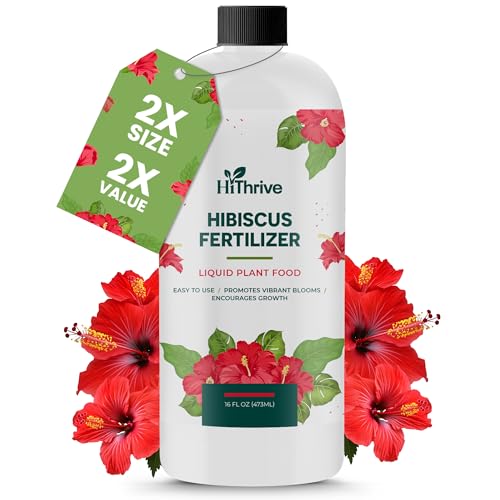
| HiThrive LiquidQuick Fix | Quick correction | — | Liquid | 16 gallons | Amazon |
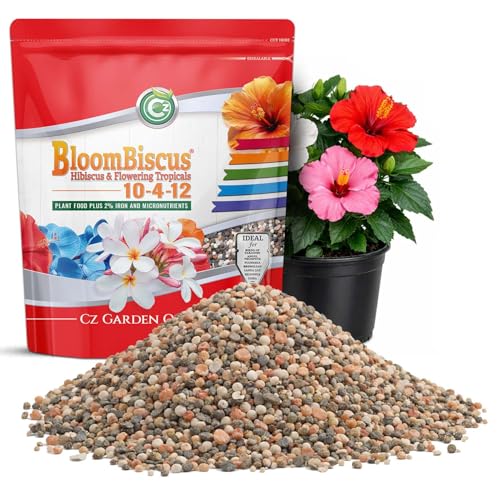
| BloomBiscus 4LBTropical Specialist | Tropicals & iron deficiency | 10-4-12 | Granules | 4 lbs | Amazon |
| Espoma Palm-Tone | Organic gardeners | 4-1-5 | Granules | 4 lbs | Amazon |
| Fertilome Tropical | Monthy feed schedule | 17-7-10 | Granules | 4 lbs | Amazon |
| TPS Hibiscus Liquid | Potted plants | 1:28 mix | Liquid | 32 oz | Amazon |
| BuildASoil Bloom Booster | Vegan organic growing | — | Powder | 1 lb | Amazon |
| BGI HIBISGAIN | Serious collectors | — | Granules | 10 lbs | Amazon |
| EarthPods Capsules | No-mess feeding | — | Capsules | 100 feedings | Amazon |
In‑Depth Reviews
1. Miracle-Gro Water Soluble Bloom Booster Flower Food, 5.5 lb.
Our pick — over 4.5★ from 9,000+ verified ratings; the strongest balance of quality and price.
This 5.5 lb. powder turns feeding into a single watering step — and buyers report blooms doubling fast.
To get more flowers fast, the 10-52-10 NPK ratio (the three numbers for nitrogen, phosphorus, and potassium) here pushes a massive amount of phosphorus straight to flower production. You mix the powder with water in a watering can or use a Miracle-Gro Garden Feeder, then reapply every 7 to 14 days. One bag covers roughly 2,200 square feet of garden area. Owners mention “doubled blooms per plant, very fast production” after applying it at the budding stage.
The biggest real-world compliment here is how it revives struggling plants. One owner noted leaves turning dark green and previously stubborn plants finally pushing new growth. As the review pages sum it up: “it provides perfect fertilizer for beautiful blooms.” The only honest headache is the bag’s resealable closure — the velcro-style strip collects fine powder dust and takes a few tries to stick shut. Keep a clip handy if you are fussy about storage.
What wins people over
- Very high phosphorus (52) drives visible blooming within days
- Wide coverage — 2,200 sq. ft. per 5.5 lb. bag
- Works on roses, hydrangeas, and perennials too, not just hibiscus
The one thing to watch
- The resealable bag seal gets clogged with powder dust; the twist-tie system of older versions was easier
Best for you if: you want the most powerful bloom trigger on the market and are okay with a liquid-mix routine every week or two.
Think twice if: you prefer a low-maintenance granular that you sprinkle once a month.
2. HiThrive 16oz Hibiscus Fertilizer
This concentrated liquid turns a yellowing hibiscus around in a week — buyers confirm it.
This is the product people reach for when their hibiscus starts looking pale and refuses to flower. The 16-ounce bottle makes 16 gallons of liquid feed when diluted. Customers note that “my hibiscus were getting yellowish and they refused to bloom. I used this fertilizer and they shaped up in a week or so.” The blend packs nitrogen for lush leaves, phosphorus for sturdy roots, and potassium for blooms, plus a full set of micronutrients (small nutrients like iron and magnesium that prevent leaf yellowing).
What stands out is the simplicity: mix with water in a watering can, apply every 1 to 2 weeks during spring and summer, then cut back to once a month in fall and winter. The HiThrive label works for all hibiscus varieties — Rose of Sharon, tropical hibiscus, Confederate Rose — so you can use it across different plants without buying separate products. The 1-pound bottle is noticeably lighter than the BloomBiscus 4LB bag, so shipping cost stays low. Unlike the Miracle-Gro powder that needs a mixing routine, this is a grab-and-go liquid for quick rescue.
Honest verdict: a fast-acting rescue for yellow leaves and stalled growth. Not the most concentrated value per gallon compared to powders, but the convenience of ready-to-mix liquid is worth it for many owners.
Reach for this if: your hibiscus is looking sickly and you need a quick, easy rescue without measuring granules.
Look elsewhere if: you want a granular feed that lasts longer between applications.
3. BloomBiscus® Hibiscus 4LB Plant Food
This 4-pound granular brought buds by the next morning for one owner — and its 2% iron fixes yellow leaves.
This 4-pound bag from Cz Garden Supply uses a 10-4-12 NPK formula that is lower in phosphorus than the Miracle-Gro bloom booster but richer in potassium. It also delivers 2% iron — a crucial micronutrient for tropicals that tend to turn chlorotic (yellow between veins). One owner shared how their braided hibiscus, which barely survived winter in Nebraska, pushed out “Buds appeared literally the next day!!!” after their first application. The heavy-duty resealable pouch makes storage simple, and the granules are ready to sprinkle straight onto the soil. The trade-off with the Miracle-Gro powder is clear: this one feeds slower but includes iron to prevent yellowing.
The catch is that no measuring scoop is included, so you need your own tablespoon to follow the pot-size instructions. Some buyers also note that the product page mentions mixing with water, but the granules are designed for dry application — just sprinkle and water in. For potted hibiscus and tropicals like Bird of Paradise, Plumeria, and Canna Lily, this is a targeted, effective choice.
Your standout spec: the 2% iron content directly addresses leaf yellowing in tropicals. Expect 4-8 flowers per day within a week on a mature plant, as reviewers point out.
Best for you if: you grow hibiscus alongside other tropicals and want a once-a-month granular with iron for greener leaves.
skip it if: you prefer a liquid that you can apply to the leaves as well as the roots.
4. Espoma Organic Palm-Tone 4-1-5
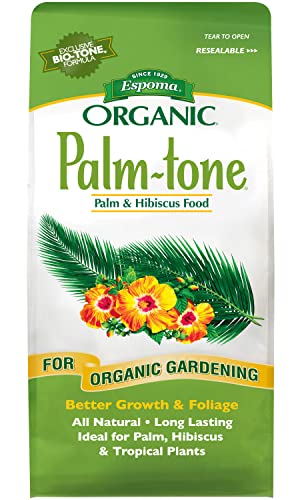
An organic formula from 1929 that greens up palms and hibiscus gently — but it won’t push a fast bloom burst.
Espoma has been making natural organics since 1929, and Palm-Tone reflects that heritage. The 4-1-5 NPK analysis is low and slow — it feeds the soil biology rather than blasting the plant with salts. The bag includes 5% calcium and the proprietary Bio-tone formula, a blend of beneficial microbes (tiny organisms in soil that help roots absorb nutrients). Buyers use it on palms, hibiscus, and tropicals monthly during the growing season. One owner said, “I get tons of blooms on my hibiscus all season long.”
Because it is organic and low-nitrogen, Palm-Tone is safe for repeated use and good for organic gardening. It is also environmentally safe with no sludges or toxic ingredients. On the downside, the low phosphorus content (1) means it won’t trigger a rapid bloom burst the way the Miracle-Gro 10-52-10 powder will. This is a maintenance feed, not a bloom booster.
The honest trade-off: gentle organic nutrients that build long-term soil health but won’t produce the same overnight flower explosion as a high-phosphorus synthetic.
Reach for this if: you are committed to organic gardening or want a steady, safe feed for mixed tropical plantings.
Look elsewhere if: you need a dramatic increase in flower count right now on a struggling plant.
5. Fertilome (11045) Hibiscus and Tropical Plant Food 17-7-10
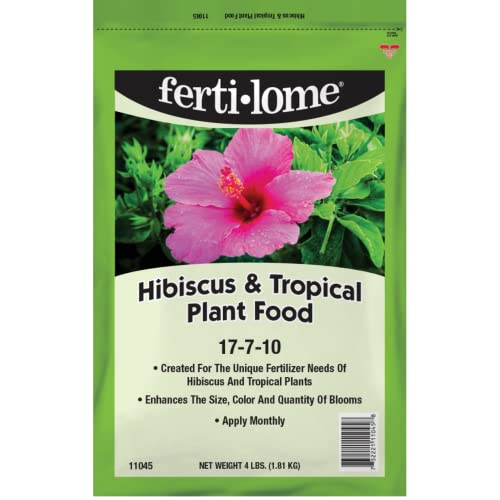
This higher-nitrogen granular (17-7-10) balances leaf health with bloom production — and one owner saw the best blooms in a decade.
This 4-pound bag from Fertilome is built for the grower who wants lush foliage and strong blooms without the extreme phosphorus spike of the Miracle-Gro bloom booster. The 17-7-10 ratio puts more emphasis on nitrogen, which drives green leaf growth, while still providing enough phosphorus and potassium for flowers. The application schedule is clear: feed every other week until blooms appear, then cut back to once a month during bloom time. Shoppers say seeing more blooms than in 10 years after using this, with “huge” flowers and very green, healthy plants.
The value-for-money reviews are mixed — it works well, but some find it pricey for a 4-pound bag. The granules are easy to scatter and water in, and the product is designed specifically for Hibiscus and other tropical flowering plants. Owners in Florida confirm it keeps hibiscus healthy through the hot, humid summer months.
What it does best
- High nitrogen (17) supports vigorous leaf growth
- Clear monthly feeding schedule, easy to follow
- Proven results on long-neglected plants — one owner saw the best blooms in a decade
What holds it back
- Some owners question the price versus the bag size
Best for you if: your hibiscus needs both leaf and flower support, and you want a simple once-a-month granular after initial bloom.
Think twice if: organic ingredients are a priority for you.
6. TPS Nutrients Hibiscus Fertilizer Liquid, 32 oz
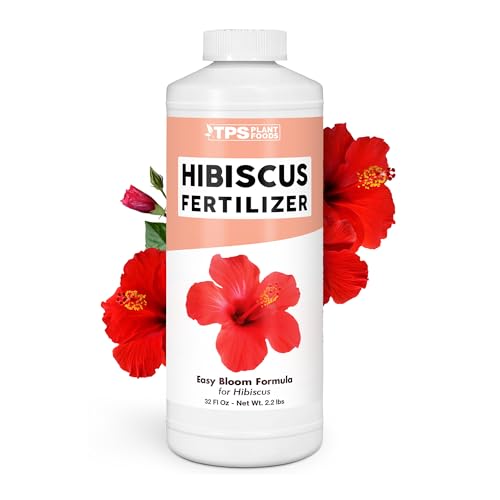
The big 32-ounce jug rescued a bare, sickly hibiscus tree — buds appeared in three weeks.
TPS Nutrients specializes in plant food for tropicals, and this 32-ounce liquid is their flagship hibiscus product. It mixes at a 1:28 ratio, so a single bottle goes a long way — you get 32 gallons of mixed feed. The reviews are packed with comeback stories: one owner’s hibiscus tree was bare with no buds and sickly leaves. After three weeks on this stuff, the first buds appeared. Four to five weeks later, the tree was covered in new leaves and buds, and it went on to produce “huge blooms.” Another owner revived a 6-year-old hibiscus that had stopped flowering — after three applications, leaves grew big and the flowers came back constant. Compared to the HiThrive liquid, this offers more concentrate per bottle.
What people appreciate is the ease of use — just measure and pour into a watering can. It is made in the USA and works for both outdoor and potted hibiscus. The main reservation from owners is the price per volume; it is more expensive than granular options. But if you need a rapid liquid rescue, this delivers.
Your edge: the 32-ounce bottle provides 32 gallons of mixed feed. The speed of visible results — 2-3 weeks from sick to budding — makes it a go-to for troubled plants.
Best for you if: you have a hibiscus in distress and need a fast-acting liquid that works on potted and in-ground plants alike.
pass on it if: you want the lowest cost per feeding — granular options give more feed per dollar.
7. BuildASoil Vegan Bloom Booster & Flower Fertilizer

A 1-pound living-soil powder from a brand serious organic growers trust — but it costs a premium.
BuildASoil has a strong reputation in the organic cultivation world, and this 1-pound Bloom Booster lives up to it. The brand claims it is a vegan formula (no animal byproducts), and it works on hydrangeas, roses, hibiscus, and vegetables. The mixing ratio is 1 teaspoon per gallon for living soil and 1 to 2 tablespoons per gallon for soilless or hydroponic setups (growing plants in water with nutrients instead of dirt). One owner said a single 1-pound bag lasted them over a year, using it both indoors and outdoors. Compared to the Espoma Palm-Tone, this is a concentrated powder for targeted feeding, not a bulk granular.
The catch is the price — one owner described the cost as “ludicrous and insane.” But the quality is hard to dispute, with users reporting massive plant growth and excellent customer service from the company. If you are building a truly organic, living-soil garden and want a bloom booster that aligns with vegan principles, this is a standout.
The honest trade-off: premium organic quality at a premium price. You pay for the science-backed formulation and clean ingredients.
Best for you if: you are a committed organic grower using living soil and want a high-quality, vegan bloom booster.
Look elsewhere if: you are on a tight budget or need to feed a large hibiscus bed — the 1-pound bag is best for a few key plants.
8. BGI Fertilizers HIBISGAIN, 10lb Bag

This 10-pound bag was made for commercial Florida growers — and owners say it tripled blooms on tired plants.
HIBISGAIN was originally developed for the commercial hibiscus growers in Homestead, Florida, and it shows in the formulation. This 10-pound bag of granules is applied directly on top of soil or mulch — no mixing required. The resealable top and convenient cut-out handle make it easy to handle. Buyers report “tripled blooms” and huge flowers after application, with one saying their elderly hibiscus “exploded in growth and is covered with flowers” after one dose. Compared to the Miracle-Gro powder, this is a no-mix granular that delivers a stronger punch per pound for serious collectors.
The only real downside is the smell — it is a strong, manure-like odor that some owners find off-putting. But the results speak for themselves. For the committed hibiscus collector who wants the most effective granular feed on the market, this is the one.
What makes it a grower favorite
- Developed by and for commercial hibiscus growers in Florida
- No mixing — sprinkle directly on soil or mulch
- 10-lb bag is the largest single container, ideal for multiple plants or frequent feeding
The honest downside
- Strong organic smell that some find unpleasant
- Premium price compared to general-purpose bloom boosters
Best for you if: you are serious about hibiscus and want a powerful, no-fuss granular from the growers who know hibiscus best.
Think twice if: odor sensitivity is a concern for you or your neighbors.
9. EarthPods Organic Hibiscus, Plumeria & Bougainvillea Fertilizer Spikes
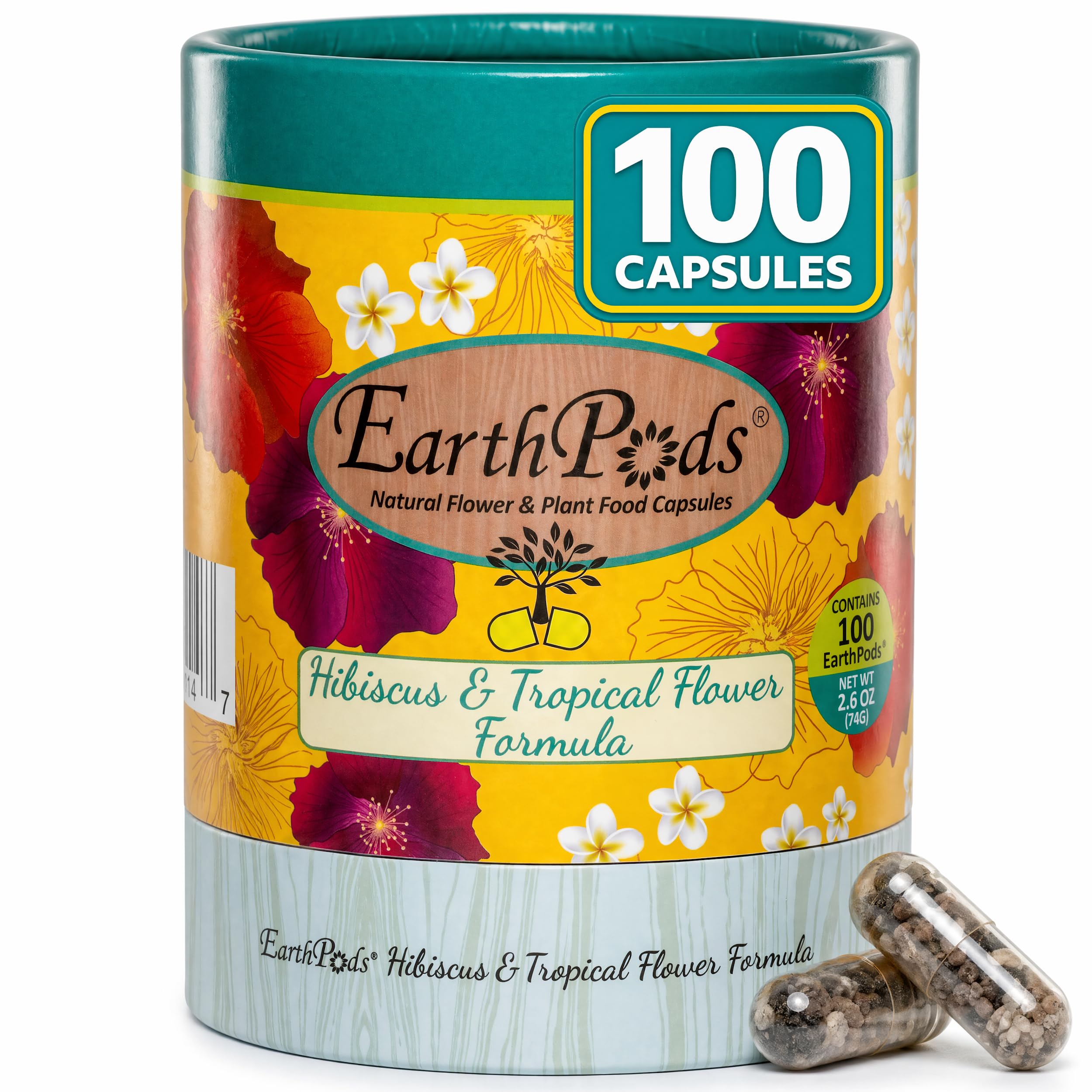
Push a capsule into soil and water — that is the entire feeding routine for 100 feedings.
EarthPods offer the most hands-off feeding method in this guide. The tube contains 100 concentrated organic capsules. You push 1 to 2 capsules into the soil of a small pot, 2 to 4 for a medium pot, and 4 to 8 for a large patio planter, then water normally. Each capsule contains worm castings (earthworm waste rich in nutrients), humic acids (organic compounds that help roots take up minerals), kelp, rock minerals, and beneficial soil biology. The coating dissolves gradually, delivering nutrients directly to the root zone over time. One owner found that a single tube lasted them 18 months before they needed to reorder. Compared to the BGI HIBISGAIN granules, these capsules are mess-free but best for container plants only.
Formulated for potted and landscape tropicals — Hibiscus, Plumeria, Bougainvillea, Bird of Paradise — the pods are gentle enough to not burn roots and the brand claims they won’t harm kids or pets when used as directed. The vegan formula comes in a recyclable paperboard tube with zero single-use plastic. Reviews note it is pricey per feeding compared to bulk granules, but the no-mess, no-measure convenience is a deal-maker for many.
The standout spec: 100 capsules per tube. At 1-2 capsules per small pot, that is potentially a 4-year supply for a single hibiscus.
Reach for this if: you want the absolute easiest feeding method and value organic, slow-release nutrition for your potted tropicals.
Look elsewhere if: you need to feed a large in-ground hibiscus bed — capsules work best for container plants.
Understanding the Specs
NPK Ratio Explained
The three numbers on a fertilizer label stand for Nitrogen, Phosphorus, and Potassium. For hibiscus, you will see ratios from 4-1-5 (gentle maintenance) to 10-52-10 (a powerful bloom booster). The middle number, phosphorus, is the key driver for flowers. A higher middle number pushes more blooms, while a balanced ratio like 10-4-12 supports both leaves and roots.
Liquid vs. Granular vs. Spikes
Liquid feeds enter the plant fastest, making them ideal for correcting deficiencies quickly. Granular feeds release slowly each time you water, providing steady nutrition over weeks. Fertilizer spikes or capsules offer the lowest effort — push them into the soil and let rain or watering dissolve them. Your choice determines how often you need to feed and how fast you see results.
FAQ
How often should I feed my hibiscus?
Can I use a general bloom booster on my hibiscus?
What does 2% iron mean for my hibiscus?
Is organic or synthetic fertilizer better for hibiscus?
How do I fix yellow leaves on my hibiscus?
Can I feed hibiscus during winter?
What is the difference between 10-52-10 and 10-4-12 fertilizer?
Are fertilizer capsules safe for pets?
Final Thoughts: The Verdict
Across the board, the best hibiscus plant food winner is the Miracle-Gro Bloom Booster because it delivers class-leading bloom production at a very reasonable coverage — 2,200 square feet per bag. If you want a rapid liquid rescue for a struggling plant, grab the HiThrive 16oz. And for the serious collector who wants the commercial-grade feed that tripled blooms on a single dose, the BGI HIBISGAIN is the one to reach for.
How We Picked
We do not accept paid placement. Every pick is matched to a real buyer and a real use-case; we do not hands-on test units.
Sources & Methodology
Specifications: manufacturer listings and product documentation. Review insights: verified customer reviews, as of July 2026. Pricing: not shown on this page (it changes often); check the current price via the retailer link.
As an Amazon Associate, Lawn Gear Lab earns from qualifying purchases. This does not affect which products we feature.