
Blackberry bushes don’t behave like garden weeds. Their woody canes and rhizome root systems laugh at a standard broadleaf spray, often resprouting weeks later as if nothing happened. Selecting an effective chemical solution requires a formula that penetrates thick bark and moves deep enough to kill the root crown.
I’m Rikta — the co-founder and writer behind Lawn Gear Lab. This guide is built on market analysis of active-ingredient chemistry, concentrated formulas, and verified owner reports that reveal which products actually stop invasive brambles from returning.
After evaluating dozens of bottles for their active-ingredient ratios, mixing requirements, and real-world success rates on woody perennials, I’ve sorted through the market to help you find the best herbicide to kill blackberry bushes that matches the scale of your infestation.
How To Choose The Best Herbicide To Kill Blackberry Bushes
Blackberry bushes are woody perennials with extensive root systems that store energy. A spray that only burns the leaves rarely kills the crown. The most effective herbicides combine a fast-acting contact agent with a systemic ingredient that translocates to the roots. You need to evaluate the active ingredients, the concentration of the formula, and the application method that fits your property line or pasture.
Active Ingredient Chemistry — Glyphosate, Triclopyr, and Imazapyr
Glyphosate alone (41% concentrate) is often the starting point, but blackberry canes develop a waxy cuticle that sheds water-based sprays. Products that pair glyphosate with imazapyr or triclopyr break through that barrier and move into the rhizomes. A 43% glyphosate plus 0.78% imazapyr ratio, for example, provides a one-two punch that kills the root system rather than just the top growth.
Concentration and Coverage Per Acre
The difference between a 32-ounce quart and a full gallon determines how many square feet you can treat. A 1-gallon jug of 41% glyphosate concentrate can cover up to 25,000 square feet, which suits large fence lines or overgrown fields. If you are dealing with a heavy thicket, a gallon-size jug reduces per-application cost and gives you room to re-treat stubborn patches without running out mid-spray.
Rainfast Timing and Visible Results Window
Rain within hours of spraying washes the chemical off the leaves before it can be absorbed. Look for formulas advertised as rainproof in 30 minutes to 2 hours. Blackberry bushes typically show wilting within 2-4 days, but complete root death may take 2-3 weeks. Patience during that window is critical — cutting the canes too early can stop the translocation process.
Quick Comparison
On smaller screens, swipe sideways to see the full table.
| Model | Category | Best For | Key Spec | Amazon |
|---|---|---|---|---|
| Roundup Poison Ivy Plus Tough Brush Killer₂ | Brush Killer | Established thickets & poison ivy mix | Triclopyr+diquat+fluazifop blend | Amazon |
| Control Solutions Eraser Max Super Concentrate | Super Concentrate | Deep root kill with imazapyr | 43.68% glyphosate + 0.78% imazapyr | Amazon |
| Hi-Yield Killzall 365 | Total Vegetation | Bare-ground brush control | 32 oz treats 4,300 sq ft | Amazon |
| Compare-N-Save 75324 | Glyphosate | Large-area general weed control | 1 gallon covers 25,000 sq ft | Amazon |
| Control Solutions Eraser Weed & Grass Killer | General purpose | High-volume perimeter spraying | 1 gallon makes up to 21 gallons mix | Amazon |
| Remedy Specialty Herbicide | Pasture/Specialty | Selective brush control in pasture | Triclopyr concentrate for woody stems | Amazon |
| Southern Ag Crossbow Specialty Herbicide | Specialty Brush | Large-acrease woody brush & trees | 1 gallon treats up to 2.23 acres | Amazon |
In‑Depth Reviews
1. Roundup Poison Ivy Plus Tough Brush Killer₂ Concentrate

This formula uses a three-ingredient cocktail — triclopyr, fluazifop-p-butyl, and diquat dibromide — that targets both broadleaf brush and grassy weeds. The diquat provides rapid leaf burn visible within hours, while the triclopyr translocates to the root system of woody plants like blackberry. Users report that the rainfast window of 30 minutes is particularly useful when spraying larger thickets where weather can shift quickly.
This concentrate specifically lists wild blackberry on the label, which removes the guesswork about whether the chemistry will work on your infestation. The mixed solution covers roughly 1,500 square feet per gallon, making it a good fit for a medium-sized invasion along a fence line or trail edge. The product also works on poison ivy, kudzu, and sumac, which makes it a versatile addition to a single-sprayer arsenal.
Some owners note that the concentrate bottle is smaller than expected for the price, and users with an acre or more may wish for a larger jug. The hack-and-squirt method, where you spray the chemical directly into cuts made in the cane, was cited by several users as the most effective delivery on thick-stemmed blackberry canes.
What works
- Visible leaf damage within hours helps confirm the spray is sticking
- Rainproof in 30 minutes reduces weather worries during application
What doesn’t
- Concentrate comes in a 32 oz bottle only, not available in a gallon size for large acreages
- Strong chemical odor requires a respirator and full coverage during mixing
2. Martin’s Eraser Max Super Concentrate
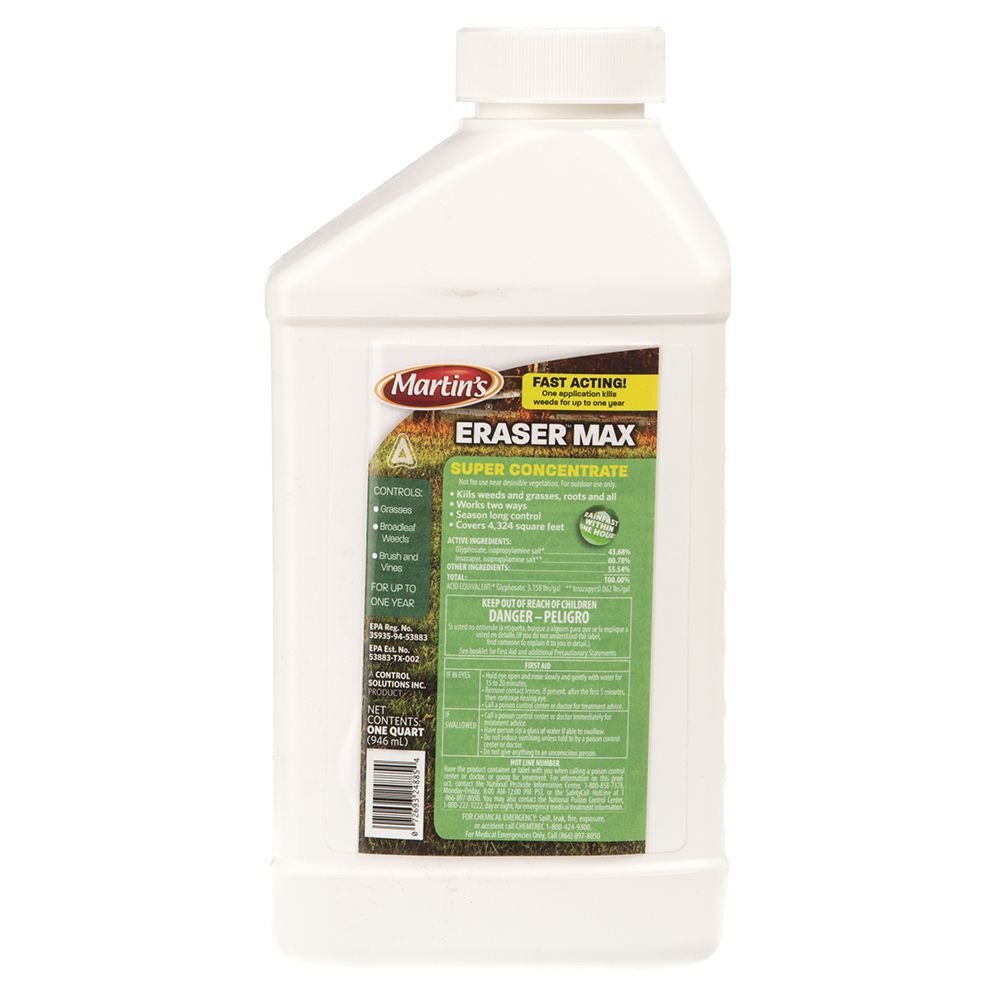
The inclusion of 0.78% imazapyr alongside 43.68% glyphosate is what makes this super concentrate different from a standard glyphosate-only spray. Imazapyr is a residual herbicide that remains active in the soil for a time and is particularly effective on deep-rooted woody species. User reports confirm this formula handles cudzu and other invasive brush that has resisted other sprays for years.
The oil-based formulation (listed as “Item Form: Oil”) helps the spray adhere to the waxy canes of blackberry bushes better than a purely aqueous concentrate. The 32-ounce quart is highly concentrated — mixing rates are low per gallon, meaning a single bottle goes further than a standard premix. Users note that results take roughly two weeks to fully show, but the die-off is complete down to the root crown.
Pay attention to the target species listed as “Insects” on the manufacturer data — this appears to be a packaging quirk rather than a functional limitation. Real-world usage on fence lines, gravel drives, and overgrown lots shows consistent total vegetation control. The imazapyr component means you should not spray near desirable trees or shrubs, as the residual activity can affect untreated roots that extend into the treated zone.
What works
- Oil-based formula clings to waxy canes and resists runoff
- Imazapyr provides residual soil activity that prevents regrowth
What doesn’t
- Residual activity makes it unsuitable for use near tree root zones
- Results take up to two weeks to fully manifest on large thickets
3. Hi-Yield Killzall 365

Killzall 365 positions itself as a bare-ground vegetation management tool. The 32-ounce bottle treats up to 4,300 square feet when mixed at the brush-control rate of 7.4 ounces per gallon of water. This is a solid solution for clearing out blackberry brambles around a shed, back fence, or neglected corner of the property where you want no regrowth for the season.
Users highlight rainfast characteristics as a strong point — the formula holds even if rain falls the following day. The product label explicitly states it is not for use on lawns, which aligns with its role as a total vegetation killer. Multiple owners mentioned that stubborn weeds may require a second application, but the per-bottle cost keeps repeated treatments affordable.
One limitation reported by a long-term user: the claim of full-year bare-ground control may require multiple sprays through the growing season. Two bottles were needed to maintain a weed-free gravel drive over a full summer. For blackberry bushes specifically, a double application spaced three weeks apart appears to be the most reliable schedule based on owner feedback.
What works
- Rainfast properties hold well even with next-day precipitation
- Low entry cost makes it easy to reapply without budget strain
What doesn’t
- Does not sterilize the ground for a full year as some users expected
- Moss and certain stubborn weeds may survive the first spray
4. Compare-N-Save 75324 Herbicide
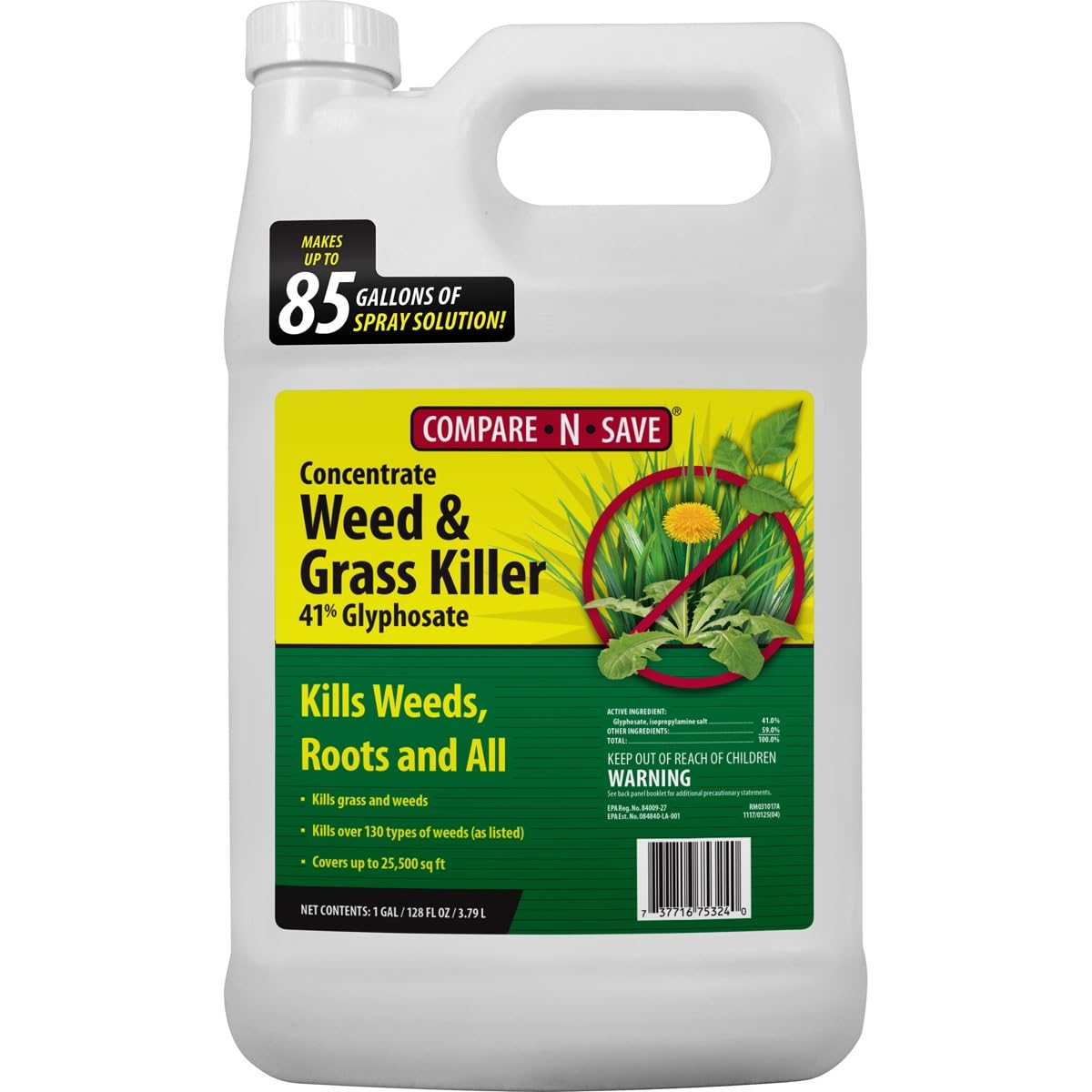
This 1-gallon jug delivers 41% glyphosate for a price that consistently undercuts the major brand names. With a coverage area of 25,000 square feet, it is the clear choice when you are facing a large blackberry thicket that requires hundreds of gallons of mixed spray. The concentrate makes up to 85 gallons of ready-to-use solution, providing enough volume to soak thick canes repeatedly if necessary.
Users report that the chemical works effectively but slowly — visible results appear in two to four days, but complete root kill takes several weeks. Patience is a recurring theme in owner feedback; cutting or pulling the dead canes too early can leave root fragments that resprout. The jug packaging has drawn complaints about loose caps during shipping, so inspect the container on arrival and transfer to a secure sprayer tank immediately.
The primary drawback is price creep. Long-term users report that the cost has more than doubled over five years, making local farm-supply store pricing a potential alternative. Despite the rising cost, the per-gallon cost per thousand square feet remains favorable compared to smaller quart-sized brush-specific formulas.
What works
- Exceptional value per square foot for large-area applications
- Makes up to 85 gallons of mixed spray from one jug
What doesn’t
- Pure glyphosate may struggle on mature blackberry without a surfactant
- Price has increased significantly in recent years; shop around first
5. Control Solutions Inc. Eraser Weed & Grass Killer Concentrate
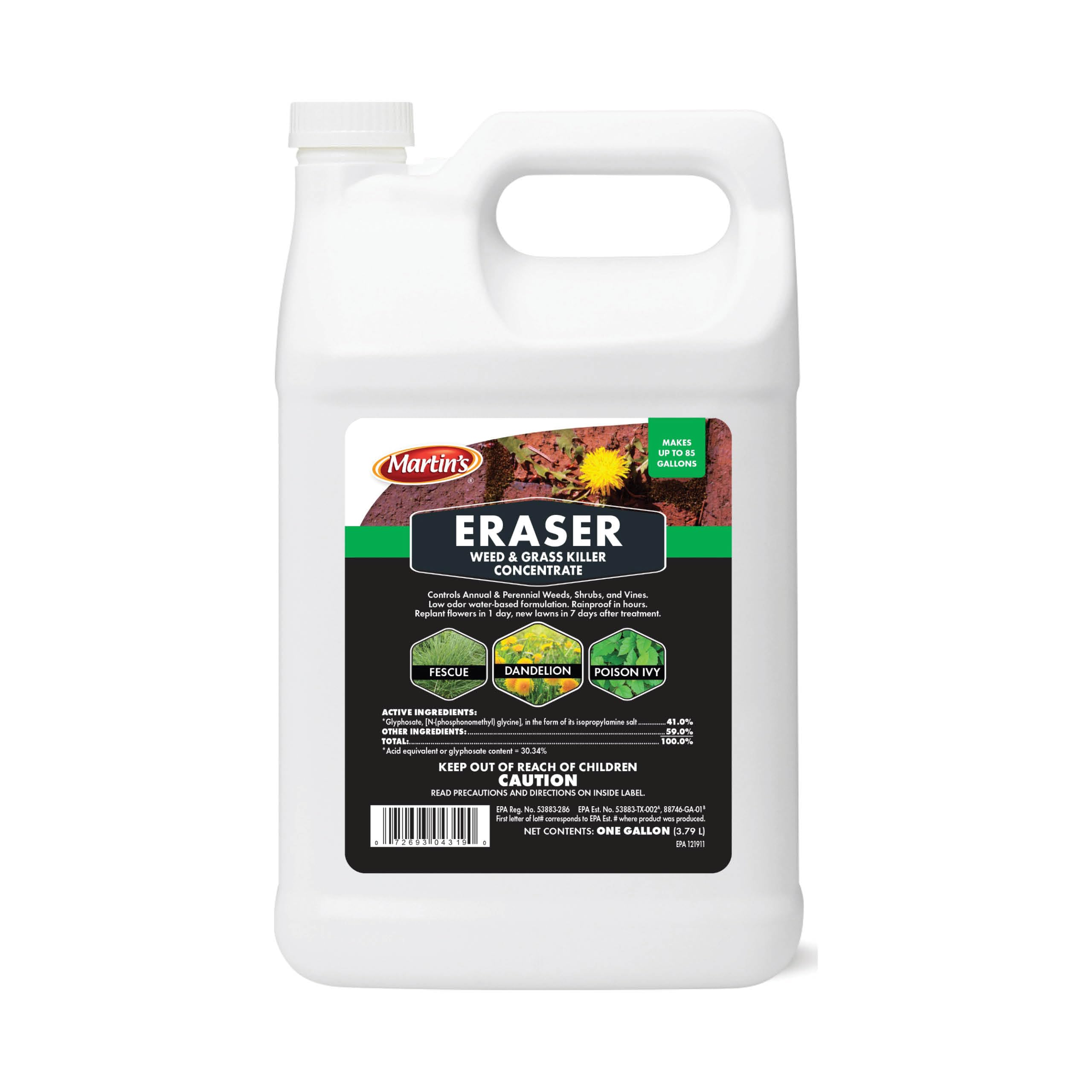
Two years of consistent owner praise backs this 1-gallon glyphosate concentrate from Control Solutions. Mixed at 8 ounces per 4 gallons of water with a surfactant, users report wilting by day two and full browning by day three on grass and weeds. The 1-gallon jug makes up to 21 gallons of mixed spray, providing a solid bridge between the smaller consumer concentrates and the true bulk jugs.
Owner feedback over 18 years of use suggests the formula may have been slightly more aggressive in earlier batches — some users note that visible results now take about three days rather than the next-day die-off they saw previously. Still, the product remains described as “as good or better than any other brand” by long-term users, and the per-ounce value is strong for the mid-range price tier.
The nature of this concentrate is general-purpose, so blackberry-specific results will depend on spray coverage and the addition of a non-ionic surfactant. The chemical relies entirely on glyphosate without auxiliary brush-specific actives like triclopyr, so thicker canes may need the hack-and-squirt method or a follow-up treatment three weeks later.
What works
- Proven long-term efficacy across decades of user reports
- Fast visible browning on grass and weeds within 2-3 days
What doesn’t
- Appears slightly less potent than earlier batches according to repeat buyers
- No specialized brush killer actives; requires surfactant for woody stems
6. Remedy Specialty Herbicide
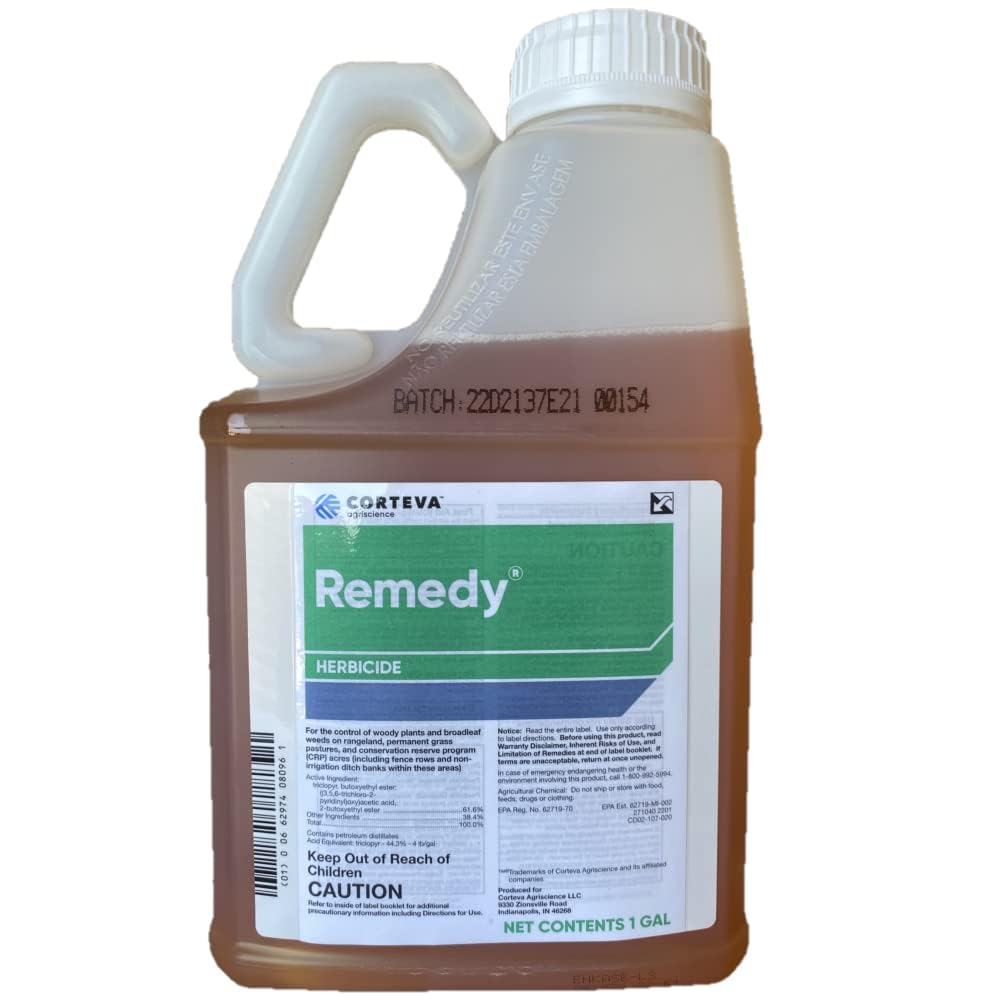
This is the heavy artillery for blackberry control. Remedy uses triclopyr as its active ingredient — the same chemistry found in many professional pasture-restoration programs. The product is designed for rangeland, fence lines, and areas where you need to control woody brush without killing the surrounding grass. Owners report absolute annihilation of cogon grass, multiflora rose, and blackberry bushes when mixed with diesel at a 1:3 ratio for basal bark application.
The selective nature of triclopyr means you can spray around pasture grass without a total vegetation kill, making this a smarter choice for grazing land or hay fields. User feedback highlights that small trees and established brush take roughly two to three weeks to die completely, but the results are long-lasting. The low-odor formulation is appreciated by those mixing large batches.
The price is the biggest consideration — this is an investment, and one reviewer noted that their previous cheaper product was more suitable for their specific weed spectrum. For targeted blackberry and invasive tree control on acreage, the per-acre cost is justifiable, but casual homeowners with a small patch may find the high concentration excessive for a single spray session.
What works
- Selective formula kills woody brush without harming pasture grass
- Effective on blackberry, cogon grass, locust trees, and multiflora rose
What doesn’t
- High upfront cost makes it best suited for acreage-scale infestations
- Basal bark application requires diesel mixing for best results
7. Southern Ag Crossbow Specialty Herbicide

Crossbow combines triclopyr with 2,4-D, creating a broader-spectrum brush killer that handles woody species like blackberry while still controlled around grass. The 1-gallon bottle makes up to 96 gallons of spray solution, covering up to 2.23 acres per gallon — massive coverage that suits large properties with overgrown fence rows or invasive thickets. User reports describe complete kill of 8-foot weeds, vines, and small trees within 48 hours, with full die-off in one week.
One of the standout features is the 3-day soil half-life cited by users, which is significantly shorter than some residual herbicides. This makes Crossbow a better option for areas where you plan to replant grass or native vegetation within the same season. Application by stem painting or foliar spray both work, and the formula is reported as effective on creeping charlie, ground ivy, and poison ivy.
The biggest variable appears to be soil type and climate — effectiveness on ground ivy ranged from 85% kill in Ohio soil down to 30-35% in rich Illinois soil. Strong odor is noted as a consideration, and rain within 1-2 days reduces efficacy significantly. For blackberry bushes specifically, applying during a warm, dry spell with good coverage gives the best odds of a single-application kill.
What works
- Short soil half-life allows replanting relatively soon after treatment
- Triclopyr+2,4-D combo hits broadleaf brush and woody stems hard
What doesn’t
- Strong chemical odor requires good ventilation and protective gear
- Efficacy varies by soil type; rich organic soils may reduce kill rate
Hardware & Specs Guide
Surfactant Requirements for Woody Cane Penetration
Blackberry canes are coated with a waxy cuticle that repels water-based sprays. A non-ionic surfactant at 0.25% to 1% of the mixed volume reduces surface tension and allows the herbicide droplets to flatten and adhere rather than bead off. Products that are oil-based (like Martin’s Eraser Max) inherently resist runoff better than aqueous concentrates, but any general glyphosate jug will benefit from a surfactant additive for blackberry application.
Mixing Ratio and Volume Per Square Foot
A standard brush-kill mix for blackberry is 6-8 ounces of concentrate per gallon of water, applied at a rate of 1 gallon per 150-300 square feet depending on the density of the thicket. The 1-gallon jugs (Compare-N-Save, Eraser Weed & Grass Killer) provide flexibility for large zones, while the 32-ounce quarts are better suited for targeted patches. Always check the label for the specific brush-kill rate — using the general weed rate on blackberry often results in partial kill.
FAQ
Will glyphosate-only herbicide kill established blackberry bushes?
How long after spraying blackberry bushes can I plant grass in the same area?
What is the best application method for blackberry bushes — foliar spray or cut-stump treatment?
Final Thoughts: The Verdict
For most gardeners, the herbicide to kill blackberry bushes winner is the Roundup Poison Ivy Plus Tough Brush Killer₂ because its triclopyr+diquat blend provides visible leaf damage within hours while the systemic chemistry travels deep into the root system. If you need total root sterilization and don’t plan to replant for a season, grab the Martin’s Eraser Max for its residual imazapyr power. And for large pasture-scale blackberry control without killing the surrounding grass, nothing beats the Remedy Specialty Herbicide.