
Specs are compiled from manufacturer listings and verified buyer reviews and can change over time — please confirm the key details on the product page before buying.
Choosing the wrong soil is the fastest way to watch your basil, mint, and rosemary struggle instead of thrive. A bag of cheap dirt can be packed with sticks, wood chips, or synthetic fertilizers that hurt delicate herb roots rather than help them. The right herb soil gives you a light, fluffy mix that drains well and feeds your plants without harsh chemicals, so you get steady growth and better flavor from every harvest.
I’m Rikta — the founder and writer behind Lawn Gear Lab. This guide is built by comparing the manufacturers’ published specifications and the patterns across verified customer reviews, so you get each pick’s real strengths and trade-offs instead of marketing spin.
Whether you are planting a windowsill garden or filling outdoor containers, the best herb soil balances moisture retention and aeration so roots can breathe and grow deep without sitting in water.
Quick Picks
- Coast of Maine Bar Harbor Blend — Best Overall
- Brut Organic Potting Soil — Best Value
- FoxFarm Ocean Forest Potting Soil — Premium Pick
- Miracle-Gro Potting Mix (3-Pack) — Reliable All-Rounder
- Espoma Organic Potting Mix — Indoor Favorite
- Midwest Hearth Premium Potting Mix — Budget Champion
How To Choose The Best Herb Soil
Herbs need a soil that drains quickly yet holds enough moisture between waterings. The wrong mix can cause root rot or stunt growth, so knowing what to look for in the ingredients list is key.
Look for Light, Fluffy Texture
Herb roots are sensitive and grow best in a loose, airy mix. Ingredients like perlite (tiny white volcanic rocks) and vermiculite (sponge-like mineral particles) create pore space for air and water. A soil that feels heavy or clumps into a hard brick will suffocate roots over time.
Organic Ingredients Matter
Herbs absorb flavors from the soil. A mix with synthetic fertilizers can produce bland, chemically-tasting leaves. Organic ingredients like worm castings (worm manure), kelp meal (dried seaweed), and compost feed the soil slowly and naturally, which supports richer essential oils in your basil, oregano, and thyme.
Check the Bag Size
Bag volume is measured in quarts or cubic feet. A standard 8-quart bag fills about two 8-inch pots. If you have multiple containers or a raised bed, a 16-quart or larger bag saves you from buying multiple small bags.
Quick Comparison
| Model | Best For | Volume | Weight | Key Ingredient | Amazon |
|---|---|---|---|---|---|
| Coast of Maine Bar Harbor Blend | Lush container gardens | 16 Quarts | 14 Pounds | Lobster & crab shell meal | Amazon |
| Brut Organic Potting Soil | Microbe-rich root feeding | 21 Quarts | — | Worm castings & trace minerals | Amazon |
| FoxFarm Ocean Forest | Serious gardeners & seedlings | 1.5 Cubic Feet | 34 Pounds | Aged forest products | Amazon |
| Miracle-Gro Potting Mix | Budget-friendly reliability | 8 qt. (3-Pack) | — | Feeds up to 6 months | Amazon |
| Espoma Organic Potting Mix | Indoor herb pots | 8 Quarts | 4.4 Pounds | Myco-tone mycorrhizae | Amazon |
| Midwest Hearth Premium Mix | Seed starting & delicate roots | 8 Quarts | 1.25 Kilograms | Balanced pH formula | Amazon |
In‑Depth Reviews
1. Coast of Maine Bar Harbor Blend
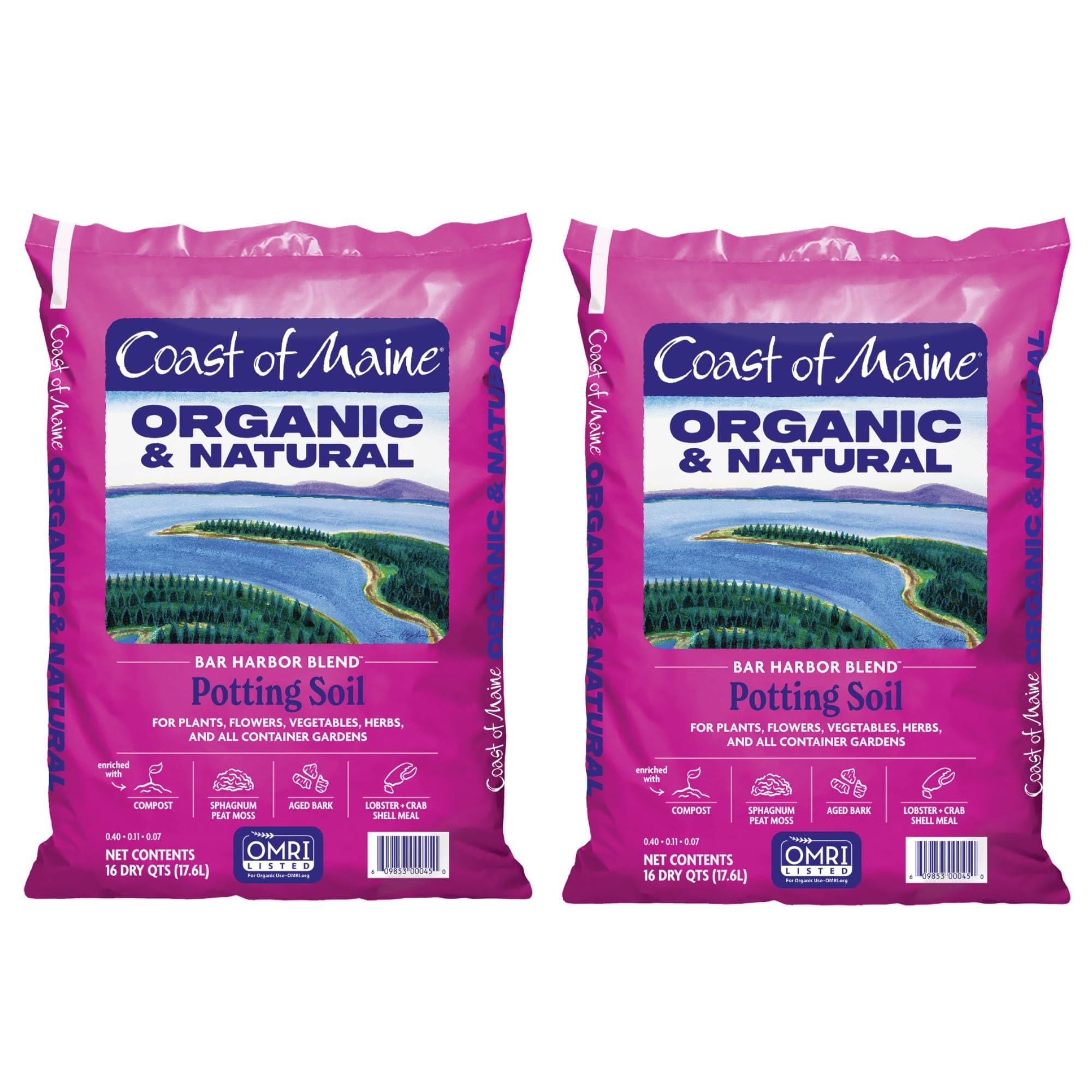
A nutrient-rich powerhouse that feeds herbs with ocean-borne ingredients.
This mix uses lobster and crab shell meal alongside kelp meal and compost — a combination you do not see in regular potting soil. Those seafood-based ingredients provide natural slow-release nitrogen, so your basil and parsley get steady food without you having to add extra fertilizer. The bag weighs 14 pounds and holds 16 quarts, giving you enough volume to fill several pots or a medium raised bed. Buyers report that two bags were enough to mound up 8 potato plants, with extra leftover for 2 more planters, showing how far this soil stretches.
Unlike the Espoma mix at 4.4 pounds, the Coast of Maine blend weighs 14 pounds — much heftier, but that weight comes from dense compost and shell meal rather than filler. The dark, rich texture feels more like garden compost than a lightweight bag of peat. Reviewers also mention there are no unexpected weeds sprouting from the soil, which is a common frustration with cheaper mixes.
Ocean-fresh feeding: The lobster shell and kelp combination delivers a steady nutrient release that supports vigorous leaf growth — exactly what herbs need for repeated harvesting.
One honest warning: At 14 pounds, this bag is noticeably heavier than other 16-quart options, so be ready to do a bit of lifting if you are hauling it to a raised bed.
Reach for this if: you want a single bag that handles containers, raised beds, and window boxes without needing extra amendments.
Look elsewhere if: you need a lighter bag for carrying up stairs or to a balcony.
2. Brut Organic Potting Soil
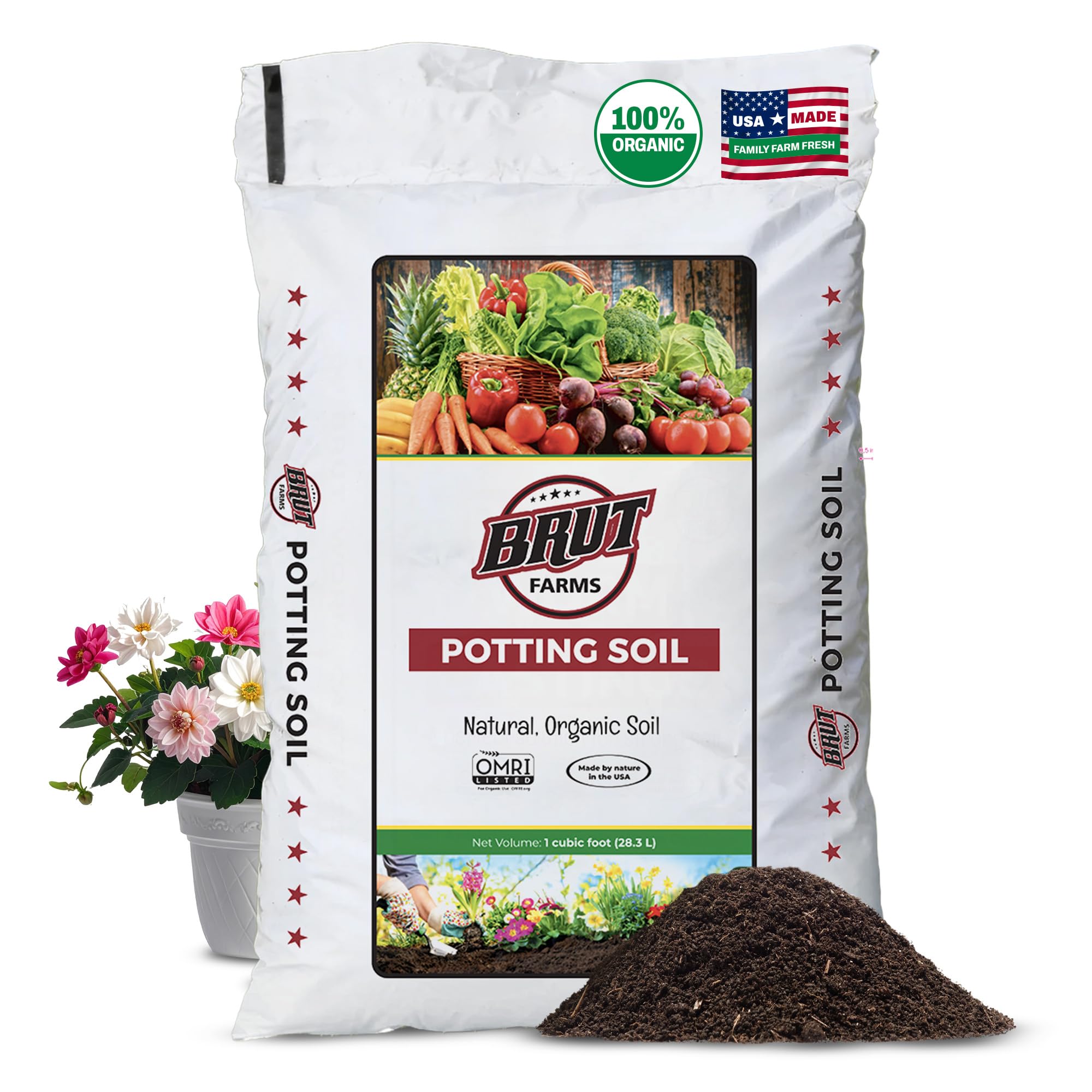
A huge bag of microbe-rich soil that feeds roots from the bottom up.
You get the largest bag on our list at 21 quarts, compared to the Espoma mix at 8 quarts. The secret is microbe-rich worm castings blended with trace minerals like Azomite and kelp, which feed plants directly at root level. The mix is naturally pH balanced between 6.3 and 6.5, the balance for most herbs like rosemary, thyme, and oregano that prefer slightly acidic conditions. One reviewer noted that their Cara Cara orange and Lapins cherry trees showed deep green leaves and new growth within 2 days of transplanting, which shows how quickly the nutrients activate.
Brut is OMRI listed (certified for organic use) and contains no sticks, wood chips, or artificial additives — a common complaint with budget soils. A fair warning from buyers: the soil contains fish and bone meal, which can attract flies that lay eggs if you leave the bag open outdoors. A top layer of sand or gravel solves that problem easily.
Root-level nutrition: The combination of worm castings and Azomite gives your herbs access to trace minerals they normally get from deep garden soil, which is hard to replicate in a container.
One honest warning: If you are planting indoors, be aware the organic ingredients can draw flies if the soil surface stays damp and uncovered.
Best for: gardeners with multiple large containers who want a filler-free organic mix that goes further per bag.
skip it if: you are sensitive to bugs near your indoor plants — a gravel top layer is essential.
3. FoxFarm Ocean Forest Potting Soil
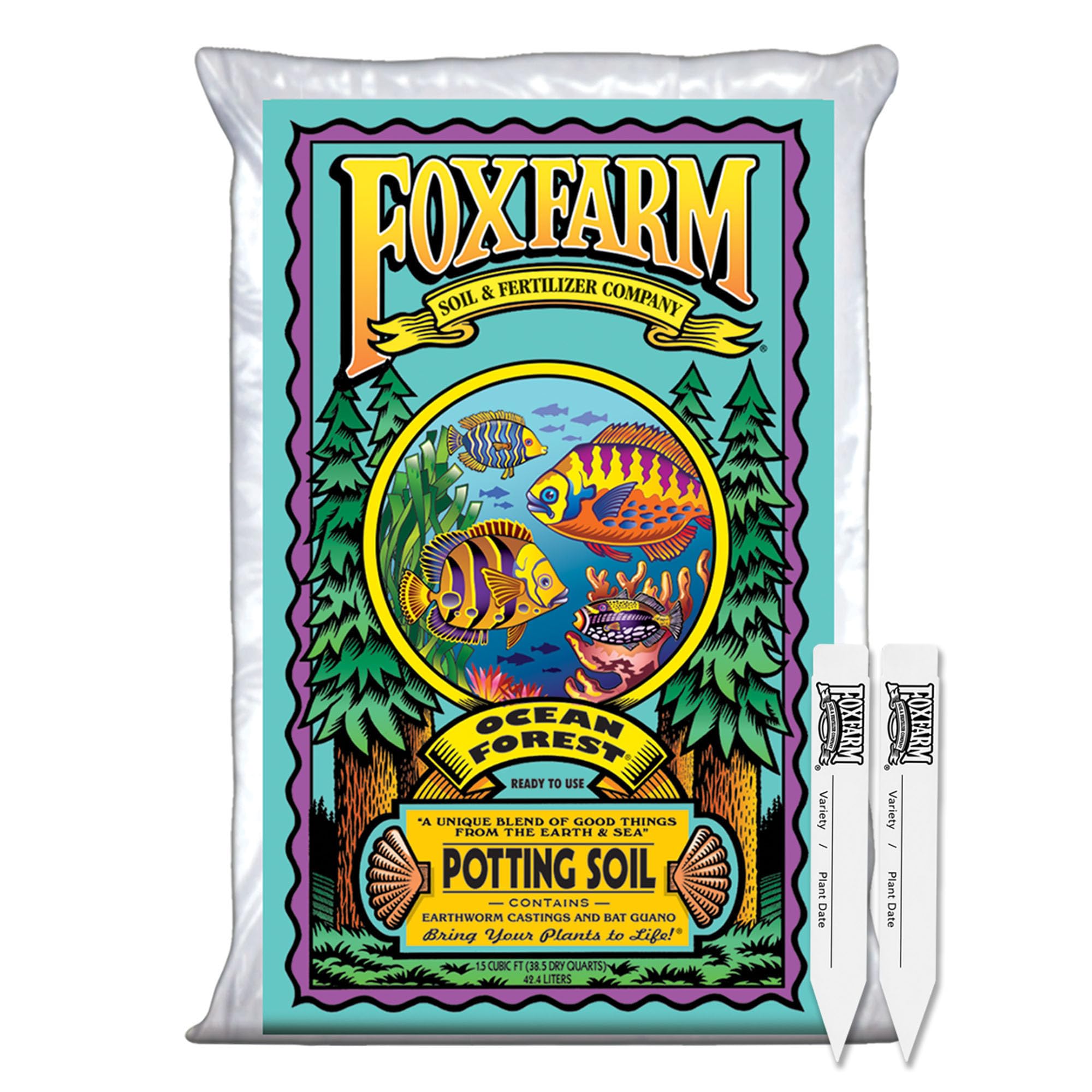
The professional-grade soil that serious herb gardeners swear by for big yields.
FoxFarm Ocean Forest is a name that comes up constantly in gardening circles, and the 1.5 cubic feet bag (about 12 gallons) gives you enough volume for large projects. The ingredients list reads like a gourmet recipe for soil: aged forest products (50-60%), sphagnum peat moss, perlite, sandy loam, fish emulsion, crab meal, shrimp meal, earthworm castings, kelp meal, and oyster shell. Sandy loam is a key addition — it provides excellent drainage that helps prevent root rot, a common killer of container herbs. At 34 pounds, this is the heaviest bag here, but one buyer mentioned that Fox Farm plants grew significantly larger than Miracle-Gro plants in a side-by-side test with the same seeds and watering schedule.
Unlike the Midwest Hearth mix (1.25 kilograms), this bag is in a completely different weight class, and the difference shows in the quality of the ingredients — there are no cheap fillers. The soil absorbs water immediately upon watering, which means less runoff and more moisture staying where roots need it. Reviewers agree it beats other brands in quality, though the price has been climbing recently.
What makes it special
- Premium ingredient blend includes fish emulsion and oyster shell for trace minerals
- Sandy loam provides superior drainage that prevents waterlogged roots
- Comes with two plant tags for labeling herbs
The trade-offs
- Heaviest bag (34 pounds) — not ideal if you carry soil from a car to a backyard
- Premium price point that has been increasing
Grab it for: serious container gardens where you want one bag to handle everything from seedlings to mature rosemary bushes.
Think twice if: you only need soil for a couple of small pots — the bag is large and heavy to store.
4. Miracle-Gro Potting Mix (3-Pack)

The household name that feeds herbs for months without extra fertilizer.
This 3-pack of 8-quart bags gives you 24 quarts total, and each bag feeds plants for up to 6 months — so you can plant your basil in spring and not think about fertilizer until fall. Miracle-Gro claims this mix grows plants twice as big versus unfed plants, and while the claim depends on the plant and conditions, the built-in fertilizer is real. One reviewer notes these smaller bags are easier to handle than lugging one giant bag, which is a practical benefit if you fill pots gradually. It works well for outdoor containers including herbs, vegetables, annuals, and shrubs.
If you compare this to the FoxFarm Ocean Forest, the key difference is that Miracle-Gro uses synthetic fertilizers for its nutrient charge rather than natural ingredients like fish emulsion. That means it is less of an “organic” choice, but for many home gardeners, the convenience of a 6-month feed is a real time-saver. The texture is well draining and does not pack down into a hard mass, so water reaches roots easily — a point multiple reviewers appreciated.
Set-and-forget feeding: The built-in fertilizer lasts six months, meaning you can water and harvest without mixing liquid fertilizers or remembering to top-dress.
One honest warning: Because the nutrients come from synthetic sources, it is not suitable for organic gardening or for those who want 100% natural ingredients.
Reach for this if: you want a reliable, no-fuss bag for outdoor containers and do not mind synthetic fertilizers.
Look elsewhere if: organic certification or all-natural ingredients are a must for your herb garden.
5. Espoma Organic Potting Mix

A lightweight organic mix that brings mycorrhizal fungi to herb roots.
Espoma includes something most soils skip: Myco-Tone, a proprietary blend of endo and ecto mycorrhizae (beneficial fungi that attach to roots and help them absorb water and nutrients). For indoor herbs like chives, parsley, and mint, this can make a real difference in a confined pot where root space is limited. The 8-quart bag weighs just 4.4 pounds — the lightest on our list — making it ideal for carrying to a windowsill or balcony. The mix includes sphagnum peat moss, humus, perlite, and organic ingredients like earthworm castings, alfalfa meal, kelp meal, and feather meal.
Compared to the Coast of Maine Bar Harbor Blend (14 pounds), the Espoma bag weighs 4.4 pounds — much lighter and easier to handle, but also less volume (8 quarts vs. 16 quarts). One owner reported a concern about a date on the bag (4/19/22) versus the purchase date (11/12/22), so it is worth checking the bag freshness when it arrives. For small containers and indoor pots, the lighter weight and mycorrhizae boost make it a smart choice.
Best for: indoor herb pots and small containers where you want organic ingredients and a lightweight bag you can carry easily.
pass on it if: you need a larger volume for outdoor raised beds — you would need multiple bags.
6. Midwest Hearth Premium Potting Mix

A budget-friendly blend with the light, fluffy texture herbs love.
For the price, this 8-quart bag gives you the same professional formulation that commercial growers use, with peat moss, perlite, and vermiculite for optimal aeration and moisture retention. The pH is controlled at balanced levels suitable for a broad spectrum of plants, which takes the guesswork out of soil acidity for different herbs. One buyer described it as having a “light, fluffy texture, perfect moisture retention and drainage” — exactly what you want for sensitive herb roots. It is also pH controlled so you can use it for different herb varieties without worrying about acidity levels.
This bag weighs just 1.25 kilograms, making it the lightest option. That light weight, however, means it is less nutrient-dense than organic mixes like Espoma or Coast of Maine. You will likely need to add liquid fertilizer after a few weeks of growth. Owners mention the bag is resealable, which is a small but useful touch if you only use a portion of the soil at a time. It works great as a seed starter for petunias and germinates seeds well, according to verified buyers.
Reach for this if: you want an affordable, lightweight mix for starting herb seeds or small pots and you are comfortable adding fertilizer later.
Look elsewhere if: you want a pre-fertilized organic soil that feeds herbs for months without extra work.
Understanding the Specs
Volume and Weight
Bag volume tells you how many pots you can fill. A standard 8-quart bag fills about two 8-inch containers. Larger bags like 16 quarts or 1.5 cubic feet are better for raised beds or multiple pots. Heavier bags (over 10 pounds) usually contain more compost and dense organic matter — that is good for nutrients but harder to carry. The weight comes from real ingredients, not filler.
Key Ingredients
Perlite (tiny white volcanic rocks) and vermiculite (brown sponge-like particles) create air pockets so roots can breathe and water drains freely. Worm castings and compost provide slow-release nutrients. Mycorrhizae (beneficial fungi) attach to roots and help them absorb more water and minerals. Avoid soils with large sticks or wood chips — those are cheap fillers that do not feed your herbs.
FAQ
Can I use regular potting soil for herbs?
What is the best soil for indoor herb gardens?
How often should I replace herb soil?
Do herbs need special soil or just regular potting mix?
What does perlite do in herb soil?
Can I use garden soil instead of potting mix for herbs?
How many quarts of soil do I need for a herb planter?
What does organic certification mean for herb soil?
Is Miracle-Gro soil safe for herbs?
Why does my herb soil smell bad after watering?
Final Thoughts: The Verdict
For most people, the best herb soil winner is the Coast of Maine Bar Harbor Blend because it combines nutrient-rich lobster and crab shell meal with compost and perlite in a 16-quart bag that handles everything from window boxes to raised beds without needing extra fertilizer. If you want the purest filler-free organic mix with the largest volume, grab the Brut Organic Potting Soil at 21 quarts with microbe-rich worm castings. And for serious container gardening where one bag does it all, the FoxFarm Ocean Forest delivers a professional-grade blend with aged forest products and excellent drainage that seasoned herb growers trust.
How We Picked
We do not accept paid placement. Every pick is matched to a real buyer and a real use-case; we do not hands-on test units.
Sources & Methodology
Specifications: manufacturer listings and product documentation. Review insights: verified customer reviews, as of July 2026. Pricing: not shown on this page (it changes often); check the current price via the retailer link.
As an Amazon Associate, Lawn Gear Lab earns from qualifying purchases. This does not affect which products we feature.