
Specs are compiled from manufacturer listings and verified buyer reviews and can change over time — please confirm the key details on the product page before buying.
Choosing the right compost for your herbs is the single most important step you can take for a thriving harvest. The wrong mix can leave you with weak plants, poor flavor, or even root burn. This guide cuts through the marketing to show you exactly which composts deliver real results for your basil, mint, rosemary, and cilantro — based on what actually works in real gardens.
I’m Rikta — the founder and writer behind Lawn Gear Lab. This guide is built by comparing the manufacturers’ published specifications and the patterns across verified customer reviews, so you get each pick’s real strengths and trade-offs instead of marketing spin.
Whether you are starting seeds indoors or amending a raised bed outdoors, these nine composts represent the best options available today for the herb garden compost category, chosen for their nutrient profiles, texture, and proven results with common culinary herbs.
Our Picks at a Glance


How To Choose The Best Herb Garden Compost
Herbs have a reputation for being easy to grow, but they are surprisingly picky about their soil. Most culinary herbs — think basil, oregano, thyme, and sage — prefer a leaner, well-drained mix than your tomatoes or peppers would enjoy. The wrong compost can make them grow leggy, reduce the essential oil content that gives herbs their flavor, or simply rot the roots in overly wet soil.
Texture: Fine vs. Chunky
Herbs with tiny seeds (basil, oregano, thyme) need a fine-textured compost for good seed-to-soil contact during germination. Chunky compost with large bark pieces or sticks can bury seeds too deep or leave air pockets that dry out tender roots. For container herbs, look for a screened, uniform consistency. For raised beds and in-ground gardens, a slightly coarser texture improves drainage and aeration over the season.
Nutrient Profile: Gentle and Balanced
Unlike heavy-feeding vegetables, most herbs thrive with a moderate, slow-release nutrient supply. A compost that is “hot” (high in fresh nitrogen) can cause lush foliage with weak flavor — exactly the opposite of what you want in pesto or tea. Fully composted manure-based or plant-based composts release nutrients slowly without burning tender roots, giving you steady growth and concentrated flavor.
Odor: A Real Concern for Indoor Gardens
If you grow herbs on a kitchen windowsill or indoor grow shelf, odor matters. Some excellent composts smell like rich earth; others can be aggressively barnyard-like. The best indoor herb composts are fully composted and processed to minimize smell, so you are not airing out the kitchen every time you water your basil. Odor-free formulas are a priority for container and indoor herb gardeners.
Quick Comparison
| Model | Best For | Volume | Weight | Base Material | Amazon |
|---|---|---|---|---|---|
| Espoma Organic Land and Sea★ Best Overall | All-purpose herb feeding | 1 Cubic Foot | 24 Pounds | Lobster & Crab Meal | Amazon |
| Michigan Peat Baccto Wholly CowBest Value | Large raised beds & lawns | 40 Quarts | 34 Pounds | Peat & Manure | Amazon |
| Ribbon Organics OMRIPremium Pick | Premium containers | 7.48 Gallons | 35 Pounds | Plant-Based | Amazon |
| R&M Organics | Indoor & outdoor versatility | 0.31 Cubic Feet | 10 Pounds | Dairy Cow Manure | Amazon |
| Black Kow Composted Cow Manure | Garden vegetable beds | 8 Quarts | 6 Pounds | Cow Manure | Amazon |
| Brut Cow Compost | Odor-sensitive indoor use | 10 Quarts | 10 Pounds | Cow Manure | Amazon |
| Old Potters Organic | Heavy feeders & roses | 768 Fluid Ounces | 25 Pounds | Plant-Based | Amazon |
| Vermont Compost Fort Vee | Seed starting & soil blocks | 20 Quarts | — | Manure & Plant Materials | Amazon |
| Home and Country Organic Cow Manure | Small indoor pots | 4 Quarts | — | Cow Manure | Amazon |
In‑Depth Reviews
1. Espoma Organic Land and Sea Gourmet Compost with Lobster & Crab Meal
Our pick — over 4.5★ from 950+ verified ratings; the strongest balance of quality and price.
The crowd-pleasing compost that gives herbs a serious leg up.
This is the compost that owners come back to year after year — one buyer reports using it for three years straight and staying happy with the results. The secret is in the blend: lobster and crab meal provide a slow-release nutrient boost that is especially kind to herbs. No synthetic plant foods or chemicals are used in the mix, which matters if you are growing culinary herbs for the kitchen.
The 24-pound bag covers a lot of ground, and the granules are easy to work into soil when planting or transplanting. You can use it any time you are putting a new herb in the ground or moving one to a bigger pot. The mycorrhizae (a proprietary blend of endo and ecto mycorrhizae — beneficial fungi that help roots absorb water and nutrients) give your basil and mint a noticeable head start. Quality is the most-discussed strength here, with many owners noting that their plants grow “extremely well” after switching to this product.
A fair word: some owners find the compost quality mixed, noting that the bag can contain more mulch-like material than pure compost. This is not a precision seed-starting mix — think of it as a rich soil amendment for established herbs. For starting seeds, you will want something finer. But for feeding your potted rosemary or amending your raised herb bed, this is as good as it gets.
Repeat-buyer proof: Three-year users stay loyal, and the lobster-crab meal gives herbs a flavor-friendly nutrient profile.
The honest trade-off: Not screened fine enough for seed starting — stick to pots and beds with this one.
Reach for this if: You want a versatile, organic compost that feeds your herbs without synthetic chemicals and has a proven track record with thousands of gardeners.
Look elsewhere if: You need a fine, uniform mix specifically for germinating tiny herb seeds indoors.
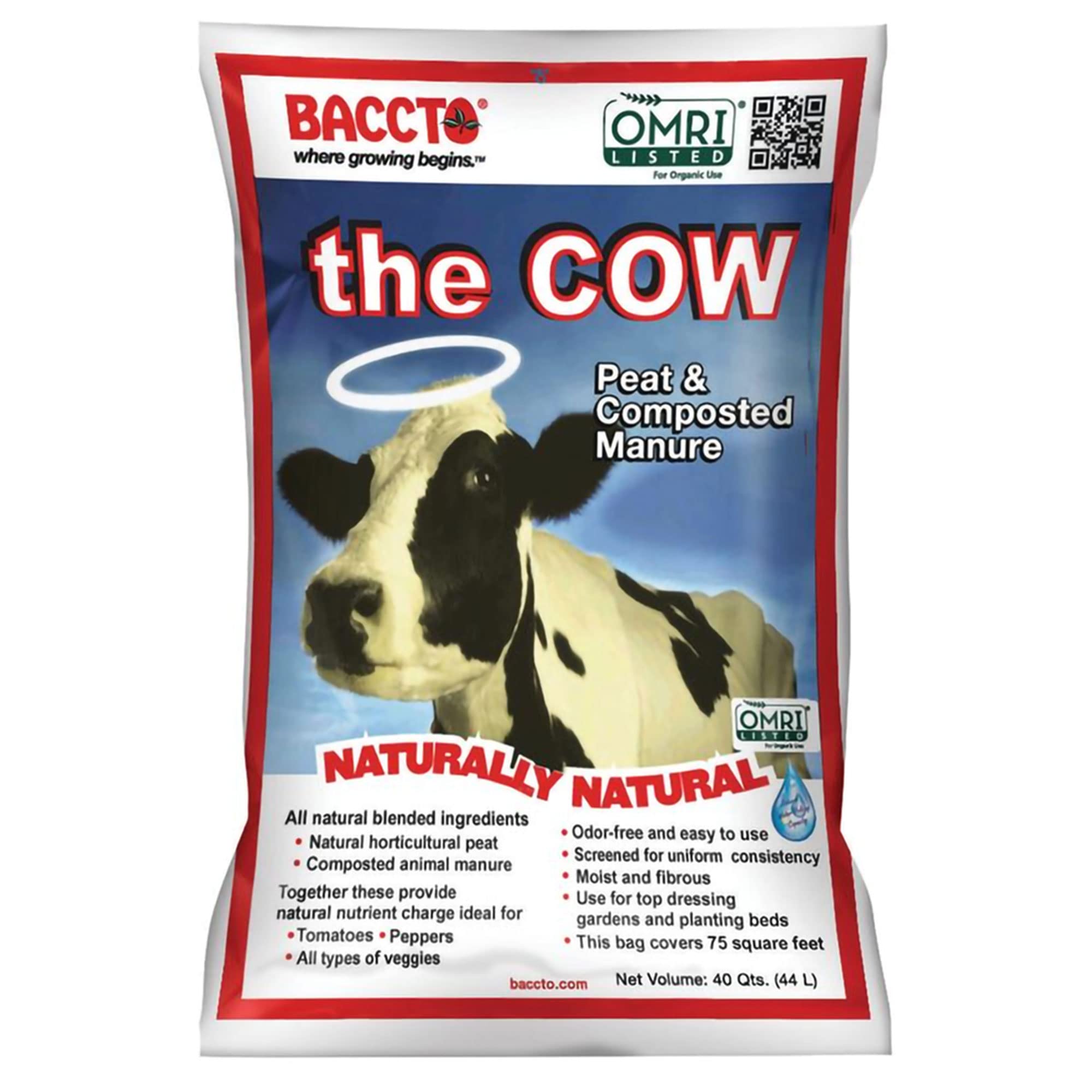
2. Michigan Peat Baccto Wholly Cow Horticultural Compost and Manure
The 40-quart giant that covers your herb patch without the stink.
At 40 quarts, this is the biggest bag in the lineup by a wide margin — compare that to the 4-quart and 8-quart options below, and you can see the value adds up fast for larger herb gardens. It is made from a blend of natural peat and composted animal manure, designed to improve moisture retention so you water less often and your herbs stay hydrated through hot spells.
What really wins people over is the odor-free formula. A 78-year-old gardener using it on poor, sandy river-bottom soil reported great results mixing it with coir and perlite for raised beds. The screened texture is uniform, meaning no surprises when you open the bag. Owners also love its effectiveness — one mushroom grower praised the high manure concentration with minimal waste, and another noted their roses are “doing good” after application.
What owners love
- Odor-free — you can top-dress a lawn or herb bed without the barnyard smell
- 34-pound bag at 40 quarts is miles more than the smaller 4-quart or 8-quart competitors
- Uniform screened texture means even application across beds
The main caveat
- At 34 pounds, this bag is noticeably heavier than smaller options — plan your carrying route
Best for: Herb gardeners with large raised beds or multiple containers who want maximum coverage and zero smell.
Think twice if: You only have a couple of small pots — at 40 quarts, this is more than you need for a windowsill garden.
3. Blue Ribbon Organics OMRI Certified Organic Compost
The “black gold” compost that container herb growers swear by.
If you are serious about container herbs — think Clivias, orchids, or even potted basil — this is the compost owners call “hands down the BEST compost I’ve ever used.” It is OMRI Certified for Organic Use, meaning it meets strict standards for organic gardening. The texture is rich, dark, and earthy, with no contaminants like sticks, plastic, or metal — just clean, finished compost.
Owners rave about its versatility. One California gardener mixes it half-and-half with perlite and orchid bark for ideal moisture and aeration in containers, noting it avoids the fungus gnat problems they had with other brands. The compost moistens easily and has no smell, making it perfect for indoor herb gardens on a kitchen counter. At 35 pounds, it is a heavy bag, but the quality per pound is what keeps people coming back — even if they admit it is expensive compared to bulk yard compost.
Container specialist: Mixes beautifully with perlite and bark for potted herbs — avoids water repellency issues common with some acid mixes.
The honest trade-off: It is the priciest per-volume option here; worth it for small premium containers, less economical for large beds.
Grab this for: Your finest container herbs — the ones you want thriving in decorative pots on the patio or kitchen windowsill.
skip it if: You are amending a large vegetable garden; you will get more coverage per dollar from the 40-quart Wholly Cow bag.
4. R&M Organics Premium Organic Compost
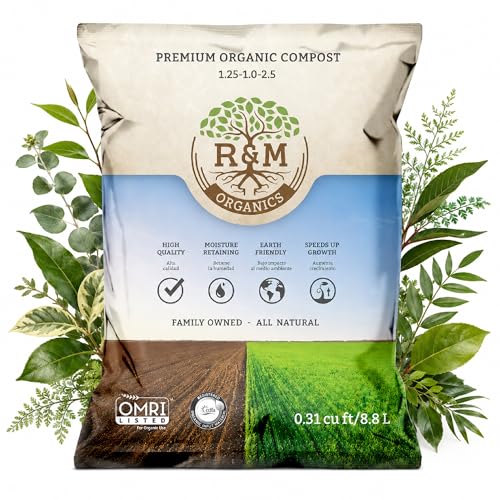
The compost that rescued ailing azaleas and revived suffering herbs.
This one has a story. A Master Gardener recommended it to rescue azaleas damaged by a roof-cleaning enzymatic cleaner, and the compost delivered. For herb gardeners, the 10-pound bag is a handy size — easy to carry, store, and use on a few pots or a small raised bed. The compost is made from dairy cow manure, fully composted through a continuous aeration process to reduce odor and impurities.
The result is a clean, earthy, soil-like texture that is low in odor — suitable for both indoor and outdoor herb gardening. Owners note that a little goes a long way; applying a quarter-inch layer around plants is enough to see results. The mixing ratio is 5:1, so you can stretch a bag across multiple containers. Plant performance is the second most-praised aspect after overall quality, with one owner seeing yellow leaves turn green within a week of application.
What stands out
- Low odor and fine topsoil-like texture — easy to spread and work into pots
- 10-pound bag is genuinely portable, unlike the 34-35 lb options
- Proven rescue story: revived plants after chemical damage
One caution
- Some owners mention the compost can stain patios and carpets — handle with care near hardscaping
Reach for this when: You need a moderate-sized bag of reliable, low-odor compost for a mix of indoor and outdoor herbs.
pass on it if: You need to cover a very large garden bed — 10 pounds goes fast on big projects.
5. Black Kow Nitrogen Phosphate Composted Cow Manure Fertilizer

A trusted name that helps garden veggies and flowers thrive.
Black Kow is a name that comes up again and again in gardening circles. At 6 pounds and 8 quarts, this bag is smaller than the Wholly Cow but still delivers where it counts. The compost holds water and nutrients in the soil around the roots — especially helpful if you have sandy soil that lets everything drain away too fast. For tough clay soils, it adds aeration and helps break up the compacted structure.
The nutrients release slowly without burning tender roots, thanks to the beneficial bacteria that convert nitrogen into an easily available form. Buyers report it really helped their garden veggies, and one gardener’s mama puts it in “everything she plants” — her flowers are always pretty as a result. Plant health is the top positive aspect, with quality close behind. The mixing ratio is 1:1, making it simple to blend with your native soil.
Soil fixer: Works for both sandy soils (holds moisture) and clay soils (adds aeration) — a rare dual benefit.
The honest trade-off: It does have a noticeable smell; one owner describes it as “terrible” but says the value gets them past the odor.
Best for: Gardeners with problematic soil — sandy or clay — who want a compost that actively improves soil structure.
Consider something else if: You are gardening indoors where odor is a dealbreaker; Brut Cow Compost or R&M Organics are more discreet.
6. Brut Cow Compost – Nutrient-Rich Composted Cow Manure

Odor-free cow compost that works indoors without the smell.
If the idea of bringing cow manure into your home makes you nervous, this is the compost that changes your mind. It is OMRI listed (certified for organic use) and made from thoroughly composted cow manure that has been carefully aerated and tested for safety. The result is a finely sifted texture with no odor — suitable for indoor and outdoor gardening alike.
Owners consistently mention that it helps plants grow strong, with one calling it “excellent for plants” and another noting it “does help plants grow strong.” The nitrogen, calcium, and iron packed into the compost enrich soil and boost microbial life. At 10 quarts and 10 pounds, it is a practical size for a few herb pots on the windowsill or a small raised bed. The compost is additive-free — just pure, composted cow manure, finely sifted.
Why it works indoors
- Odorless — no barnyard smell to disturb your kitchen or living space
- Finely sifted texture is gentle on delicate seedlings and young herb roots
- OMRI listed organic certification
Limitation
- 10 quarts covers fewer containers than the larger 40-quart bag from Michigan Peat
Grab this for: Indoor herb gardens where odor is the primary concern — you get real compost power without the smell.
Look elsewhere for: Large-scale garden bed amending; you will need multiple bags to match the coverage of the 40-quart option.
7. Old Potters Organic Compost – Plant Based Potting Soil
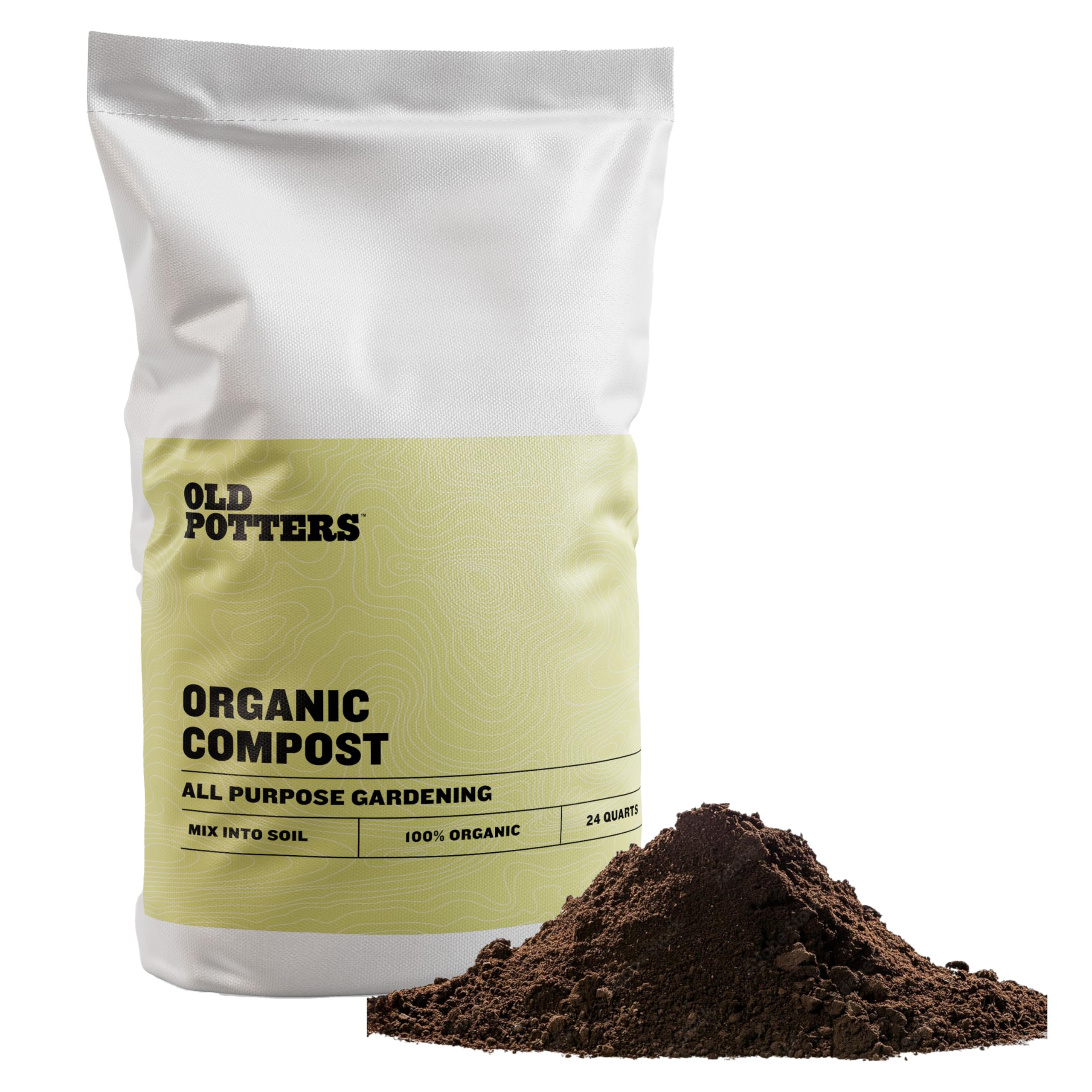
Plant-based compost that throws a punch with heavy-feeding herbs.
This one is for the herb growers who push their plants hard — basil that you are continuously harvesting, mint that spreads like crazy, or oregano that you want thick and bushy. Old Potters is made from natural plant-based materials, not manure, so it brings a different nutrient profile to the table. It improves aeration and water retention in the soil while providing complete food for your plants.
Owners mention dramatic results: one grew a dormant indoor banana plant that pushed out three new leaves after application. The texture can be a bit clumpy — some owners had to manually crumble clayish clumps before use. Quality is the most praised aspect, with plant growth close behind. One owner noted a strong, foul odor even after resealing, but said the performance “outweighs the smell.” For herbs, the plant-based formula may produce a different flavor profile than manure-based options, which some growers prefer.
Heavy feeder specialist: Great for herbs you harvest aggressively — the nutrients keep up with frequent cutting.
Honest caveat: Can be clumpy and has a strong odor for some; be prepared to crumble it by hand before use.
Best for: Herb gardeners who prefer a plant-based, chemical-free compost and push their plants hard with frequent harvesting.
it’s not for you if: Texture consistency is important to you — the clumps can be frustrating for seed starting.
8. Vermont Compost Company Fort Vee Organic Potting Mix

The seed-starting expert that delivers 100% germination for herbs.
If you grow herbs from seed — especially tiny seeds like basil, oregano, and thyme — this mix is designed for you. It is a compost-based potting soil blended from composted manure, plant materials, blonde horticultural grade sphagnum peat moss, crushed granite and basalt, blood meal, kelp meal, steamed bone meal, mined gypsum, vermiculite, and washed coconut coir. That is a lot of ingredients, and they work together to hold water well while providing slow-release minerals for seedlings.
One owner reported 100% germination on geranium and petunia seeds, which is exceptional. The mix is fluffy and light, with vermiculite visible as gold flakes for aeration and drainage. It holds water well even in 90°F heat, reducing how often you need to water seedlings. Owners praise its effectiveness for soil blocks — a technique many serious herb growers use. Seed growth is the top praised aspect, with soil quality right behind. The main criticism is texture, which some find woody or containing large bark pieces.
Why seeds love it
- Perfect for soil blocks, trays, and pots — holds its form beautifully
- Vermiculite and granite provide slow-release minerals as seedlings grow
- Excellent water retention reduces seedling watering frequency
Texture note
- Some owners find it woody with large bark pieces — sifting before use may help for very tiny seeds
Reach for this if: You start your herbs from seed indoors and want a mix that delivers reliable, high germination rates.
Think twice if: You prefer a finer, screened texture — the woody bits can be frustrating for precision seed work.
9. Home and Country USA Organic Cow Manure Compost
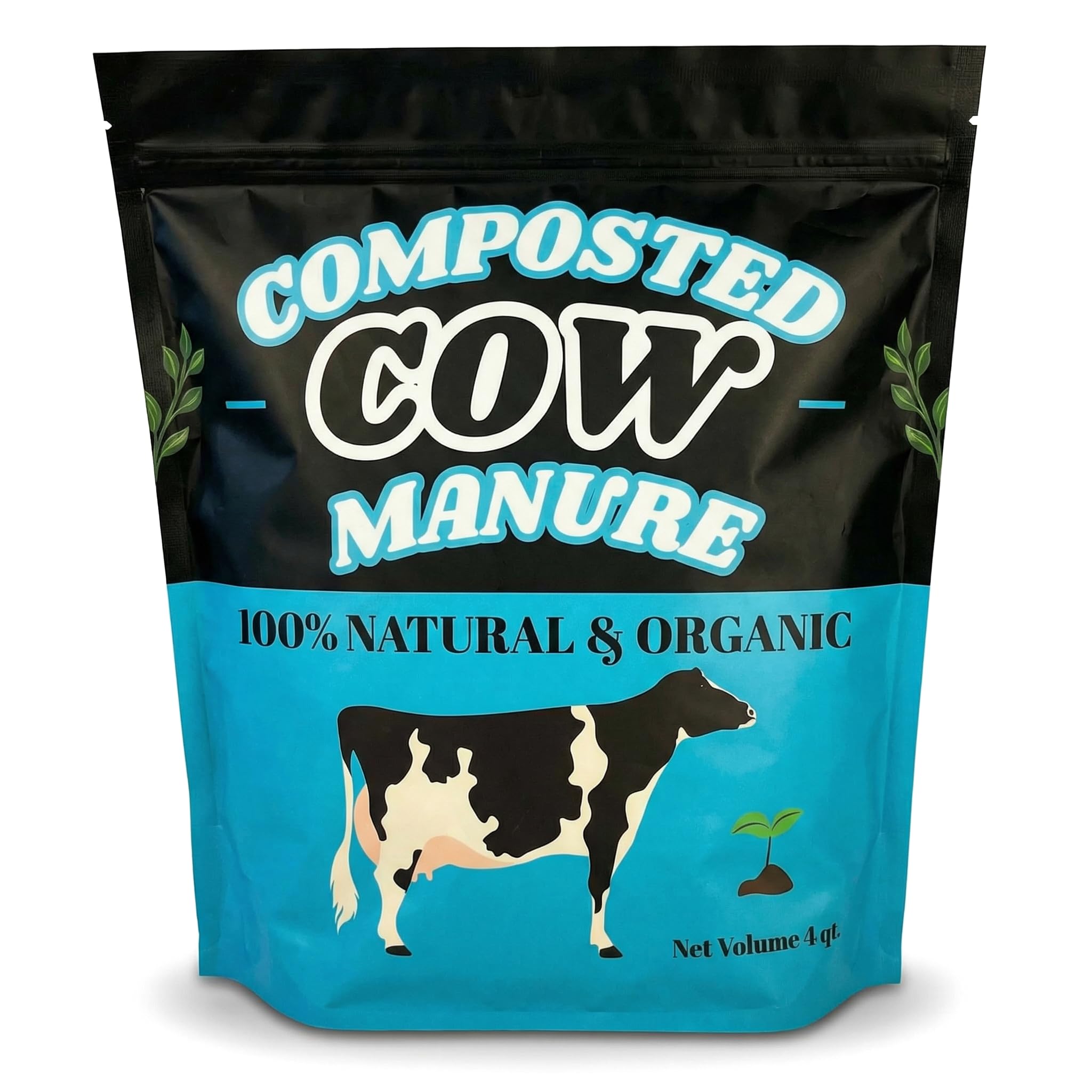
A tiny bag that packs surprising punch for sickly houseplants.
This 4-quart bag is the smallest option in the lineup — 4 quarts compared to 40 quarts — but it serves a very specific purpose. If you have a single sickly houseplant or a couple of herb pots that need a quick revival, this bag is exactly the right size. It is 100% organic composted cow manure, free from chemicals and additives, sourced from sustainable farms in the USA.
One owner used it to revive sickly houseplants, noting that a half cup stopped yellowing leaves. The compost has low odor — important for indoor use — though some find it a bit chunky for small pots. The 4-quart volume is realistically suited for a few containers rather than a garden bed. It improves soil structure and fertility by enhancing water retention and aeration, which is exactly what potted herbs need.
Perfect size for: A single plant rescue or refreshing the soil in a few small herb pots without buying a huge bag.
Honest limitation: At 4 quarts, it is genuinely small — several owners noted it was “a lot smaller than I expected” and felt it was overpriced for the bag size.
Best for: Herb growers with just one or two containers who want to try organic cow manure without committing to a large bag.
Skip if: You have more than a couple of pots, a raised bed, or any in-ground gardening — you will need a much larger volume.
Understanding the Specs
Volume & Coverage
Compost volume is measured in quarts, cubic feet, or gallons — and the range is enormous. A 4-quart bag (like the Home and Country Organic Cow Manure) is perfect for one or two pots, while a 40-quart bag (the Michigan Peat Wholly Cow) can fill a whole raised bed. The rule of thumb: for a standard 12-inch herb pot, you need roughly half a cubic foot of compost per pot. If you are amending an existing bed, plan for a 1:1 mix ratio — one part compost to one part native soil. The 4-quart bag covers about 0.15 cubic feet, meaning you will get roughly one pot refreshed. The 40-quart bag covers about 1.5 cubic feet — enough for several large pots or a small raised bed.
Odor & Composting Method
Not all composts smell the same. Fully composted, aerated manure (like the Brut Cow Compost or R&M Organics) has a clean, earthy scent suitable for indoor use. Less-processed composts can have a strong barnyard smell, even if they perform well outdoors. This matters most for indoor herb gardens and kitchen windowsill setups. If the data says “odor-free” or “low odor,” the compost has been processed through controlled aeration that reduces the volatile compounds responsible for smell. Some plant-based composts (like Old Potters) can paradoxically have a strong odor despite being plant-based — the smell comes from the decomposition process, not the base material itself. Always check the product details for odor claims before using compost indoors.
FAQ
Can I use any compost for herb garden plants, or do herbs need a special mix?
How much compost do I need for a single herb pot?
Is cow manure compost safe for indoor herb gardens?
What does OMRI certified mean for compost?
Can I mix different composts together?
How often should I reapply compost to my herbs?
Will compost burn my herb roots like fresh manure can?
Which compost is best for starting herb seeds indoors?
Final Thoughts: The Verdict
For most herb gardeners, the herb garden compost winner is the Espoma Organic Land and Sea because it combines proven three-year owner loyalty with a unique lobster and crab meal blend that feeds herbs without synthetic chemicals. If you want maximum coverage for larger beds, grab the Michigan Peat Baccto Wholly Cow — 40 quarts of odor-free compost at a volume that leaves every other bag here in the dust. And for the indoor herb gardener who needs odorless performance in a portable bag, the Brut Cow Compost is the one to reach for: OMRI certified, finely sifted, and genuinely odor-free for kitchen windowsill use. The crowd favorite — over 4.7 stars across hundreds of owners — is the Espoma for good reason: it simply works, year after year.
How We Picked
We do not accept paid placement. Every pick is matched to a real buyer and a real use-case; we do not hands-on test units.
Sources & Methodology
Specifications: manufacturer listings and product documentation. Review insights: verified customer reviews, as of July 2026. Pricing: not shown on this page (it changes often); check the current price via the retailer link.
As an Amazon Associate, Lawn Gear Lab earns from qualifying purchases. This does not affect which products we feature.