
Specs are compiled from manufacturer listings and verified buyer reviews and can change over time — please confirm the key details on the product page before buying.
Thick, stubborn branches. Overgrown shrubs. A pruning session that leaves your hands sore and cursing cheap steel. That is the reality of buying the wrong garden shears — and the reason this guide exists. Forget the marketing fluff about “comfort grips” and focus on what actually matters: the blade quality, the cutting mechanism, and whether the tool can handle the real wood in your yard without giving up after one season.
I’m Rikta — the founder and writer behind Lawn Gear Lab. This guide is built by comparing the manufacturers’ published specifications and the patterns across verified customer reviews, so you get each pick’s real strengths and trade-offs instead of marketing spin.
Whether you are shaping a rose bush or lopping a two-inch dead oak limb, choosing the right heavy duty garden shears depends on matching the tool’s blade type, cutting capacity, and handle leverage to the specific work you do most often.
Our Picks at a Glance


How To Choose The Best Heavy Duty Garden Shears
Choosing between a bypass pruner and an anvil lopper is not about brand loyalty — it is about matching the tool’s cutting geometry to the wood you are tackling. A bypass blade (like scissors) makes a clean, live cut that heals fast, which makes it ideal for green wood and delicate plants. An anvil blade (the blade chops down onto a flat surface) crushes through dead, dry, or hard wood with more force, making it perfect for thick, stubborn branches but less ideal for precise, clean snips on living stems.
The Leverage Equation
How much force you apply matters as much as the sharpness of the blade. Compound lever mechanisms (like the Fiskars Power-Lever or the DualLINK system from Corona) multiply your input force so you can slice through a branch without needing a gorilla grip. For loppers, longer handles give you more mechanical advantage — a 33-inch handle needs far less muscle than a 15-inch one, but you trade some precision and maneuverability for that raw cutting power. For hand pruners, the pivot point and gear design determine how easily the blades close.
Steel and Coating
Japanese SK5 carbon steel can reach a hardness of 59 HRC, which means it stays razor-sharp through hundreds of cuts but requires regular oiling to prevent rust from sap and moisture. Titanium and PTFE (Teflon) coatings reduce friction and keep the blade from gumming up, but they are not a substitute for basic maintenance — a quick wipe and a drop of oil after every session will make any blade last years longer. German carbon steel with sliding lacquer offers corrosion resistance without needing as much oiling, making it a solid middle ground for gardeners who do not want to baby their tools.
Quick Comparison
| Model | Best For | Cutting Capacity | Blade Type | Weight | Amazon |
|---|---|---|---|---|---|
| Original LÖWE Professional Anvil Pruner★ Best Overall | Overall Heavy Duty Use | 22mm | Anvil | 290g | Amazon |
| Fiskars 23-Inch Power-Lever Hedge ShearsTop Performer | Shaping Hedges & Shrubs | 10 inches | Bypass | 2.6 lbs | Amazon |
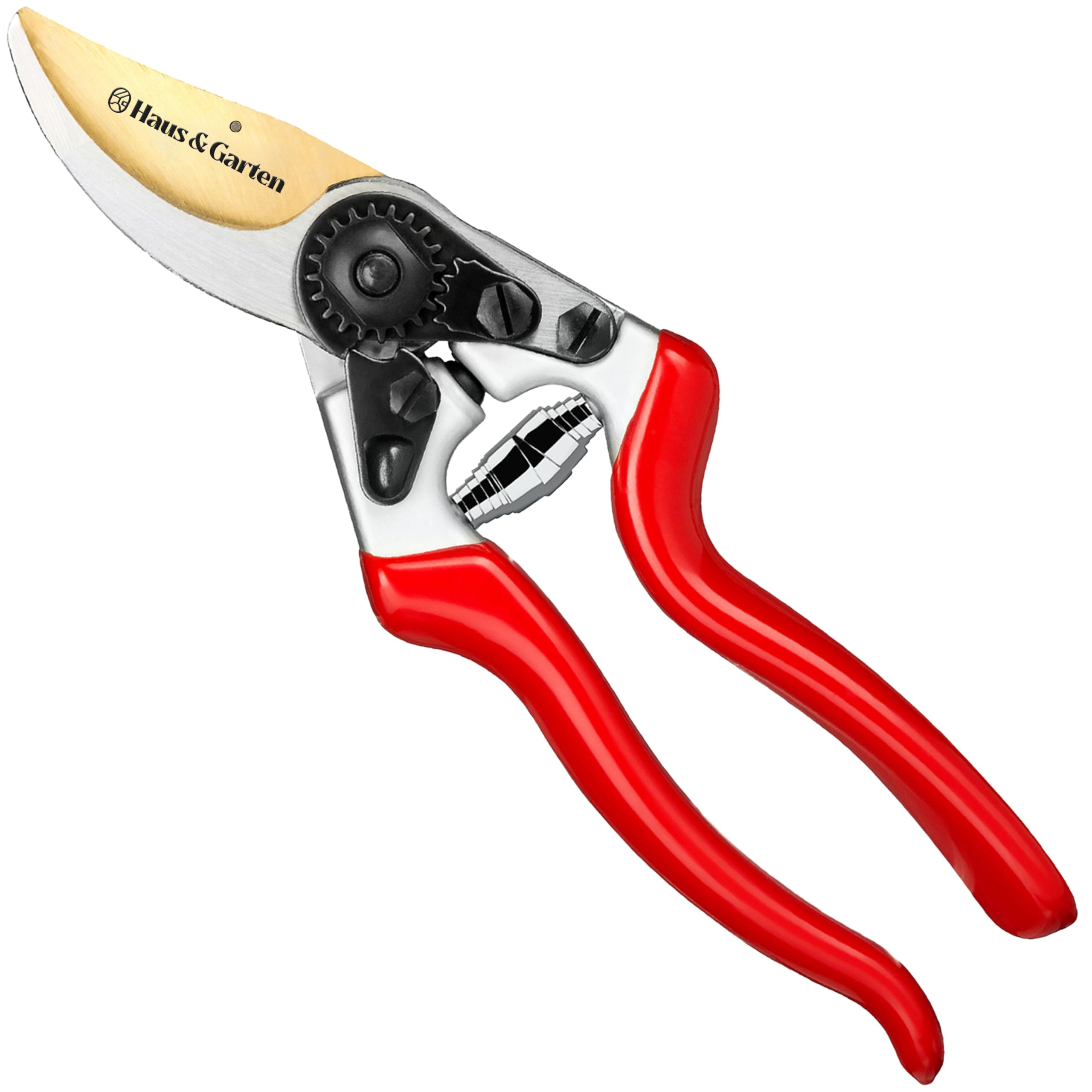
| Haus & Garten EnduroPRO Bypass PrunersBest Value | All-Day Pruning Comfort | 1 inch | Bypass | 8.8 oz | Amazon |
| TONMA 8″ Pruning Shears | Japanese Precision & Long Edge Life | 1 inch | Bypass | 244g | Amazon |
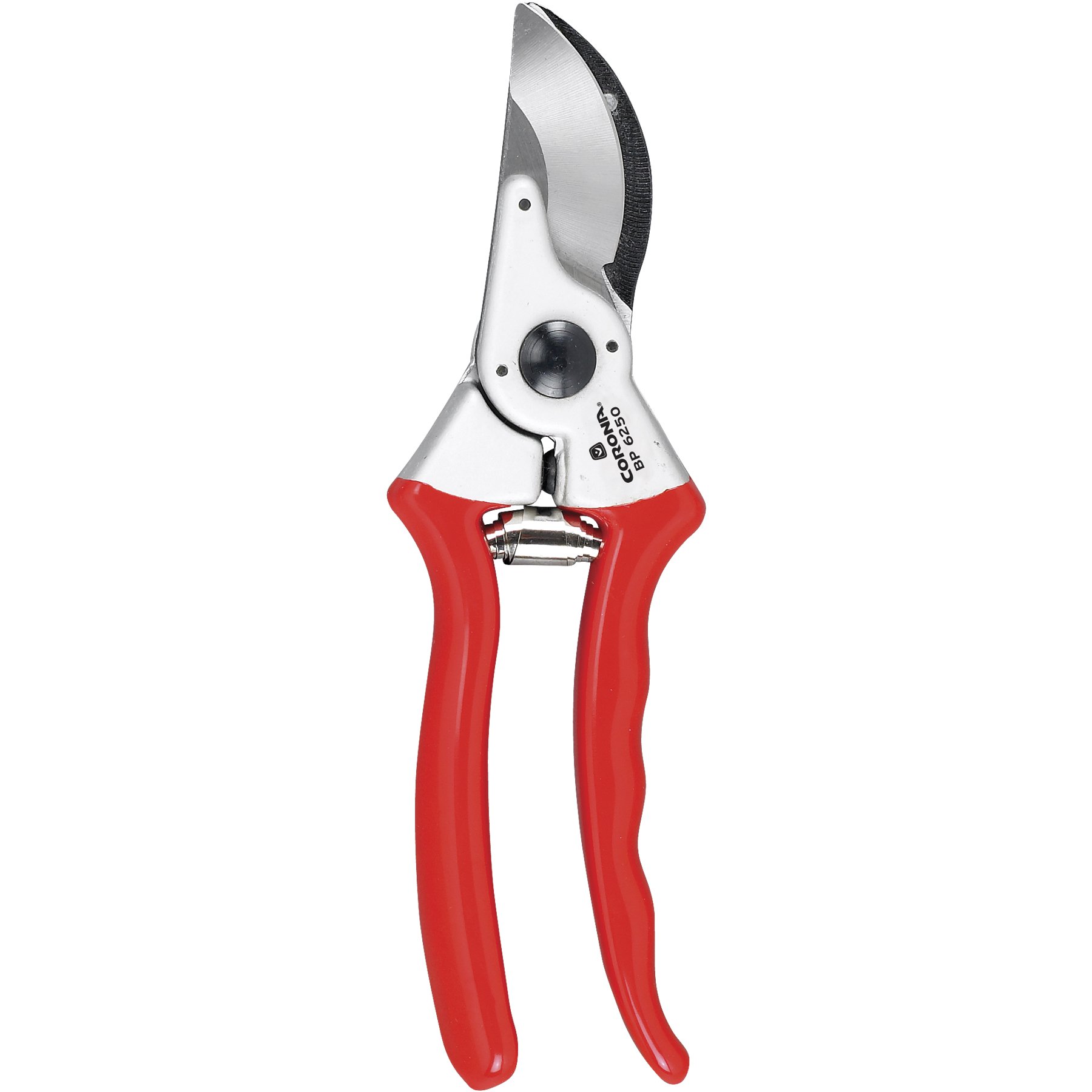
| Corona Tools BP 6250 MAXFORGED Pruner | Professional-Grade at a Value Price | 1 inch | Bypass | 9.6 oz | Amazon |
| Jardineer Ratchet Anvil Loppers | Thick Deadwood with Less Effort | 2 inches | Anvil | 5 lbs | Amazon |
| Kimura Pro Heavy Duty Hedge Shears | Lightweight Hedge Trimming | 25mm | Bypass | 750g | Amazon |
| Corona Tools 33″ Bypass Loppers | High-Reach Branch Cutting | 2 inches | Bypass | 4.3 lbs | Amazon |
| Original LÖWE 10 Professional Anvil Shears | Pro Orcharding & Ergonomics | 30mm | Anvil (Bypass Geometry) | 285g | Amazon |
In‑Depth Reviews
1. Original LÖWE Professional Anvil Pruner
Our pick — over 4.5★ from 950+ verified ratings; the strongest balance of quality and price.
The German tank that turns one-inch oak limbs into easy snips.
This is an anvil cutter built for serious wood — dry, hard, old branches that would make a bypass blade grunt. The carbon steel blade is coated with sliding lacquer, which means it resists rust and cuts with less friction than raw steel. It handles branches up to 22mm (just under an inch) with the kind of minimal effort that leaves you checking to see if you actually closed the blade. It feels solidly built, with no looseness in the pivot — a build quality that owners say “likely outlasts user.”
At 290 grams (about 10 ounces), it is not a lightweight, but that mass translates into real cutting authority. The one-finger safety lock is simple and effective, and the handle is designed for medium to large hands. The grip is comfortable, and the blade’s serrated edge grabs branches so they do not slip out mid-cut. Buyers report it makes “cutting easy” and call it “awesome product” without qualification. The recurring observation is that the plastic handles and lock feel less premium than the German steel blade, and there is no included sheath for storage — a minor oversight for a tool this good.
Why It Dominates
- Heavy-duty German carbon steel — solid construction praised by every owner
- easy cuts on branches up to 3/4 inch, with a powerful cutting system
- Sliding lacquer coating resists rust and reduces friction through sap and debris
- One-hand safety lock is smooth and stays put during use
The Trade-Offs
- No sheath or holster included for carrying on the belt
- Plastic handle and lock feel less durable than the steel blade suggests
- Heavier than some competitors; not the choice for quick, light trimming sessions
Who This Is For: Anyone who regularly cuts dry, hard, or dead wood — rose stocks, old branches, thick twigs — and wants a tool that will still be sharp in a decade.
Who Should Look Elsewhere: If you need a lightweight pruner for continuous snipping of green growth all afternoon, the extra heft may tire you out.
2. Fiskars 23-Inch Power-Lever Hedge Shears
The hedge-tamer that makes long shaping sessions feel short.
For hedges, shrubs, and decorative grasses, these are the go-to. The Power-Lever mechanism is the headline act — an innovative compound lever that multiplies your leverage. That means you can slice through tough stems and dense hedges without the jarring stop that cheap shears produce. The blade itself is a 10-inch, fully hardened, precision-ground steel with a serrated edge that grips each branch before cutting, and the self-sharpening design means every cut actually hones the edge a little more.
At 2.6 pounds, it is not featherlight, but the shock-absorbing bumpers and SoftGrip touchpoints keep your hands from tiring. Owners note it is “slightly heavier than expected but not tiring” and praise how smoothly it cuts through oleanders and Texas sage. The rust-resistant coating helps the blades glide through sap without gumming up — a real advantage when you are shaping fresh growth. The catch? It is a specialist tool for hedges and shrubs; it is not a replacement for a hand pruner on thick single branches. For manicuring a hedge line or trimming back overgrown bushes, however, it is the right choice.
what separates it
- Self-sharpening blades stay sharp without maintenance
- Lightweight enough for extended use, with comfortable SoftGrip handles
- Rust-resistant coating prevents sap buildup and corrosion
What to Watch
- Designed for hedges and shrubs — not a replacement for hand pruners on thick single stems
- Some owners find it a bit heavy for very long sessions, though not fatiguing
- Serrated blade can be harder to sharpen when it eventually dulls
Reach for this if: You have hedges, shrubs, or tall grasses to shape and want a tool that cuts with less effort than a standard shear.
Look elsewhere if: Your work is mostly pruning individual rose canes or thick branches — a hand pruner is the better tool for that.
3. Haus & Garten EnduroPRO Bypass Pruners
The crowd-pleaser that punches well above its weight class.
The EnduroPRO is the definition of a well-engineered tool that overdelivers. The blade is Japanese-grade high-carbon steel, heat-treated to achieve ideal hardness, then coated with titanium. That titanium coating does two jobs: it reduces friction so the blade slides through wood, and it resists rust and sap buildup. It is a bypass design, which means it makes clean, scissor-like cuts that are better for green, living wood — the kind of clean edge that helps plants heal quickly. And it can handle branches up to a full inch thick.
At only 8.8 ounces, it is one of the lightest heavy-duty pruners you will find. The aluminum body and drop-forged handles shed weight without sacrificing durability. The ergonomic handle design aligns your wrist naturally, reducing fatigue after a long pruning session. Owners consistently say it cuts “better than shears twice the price.” The only real complaint? People with arthritic hands wish the handles were larger for a better grip — but for most hand sizes, it fits well. The verdict from buyers is simple: “the best pruners that I have ever owned.”
Why It Is A Winner
- Titanium-coated Japanese steel stays sharp and resists rust
- Ultra-light at 8.8 oz — reduces fatigue during all-day pruning
- Cuts through 1-inch branches with minimal grip effort
- Ergonomic design properly aligns the wrist for comfortable use
Small Gripes
- Handle size is snug; those with larger or arthritic hands may find it cramped
- Titanium coating can wear over time with heavy use
- Replacement parts are available but not always in stock
Ideal For: The everyday gardener who needs a sharp, reliable pruner that cuts cleanly and does not weigh them down.
Consider The Alternative: If your hands are large or you struggle with grip strength, the Corona BP 6250 has a more forgiving handle shape.
4. TONMA 8″ Pruning Shears

Japanese SK5 steel that stays razor-sharp longer than anything in its price range.
The blade on the TONMA is not stainless steel — it is SK5 carbon steel hardened to 59 HRC (a measure of blade hardness). That is unusually high for a pruner at this level. A harder edge holds sharpness far longer, which means you are not reaching for a sharpener after every pruning session. The trade-off is legitimate: it is not rust-proof. You need to wipe it down and oil it occasionally. The cutting action is precise, with a smooth action that makes clean, therapeutic cuts on stems and small branches up to one inch thick.
The safety lock is improved over previous versions — a tight clip that stays engaged without sliding accidentally. The handles are aluminum with a full clear vinyl coating, which provides a superior grip feel compared to basic plastic. Owners note it is well-balanced and works for all hand sizes. A few buyers point out that the opposing steel plate could be thicker to prevent bark crushing on larger hardwood, but that is a refinement noticed only by serious pruners. The lifetime service guarantee adds a safety net that budget picks lack.
Sharp Edge Advantage
- SK5 Japanese steel at 59 HRC stays sharp through hundreds of cuts
- Smooth, well-balanced action with a comfortable grip
- One-hand safety lock stays tight and does not slide
- Lifetime service included from the manufacturer
Watch Out For
- Not rust-proof — requires cleaning and occasional oiling after use
- Some owners wish the opposing steel were thicker for heavy hardwood
- The non-stainless steel is harder to resharpen when it finally dulls
Best For: The enthusiast who values extended edge retention and Japanese precision over low-maintenance materials.
Not For: Anyone who wants a “low-maintenance” tool that can sit in the rain without rusting.
5. Corona Tools BP 6250 MAXFORGED Bypass Pruner
Professional-grade performance — the smart money buy.
The Corona BP 6250 delivers professional-grade cutting performance at a value price. The precision-honed forged steel blade provides smooth, scissor-like cuts that minimize plant damage, which is crucial for healthy regrowth. It handles branches up to 1 inch thick with an effort that feels like “cutting wood like melted butter” according to owners. The blade has a self-cleaning sap groove and a slant-ground hook design that keeps the cut clean and prevents bark stripping.
At 9.6 ounces with lightweight aluminum handles, it is a full pound lighter than many steel-handled pruners, which makes a difference during extended use. A volunteer spring provides smooth, consistent action, and the adjustable pivot bolt lets you tune the blade tension. Owners with arthritic hands report four hours of continuous use with no hand fatigue — a strong endorsement of the ergonomic, slip-resistant grip. The built-in wire cutting notch is handy for garden work, and the thumb lock keeps the blade secure when stored. A small number of units arrived with a locking mechanism that needed a minor file adjustment to engage properly, but this is a rare defect.
Why Professionals Reach For It
- Forged steel blade delivers clean, healthy cuts that promote plant regrowth
- Lightweight aluminum construction reduces fatigue without sacrificing strength
- Sap groove keeps the blade from sticking during heavy use
- Adjustable pivot for precise blade tension control
Minor Maintenance
- Carbon steel blade needs regular oiling to prevent rust; not a stainless tool
- A rare defect: the locking mechanism may require a minor adjustment from the start
- Not the best choice for dry, dead hardwood — the slim bypass blade can struggle
Your Move: If you want a pro-grade pruner without paying Felco prices, this is the one — especially if comfortable all-day cutting matters more to you than deadwood crushing.
skip it if: You need a tool for thick, brittle, dry branches; an anvil-style pruner handles that work better.
6. Jardineer Ratchet Anvil Loppers

The ratchet mechanism turns a 2-inch branch into a manageable, multi-squeeze task.
These loppers are purpose-built for the kind of thick, stubborn, dead hardwood that would stop a standard pruner cold. The ratchet anvil mechanism is the key feature: each squeeze locks and multiplies your force, allowing you to cut through 2-inch thick branches without needing a single superhuman press. This is a standout for seniors or anyone with limited hand strength who still needs to manage heavy yard pruning. The blade is thick SK5 carbon steel with a rust-resistant Teflon coating, and the set includes a matching spare blade to extend the tool’s working life.
The 30-inch handles give you enough reach to trim high branches safely without a ladder, and the steel tube frame resists bending under heavy force. The anvil design specifically suits dry, dead, and thick hardwood, avoiding the blade jamming that a bypass can suffer on brittle wood. The set also includes a smaller hand pruner for thin twigs and flowers — a thoughtful addition that covers your pruning range. Owners love the extra blade and the comfortable rubber grips, though a few note that a bolt can come loose over extended use and needs tightening. The weight is substantial at 5 pounds, so it is not a tool for quick snips — it is a dedicated heavy lifter.
Why It Gets The Job Done
- Ratchet mechanism slices through 2-inch thick branches with manageable effort
- Includes an extra SK5 spare blade to double the tool’s lifespan
- 30-inch handles provide safe reach without a ladder
- Comes with a second hand pruner for smaller trimming tasks
Heavy Consideration
- 5 pounds is heavy; not a tool for quick, light trimming
- Bolt can loosen under heavy use and may need periodic tightening
- Anvil design crushes wood slightly — not ideal for clean live cuts
Grab These If: Your yard is full of thick, dead branches and you want a lopper that does not punish your hands with every squeeze.
Skip If: Your pruning is mostly green growth and delicate stems — a bypass lopper gives cleaner cuts.
7. Kimura Pro Heavy Duty Hedge Shears

Patented gearing gives you the leverage of a longer handle in a compact package.
The Kimura Pro is a hedge shear that thinks it is a lopper. The patented gearing technology allows you to slice through stems up to 25mm (roughly one inch) in diameter without straining your arms. The blade is Japanese SK5 steel with a PTFE coating that reduces friction and resists sap buildup and rust. The wavy edge design helps catch and hold larger stems as you cut, preventing them from slipping out.
At 750 grams (about 1.7 pounds), it is lighter than it looks, thanks to the aluminum handles with soft TPR grips. The weight is distributed evenly between the blade and handle, which makes it feel balanced during extended use. Owners say it makes “yard work noticeably faster and cleaner” and praise how easily it cuts through border grass, roses, and light vegetation. The catch is that the blade does lose its factory sharpness after a couple of months of regular use — a few owners note it needs a touch-up on a sharpener faster than expected. It is not for dense jungle-level vegetation; it is best for regular hedge and shrub shaping.
What You Gain
- Lightweight, well-balanced design reduces arm fatigue
- PTFE-coated SK5 steel resists rust and keeps sap from sticking
- Wavy blade edge catches thicker stems effectively
What You Should Know
- Blade sharpness degrades after a couple of months of regular use; needs periodic sharpening
- Not ideal for dense, very thick vegetation — it is a hedge shear, not a brute-force lopper
- Handle length may feel large for gardeners with smaller hands
Best For: The weekend gardener who wants hedge shears that cut with noticeably less effort, especially on thicker stems that would stop a standard shear.
Consider Another: If you need a tool for heavy, all-day professional shaping every week, the Fiskars Power-Lever might hold an edge longer.
8. Corona Tools 33″ Bypass Loppers

The power-geared long arm that turns high branches into low-hanging fruit.
These loppers solve two problems at once: they give you the reach to hit branches that are 33 inches away, and the DualLINK MAXFORGED mechanism multiplies your cutting force so you are not fighting the tool with every squeeze. The precision-ground, fully forged steel blades deliver clean, smooth cuts that are better for the plant’s long-term health — torn bark invites disease. It handles branches up to 2 inches thick, putting it in the same capacity class as the Jardineer ratchet loppers, but in a bypass design that is kinder to living wood.
At 4.3 pounds, it is lighter than the look of its thick steel handles would suggest. The non-slip cushioned grips and impact-reducing bumpers absorb shock, making it easier on the hands during extended sessions. Owners praise how it “cuts limbs and branches very well” and call it comfortable to use, expecting it to last for many years. A minority note it is not a dramatic leap forward over a 5-year-old Fiskars tool in terms of cutting effort — more of a sideways upgrade in capacity and reach, which is a fair observation for seasoned pruners.
Why Reach For These
- DualLINK mechanism provides serious mechanical advantage for less effort on thick cuts
- Forged steel blades deliver clean cuts that reduce plant damage
- 33-inch handles let you prune high branches without a ladder
- Impact-reducing bumpers absorb shock and ease hand fatigue
Before You Buy
- A few owners feel the cutting effort is similar to older quality loppers, despite the leverage claim
- Not the lightest option at 4.3 lbs, especially for overhead work
- Blade design can be less forgiving on very thin, green branches — better for thicker wood
Reach For This If: Your main challenge is pruning higher branches and dense shrubs where extra length and leverage make the difference.
Think Twice If: You mostly do close-up, low-angle work where a 33-inch handle is awkward more than helpful.
9. Original LÖWE 10 Professional Anvil Shears

The hybrid that marries anvil power with bypass precision for a uniquely clean crush.
The LÖWE 10 is an anvil pruner that borrows the geometry of a bypass shear. That might sound like a footnote, but it is crucial: it gives you the crushing power of an anvil (perfect for hard, dry, dead wood) while the curved blade and bypass geometry guide the cut more like a scissor, reducing the tearing that pure anvil designs can cause. The result is a tool that cuts hard branches up to 30mm (1.18 inches) with a sharp, easy motion that owners describe as so smooth they “thought I had missed it because it was so smooth and easy.”
At 285 grams (just over 10 ounces) and 8.07 inches long, it is compact and light. The curved, corrosion-protected blade is ideal for reaching into tight branch formations where bulkier shears cannot fit. The inward-curved lower handles mean the grips open less widely, which makes the tool a natural fit for medium-sized hands — though it works for larger “worker” hands as well. Owners rank it among the best pruners they have used, specifically praising its “very solid grips” and professional performance. The only barrier: it costs more than most of the competition, and while owners say it is “worth it,” that premium price can be a hurdle for casual buyers.
What Makes It Special
- Unique bypass-geometry anvil design cuts hard wood with surprising smoothness
- Corrosion-protected curved blade reaches into tight branch clusters
- Inward-curved handles fit medium hands perfectly and reduce grip fatigue
- German engineering praised by experienced owners
The Cost of Craftsmanship
- Premium price that is significantly higher than most alternatives in this list
- Wood handles, while elegant, can be less grippy than rubberized handles when wet
- Not as widely available for replacement parts as mainstream brands
For The Connoisseur: You want the best-engineered anvil shear that combines hard-wood crushing power with near-bypass cutting smoothness, and you are willing to pay for German precision.
For The Pragmatist: If you need a solid, affordable anvil pruner, the standard LÖWE Professional (our #1 pick) delivers the same brand quality at a lower price point.
Understanding the Specs
Bypass vs. Anvil Blade
This is the most fundamental decision you will make. A bypass blade works like a pair of scissors — two curved blades pass each other to make a clean, precise cut. It is best for green, living wood because the clean cut heals quickly with minimal damage to the plant. An anvil blade, by contrast, has a single sharp blade that chops down onto a flat metal surface (the anvil). This design crushes through dry, dead, and hardwood with more force, but it can bruise the stem and is not ideal for delicate pruning. For most gardeners, owning both types is the smart move: a bypass pruner for daily shaping and live wood, an anvil lopper for dead branch removal.
Cutting Capacity (Maximum Branch Thickness)
This is the maximum diameter of branch the tool is designed to cut in a single stroke. A hand pruner typically handles 3/4 inch to 1 inch; an anvil pruner can often manage slightly more on dead wood. Loppers with compound lever or ratchet mechanisms can handle 1.5 to 2 inches. Do not try to force a tool to cut beyond its rated capacity — you risk bending the blade or locking the pivot, and you will end up with a ragged cut that harms the plant. If you consistently hit wood thicker than 1 inch, step up to a lopper with a mechanical advantage system.
Blade Steel Hardness (HRC)
Rockwell Hardness (HRC) measures how hard the blade steel is. A higher number means the blade stays sharp longer, but also makes it harder to sharpen when it eventually dulls. Japanese SK5 steel at 59 HRC (like the TONMA pruners) is exceptionally hard for a gardening tool and holds an edge through many sessions. Most Japanese carbon-steel pruners sit in the 57-61 HRC range, while standard stainless steel blades are typically softer (around 52-56 HRC). Harder steel also tends to be more brittle and more prone to chipping if you hit a nail, so for heavy, messy work, slightly softer steel that is easier to re-sharpen can actually be more practical.
Leverage & Mechanical Advantage
This is the engineering that makes a heavy-duty tool easy or difficult to use. A standard pruner uses a simple pivot — you supply all the force. Compound lever systems (like the Fiskars Power-Lever or the Corona DualLINK) use a second pivot point that multiplies your input force, typically by 2x to 3x. Ratchet mechanisms (like the Jardineer loppers) break the cut into several smaller squeezes, each locking the blade deeper into the wood. For loppers, longer handles (30-33 inches) multiply leverage dramatically, meaning you use less effort per cut but trade maneuverability. If you have limited hand strength or arthritis, a tool with mechanical advantage is not a luxury — it is a necessity.
FAQ
What is the difference between bypass and anvil shears for heavy duty work?
How do I know which cutting capacity I need for my yard?
Why does my new shear feel stiff or hard to squeeze?
Can I use anvil shears on live tree branches?
How do I maintain my heavy duty garden shears?
Why do some garden shears cost twice as much as others?
What is the best blade coating for rust resistance?
Is a heavy duty garden shear the same as a regular pruner?
Final Thoughts: The Verdict
For most people, the heavy duty garden shears winner is the Original LÖWE Professional Anvil Pruner because it delivers the most brute-force cutting power per dollar, with a German carbon steel blade that will handle year after year of tough wood without breaking down. If you want the best ergonomic feel for all-day pruning of green wood, grab the Haus & Garten EnduroPRO Bypass Pruners — it is featherlight, razor sharp, and designed not to tire your wrist. And for tackling the thickest dead branches with minimal arm effort, the Jardineer Ratchet Anvil Loppers are the one to reach for, especially if you value a 2-inch cutting capacity and an extra spare blade included
How We Picked
We do not accept paid placement. Every pick is matched to a real buyer and a real use-case; we do not hands-on test units.
Sources & Methodology
Specifications: manufacturer listings and product documentation. Review insights: verified customer reviews, as of July 2026. Pricing: not shown on this page (it changes often); check the current price via the retailer link.
As an Amazon Associate, Lawn Gear Lab earns from qualifying purchases. This does not affect which products we feature.