
Specs are compiled from manufacturer listings and verified buyer reviews and can change over time — please confirm the key details on the product page before buying.
Hard, rocky soil, roots that grab at your shovel, and heavy loads that make your back ache — that is the real world of big garden work. Cheap equipment bends, chips, or stalls when the job gets brutal, costing you time and frustration. This guide cuts through the noise to find the tools that actually stand up to repeated abuse.
I’m Rikta — the founder and writer behind Lawn Gear Lab. This guide is built by comparing the manufacturers’ published specifications and the patterns across verified customer reviews, so you get each pick’s real strengths and trade-offs instead of marketing spin.
if you need to break compacted clay, haul a ton of soil, or keep weeds at bay, these are the machines and hand tools built to survive the season — the heavy duty garden equipment that earns its spot in your shed.
Our Picks at a Glance


How To Choose The Best Heavy Duty Garden Equipment
You do not need a dozen tools — you need the few that can handle the worst your property throws at them. The right machine or hand tool saves you hours of frustration and years of replacement costs. Here is what separates the tough stuff from the temporary.
Power Source: Gas, Corded, or Battery?
Your choice of power dictates freedom, weight, and willingness to use the tool. Gas engines deliver relentless torque for breaking new ground and need no tether, but they add weight and require fuel storage and maintenance. Corded electric tools are lighter, instant-start, and run as long as you have an extension cord — ideal for compact to medium plots near an outlet. Battery-powered gear offers quiet, fume-free operation and is the easiest to handle, though runtime limits how much you can do on a single charge. For the hardest digging and biggest gardens, gas still leads on raw stamina; for everything else, electric has quietly caught up.
Tine Design and Drive System
A tiller or cultivator is only as good as its tines. Wider, reverse-angle tines dig deeper and resist tangling with roots and vines. Front-tine tillers are lighter and easier to lift into raised beds, but they can buck on hard ground. Rear-tine machines are heavier and self-propelled — they pull themselves through untouched soil without bouncing. For a hand tool, a dual-head design (pick on one side, mattock on the other) gives you two weapons for two different tasks: prying rocks and chopping roots, all in one head.
Weight, Frame, and Materials
Heavy duty means heavy materials — but not always heavy tools. A carbon-steel frame on a dump cart supports serious loads without flexing, while a poly bed resists rust. On a hand tool, a riveted steel head and a fiberglass handle with a vibration-damping core outlast cheaper welded or wooden constructions. Weight is a trade-off: a 78-pound gas tiller is stable and digs deep, but you need to move it around, whereas a 24-pound electric model is easy to store and maneuver, but you may have to take several passes on hard clay. Choose the frame strength your actual soil demands, not your ego.
Quick Comparison
| Model | Best For | Power Source | Working Width | Weight | Amazon |
|---|---|---|---|---|---|
| Fiskars IsoCore Pickaxe Mattock★ Best Overall | Root chopping & rock prying | Manual | 1.5 lb head | 1.5 lb | Amazon |
| Rogue Hoe 7-Inch CultivatorProfessional Grade | Large-scale weeding & sod busting | Manual | 7 in blade | 4.09 lb | Amazon |
| Westinghouse 18-Inch TillerBest Value | Light tilling in medium gardens | Corded Electric | 18 in | 23.9 lb | Amazon |
| Scotts 16-Inch Garden Tiller | Maintaining existing garden beds | Corded Electric | 11/16 in | 14.52 kg | Amazon |
| Sekey 1000lbs Dump Cart | Hauling heavy soil & rocks | Manual | 1,000 lb capacity | — | Amazon |
| Sun Joe TJ605E Tiller | Medium garden soil prep | Corded Electric | 15.7 in | — | Amazon |
| Honda FG110 Mini Tiller | Small beds & pre-tilled soil | Gas | 6/9 in | 28 lb | Amazon |
| Earthquake 20015 Versa Tiller | Breaking new ground | Gas | 11–21 in | 78 lb | Amazon |
| Greenworks 80V Mower | Quiet, self-propelled mowing | Battery | 21 in | 74.95 lb | Amazon |
In‑Depth Reviews
1. Fiskars IsoCore Pickaxe Mattock with Shock-Absorbing Handle
Our pick — over 4.5★ from 800+ verified ratings; the strongest balance of quality and price.
The hand tool that severs roots and pries rocks without rattling your arms numb.
This is not your father’s pickaxe. The Fiskars IsoCore is a dual-headed tool — pick on one side, mattock on the other — so you switch from breaking up hardened ground to prying rocks with a simple flip. What makes it special is the patented IsoCore Shock Control System. Your hands and elbows feel the difference after the first twenty swings.
The head is forged steel, riveted so it cannot separate even during the most forceful swings. A textured, non-slip handle with a flared grip keeps each swing aimed where you want it, and the fiberglass-and-steel tube construction resists breaking long after wooden handles would snap. As the review pages sum it up: “We have had Fiskars products for easily 50+ years and have yet to be disappointed.” It is versatile enough for weeding, digging holes, chopping small roots, and even light demolition — a fact confirmed by gardeners who use it for everything from planting to paving prep.
The trade-off? Backed by a lifetime warranty, this is the one tool every gardener should own — an incredibly high 4.9 stars across 800+ ratings speaks for itself.
What wins people over
- The patented IsoCore system reduces transmitted shock and vibration compared to standard pickaxes
- Dual-head design (pick and mattock in one) lets you switch between prying and chopping without swapping tools
- Riveted forged steel head stays locked tight even under the hardest swings — no risk of separation
The honest caveat
- Heavier than a standard garden hoe — the weight is intentional for the work, but it will feel substantial in hand
- Handle length is moderate; very tall users occasionally wish it were a few inches longer
Reach for this if… you regularly deal with tree roots, rocks, or hard clay and want one hand tool that does not punish your joints.
Think twice if… your garden work is limited to soft, loose soil and surface weeding — a lighter hoe would be less tool than you need.
2. Rogue Hoe 7 Inch Wide Blade Heavy Duty Garden Cultivator
A hoe built from recycled agricultural disc blades that slices through sod like butter.
This is a hand tool that feels like a power tool — in a good way. The Rogue Hoe’s 7-inch wide blade is cut from recycled agricultural disc blades, so it arrives incredibly sharp and holds an edge for an entire day of weeding. The blade and socket are welded together into a single heavy-duty unit, meaning no wobble, no snapped bolt, no mid-job failure. Buyers report it is excellent for chopping sod, breaking roots, and moving soil, and with a long handle you can swing it without bending over — a genuine back-saver.
What owners praise most is the quality (mentioned more than 190 times in the reviews). The blade is thick enough to withstand many sharpenings over its lifetime, and the cutting edge runs up the sides of the blade, turning it into a pointed digging tool for stubborn jobs. At 4.09 pounds, it is noticeably heavier than a typical garden hoe, but the weight helps the blade do the work — it “slices weeds and brush in one swing instead of two or three,” as one buyer put it. A buyer’s verbatim review sums it up: “Heavy-duty, durable 7″ blade garden cultivator.” This is the hoe for when a cheap import would fold on the first rock.
The main caveat: the handle comes with a factory varnish that a few owners strip off and replace with linseed oil for a better grip. It is a five-minute fix on an otherwise lifetime-quality tool. For large-scale weeding, mounding, and prepping soil, this is as good as hand tools get.
Long-haul specialist: This is the hoe you pass down — a recycled steel blade that takes a razor edge and a welded build that will not separate. skip it if you only need to weed a few small flower beds; buy it if you are clearing overgrown ground by the acre.
Grab it for… busting sod, cutting through clay, and clearing waist-high weeds without bending over.
Not the tool for… delicate work near plants — this blade is wide and aggressive, designed for open ground and rough clearing.
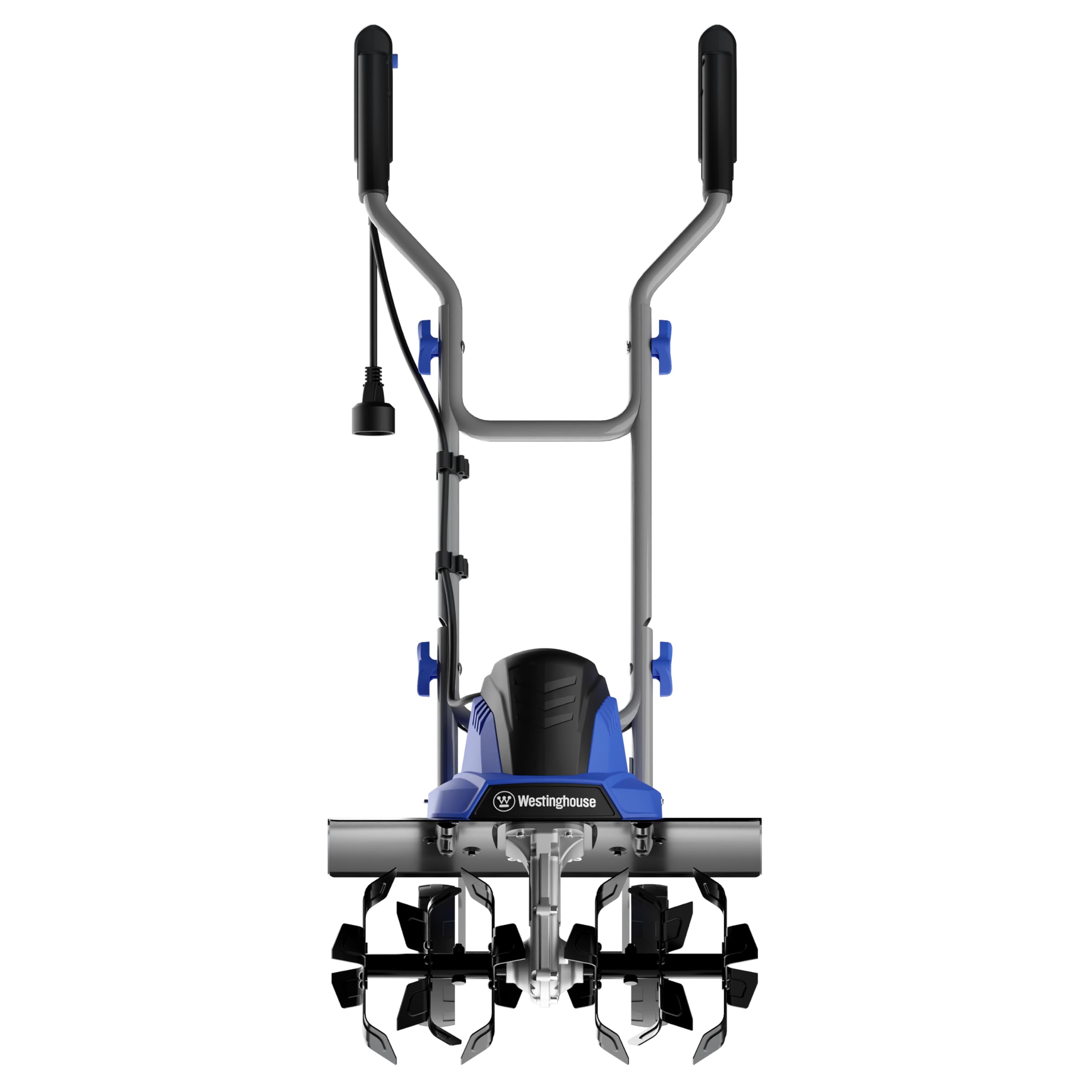
3. Westinghouse 18-Inch, 15 Amp Corded Electric Tiller Cultivator
A corded tiller that punches above its weight with a 15-amp motor and six steel blades.
The Westinghouse W18TCAC proves you do not need a gas engine to break new ground. Its 15-amp motor spins six steel tines at up to 400 RPM, chewing through an 18-inch working width. The first pass digs about 2 inches deep, and subsequent passes reach up to 4 inches — enough to loosen compacted soil for a medium to large garden. At 23.9 pounds, it is light enough to carry to the shed with one hand, yet the steel tines survive encounters with rocks that would snap a plastic-tined cultivator.
What stands out in the buyer consensus is the sheer effectiveness for the price — owners call it “an excellent little tiller” that handles hard soil and rocks without complaint. The handles fold for compact storage, and the ergonomic H-type grip makes it comfortable to maneuver. The catch, as a few owners note: the vibration is noticeable, and you should use a heavy-duty extension cord because the motor does draw significant power. Some also mention that the middle gap between the tines leaves a narrow strip untouched on the first pass, requiring a second overlap. But for the price of a good hand tool, you get a powered tiller that makes short work of a garden plot.
The honest downside is durability — the reviews show mixed opinions, with a handful of units experiencing issues after a couple of months of heavy use. The 2-year limited warranty offers some confidence, but if you need a machine for daily commercial-grade abuse, you may want one of the gas-powered options below.
Smart budget play: A 15-amp corded tiller that runs as long as you have an outlet, at a fraction of the cost of gas. Best for the weekend gardener with a medium plot and accessible power.
Ideal for… preparing vegetable beds and flower patches in moderately compacted soil without spending gas-tiller money.
Consider upgrading if… you need to break heavy clay from a standstill every weekend — the durability record is mixed, and the gas models below will handle more consistent abuse.
4. Scotts Outdoor Power Tools TC70135SS Garden Tiller, 13.5-Amp

A cultivator with adjustable tines that switch between 11 and 16 inches for tight rows or open beds.
The Scotts TC70135SS is the tiller for the gardener who needs one tool for two jobs. Its six steel tines reconfigure to an 11-inch width for weeding between established rows or a full 16-inch width for breaking larger garden areas. The 13.5-amp motor is powerful enough for hard-packed soil, and the tool can reach a depth of 8 inches. Rear flip-down wheels help you roll it to the garden, then fold up so the tines reach full depth during operation.
Functionality is the most-praised aspect, with over 100 owners calling it effective for mixing leaves and clippings into soil and preparing garden beds. Owners note that it pulls backward for the first pass to dig in, but once you get the rhythm, it tears through grass roots in minutes. Assembly is tool-free thanks to wing nuts, and the bail wire switch lets you grip the handle anywhere comfortable. One buyer sums up the experience: “This tiller does an amazing job, plus it is so easy to start since it’s electric!”
On the less positive side, cord management is a constant challenge on a moving tiller, and the tines can kick up rocks aggressively. A few owners also note that it “bogs down if buried,” so you need to let the machine do the work rather than forcing it deep on the first pass. For existing garden beds and moderate soil, it is a fast, powerful, and versatile partner.
Width-flexible tiller: Adjusts from 11 to 16 inches on the fly, letting you cultivate narrow rows without damaging nearby plants. The 13.5-amp motor has enough grunt for most home gardens, though it prefers established soil over virgin clay.
Reach for this when… you maintain an existing garden and need to switch between open-bed tilling and in-row weeding.
Look elsewhere if… you need to break completely new ground or heavy clay — the lighter build and corded tether make it less suited to primary tillage.
5. Sekey 1000lbs Garden Dump Cart for Seniors
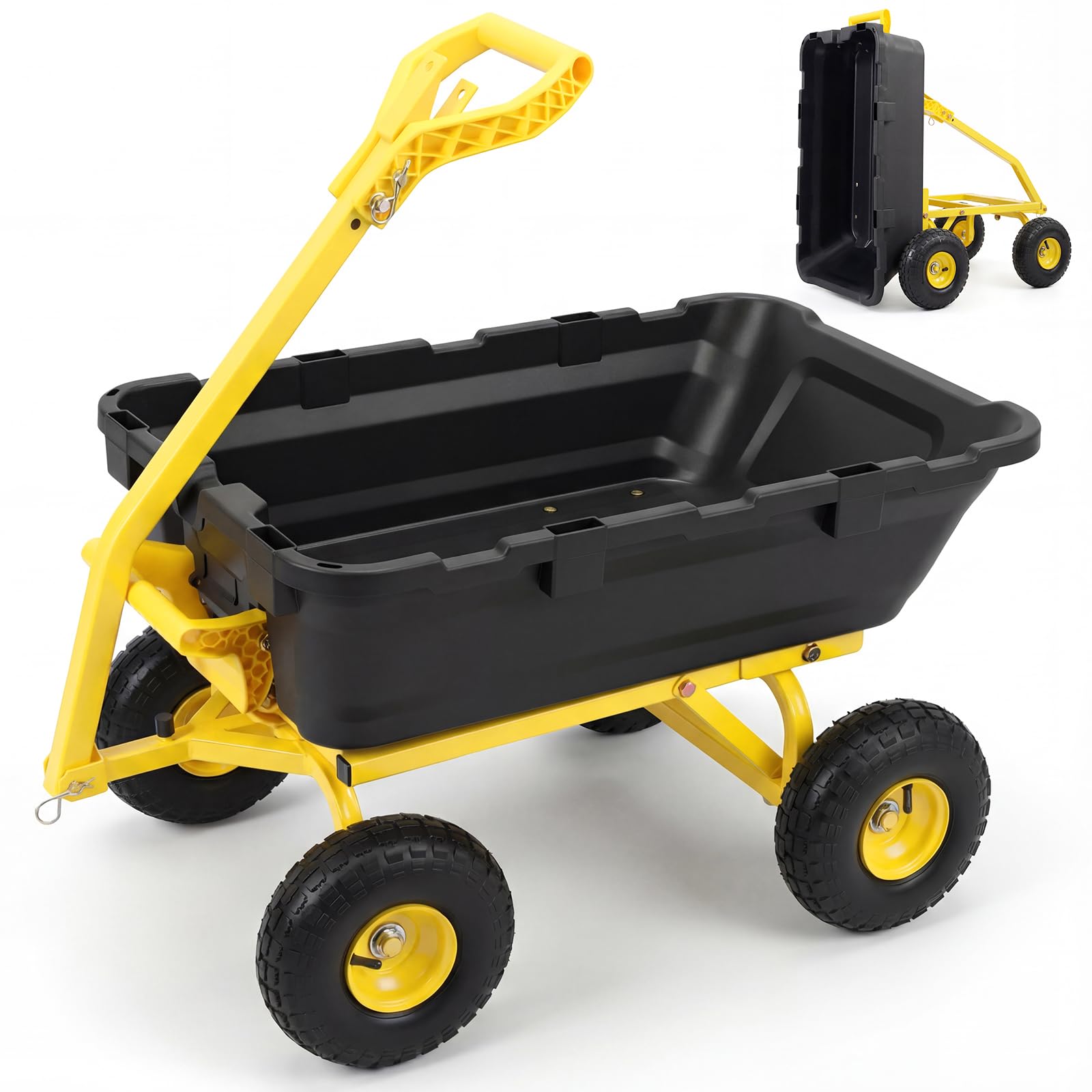
A four-wheeled dump cart that carries a half-ton so your back does not have to.
If you have ever wrestled a wheelbarrow across lumpy ground, the Sekey Dump Cart is the upgrade you did not know existed. It is a 4-wheel cart with a carbon-steel frame and a high-strength poly bed that hauls loads up to 1,000 pounds — soil, mulch, gravel, firewood, even rocks — without you lifting a pound. The patented quick-release dumping system lets you tilt the bed and unload in seconds; the steep dump angle means you do minimal shoveling afterward.
The construction earns the most praise — owners describe it as “very durable” and “a tank,” with a spacious interior that fits a surprising amount of material. The 10-inch rubber tires absorb shocks on grass, gravel, and mud, and the 180-degree turn handle makes it maneuverable even in tight garden paths. Assembly takes under 45 minutes with basic tools, and owners say the instructions are clear and the hardware is now well-organized. One review sums it up as an “outstanding, sturdy” cart used behind a tractor on a 5-acre property for hauling mulch and tools without issue.
The less-discussed trade-off: a few owners note the cotter pins for the wheels feel a bit flimsy and may need bending to avoid hitting the tire tube. Steering also receives mixed feedback — on very soft ground the 4-wheel design can be harder to pivot than a traditional wheelbarrow. But for anyone who needs to move heavy loads regularly, this cart is a legitimate back-saver that justifies the price.
Load-bearing champion: 1,000-pound capacity, rust-proof poly bed, and a quick-release dump mechanism. A genuine alternative to the wheelbarrow for seniors and anyone with back concerns.
Best for… large garden projects, hauling heavy materials over uneven ground, and anyone who wants to avoid the strain of a loaded wheelbarrow.
Not ideal for… very tight, narrow paths — the 4-wheel chassis is stable but less nimble than a 2-wheel option in confined spaces.
6. Sun Joe Corded Electric Garden Tiller & Cultivator TJ605E
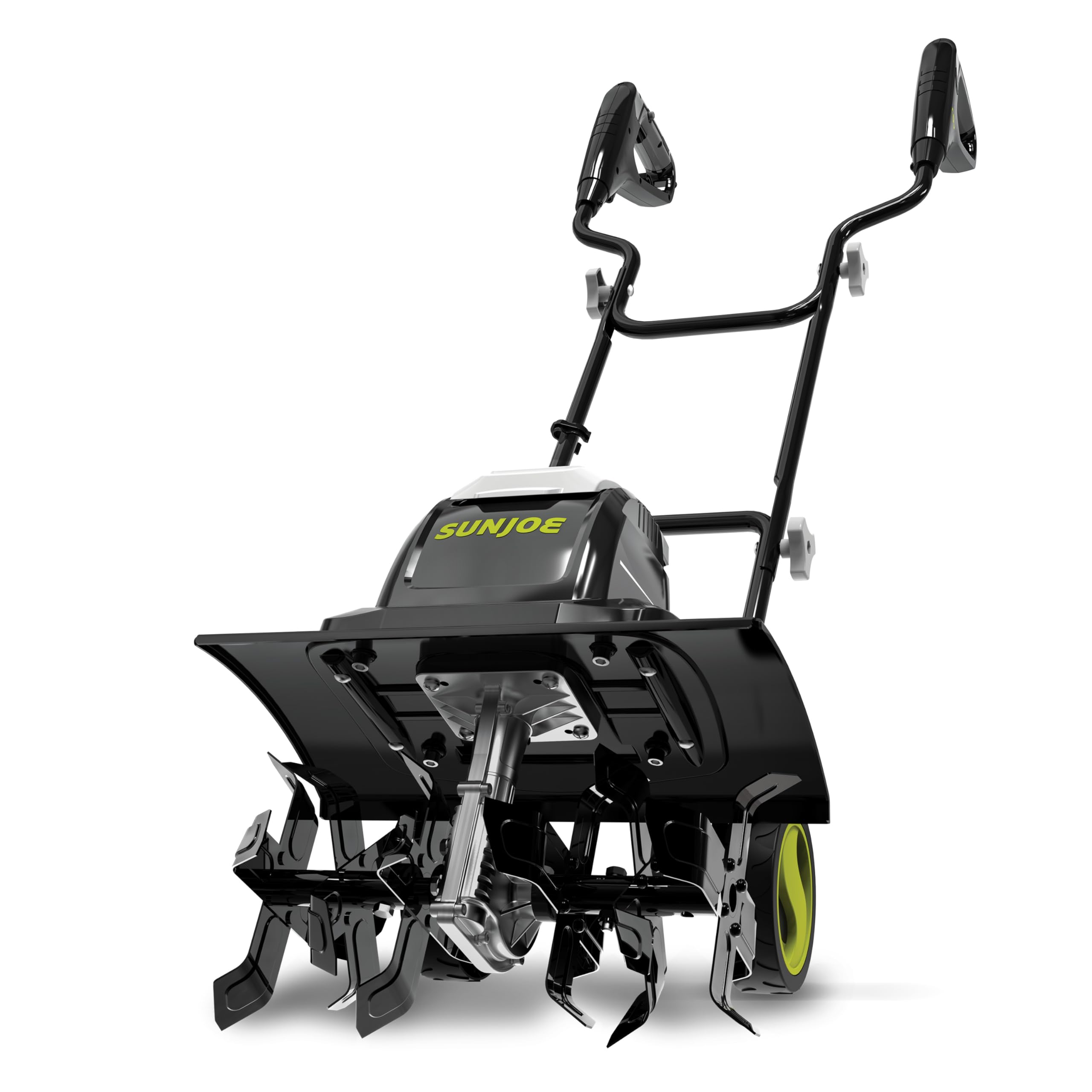
An electric tiller that a petite gardener can control without sacrificing power.
The Sun Joe TJ605E is the corded tiller for the person who wants to walk away from gas entirely, but still needs real tilling power. Its 15-amp motor delivers the same 400 RPM as the Westinghouse above, but with a slightly narrower 15.7-inch cutting width and a 7.7-inch maximum depth. The six rust-proof steel tines are angled to hold performance through repeated seasonal use, and the foldable handle makes storage simple. Four-position wheels give you adjustable depth control without having to muscle the machine.
The most-praised quality is effectiveness — owners say it tears through established 900 sq ft gardens with patience, and one reviewer describes it as having the “power of a heavy gas tiller but light enough for a petite woman to control.” Assembly is minimal (four bolts for the handlebars), and the safety button plus trigger system prevents accidental starts. The consensus is that it is not the heaviest-duty machine in the world, but it handles medium gardens and compost mixing better than any hand tool could.
Battery life is one of the specs customers mention most, but the TJ605E is corded — so as long as you have an outlet, you have infinite runtime. The recurring critique is the lack of variable speed control; it runs at full tilt or not at all. In weedy areas, the tines can get clogged with vines and need periodic clearing. Overall, it is a practical, affordable electric tiller for the home gardener who already has a spare extension cord.
Light but capable: A 15-amp corded tiller that feels lighter than its power level suggests. Best for medium gardens, raised beds, and owners who prefer electric start-and-go simplicity over gas maintenance.
Choose it for… maintaining an existing garden bed, mixing in compost, and light to moderate soil prep.
Skip it for… breaking new ground in heavy clay or rocky soil — the tines will struggle and clog frequently.
7. Honda FG110 Mini Tiller Cultivator
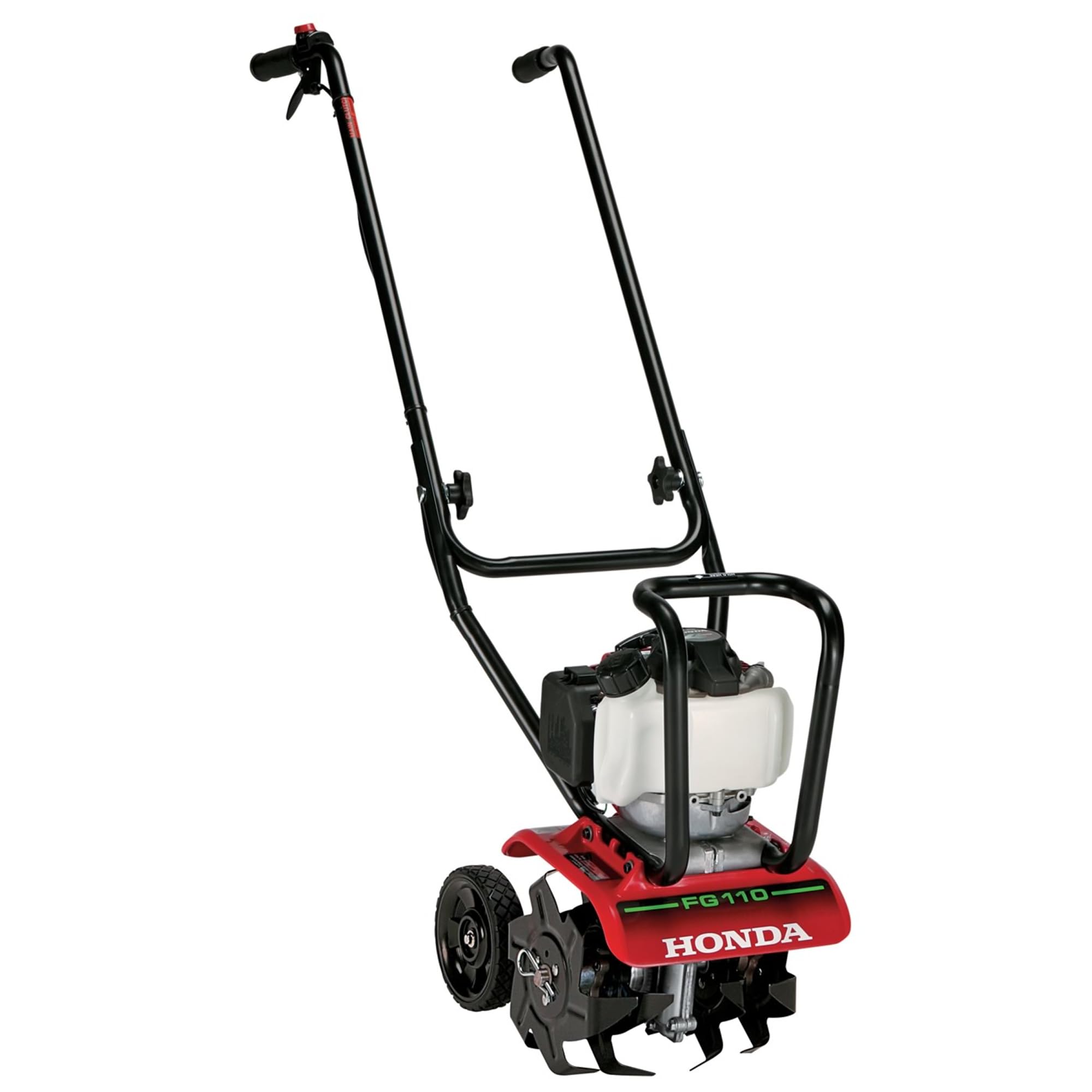
A tiny gas tiller with a legendary engine that starts on the first pull for years.
The Honda FG110 is the mini tiller for the gardener who values reliability over raw horsepower. It weighs just 28 pounds and fits easily into a raised bed or a car trunk, yet the Honda GX25 4-stroke engine is legendary for its quick, easy starts on straight unleaded gas — no mixing oil required. The patented hybrid tines combine digging blades and cultivating blades, so the same machine can break light soil and then refine the tilth in one pass. You can remove the outer tines to narrow the width from 9 inches down to 6 inches, letting you cultivate within 1 inch of your plants without damage.
What owners come back to is the dependable Honda engineering. Reviews are consistent: “starts easy, works great, easy to handle,” reflecting the 4.8-star average across hundreds of owners. The adjustable depth bar and easy-access controls let you dial in the aggressiveness without fighting the machine. As one buyer put it: “It costs a bit more, but it’s reliable and digs in hard.” For small to medium gardens, pre-tilled soil, and raised beds, this tiller is a joy to use — it is compact enough to lift into a truck bed and quiet enough to not annoy the neighbors.
The realistic limit: the FG110 is intended for light to moderate jobs and performs best in softer or pre-tilled soil. In extremely hard, compacted ground, it may only dig in a few inches at a pass. At the higher end of the price spectrum, it is a premium investment for a specific use case — not a replacement for a full-size rear-tine tiller if you need to break a new half-acre from scratch.
Legendary small-engine reliability: The Honda GX25 starts every time, runs on straight gas, and powers a 28-pound machine that is ideal for raised beds and fine cultivating. A premium tool for the gardener who hates wrestling with equipment.
Perfect for… raised bed prep, mixing amendments into soft soil, and maintaining tight garden rows where a larger tiller cannot fit.
Underpowered for… breaking new sod or heavy virgin clay — this is a finishing tool, not a primary ground-breaker.
8. Earthquake 20015 Versa 2-in-1 Tiller Cultivator, 99cc

A gas-powered beast that chews through compacted clay and pulls you along for the ride.
When the ground has never been turned and the soil is hard-packed clay, you want the Earthquake Versa. Its 99cc 4-cycle Viper engine delivers serious torque through adjustable front tines, and it converts from a 21-inch tiller to an 11-inch cultivator by removing the outer tines and side shields — tool-less, so you can switch on the fly. The adjustable handlebar height and onboard wheels for transport make this 78-pound machine manageable for one person to move around.
The thing owners talk about most is the raw power — “a monster” that tears through hard-packed soil and roots with surprising speed. It starts quickly (often on the first or second pull) even after sitting in a shed for a year, as one owner confirmed: “I bought this in 2023. I pulled it out, put some gas in it, and again it started on the third pull.” The tilling depth reaches 11 inches, and the self-propulsion effect means you just guide it once the tines bite in. As another buyer put it, the machine is “heavy but drags you along like a flyweight.”
The biggest drawback is the assembly experience — the instructions are described as poor, and the tine bolts use an uncommon 15.5mm head. Some owners also note that bolts can loosen over time due to the vibration and soft steel, requiring regular re-tightening. If you are comfortable with basic mechanical assembly, the Earthquake is one of the best values in gas-powered tillers for breaking new ground, backed by a 5-year limited warranty that speaks to its intended lifespan.
Why it dominates
- 99cc Viper engine provides the torque needed to chew through compacted clay, roots, and sod on the first pass
- Tool-less width adjustment from 11 to 21 inches lets you switch from full-field tilling to in-row cultivating in seconds
- Starts reliably even after months of storage, per numerous owner reports
The real catch
- Assembly instructions are lacking; expect to spend extra time figuring out the tine bolt size (15.5mm) and alignment
- Bolts may loosen from vibration during extended use — keep a wrench handy for periodic tightening
Your machine if… you need to break new ground on a large plot or clay-heavy soil that lighter tillers cannot handle.
Reconsider if… you are not comfortable with minor mechanical maintenance or only need a tiller for soft, existing beds — the Earthquake is overkill for refined soil.
9. Greenworks 80V 21″ Self-Propelled Cordless Lawn Mower

A battery mower that cuts a half-acre in near silence with gas mower power.
If you want to ditch gas and oil but still demand the mowing performance of a conventional machine, the Greenworks 80V is your answer. It packs a brushless motor and a durable 21-inch steel deck, powered by an 80V 4.0Ah battery that cuts up to half an acre per charge depending on grass conditions. The self-propelled rear-wheel drive system gives you variable speed control — you set the pace, and the mower keeps up. It is quiet, so you can mow early morning or evening without disturbing the whole block.
Performance is the most-praised aspect — owners consistently note that the 80V brushless motor has plenty of power for hills, thick grass, and even St. Augustine lawns. The 4-in-1 system lets you mulch, bag, side-discharge, or use the turbo leaf pickup mode for fall cleanup. The LED headlights make it usable in low light, and the 7-position height adjustment lets you fine-tune the cut. One long-time owner summed it up: “Very quiet, neighbors can’t hear. Instant start, no gas/oil.” The self-propel feature is described as easy to control once you get the hang of disengaging it before turning.
The honest trade-off: battery life gets mixed feedback. Owners with larger lawns (approaching or exceeding the half-acre mark) often need a second battery or a quick recharge session to finish the job. The self-propel system also tends to lock the wheels when turning, requiring you to disengage it early. But for a typical suburban lot, this mower is light, quiet, and powerful enough to make you wonder why you ever dealt with gas.
Battery breakthrough: An 80V brushless mower with a steel deck and rear self-propel that handles a half-acre in near silence. The trade-off is battery run time for oversized lots — but for most yards, this replaces gas completely.
Pick this if… you want a self-propelled mower that starts instantly, runs cleanly, and is quiet enough for early morning mowing.
Look elsewhere if… your lawn is larger than half an acre or very thick — you will need extra batteries to complete the job in one session.
Understanding the Specs
Motor / Engine Power
For powered equipment, motor amperage (for corded electric) and engine displacement in cubic centimeters (cc, for gas) are the two numbers that tell you how much grunt the tool has. A 15-amp motor is the standard for medium-duty electric tillers and will handle most home gardens. Gas engines rated at 99cc and above will tear through virgin soil and clay that would stall a smaller electric motor. A higher number means it can maintain tine speed under load, so the tool does not bog down when it hits a rock or root.
Working Width
This is how wide a swath the tool cuts in one pass. A wider working width (18 to 21 inches) means you cover ground faster, which matters if you have a large garden. A narrower width (6 to 11 inches) is better for maneuvering in tight raised beds, between rows of established plants, or cultivating within an inch of a delicate transplant. For a hand tool like a hoe or cultivator, the blade width determines how much soil you turn per swing — a 7-inch blade is a good balance between efficiency and precision.
FAQ
Will a corded electric tiller work on hard clay soil?
How do I choose between a front-tine and rear-tine tiller?
What does a dual-head pick mattock do that a standard hoe cannot?
Can I leave gas in the tiller over winter?
How much weight can the Sekey dump cart actually haul?
Is a battery-powered mower powerful enough for thick grass?
How do I maintain the sharp edge on the Rogue Hoe?
What size extension cord do I need for a 15-amp corded tiller?
The Earthquake tiller assembly instructions are poor — what should I expect?
Does the Greenworks mower self-propel on hills?
Final Thoughts: The Verdict
If you want one dependable pick, the heavy duty garden equipment winner is the Fiskars IsoCore Pickaxe Mattock because it is the single most versatile, durable hand tool for root chopping, rock prying, and hard-soil work — backed by a lifetime warranty and a 4.9-star rating that makes it the unanimous crowd favorite. If you want powered tilling, grab the Earthquake 20015 Versa for breaking new ground or the Westinghouse 18-Inch Tiller for a quiet, corded option. And for hauling heavy loads, the Sekey 1000lbs Dump Cart spares your back and saves you hours of trips with a wheelbarrow.
How We Picked
We do not accept paid placement. Every pick is matched to a real buyer and a real use-case; we do not hands-on test units.
Sources & Methodology
Specifications: manufacturer listings and product documentation. Review insights: verified customer reviews, as of July 2026. Pricing: not shown on this page (it changes often); check the current price via the retailer link.
As an Amazon Associate, Lawn Gear Lab earns from qualifying purchases. This does not affect which products we feature.