
Specs are compiled from manufacturer listings and verified buyer reviews and can change over time — please confirm the key details on the product page before buying.
Your hands are telling you something after an hour in the garden — dull shears make you squeeze harder, crush stems instead of slicing them, and leave your palms sore for days. The real difference between a frustrating afternoon and a steady rhythm of clean cuts depends on the blade geometry, the steel quality, and whether the handles were shaped for your hand or for a factory mold. That is what this guide sorts out for you — nine of the most talked-about handheld pruning shears, stripped of the marketing and judged by the only thing that matters: how they actually cut.
I’m Rikta — the founder and writer behind Lawn Gear Lab. This guide is built by comparing the manufacturers’ published specifications and the patterns across verified customer reviews, so you get each pick’s real strengths and trade-offs instead of marketing spin.
Whether you are snipping back roses, shaping a bonsai, or clearing woody deadwood from an overgrown shrub, finding the right pair of handheld pruning shears turns a chore into something you barely think about — just a clean snip and you move on.
Our Picks at a Glance


How To Choose The Best Handheld Pruning Shears
Start with the plant material you cut most often. Green stems and live growth need a bypass blade — it makes a clean scissor cut that heals quickly. Dead wood and dry branches suit an anvil blade — it crushes the material against a flat plate, which is fine for brittle stuff but can bruise living tissue. Your hand size matters too. A handle that forces your fingers wide open or pinches your palm will hurt after twenty cuts. Grab the shears, open and close them a few times — your hand will tell you the answer faster than any spec sheet.
Quick Comparison
| Model | Best For | Blade Type | Cut Capacity | Weight | Amazon |
|---|---|---|---|---|---|
| Original LÖWE Professional Anvil Pruner★ Best Overall | Heavy-duty dry wood | Anvil | 22 mm | 290 g | Amazon |
| gonicc 8″ Professional Premium BypassBest Value | Everyday garden value | Bypass | 0.75 in | 150 g | Amazon |
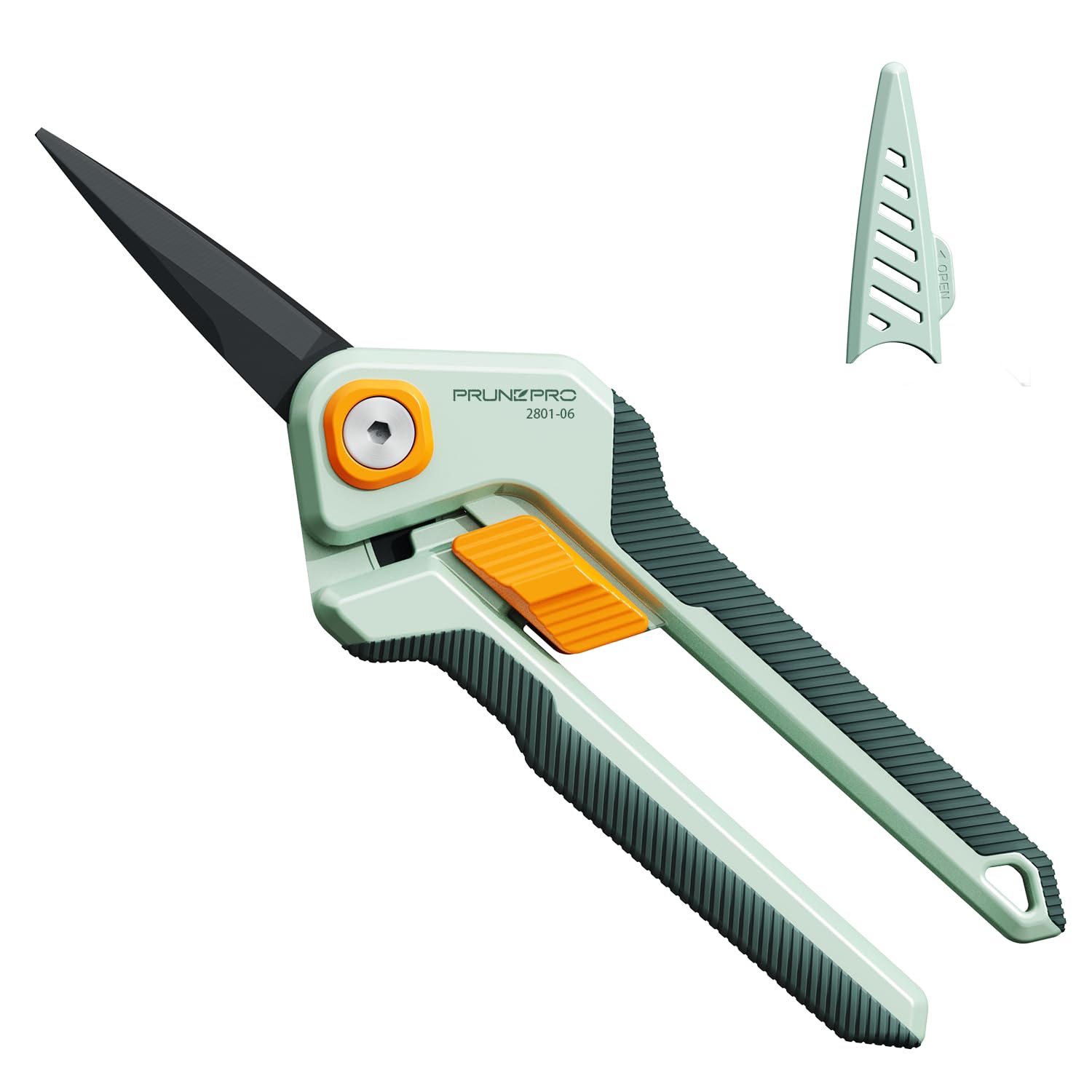
| PrunePro Garden ScissorsPrecision Pick | Precision snipping & tight spaces | Bypass | Delicate stems | 0.14 kg | Amazon |
| Haus & Garten ForgedPRO | Rust resistance & heavy cutting | Bypass | 1 in | 10.7 oz | Amazon |
| Modern Sprout Pruning Shears | Herbs & houseplants | Bypass | Fine stems | Lightweight | Amazon |
| Kimura 8″ Pro Pruning Scissors | Arthritis-friendly & durability | Straight | 15 mm | Lightweight | Amazon |
| Saboten Japanese Pruning Shears | Small hands & sap-heavy plants | Bypass | 20 mm | 0.24 kg | Amazon |
| Corona Tools BP 6250 MAXFORGED | Professional & arthritis comfort | Bypass | 1 in | 0.6 lb | Amazon |
| Original LÖWE 10 Professional Anvil | Orchard & forestry pro | Anvil / Bypass hybrid | 1.18 in | 285 g | Amazon |
In‑Depth Reviews
1. Original LÖWE Professional Anvil Pruner Garden Tools 1.104
Our pick — over 4.5★ from 950+ verified ratings; the strongest balance of quality and price.
The German-made brute that chews through dry branches without complaint.
This is the heaviest pruner in the lineup at 290 grams — a 1.9x weight gap over the gonicc — and that heft works in its favor. The anvil-style blade uses a serrated edge to grab hard, dry wood and crush it cleanly against a flat plate, which is exactly what you want for dead branches and twigs. The carbon steel blade wears a sliding lacquer coating that fights corrosion and cuts friction, so it stays slick through repeated cuts. Owners who reach for this daily report it “feels solid and heavy with no looseness” — the kind of tool that tells your hand it was built in a real factory, not stamped out in a high-volume line.
The one-handed safety lock clicks in place with a single finger, which sounds minor until you have tried fumbling with a sliding lock while holding a handful of clippings. Every part is replaceable, and the handle is shaped for medium-to-large hands, not a generic one-size compromise. The trade-off is the weight — at nearly double the gonicc, it is not the pruner you grab for a light deadheading session. It is the one you bring when the job is thick, old, and stubborn.
Built to outlast you: German engineering, replaceable parts, and a serrated anvil blade that grips instead of bouncing off dry wood. This is the pruner that pays for itself over a decade of abuse.
Reach for this if: you mostly cut dead wood, thick twigs, and dry branches — the anvil action and extra weight do the work for you.
Think twice if: you need a lightweight quick-snip for green stems and flowers; the heft and anvil design are overkill for delicate work.
2. gonicc 8″ Professional Premium Bypass Titanium Pruning Shears (GPPS-1003)
The crowd favorite that punches way above its price tag.
This is the pruner over 33,000 owners have rated, and the numbers tell a clear story: quality and sharpness lead the praise, with titanium-coated SK5 steel blades that “stay sharp after months, cut cleanly without tearing” according to buyers who put them through heavy rose-garden abuse. The bypass design means it makes a clean scissor cut — the blade slides past the hook-like lower jaw instead of crushing against it — so green stems heal faster. It cuts branches up to 0.75 inches thick, which covers 90% of routine garden work.
At just 150 grams versus the LÖWE at 290 grams, making it the choice for a full afternoon of snipping without hand fatigue. The ergonomic aluminum handles wear PVC wraps for a non-slip grip. Buyers report the foam can degrade over time and the wide-open grip pose a stretch for smaller hands, but the overwhelming consensus is that these cut better than many higher-priced brands.
Why owners love them
- Premium SK5 steel with titanium coating stays sharp and resists rust
- Sacrificial price for professional-grade cutting performance
- Sap groove channels sticky resin away from the blade joint
The honest trade-offs
- Wide-open handle spread can feel awkward for people with smaller hands
- PVC grip foam may degrade over seasons of heavy use
Grab these if: you want a sharp, lightweight bypass pruner that handles daily garden work while staying affordable.
Look elsewhere if: you need a heavy-duty anvil cutter for dry wood or have very small hands that struggle with wide-reach handles.
3. PrunePro Garden Scissors Pruning Shears
The tiny snipper that treats each stem like surgery.
These are not for thick branches — the manufacturer is blunt about it: “these shears are designed specifically for delicate stems and thin green growth.” The micro-tip snips let you reach into a dense rose bush and sever one spent bloom without touching the surrounding buds. The blades are high-carbon German stainless steel with a Teflon non-stick coating that sheds sap and resists rust. Owners love the precision: “perfect for getting into tight spaces” is a common refrain, and at 0.14 kg they are easy to wield for long periods.
The safety lock is built to survive a common failure point — it will not break even if you accidentally close it in the locked position. The catch is that size: several buyers mention they are small, and the documentation warns not to cut branches larger than a pinky finger. If you need one tool for everything in the yard, this is not it. But for deadheading annuals, harvesting herbs, or shaping bonsai, nothing in this list is more surgical.
The right tool for the right job: these micro-tip bypass snips are unbeatable for precision work on soft, green growth. Keep them in your pocket for deadheading and leave the heavy lifting to a larger pruner.
Perfect for: gardeners who need a secondary, ultra-precise tool for flowers, herbs, and bonsai — especially in tight branch formations.
Not your main pruner if: you regularly cut woody stems thicker than a pinky finger; the blades are not built for that abuse.
4. Haus & Garten ForgedPRO 8.75″ Heavy Duty Professional Titanium Bypass Pruning Shears
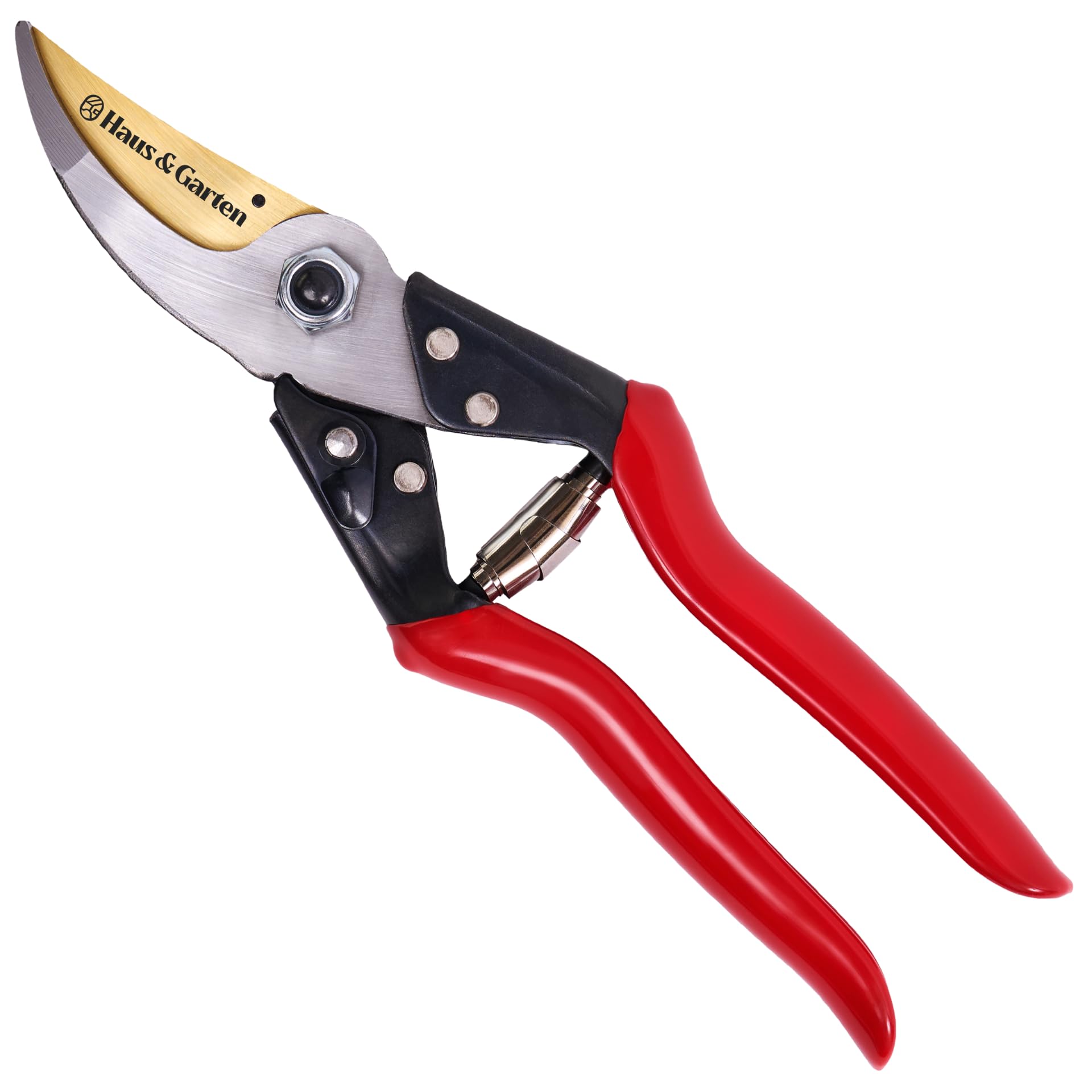
Hefty, sharp, and built to handle branches that stop lesser shears cold.
Japanese-grade high-carbon steel with a titanium coating gives these shears a cutting capacity of up to 1 inch — the same as the Corona below, but in a heavier 10.7 oz frame that provides leverage without requiring a death grip. The bypass blade makes clean, scissor-style cuts, and the self-cleaning sap groove prevents sticky buildup from gluing the joint shut. Owners say they “cut like a hot knife through butter” and note the red handles make the tool easy to spot when you drop it in the mulch.
The locking mechanism draws mixed reactions — some find it disappointing compared to the rest of the build quality. But at this price point, the consensus from 163 ratings is clear: the cutting performance and titanium-coated rust resistance outshine that gripe. The weight makes it a serious tool for serious pruning sessions, not a quick-snip companion.
Serious cutting power: the titanium coating and 1-inch capacity mean you can reach for these first when facing live branches and woody stems up to an inch thick. The sap groove keeps them running smooth.
Reach for this if: you need a single pruner that can tackle both green stems and moderate woody growth without rusting out after one season.
Skip if: the locking mechanism is a dealbreaker for you — some owners find it finicky — or if you prefer a lighter tool for all-day snipping.
5. Modern Sprout Pruning Shears
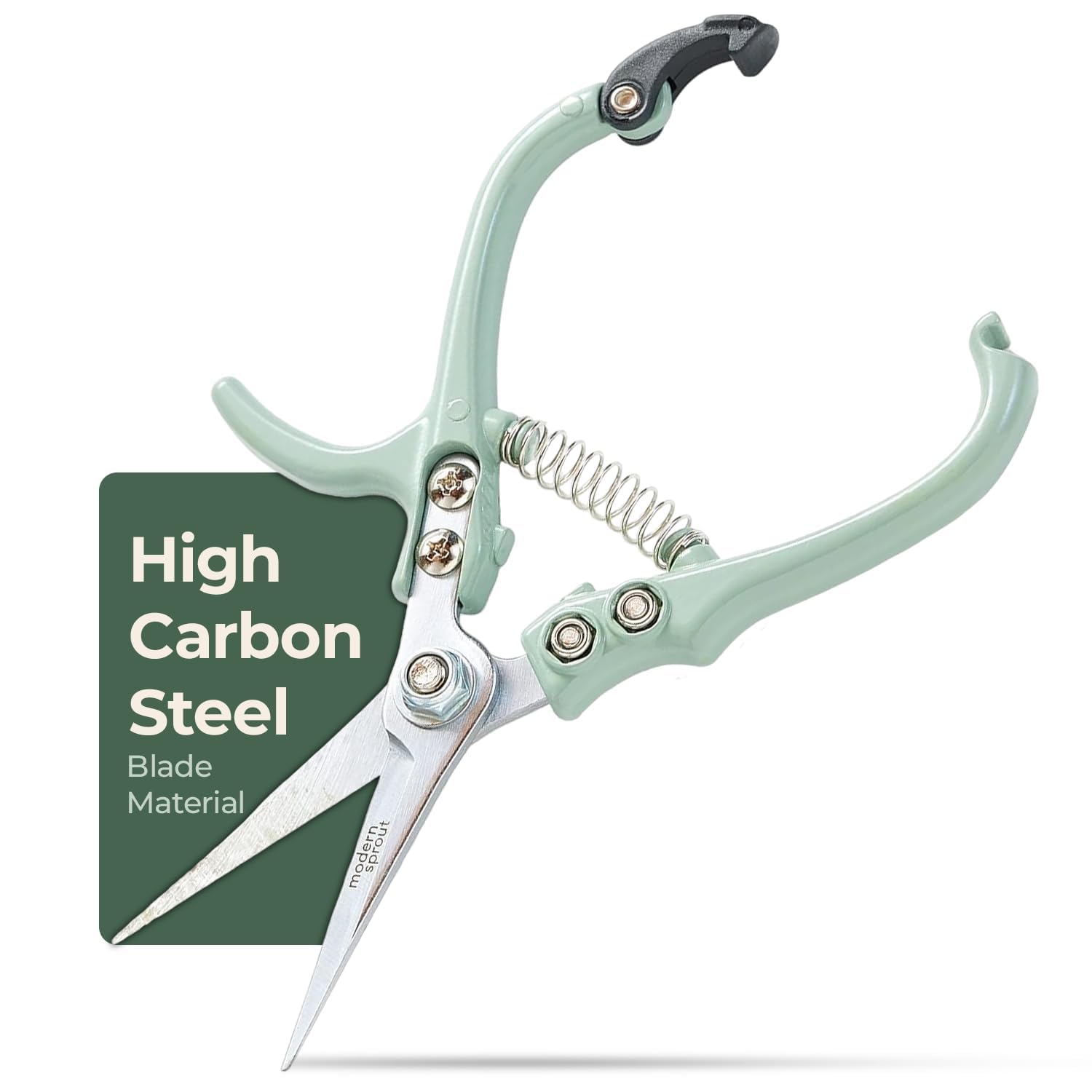
The lightweight snipper that makes herb harvesting a one-handed pleasure.
At a glance, these look like craft scissors, but the high-carbon steel needle-nose blades are proper pruning tools — sharp, rust-resistant, and narrow enough to snip individual basil leaves without crushing the stem. The ergonomic aluminum handles are built for smaller hands and reduced strain, which is why owners with arthritis and hobbyist gardeners alike call them “perfect for herb snipping, deadheading slender-stemmed spent blooms.” The easy-lock safety latch clicks shut securely for storage in a drawer or apron pocket.
The size is the defining trade-off. These are explicitly for fine-stemmed plants like mint, bonsai, and flowers — not for woody branches. The 938 ratings and 4.8-star score reflect near-universal satisfaction from buyers who understood the use case. If your world is pots, herbs, and delicate blooms, these are the most comfortable precision tool in the list.
Designed for the delicate work: the needle-nose tip reaches into crowded pots and snips exactly what you want without collateral damage. The lightweight aluminum build means zero hand fatigue.
Ideal for: indoor gardeners, herb lovers, and anyone who spends more time trimming basil than cutting tree branches.
Not for: general yard pruning — these are specialty snips for fine stems only.
6. Kimura 8″ Pro Pruning Scissors

The Japanese steel scissor that is as kind to stiff hands as it is ruthless on stems.
The SK5 high-carbon steel blades are forged in Japan and heat-treated to 59 HRC (a hardness rating that keeps an edge longer than softer steels). The PTFE coating — the same low-friction material used on non-stick cookware — helps the blades slide through plants without gumming up with sap. The aluminum handles are wrapped in non-slip vinyl, and owners with arthritis or carpal tunnel specifically praise the ergonomic shape: “easy on stiff hands” and “well made and easy on stiff hands” are repeated observations. The 8-inch length gives you leverage for woody stems up to 15 mm thick.
The straight blade type (not a traditional bypass curve) means these work more like heavy-duty scissors than classic pruners. Some buyers find them ideal for cutting open bags and boxes alongside garden use — a versatility bonus. A lifetime warranty backs the purchase, which signals confidence in the riveted aluminum construction. The trade-off is that they are not designed for the thickest branches — 15 mm is roughly 0.6 inches — so leave the 1-inch stuff to the Haus & Garten or Corona.
Ergonomics first: the vinyl-coated handles and lightweight aluminum body are deliberately shaped for people with arthritis or hand fatigue issues. The 59 HRC steel means you sharpen less often.
Best for: gardeners with hand pain who still want professional-grade cutting performance without the heavy squeeze.
Not the best fit if: you need to cut branches thicker than half an inch regularly — step up to a 1-inch capacity model.
7. Saboten Japanese Pruning Shears 7.9″

A nimble, compact pruner that punches above its size with Japanese carbon steel.
The 7.9-inch length makes this the most compact bypass pruner in the premium tier, and that short frame translates into precise control for detail work like deadheading roses and shaping bonsai. The carbon steel blades wear a fluorine coating — a step beyond titanium — that actively repels sticky sap rather than letting it bake on. Owners with smaller or arthritic hands call it a standout: “easy grip for small arthritic hands, smooth open/close, good lock” and one florist simply says “I love them!!!!” The cutting capacity is 20 mm (just under 0.8 inches), which handles most live wood and green stems in a typical garden.
The lightweight build at 0.24 kg means you can snip for an hour without the tool feeling heavy. The safety lock works with one hand. The trade-off is that the rubber-and-plastic handle construction does not have the same bombproof feel as the all-metal Corona or the forged German shears. It is a finesse tool, not a brute-force branch destroyer.
Precision and sap resistance in one package: the fluorine coating is a real upgrade if you prune pine, fruit trees, or any plant that bleeds sticky resin. The compact 7.9-inch length gives you surgical control.
Reach for this if: you have smaller hands, deal with sappy plants, or want a nimble pruner for precise garden work rather than heavy demolition.
Consider something else if: you need a single tool to handle 1-inch woody branches all day — the build is refined but not industrial.
8. Corona Tools BP 6250 MAXFORGED Aluminum Bypass Pruner
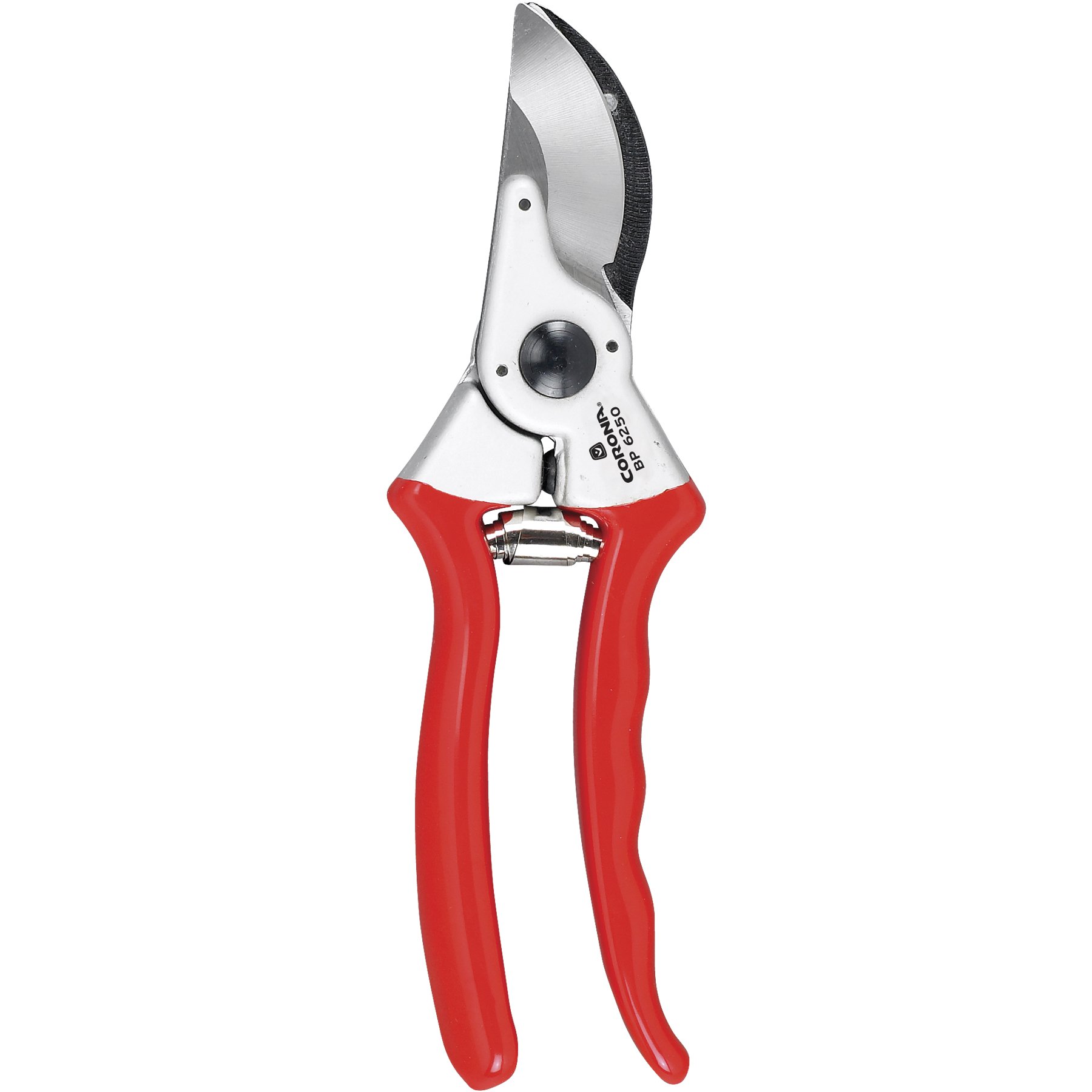
The pro-grade pruner that gives Felco a run for half the money.
Corona’s BP 6250 is the pruner that experienced gardeners compare directly to the industry-standard Felco F-2, and the verdict is consistent: equal performance at roughly half the cost. The forged steel blade cuts through branches up to 1 inch thick, and the aluminum handles keep the weight at just 0.6 pounds — light enough for extended sessions. Owners who prune for four hours at a time report “no hand fatigue” even with arthritic hands. The self-cleaning sap groove, adjustable pivot bolt, and replaceable high-carbon steel blade mean this tool is built to be maintained, not thrown away.
The downside is that the carbon steel blade demands care — you must clean and oil it after use to prevent rust, and opening the blades for the first time may require watching a YouTube tutorial if the assembly comes tight. The 651 ratings and 4.6-star score reflect near-universal respect for the cutting performance, with the maintenance requirement being the most common caveat. If you want a long-term professional tool that you can rebuild instead of replace, this is the one.
What makes it a pro tool
- 1-inch cutting capacity in a lightweight (0.6 lb) aluminum body
- Replaceable, precision-honed forged steel blade extends tool life indefinitely
- Self-cleaning sap groove and adjustable pivot bolt for on-the-go tuning
What it asks of you
- Carbon steel blade requires cleaning and oiling after every use to prevent rust
- Initial blade opening may need adjustment — instructions are not included
Choose this if: you are a serious gardener or light professional who wants Felco-level performance without the Felco price — and you are willing to maintain the blade.
Pass if: you prefer stainless steel that you can throw in a drawer without oiling, or if your pruning is light enough that the extra maintenance is not worth it.
9. Original LÖWE 10 Professional Anvil Pruning Shears 10.107

The hybrid that blends anvil power with bypass precision for the toughest orchard work.
This is the pruner that LÖWE designed specifically for orcharding and forestry, and it shows in the numbers: a 1.18-inch cutting capacity — the widest in this lineup — combined with a hybrid blade geometry that pairs an anvil mechanism with a bypass-style cut. What that means in practice is that you get the crushing power of an anvil for dry, hard wood, but the blade shape prevents the material from slipping and delivers a cleaner cut than a standard anvil. The curved, corrosion-protected blade is ideal for reaching into tight branch formations without mangling the surrounding growth.
At 285 grams and 8.07 inches long, it is nearly the same weight as the LÖWE Professional above but with a noticeably wider jaw. The inward-curved lower handles keep the grip from opening too wide, which owners with medium-sized hands appreciate. The wood handles add a traditional feel that some gardeners prefer over synthetic grips. One owner sums up the sentiment: “Very sharp and precise tool a pleasure to use, more expensive than competition but worth it.” The biggest hurdle is the price — it is the most expensive pruner here — but for professional orchard work or demanding home gardens, it is the last pruner you will buy.
Pro-level branch eater: the hybrid anvil-bypass design is a genuine innovation for dry wood — you get the leverage of an anvil with the clean cut of a bypass. The 1.18-inch capacity means almost nothing in your garden can stop it.
Invest in this if: you are a professional orchardist, forester, or a demanding home gardener who regularly cuts thick, hard, or dry branches and wants a single tool that does everything.
Think twice if: your pruning is light — deadheading flowers and snipping herbs — this is overbuilt for that work and carries a premium price.
Understanding the Specs
Blade Type: Bypass vs. Anvil
A bypass blade slides past a lower hook like a pair of scissors — it makes a clean cut that heals well on living plants. An anvil blade crushes the stem against a flat plate — it has more leverage for dry, dead wood but can bruise live green tissue. The best choice depends on what you cut most. Some premium pruners, like the LÖWE 10, hybridize the two geometries for versatility.
Cutting Capacity
Measured in inches or millimeters, this is the thickest branch the shears can cleanly sever. A 0.75-inch (20 mm) capacity handles most routine garden work. A 1-inch or larger capacity is for serious woody growth and orchard pruning. Overshooting your needs means carrying extra weight; undershooting means the shears will struggle and dull faster.
FAQ
What is the difference between bypass and anvil pruning shears?
How thick of a branch can handheld pruning shears cut?
Are titanium-coated blades actually better?
How do I clean and maintain my pruning shears?
What is the best pruner for arthritic hands?
Can I use pruning shears on woody branches?
What does “drop-forged” mean on a pruner?
How do safety locks work on pruning shears?
Final Thoughts: The Verdict
For most people, the handheld pruning shears winner is the Original LÖWE Professional Anvil Pruner because its German-made anvil blade, replaceable parts, and solid 290 g construction handle years of dry wood and tough branches without loosening. If you want a lightweight everyday cutter that offers the best value from over 33,000 satisfied owners, grab the gonicc 8″ Bypass. And for precision work on herbs, flowers, and bonsai, the Modern Sprout Pruning Shears are the ones to reach for.
How We Picked
We do not accept paid placement. Every pick is matched to a real buyer and a real use-case; we do not hands-on test units.
Sources & Methodology
Specifications: manufacturer listings and product documentation. Review insights: verified customer reviews, as of July 2026. Pricing: not shown on this page (it changes often); check the current price via the retailer link.
As an Amazon Associate, Lawn Gear Lab earns from qualifying purchases. This does not affect which products we feature.