
Specs are compiled from manufacturer listings and verified buyer reviews and can change over time — please confirm the key details on the product page before buying.
Bent over a flower bed with a dull trowel that glances off the first root is a slow, frustrating way to spend a Saturday. A proper handheld hoe puts a sharp, controlled cutting edge right in your palm, letting you slice through weeds and dig into compacted soil without needing to haul a long-handled tool into tight spots. The trick is finding the one that matches your grip, your soil type, and the kind of weeding you actually do.
I’m Rikta — the founder and writer behind Lawn Gear Lab. This guide is built by comparing the manufacturers’ published specifications and the patterns across verified customer reviews, so you get each pick’s real strengths and trade-offs instead of marketing spin.
Whether you are digging out taproots in heavy clay or shaving weeds between strawberry plants, the best handheld hoe for your garden depends on blade shape, steel quality, and how the tool fits your hand for the long haul.
Our Picks at a Glance


How To Choose The Best Handheld Hoe
A handheld hoe is a small investment with a big impact on your back and your weeding speed. Focus on three things to get the right one for your garden.
Blade Shape and Your Soil
The blade’s angle determines how it bites into the ground. A curved or hooked blade (like the Korean Homi or CobraHead) digs deep and hooks roots, making it ideal for hard clay or established weeds. A straight or angled blade (like a Nejiri Kama) is better for shaving just under the soil surface, slicing off young weeds without disturbing the dirt around your plants.
Steel Quality and Sharpness
High-carbon steel stays sharp longer and can take a fine edge, but it can rust if left wet. Stainless steel resists rust and is easier to maintain, but it may not hold an ultra-sharp edge as long. Look for a blade that feels solid and has no flex—it will handle tough roots without bending.
Handle Comfort and Weight
You will grip this tool for more than a few minutes, so the handle matters. Wood handles with a comfortable shape reduce fatigue, while rubber or recycled plastic grips can prevent blistering if you tend to grip hard. A tool under 6 ounces is easy to maneuver for precision work; anything over a pound gives you more chopping power but will wear your arm out faster.
Quick Comparison
| Model | Best For | Blade Length | Total Length | Material | Amazon |
|---|---|---|---|---|---|
| Premium Hand plow Hoe★ Best Overall | Hard clay & heavy roots | — | 11.8 in | Iron | Amazon |
| Hanpex Wide BladeCompact Power | Quick close-up weeding | 5 in | 10.5 in | Carbon Steel | Amazon |
| TOYPOPOR Nejiri KamaPrecision Pick | Precision weeding near plants | 4.3 in | 11 in | Carbon Steel | Amazon |
| Edward Tools Hoe & Cultivator | All-in-one digging & tilling | — | — | Stainless Steel | Amazon |
| Nisaku NJP100 | Maintenance weeding & scraping | 4 in | 10.5 in | Stainless Steel | Amazon |
| WORKPRO Hoe & Cultivator | Heavy-duty soil breaking | — | 14 in | Metal | Amazon |
| Altdorff Hand Tiller | Loosening beds & boxes | — | 17.7 in | Alloy Steel | Amazon |
| Truper Rapid Tiller | Tough clay & dandelions | — | 14 in | Forged Steel | Amazon |
| CobraHead Mini | Precision & tight crevices | — | — | Tempered Steel | Amazon |
In‑Depth Reviews
1. Premium Quality Hand plow Hoe with Safety Cover
Our pick — over 4.5★ from 700+ verified ratings; the strongest balance of quality and price.
A hand-forged Korean Homi that feels like an extension of your arm.
This is the tool that gets called “my favorite new gardening tool” over and over again. Forged by a single Korean master blacksmith who has spent his life making the Homi design, this hoe weighs 10.7 ounces — notably heavier than most handheld hoes. That heft gives it serious authority when you need to break through hard-packed clay or unearth deep taproots. The pointed tip survives rocks, the curved iron blade hooks and pries roots loose, and the wooden handle resists bending under pressure. As owners put it, the thing “cuts your weeding in half.”
The included synthetic leather cover with a precise logo is a small touch that keeps the sharp edge from finding your fingers in a drawer. Quality is the most-praised aspect here, mentioned far more than anything else — and the 4.8-star rating across nearly a thousand owners confirms the broad satisfaction. Just be aware it is designed for right-handed use, so left-handed gardeners may find the angle less natural. If you face stubborn soil and want a tool that will last a lifetime, this is the one to grab.
Why it wins
- Hand-forged, heirloom-quality iron blade that bites into hard clay without bending.
- Versatile curved point hooks roots, digs, plants, and seeds — a true all-in-one.
- Safety cover protects the blade and your hands between uses.
The honest limit
- Right-handed grip angle only; less comfortable for left-handed users.
- Heavier than most handheld hoes at 10.7 ounces, which can fatigue some gardeners faster.
Perfect for: anyone with heavy clay soil, deep-rooted weeds, or a desire for a single heirloom-quality tool that does almost everything.
Think twice if: you are left-handed or prefer an ultra-light, one-job tool for quick maintenance weeding.
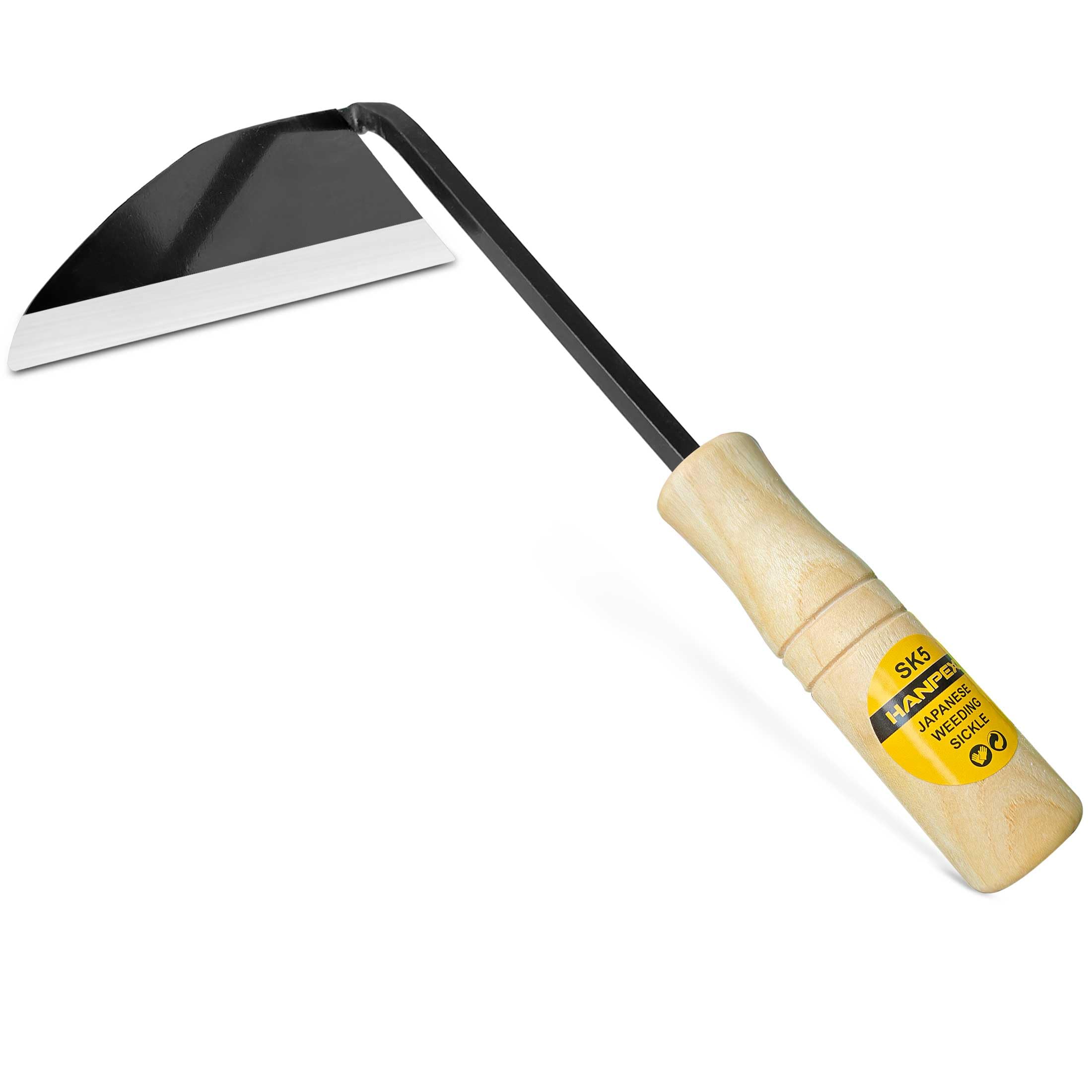
2. Hanpex Japanese Wide Blade Gardening Hand Hoe
A feather-light sickle that shaves weeds away at soil level.
At just 4.8 ounces, this is the lightest tool in the lineup — more than 2 times lighter than the Korean Homi above. The trade-off is a very different feel. The 5-inch SK5 Japanese high-carbon steel blade is designed for a slicing motion just under the soil surface, not for deep digging. Buyers describe it as “shaving the weeds away,” which is exactly right for maintaining beds, patios, and tight rows. The short 10.5-inch total length keeps you close to the work, giving you precise control.
Sharpness is the second most-mentioned positive, and the reviews confirm it arrives razor-ready. One owner called it “amazing little tool, very sharp, strong enough for green non woody annuals.” It is not built for hacking at heavy clay or woody perennials, but for the daily chore of keeping weeds from taking hold, it is tough to top. The 4.6-star rating across a solid number of owners backs up the enthusiasm.
Best for quick work: if you want to spend 15 minutes a week keeping beds clean rather than an hour digging out established weeds, this light, sharp sickle will become your go-to.
Reach for this when: you need a fast, fatigue-free tool for shallow weeding in flower beds, patios, and around decorative plants.
Skip it for: hard clay, deep taproots, or any job that requires prying or digging more than an inch into the soil.
3. TOYPOPOR Japanese Weeding Sickle Hoe
The twisted blade that slides perfectly between your onions and strawberries.
The callout from a reviewer who uses this “perfect for close weeding around my onions, strawberries, etc.” nails exactly what this tool does best. The Nejiri Kama design places the blade facing the ground horizontally, so you can shave the soil surface and slice weeds off at the root without disturbing the plants you want to keep. The 4.3-inch high-carbon steel blade and 11-inch total length give you surgical reach into tight spots that a wider hoe would miss.
Effectiveness is the top praise from owners, and the blade is sharp enough to handle unwanted saplings as well as shallow weeds. The mixed feedback on sharpness comes from a few who found the edge not as aggressive as expected — but the chorus of “super sharp” and “best weeding tool ever” is much louder. At 5.9 ounces, it sits between the featherweight Hanpex and the hefty Korean Homi, offering a good balance of cutting power and precision.
A surgeon’s tool: for anyone who grows vegetables, flowers, or herbs in rows and needs to weed without gouging out the good plants.
Best for: precise, close-up weeding in vegetable beds, around flowers, and in areas where a mis-swing would damage your crop.
Not for: breaking new ground in hard-packed soil or removing large woody roots.
4. Edward Tools Stainless Steel Hoe and Cultivator

A heavy-duty two-header that chops soil on one side and forks it on the other.
With a stainless steel hoe blade on one end and a three-prong fork on the other, this tool saves you from carrying two separate implements. At 16 ounces, it is the heaviest dual-head hand tool here, and that weight gives the hoe end real smashing power for breaking soil along lawn edges. The fork side excels at ripping into rocky soil and pulling out weeds, though its weight makes the sideways shaking motion a little awkward — as one owner noted, the fork end works, but you feel the heft.
Quality gets the most praise, but sturdiness and durability are more mixed. A few owners reported a prong breaking on very tough roots or hard ground, so treat this as a capable generalist rather than an indestructible pro tool. The ergonomic rubber handle earns consistent points for reducing hand fatigue during longer sessions. If you want a single affordable tool that does both hoeing and cultivating, this is a smart choice.
Strong points
- Two tools in one — sharp hoe blade for cutting, fork for loosening soil and ripping weeds.
- Stainless steel construction resists rust and is easy to clean.
- Lifetime warranty from the manufacturer adds confidence.
What to watch for
- Fork prongs can bend or break under extreme pressure in heavy clay or rocky soil.
- At a full pound, it is noticeably heavier than single-purpose hand hoes, which can tire your arm over time.
Ideal for: gardeners who want one tool for both cutting and cultivating and who work in moderate soil conditions.
Better options exist for: ultra-tough digging or anyone who prefers a lighter, more precise single-blade hoe.
5. Nisaku NJP100 Nejiri Gama Handheld Weeder

A polished stainless blade from Japanese artisans that stays sharp season after season.
Nisaku means “quality” in their tradition, and this tool lives up to the name. The 4-inch stainless steel blade is rust-proof, scratch-resistant, and welded to the shaft — no weak joints to fail. The 4.5-inch black lacquered beech wood handle gives it a classic, comfortable feel, and the angled blade design is perfect for scraping and weeding in tight spaces like between pavers or under shrubs. At just 5 ounces, it is light enough to use for an hour without your arm complaining.
A snap-on vinyl cover is included, which is a thoughtful touch from an artisan maker. The reviews consistently call it “the best weeding tool I’ve ever had,” praising its ability to cut through dirt and hook out roots efficiently. The single protruding rivet pin on the handle is a minor point some owners note, but it does not affect performance. The 4.8-star average tells you almost everyone who buys this is thrilled.
The maintenance weeder: if you stay on top of your garden and want a beautiful, well-balanced tool for regular upkeep, this is the one.
Perfect for: keeping beds tidy, weeding between pavers, and any task that benefits from a sharp, light, rust-resistant blade.
Less suited to: deep digging in hard, compacted clay or prying out large woody roots.
6. WORKPRO Hoe and Cultivator Garden Rake

A 14-inch workhorse with a thickened blade that breaks soil before the cultivator finishes it.
This is a serious tool for serious work. The thickened hoe blade measures 0.17 inches — noticeably thicker than most hand hoe blades — and it is paired with a sturdy three-tine rake on the other end. The 14-inch beechwood handle gives you more leverage than the shorter Japanese-style tools, making it a good middle ground between a hand tool and a full-size hoe. At roughly a pound, it has real authority for breaking up hardened soil and digging shallow trenches.
Owners call it their “favorite gardening tool,” praising the dayglo handle (hard to lose in the garden) and the easy assembly. Quality and functionality are the top praised aspects, though build quality gets mixed feedback — a few owners found it less sturdy than expected for extremely heavy use. For general garden beds, edging, and soil prep, it works beautifully and the price is hard to argue with.
What stands out
- Extra-thick 0.17-inch hoe blade holds up to repeated heavy use.
- Two tools in one — hoe on one side, three-tine cultivator on the other.
- Bright handle makes it easy to spot in garden beds and grass.
Consider this
- Mixed feedback on long-term durability; some owners note it is not as rugged as expected.
- At one pound, it is heavier than precision hand hoes, which can lead to fatigue during extended detail work.
Best for: gardeners who need a two-in-one tool for breaking ground, edging, and soil prep without spending a lot.
A little heavy for: delicate precision weeding around young plants or flowers.
7. Altdorff Hand Tiller Garden Claw

A twisting tiller that uses your body weight instead of your wrists.
This is not a traditional handheld hoe — it is a different tool for a different job. The 17.7-inch arc handle is designed to let you use your body’s turning force to rotate the four arrow-tipped tines into the soil, rather than relying on wrist strength to chop and pry. It is ideal for loosening raised beds, flower boxes, and areas around shrubs where you want to aerate and mix soil without bending over a short hand tool.
Effectiveness is the top praised aspect by a wide margin, and owners confirm it cuts easily through sandy soil and weeds. The steel construction and thick rubber grips feel solid, though a few note it seems “a little flimsier than I anticipated” for extremely compacted ground. At 3.5 pounds, it is the heaviest tool here, but that weight helps it do its job — you set the tines on the soil, push down, and twist. It is perfect for soft garden beds, not for rocky or cemented soil.
A different motion: if you struggle with wrist pain from chopping-style hoes, this twisting tiller offers a much friendlier action for loosening beds and mixing compost.
Reach for it when: you need to aerate, loosen, and cultivate raised beds or large flower boxes without bending over and without a power tool.
Skip it for: precision weeding near delicate plants, removing individual weeds, or any work in extremely hard or rocky ground.
8. Truper Rapid Tiller, Digger Cultivator
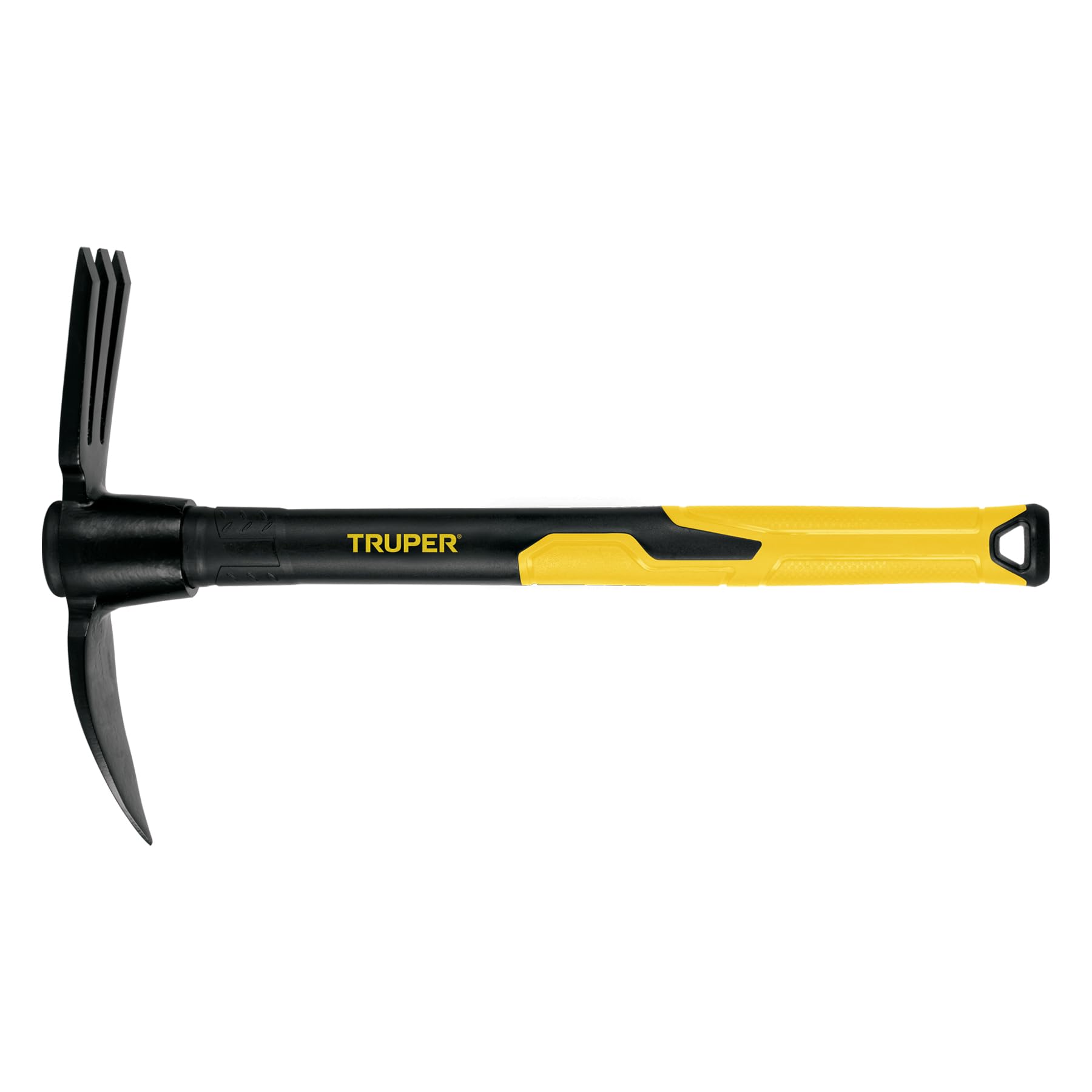
Farm-tested for six years, this forged steel digger chews through red clay without rusting.
This is the kind of tool that gets left out in the rain and still works perfectly the next day. The forged steel head is tough enough to tear through heavy red clay — a recurring theme in the reviews — and the 14-inch fiberglass handle with comfort grip absorbs shock effectively. One side is a sharp digging blade, the other is a three-tine cultivator, and you simply twirl the tool in your hand to switch between them.
Durability is the most-praised aspect by a significant margin, with owners saying it has outperformed similar tools from big-box stores. The weight gets mixed feedback — some love it, others find it a bit heavy after a few hours. As one owner put it, “after a few hours you will get sore,” but added that the extra weight gives you momentum to get deep in the dirt. If you have tough soil and want a tool that will not quit, this one has a proven track record.
Built for the long haul
- Forged steel head with rust resistance; one owner reported leaving it out in the rain with no rust.
- Curved digging point penetrates tough clay easily.
- Farm-tested by multiple owners over several years without failure.
The honest trade-off
- Some find it a touch heavy after extended use — you will feel your arms the next day.
- Not as precise for delicate close-up weeding as smaller single-blade hoes.
Best for: owners of heavy clay soil who want a durable, two-headed tool that does not mind being left outside and can take a beating season after season.
Not ideal for: small-handed gardeners who prefer a lighter tool, or for precision work between delicate plants.
9. CobraHead Mini Weeder & Cultivator

The curved snake-head that slides into crevices other tools cannot reach.
Developed from seasons of hands-on gardening experience in Cambridge, Wisconsin, the CobraHead Mini is a study in thoughtful design. The tempered steel blade curves like a cobra’s head, allowing you to plow through soil, hook out deep roots, and work in tight crevices between flagstones or around established perennials. The recycled plastic handle is designed for both right and left hands, and the tool weighs just 5 ounces, making it easy to maneuver for extended periods.
Some owners find the size laughably small at first glance — but that small size is exactly why it works so well in tight spaces. As one review put it, “if you are weeding a bed this is a great tool to have. Easier to get the roots of some weeds.” The most-praised aspect is quality, with weeding and ease of use close behind. The one-year unconditional warranty from the manufacturer backs up the confidence. It is a specialized tool, but for its intended job — precision weeding in tight spaces — it is class-leading.
A specialist, not a generalist: buy this for the job it was designed for — close-up, detail weeding where a full-size hoe or even a hand trowel is too clumsy.
Perfect for: weeding flower beds with perennials, getting between pavers, and removing deep taproots in tight spots.
Not for: large-scale soil breaking, cultivating wide beds, or anyone who needs a single tool for every garden task.
Understanding the Specs
Blade Material
The steel type determines how sharp the blade stays and how long it lasts. High-carbon steel (like SK5 or the steel used in the TOYPOPOR and Hanpex) can take a very fine edge and holds it well, but you need to dry it after use or it will rust. Stainless steel (like the Nisaku and Edward Tools) resists rust and needs less care, but it may not hold an ultra-sharp edge as long. Forged iron (like the Korean Homi) offers a balance of toughness and workability that can last a lifetime with basic care.
Weight and Control
The weight of a handheld hoe directly affects how it feels in your hand. Tools under 6 ounces (like the Hanpex, Nisaku, and CobraHead Mini) are ideal for precision work and long sessions without fatigue — you can “shave” the soil for an hour without your arm aching. Tools around 10 to 16 ounces (like the Korean Homi and Edward Tools) give you more chopping and prying power for tough soil, but they will tire you out faster. Above a pound, you are looking at a tool meant for soil breaking rather than detail weeding.
FAQ
What is a handheld hoe good for compared to a long-handled one?
How do I keep my handheld hoe sharp?
Can a handheld hoe handle clay soil?
Which is better, a straight blade or a curved blade?
How do I prevent blisters when using a hand hoe?
What is the difference between a Homi and a Nejiri Kama?
Is a heavier handheld hoe always better for tough soil?
How do I store a handheld hoe to make it last?
Final Thoughts: The Verdict
Across the board, the best handheld hoe is the Premium Quality Hand plow Hoe because its hand-forged iron blade handles everything from heavy clay to dandelions with heirloom durability — and the crowd agrees with a near-perfect satisfaction rate. If you want a featherlight slicer for keeping beds tidy without fatigue, grab the Hanpex Japanese Wide Blade. And for precision weeding in tight vegetable rows, the TOYPOPOR Nejiri Kama is the one to reach for.
How We Picked
We do not accept paid placement. Every pick is matched to a real buyer and a real use-case; we do not hands-on test units.
Sources & Methodology
Specifications: manufacturer listings and product documentation. Review insights: verified customer reviews, as of July 2026. Pricing: not shown on this page (it changes often); check the current price via the retailer link.
As an Amazon Associate, Lawn Gear Lab earns from qualifying purchases. This does not affect which products we feature.